Global community critical of Australia’s treatment of First Nations peoples, refugees

Feedback from member states during the United Nation’s third Universal Periodic Review (UPR) of Australia’s human rights track record found it seriously lacking in its commitments to international human rights law.

Among the criticisms leveled at Australia by the international community is its treatment of First Nations peoples and the mandatory and indefinite detention of refugees.

Australia’s last UPR was in 2015 and according to the Australian Human Rights Commission just 11% of the recommendations made five years ago have been implemented.

The UPR session heard recommendations from member states, many of which identified as a human rights issue the overrepresentation of Aboriginal and Torres Strait Islander people in prisons. 

There was overwhelming support from the international community for Australia to raise the age of criminal responsibility.

“The fact that kids as young as 10 – and let’s face it the majority of these are Indigenous kids – are still being sent to jail is not only in opposition to the UN’s own recommendations, but it is just morally wrong,” Amnesty International Australia Indigenous Rights Lead, Nolan Hunter said.

“This is a legacy of Colonialism and the historic inequity in the treatment of Indigenous people that continues to this day, yet it is a contemporary violation that we can easily address.

“Putting kids behind bars who are often times battling poverty, discrimination and complex health issues makes a mockery of claims by our legislators that they’re committed to reconciliation and closing the gap.

“State and Territory Governments can and must act now to raise the age to 14 in line with international standards, or be judged by history for knowing it’s wrong to lock kids up, but doing it anyway.”

The concerns raised by UN member states closely echo sentiment in the Australian community and Australia’s indefinite detention of refugees also came in for a scathing rebuke, despite 26 people being unexpectedly released into the community on Wednesday after being held for more than seven years.

Amnesty International Australia Refugee Rights Advisor Dr Graham Thom said: “People trapped indefinitely by Australia’s offshore detention regime and those in immigration detention centres and Alternative Places of Detention (APODs) are suffering. 

“They have been left without hope for eight years. They can’t work, play the sports they love, access health care or plan for their futures. And many suffer trauma and illness every day because of their experiences in detention.

These people have fled some of the most dangerous places on earth, and they have a right to freedom, safety and a bright future for themselves and their families.

There are other options. Amnesty has worked to get people to Switzerland, Canada, France, Norway – and to support them to resettle in the US. New Zealand has offered to take 150 refugees a year, for the past eight years. That alone would be more than enough to see all those remaining in detention moved to safety.”

A full report on the recommendations of the latest UPR of Australia will be available on February 5.

BACKGROUND

In its submission, Amnesty International Australia has called on the Government to:

  1. Enact laws, such as a Human Rights Act, to ensure that Australia’s international human rights obligations are reflected in domestic legislation. 
  1. Raise the minimum age of criminal responsibility nation-wide to at least 14 years in line with international standards.
  2. Develop, in consultation with Aboriginal and Torres Strait Islander peak organisations, a national action plan to implement the Declaration on the Rights of Indigenous Peoples.
  3. End policies of ‘offshore processing’ and detention for refugees and people seeking asylum and end mandatory detention 
  4. Ensure that the right to freedom of peaceful assembly is respected, including through repealing legislation that violates international human rights laws and standards.
  5. Ensure freedom of expression, press freedom, the rights of whistle-blowers and the right to peaceful assembly are protected under legislation both at national and state government levels. 
  6. End unlawful discrimination on the grounds of sexual orientation, gender identity and intersex status and amend the Religious Discrimination Bill that would give religious bodies a license to discriminate against LGBTQI+ individuals

Submission: UN Universal Periodic Review of Nauru 2021

Amnesty Internationa’s submission was prepared for the Universal Periodic Review (UPR) of Nauru to be held in January-February 2021.

In it, Amnesty International evaluates the implementation of recommendations made to Nauru in its previous UPR and makes recommendations in relation to improving the national human rights framework, strengthening the right to a fair trial, protecting rights to freedom of expression and ending harmful refugee policies.

Submission: UN Universal Periodic Review of Australia 2021

This submission was prepared for the Universal Periodic Review (UPR) of Australia in January-February 2021. In it, Amnesty International evaluates the implementation of recommendations made to Australia in its previous UPR, including in relation to the rights of Indigenous Peoples, the rights of asylum seekers, ensuring religious freedom is upheld and maintaining protection from all forms of religious discrimination. 

It also assesses the national human rights framework with regards to ongoing resistance by the Federal Government to introduce a Human Rights Act, which would ensure all such rights to freedom of religion, freedom of speech, right to protest and other fundamental rights would be protected and aligned across local, State and Federal Government . 

With regard to the human rights situation on the ground, Amnesty International raises concern about the ongoing racial discrimination against Indigenous Peoples, with health, life expectancy, education and employment indicators all falling well below the national average. The number of Aboriginal deaths in custody continues to rise and the minimum age of criminal responsibility is still 10 years – well below the media age of 14 internationally – with many children transported for five hours or more in police cages in the Northern Territory.

Approximately 370 refugees remain stranded offshore – seven years since Operation Sovereign Borders was launched to stop refugees arriving by boat. Amnesty International is deeply concerned about the level of human rights violations under the Australian Government’s policies of deterrence and detention – both onshore and offshore – which punish people fleeing persecution and seeking safety in Australia.

This submission makes eleven recommendations across a range of human rights issues that the Australian government must implement.

Biden administration must prioritise human rights

People in the United States deserve a bold and transformational approach from their new President, Joe Biden, who is being inaugurated today in Washington DC.

“As a global superpower, US government policy affects us all, and we call on the Biden administration to put human rights at the forefront of all their policies,” Amnesty International Australia National Director, Sam Klintworth, said.

As a global superpower, US government policy affects us all, and we call on the Biden administration to put human rights at the forefront of all their policies.

Amnesty International Australia National Director, Sam Klintworth.

“Australia’s close relationship with the USA is important to Joe Biden. Prime Minister Scott Morrison needs to be on the phone as soon as possible, urging the President to prioritise human rights,” Klintworth said. 

“By prioritising human rights, Joe Biden can free the thousands of people, including families, from Immigration and Customs Enforcement (ICE). And he can also stop the killing of an average of 109 people each day of gun violence. He can pursue gender equality; living free from violence is a human right, yet millions of American women and girls suffer disproportionately from violence.
“President Biden can abolish the federal death penalty. The former President pursued far more federal executions than at any time since reliable statistics were first kept.

Viet Nam: New leadership must seize opportunity to reverse human rights decline

The Vietnamese authorities must end their relentless assault on human rights defenders and individuals exercising their human rights to freedom of expression, association and peaceful assembly, said Amnesty International today ahead of the 13th party congress of the Communist Party of Viet Nam (CPV), scheduled to take place between 25 January and 2 February. 

“The Vietnamese authorities’ intolerance of peaceful dissent has peaked under the outgoing leadership. The nomination of new national leaders provides an invaluable opportunity for Viet Nam to change course on human rights,” said Yamini Mishra, Amnesty International’s Asia-Pacific Regional Director.  

The Vietnamese authorities’ intolerance of peaceful dissent has peaked under the outgoing leadership. The nomination of new national leaders provides an invaluable opportunity for Viet Nam to change course on human rights.  

Yamini Mishra, Amnesty International’s Asia-Pacific Regional Director.

According to Article 4 of Viet Nam’s Constitution the CPV leads “the State and society”. This provision has been relied upon to outlaw other political parties.  

The CPV congress – which occurs every five years – is the key mechanism by which government leaders are selected and policy priorities are set. It involves the nomination of new party leaders who are later formally appointed to government leadership positions by the National Assembly. The CPV has been in government since its victory in the Viet Nam War in April 1975.  

“Viet Nam has made some strides in helping to realize economic and social rights for many of its people, but this progress has been severely undermined by its continued repression of freedom of expression, association and peaceful assembly.  

“As Viet Nam increasingly opens to global trade, its prison gates are slamming shut on an ever-rising number of peaceful individuals.” 

Surge in prisoners of conscience in five years since last party congress 

Amnesty International currently recognizes 170 prisoners of conscience in Viet Nam. This is the highest number recorded by the organization since it began publishing comparable figures in 1996.  

The number of prisoners of conscience has increased steeply in recent years and has doubled from 84 in the year of the previous CPV congress in 2016.  

Prisoners of conscience are individuals who have been detained solely for the peaceful exercise of their human rights. Amnesty International calls for the immediate and unconditional release of all prisoners of conscience wrongfully detained in Viet Nam and throughout the world. 

Crackdown ahead of upcoming congress 

The recent conviction and heavy sentencing of three journalists and prisoners of conscience affiliated with the Independent Journalists Association of Viet Nam (IJAVN) – Pham Chi Dung, Nguyen Tuong Thuy and Le Huu Minh Tuan – by the Ho Chi Minh City People’s Court on 5 January 2021 is the latest violation of freedom of expression in a months-long escalation of repression.  

The three journalists were convicted under Article 117 of the Criminal Code for “making, storing or spreading information, materials or items for the purpose of opposing the State of the Socialist Republic of Viet Nam”. Pham Chi Dung was sentenced to 15 years’ imprisonment, and Nguyen Tuong Thuy and Le Huu Minh Tuan each received 11-year sentences. 

Article 117 is commonly used to suppress legitimate dissent in Viet Nam and has been a favoured tool of the authorities to arbitrarily imprison journalists, bloggers and others who express views that do not align with the interests of the CPV. 

Pham Chi Dung, the founder of IJAVN, was arrested on 21 November 2019, days after he signed a letter urging the European Union (EU) to delay approval of the EU-Vietnam Free Trade Agreement (EVFTA) until Viet Nam took measures to improve its respect for human rights. Nguyen Tuong Thuy and Le Huu Minh Tuan were arrested on 23 May 2020 and 12 June 2020, respectively. 

“These outrageous sentences reveal the Vietnamese authorities’ zero-tolerance approach to dissent. Today, Viet Nam is one of the most dangerous countries in the region to be a human rights defender, journalist, blogger or political activist,” said Yamini Mishra.  

The convictions follow the arbitrary arrest of prominent human rights defender, journalist and author Pham Doan Trang in October 2020. She was also charged under Article 117 and remains in pre-trial detention. 

High time to repeal or amend repressive laws 

At least 36 people have been detained under Article 117 since the 2015 Criminal Code came into force in January 2018 – eight in 2018, 14 in 2019 and 14 in 2020. Those convicted have received sentences ranging from five to 15 years’ imprisonment. 

In addition to Article 117 of the Criminal Code, Article 331 (“abusing democratic freedoms to infringe the interests of the State”) is another common charge used by authorities to repress its people. 

Among the 23 people who have been charged under Article 331 since the 2015 Criminal Code took effect, 15 have so far been convicted and sentenced to prison terms of between six months and five years. At least nine people were charged under Article 331 in 2018 alone, another five were detained on the same charge in 2019 and nine were charged in 2020.  

Both Article 117 and 331 violate Viet Nam’s international human rights obligations and should be repealed or substantially amended to comply with the rules set out under Article 19 of the International Covenant on Civil and Political Rights (ICCPR), to which Viet Nam is a state party, and other standards. Other laws that unduly restrict freedom of expression should also be repealed or substantially amended, including the vaguely worded and excessively punitive Law on Cybersecurity. 

In its most recent review of Viet Nam in 2019, the UN Human Rights Committee, the body tasked with monitoring the implementation of the ICCPR, stated that Viet Nam’s “domestic legal framework remains incompatible with the Covenant” and highlighted Articles 117 and 331 of the Criminal Code in addition to the Law on Cybersecurity for their non-compliance with the requirements of the Covenant. 

Big tech must end complicity in Viet Nam’s censorship regime 

Viet Nam has long maintained strict censorship of the press, yet the expansion of social media in recent years has significantly opened up the space for public debate and the exchange of ideas and opinions among the general public. 

As documented in Amnesty International’s December 2020 report, ‘Let Us Breathe!’: Censorship and criminalization of online expression in Viet Namthis technological revolution has led Viet Nam’s censors and security forces to unleash a major crackdown on online expression.  

A large and growing proportion of prisoners of conscience in Viet Nam are imprisoned based on their expression online, with 41% of those recognized by Amnesty International behind bars because of peaceful online speech. 

In addition to imprisoning people based on their social media posts, Vietnamese authorities have increasingly enlisted tech giants Facebook and YouTube to implement censorship on their behalf.  

“With these impending changes in national leadership, both the Vietnamese authorities and big tech have a chance to reset their approach. They must protect online expression in line with international human rights law and standards,” said Yamini Mishra. 

Longstanding human rights concerns must be addressed 

Viet Nam has a long and pressing list of human rights concerns which require urgent remedial action by the incoming party and government leadership.  

The country still imposes the death penalty and undertakes executions in violation of the right to life. Amnesty International reiterates the organization’s longstanding call for this ultimate cruel, inhuman and degrading punishment to be abolished in Viet Nam and everywhere. 

Ethnic and religious minorities also continue to face serious discrimination on the basis of their ethnic and religious identities and perceived political beliefs. Violence against women and girls, and in particular intimate partner violence, remains a serious and widespread concern.  

“In setting policy for the coming five years, the CPV must set its sights on meeting international human rights standards. From the death penalty, to women’s rights, to the arbitrary prosecution of freedom of expression, this is a time to correct course where current policy is causing suffering and injustice,” said Yamini Mishra. 

No youth curfew in Alice Springs: Amnesty International

Alice Springs Town Council has passed a motion in favour of implementing measures to ‘counteract antisocial and criminal behaviour’, including a possible curfew for young people.

Amnesty International has written to all councillors and the Northern Territory Police Minister, Nicole Manison, calling on the curfew to be dropped.

A youth curfew potentially breaches human rights law such as the UN Guidelines for the Prevention of Juvenile Delinquency, and goes against recommendations from the UN Committee on the Rights of the Child and the UN World Report on Violence Against Children.

Instead of a punitive, tough-on-crime approach, Alice Springs Town Council and the Northern Territory government should instead be pursuing justice reinvestment and Indigenous-led prevention and diversion programs that address the cause of offending and keeps children out of prison.

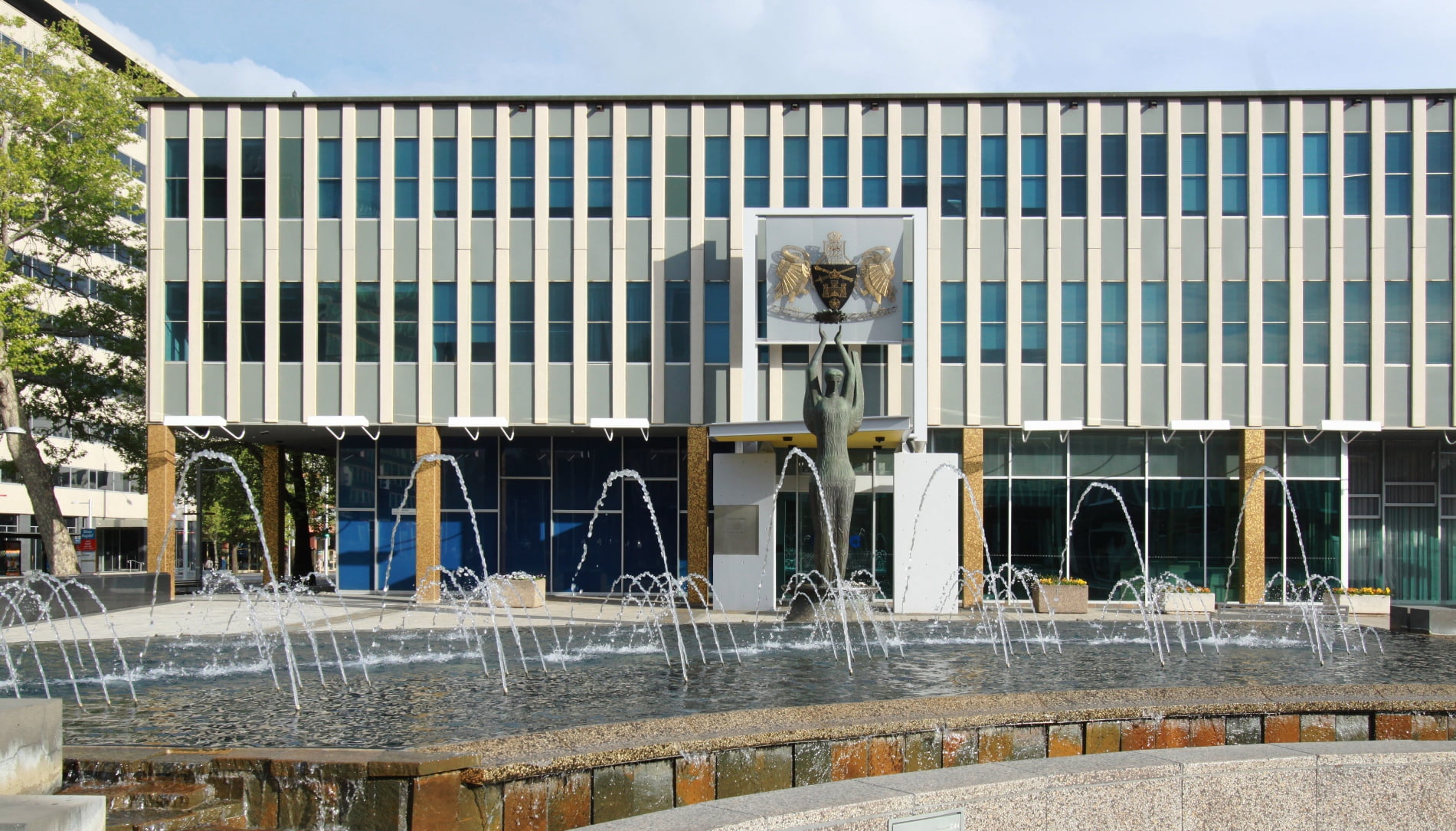
Community is Everything team meet ACT Attorney-General Shane Rattenbury on #RaiseTheAge

After the 2020 Australian Capital Territory election, Shane Rattenbury MLA was appointed Attorney-General. Prior to this, Rattenbury had led the push for the government to commit to raising the minimum age of criminal responsibility.

The Amnesty International Australia Community is Everything (CIE) team met with Attorney-General Rattenbury to discuss the progress of raising the age.

Attorney-General Rattenbury confirmed that it was the government’s intention to raise the age to fourteen. This is a significant point given that other jurisdictions are actively considering only raising the age to twelve.

The CIE team reiterated Amnesty International Australia’s position that the government should deliver this important reform by the end of 2021.

Attorney-General Rattenbury is open to continuing to work with Amnesty International Australia on the minimum age of criminal responsibility, and the CIE team look foward to doing so.

Scores of civilians killed in conflict over Nagorno-Karabakh, international community must act

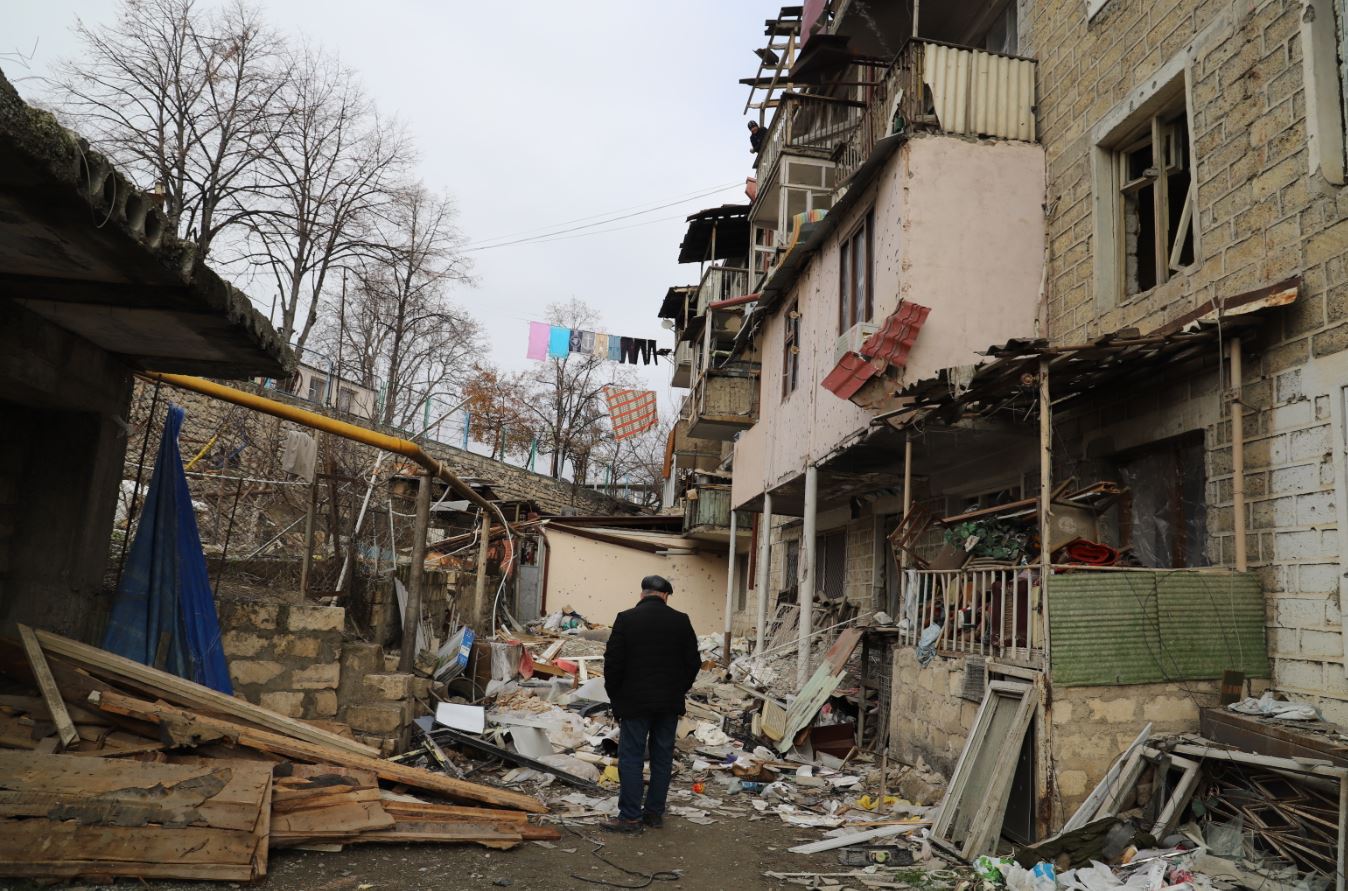
During the 44-day conflict between late September and early November 2020, Armenian and Azerbaijani forces’ repeated use of notoriously inaccurate and indiscriminate weapons – including cluster munitions and explosive weapons with wide area effects in populated civilian areas – violated international humanitarian law and killed scores of civilians, injured hundreds and destroyed homes and key infrastructure.

The new Amnesty International report, In the Line of Fire: Civilian casualties from unawful strikes in the Armenian-Azerbaijani conflict over Nagorno-Karabakh, is based an on-the-ground investigation on both sides and details 18 strikes by Armenian and Azerbaijani forces which unlawfully killed civilians. In all, at least 146 civilians, including multiple children and older people.

Amnesty International Australia has written to Australian Foreign Minister Marise Payne, asking her to work with the international community to:

  • Monitor the situation and exert every effort to ensure that both sides are fully compliant with their obligations under international humanitarian and human rights law, and document and publish any information where respective obligations are, or are alleged to be, violated, and
  • Ensure that both sides take prompt, tangible and effective steps to investigate reported violations, identify and bring to account the perpetrators, and provide full and adequate reparation to the victims.

Two years since Australian prisoner of conscience, Chau Van Kham, locked up in Viet Nam, has spoken to his wife

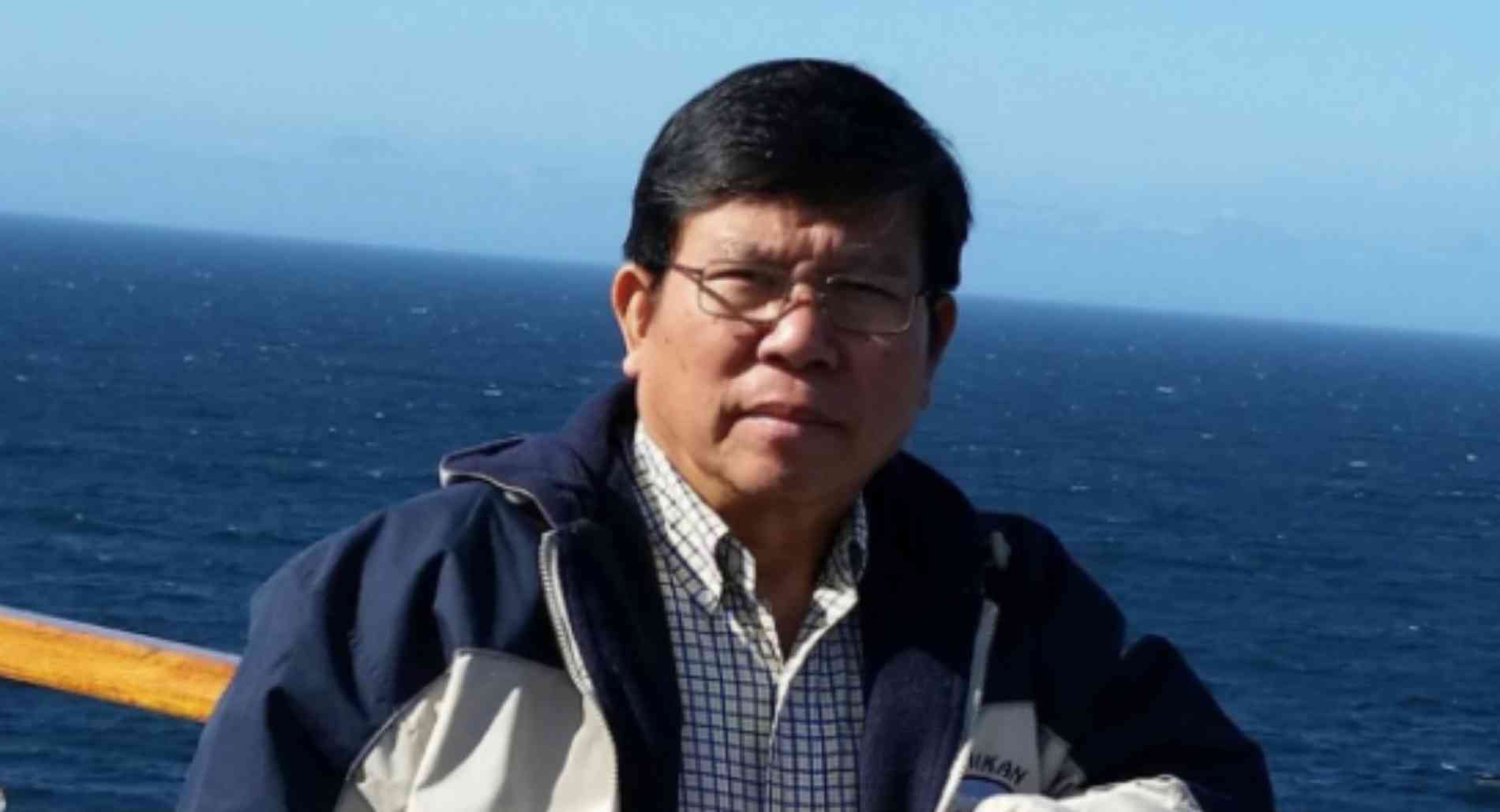
The family of Australian father of two, Chau Van Kham, are this week marking the two year anniversary of his arrest and incarceration in Viet Nam. The former baker from Sydney, who suffers from a number of medical issues, will also be turning 72 years old. But he won’t be talking to his wife and family on that day. He hasn’t spoken to family here in Australia for two years.

Mr Chau, who was sentenced to 12 years in prison for being a member of the political party  Viet Tan, is not allowed to speak to his family in Australia directly and any letters he writes to them are read by the Vietnamese authorities before they can be sent on to his family.

Mr Chau’s wife of 38 years, Chau Thi Quynh Trang, said not being able to speak directly to her husband for almost two years has taken a terrible toll on her and the rest of the family. 

Prison conditions in Viet Nam are notoriously harsh, with regular testimonies from detainees about the poor food quality, lack of drinking water and the absence of adequate medical treatment. Furthermore, prisoners of conscience often face additional harassment, intimidation and ill-treatment.

“My husband went to Viet Nam to monitor the human rights situation on the ground there,” Mrs Chau said. “Within hours of arriving, he was arrested and I haven’t spoken to him since. We miss him so much – just to hear his voice, hear that he is OK – would be better than this terrible silence.”

In almost two years, Mr Chau has been permitted only one family visit from his sister  in June 2020, and a monthly 10-minutes phone call with his nephew since August. Any visit from family in Viet Nam is now more difficult, even if he were to be given family access,  after he was moved to a prison three hours outside Ho Chi Minh City. Visits from consular officials are also infrequent.

Mr Chau’s lawyer, Dan Phuong Nguyen, said the lack of information surrounding the case from Australian government officials had been frustrating. “We know very little about how Kham is doing and how much progress officials here are putting into securing his release. At his age, with his medical issues, he should be a priority and we implore Marise Payne and the Department of Foreign Affairs and Trade to do more to ensure Mr Chau will soon be home with his family.”

BACKGROUND

Mr Chau Van Kham, a Vietnamese Australian, was detained in Vietnam in January 2019. 

A baker from Sydney, Mr Chau joined an unregistered Vietnamese overseas-based political party, Viet Tan, in 2010. In addition to advocating for democracy and human rights in Vietnam, he also organised fundraising events for his organisation within the Vietnamese community in Australia.

Mr Chau was found guilty of “terrorism to oppose the people’s government” under article 113 of the 2015 Penal Code and sentenced to 12 years in prison by a Vietnamese court. 

Up until his appeal, Mr Chau was being held in a detention centre. He was then moved to a new location without the knowledge of his family.

In June 2020, the family was informed he had been moved to Thu Duc prison, three hours from Ho Chi Minh City. A consular visit was also received around this time.

Amnesty International Australia, Dan Phuong Nguyen and Chau Trang have met with representatives of Foreign Minister Marise Payne, DFAT and other Members of Parliament to urge the Australian government to do more to bring Mr Chau home.

Response to latest comments regarding #BLM from Acting Prime Minister, Michael McCormack

In response to Acting Prime Minister Michael McCormack’s defence of his comparison of the Capitol Riots and the Black Lives Matter, in which he stated ‘All Lives Matter’, Amnesty International Indigenous Rights Lead, Nolan Hunter, said:

“The Acting Prime Minister is continuing to show his ignorance about what Black Lives Matters mean, and how it affects our mob right here in Australia. 

“Ignorance of the issues that affect Indigenous people in Australia is why we are behind the rest of the world and lock up little children as young as ten, why Indigenous children are 27 times more likely to end up in prison than their non-Indigenous peers, why 441 Indigenous people have died in custody since 1991, why our cultural sites get destroyed, and why there is no voice to parliament.

“Instead of backing up President Trump, the Acting Prime Minister should be backing up Indigenous people in his own country and take the lead in addressing these issues.”

ENDS