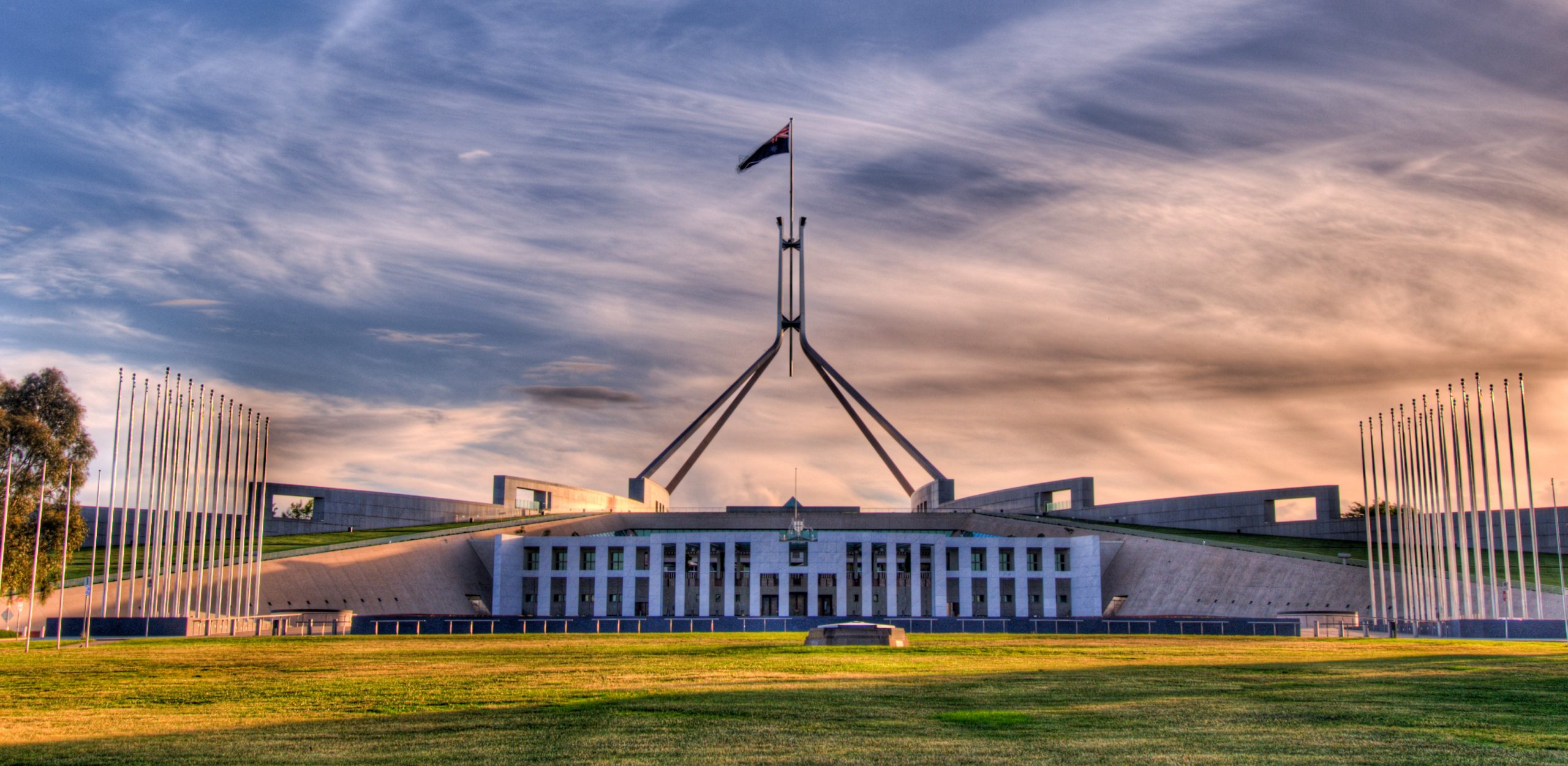
Amnesty International Australia has asked the Australian government to intervene to stop the three scheduled federal executions in the US.
Since resuming federal executions after 17 years last July 2019, the Trump administration has put to death a total of ten men and is pursuing a further three executions in its last weeks in office, including that of the only woman on federal death row.
Lisa Montgomery is due to be executed on 12 January; Corey Johnson on 14 January; and Dustin Higgs on 15 January.
The resort to executions as shown in recent months has not only put the spotlight on the unjust flaws and arbitrariness that have long affected the USA death penalty system, but also failures on the part of the Trump administration to uphold safeguards and restrictions established under international law and standards to guarantee protection of the rights of those facing the death penalty. Racial bias, sentencing of people with severe mental and intellectual disabilities, and flawed legal representation are some of the common factors that have contributed to unreliable judicial ecisions on life or death.
In response to Acting Prime Minister Michael McCormack’s comments on ABC Radio this morning, likening last week’s attack on the US Capitol building to Black Lives Matters protests, Amnesty International Indigenous Rights Lead, Nolan Hunter, said:
“The Acting Prime Minister must immediately withdraw his deeply offensive comments that compared the violent attacks on the US Capitol to the historic and important Black Lives Matters movement that swept the world last year. He must be condemned in the strongest terms.
“To call the Black Lives Matters movement ‘race riots’ proves that the Acting Prime Minister ignored the incredibly important message that it shared. Here, Australians are sick of Indigenous lives not mattering like white lives, Australians are sick of Indigenous people dying younger than non-Indigenous Australians, Australians are sick of Indigenous people being locked up.
“Remember, since the 1991 Royal Commission there have been 441 Aboriginal deaths in custody. Black Lives Matter showed that all Australians no longer accept this.
“To call the Black Lives Matters movement ‘race riots’ also shows that the Acting Prime Minister ignored the hundreds of thousands of people who stood in solidarity, here and around the world, who want to make systemic racism a thing of the past.”.
Following the release by the government on Saturday of proposals for an Indigenous Voice. Hunter said:
“If it is the government’s line to dismiss Black Lives Matters as ‘race riots’ two days after proposing an ‘Indigenous voice’, they clearly have much work to do to get onto the same page as the community”.
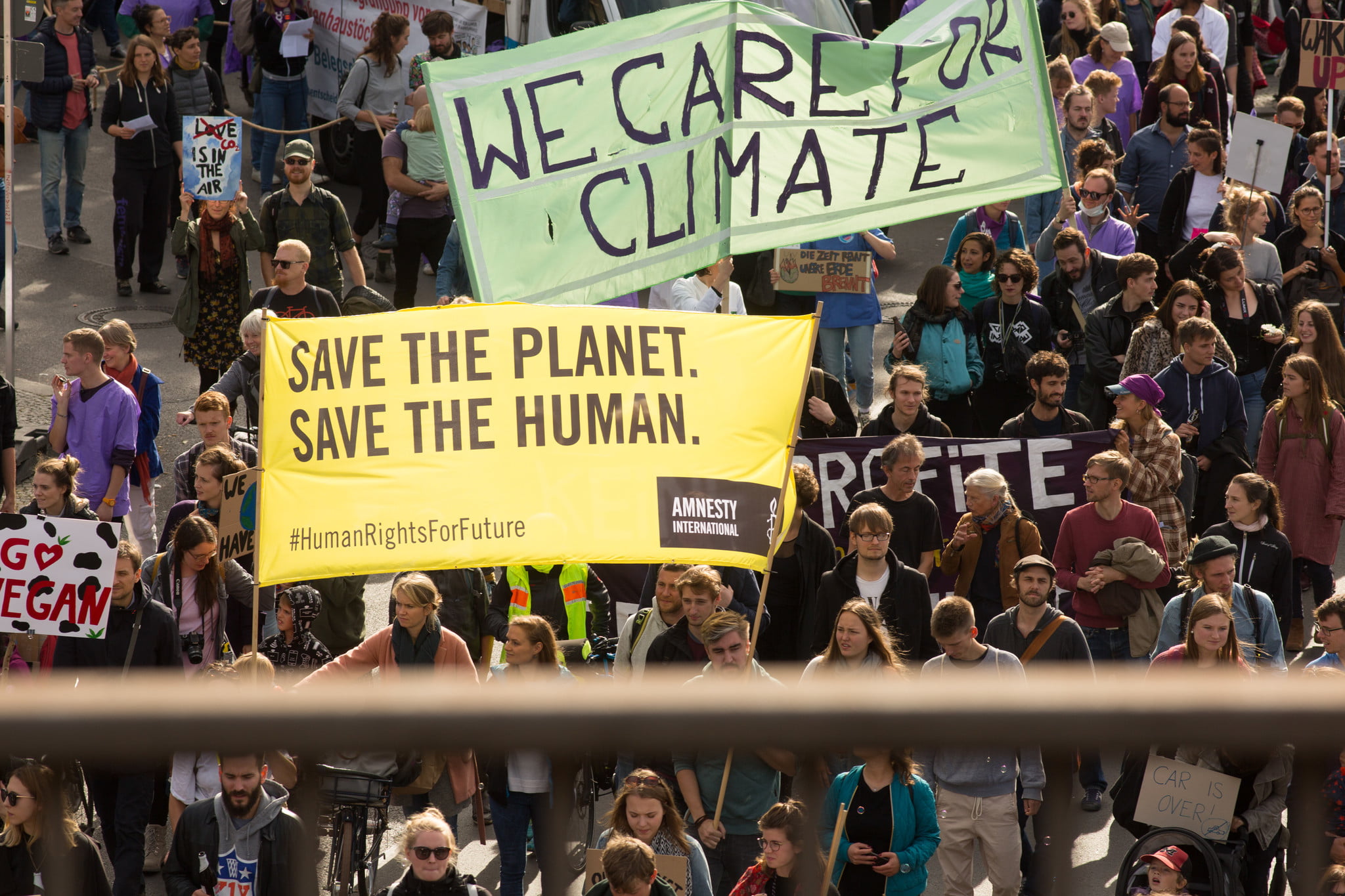
The climate crisis is one of the most significant human rights issues to date, threatening the enjoyment of a full range of human rights, for present and future generations.
Despite the impact that climate change is already having on human rights, and that it will continue to accelerate in the future, Australia’s policies are exacerbating climate change and the existential threats it poses to human rights.
While climate change affects all, the rights of Indigenous peoples in Australia are at higher risk. Aboriginal and Torres Strait Islander peoples are especially vulnerable to the effects of climate change due to their deep connection to country.
Governments worldwide recognise the urgency of climate action, with Australia’s major trading partners – China, Japan, South Korea, the UK and the EU – having clear commitments to net-zero emissions and strengthening their near-term commitments. The US under the incoming Biden administration is set to follow. Australia currently has no long-term plan for action.
Amnesty International has submitted to the inquiry into the Climate Change (National Framework for Adaptation and Mitigation) Bill 2020 and Climate Change (National Framework for Adaptation and Mitigation) (Consequential and Transitional Provisions) Bill 2020.
The climate crisis is one of the most significant human rights issues to date, threatening the enjoyment of a full range of human rights, for present and future generations.
Despite the impact that climate change is already having on human rights, and that it will continue to accelerate in the future, Australia’s policies are exacerbating climate change and the existential threats it poses to human rights.
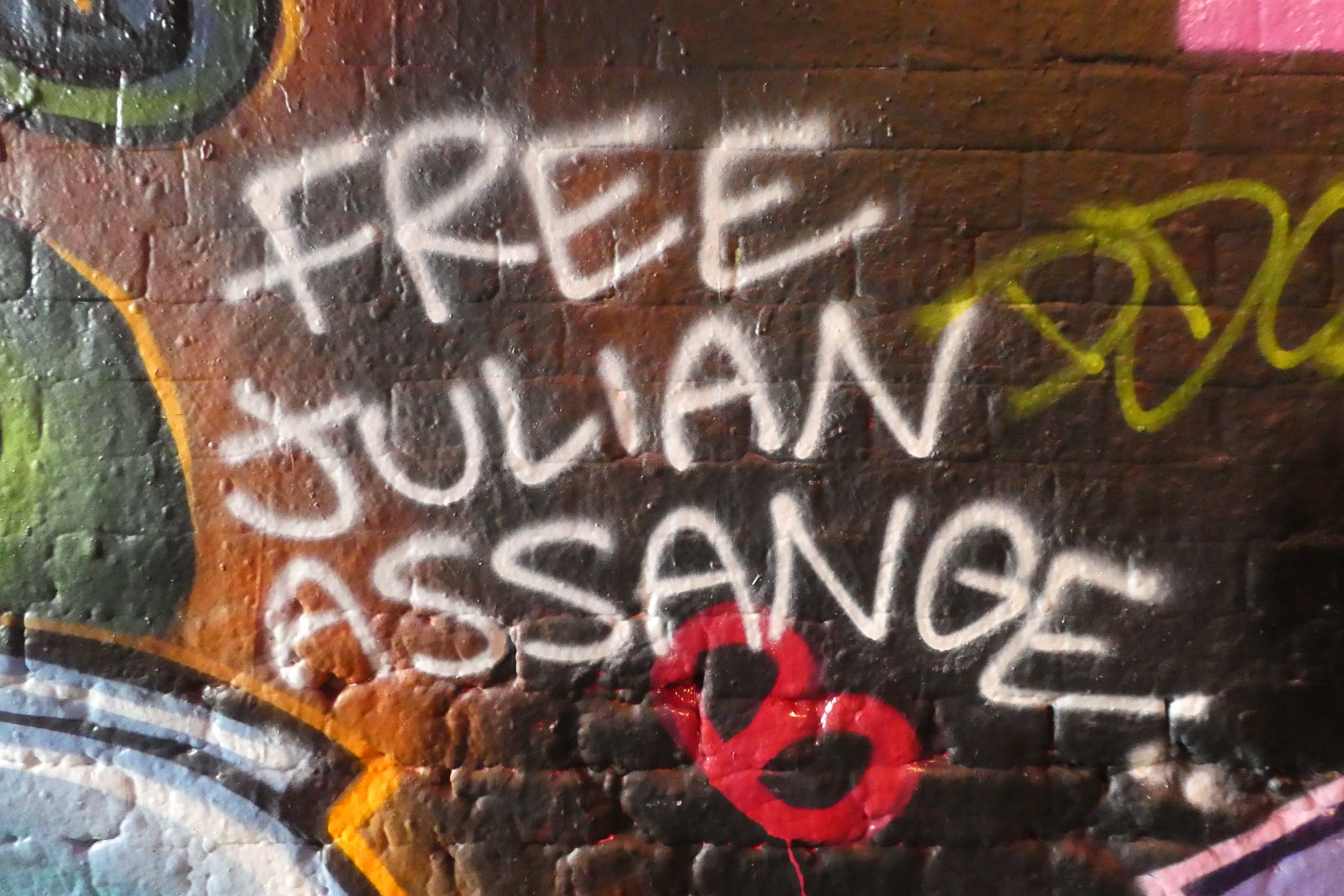
On 4 January 2020, the Magistrate Court in London did not approve the extradition of Julian Assange to the US where he would face a risk of ill-treatment in prison.
The US extradition request was based on charges directly related to the publication of leaked classified documents as part of Assange’s work with Wikileaks. Publishing such information is a cornerstone of media freedom and the public’s right to information about government wrongdoing. Publishing information in the public interest is protected under international human rights law and should not be criminalised.
In the US, Assange faces 18 charges, 17 of them under the Espionage Act; and one under the Computer Fraud and Abuse Act. He would also face a real risk of serious human rights violations due to detention conditions that could amount to torture or other ill-treatment, including prolonged solitary confinement. Assange is the first publisher to face charges under the Espionage Act.
In 2020, our global movement continued to stand up for justice, freedom and equality. We took action for the human rights of all, despite the difficult circumstances of a global pandemic. In Australia, we experienced some of the strictest lockdowns in the world. Standing up for what’s right and demanding human rights for all looked different – but it was not deterred.
In 2021, the fight for our human rights continues – right across the globe, and right here at home. Here are 5 Australian human rights cases, that need your attention now:
Demand the US drop the charges against Julian Assange
Julian Assange is currently being held at Belmarsh, a high security prison in the UK, on the basis of a US extradition request on charges that stem directly from the publication of disclosed documents as part of his work with Wikileaks. On January 4, the UK will decide Assange’s fate. This decision could radically alter the landscape of global media freedoms & undermine the public’s right to information, including evidence of potential war crimes. Take urgent action for Julian Assange now.
Amnesty International staff, activists and supporters protest for Julian Assange’s freedom in Sydney
Call #GameOver, and bring those detained by Australia’s detention regime to safety
More than 700 refugees and people seeking asylum were still detained in PNG and Nauru when we launched our #Game Over campaign at the beginning of 2020. Thanks to thousands of Australians standing in solidarity and pressuring the government for change, that number was reduced to 290. But that is still 290 too many. That number is about 500, when you factor in the refugees and asylum seekers detained in APODs (Alternative places of detention) on Australian soil.
Our collective action resulted in an acknowledgement from Peter Dutton in Question Time, who stated that the NZ solution is ‘still on the table’. That is of course, the Australian Government accepting New Zealand’s long-standing offer of resettlement. Add your name now, joining the call for the government to bring these people to safety now.
Across Australia, children as young as 10 are charged, brought before a court, sentenced and locked up behind bars. Instead of putting kids this young behind bars, governments can fund Indigenous-led solutions and community programs which have better outcomes for children and communities.
Last August, the ACT government committed to raising the age of criminal responsibility to 14. They’re the second jurisdiction to commit to raising the age – but the first to commit to raising it to 14. We must build on this momentum in 2021 and urge all states and territories to work to keep children out of the quicksand of the youth justice system. Add your name demanding governments #RaiseTheAge now.
Fluffy toys behind bars, representing the children as young as 10 years old locked behind bars in QLD.
Call on the government to protect LGBTQA+ Australians from conversion practices
The conversion practices movement make pseudoscientific claims which tell LGBTQA+ people they can change their sexual orientation or gender identity. These practices are prevalent across Australia, and successive Australian state and territory governments have failed to legislate to adequately address and ban them. In 2020, the ACT and Queensland passed legislation to end conversion practices. Now it’s time for the rest of the country to follow suit. Call on the Australian Government to end conversion practices Australia wide.
Help free Vietnamese Australian man Chau Van Kham
Chau Van Kham is a 71 year old Vietnamese Australian. He was detained within hours of arriving in Vietnam in 2019 and sentenced to 12 years in prison for being a member of the political party, Viet Tan. His family in Australia have grave concerns for his health – particularly as prison conditions in Vietnam are notoriously harsh, with regular testimonies from detainees about the poor food quality, lack of drinking water and the absence of adequate medical treatment. Call for Kham’s immediate and unconditional release so he can be safely reunited with his family in Australia.
Amnesty International campaigner Joel Clark with Chau Van Kham’s wife, Trang.
Ministers and Assistant Ministers in Prime Minister Scott Morrison’s new ministry were sworn in on the 22nd December 2020. There are several new members in important ministries related to human rights.
Amnesty International has written to the following Ministers and Assistant Minister congratulating them on their appointment and outlining important human rights issues in their portfolios. You can read the letters below to:
The Hon. Alex Hawke MP, the new Minister for Immigration, Citizenship, Migrant Services and Multicultural Affairs
The Department of Foreign Affairs and Trade releases Country Information Reports primarily for the use of protection status determination, and provides a ‘general’ country overview.
Amnesty International is concerned that the newly published Country Information Report for India does not reflect the reality of the human rights situation on the ground. In particular, threats to human rights and ongoing violations of human rights are frequently understated in the report.
It’s been a difficult year, with many people facing familiar and new hardships. Despite the difficult circumstances, our global community continued courageously standing up for justice, freedom and equality. From writing letters and signing petitions to protesting in a safe way, people came together to take action and show that change is possible. Celebrate these inspiring stories of human rights wins that prove how when we challenge injustice our voices are powerful enough to change the world.
You stood up for Indigenous rights
In 2020 we fought hard to end the over-representation of Indigenous and Torres Strait Islander children in the youth justice system.
In July we had a significant human rights win for justice reinvestment, which provides an alternative to prison. One of our Indigenous-led partners, Mona Aboriginal Corporation, received $2.25 million in government funding. The program aims to provide intensive, holistic case management, connecting young people at risk to country, culture, and community.
We made human rights history in August, when the ACT government committed to raising the age of criminal responsibility to 14. They’re the second jurisdiction to commit to raising the age – but the first to commit to raising it to 14. This win is the result of five years of campaigning, various research reports (including our July Raise the Age report) and over 70,000 Australians taking action. We must build on this momentum in 2021 and continue pushing until Australia stops locking up children.
‘Black Lives Matter’ rally on June 02, 2020 in Sydney, Australia. Photo: Lisa Maree Williams/Getty Images.
You called game over on offshore detention
More than 700 refugees and people seeking asylum were still detained in PNG and Nauru when we launched our #Game Over campaign in January. Thanks to your help, that number has now been reduced to 290.
Those who were resettled include Ezatullah Karkar, Adam Sanoussi, Vali Papi, Farhad Bandesh. Behrouz Boochani, with whom Amnesty Australia had been working for 5 years, also resettled in New Zealand in August. This was an important step in establishing a new pathway to resettle refugees from Nauru and PNG. Amnesty used this opportunity to pressure the Australian government to accept New Zealand’s offer to take 150 people off Nauru and PNG. Over 65,000 Australians signed the petition, alongside sporting celebrities such as Craig Foster and Sonny Bill Williams.
This resulted in acknowledgement from Peter Dutton, that the NZ solution is ‘on the table’. We will continue to build on this momentum in 2021, until all refugees on Nauru and PNG have reached a new home.
The moment a person walks free after 8 yrs
Thankyou to all for raising your voices
And to whomever signed the form
8 years too long, and 500 remaining here and offshore who deserve nothing less. Please sign theirs
Since 2018, our My New Neighbour (MNN) campaign has been calling on the Australian federal government to make improvements to the existing Community Sponsorship Program (CSP). The CSP must be fair and more accessible for Australians to sponsor refugees and welcome them to our country. Almost 30,000 individuals and 40 local councils have publicly pledged their support for an improved and expanded CSP. We made significant progress when the government announced an inquiry into the sponsorship of refugees in Australia. The MNN team worked with communities across the country to coordinate 25 submissions as part of the review.
In a victory for common sense and compassion, legislation seeking to remove mobile phones from refugees and asylum seekers in detention failed to secure support in the Australian Senate after thousands of people contacted key Senators to express their extreme concern. The Migration Amendment (Prohibiting Items in Immigration Detention Facilities) Bill sought to give Border Force increased powers to remove mobile phones which for many are a literal lifeline to stay in contact with support networks and legal representation.
@FarhadBandesh
You protected media freedom
Never has media freedom been more important than during the Covid-19 pandemic. This year we defended two individuals detained for reporting on COVID-19, both which resulted in good news.
Mamane Kaka was released in March after being detained for three weeks in Niger, for publishing a social media post about a suspected case of COVID-19. He was given a three-month suspended sentence.
Journalist and prisoner of conscience, Darvinson Rojas, was released on bail in April after almost two weeks in detention in Venezuela. He was arrested on politically motivated charges in an attempt to silence his reporting on the pandemic in Venezuela.
Journalist and President of Niger bloggers association, Samira Sabou, was released from prison in July, following calls from Amnesty International.
I don’t forget about Amnesty International who highlighted the incoherence related to my arrest. I have been touched by the solidarity and the support I received from all corners of the globe.
Samira Sabou
You fought for LGBTQA+ rights
As part of our 2020 Write for Rights campaign we continue to campaign alongside LGBTQA+ survivors of conversion practices, calling on Australian governments to protect LGBTQA+ people.
In 2020, the ACT and Queensland passed legislation to end conversion practices. In December the Victorian Parliament’s lower house passed a world-leading bill to end harmful LGBTQA+ conversion practices in the state. The legislation will pave the way, together with our advocacy, for other states to follow. It is hoped to pass the upper house in early 2021.
You gave access to education for Rohingya refugee children
In January, the Bangladesh government announced its commitment to provide education to half a million Rohingya refugee children, two and a half years after they were forced to flee crimes against humanity in Myanmar. In the two years we’ve been campaigning on the issue, Amnesty International held an art camp in the refugee camps of Cox’s Bazar, developed a popular hip hop video with two Bangladeshi YouTube stars and published a comprehensive briefing detailing conditions in the camps, and their effects on children.
Rohingya children enjoy playing and learning in a refugee camp in Bangladesh. Photo: Arif Zaman.
You held those in power to account
In November, Japanese beer company Kirin announced the suspension of payments to the Myanmar military company MEHL and Korean garment company Pan-Pacific also decided to end its business relationship with MEHL. Both decisions were prompted by Amnesty’s 2020 report Military Ltd. which exposed the link between MEHL and military units that are implicated in serious human rights violations against Rakhine State’s predominantly Muslim Rohingya minority population.
You fought to abolish the death penalty
In March, Colorado abolished the death penalty and commuted the death sentences of the three remaining men on death row. This makes Colorado the 22nd US state to have abolished the death penalty.
And in September, Kazakhstan committed to abolishing the death penalty – bringing it closer the ever-growing family of nations that have left this shameful punishment behind.
The majority of the world – 106 countries – have now abolished the death penalty in law for all crimes, and 142 countries – more than two thirds – have abolished the death penalty in law or practice.
You stood up for the rights of women
On International Women’s Day hundreds of Australian supporters made ‘freedom flowers’, attended rallies and held events calling for Yasaman Aryani’s release. The flowers, along with 100,000 actions were sent to the Iranian Embassy in Canberra on 10 April 2020 to mark the first anniversary of Yasaman’s arrest for campaigning against forced veiling. Over one million Amnesty supporters around the world also took action for her release. As a result, it was announced that Yasaman’s prison sentence was reduced from 16 years, and she will now only have to serve 5 years and 6 months.
In April, following calls and successful litigation by Amnesty International and partner organisations, Sierra Leone’s government overturned the ban preventing pregnant girls from attending school and sitting exams. The ban had been in place for nearly five years, depriving many young women of their right to an education.
Iranian human rights defender, Narges Mohammad was freed from prison in October after supporters from around the globe pressured the Iranian government. Narges was sentenced to 16 years in prison for campaigning against the death penalty and condemning acid attacks against women.
In November, Argentina’s President, Alberto Fernández, fulfilled his campaign promise to send a historic bill to Congress to legalise abortion. This followed years of campaigning by women’s rights advocates including Amnesty International.
Women’s rights advocates including Amnesty International have been calling for legal abortion in Argentina for years. Photo: Amnistía Internacional Argentina.
You protected people who raised their voices
While the ongoing challenges posed by COVID-19 have limited our opportunities for mobilisation, you helped us launch our Protect Protest campaign. Initial tactics included our Human Rights Observers and Digital Defenders who protect people during protests and support them to speak out against hate speech online.
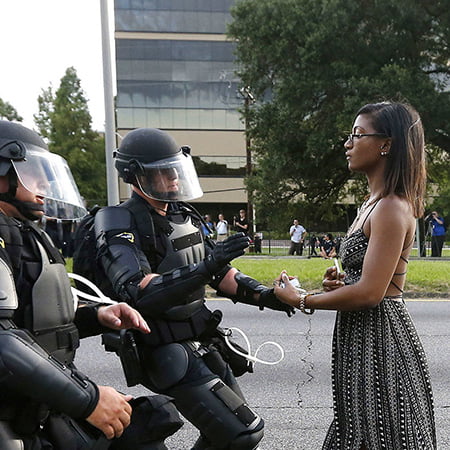
The AI USA report on police violations during #BLM protests helped make human rights violations committed across the country visible and generated significant coverage and interest. Amnesty investigators also briefed Congress and testified to the Oregon State Legislature to assist the latter in rewriting their laws about the use of tear gas.
In July, a high-ranking officer in Chile’s police force was arrested and charged after Amnesty International published evidence suggesting that he was responsible for blinding a student in last year’s demonstrations that were marred by the unlawful use of force by the police.
You improved the lives of hundreds of people at risk
Thanks to relentless campaigning from Amnesty supporters over the past five years, we’ve improved the lives of over 125 people.
A number of individuals unjustly detained were released, including Narges Mohammadi from Iran and Alaa Shaaban Hamida, from Egypt. In South Sudan, activist Kanybil Noon was released after 117 days in detention without charge. Upon release, Kanybil said: “I’m so grateful for your efforts. Send my gratitude to the entire staff. I’m so grateful for your service.
In March, Guligeina a young Uyghur student was released from a ‘transformation-through-education’ facility in China after 3 years. Thank you to the 20,000 supporters in Australia who signed the petition and helped secure Guligeina’s release!
Uyghur student Guligeina
Following a report from Amnesty International, along with a strategic intervention from the Association of Psychoanalysts of Kazakhstan, Vadim Nesterov’s legal rights were reinstated in January, representing an incredible win for people with disabilities in Kazakhstan. As a person with mental disabilities, Vadim had been deprived of legal capacity when he turned 18 and was unable to make decisions about his life or exercise his fundamental human rights.
Chinese human rights lawyer Wang Quanzhang was reunited with his family in April after spending four and a half years in prison. He was targeted for his work exposing corruption and human rights violations. Amnesty had campaigned for his release since he was first detained.
Wang Quanzhang and his family smile for a photo.
In early May, a French court acquitted Cédric Herrou a farmer who was prosecuted simply for helping asylum seekers in need. Herrou’s case was emblematic of how acts of solidarity have been criminalised across Europe.
In Bahrain, human rights activist Nabeel Rajab was released from prison in May on a non-custodial sentence, following years of campaigning from Amnesty International and other human rights organisations.
People demonstrating for human rights activist, Nabeel Rajab. Photo: Mohammed Al-Shaikh/AFP/Getty Images.
South Sudan teenager Magai Matiop Ngong had his death sentence quashed and was removed from death row on 29 July. Moved by his plight, people around the world wrote an incredible 765,000 messages of support. Magai’s case generated debate on the use of the death penalty against children in South Sudan – a rare and hugely positive development.
Russian Jehovah’s Witness and prisoner of conscience Gennadiy Shpakovsky, who had been prosecuted solely for exercising his right to freedom of religion, had his sentence commuted and was released from prison.
You helped protect the future of our planet and stood for climate justice
In October, JBS – the world’s largest meat producer – pledged to monitor its entire supply chain by 2025, including the problematic “indirect supplier” farms linked to illegal deforestation and land seizures in the Amazon. And top European investment house Nordea Asset Management removed JBS from its portfolio, attributing its decision to exposés, such as our report, about JBS’s indirect supply chain.
The Escazú Agreement, the regional treaty for protection of the environment and environmental defenders, will now come into effect, following intensive campaigning by Amnesty and partners in several Latin-American countries.
You protected worker’s rights
In a bid to help protect migrant workers from labour exploitation, Qatar abolished requirements for migrant workers to get permission from their employer to change jobs and announced the introduction of a new non-discriminatory minimum wage. The 2022 World Cup is due to take place in Qatar and Amnesty has been campaigning to improve migrant workers’ rights for years.
As construction continues at 2022 FIFA World Cup stadiums in Qatar, Amnesty International is campaigning to improve migrant workers’ rights. Photo: Getty Images.
In October, five Malaysian activists, charged for holding a peaceful gathering in support of hospital cleaners, were granted a discharge not amounting to acquittal. We featured their case in our Exposed, Silenced, Attacked report and, thanks to our work, they’re no longer being prosecuted.
We could not have done it without the help of Amnesty International.
Union representative
You showed compassion for the vulnerable during COVID-19
You helped to protect human rights in response to COVID-19 in the areas of health, surveillance and over-policing, as well as standing up for journalists and other human rights defenders reporting on the frontlines of the pandemic around the world. Following the September publication of our report on how the UK government abandoned older people to die in care homes amid the COVID-19 pandemic, the UK’s Care Quality Commission announced an urgent investigation into the blanket use of “Do not attempt resuscitation” orders in care homes during the COVID-19 pandemic, and the social care minister said government will launch a pilot project to test some relatives, so as to allow more meaningful visits to care home residents.
You helped us build a stronger Amnesty for even more human rights wins
In 2020 Amnesty became a global movement of more than 10 million supporters. It’s an incredible community and Amnesty would like to thank each and every one of you for taking action and making a difference.
In a year of hardship, when life was put on hold for many, you continued to challenge injustice. You fought courageously for a world where everyone enjoys their human rights without discrimination. You took a stand for the rights of activists, changed oppressive laws and freed people unjustly jailed.
Together our voices are powerful and with your every action, every contribution we move closer to a world where human rights are enjoyed by all. Let’s keep standing strong for justice, freedom and equality in 2021!
Amnesty International Australia has written to the Minister for Indigenous Australians, Ken Wyatt MP, urging him to support a motion before the Senate calling for a Joint Select Committee on Makarratta.
The committee would allow the parliament to explore the history and progress of truth-telling and treaty-making in Australia, international developments in treaty-making and truth-telling, the representation of First Nations parties in treaty-making and truth-telling, and the role of First Nations Voice to Parliament.
Amnesty’s Indigenous Rights Lead, Nolan Hunter, was there when the Uluru Statement of the Heart was formed and is calling on the Minister for action.