Scrapping of bailhouses latest retrograde step in QLD youth justice reform

Amnesty International Australia has serious concerns about the Queensland Government’s decision to scrap bailhouses as the latest in a rollback of youth justice reforms.

Following a Right To Information request in 2018, Amnesty International uncovered serious breaches of international law, which resulted in the Queensland Government introducing bailhouses as well as establishing a youth justice department. Both of these initiatives have now been scrapped.

Amnesty International Australia Indigenous Rights Advisor Rodney Dillon said scrapping of bailhouses, and the fact that children are still being kept in watchhouses, shows just how urgent the need is for fundamental law reform.

“Without bailhouses, watchhouses will continue to be used as a stop-gap to compensate for an at-capacity youth prison system and Queensland’s notoriously backlogged Children’s Court.

“We know that these are no places for kids as young as 10, being managed by police without the necessary training and skills to deal with children,” Dillon said.

The Queensland government has cited a reoffending rate of 85% as a reason for bail houses to close.

“If the government is saying that bail houses have failed, it’s because they set them up to fail in the first place. Bail accommodation needs to have a therapeutic approach to find out why a child might be offending, and addressing those issues.

“The Queensland bail houses were just a mini-prison – an ill-thought out plan that was always likely to fail. The government now has the opportunity to learn lessons from this and come back with a therapeutic approach that works,” he said.

Eleven children stayed in a police watch house for more than 15 days during the 2019-20 year, according to new data published by the Childrens Court of Queensland.

“It is absolutely mind-blowing to think that the government is still holding children in watch houses for longer than two weeks—they shouldn’t even be in there overnight.

“The new Minister has to make it her priority to address this as soon as possible.

“As we saw in the disturbing video from the Northern Territory this week, there is mounting evidence that police are not the right people to be dealing with young offenders with complex needs.

“It’s really time that all State and Territory governments listened to the experts and raise the age of criminal responsibility from 10 to 14.

“There are already very successful Indigenous-led diversion programs which are far more effective in dealing with youth offending than the quicksand of the youth justice system. We as a country have to do better by Indigenous kids.”


Advocates deliver almost 30,000 signatures to Minister Tudge for a fairer community sponsorship program

Advocates of a fairer community sponsorship program will on Thursday December 17 handover 30,000 signatures supporting reform to the program to welcome more people into our communities.

The signatures will be handed over at Acting Minister for Immigration, Alan Tudge’s electorate office in Wantirna South, Melbourne. A review into the current model is due to be completed within weeks.

“My family and I were privately sponsored to Australia, and it was church organisations, local friends and diaspora connections who collectively played a role in helping us resettle,” Amnesty International Australia campaigner Shankar Kasynathan said.

“I have met many others in Australia and overseas, who have benefitted from, and are now thriving because of their experience with refugee community sponsorship.

“We have it in our communities, to ensure the next model is fair and just. It must be additional to our humanitarian intake.”

Minister Tudge has declined repeated requests for a meeting to hand over the tens of thousands of signatures from Australian citizens. 

Since March 2018, Amnesty International has been joined by 40 local governments, hundreds of community groups, including refugee communities and almost 30,000 Australians who have been calling for a fair and just model of community sponsorship. 

“In the time of COVID 19, when immigration has collapsed, our government should be welcoming those desperate for a new start into our own communities with open arms. It’s the humane thing to do, the most economically sound thing to do, and the most sensible thing to do,” Kasynathan said.

Refugee rights advocates call for immediate release of people being detained in APODs

A coalition of rights groups have called for all the people being held in alternative places of detention (APODs), under Australia’s cruel immigration detention regime, to be immediately released into the community.

Following the release last week of musician Farhad Bandesh and four others, Australian Border Force notified detainees in Melbourne’s Mantra hotel in Preston on Monday that they would be moved to another detention facility – however, no further details have been given.

The contract for Mantra to be used as an APOD expires on December 31.

Farhad Rahmati, who is currently detained in Villawood, Sydney said:

“With a stroke of his pen, Alan Tudge could release everyone to community which costs zero. Instead he is choosing to relocate the [people at Mantra] to another prison, spending millions of taxpayers dollars! After eight years of detention this is nonsense and we should be free.”

Amnesty International Australia Refugee Advisor Dr Graham Thom, said:

“The fact that some of these people have been released, and some are being moved to another facility demonstrates the totally arbitrary and cruel nature of locking innocent people up.

“As refugees it is clear these people have fled some of the most dangerous places on earth, and they have a right to freedom, safety and to build a future for themselves and their families.

“It’s unfathomable that human beings can be treated with such disregard. These people have been kept trapped and deprived of any hope for more than seven years. We have grave concerns for their mental health with this development which  unnecessarily prolongs the unbearable limbo the Australian Government has them trapped in,” Dr Thom said.

Director Advocacy and Campaigns for the Asylum Seeker Resource Centre (ASRC), Jana Favero said:

“Amongst all misinformation, forced transfers and secrecy, one thing is certain – it’s time to release people from detention into the community with support. We can no longer treat refugees like pawns in a game of political chess. We call on the Morrison Government to release all 200 people from indefinite detention urgently so they can recover their health, reunite with family and live freely in the community.”

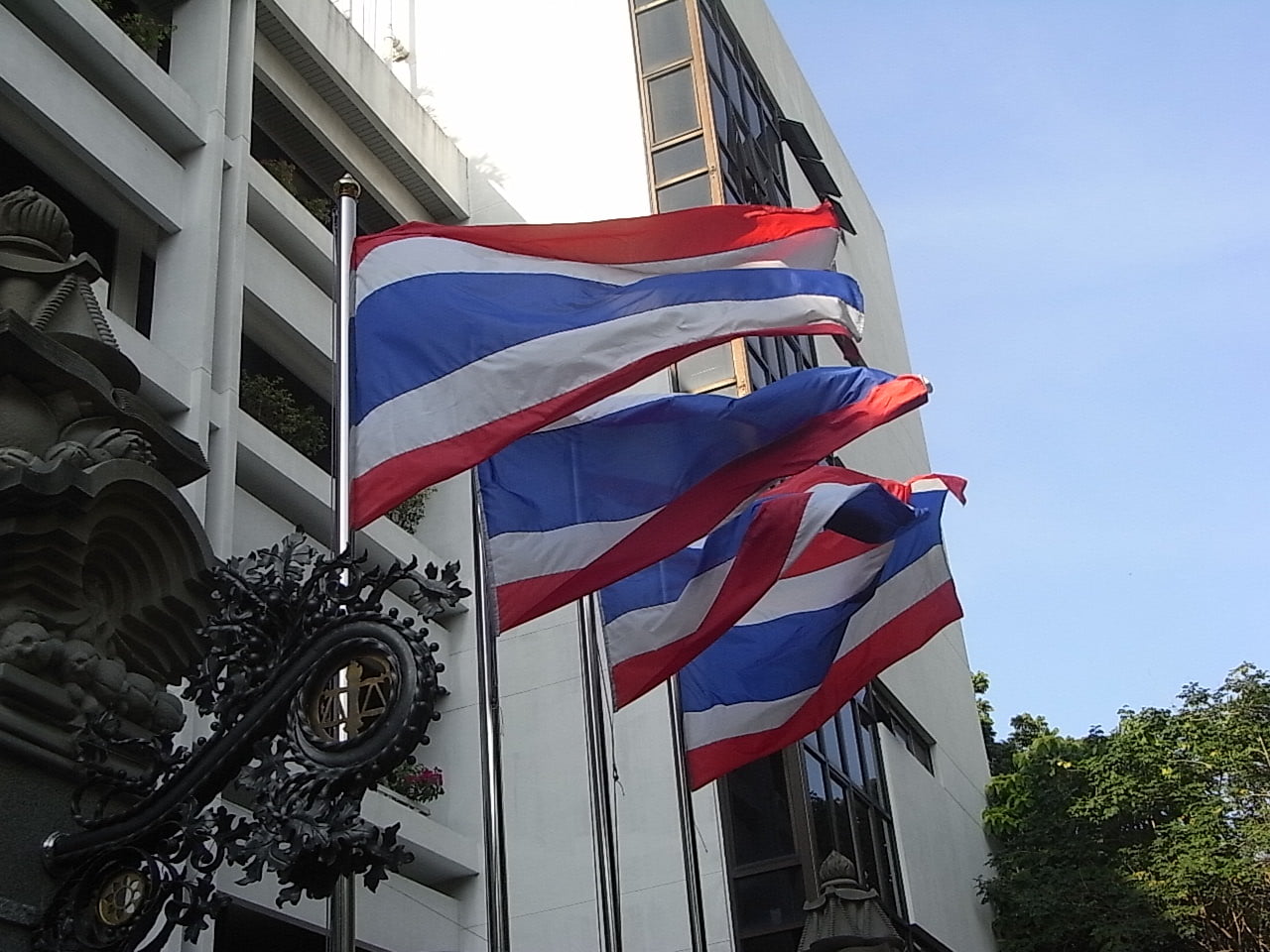
New partnership with Thailand, an opportunity to shine a light on human rights violations

Prime Minister Scott Morrison announced that Australia would be ‘elevating’ its relationship with Thailand to that of a ‘Strategic Partnership’.

The Prime Minister stated that the new partnership will ‘enhance cooperation in key areas, including defence and security, cyber affairs, anti-money laundering and combating transnational crime’.

The partnership must have human rights at its heart; Amnesty International has serious concerns in regards Thailand’s ongoing crackdown on freedom of expression and assembly, use of death penalty, impunity issues, and crackdown on freedom of association and right to privacy must be addressed.

Amnesty International has written to the Foreign Minister, Senator Marise Payne, asking her to use this partnership as a way to shine a light on these human rights violations.

Submission: Custodial Inspector (OPCAT) Amendment Bill 2020 (Tas.)

On 21 December 2017, Australia ratified the Optional Protocol to the Convention against Torture and other Cruel, Inhuman or Degrading Treatment or Punishment (OPCAT), coming into force on 20 January 2018.

OPCAT requires each state to nominate a body or bodies to fulfil the role of a National Preventive Mechanism (NPM). 

The Tasmanian Government intends to introduce legislation proposing amendments to the Custodial Inspector Act 2016 that will nominate the Custodial Inspector to fulfil the role of the NPM. It has sought feedback on the Custodial Inspector Amendment (OPCAT) Bill 2020.

The Custodial Inspector Amendment (OPCAT) Bill is a good foundation for the Tasmanian government’s approach to establish a National Preventative Measure. As it stands though, there are several gaps in the bill when assessed against the Optional Protocol on the Convention Against Torture.

Amnesty International submits that the bill needs to be strengthened in three core areas: independence, scope and access.

Australia has vital role to play in ensuring equal access to vaccines

Commenting on Friday’s announcement that The University of Queensland and CSL COVID-19 vaccine trial has been abandoned, Amnesty International Australia campaigner Joel Mackay said:  

“Australia has a vital role to play in the equal access of vaccines, particularly in our region.

“New or expanded agreements on vaccines should include provisions for the common good, and include additional vaccines for partners in the Pacific and Southeast Asia.

“We want Australia to be the good global citizen when it comes to promoting and defending human rights, especially in the time of COVID-19.” 

Under international human rights law, countries have an obligation to work together to respond to the pandemic, and wealthier states have a special responsibility to assist states with fewer resources. But some governments have already adopted a “me first” approach that could undermine the efficacy of a future vaccine. 

“The Australian Government must outline how many ordered vaccine doses are likely required and how many will be made available to our regional partners, as well as purchasing additional to ensure that Australia is contributing towards equal access.”

Meanwhile, Amnesty International has called on governments to stop blocking a temporary waiver of some global intellectual property rules that will help boost global access to COVID-19 vaccines.

The World Trade Organization met in Geneva last week to discuss a proposal to temporarily exempt vaccines from some provisions of the Trade Related Aspects of Intellectual Property Rights (TRIPS) Agreement. The proposal would facilitate technology transfers so that COVID-19 medical products including vaccines could be produced quickly and affordably by manufacturers around the world. Higher-income countries have already made deals to buy up the vast majority of the world’s potential vaccine supplies for 2021, so the move would help scale up access for people in lower-income countries. 

WTO members failed to reach an agreement on the proposal and deferred discussions to a later meeting.

Explainer: What is happening in Ethiopia’s Tigray province?

Conflict in Ethiopia’s northern state, Tigray, has continued to escalate in recent weeks, with hundreds of soldiers and civilians killed and tens of thousands of refugees fleeing to nearby Sudan. The conflict involves a dispute between regional forces in the northern region of Tigray and the national government, led by Ethiopian Prime Minister Abiy Ahmed. 

The military conflict began after months of escalating tensions when, on November 4 Abiy Ahmed ordered the Ethiopian Defence Forces (EDF) to militarily engage with regional forces in Tigray. Abiy Ahmed stated it was a response to multiple attacks by the Tigray security forces on the federal military base in Mekelle and other military camps in the Tigray Region.

Since then, there have been a number of  armed confrontations between federal forces (Federal Army, Amhara Region’s Special Force Police and Amhara local militia) on one side and the Tigray regional forces (Tigray Special Force Police and militia) on the other. 

There has also been news of a confirmed massacre in Mai Kadra, a town in the South West Zone of Ethiopia’s Tigray Region on the night of 9 November, where scores of casualties have been recorded. However, due to an ongoing internet shutdown, information about victims of the massacre has been difficult to verify. 

Who is involved in the conflict?

The conflict has roots in an ongoing feud between regional leaders in Tigray, known as the Tigray People’s Liberation Front (TPLF), and the federal Ethiopian government, led by Prime Minister Abiy Ahmed and based in Addis Ababa. 

Ethiopia is largely split into 10 semi-autonomous states based along ethnic lines. Tigray is one of these regions in the far north of Ethiopia. Despite having a population which only makes up 6% of Ethiopia’s 110 million population, the TPLF has held a dominant position in federal politics until 2018.

The TPLF originally came to power in 1991 after toppling the military dictatorship that had ruled Ethiopia throughout the 1970s and 1980s. In 1991, the TPLF emerged as leader of a coalition of four ethno-regional parties which then governed Ethiopia, until they were replaced by Abiy Ahmed in 2018 after a series of anti-government protests. Soon after Abiy Ahmed came to power, members of the TPLF accused Abiy of unfairly removing them from government positions and targeting them in corruption prosecutions. In 2019, the TPLF withdrew from Abiy’s Prosperity Party, a coalition of ethnically based parties each in control of their own region. After this, the tension between the federal government, and the TPLF escalated and despite Abiy’s government postponing national elections due to the coronavirus pandemic, the TPLF held their own regional elections in September.

Following these elections, Abiy declared the newly elected Tigray government unlawful and in response Tigray said it no longer recognised Abiy’s administration. All-out conflict began on November 4 when Abiy ordered the Ethiopian Defence Forces (EDF) to militarily engage with regional forces in Tigray, after accusing the TPLF of attacking a federal military base in Mekelle. 

What are the main human rights concerns?

Since the conflict began more than 25,000 Ethiopian refugees have fled to neighbouring Sudan. A telecommunications blockout, and restricted access to transport routes have obstructed the access of aid groups to civilians and refugees, while also blocking information about the conflict reaching international media.

There have also been reports of over 600 civilians killed in a massacre in the town of Mai Kadra in western Tigray on November 9. Amnesty International’s Director for East and Southern Africa Deprose Muchena said: “We have confirmed the massacre of a very large number of civilians, who appear to have been day labourers in no way involved in the ongoing military offensive. This is a horrific tragedy whose true extent only time will tell as communication in Tigray remains shut down”.

What does Amnesty want to happen?

Amnesty International is calling on all parties to the conflict to prioritise the protection of civilians, and to grant access to human rights monitors and humanitarian organisations.

Tasmanian OPCAT Bill is a good foundation, but work remains

On 21 December 2017, Australia ratified the Optional Protocol to the Convention against Torture and other Cruel, Inhuman or Degrading Treatment or Punishment (OPCAT), coming into force on 20 January 2018.

OPCAT requires each state to nominate a body or bodies to fulfil the role of a National Preventive Mechanism (NPM). 

The Tasmanian Government intends to introduce legislation proposing amendments to the Custodial Inspector Act 2016 that will nominate the Custodial Inspector to fulfil the role of the NPM. It has sought feedback on the Custodial Inspector Amendment (OPCAT) Bill 2020.

The Custodial Inspector Amendment (OPCAT) Bill is a good foundation for the Tasmanian government’s approach to establish a National Preventative Measure. As it stands though, there are several gaps in the bill when assessed against the Optional Protocol on the Convention Against Torture.

Amnesty International submits that the bill needs to be strengthened in three core areas: independence, scope and access.

Morrison needs to be more ambitious at the Climate Ambition Summit

The Climate Ambition Summit, hosted by UK Prime Minister Boris Johnson, is an important milestone to the United Nations Climate Change Conference in Glasgow, 2021. Prime Minister Scott Morrison will be attending the talks virtually.

A key part of the Climate Ambition Summit is that governments will announce their revised climate pledges to the Paris Agreement.

Amnesty International Australia has written to the Prime Minister with eight recommendations that he should adopt in the leadup to the summit.

Letter to the Prime Minister Ahead of Climate Ambition Summit

On Tuesday 8th December 2020, Amnesty International Australia sent the following letter to Prime Minister Scott Morrison ahead of the Climate Ambition Summit. You can download the letter here or read it below:

8 December 2020

Hon. Scott Morrison

RE: Recommendation for Australia to enhance its climate ambition and submit a revised NDC that is human rights and 1. 5°C Compliant

Dear Hon. Prime Minister Morrison

I write to you ahead of the Climate Ambition Summit this weekend, an important milestone on the road to COP26 climate talks in 2021 and during which governments are expected to announce their revised climate pledges to the Paris Agreement.

Amnesty International Australia is heartened to learn that the Government would announce at the summit your intention to abandon plan to use Kyoto carryover credits to achieve Australia’s emissions reduction targets.

Climate change is a global human rights emergency, impacting the rights to life, food, water, health, housing, culture, among others. It disproportionately affects individuals and communities that are marginalised or subject to discrimination – including the First Nations peoples and with young people bearing the brunt of future impacts – but no one is exempt from the risks associated with climate change.

The bushfire crisis in late 2019 and early 2020 demonstrated just how real and catastrophic climate change is for Australia. This requires the Australian Government to take rapid and effective action at the national and international level to reduce emissions quickly and protect people from the impacts of the climate crisis.

Governments worldwide recognise the urgency of climate action, with Australia’s major trading partners – China, Japan, South Korea, the UK and the EU – having clear commitments to net-zero emissions and strengthening their near-term commitments. The US, under the incoming Biden administration, is set to follow.

Amnesty International calls upon Australia to:

● Announce ambitious new Nationally Determined Contributions (NDCs) at the earliest, which will align emissions reduction targets for 2030 and 2050 with the imperative to keep the increase of global average temperature as low as possible and no higher than 1.5°C above pre-industrial levels.
● Ensure that the transition towards a zero-carbon economy and a more resilient society is just, fair, human rights-consistent and reduces inequality. Such a transition is necessary to achieve the Sustainable Development Goals.
● Respect, protect and fulfil the right to information, participation and to effective remedies, as well as to freedom of expression and assembly in the design, implementation, monitoring and evaluation of the NDCs and all climate policies and strategies in line with SDG 16: peace, justice and strong institutions.
● Ensure that any COVID-19 response measures facilitate the transition away from fossil fuels and towards human rights-consistent renewable energy and a zero-carbon economy and also provide for greater social protection and the creation of green and other new jobs that deliver sustainable and decent employment for all workers without discrimination of any kind.
● Take the lead in committing to zero carbon emissions by 2030 or as soon as possible after that in your NDC, given your greater capacity and greater contribution to the climate crisis.
● Indicate a commitment to reduce emissions from all sectors, including extra-territorial emissions, and to cease overseas fossil-fuel financing.
● Substantially increase funding and support for human rights-consistent climate initiatives, including technology transfer, in less wealthy countries that would not be able to effectively mitigate and adapt to climate change themselves.
● Provide financial means, support and access to legal remedy to people whose rights have been negatively affected as the result of loss and damage caused by climate change, particularly in less wealthy countries.

We look forward to your positive attention to these matters.

Yours sincerely,

Sam Klintworth
National Director
Amnesty International Australia