Submission: Australian Labor Party National Platform 2020

Every three years – in alignment with the election cycle – the Australian Labor Party reviews its National Platform. The National Platform is a document that outlines its principles and commitments.

Amnesty International Australia has submitted its feedback to Labor’s Draft National Platform 2020. It made 48 recommendations on issues including climate justice, the right to education, the right to health, issues facing Indigenous people, issues facing LGBTQIA+ people, anti-racism, Australia’s place in the world and international issues, trade, sexual and reproductive health, and Australia’s humanitarian intake and immigration issues.

Pakistan: Surge in Targeted Killings of Ahmadis

Pakistani authorities should urgently and impartially investigate a surge in violent attacks on members of the Ahmadiyya religious community, Human Rights Watch, Amnesty International, and the International Commission of Jurists (ICJ) said today. The authorities should take appropriate legal action against those responsible for threats and violence against Ahmadis. 

Since July 2020, there have been at least five apparently targeted killings of members of the Ahmadiyya community. In only two of the cases have the police taken a suspect into custody. Pakistani authorities have long downplayed, and at times even encouraged, violence against Ahmadis, whose rights to freedom of religion and belief are not respected under Pakistani law. 

There are few communities in Pakistan who have suffered as much as the Ahmadi

Omar Waraich, Head of South Asia, Amnesty International.

“There are few communities in Pakistan who have suffered as much as the Ahmadis,” said Omar Waraich, head of South Asia at Amnesty International. “The recent wave of killings tragically underscores not just the seriousness of the threats they face, but also the callous indifference of the authorities, who have failed to protect the community or punish the perpetrators.” 

On November 20, a teenage assailant is alleged to have fatally shot Dr. Tahir Mahmood, 31, as he answered the door of his house in Nankana Sahib district, Punjab. Mahmood’s father and two uncles were injured in the attack. The police reported that the suspect “confessed to having attacked the family over religious differences.”  

Several recent attacks have occurred in the city of Peshawar, in Khyber Pakhtunkhwa province. On November 9, Mahmoob Khan, 82, was fatally shot while waiting at a bus station. On October 6, two men on a motorcycle stopped the car of Dr. Naeemuddin Khattak, 57, a professor at the Government Superior Science College, and fired five shots, killing him. His family said he had a “heated argument over a religious issue” with a colleague a day before. Jamaat-i-Ahmadiyya, a community organization, issued a statement saying Khattak had previously received threats and was targeted because of his faith. 

On August 12, Meraj Ahmed, 61, was fatally shot as he was closing his shop in Peshawar. On July 29, an alleged 19-year-old assailant killed Tahir Ahmad Naseem, 57, inside a high-security courtroom. Naseem was facing trial for blasphemy accusations. In a video that circulated on social media, the suspect states that Naseem was a “blasphemer.”  

Successive Pakistani governments have failed to protect the human rights and security of the Ahmadiyya community. The penal code explicitly discriminates against religious minorities and targets Ahmadis by prohibiting them from “indirectly or directly posing as a Muslim.” Ahmadis are banned from declaring or propagating their faith publicly, building mosques, or making the Muslim call for prayer. 

The authorities arbitrarily arrest, detain, and charge Ahmadis for blasphemy and other offenses because of their religious beliefs. The police have often been complicit in harassment and bringing fabricated charges against Ahmadis or have not intervened to stop anti-Ahmadi violence. The government’s failure to address religious persecution of Ahmadis has facilitated violence against them in the name of religion.  

“Pakistan was part of the consensus at the UN General Assembly that required that states take active measures to ensure that persons belonging to religious minorities may exercise fully and effectively all their human rights and fundamental freedoms without any discrimination and in full equality before the law,” said Ian Seiderman, legal and policy director at the International Commission of Jurists. “The Pakistani government has completely failed to do so in the case of the Ahmadis.” 

The Pakistani government also promotes discriminatory practices against Ahmadis. For example, all Pakistani Muslim citizens applying for passports are obliged to sign a statement explicitly stating that they consider the founder of the Ahmadi community an “imposter,” and consider Ahmadis to be non-Muslims. 

Pakistani laws against the Ahmadiyya community violate Pakistan’s international legal obligations under the International Covenant on Civil and Political Rights (ICCPR), which Pakistan ratified in 2010, including the rights to freedom of conscience, religion, expression, and association, and to profess and practice one’s own religion.  

Independent experts of the United Nations Human Rights Council, including the special rapporteurs on the freedom of religion or belief and the UN special rapporteur on minority issues, and the special rapporteur on extrajudicial, summary or arbitrary executions, have previously expressed concern at the persecution of the Ahmadiyya community in Pakistan.  

“Pakistan’s federal and provincial governments should take immediate legal and policy measures to eliminate widespread and rampant discrimination and social exclusion faced by the Ahmadiyya community in Pakistan,” said Patricia Gossman, associate Asia director at Human Rights Watch. “The government should repeal the blasphemy law and all anti-Ahmadiyya provisions.”  
KYLIE MOORE-GILBERT RELEASE WELCOME; OTHERS IMPRISONED ON POLITICAL CHARGES MUST NOW BE RELEASED

Amnesty International Australia today welcomed the confirmation that British-Australian academic Kylie Moore-Gilbert has been released from detention in Iran.

“We were always extremely concerned that Kylie was imprisoned solely for exercising her right to freedom of expression and association – including through her work as an academic – and it’s an enormous relief to hear of her release,” Amnesty International Australia Individuals at Risk campaigner, Rose Kulak, said.

“Her allegations of torture and other ill-treatment, including through prolonged solitary confinement, must be independently and effectively investigated by the Iranian authorities and anyone found responsible brought to justice in fair trials.

“The Australian government has been working hard on Kylie’s case, and we urge Foreign Minister Marise Payne to keep up the diplomatic efforts for Australians in other countries imprisoned on what appear to be politically motivated charges..

“Amnesty implores the Australian government to pursue all means possible to bring other Australians overseas home, including Yang Hengjun who is imprisoned in China, and Chau Van Kham who is imprisoned in Viet Nam.”

‘Temporary’ reveals the lives of refugees trapped in uncertainty

The stories of people seeking asylum are supposed to end. But in Australia, people who arrive by boat are seldom able to finish their story. Explore Temporary, a new project from UNSW’s Kaldor Centre, and meet men and women who became Australia’s legacy caseload’.

Temporary is powerful personal stories, each vividly illustrated by photographers and artists who themselves are refugees and people seeking asylum. Temporary is also an eight-episode podcast, co-produced with Guardian Australia and UNSW’s Centre for Ideas. 

Their journeys come to life in a storytelling hub produced by the Kaldor Centre for International Refugee Law, vividly illustrated by refugee artists and photographers, and their voices rise from an eight-episode narrative podcast series by UNSW Centre for Ideas, co-produced with Guardian Australia, which will syndicate select episodes in its ‘Full Story’ podcast. 

The podcasts are hosted by Sisonke Msimang, a writer whose own family was granted asylum in Canada. Now living in Australia, Msimang says, “The stories of refugees and people seeking a better life, just like my family, really matter to me – and the stories in ‘Temporary’ reveal the inhumanity of a system that goes to extraordinary lengths to thwart the ambitions of regular people fleeing harm.”  

Temporary’ lays bare a system designed to deter people fleeing danger and seeking protection in Australia. It offers rare access, enabled by the Refugee Advice and Casework Service (RACS) based at UNSW, to people with lived experience of the system. They let us in on what it’s like to suddenly have to leave home without saying goodbye, to face an interview that seals your fate, to be separated from family indefinitely or stuck in judicial purgatory. To try to stay hopeful. 

The first story, ‘A legacy of endless limbo’, traces Australia’s stop-the-boats politics to today’s punitive policies keeping people in uncertainty.

Explained: Reproductive rights under threat in Poland

Peaceful protesters against the new restrictions on abortion in Poland have faced excessive use of force by police officers, and have been arbitrarily detained without access to lawyers. Protests began on October 22nd after Poland’s constitutional tribunal ruled abortions due to foetal defects as unconstitutional. 

What are the abortion laws in Poland?

Poland has one of Europe’s most restrictive abortion laws. Under Polish law, abortion is only legal when it is the result of rape or incest, threatens the life of the woman, or in cases of a severe and irreversible defect or incurable illness that threatens the foetus’ life. 

Recently, Poland’s constitutional tribunal – the highest Polish court – ruled that abortions due to foetal defects are unconstitutional and therefore illegal. As the majority of the small number of legal abortions carried out in Poland are due to foetal defects, this has been viewed as an almost total ban on abortion in Poland. 

What does Amnesty think should happen?

Amnesty International is urging the EU and other international actors to speak in solidarity with Polish women by calling on Poland to uphold women’s rights and protect the right to protest. 

Draginja Nadazdin, Director of Amnesty International Poland, said: “Women in Poland are living under one of the strictest regimes in Europe in terms of access to abortion. Their right to protest against these restrictions must be upheld. The police must facilitate those wishing to protest peacefully in support of women, including by safeguarding protesters against harassment and violent attacks by counter-demonstrators”.

Afghan and Australian human rights groups welcome release of the Brereton Afghanistan Inquiry

Afghan and Australian human rights organisations have welcomed the release of the report of the Inspector-General of the Australian Defence Force Afghanistan (IGADF) Inquiry, led by Justice Paul Brereton, into alleged war crimes by Australian special forces in Afghanistan and have called on the Australian Government to now move swiftly to implement its recommendations and establish a proper redress mechanism for victims.

The report, the result of a four year inquiry, found evidence of grave human rights violations by Australian special forces soldiers, including the alleged executions of 39 Afghan civilians and prisoners, deliberate cover-ups and abuse. It has made 143 recommendations, including that 53 incidents involving 19 soldiers be referred to the Office of the Special Investigator for criminal investigation, and that the families of the victims be compensated. It has also made numerous recommendations aimed at transforming the “warrior-hero” culture and accountability mechanisms within the SAS, including strengthening reporting mechanisms and protections for whistleblowers.  

Horia Mosadiq, Executive Director at the Conflict Analysis Network, said: “We welcome the forthcoming criminal investigations into the allegations of war crimes by Australian special forces in Afghanistan, and the release of the much overdue report. What is important is not only justice and accountability for the victims, but that this process should lead to the elimination of a culture of cover-up and self-policing by the military. We hope and expect that Afghan victims are able to participate in the process and have the chance to be heard. We deserve justice and accountability and an end to the culture of impunity and secrecy which has defined the conflict in Afghanistan, always at the expense of its people.”     

Hadi Marifat, Executive Director at the Afghanistan Human Rights and Democracy Organization said: “Although the release of the report and commencement of investigations will mark the beginning of a process of closure, nothing other than bringing to justice those responsible for unlawful killings and unlawful treatment can better heal the open wounds of the families of the victims.” 

“What is missing in the report are any concrete recommendations of a support mechanism for the Afghan victims and their families. The Australian Government must consider providing meaningful and adequate counselling and reparations to the victims and their families, including through the establishment of a redress compensation scheme. Afghan victims must be consulted.” 

Rawan Arraf, Principal Lawyer and Director at the Australian Centre for International Justice, said: “We are still processing the enormity and scale of the incidents, the details of these horrific crimes against people we were supposedly trying to protect. The utter dehumanisation of the Afghan people and victims is palpable. What happens next is absolutely critical. The Office of the Special Investigator must conduct full and thorough investigations, including of incidents where the Inquiry found allegations or rumours were unsubstantiated. There are many incidents that were not recommended for referral. There is insufficient transparency in the report as to why. The OSI should be free to reopen those matters and determine for itself.”

Tim O’Connor, Campaigner at Amnesty International said: “That 39 murders have been identified in this report is horrifying and shameful to all Australians. The evidence provided on these murders must be investigated independently and transparently and those responsible must be held accountable. Stripping service medals is not adequate. Justice must not be seen to be done – but must be done.

“The full impact upon the families and communities of these 39 murder victims must be fully explored and appropriate support provided to those families and communities. Reparations are also a crucial element of restoring justice to these innocent people that Australian soldiers were there to protect.”

Keren Adams, Legal Director at the Human Rights Law Centre, commented: “The alleged atrocities and the cavalier disregard for the lives of Afghan civilians and prisoners detailed in this report are profoundly confronting and a moment of national shame. One of the most disturbing aspects of this case is just how long it has taken for these crimes to come to light and the many attempts to intimidate and prosecute those who have spoken out about them. No whistleblower should face prison for exposing potential war crimes and no journalist should ever fear prosecution for doing their job.”

Matt Tinkler, Deputy CEO and Managing Director International Programs, Save the Children Australia said “We know that all wars are wars against children, but it is truly devastating to learn that there have been atrocities committed against children by Australian soldiers. Australia’s vigorous response to these heinous findings will demonstrate our nation’s commitment to upholding international humanitarian law, including the protection of children in war.”

Dr Sue Wareham, President of the Medical Association for the Prevention of War said: “The Brereton report’s recognition that there is much more to uncover makes it imperative that an exhaustive process of investigation, with prosecutions where needed, be implemented.” 

“MAPW calls for the dropping of criminal charges against military lawyer David McBride, who was instrumental in bringing ADF war crimes in Afghanistan to light. To continue the politically-motivated charges against him after Justice Brereton has reported on these same crimes would be absurd.”

Kerry Weste, President of Australian Lawyers for Human Rights said, “Allegations of deliberate, repeated and targeted war crimes by Australian SAS Soldiers causing the deaths of 39 innocent civilians and prisoners of war are extremely serious and, if proven, constitute grave breaches of international humanitarian law. Any culture within the ADF that has no regard for the value of human life must be addressed. Those responsible, including in the chain of command, must be held to account and the Australian Government should move to ensure that whistleblowers and journalists are protected for speaking out and reporting on matters so clearly in the public interest.”  

Qatar must not drop the ball on workers’ rights

Qatar must strengthen enforcement of its labour reforms and end impunity for abusive employers if it is to fully deliver on its promises to protect workers’ rights, Amnesty International said today.

Since being awarded the 2022 FIFA World Cup, Qatar has faced increased scrutiny over its record on migrant workers’ rights. With two years to go until kick-off, Amnesty International has released a new analysis of Qatar’s progress on reforming its labour system. The organization welcomed recent reforms, but warned that the reality for many migrant workers will remain harsh unless further action is taken to guarantee wages, ensure access to justice, and protect domestic workers from exploitation.

“In recent years Qatar has introduced a series of major reforms, including amending laws to give workers freedom of movement and allow them greater job mobility. It has also promised better pay and access to justice in cases of abuse. But many migrant workers have not yet benefited from these changes. Until these reforms are fully enforced, many will remain trapped in a cycle of exploitation,” said Steve Cockburn, Head of Economic and Social Justice at Amnesty International.

“Positive reforms have too often been undermined by weak implementation and an unwillingness to hold abusive employers to account. Inspection systems are inadequate to detect abuse, and it remains challenging for workers to lodge complaints without risking their income and legal status. Qatar needs to do much more to ensure legislation has a tangible impact on people’s lives.”

Since 2017, Qatar’s government has introduced a number of reforms aimed at benefiting migrant workers. These include a law regulating working hours for live-in domestic workers, labour tribunals to facilitate access to justice, a fund to support payment of unpaid wages, and a minimum wage.

Qatar has also abolished laws requiring migrant workers to seek their employers’ permission to change jobs or leave the country, and ratified two key international human rights treaties, albeit without recognising the right to join a trade union. If properly and fully implemented, these reforms could help end the most problematic aspects of the kafala sponsorship system and enable migrant workers to flee abusive working conditions and seek redress. However, thousands of workers continue to be subjected to labour abuses. 

For example, a recent report by Amnesty International documented how domestic workers in Qatar continue to work around 16 hours a day with no day off, despite the introduction of a law stipulating a ten-hour limit and a weekly rest day. Women interviewed for the report described horrendous verbal and physical abuse, and none had seen their employers held to account.

In another investigation, Amnesty International documented how around 100 migrant workers employed on a construction project for a World Cup stadium worked for up to seven months without pay, despite the authorities being aware of the issues for nearly a year. Although most workers have now been paid most of what they owed following publication, the case highlighted continuing failures by both the Qatar authorities and FIFA to provide timely remedy to workers.

To address the persistent power imbalance between employers and migrant workers, and move closer to delivering on its commitments, Qatar needs to better implement current reforms and introduce further ones, strengthen inspection mechanisms to quickly detect and stop abuses, improve workers’ ability to access justice and remedy, end the culture of impunity for abusive employers, and respect the right of migrant workers to form trade unions. It should ensure a particular focus on strengthening protections for domestic workers, who have so far been left behind by many of the reforms.

“Holding perpetrators to account is paramount to end the cycle of abuse. Qatar must show abusive employers that their actions have consequences, by monitoring their adherence to laws and penalizing employers who break them. It’s time for Qatar to send a clear signal that labour abuses will not be tolerated,” said Steve Cockburn.

As the World Cup organizer, FIFA also has a responsibility to ensure human rights are respected in the context of preparing for and carrying out the tournament. This includes an obligation to hold its World Cup partners to account and use its clout to push Qatar to fully reform its labour system.

With this in mind, Amnesty International offices in more than 20 countries are writing to their national football associations urging them to play an active role in ensuring the rights of migrant workers. Football associations should call on FIFA to use its voice, privately and publicly, to urge the Qatar government to fulfil its programme of labour reforms before the World Cup kicks off.

Australia must raise human rights concerns at G20

Australian Prime Minister Scott Morrison has the opportunity to lead on human rights concerns by raising them with leaders at the G20 Summit under Saudi Arabia’s presidency, which will be held virtually. 

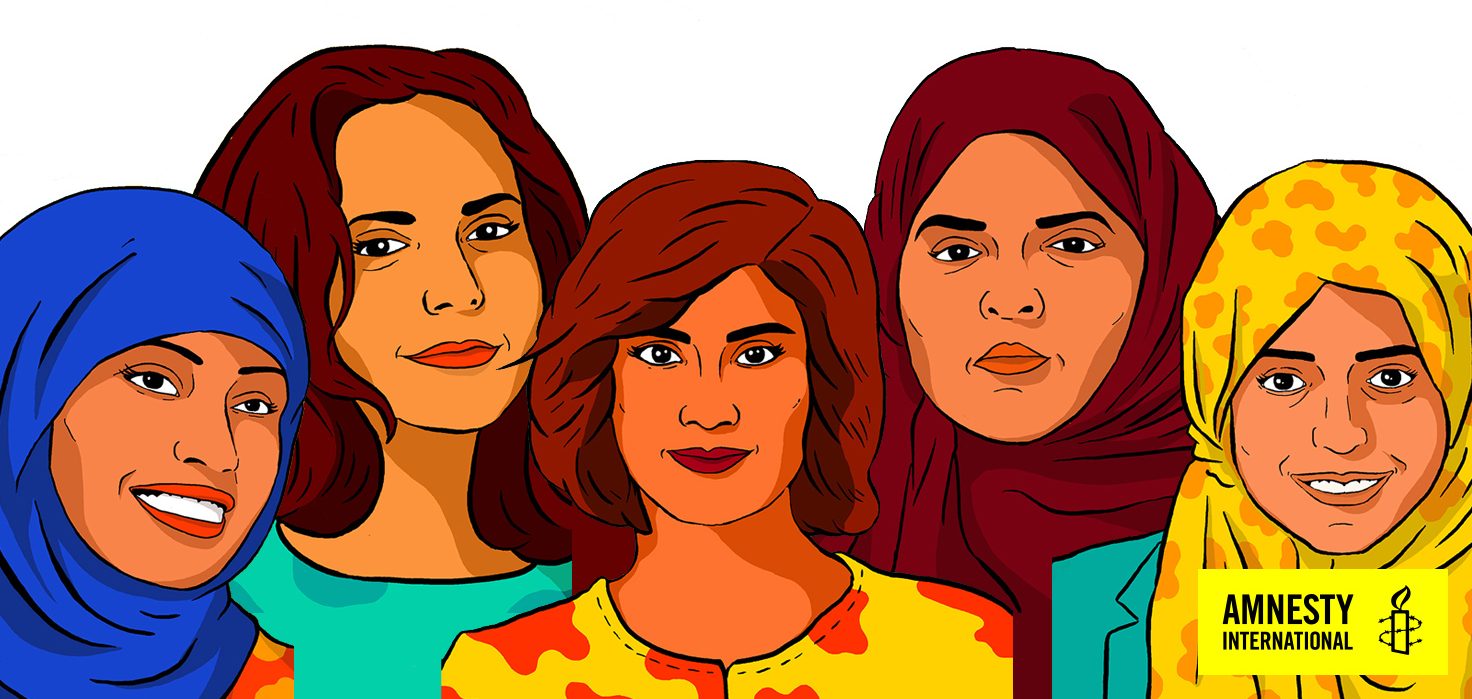
Amnesty and the Gulf Institute for Democracy and Human Rights (GIDHR) have also written to the Saudi ambassador to Australia, Messaad Ibraham al-Sulaim, to call for the release of 5 women human rights defenders, presenting him with more than 40,000 signatures supporting their release.

Amnesty International Australia National Director Sam Klintworth said: “The arrest and ongoing detention of women human rights defenders in Saudi Arabia for their beliefs and activism is a gross violation of human rights. With the world’s attention on Saudi Arabia in the lead-up to the G20 Leaders Summit, now is the time for the Saudi government to free these activists.”

The arrest and ongoing detention of women human rights defenders in Saudi Arabia for their beliefs and activism is a gross violation of human rights. With the world’s attention on Saudi Arabia in the lead-up to the G20 Leaders Summit, now is the time for the Saudi government to free these activists.

Amnesty International Australia National Director, Sam Klintworth

The GIDHR’s Fatima Yazbek said: “We are seriously concerned regarding the physical and mental health of the detained female activists behind the Saudi bars. Those courageous women who fought bravely for the rights and freedoms of their fellow citizens and paid an expensive bill rather than being honoured.

“We urge the Saudi authorities to release those detained female activists, to ensure their rights, freedoms, well-being and safety are protected, and to protect the Saudi women who express their opinions and demand their rights online or through other forms of activism.”

Australia can also leverage its influence by advocating on human rights issues in countries in our region including G20 members, India and China, and guests, Viet Nam.

“Prime Minister Scott Morrison has an opportunity to put human rights on the same footing as economics by raising concerns on issues such as the case of Australian Vietnamese retiree Chau Van Kham who is in prison for 12 years in Viet Nam, the treatment of Uyghurs in Xinjiang, the murder of Jamal Khashoggi and the human rights abuses in the disputed territory Jammu and Kashmir,” Klintworth said.

Stranded Aussies must be brought home by end of 2020

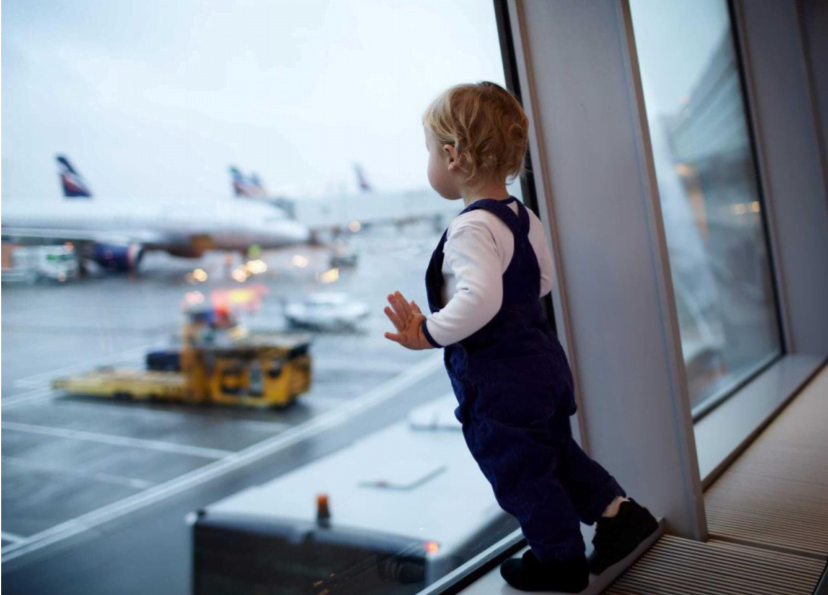
Amnesty International Australia has today published a report highlighting the stories of some of the 35,000 Australians stranded overseas due to border closures and the Federal Government’s cap on returns.

Amnesty has gathered stories from several Australians stranded overseas, desperate but unable to return. Among them is Lynne who has been stranded in the UK since she left to be with her dying mum, who has since passed away.

Her 13-year-old son has Autism Spectrum Disorder and anxiety and her being stuck in Scotland is taking its toll on him. Although she counts herself lucky that she has been able to get accommodation and borrow money from friends, her son needs her home.

Lynne also has major health concerns that were being closely monitored at home that are now going unchecked. She needs to return to Australia as soon as possible.

“Lynne’s story is just one of many distressing accounts we’ve gathered which shows the impact of the government caps on returns,” Amnesty International Australia Campaigner, Joel Mackay, said.

“The Prime Minister promised to get the stranded Aussies home by Christmas. This is a promise that looks certain to be broken. The piecemeal approach to bringing people home needs to be supercharged. More quarantine spaces, home quarantine, more repatriation flights: this is what will bring Aussies home.”

The Prime Minister promised to get the stranded Aussies home by Christmas. This is a promise that looks certain to be broken. The piecemeal approach to bringing people home needs to be supercharged. More quarantine spaces, home quarantine, more repatriation flights: this is what will bring Aussies home.

Amnesty International Australia campaigner Joel Mackay.

“It’s a difficult situation for certain, but we have recommended a seven point plan which provides a workable solution to ensure the Australian government can meet its obligations under international law and avoid violating the human rights of these people who are so desperate to return.

The Australian government should:

  1. Support all states and territories to increase the capacity of their existing hotel quarantine programs. This means more hotel rooms so that more people can quarantine.
  2. Adopt a home quarantine program. Where safe to do so, allow returning Australians to quarantine at home for two weeks, with checks from the authorities to ensure compliance.
  3. Use federal quarantine facilities to allow people to isolate.
  4. Significantly raise, or remove, the cap on the amount of Australians who can return home per week.
  5. Work with the airlines to maximise the number of flights coming to Australia, and to prioritise returning Australians safely.
  6. Charter additional repatriation flights, including using RAAF resources if necessary.
  7. Open Melbourne Airport and airports other than Sydney, Perth, Adelaide and Brisbane to cater for an increased number of returning Australians.