My New Neighbour Activist Resources

My New Neighbour: a way to bring refugees to Australia safely. 

We’re mobilising towns and communities in advocating for a fairer community sponsorship program for refugees. A fairer sponsorship program would allow everyday Australians and their communities to support refugees in coming to Australia and settling into the community.

By growing visible support in your community for an improved community sponsorship program (CSP) and lobbying your local council to show their support, we will send our government a clear message: our communities are serious about creating safe ways for people to rebuild their lives in Australia.

What is Community Sponsorship?

Check out this explainer video!

My New Neighbour Conversation Series toolkit

Organise a My New Neighbour ‘Stories’ Event

(PDF, 595Kb)

This guide has all the information you need to be part of Amnesty’s ‘My New Neighbour Stories’ events happening around Australia. By helping to share the stories of welcoming communities around Australia, you will be part of Amnesty’s global movement to create supportive pathways for refugees to reach safety.

Other resources

My New Neighbour campaign toolkit

Download the My New Neighbour campaign toolkit

Getting local allies 

These one-page guides are an easy tool you can use to help you get your schools, councils and sporting clubs on board.

schools sporting clubs local COUNCILs 

Ready to get your local council on board? Check out the guides specific for getting your councillors to pass a motion supporting an expanded and improved community sponsorship program.

 local COUNCIL GUIDE council motion template

It’s important to show the community support for this issue so working with local media to showcase sporting clubs, schools and local councils supporting the campaign is important and helps get more community support for CSP.

Media tips media release template 

Get people to show their support for the program. Ask them to sign and share the petition and make public statements about their support for the campaign. Use the ‘What is CSP’ flyer at events and stalls where people want more detailed information about the program, the ‘general’ flyer is very top line information about the campaign that is a good easy handout.

petition FAQS what is CSP flyer for events General flyer for events

Posters and signs (right click on the image to download)


Host an event for My New Neighbour!

For further support and resources, make sure you log your event.

Didn’t find what you were looking for? Contact the Supporter Care Team at activism@amnesty.org.au. 


Morrison Government must ramp up efforts to tackle climate change following US election and support Zali Stegall’s call for a conscience vote

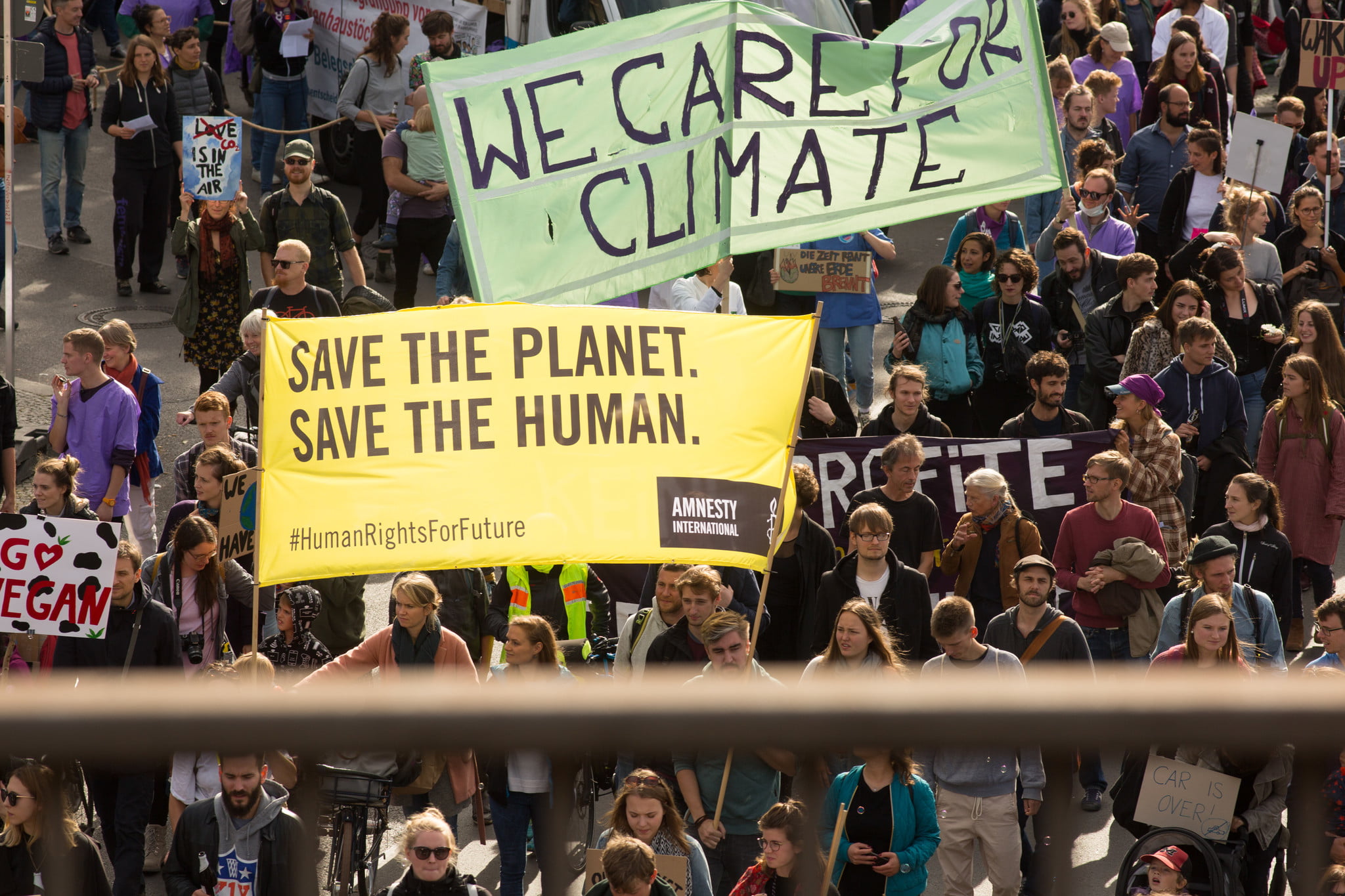
Following comments over the weekend from US President-Elect, Joe Biden, that he has been given a clear mandate from the American people to tackle climate change, Amnesty International is asking the Australian Government to step up, align itself with the rest of the world and take clear, decisive action on climate change, one of the greatest human rights challenges the world has ever faced.

It is time for Australia to join not only the US but also its major trading partners, including China, Japan, the UK, the EU, who have all committed to net-zero emissions. While the rest of the world is lifting its game, Australia right now stands with the world’s major polluters by refusing to take meaningful actions.The introduction of a Climate Change Bill by Independent MP for Warringah, Zali Steggall, is a strong step in the right direction and Amnesty fully supports her call for a conscience vote on the issue.

Amnesty International Australia Campaigner, Joel Mackay, said: “On the international front with the election of Joe Biden in the US, Australia’s closest ally is now firmly focused on tackling climate change head on, before it’s too late. Australia must do the same – turning down cooperation on climate change, is akin to deprioritising the incredibly important relationship that we have with the US. To delay will have catastrophic consequences for the human rights of us all,, in particular Indigenous people and our neighbours and friends in the Pacific.

“On the domestic front, the Prime Minister has the opportunity to tackle climate change by working with Zali Steggall and other members of parliament, right now. He can rise above the rhetoric of a ‘technological’ approach to climate change, and get real solutions started, now.” 

What is the #EndSARS movement?

Since the beginning of October, thousands of Nigerians have been marching in peaceful protests against police brutality as part of the #EndSARS movement. The #EndSARS movement aims to draw attention to human rights violations committed by the Special Anti Robbery Squad (SARS), a unit of the Nigerian police tasked with fighting violent crimes. 

Since protests began on October 8, 2020 at least 56 people have died across the country. In multiple cases, the security forces have used excessive force in an attempt to control or stop the protests. Victims include protesters and others who were allegedly hired by the authorities to confront the protesters. 

What is SARS?

The Special AntiRobbery Squad (SARS) is a unit of the Nigerian police created in 1992, and tasked with fighting violent crimes such as robbery and kidnapping. SARS has been documented as committing widespread human rights violations including extrajudicial executions, torture and other ill-treatment, rape and extortion by officers of the SARS. In June 2020, Amnesty International released Nigeria: Time to End Impunity a report containing 82 interviews detailing cases of abuse by SARS from January 2017 to May 2020. 

Despite promises of reform and accountability for violations by the Nigerian government, SARS officers continue to subject detainees in their custody to torture and other forms of ill-treatment.

What is the #EndSARS movement?

In late 2017, Nigerian human rights defenders and activists launched a massive campaign tagged #EndSARS. The campaign was aimed at drawing attention to human rights violations committed by SARS, as well as calling for good governance and an end to police brutality.

The movement saw a surge in October 2020, when hundreds of Nigerians have been taking to the street in peaceful protests. Through videos and photos on social media, others shared horrendous stories of SARS officers abusing their victims. 

What happened on the 20th October?

On the evening of 20th October, 12 peaceful protesters were killed and hundreds severely injured when the Nigerian army and police open-fired into a crowd of #EndSARS protesters at Alausa and Lekki Toll Gate Lagos. Witnesses at Lekki told Amnesty International that soldiers arrived and opened fire without warning. Eyewitnesses at Alausa protest ground said they were attacked by a team of soldiers and policemen from the Rapid Response Squad (RRS) Unit, leaving at least two people dead and one critically injured.  

Amnesty International also received reports that shortly before the shootings, CCTV cameras at the Lekki toll gate, where #EndSARS protesters had been camped for two weeks, were removed by government officials and the electricity was cut – a clear attempt to hide evidence. As in previous cases documented by Amnesty International, some of those killed and injured at both grounds were allegedly taken away by the military. 

What does Amnesty think should happen?

Amnesty International is calling on the Nigerian authorities’ to end their attempts to cover up the Lekki Toll Gate massacre, and is calling on Nigerian authorities to bring to justice those behind the shooting and to protect those who are exercising their right to freedom of assembly. 

Amnesty International also urges the Nigerian authorities to ensure that measures are taken to immediately end the practice of torture and ill-treatment by the SARS; implement the Anti-Torture Act (2017), and ensure that all allegations of torture and other ill-treatment are promptly, thoroughly, independently and impartially investigated and, where sufficient admissible evidence exists, prosecute those suspected of criminal conduct in fair trials irrespective of their rank and status.

Solomon Islands blocks bauxite mine in victory for Wagina islanders who feared for livelihoods

The Solomon Islands Minister of the Environment has upheld a decision that had refused the development of an open-cast bauxite mine on Wagina Island.

“This is a hard-won victory for Wagina Island residents who rely on their island and waters around the proposed mining site for their livelihoods,” said Richard Pearshouse, Amnesty International’s Head of Crisis and Environment

Environmental decisions are always better when local communities are adequately consulted.

Amnesty International Head of Crisis and Environment, Richard Pearshouse.


“The Minister has heard their concerns loud and clear: environmental decisions are always better when local communities are adequately consulted. When Amnesty International conducted research on the ground in 2019, many community members said they did not feel sufficiently informed or consulted about this mining proposal.”

Background

Wagina Island is a remote island of approximately 80 km2 in north-west Choiseul Province. Its residents are originally from Kiribati, having been relocated in the early 1960s by the British colonial administration. Estimated at around 2,000 people, they live by subsistence farming, fishing and seaweed farming.

In December 2019, following an investigation on Wagina Island, Amnesty International called on the Minister of the Environment to conduct face-to-face consultations with local communities to hear their concerns before deciding the fate of a proposed open-cast bauxite mine. Residents told Amnesty International that they were concerned about the possible impacts from mining on fishing and sea-weed farming from mine run-off or disturbances to fresh groundwater discharges into the sea.

The Ministry of Environment had granted Solomon Bauxite Limited (SBL) a permit to mine there in 2013. The next year, Wagina Island residents fought the decision, eventually winning a Supreme Court stay on the mine’s development until the matter was further scrutinized. In March 2019, the Environmental Advisory Committee overturned the mining licence, after residents raised fears it could impact livelihoods on the island.

The Minister’s latest decision comes in response to an appeal from SBL to overturn that March 2019 move.  

What’s happening in Armenia and Azerbaijan?

On July 14th, an escalation in conflict at the Armenia – Azerbaijan border resulted in at least 16 deaths, and reignited a generations-long conflict between the two nations.

By the end of September this erupted into heavy fighting which in recent weeks has led to thousands of civilians being displaced as both sides continue to exchange artillery and rocket fire, despite attempts to broker an end to hostilities. 

Is this a new conflict?

The history of this conflict is centred on the territory of Nagorno-Karabakh, a region located within Azerbaijani territory but with a majority ethnic Armenian population. 

Ownership of the territory has been contentious for centuries, but erupted into war between Azerbaijan and Armenia in the early twentieth century when territorial disputes in the Southern Caucuses were intensified by the 1917 Russian Revolution and World War One. 

After both nations came under Soviet control, these disputes largely came to a stand-still, until tensions were reignited in 1988 when Armenians of Karabakh lobbied to leave Soviet Azerbaijan and join Armenia. 

Large-scale violence broke out in 1991 when Nagorno-Karabakh declared independence from Azerbaijan, and the dissolution of the USSR left Armenia and Azerbaijan as two independent nation-states. A fragile ceasefire was declared in 1994 after tens of thousands deaths and the displacement of hundreds of thousands, mostly ethnic Azerbaijani.

Despite the ceasefire there have since been a number of hostilities and skirmishes both in Nagorno-Karabakh and recently along the Armenia-Azerbaijan border.

What are the main human rights concerns?

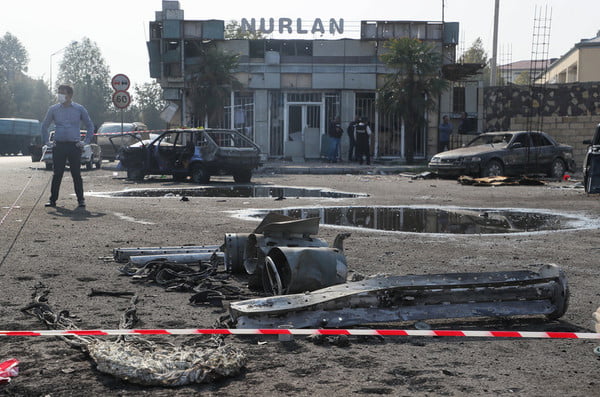
There are a number of human rights concerns that have come to light during the most recent conflict. The main concern is the number of civilian casualties and damage to civilian buildings and infrastructure. This is largely due to the use of cluster bombs.

Cluster bombs are weapons which scatter hundreds of bomblets, or submunitions, over a wide area. It is estimated that between 5 and 20 per cent of cluster bomblets fail to explode. They are then left behind, posing a threat to civilians similar to that of anti-personnel landmines. 

The use of these bombs violates the prohibition of indiscriminate attack and are internationally banned by a treaty backed by more than 100 states

Civilian casualties and severe damage to civilian buildings have been reported most notably in the city of Ganja in Azerbaijan, as well as in the Armenia-controlled Nagorno-Karabakh region. Photo and video evidence reveals devastating damage to hospitals, schools and vital infrastructure.

Other concerns include restrictions to internet access by the Azerbaijani government. And concern over freedom of expression after the arbitrary detention of Giyas Ibrahimov, an activist and former prisoner of conscience, by Azerbaijani security services. 

What does Amnesty think should happen?

Amnesty International calls on the parties to the conflict to fully respect international humanitarian law, particularly the prohibition of direct attacks on civilians and civilian objects, and of indiscriminate attacks. Military forces also must take all feasible precautions to spare civilians and civilian objects.

This means that they must not use explosive weapons with wide area effects, such as artillery, in the vicinity of concentration of civilians. Amnesty also urges both sides to join the Convention on Cluster Munitions, the global treaty banning the weapons. 

Amnesty International also calls upon the international community to monitor the situation and exert every effort to ensure both sides to the conflict observe international humanitarian law. Reports of violations of international humanitarian law must be thoroughly investigated and perpetrators held accountable.

A peace deal has since been brokered in the region and Armenian refugees have begun to return to the region.

TRANS AND GENDER DIVERSE KIDS’ RIGHTS REDUCED BY USE OF A QUESTIONNAIRE

Amnesty International Australia has expressed concern over a proposal to not allow submissions into the Education Legislation Amendment (Parental Rights) Bill 2020, but rather issue a “questionnaire”.

The bill has generated concern within the LGBTQIA+ community as it seeks to deny the very existence of trans people by allowing parents to withdraw their child from a class or program which tells them LGBTQIA+ people are just like everyone else.

“Assessing the effect of the Bill by putting trans and gender diverse children’s human rights to a ‘questionnaire’ is dangerous,” said Amnesty International NSW LGBTQI Network Convenor, Lizzi Price. 

“We know that this type of consultation – such as the Australian Marriage Law Postal Survey – hurts the LGBTQIA+ community.” 

Research from the University of Sydney shows that the Survey led to increased mental stress in the LGBT community. There is no indication of the nature of the questions, nor how the questionnaire’s responses will be tabulated and considered. 

“If more than 50% of respondents support the amendments regarding trans and gender diverse students, does that mean that the Committee will support the Bill and recommend that it be passed by the Legislative Council?”

Amnesty International Australia strongly recommends that the committee allows written submissions to be accepted for this inquiry. Given the nature of the Bill, the committee should also seek specific input from trans and gender diverse children, their carers and people and organisations with expertise in supporting trans and gender diverse children.

Submission: Review of Australia’s Community Sponsorship Program

Australia can and must do more to address the global refugee crisis. Particularly in the wake of the recent Federal Budget, which cuts 5,000 places from our humanitarian intake each year over the next four years. A better program will enable communities to come together to support more people seeking safety to build their lives here and contribute to the Australian community.

Amnesty International Australia welcomes the opportunity to provide input into the Review of Australia’s Community Support Program for refugees. In our submission, we have recommended an alternative model for the program that would see considerable improvements across four key areas.

Read our submission here.

Raise the Age Coalition welcome ACT’s nation-leading step towards raising the age

The national Raise the Age coalition of medical, legal, Aboriginal-led and human rights organisations today congratulated the new ACT Labor-Greens Government on its historic commitment to change the law in the ACT and raise the minimum age of criminal responsibility. 

State and territory Attorneys-General delayed making a decision to raise the age when they met on 29 July 2020 despite the overwhelming medical consensus that locking away children as young as 10  can do irreparable, lifelong damage to their mental health and cognitive development. 

The ACT’s Parliamentary Agreement commitment to Raise the Age is an example to all states and territories that there is nothing stopping them from acting in the best interests of children and the community, and raising the age tomorrow. 

National Aboriginal and Torres Strait Islander Legal Services Co-Chair, Nerita Waight: 

“NATSILS welcomes ACT committing to Raising The Age. We commend everyone in our communities who fought hard for this through sharing their stories, signing petitions, calling their local politicians and demanding dignity for our children. The UN has recommended Australia does not imprison kids under 16, and we are lagging behind the rest of the world. While ACT leads the way we urge every state and territory to follow their lead.”

Human Rights Law Centre, Legal Director, Ruth Barson: 

“Children across Australia should be in schools and playgrounds, not prison cells. As the ACT Government shows leadership and moves closer to raising the minimum age of criminal responsibility, every other state and territory government must follow suit and change their laws so that children are no longer hauled before courts and locked away in jails”. 

Change the Record, Executive Officer, Sophie Trevitt: 

“Every day a child spends behind bars causes them harm. We hope the ACT Government’s commitment to change the law and raise the age will be an example to all the other states and territories. Governments listened to the medical experts during the Covid-19 pandemic and saved countless lives. Now we must listen to the medical experts from the Australian Medical Association, Public Health Association of Australia, Royal Australian College of Physicians and the Australian Indigenous Doctors Association who have called for an end to the criminalisation and incarceration of young children.”  

Amnesty International Australia, Indigenous Rights Lead, Nolan Hunter: 

“All states and territories must work to keep children out of the quicksand of the youth justice system. Raising the age is a huge step towards doing this. We all know in our hearts that it’s wrong to lock little kids up, especially when all the evidence shows that diversion and justice reinvestment is what actually prevents youth offending.”

Public Health Association of Australia CEO, Terry Slevin: 

“The PHAA welcomes the commitment by the ACT Government to raise the age of criminal responsibility – it is a really important step towards preventing significant physical and mental health impacts in children and adolescents who are incarcerated early in life. We strongly urge all states and territories to raise the age to 14 years – it is a move based on evidence and in line with international recommendations.”

Human rights warning issued to Australians travelling to the US

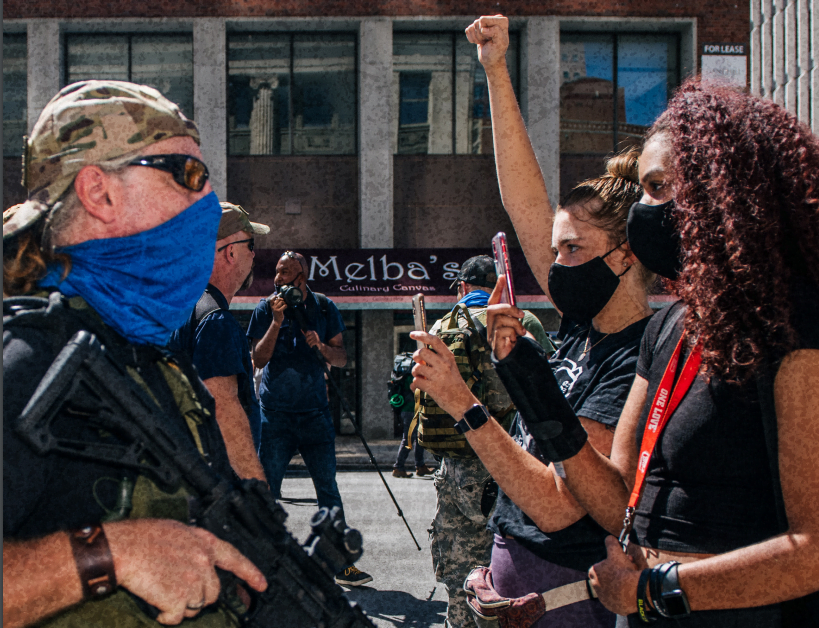
Amnesty International Australia has issued a human rights alert to those intending to travel to the United States of America as the nation faces unrest in the lead up to the November 3 election.

Last month Amnesty International released a report, Losing the Peace: US Police Failures to Protect Protesters from Violence which found law enforcement agencies across the USA are failing to facilitate people’s fundamental right to freedom of peaceful assembly, and to protect protests and counter-protests from violent disruption by armed groups, among others

The right to protest is under threat all over the world, and we’re extremely concerned about what that means during the elections in the United States, which has a proud history of change through peaceful protest.

Amnesty International Campaigner, Nikita White.

“The right to protest is under threat all over the world, and we’re extremely concerned about what that means during the elections in the United States, which has a proud history of change through peaceful protest,” Amnesty International Campaigner Nikita White said.

“This is a salient reminder that important social change comes around almost invariably through protest movements, and to stifle this right is to trample human rights more generally.

“We urge the US authorities to meticulously protect people’s human rights to freedom of peaceful assembly and expression and prohibit and prevent vigilantism by armed groups, including those who seek to intimidate protesters and voters.”

Australia’s Department of Foreign Affairs and Trade today upgraded its travel advice warning to Australians to be alert and avoid travelling to the United States, particularly to “avoid areas where protests are occurring due to the ongoing potential for violence”.

Qld voters reject discriminatory crime policies

Queensland voters have sent a clear signal to their elected officials that they need to get smart on crime and abandon policies that discriminate against the state’s most vulnerable.

The LNP’s proposal for youth curfews in the State’s north were repudiated by electors with the party not winning the seats in Townsville and Cairns they needed to form government.

“Annastacia Palaszczuk now has a mandate to reject the tough-on-crime policy announcements that marred the election campaign, and to get on with the job of protecting kids,” Amnesty International Australia Indigenous Rights Lead, Nolan Hunter, said.

“This is a great opportunity for Queensland to embrace long term solutions: diversion programs and Indigenous-led solutions to keep kids out of the justice system and address the root cause of overrepresentation in Australia’s prisons.

This is a great opportunity for Queensland to embrace long term solutions: diversion programs and Indigenous-led solutions to keep kids out of the justice system and address the root cause of overrepresentation in Australia’s prisons.

Amnesty International Australia Indigenous Rights Lead, Nolan Hunter.

“All the evidence shows that diversion, and getting kids out of watchhouses and bail houses is what’s effective on youth crime.

“Voters have shown that they’re ready for a considered and systematic approach to tackling crime, so that should give the new QLD government all the motivation they need to raise the age of criminal responsibility in line with international standards.”

Prior to the Queensland Election Amnesty International Australia issued a ‘Human Rights Agenda for the next Queensland Government’ which included an eight-point plan to improve youth justice.