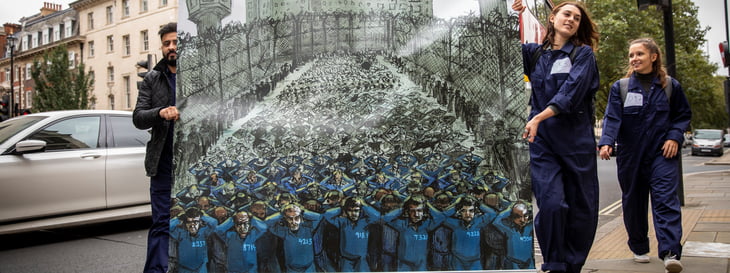
Amnesty International today published heartbreaking new testimony from relatives of 48 ethnic Uyghur and Kazakh people detained in China’s Xinjiang Uyghur Autonomous Region, as it reiterated its call for the UN High Commissioner for Human Rights to take action.
The outgoing High Commissioner, Michelle Bachelet, has yet to release a long-awaited report on serious human rights violations in Xinjiang, and has repeatedly failed to recognize the gravity of violations by Chinese authorities in the region. It is deeply disappointing that due to this delay, yet another UN Human Rights Council session will close this week without having been able to discuss the UN’s findings on Xinjiang.
The new testimony gathered by Amnesty International is part of its Free Xinjiang Detainees campaign, which now tells the stories of 120 individuals who have been swept up in China’s vast system of prisons and internment camps in Xinjiang.
“The accounts of these families offer a window into the horrors taking place in Xinjiang, which amount to crimes against humanity. Many people said they have several family members in detention, illustrating the industrial scale of the abuses – one man said 40 of his relatives had been detained,” said Agnès Callamard, Amnesty International’s Secretary General.
“The foot-dragging which has characterized the UN response to the dystopian nightmare in Xinjiang adds insult to injury for victims and survivors of China’s campaign of mass imprisonment, torture and persecution against predominantly Muslim minorities in Xinjiang since 2017. We continue to call on the Chinese government to dismantle its vast system of internment camps; end all arbitrary detention, enforced disappearances and ill-treatment whether in prisons or other locations; and end its horrific persecution of Uyghurs, Kazakhs and other minorities in Xinjiang.
“Chinese authorities must be held accountable, and a crucial step is for High Commissioner Bachelet to publish her long-delayed report that should be presented urgently at the UN Human Rights Council. Her ongoing failure to call out crimes against humanity and other serious human rights violations in Xinjiang is an obstacle to justice. It also puts the UN system to shame.”
Families torn apart
Amnesty International recently carried out in-person interviews in Turkey with exiled relatives of 48 detainees. They described how their loved ones had been arrested for “terrorism”-related or other spurious charges, apparently for things as mundane as traveling or paying for their children’s education abroad. Others appear to have been arrested solely on the basis of their religion or ethnicity.
Gulaisha Oralbay, a Kazakh woman, described what happened to her brother, Dilshat Oralbay, a retired Uyghur journalist and translator, after the Chinese authorities coaxed him into returning to Xinjiang from Kazakhstan in 2017. His passport was confiscated immediately upon his return, and he was arrested several months later.
“There is no court, they just put him in jail, [and told him it would be] for 25 years,” Gulaisha said.
“I don’t even think [he] himself knows the reason. Somebody said [it was] because he travelled to Kazakhstan, and different excuses; there is no clear justification and reason.”
Gulaisha and Dilshat’s two sisters, Bakytgul and Bagila Oralbay, are also in detention.
Abdullah Rasul told Amnesty International how his brother Parhat Rasul, a Uyghur farmer and part-time butcher, was detained and taken to an internment camp in May 2017. The family have not heard from him directly since then, but in 2018 a reliable source told them Parhat had been sentenced to nine years in prison.
Parhat’s family believes that he was arrested simply because he is an observant Muslim and was doing charity work. Family members said Parhat’s wife Kalbinur and his mother-in-law Parizat Abdugul were also imprisoned. Parhat and Kalbinur have two daughters, aged 14 and 16, and a son aged 11.
“They [the Chinese government] want to erase our identity, erase our culture, erase our religion,” Abdullah Rasul said. “I hope everyone can see clearly what is happening in our homeland.”
Medine Nazimi described how she last heard the voice of her sister, Mevlüde Hilal, at the end of 2016. Mevlüde had been studying in Turkey but, after she returned to Xinjiang to help her ailing mother, she was sent to an internment camp in 2017 and later allegedly sentenced to 10 years in prison on a charge of “separatism”. She is married and has a young daughter.
“When they took my sister, my niece, Aisha, was only one year old,” Medine told Amnesty International. “We were just going about our daily lives, and we were a happy family. My sister was taken for only one reason: it’s because she’s a Uyghur.”
People who speak out about the situation do so at great risk; several family members of detainees described being threatened by the authorities for going public.
Abudurehman Tothi, a Uyghur businessman and activist living in Turkey was interviewed by international media about his wife and mother’s imprisonment and father’s arbitrary detention. He told Amnesty International that afterwards the Chinese consulate in Turkey contacted him and threatened him with detention or death in a “car crash”.
Mountain of evidence
Since 2017, there has been extensive documentation of China’s crackdown against Uyghurs, Kazakhs and other predominantly Muslim ethnic minorities in Xinjiang, carried out under the guise of fighting “terrorism”. In 2021, a comprehensive report by Amnesty International demonstrated that the systematic state-organized mass imprisonment, torture and persecution perpetrated by Chinese authorities were crimes against humanity.
Chinese authorities have used their repressive surveillance state to try to sweep these violations under the carpet, but information continues to seep out of Xinjiang. In May 2022, several international media outlets published a joint investigation, the Xinjiang Police Files, which included a cache of leaked speeches, images, documents and spreadsheets obtained from Chinese internal police networks.
“Despite a growing body of evidence, Chinese authorities are still lying to the world about arbitrary detention on a massive scale in Xinjiang,” said Agnès Callamard.
“Amnesty International supports the joint call by dozens of UN experts to establish an independent, impartial and international mechanism. Such a mechanism must investigate crimes against humanity and other serious human rights violations committed by the Chinese government in Xinjiang. The many thousands of people still arbitrarily detained, and their families, deserve truth, justice and accountability.”
Bachelet should as a matter of urgency address the demands of the detainees’ families and indicate whether her office has been able to take any steps towards facilitating information on those detained.
Russian air strikes on an apartment block and beach resort hotel in the coastal town of Serhiivka in southern Ukraine killed at least 21 civilians, Amnesty International said today following a new on-the-ground investigation.
The strikes, apparently using anti-ship missiles, hit the town in the Odesa region shortly before 1am on 1 July, injuring at least 35 people. Five people remain in serious condition in intensive care, meaning the total death toll may rise.
“These powerful weapons were designed to destroy warships, and firing them into residential areas is extremely reckless,” said Donatella Rovera, Amnesty International’s Senior Crisis Response Adviser.
“This attack is yet another example of the Russian military’s utter disregard for civilians in Ukraine as they continue to cause needless death and destruction. All those responsible for such war crimes must face justice for their actions.”
Amnesty International visited the strike locations in Serhiivka and found no evidence of the presence of Ukrainian soldiers, weapons, or other valid military targets nearby. Satellite imagery reviewed by Amnesty International also did not indicate any military activity in the area prior to the attack.
Local government officials told Amnesty International that the weapons used in the attack were two Kh-22 guided missiles. With an estimated warhead of more than 900kg and a targeting system designed to hit ships rather than land objects, the missile is potentially extremely inaccurate, and therefore completely inappropriate for use in a populated area.
Amnesty International’s Crisis Response weapons expert found ordnance fragments consistent with a large guided missile at the scene of the strike on the hotel. Notably, the fragments contained old-style rivets, consistent with a 50-year-old weapon such as a Kh-22.
A core principle of international humanitarian law (the laws of war) is that parties to an armed conflict must at all times distinguish between civilians and civilian objects, and members of the military and military objectives. Military objectives can be targeted, but it is unlawful to target civilians or civilian objects. Prior to any attack, members of the military are required to take steps to ensure that they are reasonably certain they are not targeting civilians and civilian objects.
To date, there have been numerous examples of Russian forces routinely launching unlawful attacks in Ukraine which have killed and injured civilians, some of which may have been deliberate attacks on civilians or civilian objects.
Resort hotel strike
Just after midnight on 1 July, Russian forces launched at least two missiles towards the Black Sea resort of Serhiivka, around 45 miles southwest of the city of Odesa. The first missile hit the Godji Hotel, and killed six civilians. Just minutes later, a second missile hit the hardware store at the front of a residential nine-storey building at 23 Budzhaska Street, and killed 15 civilians.
Amongst those killed at the Godji Hotel were Nadiya Rudnitskaya, the hotel manager, and her 12-year-old son Dmytro Rudnitsky. Olha Ilyashevych, 30, and her mother Maria, who had both fled fighting from Slovyansk in the Donbas region, were also killed.
The fatalities also included Oleksander Shishkov, 41, a well-known football coach who lived in Odesa but who had been staying at the hotel following a children’s football match the day before between the local team and the team from the nearby town of Bilhorod-Dnistrovsky.
Residential block strike
Amongst those killed in the strike on Budzhaska Street were Volodymyr Chulak, a 68-year-old physical education teacher, his wife Tetiana, a 64-year-old chef, and their son Mykhaylo, 35, who lived in Odesa and was visiting his parents.
Tetiana Chulak’s sister Valentyna told Amnesty International: “I heard the explosions and ran to the street… I ran there [number 23] and into the building, and found Tetiana in her bed, dead, covered in smashed-up furniture and debris, and her husband Volodymyr was dead in the kitchen. Their son Mykhaylo had been standing on the terrace, and was directly hit by the missile; he was in shreds.”
Also killed were Halyna Rumashuk, a 50-year-old receptionist, and her husband Serhii, a 48-year-old builder. They had initially survived the strike and managed to escape the building, but the couple then returned to look for some of their belongings, when a wall collapsed and killed them both.
Roman, 36, a resident of the fourth floor of the building, told Amnesty International that he and his mother only survived because at the time of the strike they were behind a poured-concrete wall in their kitchen, bathing their puppy who had undergone surgery. The rest of their apartment was obliterated in the blast. Roman attempted to save his next-door neighbour, Proskovia Pavlenko, 63. She was mortally wounded in the blast, and died as he carried her from the building.
Natalia Yankovska and her partner Maksym Nedomov both died from serious injuries caused by the blast. Natalia’s two young sons from a previous marriage, aged 10 and 14, both remain in hospital, with one in critical condition.
Other victims killed in the strike on the residential block include Oleksander Sribny (47), Tetiana Nesterenko (64), and Vira Maksymenko (71).
“The Russian military’s relentless bombardment of residential areas full of civilians, killing people as they sleep, shocks the conscience,” said Donatella Rovera.
“How many more civilians must die before there is justice and accountability for these crimes? The Russian forces responsible for these ongoing serious violations of international humanitarian law must be held accountable for their actions, and victims and their families must receive full reparations.”
Amnesty International’s ongoing documentation of violations of human rights and international humanitarian law committed during the war in Ukraine is available here.
Responding to the Western Australian government’s statement on moving children from Banksia Hill Detention Centre to the maximum security Casuarina Prison, Amnesty International Australia Indigenous Rights Lead, Maggie Munn, said:
“Time and time again we have heard just how bad conditions are in Banksia Hill. In fact, District Court Judge Hylton Quail was quoted saying ‘When you treat a damaged child like an animal, they will behave like one and if you want a monster this is how you do it’.
“And yet the Western Australian government’s response to unacceptable conditions and harmful behaviours at Banksia Hill is to move these kids to a maximum security jail.
“We should be shocked and outraged that despite United Nations member states calling on Australia to do better for our kids, they decide that putting them in a maximum security prison is the solution.
“When will governments accept what child health and development experts have been saying for years – that kids don’t belong in prison. It’s not just that they don’t belong though – keeping them in an adult prison – in separate accommodation or otherwise – contravenes our obligations under the Conventions on the Rights of the Child.
“Doubling down on punitive measures to deal with complex issues is going to have the same tragic and predictable consequences that have seen more than 500 Aborginal deaths in custody since the Royal Commission.
“It breaks my heart that our kids are being treated this way and not supported and nurtured to deal with their trauma and health issues so they can have the same chance as we’d want for any Australian kid: to be happy and healthy.”
BACKGROUND
In July 2017 the extreme suffering endured by children in Banksia Hill was revealed following findings from the Inspector of Custodial Services including the use of spit hoods, solitary confinement, alleged sexual assault, and soaring rates of self-harm and attempted suicide.
Amnesty International made initial contact with the Minister for Corrective Services about one case in December 2017, and a second case in January 2018.
NAIDOC Week is an opportunity for all Australians to celebrate the oldest continuous living culture on earth. It’s also an important opportunity to learn about First Nations culture, history and the ongoing impacts that colonisation has on people today.
Human rights activists stand up for the rights of everyone, everywhere. When we learn that someone’s rights have been abused, we jump into action. But sometimes, despite our best intentions, we may actually do harm without realising it, because we have not taken the time to be a genuine ally.
It is crucial that we understand how our presence impacts the people and communities we support.
Being a genuine ally involves a lot of self-reflection, education and listening. It means knowing we’re often coming into this space from a position of power and privilege. Privilege that we’ve gained through unjust systems that marginalise the groups we seek to ally with. It’s not enough to show up in solidarity and speak out against the unjust system, we have to do what is within our power to dismantle the system and differentiate ourselves from the opponents of these groups. We have to change our own behaviours and be mindful that we are not contributing to keeping that system going.
Amnesty International’s Indigenous Rights Advisor Rodney Dillon explains that these groups are leading the fight against the injustices they face and as allies we are there to follow their lead. “We’ve been flat out campaigning for the last 200 years. We’ve done well in some places but not well in other places. We need supporters like you to campaigning on these things, talking to pollies. It’s important for us as an organisation to be that bridge between two groups. I think that non-Indigenous peoples’ support and influence can be really, really important to make change. The people who put the wall up, I can understand why it’s there, but the people who pull it down – they’re the ones we need.”
When working with Indigenous communities there isn’t one way to be an ally – because every community and individual is different. Every relationship you build needs a different approach. But here are some suggestions that will help you to get started.
1. Listen to and follow the community
Find out who the traditional owners and Elders are of the land you are on. When doing long-term work on Indigenous rights, build strong relationships within the community and make sure everything is First Nations-led.
2. Centre the stories around community
A big part of your involvement is to amplify the voices of First Nations communities, don’t make it about yourself. You should directly share these messages with your networks in their words without alteration.
3. Learn the historical and cultural context
Knowing the history and being culturally competent is vital. The issues the community face come from hundreds of years of ongoing trauma and discrimination. It is not the responsibility of the community to educate you.
4. Never show up empty-handed
Showing up in support is great but offer to lend a hand as well. Use your labour, resources and skills to help out. What additional value can you bring the community?
5. Always seek consent and permission
Consent is a continuous process, not a one-time request. Seek permission before taking part in community events, particularly around cultural and spiritual events. They’ll usually be labeled something like ‘all community and allies welcome’.
6. Be responsible for yourself
Be aware of what resources you’re taking away from communities through your presence. Ensure you’ve given back to the community more than you’ve taken away.
7. Know when to step back
Be aware of what space you are taking up. Always remember that you are there as a guest in a supportive role. There will be times when the community need to act alone, respect their boundaries.
8. Saviours are not needed, solidarity is
Solidarity is only meaningful if it is substantive and not merely performative. This means showing up to support the community with your presence alone should be the baseline, not the end game.
9. Be mindful of others’ time and energy
First Nations people often have to be advocates on a wide range of issues that affect them and their community first-hand. They don’t have the choice to switch off from being involved and can be spread thin in many directions.
10. Do no harm to the community
The community should be better off, or the same, because of your presence, not worse. Follow all of these suggestions and keep reflecting on your behaviour and you’re on your way to doing your part in bringing down an unjust system.
NAIDOC Week is celebrated every year during the first full week in July and this year it runs from 3 to 10 July. NAIDOC stands for ‘National Aboriginal and Islanders Day of Observance Committee’.
This year’s theme is to ‘Get Up! Stand up! Show up!’ for systemic change.
It must be a genuine commitment of allyship by all of us to support and secure institutional, structural, collaborative, and cooperative reforms. It is also to celebrate the many who have driven and led change in our communities over generations.
Check out the NAIDOC Week website for how you can get involved in your local area.
As part of Amnesty International Australia’s 2025 Vision, we are committed to working with First Nations communities, partners and allies to secureFirst Nations justice and end the over-representation of young people in prisons within a generation. Learn more about our First Nations Justice campaign.
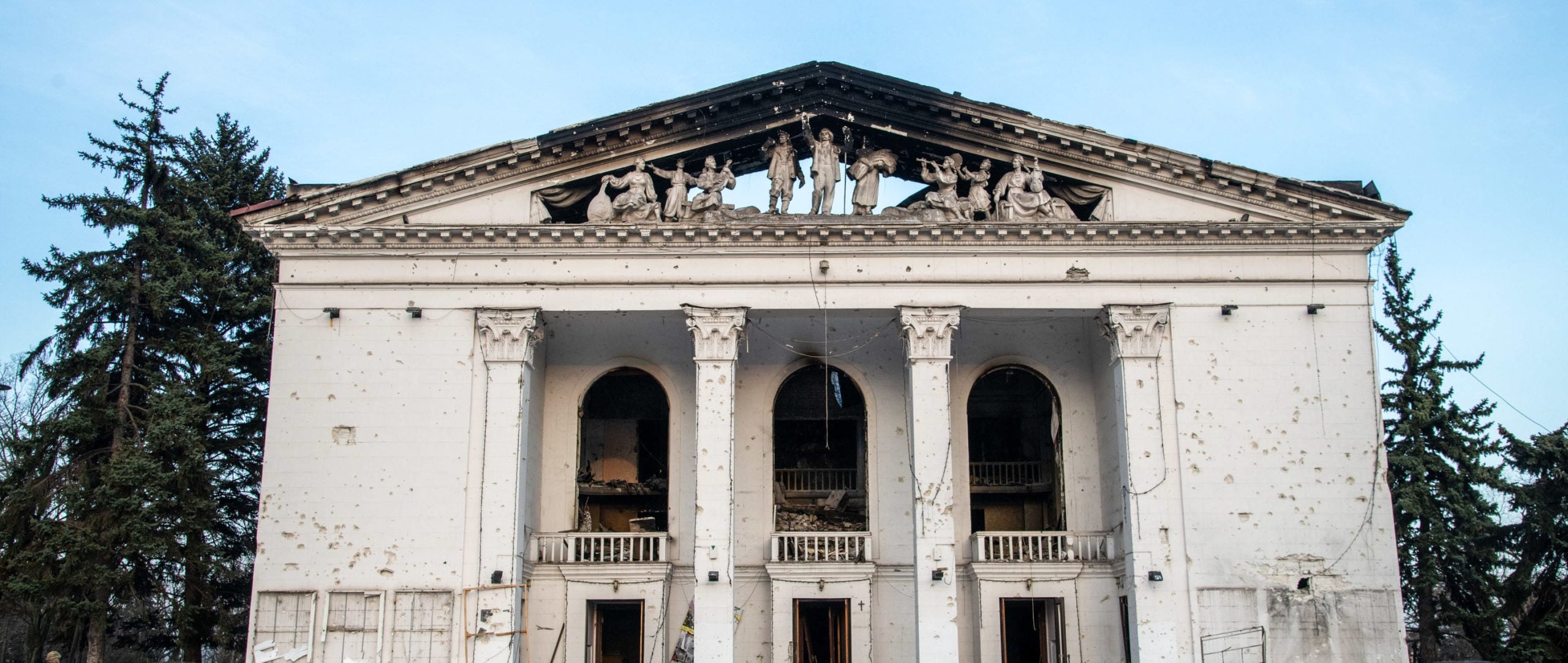
An extensive investigation by Amnesty International has concluded that Russian military forces committed a war crime when they struck the Mariupol drama theatre in Ukraine in March, killing at least dozen people and likely many more.
In a new report, ‘Children’: The Attack on the Donetsk Regional Academic Drama Theatre in Mariupol, Ukraine, the organization documents how the Russian military likely deliberately targeted the theatre despite knowing hundreds of civilians were sheltering there on 16 March, making the attack a clear war crime.
Amnesty International’s Crisis Response team interviewed numerous survivors and collected extensive digital evidence, concluding that the attack was almost certainly carried out by Russian fighter aircraft, which dropped two 500kg bombs that struck close to each other and detonated simultaneously.
“After months of rigorous investigation, analysis of satellite imagery and interviews with dozens of witnesses, we concluded that the strike was a clear war crime committed by Russian forces,” said Agnès Callamard, Amnesty International’s Secretary General.
After months of rigorous investigation, analysis of satellite imagery and interviews with dozens of witnesses, we concluded that the strike was a clear war crime committed by Russian forces.
“Many people were injured and killed in this merciless attack. Their deaths were likely caused by Russian forces deliberately targeting Ukrainian civilians.
“The International Criminal Court, and all others with jurisdiction over crimes committed during this conflict, must investigate this attack as a war crime. All those responsible must be held accountable for causing such death and destruction.”
Amnesty International commissioned a physicist to build a mathematical model of the detonation, to determine the net explosive weight (NEW) of the blast which would be required to cause the level of destruction seen at the theatre. The conclusion was that the bombs had a NEW of 400-800kg. Based on available evidence regarding the aerial bombs in Russia’s arsenal, Amnesty International believes the weapons were most likely two 500kg bombs of the same model, which would yield a total NEW of 440-600kg.
The most likely Russian aircraft to have conducted the strike are multi-role fighters – such as the Su-25, Su-30, or Su-34 – which were based at nearby Russian airfields, and frequently seen operating over southern Ukraine.
Amnesty International examined several alternative theories about who was responsible for the attack, and what weapons may have been used. Based on the available credible evidence, the investigation ultimately found that a deliberate air strike targeted at a civilian object was the most plausible explanation.
‘I couldn’t believe my eyes’
Following the Russian invasion of Ukraine in late February 2022, civilians began fleeing their homes as cities and towns were targeted by military attacks. In besieged Mariupol in the Donetsk region, the theatre became a safe haven for civilians seeking shelter from fighting.
The theatre, in the city’s Tsentralnyi district, was a hub for the distribution of medicine, food and water, and a designated gathering point for people hoping to be evacuated via humanitarian corridors. The building was clearly recognizable as a civilian object, perhaps more so than any other location in the city.
Locals had also written the giant Cyrillic letters “Дети” – Russian for “children” – on forecourts on either side of the building, which would have been clearly visible to Russian pilots and also on satellite imagery.
Nevertheless, Russian bombs struck the theatre shortly after 10am on 16 March, producing a large explosion which caused the roof and huge portions of two main walls to collapse. At the time of the attack, hundreds of civilians were in and around the theatre.
Amnesty International believes that at least a dozen people were killed by the strike and likely many more, and that many others were seriously injured. This estimate is lower than previous counts, reflecting the fact that large numbers of people had left the theatre during the two days prior to the attack, and most of those who remained were in the theatre’s basement and other areas that were protected from the full brunt of the blast.
When the bombs detonated, they destroyed the adjacent interior walls along the sides of the performance space, and then breached the exterior load-bearing walls, creating two main debris fields on the north-eastern and south-western sides of the building. Both debris fields are visible on satellite imagery taken just minutes after the strike.
Igor Moroz, a 50-year-old architect, was nearby when the theatre was hit. He told Amnesty International: “It all happened in front of our eyes. We were 200 or 300 metres away [when] the explosion happened… I could hear a plane and the sound of bombs dropping. Then we saw the roof [of the theatre] rise up.”
Gregory Golovniov, a 51-year-old entrepreneur, said: “I was walking down the street leading to the drama theatre… I could hear the noise of a plane… but at that time I didn’t really pay attention because [planes] were constantly flying around… I saw the roof of the building explode… It jumped 20 metres and then collapsed… then I saw a lot of smoke and rubble… I couldn’t believe my eyes because the theatre was a sanctuary. There were two big ‘children’ signs.”
Vitaliy Kontarov, a 48-year-old truck driver, was also close to the theatre at the time of the attack. He told Amnesty International: “We heard planes… I saw two missiles fire from one plane towards the theatre.”
‘In a second, everything changed’
In total, interviewees provided Amnesty International with the full names of four people who were killed: Mykhailo Hrebenstskii, Luba Sviridova, Yelena Kuznetsova, and Igor Chystiakov. They also gave the forenames of three other people they believe were killed. Several survivors and other witnesses reported seeing dead bodies of people they could not identify, and it is likely that many fatalities remain unreported.
A woman in her late teens was sheltering in the basement with her boyfriend and her mother when the bombs struck. She told Amnesty International: “In a second, everything changed. Everything jumped up… People started screaming. It was full of dust. … I saw people bleeding. We grabbed our documents and left… Some people were not as lucky.”
Yehven Hrebenstskii found the body of his father Mykhailo inside the concert hall. Yehven told Amnesty International: “There were many injured people… There were police trying to pull people out of the rubble… At first, I saw his [Mykhailo’s] arm. First, I saw a familiar hand. You know the hand of your loved ones. His face was covered with blood. His body was covered with bricks… I didn’t want my mom to see.”
Dmytro Symonenko was with Luba Sviridova moments before she died from her injuries. He told Amnesty International: “She was severely injured. She managed to crawl from the rubble… she asked us to remember her name, because she felt she was dying.”
Many other interviewees told Amnesty International they had seen bloodied bodies and dismembered body parts, including legs and hands, in the rubble of the devastated building following the strike.
Deliberate targeting of civilians
International humanitarian law (IHL) is the body of law which principally governs armed conflict. A core principle of IHL is that parties to an armed conflict must at all times distinguish between civilians and civilian objects, and members of the military and military objects. Military objects can be targeted; it is unlawful to target civilians or civilian objects. Prior to any attack, members of the military are required to take steps to ensure that they are reasonably certain they are not targeting civilians and civilian objects.
None of the 28 survivors Amnesty International interviewed, nor any of the other witnesses around the theatre on the day of the attack, provided any information to indicate that the Ukrainian military was using the theatre as a base for operations, a place to store weapons, or a place from which to launch attacks.
The civilian character of the theatre and the presence of numerous civilians was evident in the weeks prior to the attack. The nature of the attack – the strike’s location inside the building, as well as the likely weapon used – and the absence of any potentially legitimate military objective nearby, strongly suggests that the theatre was the intended target. As a result, the attack likely constitutes a deliberate attack on a civilian object, and is a war crime.
“Through the air and on the ground, Russian forces have been on a well-documented and deliberate killing spree of civilians in Ukraine,” said Agnès Callamard.
“Thorough investigations are urgently needed in order to hold perpetrators accountable for the serious injury and loss of civilian life they caused, as well as for the extensive damage to civilian infrastructure.”
Methodology
Between 16 March and 21 June, Amnesty International gathered and analysed available credible evidence related to the attack on the theatre. This included 52 first-hand testimonies from survivors and witnesses of the attack and its aftermath, 28 of whom were inside or adjacent to the theatre at the time. Amnesty International also analysed satellite imagery and radar data from immediately before and shortly after the attack; authenticated photographic and video material provided by survivors and witnesses; and two sets of architectural plans of the theatre.
This was supported by an open-source investigation by Amnesty International’s Crisis Evidence Lab, who examined and verified 46 photos and videos of the strike that were shared on social media, as well as an additional 143 photos and videos that were privately shared with researchers.
Amnesty International’s ongoing documentation of violations of human rights and international humanitarian law committed during the war in Ukraine is available here.
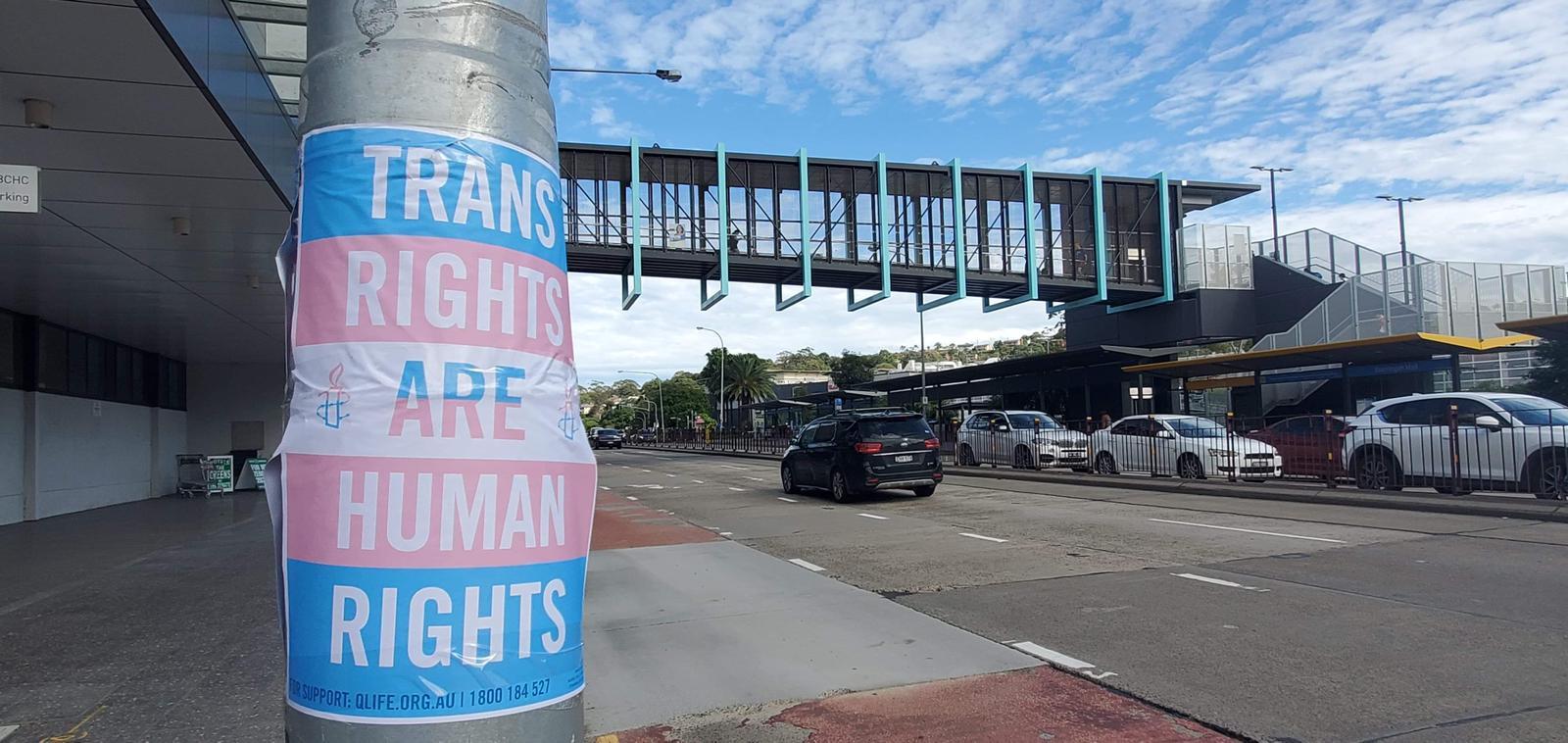
After the recent decision by FINA – the international federation recognised by the International Olympic Committee for administering international competitions in water sports – to introduce an exclusionary policy that effectively bans trans women, and some intersex women from competing, Amnesty International Australia has written to all leading sporting associations in Australia.
In the letter, Amnesty has highlighted that the move by FINA is a breach of the human rights of the athletes that this policy will impact directly, but that it also sends a dangerous message to trans, gender diverse and intersex people that they are not welcome.
Amnesty has called on all sporting associations in Australia to follow the guidelines for the inclusion of transgender and gender diverse people in sport, which have been developed by the Australian Human Rights Commission in partnership with Sport Australia and the Coalition of Major Professional and Participation Sports.
By doing this, sporting associations in Australia can help create and promote an inclusive environment for transgender and gender diverse people.
In 2021, the world’s largest human rights event Write for Rights (W4R) turned 20 years old. A total of 275,000 actions were taken by 103,000 people in Australia alone, to defend human rights and challenge the injustice of 10 cases around the world.
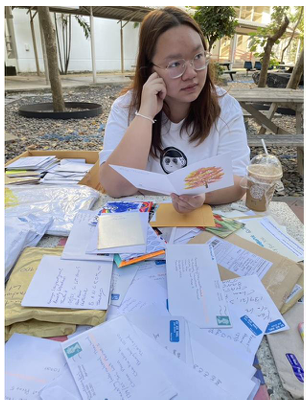
Every year, supporters across the globe write letters, send solidarity cards and sign petitions – calling for justice for those whose human rights are being attacked. Real positive change takes place because of those letters and actions: people under attack are protected, people wrongfully imprisoned are released, torturers are brought to justice and people in prison are treated more humanely.
With lockdowns leading to restrictions on events, Amnesty Australia activists came up with exciting and innovative ideas to take action. Over the course of W4R, activists held over 40 events. Highlights included projecting images of Rung, Janna and Zhan in Brisbane, Sydney and Melbourne on Human Rights Day, an interview by the Women’s Rights Network with Wendy and a webinar run by the LGBTQIA+ Network with Ana and Vira from Sphere.
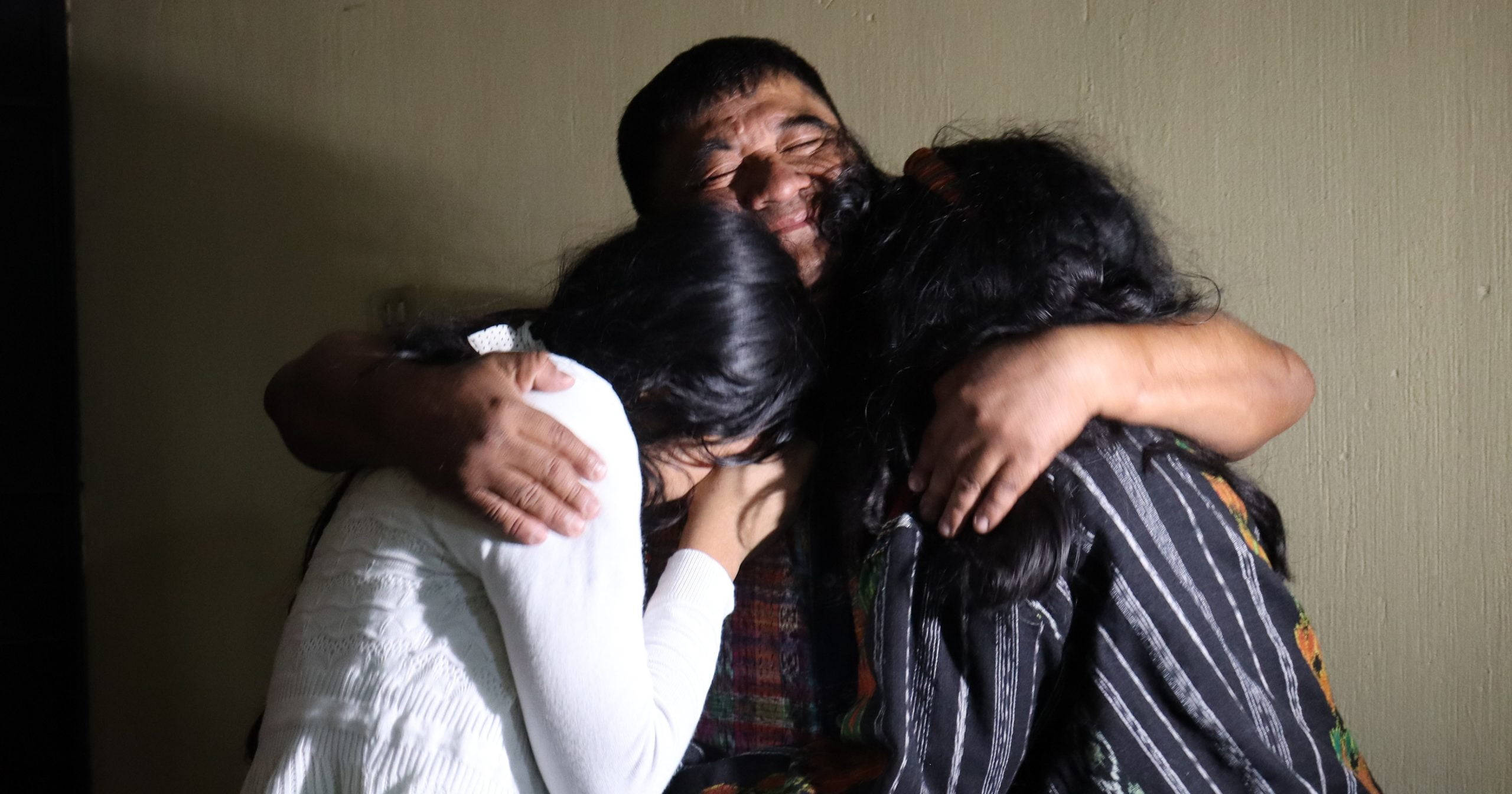
In 2018, Bernardo Caal Xol was thrown in jail without any evidence for protecting rivers sacred to his people, the Indigenous Maya Q’eqchi’ in north central Guatemala.
Throughout W4R 2021, over 20,000 people took action in Australia in support of Bernardo, including 1,200 people who emailed the Guatemalan embassy demanding his release from prison. On March 24 2022, Bernardo was released and reunited with his family after more than four years of imprisonment.
“Amnesty International gave me hope of freedom and now I am free. I am now with my family, I am now with my daughters, I am now with my partner. My mother has already cried with happiness to see me free. Thanks to each one of you, thanks to each one of you for spreading and sharing my letters.”
Bernardo Caal Xol
Bernardo remains convicted of a crime he did not commit, and the Guatemalan authorities continue to criminalise him for his work in defending human rights and the environment. Amnesty will continue to campaign to demand that national authorities stop criminalising Bernardo’s important work in defending human rights and the environment.
2. We stand in solidarity with young Ciham
Ciham Ali has been secretly detained without a trial in Eritrea since 2012. She was only 15. Nine years on and no one, not even her family, knows where Ciham is being held. Her secret detention amounts to an enforced disappearance – a crime under international law. Despite being a US national, the US government has not intervened in her case.
As part of W4R 2021, Amnesty supporters around the world wore Ciham’s favourite colour purple to highlight her case, calling on the USA government to intervene on her behalf.
440,000 actions were taken for Ciham during the campaign, demonstrating the power of a collective voice both to raise awareness and apply pressure on authorities, as well as to show solidarity with Ciham’s loved ones. These actions give them strength and hope.
“When I started campaigning for Ciham, her case was basically unknown, and it means so much to now see so many people across the world speak up for her. I know it is going to make a difference, not just in the campaign to free her, but to give strength to all her loved ones who are suffering every day that they are separated from her.”
Vanessa Tsehaye – Horn of Africa Campaigner, Amnesty International
3. Imolaeyo’s case in Nigeria is being reviewed
In October 2020, computer programmer Imoleayo Michael posted on social media in support of protests against police violence in Nigeria. Armed men raided his home and locked him in an underground cell for 41 days. Now, he faces trumped up charges of ‘conspiracy’.
For W4R 2021, Amnesty activists around the world displayed overwhelming solidarity for Imoleayo’s case and the court consequently reassigned the case to a new judge and ordered the trial to start afresh. On 16 February, the day that his trial restarted, Amnesty International Nigeria delivered solidarity letters and signed postcards to Imoleayo.
“I sincerely appreciate all these letters; they mean a lot to me. I say a big thank you to you all. Thank you. Thank you. Thank you. I received thousands of your letters posted and online. I’m greatly inspired. Your letters really got me emotional as I keep reading and I am more inspired and encouraged to do more for humanity. Once again thank you for joining me in solidarity for freedom.”
Imolaeyo Michael
Amnesty will continue campaigning and advocating for Imoleayo’s freedom. With enough pressure, we can get the charges dropped against him and help make Nigeria a safer place for people who speak out for human rights.
4. Wendy continues to raise her voice in protest for women and justice in Mexico
Childcare worker Wendy Galarza was peacefully protesting a woman’s murder in November 2020, when the police opened fire and she was shot. In Mexico, women are often degraded, attacked and killed for being women.
Wendy is grateful for the work by Amnesty supporters, and was in close contact with Amnesty activists for the duration of the campaign.
“Amnesty International Mexico has given us the security to talk about what happened, because we felt the support of the whole movement. The love we received from the organisation is tangible and represents something very important for us.”
“I had the opportunity to be part of one of the most important international campaigns of the movement: “Write for Rights”. There are no words to describe what I feel when I see that it is not only my case that is being made visible around the world, but also the stories of my fellow protesters who, like me, were repressed that night of the 9th November 2020. Thanks to Amnesty International for being present.”
Wendy Galarza
Amnesty continues to work on her case, calling on the Mexican authorities to bring her attackers to justice. Stand with Wendy and help her get the justice she deserves.
5. We will continue to challenge injustice for Chinese citizen journalist Zhan
Zhang is a Chinese citizen journalist who has been sentenced to four years in prison for courageously reporting on COVID-19. The Chinese government is stifling freedom of expression in its attempt to gain economic and political dominance. She has been imprisoned and tortured in Shanghai.
During W4R 2021, Zhang Zhan’s health was in critical condition after being on hunger strike in protest of her unjust incarceration. It is still unclear as to whether Zhang has access to adequate medical care.
Contacts from Zhang Zhan’s Concern Group and her lawyers have shared that they find it very touching that Amnesty supporters are so persistent and have taken huge amounts of actions for her.
“Thank you to all the friends who worked and supported Zhang Zhan’s case. Those who wrote letters and cards to her and spoke out for her, every letter sent to Shanghai Municipal Pudong District Detention Centre and Shanghai Municipal Women’s Prison, every card, every painting, every letter sent to various departments of the Chinese authorities, every protest [action], every tweet and post on social media, every poster, every candle, every greeting, blessing and encouragement – I believe that Zhang Zhan felt it [all].”
Thank you all for helping her through the most life-threatening part of her life. The support and solidarity from all over the world, the belief in justice, the pursuit of truth, [all] make this winter warm. Like Zhang Zhan, we are full of hope.”
Zhan helped others by exposing censored information about Covid-19. Now, we need to help save her life. Call on the Chinese government to free Zhan immediately. Your voice can make all the difference.
6. Sphere NGO is still bravely speaking up for women and LGBTQIA+ rights in Ukraine
Anna and Vira bravely stand up for women and LGBTQIA+ people in the Ukraine. But their organisation, Sphere NGO, has been subject to numerous violent attacks by groups determined to intimidate them into silence. No one should be attacked for speaking up for their rights and the rights of others. As part of W4R 2021, Amnesty supporters called on Ukraine to bring Sphere’s attackers to justice.
“Before Write for Rights we felt quite burned out, not only my colleagues and I, but I would say this was true for the whole community. We were thinking about our goals and the change we were supposed to make,” says Anna.
“…After we travelled to Amnesty International offices in different countries and got all this support, we felt so charged and inspired that we launched an advocacy and a large media campaign. With all the plans and ideas we had, it makes it even more painful to realise that the war has broken out.”
Anna also emotionally shares details of her life in war-torn Kharkiv.
She is staying in the city despite all the risks because she feels it her duty to help people in these difficult times. Their community centre has now been shut down, not only because it is too dangerous to work there, but also because public transport is no longer in operation in Kharkiv, therefore, it is impossible to reach the centre. The organisation, however, keeps working. Anna and her colleagues provide humanitarian aid and financial support to LGBTQIA+ community members that stayed in the city. Help is also being provided to those who have escaped from the city.
Anna says that every word of support and every message that condemns the Russian invasion and violations matter nowadays. It is something that helps her get up in the morning and keep going.
7. We will continue to stand with student protestor Rung in Thailand
University student Panusaya ‘Rung’ Sithijirawattanakul has become a leading voice in Thailand’s democracy movement. She bravely took part in protests for social and political change throughout 2020. In March 2021, the authorities jailed her for 60 days. She went on hunger strike for 38 days and was eventually released. Today, she faces dozens of charges against her and life imprisonment.
The W4R spotlight on Rung may have contributed to the official decision to grant her release on bail in January 2022, and to increased momentum for calls on authorities to grant other political prisoners their right to release on bail. The campaign has given her hope to continue fighting.
“The number of the letters that I have received was beyond any of my expectations. For me, this is a successful campaign, just to see each individual letter sent to me, it makes me so happy that they know what is happening in Thailand, and what I am facing.”
Rung
Amnesty will continue working to release those unfairly detained and charged for peacefully exercising their rights to freedom of expression and assembly. Stand with Rung and call for all charges against her to be dropped immediately.
8. We will continue to challenge injustice for Egyptian lawyer and defender of other people’s freedom
Mohamed Baker is a lawyer who defends some of Egypt’s most marginalised people. He’s been locked up in a maximum-security prison since 2019 in cruel conditions where he is subjected to discriminatory and punitive treatment by the authorities because the they don’t agree with his work promoting human rights.
Mohamed’s loved ones were happily surprised with the number of emails received. They were particularly touched by the creative work made around cats, which are his favourite animal. During prison visits, Mohamed learned about the amount of support, the photos with cats and illustrations created for him, which made him smile. He was very happy about the global mobilisation.
Mohamed’s loved ones wanted to share this message:
“We are very happy with the campaign and very thankful to every member who participated in it. And we are very fortunate that the campaign chose Baker. No matter how hard I try, I will not be able to express how we felt after receiving that amount of warmth and psychological support that the campaign provided us with.”
“…So many expressive words in all languages. And the cards and publications on social media and pictures of people with their cats and photos of their cats. People’s sketches and drawings of Baker, activities on the streets, even in small cities. Statements, campaigns, follow-up, news, and support, the video that Ahmed Gamal Ziada helped filming. We cannot thank you enough! There is no improvement, the situation is getting worse, but this is not related to the campaign.”
Amnesty will continue to work on Mohamed’s case until he is released. Our collective voices have helped free people before – and we can do it again.
9. Palestinian teenage journalist Janna is determined to use her voice and words to expose Israeli military abuses
At 15 years old, Janna Jihad is a world recognised journalist. She is from a small Palestinian village called Nabi Saleh, in the occupied West Bank. When she was seven, she started documenting the widespread abuse, racism and discrimination of Palestinians by the Israeli military. Since then, she’s received many death threats and harassment.
Janna’s mother Nawal feels heart-warmed by the supportive messages from children, youth and their parents from all over the world. Children have told Janna that she inspires them.
“It was truly heart-warming, I’ve also been receiving tons of love and support on my Instagram account. Students sending me letters and videos from their classrooms, telling me that they know me, they know my story, they share it and send solidarity which is beyond anything I could describe. I am really happy that our Palestinian story is reaching every corner of the world, especially with the younger generations, and this gives me so much hope for a better future.”
“Having this much attention to our cause and spreading awareness is what I’ve aspired for as a journalist and I’m beyond happy and grateful. I’m thankful to each and every person who took the time to write to me and message me, my heart is full.”
10. We will continue to challenge injustice for Mikita’s casein Belarus
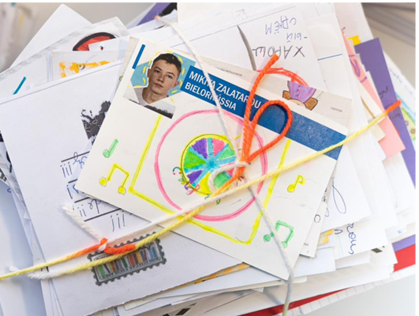
Mikita Zalatarou was just 16 years old when the Belarusian authorities arrested and beat him after being swept up in a crowd of protesters while waiting for his friend. He has been sentenced to five years in a child educational prison colony – despite there being no evidence that he was involved in any violence. Since then, Mikita has been held in solitary confinement and reportedly has been tortured. He is not getting the medical treatment he needs for his epilepsy.
Mikita’s father has been clear that public support for his son is important both to Mikita and his family, and all efforts and support from Amnesty International members are much appreciated.
“I tell him to keep his head down, to learn, to study languages, English [for example]. I could send him books. But this is impossible: they are so busy there that they do not have a free minute,” – Mikhail, Mikita’s father.
“Thank you so much for all your amazing support, your letters, signatures and your solidarity actions. At the moment we have very little access to Mikita and sadly we have been informed that Mikita is not able to receive most, if not all, solidarity messages. However, he is aware that he was featured in the W4R campaign, and we hope that it has had a positive impact on his mental state and his overall situation.”
Knowing that you are not forgotten and that the world is behind you is a powerful thing, especially when you are behind bars. Thank you!
We run Write for Rights every year because it works – real change happens because of actions like these. Their words have freed people from human rights abuses and changed lives. Knowing they’re a part of a community this powerful has changed their lives, too.
I first came to Amnesty in 2013 as a volunteer – brand new to the country, on a bridging visa, without work rights, no friends and family and in a very vulnerable situation.
The Amnesty team welcomed me with open arms and allowed me to be part of a team and engage with the outside world. I still reflect on my experience at Amnesty and appreciate every day that I spent helping people seeking asylum who were trapped in detention centres.
We sent them picture dictionaries so they would know a few words in English once they were in the community and reminded them that there were many people who supported and cared for them.
I have experienced injustice and discrimination growing up in my country. I have witnessed my people in Afghanistan being discriminated against and suffering genocide because of their ethnicity, beliefs and religion. But I have also witnessed discrimination and injustice in Australia.
Now almost a decade later, I return to Amnesty as its Refugee Rights Campaigner with a mission to advocate for people just like me who continue to experience rights abuses just for seeking safety on Australian shores.
Now almost a decade later, I return to Amnesty as its Refugee Rights Campaigner with a mission to advocate for people just like me who continue to experience rights abuses just for seeking safety on Australian shores.
Zaki Haidari, Amnesty International Australia Refugee Rights Campaigner.
It troubles me deeply that these people – people like me – are expected to remain silent about their conditions or risk being sent back to potential persecution and even death sentences. We are forced to live in the community on bridging visas with no work rights and very limited access to social services, which has pushed us to poverty and taken away dignity and hope.
There are thousands of refugees who have been living in Australia for the past 10 years on temporary visas, separated from their families and loved ones – people just like me.
We are kept on a permanent temporary status, never able to rebuild our lives and forcing us to relive our trauma at the end of every visa cycle.
Refugees aren’t even allowed to gain a formal education past high school. As soon as they reach 18, their studies stop because they are ineligible for fee assistance.
There has been no indication of ending this regime, indeed one of the first things the new Albanese Government did was proudly turn back a boat of asylum seekers. The same people to whom we owe protection under international law.
I know Australians are welcoming people and they understand that people seeking asylum are people just like me, or you, who have found themselves in circumstances no one wants to ever be in. You only have to look at the outpouring of love for the Bilo family and the pressure that led them to finally be released from detention.
But while the Bilo family are back with the community that loves them, like many other refugees, their futures are far from certain. That’s why I will continue to use my voice and experience to fight for all those seeking asylum so they can realise their full human rights.
As the global community prepares to celebrate World Refugee Day on June 20, new research commissioned by Amnesty International Australia has shown Australians strongly support refugees as welcome in our communities.
The research, commissioned as part of Amnesty’s annual Human Rights Barometer, shows that 72% of Australians support either maintaining or increasing Australia’s humanitarian intake, and that the majority of Australians support refugees being settled here.
“As we saw from the election result, Australians have embraced a kinder and fairer approach to refugee policy – now it’s time for the Albanese government to make good on its promise to abolish Temporary Protection visas as well as increasing the humanitarian intake to 30,000,” Amnesty International Australia Refugee Rights Campaigner, Zaki Haidari, said.
The research also showed support for community sponsorship of refugees, and while a new and fairer program was announced at the end of 2021, Amnesty continues to call for community sponsorship to be additional to the humanitarian intake.
“The outpouring of love and support from the Australian and Biloela community for the Nadesalingham family and the joy at seeing them going home to the community who loves them shows how passionate communities are to support people in need of safety, and how integral they become to those communities,” Haidari said.
“Australia has rejected the scare campaigns and have seen how devastating detention is on people whose only crime is to seek safety that we as a country are obliged to give them.”
The latest wave of the Amnesty International Human Rights Barometer also found that most Australians think the Federal Government spends too much taxpayers money on keeping people seeking asylum in detention, and similarly, 57% feel that if Australian communities have the money and resources to sponsor refugees so they can live in those communities, then they should be allowed to.
The full 2022 Human Rights Barometer report will be available in the coming months.
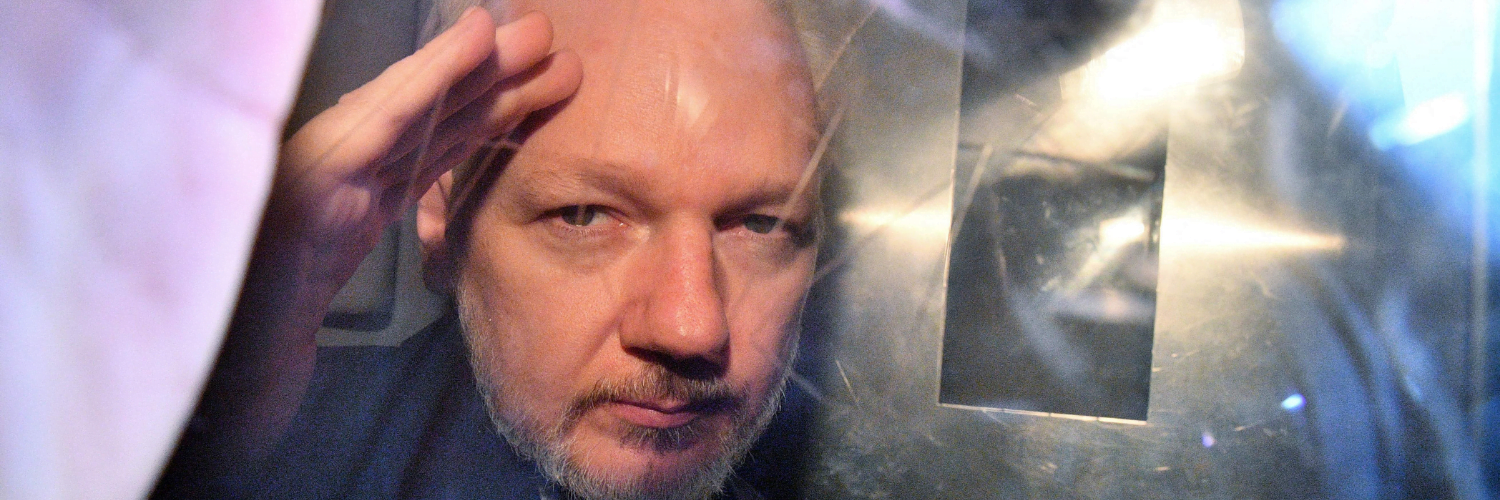
Responding to the news that the UK Home Secretary Priti Patel has certified Julian Assange’s extradition to the United States to face charges under the Espionage Act, Agnes Callamard, Amnesty International Secretary General said:
“Allowing Julian Assange to be extradited to the US would put him at great risk and sends a chilling message to journalists the world over.”
“If the extradition proceeds, Amnesty International is extremely concerned that Assange faces a high risk of prolonged solitary confinement, which would violate the prohibition on torture or other ill treatment. Diplomatic assurances provided by the US that Assange will not be kept in solitary confinement cannot be taken on face value given previous history.”
“We call on the UK to refrain from extraditing Julian Assange, for the US to drop the charges, and for Assange to be freed.”
Julian Assange is likely to further appeal the extradition on separate grounds that it violates his right to freedom of expression.