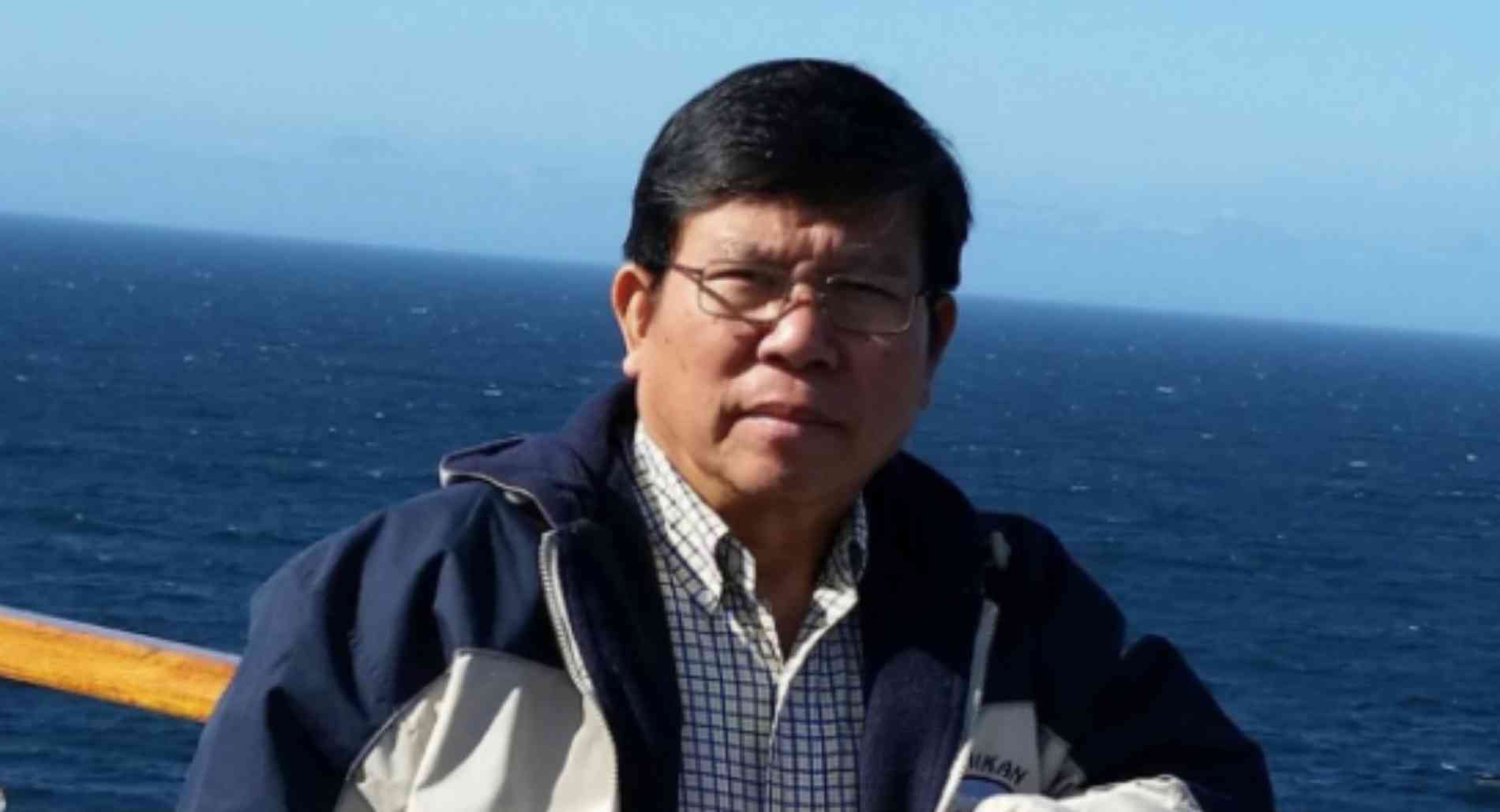
Amnesty International Australia has today launched a new campaign for Vietnamese Australian prisoner of conscience Chau Van Kham who is serving a 12-year sentence for “terrorism” activities in Vietnam.
Trang Chau said her husband is in poor health and has been denied his lawyer of choice.
“In 2019, my husband decided to go to Vietnam to monitor the human rights situation on the ground. Within hours of arriving, he was arrested.
“Later that year, he was sentenced to 12 years in prison and the only ‘evidence’ presented by the authorities during the trial was his membership of a group called Viet Tan.
“I contacted Amnesty because I want to bring awareness to my husband’s case. My hope is to get help from anyone who reads this, to help bring my husband home,” Mrs Chau said.
“Amnesty is supporting Mr Chau’s family in calling for his immediate and unconditional release, so he can be reunited with them in Australia,” Amnesty International Australia Individuals at Risk Campaigner Rose Kulak said.
BACKGROUND
Mr Chau Van Kham, a Vietnamese Australian, was detained in Vietnam in January 2019.
A baker from Sydney, Mr Chau joined an unregistered Vietnamese overseas-based political party, Viet Tan, in 2010. In addition to advocating for democracy and human rights in Viet Nam, he also organised fundraising events for his organisation within the Vietnamese community in Australia.
Mr Chau was found guilty of “terrorism to oppose the people’s government” under article 113 of the 2015 Penal Code and sentenced to 12 years in prison by a Vietnamese court.
Up until his appeal, Mr Chau was being held in a detention centre. He was then moved to a new location without the knowledge of his family.
In June 2020, the family was informed he had been moved to Thu Duc prison, three hours from Ho Chi Minh City. A consular visit was also received around this time.
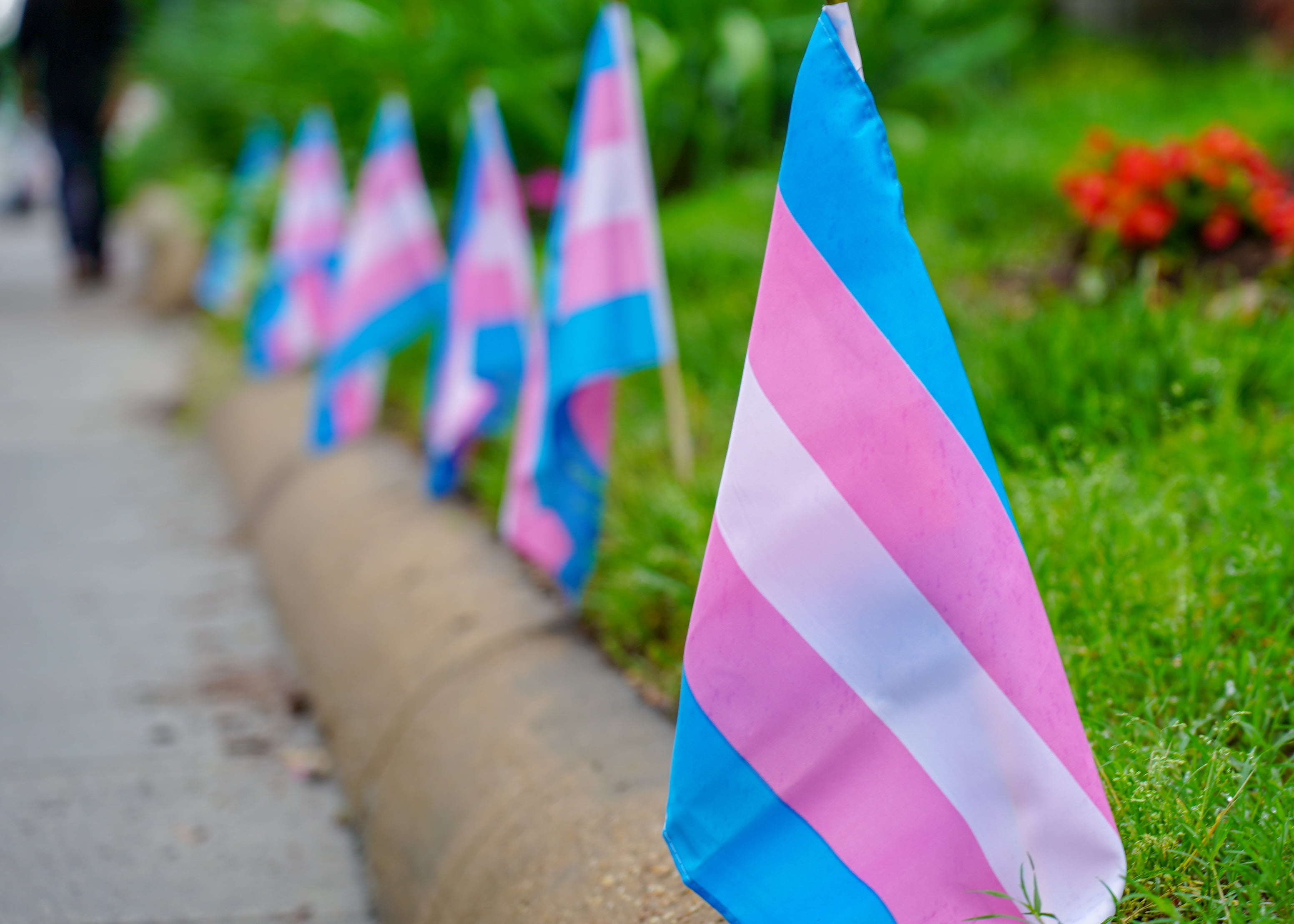
Amnesty International Australia stands with the Trans and Gender Diverse communities in Australia to condemn ignorance and bigotry as evidenced in comments made on Wednesday by Peth Lord Mayor Basil Zempilas.
Mr Zemplias’ comments lead to discrimination, violence and exclusion. While his subsequent apology is acknowledged, the new Mayor needs to back his words up with actions.
“Mr Zempilas should take the time to educate himself and his audience about Trans and Gender Diverse people’s experience,” Convenor, Amnesty International Perth LGBTQIA+ Action Group, Hannah Wahlsten, said.
Mr Zempilas should take the time to educate himself and his audience about Trans and Gender Diverse people’s experience.
Convenor, Amnesty International Perth LGBTQIA+ Action Group, Hannah Wahlsten.
“We expect better from our elected officials and agree with Transfolk of Western Australia that the new Mayor needs to face the truth of the harm that his comments cause. When elected officials give voice to bigotry it is seen as permission to others that it is okay to discriminate and use violence.
“It all starts at the top. You need to face the truth of the harm such comments cause.
“Using this as a ‘teaching moment’ for himself, he should listen to people with lived experience – perhaps he might even like to have a member of the community on his show – so he can learn about why these glib comments can be so harmful and damaging, especially from those in positions of authority.”
Discriminatory and harmful comments such as those made by Zempilas illustrate why the Inclusive education WA program is so important in schools – and Zempilas should make this a priority to show his apology is more than just an embarrassing backflip.
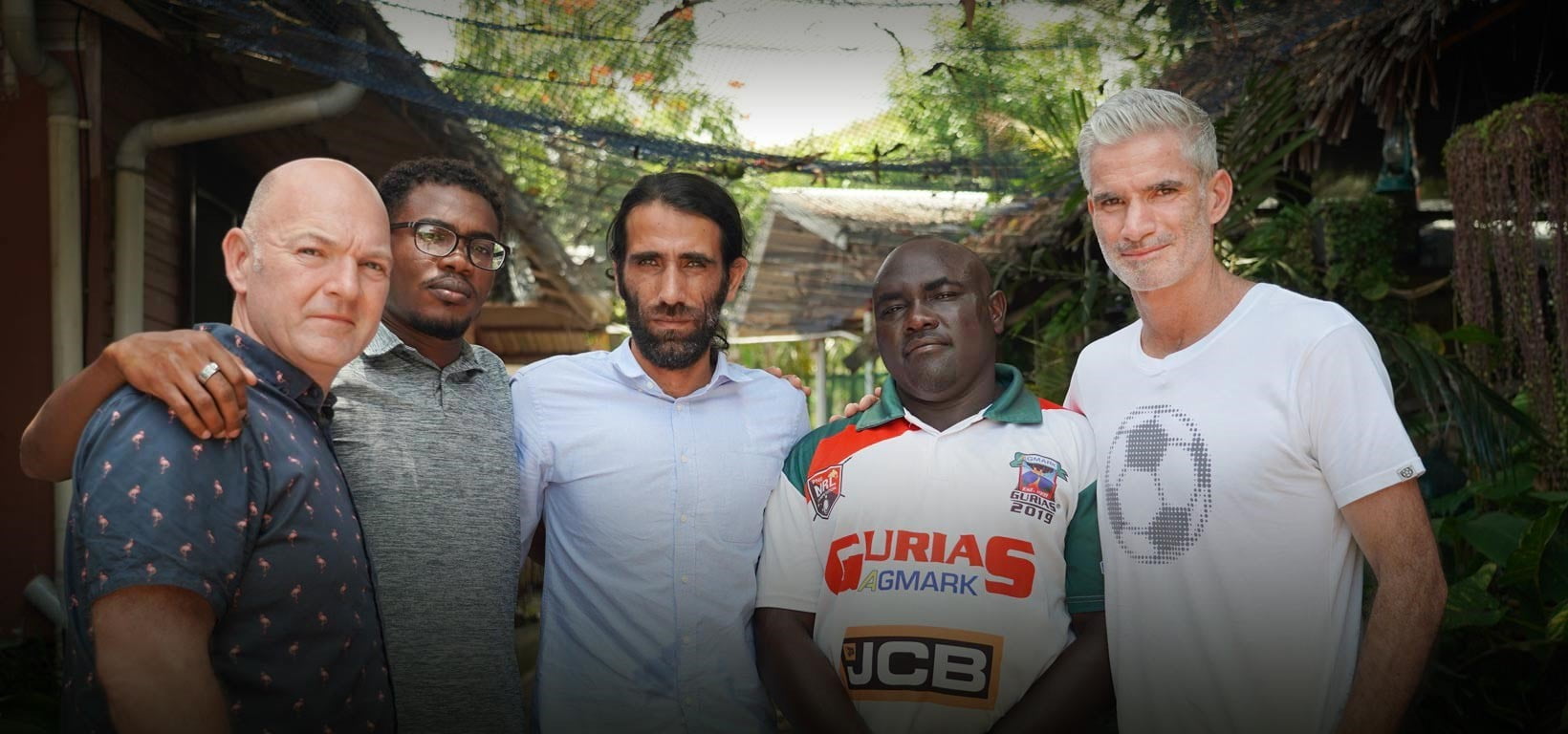
Former All Black and NRL superstar, Sonny Bill Williams, and former Socceroo, Craig Foster, have joined forces to call on the Australian Government to finally accept the offer made by New Zealand in 2013 to resettle refugees stuck on Papua New Guinea and Nauru.
As more than 65,000 signatures from the #GameOver campaign to get refugees stuck offshore to safety were handed over to two Parliamentarians, Craig Foster said: “We’ve come to Canberra to call on the Australian Government to finally accept the New Zealand offer to resettle 150 refugees a year. There are still just under 300 people stranded on PNG and Nauru and as the deal with the US is about to come to an end it is more urgent than ever we get these refugees to safety as soon as possible.
“Australians across the country have been asking for this for many years. The mental and physical anguish these people have suffered has been terrible and it’s time for the Australian Government to do the right thing and accept the New Zealand offer.”
Sonny Bill Williams said: “New Zealand has a proud resettlement history. Since the Second World War it has resettled over 35,000 refugees. This is not about politics, this is about a few hundred refugees who have suffered for too long and who are in need of a solution. New Zealand has offered to provide that solution, Australia should accept.”
Responding to this morning’s comments by Foreign Affairs Minister, Marise Payne, concerning the violation of women at Hamad International Airport in Qatar, Amnesty International National Director, Sam Klintworth, said:
“There are a number of very serious questions the Department must answer concerning the events of October 2 in Qatar. The women subjected to this terrible ordeal appear to have come forward straight away and told authorities what occurred at the airport. Why then has it taken until now, following a report in the media, for the Department to approach the Qatari authorities for an explanation?
“Were any other women from other countries violated in this way at the airport and if so, have those countries been informed? What was the full extent of this incident?
“There must be an independent investigation into the events that took place if we are to ever get a truly transparent account of what occurred and to establish unequivocally who is responsible and hold them to account for this gross breach of these women’s rights.”
With women’s empowerment topping the agenda at today’s B20 Summit, hosted by Saudi Arabia, Amnesty International is reminding business leaders that many of the country’s bravest women’s rights activists are languishing in prison for daring to demand reforms.
Loujain al Hathloul, Nassima al-Sada, Samar Badawi, Maya’a al-Zahrani, and Nouf Abdulaziz spearheaded women’s rights campaigns, including calling for the right to drive and an end to the repressive male guardianship system. But while Saudi Arabia talks up recent reforms such as the relaxation of social restrictions and the loosening of the guardianship system to court approval from the rich and powerful around the B20, women’s rights activists remain in detention.
“Since assuming the G20 Presidency Saudi Arabia has invested heavily in rebranding its image, throwing out slogans about women’s equality and insisting it is ready for change. But Saudi Arabia’s real changemakers are behind bars,” said Lynn Maalouf, Amnesty International’s Deputy Regional Director for the Middle East and North Africa.
“B20 leaders must not be fooled by this shameless hypocrisy, and we call on them to show they care about human rights as much as business opportunities. Any business operating in or with Saudi Arabia has a responsibility to ensure they are not contributing to human rights violations through their activities.”
The B20 is the official forum for business leaders to present policy recommendations to the G20, ahead of the main summit in November. This year high profile participants include representatives from HSBC, Mastercard, PwC, McKinsey, CISCO, ENI, Siemens, Accenture and BBVA.
Cynical PR campaign
Saudi Arabia has publicized the fact that this year, 33 percent of B20 delegates are women – the highest ever contingency. The B20 website states that “Women in Business” will be Saudi Arabia’s “signature topic” as President.
These events are the culmination of an aggressive PR drive under the leadership of Crown Prince Mohammed bin Salman, who has promised equal opportunities as part of Saudi Arabia’s Vision 2030 strategy.
Following the announcement of the Vision 2030 plan, women were granted the right to drive in June 2018. This was a step towards equal employment opportunities, giving women in Saudi Arabia a modicum of freedom and independence. But just weeks before this change was announced authorities launched a crackdown on human rights defenders, arresting many of those who had advocated for the right to drive.
Currently, 13 women’s rights defenders remain on trial facing prosecution for their human rights activism. Several face charges of contacting foreign media or international organizations, including Amnesty International. Some were also accused of “promoting women’s rights” and “calling for the end of the male guardianship system”. Of the 13 women, five remain in detention: Loujain al-Hathloul, Samar Badawi, Nassima al-Sada, Nouf Abdulaziz and Maya’a al-Zahrani.
Saudi Arabian authorities continue to systematically silence dissent and crush freedom of expression, using the Specialized Criminal Court to target economists, teachers, clerics, writers, activists and others who have called for change. Human rights defenders face arbitrary arrest, unfair trials and torture.
Amnesty International is urging business leaders at the B20 not to turn a blind eye to these violations. All businesses have a responsibility to ensure they are not contributing to human rights harm. They are expected to carry out human rights due diligence in order to identify, prevent and mitigate the human rights risks of their activities, and activities within their supply chain and business relationships.
Amnesty International has written to businesses participating in the B20 Summit raising serious concerns about the human rights risks of business operations in and with Saudi Arabia, and reminding them of their human rights responsibilities.
“We urge B20 delegates also to think carefully about how their brands could be legitimizing human rights violations and endorsing Saudi Arabia’s charm offensive,” said Lynn Maalouf.
“If B20 Saudi Arabia was as progressive as it claims, the activists who did so much to secure more rights for women would have a seat at the table.”
In just three years Amnesty International’s refugee campaign, ‘My New Neighbour’, has gone to every Australian state and territory, revealing the willingness of local communities to get behind their new neighbours, some of whom are refugees.
The My New Neighbour campaign is a neighbourhood-led solution to help refugees – people who are seeking to rebuild their lives somewhere safe. It’s all about giving communities the opportunity to lead the change from within.
The LNP in Queensland proposing a curfew on children in Far North Queensland is extremely concerning and potentially breaches international law. Amnesty International Australia campaigner Joel Mackay said:
“The evidence is clear: tough on crime is not solving the issue of youth offending. The LNP seems not to be listening to the experts or reviewing the evidence.
“A preemptive curfew on children will only entrench cycles of disadvantage, poverty, poor health and racism. Youth prisons will once again overflow. It will affect the most marginalised children in our communities who need support and only get more children trapped in the quicksand of our justice system
“The reality is that curfews do not work – the UN Guidelines for the Prevention of Juvenile Delinquency note that curfews ‘stigmatise, victimise and criminalise young people’.
“Australia is a signatory to the Convention on the Rights of the Child, so this policy may breach our commitment to international law if enacted
“Reintroducing breach of bail as an offence is also extremely concerning, because we know that the children who are locked up are very likely to be locked up again, keeping them out of prison and addressing the underlying causes, breaks the cycle,” Mackay said.
“Our society should be protecting and promoting the safety of children, and all the evidence shows that these programs are effective for children in helping them become contributing members of our society and reduce the economic burden on the taxpayer.”
BACKGROUND
Amnesty International Australia has released a Human Rights Agenda for the Queensland election which outlines an evidence-based approach to youth justice which includes the recommendation to raise the age of criminal responsibility from 10 to 14 in line with international standards.
Write for Rights is a moment when Amnesty International’s movement of ten million comes together to challenge injustice and take action for freedom, justice and equality.
Over nearly 20 years, those actions more have made a real difference in many lives.
In 2019 Amnesty activists took more than six million Write for Rights actions. And in 2020 we heard good news in four of the ten cases from 2019.
On 5 February 2020 a court in Iran substantially reduced the sentence of women’s rights defender Yasaman.
Over one million people took action for Yasaman during Write for Rights in 2019.
“Thank you so much. I have no words. You have no idea how much my heart was filled with happiness.”
Magai, South Sudan
On 29 July 2020, Magai was removed from death row and his death sentence was quashed.
In 2020 the Canadian government signed an agreement to build the care facility the Grassy Narrows desperately needed, decades after they were poisoned by mercury poisoning.
Ibrahim Ezz El-Din, a housing rights researcher, appeared at the Supreme State Security Prosecution in Cairo after 167 days of enforced disappearance in November 2019.
“I will forever be grateful to Amnesty’s supporters. Keep up the good work.”
Eskinder, Ethiopia
Eskinder was arrested and sentenced to 18 years in prison because of his work as a journalist. He was released in 2018.
Whistle-blower Chelsea Manning walked free in May 2017, after her 35-year prison sentence was cut short by outgoing President Barack Obama.
In 2015 more than a quarter of a million people wrote for her release during Write for Rights.
“While before I felt all hope had gone, the story changed when Amnesty International came in … I regained hope.”
Moses, Nigeria
After more than 800,000 actions from activists all around the world, Mose’s life was spared in June 2015. He was wrongfully sentenced to death when he was only 16.
“Every single signature for the petition to get me free made a difference. Now I’m free. I’m no faiytale, I’m a true story.”
Teodora, El Salvador
Teodora was sentenced to 30 years in prison following the stillbirth of her child under draconian anti-abortion laws.
She was released in February 2018.
These are a handful of those lives changed over nearly two decades of Write for Rights.
Your phone rings. Within seconds, it’s infected with secret spyware that’s tracking everything you do. This isn’t a conspiracy theory or a twist in a Netflix thriller. It’s happening right now to people like you – and you have the power to stop it.
We all know that privacy matters. Our private thoughts, texts, friendships, social interactions make up who we are. It’s why COVID-19 has revived fears about governments and corporations snooping on our every move – and with good reason. At least one of the companies looking to capitalise on the contact tracing dilemma is NSO, the controversial company currently being sued by WhatsApp for allegedly installing spyware on the phones of thousands of users – including activists and journalists. (More about them later).
For many of us, that unsettling feeling of being watched is all too real. After all, we live in a world of mass surveillance, from facial recognition to online tracking – governments and tech companies are harvesting intimate information about billions of people. Targeted surveillance is slightly different. It’s the use of technology to spy on specific people.
You may think this is fine, because aren’t people only targeted when they’ve done something wrong? Think again.
From Mexico to the Middle East, governments are wielding a range of sophisticated cyber-tools to unlawfully spy on their critics. A seemingly innocuous missed call, a personalized text message or unknowingly redirected to malicious website for a split second, and without you being aware the spyware is installed.
The people targeted are often journalists, bloggers and activists (including Amnesty’s own staff) voicing inconvenient truths. They may be exposing corrupt deals, demanding electoral reform, or promoting the right to privacy. Their defence of human rights puts them at odds with their governments. Rather than listen, governments prefer to shut them down. And when governments attack the people who are defending our rights, then we’re all at risk.
Listen to the Witness podcast as Amnesty Tech’s team of Investigators race against the clock to expose a notorious spyware and stop it being used against activists.
Stop governments spying on activists
Ahmed Mansoor
Until recently, Ahmed Mansoor was the United Arab Emirates’ (UAE’s) last active human rights defender. A blogger, poet and father-of-three, Mansoor called for political reforms that would have transformed the UAE into the progressive society it claims to be. The government responded by hacking into Mansoor’s phone, his computer, even his bank account before fabricating charges against him and locking him up for 10 years. Mansoor is in solitary confinement and gravely ill.
Maati Monjib
Maati Monjib suspected the Moroccan authorities had been spying on his phone and computer since 2015. The historian and freedom of expression advocate was proved right in 2019 when his phone was repeatedly targeted with suspicious WhatsApp text messages carrying links to websites connected to NSO Group’s notorious Pegasus spyware. Monjib continues to face bogus national security charges simply for training journalists on a phone app designed to protect users’ privacy.
Yahya Assiri
A former Saudi Arabian Air Force officer, Yahya Assiri had always been troubled by the poverty and inequality he saw around him. His peaceful attempts to call attention to these issues online put him on the wrong side of the authorities. In 2018 Assiri, a friend of Jamal Khashoggi, was targeted using NSO Group’s Pegasus spyware. The software has been implicated in scores of attacks on human rights activists and has no framework to regulate its use.
How do governments target activists?
Howie Shia
The authorities use clever cyber-attacks to access users’ phones and computers. Once in, they can find out who their contacts are, their passwords, their social media habits, their texts. They can record conversations. They can find out everything about that person, tap into their network, find out about their work, and destroy it. Since 2017, Amnesty’s own research has uncovered attacks like these in Egypt, India, Morocco, Pakistan, Saudi Arabia, UAE, Qatar and Uzbekistan.
Remember, the users we’re talking about are human rights activists, among them journalists, bloggers, poets, teachers and so many others who bravely take a stand for justice, equality and freedom. They take these risks so we don’t have to. But voicing concerns about government conduct and policy makes them unpopular with the authorities. So much so that governments resort to dirty tricks, smearing activists and re-branding them as criminals and terrorists.
The long arm of NSO
Some of the most insidious attacks on human rights defenders have been waged using spyware manufactured by NSO Group. A major player in the shadowy surveillance industry, they specialise in cyber-surveillance tools.
NSO is responsible for Pegasus malware, a powerful programme that can turn on your phone’s microphone and camera without your knowledge. It can also access your emails and texts, track your keystrokes and collect data about you. The worst thing is you don’t have to do anything to trigger it – Pegasus can be installed without you ever knowing.
NSO say they’re creating technology that helps governments fight terrorism and crime. But as early as 2018, when one of our own staff was targeted through WhatsApp, our Security Lab discovered a network of more than 600 suspicious websites owned by NSO that could be used to spy on journalists and activists around the world. We were not wrong. In 2019, thousands of people received scam WhatsApp call, leading WhatsApp to later sue NSO. More recently we documented the cases of Moroccan activists who had been similarly targeted.
In January 2020, we supported legal action in Israel, (where NSO is headquartered) demanding that Israel stop NSO from being able to export its spyware. In July 2020, the court in Tel Aviv rejected the attempt, leaving NSO free to carry on selling its technology to human rights abusers. We will continue to do all we can to stop NSO’s products being used to persecute activists
A booming industry
Cases of governments snooping on activists have increased massively in the last decade. This is down to more and more companies developing and selling spyware to governments. Dubbed “lawful interception technologies”, these products are ripe for misuse.
In a world where people defending human rights are increasingly branded criminals and terrorists, and where national security concerns are routinely used to suspend basic rights, the potential for exploiting this technology for nefarious purposes is huge. Right now, there’s no framework to prevent such misuse and no consequences when the technology is used to abuse the rights of activists. Companies are getting away with peddling deeply dangerous tech with zero penalties.
The missing link in all this is a proper regulation on the use of spyware technology. At its heart, this needs to be guided by human rights principles, to make sure that the kinds of abuses we’ve documented stop happening.
We all have the right to freely express our views and opinions, the right to gather and associate with others and the right to privacy. Digital spyware attacks on human rights activists violate these rights. When governments snoop on the people who are trying to defend our rights, our losses are doubled. It’s as simple as this: privacy matters. Our personal thoughts, our texts to friends, our kids’ photos, our work – are what make us who we are. Our right to privacy is a right to control what makes us us. It’s a right worth defending – for us and for the people who defend us.
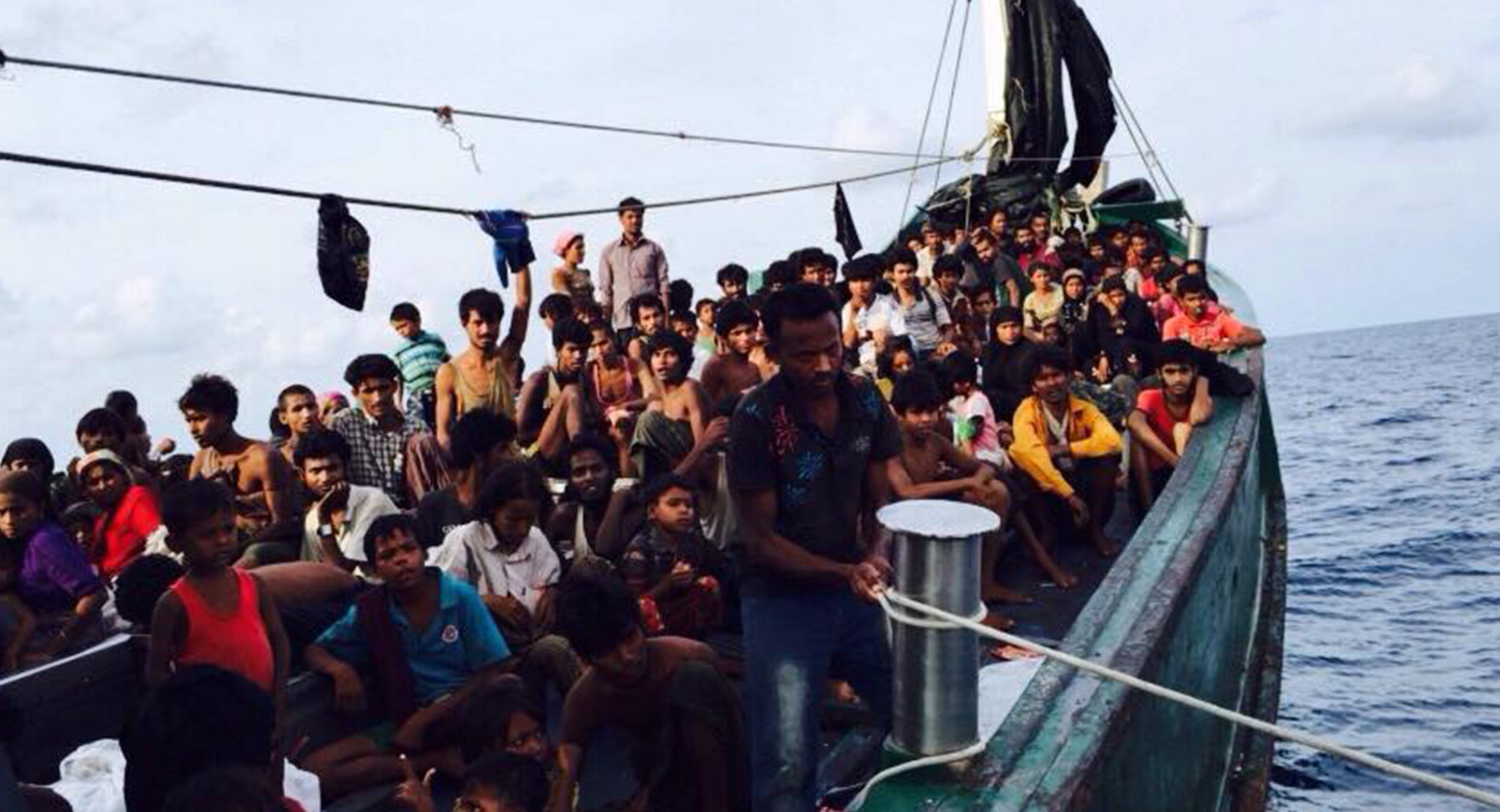
Responding to reports that a boat carrying around 250 Rohingya refugees was sighted near Indonesian waters, off Aceh, Amnesty International Indonesia’s Executive Director Usman Hamid said:
“The Indonesian authorities must urgently rescue Rohingya people currently adrift off the coast of Aceh. This is a matter of life and death. Indonesia has a chance to lead by example in the region – and simply show humanity.
“We’ve received reports that border patrols have instructions to turn these refugees away. This is unconscionable. To push the boat back would violate Indonesia’s international obligations. Now that they have been alerted to boats in distress, the authorities must immediately rescue, disembark the passengers, provide them with shelter and ensure their safety.
“Indonesia has already shown regional leadership by allowing desperate Rohingya ships onto their shores twice before this year, after they were stranded at sea for months.
“There is no reason Indonesia should lead this refugee crisis alone. There must be shared responsibility among regional countries in order to organise urgent search and rescue and prevent others from facing the same dangers. ASEAN countries are failing to come in aid to people who have fled persecution in Myanmar and the hardships of refugee camps in Bangladesh. Rohingya suffering is a regional issue in need of a humane regional response in line with international law.”
Background
The leader of a fishing community in Aceh, Miftachuddin Cut Adek, today told local media that a boat carrying around 250 Rohingya refugees was sighted 80-100 miles near Lhokseumawe waters. He said local fishermen have been seeing them in the area for the last few days.
Amnesty has also received confidential information that the Indonesian Navy and Army has instructed all local units along Aceh shore to remain on alert in order to prevent their arrival. International law imposes obligations on states to protect the human rights of refugees arriving on their shores.
The principle of non-refoulement obliges states not to return anyone to a place where they would be at risk of persecution or serious human rights violations. The principle is the cornerstone of international refugee protection and is fundamental to the absolute prohibition of torture and cruel, inhuman or degrading treatment or punishment.
In September the Indonesian authorities allowed the disembarkation of 297 Rohingya refugees in Lhokseumawe, Aceh and pledged to provide shelter for them. In June, 99 Rohingya refugees disembarked in North Aceh after local people urged authorities to save them and protested until they were brought to shore.
These refugees, 383 people in total, are currently staying in Lhokseumawe Vocational Centre. At least three of them have died due to the weakened physical state after months at sea.
Following up these arrivals, the Indonesian Government in the ASEAN Ministerial Meeting last month has called the neighbouring countries to adopt a shared response to rescuing Rohingya refugees.