Amnesty International Australia launches Human Rights Agenda ahead of QLD poll

Whichever party forms government after the Queensland election on October 31 has the opportunity to set a commitment to human rights at the centre of its administration, with key tenets of reform outlined in a human rights agenda released today by Amnesty International Australia.

Raising the age of criminal responsibility from 10 to 14, funding Indigenous-led justice reinvestment and ending conversion practices are among the recommendations in the agenda which politicians received today.

“With a human rights act passed into law in 2019, Queenslanders are obviously alive to their rights and whoever forms government can strengthen the state’s commitment to human rights for all by addressing the shortcomings and institutional disadvantage for minorities,” Amnesty International Australia National Director Sam Klintworth said.

“Kids are still being held in adult watchhouses, LGBTQI+ people are still being subject to traumatising conversion practices and domestic violence is still a major issue. All of these injustices can be remedied by prioritising human rights in policy and process.

“Amnesty International Australia calls on the next State Government to challenge injustices and protect the rights and freedoms of all Queenslanders by committing to protect rights and freedoms according to our international commitments under human rights treaties.”

Thailand: More arrests amid ‘drastic’ emergency order banning gatherings

Responding to news that the Thai authorities have ordered a ban on gatherings of five or more people in Bangkok and on sharing information that “could create fear”, Amnesty International’s Deputy Regional Director for Campaigns, Ming Yu Hah, said: 

“This vague, drastic order will lead to more people unfairly arrested, detained and prosecuted. 

“With further public assemblies expected to happen today, we urge the Thai authorities to engage in constructive dialogue with the protesters. 

“The scale of today’s early morning arrests seems completely unjustified based on yesterday’s events. The assemblies were overwhelmingly peaceful. These moves are clearly designed to stamp out dissent, and sow fear in anyone who sympathizes with the protesters’ views. Peaceful protesters must be released immediately and unconditionally, and all those detained must have access to legal counsel. 

“These arrests and sudden emergency measures, announced in the middle of the night, are just the latest escalation in Thailand’s current onslaught on freedom of expression and peaceful assembly. 

“Instead of ruling by decree and mass arrests, the Thai authorities must reverse course. They must comply with their international obligations to respect the rights of anyone who simply wishes to peacefully speak their mind, on social media or in the streets.” 

Background 

On 15 October 2020, the Thai authorities ordered an indefinite ban on gatherings of five or more people in Bangkok, the capital, under emergency measures to stop escalating protests. The ban took effect at 4am local time. The order also bans the publication of news or online messages that “could create fear”, affect national security or damage public morale. 

According to news reports, at least 20 people were arrested in the early hours for allegedly violating the state of emergency in place since May 2020 to respond to the COVID-19 pandemic. Amnesty International urged the authorities at the time not to use this state of emergency to violate human rights. 

At least 21people were arrested earlier this week for attending demonstrations. 

Amnesty International’s Updated Abortion Policy: FAQs

1. Why is Amnesty International revisiting its position on abortion?

We have updated our position to align with evolving international human rights law and standards, to make it as inclusive as possible, and to ensure it addresses the full range of barriers that impede access to safe abortion and the full range of human rights violations due to criminalization of abortion.

Our position on abortion is informed by years of research and consultations with women and girls whose lives have been shattered by restrictive laws; as well as with medical providers, activists and legal experts.

2What has changed specifically in the policy?

Amnesty International’s updated policy recognizes abortion, provided in a manner that respects pregnant persons’ human rights, autonomy, dignity and needs, as the right of anyone who can become pregnant.

Instead of viewing abortion access simply as a health issue, or one that affects only certain people, our new position recognizes that safe abortion access is essential for realizing the full range of human rights and achieving gender, social, reproductive and economic justice.

Amnesty International continues to call for full decriminalization of abortion. But whereas our previous policy advocated for abortion access under certain circumstances, we now call for universal access to safe abortions for all people who need them.

3. What changes does Amnesty International want governments to make?

We are calling on governments to fully decriminalize abortion, and ensure universal access to safe abortion services to all people who need them. This should include removing abortion from criminal laws, and an end to punishment of people who obtain, provide or assist with the provision of abortion.

Abortion should be regulated like any other health service. This means abortion and post-abortion care must be accessible and affordable, of good quality and provided without discrimination. Abortion should also only be undertaken with informed consent and never under threat, force or coercion.

Governments must remove requirements which deny people autonomy over their own bodies – such as parental or spousal consent. They should ensure everyone has access to accurate, evidence-based information about sexual and reproductive health and rights.

States should remove discriminatory laws which prevent people with disabilities, adolescents and transgender people, among others, from accessing safe abortion.

Governments must address the social and economic factors which can influence people’s decisions about whether to continue their pregnancies. People need a safe and dignified environment to reproduce and become parents which depends on enabling social factors such as access to high-quality health care, housing, education and employment. Failure to guarantee these rights denies people the right to make decisions about their bodies.

This insight is key to demands of groups that oppose intersectional discrimination and oppression, such as the reproductive justice movement in the United States led by Black women and women of colour.

4. Is abortion a human right?

Under international human rights law, everyone has the right to life (beginning at birth), the right to privacy, the right to health, the right to equality and non-discrimination and equal protection under the law, and the right to be free from violence, discrimination, and torture or other ill-treatment.

Amnesty International recognizes access to safe abortion as an essential component in ensuring the protection of each of these rights.

Human rights are universal, indivisible and interlinked. This means that sexual and reproductive rights, including the right to abortion, are fundamental to the full realization of all other human rights.

5How have international laws evolved since Amnesty International’s last position on abortion?

International legal norms and standards around abortion have undergone a substantial evolution in the past decade.

Human rights bodies are increasingly recognizing the harm caused by laws which limit abortion access to certain “minimum grounds” – exceptional circumstances such as risk to life or health, sexual assault or foetal impairment, and are increasingly calling for full decriminalization of abortion and access to safe abortion for all people who need it.

UN bodies also emphasize that states have an obligation to ensure that safe abortion access is available not only in theory but in practice.

This includes removing or reforming laws that force most people who need abortions to seek unsafe abortions.

6. Why does Amnesty International use the term “pregnant people”?

Cisgender women and girls are not the only people who need access to safe abortion services. Intersex people, transgender men and boys, and people with other or no gender identities can also become pregnant. These individuals often face multiple and intersecting forms of discrimination when trying to access health services.

7. Is abortion a violation of the right to life?

No. In fact, no international or regional human rights body has ever found abortion to be incompatible with human rights, including the right to life.

Instead the UN Human Rights Committee has repeatedly emphasized the threat to women’s and girls’ lives posed by restrictions that compel them to seek unsafe abortions. Ensuring everyone can access safe abortion protects the right to life.

Amnesty International does not take a position on when human life begins – this is a moral and ethical question for individuals to decide for themselves.  Our policy is aligned with international human rights law which is clear that human rights apply after birth, not before.

8. Does Amnesty International think abortion should be available in later stages of pregnancy?

Amnesty International calls on governments to ensure that safe abortion is accessible as early as possible and as late as necessary. Amnesty International acknowledges that states may regulate access to abortion, including by setting ‘gestational limits’. However, any such limits must be subject to human rights scrutiny and should not result in discrimination or human rights violations.

It is important to keep in mind that abortions in later stages of pregnancy are relatively rare. For example, in England and Wales, only 8% of abortions occur after 12 weeks; and 0.1% occur at or over 24 weeks.

But it is equally important to recognize that there will always be cases where pregnant individuals require access to abortion in later stages of pregnancy, particularly to safeguard their health and lives.

There are a variety of reasons why someone might seek an abortion later in pregnancy. These include systemic inequalities which deprive people of accessing healthcare earlier in pregnancy.

People who seek abortion later in pregnancy are often facing one of the hardest situations of their lives – they need health care and support rather than judgement. Governments must ensure that people in critical situations are not denied access to safe abortions.

9. Does Amnesty International support sex-selective abortion?

Amnesty International opposes gender discrimination and gender stereotypes. In some societies this can manifest in a culture of son preference and can contribute to sex-selective abortions.

But restricting access to safe abortion is not the answer to structural discrimination. Amnesty International continues to call for full decriminalization of abortion, regardless of reason, and calls on states to take urgent steps to end gender-based discrimination and denial of economic and social rights that may lead to abortions following sex determination.

10. Won’t abortion on demand lead to discrimination against people with disabilities?

The UN Committee on the Rights of People with Disabilities stands by the principle that the decision about whether to continue a pregnancy after a foetal impairment diagnosis should belong to the pregnant person.

The best way for governments to promote the rights of people with disabilities and to combat discrimination against them is to put into place laws and policies that support their autonomy and human rights, and to ensure that they can participate as equal members of society.

11. Is Amnesty International encouraging people to have abortions?

No. We are asking governments to create an environment where anybody who seeks an abortion can access one safely, without discrimination, force or coercion, and free of stigma.

There are many complex and personal reasons why people decide to end their pregnancies, and it is critical to consider the issue in a compassionate manner.
Restricting abortion access does not stop abortions. It simply forces people to undergo unsafe procedures which put their health and lives at risk.

12. Does Amnesty International think healthcare providers should be forced to perform abortions even if this goes against their beliefs?

International law does not recognize refusal to provide healthcare on grounds of conscience or religious beliefs as a human right. UN experts have said that if states allow such refusals, they must ensure this does not jeopardize access to safe abortion services. This means requiring health professionals who object to providing abortion services to facilitate other options – including by providing accurate, information and making timely referrals to other healthcare providers.

Health professionals must always provide care, regardless of personal beliefs or objections, in emergency circumstances – when the procedure is necessary to save a pregnant person’s life or prevent serious harm. This includes life-saving post-abortion care, or situations where a referral is not possible.

The UN Committee on Economic, Social and Cultural Rights Committee has also said that states should ensure that an adequate number of health-care providers willing and able to provide such services are available and accessible to anyone who needs them.
Myanmar: Villages burned, civilians killed as Rakhine State conflict escalates

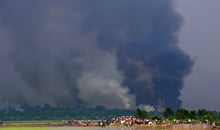
Amnesty International has gathered new evidence of indiscriminate attacks on civilians in Rakhine State, amid serious escalations in the ongoing armed conflict between the Myanmar military and the Arakan Army (AA). 

This evidence is based on firsthand testimony, photographs and video obtained from inside Rakhine State, and analysis of satellite imagery as well as media reports and civil society sources. Witnesses’ names have been changed. 

“There are no signs of the conflict between the Arakan Army and the Myanmar military abating – and civilians continue to bear the brunt,” said Ming Yu Hah, Amnesty International’s Deputy Regional Director for Campaigns. 

“The Myanmar military’s utter disregard for civilian suffering grows more shocking and brazen by the day. The UN Security Council must urgently refer the situation in Myanmar to the International Criminal Court.” 

Amnesty International is also concerned at recent reports of an increased presence of Myanmar military troops along the Myanmar-Bangladesh border. Images of antipersonnel landmines recently found in a civilian area were analysed by Amnesty’s weapons expert and identified as the MM2 type landmine often used by the Myanmar military. This device is larger than most anti-personnel landmines, and typically inflicts severe damage. 
 
Both the Arakan Army and Myanmar military use antipersonnel devices, and as such definitively establishing provenance is not always possible. Current restrictions on access preclude on-the-ground documentation efforts by Amnesty International. 
 
Several incidents involving civilians injured or killed by landmines have been credibly reported in Rakhine and Chin States in recent months by local civil society and media outlets. 
 
One of the most recent instances was on September 18, when a 44-year-old Chin woman stood on a landmine while collecting bamboo shoots near the Myanmar military’s Light Infantry Battalion 289 base in Paletwa. She died of her injuries a short time after. 

Amnesty International also notes with alarm recent local media reports of the Myanmar military using Rohingya children for forced portering in Buthidaung Township, in an area where clashes with the Arakan Army are ongoing. 
 

‘I didn’t think it could be our village’ 

On the morning of 8 September 2020, Maung Soe* was at work near his village of Nyaung Kan in Myebon Township when he heard heavy weaponry, which he describes as sounding like thunder. 

“I didn’t think it could be our village. I thought it was somewhere else. I tried to call my wife and she wasn’t answering. I heard it two times — jainjain — within one minute. 

“I went to the village and I heard some people got injured. When I got home, my wife and my daughter were laid down on the floor. [My wife] was not saying anything. I tried to check my [seven-year-old] daughter and she was still alive. I picked up my daughter and tried to get out. 

“I didn’t see [any soldiers]. The weapon came from very far. And when I tried to run by hugging my daughter’s body, there was more shooting. I tried to lay over my daughter’s body, near the stream. Within two minutes, my daughter passed away. 

“Even after my daughter passed away, I could still hear the weapons coming… I had to run away, leaving my daughter’s body. I came back later when they stopped shooting.”  

Maung Soe says there were no Arakan Army fighters in Nyaung Kan. Villagers believe the heavy weaponry was fired from a Myanmar military base near the border with Ann Township. 

The shelling at Nyaung Kan village in Myebon Township claimed the lives of five people, including Maung Soe’s wife and daughter. All were from the Rakhine ethnic group, and two were seven-year-old children. Ten others were wounded in the attack. 

By one local civil society group’s estimate, the number of civilians killed in this conflict since December 2018 in Rakhine and Chin States stands at 289, with 641 injured. 
 
The true figure cannot be independently verified, as a mobile internet shutdown and broader government crackdowns on media reporting have impeded documentation efforts in conflict-affected areas. However, in July 2020, Amnesty International was able to document indiscriminate airstrikes and shelling by the Myanmar military, killing or injuring civilians, including children. 

On 14 September, UN High Commissioner for Human Rights Michelle Bachelet told the Human Rights Council that in some recent cases in Rakhine State, civilians “appear to have been targeted or attacked indiscriminately, which may constitute further war crimes or even crimes against humanity.” 

Maung Soe is now displaced, and says he wants to see the Myanmar military withdraw from Rakhine State to prevent further harm: “As I suffer, and as I have lost my family, I don’t want any other Rakhine people to have a similar experience in the future.” 

  
‘One from the road and one from the mountain’: Burned village attacked from two directions 

Satellite analysis and new witness testimony gathered by Amnesty International suggest that Myanmar soldiers burned a village in central Rakhine State’s Kyauktaw Township in early September. 
 
One witness, villager U Kyaw Tin*, who lives in the area, told Amnesty International that he was walking with his cow when the Myanmar military launched an assault on Hpa Yar Paung began on 3 September.  
 
“[They] started shooting, they entered the village. I didn’t know exactly where the shooting came from … We were trying to run to the other side. We didn’t really see what exactly was going on, because we all were running.” 

He said that it appeared the village was closed in on by the Myanmar military from two directions: “Two [sets of] troops, one from each side – one from the road and one from the mountain. There was also shooting from [a remote location], but there was also something from the roadside, coming in by car.” 

A spokesperson for the Myanmar military, Major General Zaw Min Tun, told journalists a police vehicle was attacked by the Arakan Army with a remotely detonated improvised explosive device (IED) near the village.

Papi resettled in USA

Nearly 70,000 supporters continue to pressure the Australian Government to get refugees and asylum seekers trapped in offshore detention to safety. Last week, Vali Papi was one of many who have finally been resettled.  

After being held offshore for more than 7 years, last week Papi boarded a plane with his family to be resettled in the United States. 

Craig Foster and the Amnesty team met Papi when they were in Port Moresby, Papua New Guinea last year. After seeking asylum in Australia, Papi was sent to Manus Island Detention Centre. When the High Court in Papua New Guinea ruled that the Detention Centre was illegal, Papi and many other refugees and asylum seekers were ultimately moved into community detention in Port Moresby. 

While held offshore Papi met his partner and had a child, Cyrus. Cyrus suffers from multiple medical issues and he does not have access to the facilities required in Papua New Guinea to make sure he can lead a healthy and happy life. 

Amnesty and many other organisations have worked tirelessly to secure Papi and his family permanent resettlement, and there are organisations on the ground in the United States ready to assist Papi in making sure Cyrus gets the help he needs.

Progress

When the #GameOver campaign began in November of 2019, 612 people were still detained offshore. Today that number is just over 300. 

Check out some of the key highlights of our progress together at gameover.org.au.

We still have more than 300 people detained offshore. We need to keep building our movement and keep the pressure up. Head over the resources page to download your #GameOver Toolkit and find out how you can be involved.  

Prohibiting items bill support collapses in the face of people powered pressure

Legislation seeking to remove mobile phones from refugees and asylum seekers in detention has failed to secure support in the Senate, with Jacqui Lambie confirming she will vote against the Bill.

The Migration Amendment (Prohibiting Items in Immigration Detention Facilities) Bill sought to give Border Force increased powers to remove mobile phones which for many refugees and asylum seekers in detention is a literal lifeline to stay in contact with support networks and legal representation.

The phone is the only lifeline to video all our families, friends and lawyers. Without a phone there won’t be hope. 

Farhad Bandesh

“This is a victory for common sense, compassion and human rights,” Amnesty International Australia Refugee Advisor Dr Graham Thom said.

“Amnesty International has been very clear on our stance on this bill: it will violate international law and is designed to ‘fix’ an issue that does not exist – it warrants power to officers over detainees that is not needed.

“Thousands of people contacted key Senators to express their extreme concern about this bill and we’re so glad their voices have been heard and acknowledged.

“We welcome Senator Lambie’s decision: it’s the right one. The potential for this Bill to deny asylum seekers their rights and crush their already fragile spirits was unconscionable.

Immigration detainee Farhad Bandesh said a mobile phone is much more than a function object, but that it symbolised hope for those languishing in detention for years on end.

“You know the phone is critical not just for refugees, it’s for everyone who is in detention and in the community. I believe if we are part of the community and we are humans –  why can’t we use this device? The phone is the only lifeline to video all our families, friends and lawyers. Without a phone there won’t be hope.” 

Tasmanian Government must remove children from MC1D pending independent

Amnesty International Australia is calling for all children remaining in the Many Colours 1 Direction (MC1D) program be brought back to Tasmania immediately.

The ABC revealed this week there are serious questions about the qualifications of the operator of the program and his conduct as well as the safety of the children sent there.

“This isn’t the first time questions have been raised about this program and we’ve seen other States and Territories stop sending kids there, so it’s difficult to understand why the Tasmanian government thinks it’s an appropriate place to send some of our most vulnerable kids,” Amnesty International Australia Indigenous Rights Advisor, Rodney Dillon, said.

“Yesterday’s announcement of a review into the program is pointless. It’s already established there are serious problems and allegations of physical and psychological abuse.

“Our kids need to be in community and on country, not thousands of kilometers away, out of reach of any real monitoring and their support networks.

“We welcome the Tasmanian Government’s statement committing to funding Indigenous-led diversion programs where kids are cared for and nurtured, not left on a milk crate for hours on end in the baking sun.

“But it has to go further; they must bring the kids still there back to their home state and give them the support they need there.

“We’re also calling on the Northern Territory government to instigate an independent review into the operations of Allan Brahminy in light of these new allegations as he operates in that jurisdiction.”

Amnesty India forced to close due to sustained harassment

Responding to Amnesty International India’s bank accounts being frozen by the Enforcement Directorate, an investigative agency of the Government in India, Julie Verhaar, Acting Secretary General of Amnesty International said:

“This is an egregious and shameful act by the Indian Government, which forces us to cease the crucial human rights work of Amnesty International India for now. However, this does not mark the end of our firm commitment to, and engagement in, the struggle for human rights in India. We will be working resolutely to determine how Amnesty International can continue to play our part within the human rights movement in India for years to come.

This is an egregious and shameful act by the Indian Government, which forces us to cease the crucial human rights work of Amnesty International India for now.

Julie Verhaar, Acting Secretary General of Amnesty International.

“The Amnesty movement is very proud of the vital work carried out by our outstanding colleagues in India regardless of the risks they faced, including their unequivocal calls for accountability for the actions of the authorities during the Delhi riots and in Jammu and Kashmir and their work on gender based violence.  Sadly, this enormously important work standing up for victims has been met with the heavy-handed tactics that Indian civil society has become increasingly familiar with – part of the government’s drive to silence critical voices and stoke a climate of fear.

“The staff of Amnesty India have shown great dignity in the face of a concerted and vicious smear campaign of spurious allegations, raids by various investigative agencies, malicious media leaks, and intimidation without an iota of credible evidence of wrongdoing. No laws have been broken.

“It is a dismal day when a country of India’s stature, a rising global power and a member of the UN Human Rights Council, with a constitution which commits to human rights and whose national human rights movements have influenced the world, so brazenly seeks to silence those who pursue accountability and justice. As many of our colleagues have lost their jobs this week thanks to the actions of the Government of India, we will look for ways to continue our support to them as we continue to call on the Government to end its shameful crackdown on those who stand up for human rights of Indians.”

Twitter still failing women over online violence and abuse

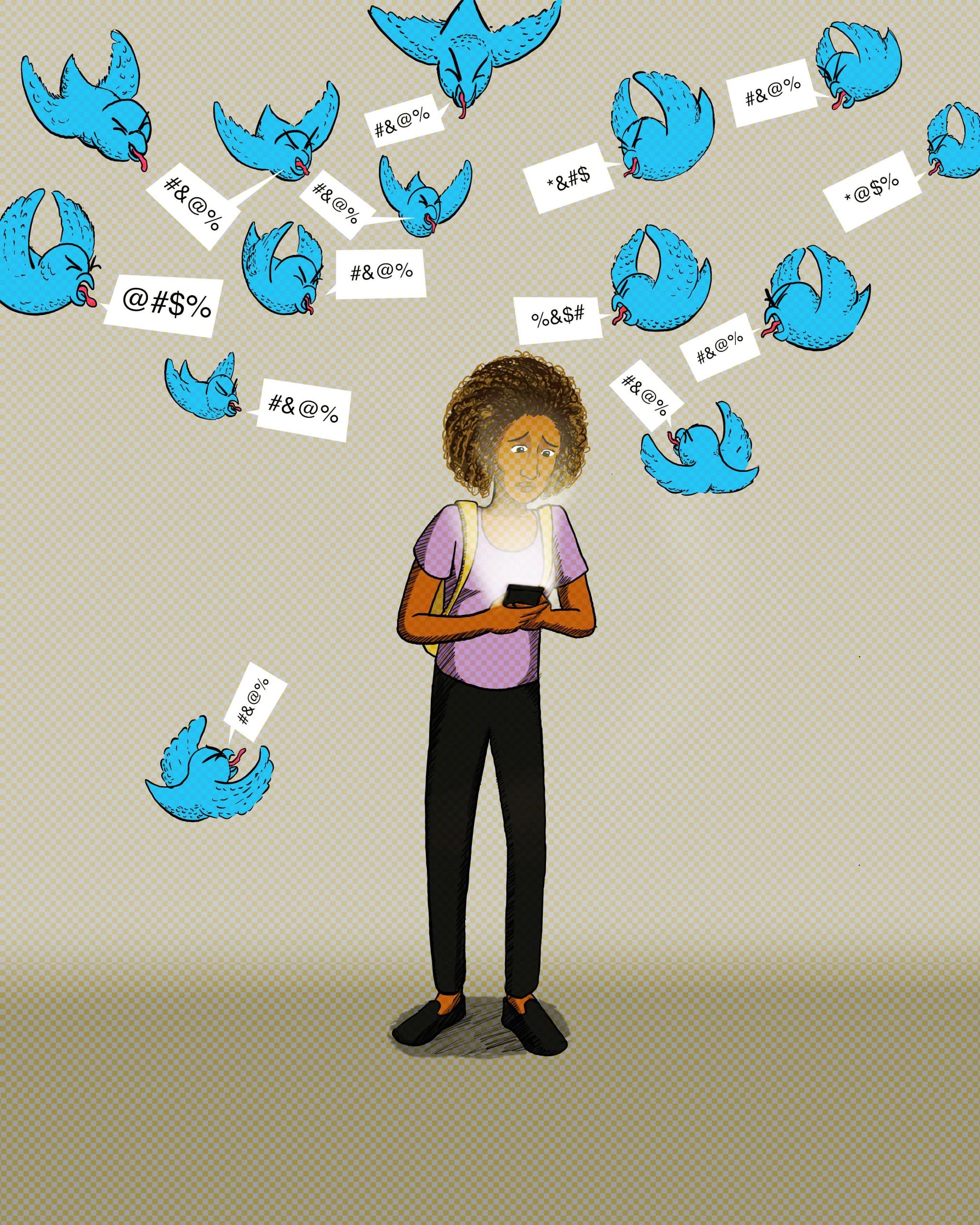
Twitter is still not doing enough to protect women from online violence and abuse, despite repeated promises to do so, new analysis by Amnesty International reveals.

The Twitter Scorecard grades the social media company’s record on implementing a series of recommendations to tackle abuse against women on the platform, since Amnesty first highlighted the scale of the problem in its 2018 Toxic Twitter report.  Despite some welcome progress, Twitter needs to do much more to address the problem. The company has fully implemented just one of ten concrete recommendations, with limited progress in increasing transparency on how it handles reports of abuse.

“Twitter is still not doing enough to tackle the deluge of abuse women face on the platform. Our analysis shows that despite some progress, Twitter is not doing enough to protect women users, leading many women to silence or censor themselves on the platform,” said Rasha Abdul Rahim, Co-Director of Amnesty Tech.

Twitter is still not doing enough to tackle the deluge of abuse women face on the platform. Our analysis shows that despite some progress, Twitter is not doing enough to protect women users, leading many women to silence or censor themselves on the platform.

Rasha Abdul Rahim, Co-Director of Amnesty Tech.

 “We have outlined clear, straightforward steps that Twitter can take to make its platform a safer place for women to express their views. Twitter can and must do more to protect women from abuse.”

Since the release of Toxic Twitter in 2018, Amnesty International has continued to highlight the scale of abuse women face on Twitter, including in Argentina, India, UK and USA. Meanwhile, women have continued to speak out about the abuse they experience on Twitter, and the company’s failure to adequately respond.

The persistent abuse women face on the platform undermines their right to express themselves equally, freely and without fear. This abuse is highly intersectional and women from ethnic or religious minorities, marginalized castes, lesbian, bisexual or transgender women – as well as non-binary individuals – and women with disabilities are disproportionately impacted by abuse on the platform.

Indian author and activist, Meena Kandasamy, said, “Being a Tamil, mixed-caste woman, who speaks out against India’s discriminatory caste system, has proved an explosive mix on Twitter. I receive a torrent of racist and misogynistic abuse, including rape threats. Twitter always seems to be playing catchup and is too slow to address the different types of abuse women face. Twitter is a powerful place to express ourselves, but Twitter needs to do more to clean up the platform and make it a safe place for women.”

Amnesty International provided Twitter with concrete recommendations on how it can better meet its human rights responsibilities, highlighting ten we believe are key to helping to tackle online abuse against women. The Twitter Scorecard uses a traffic light system to grade Twitter’s progress in implementing the recommendations, which cover transparency, reporting mechanisms, and enhanced privacy and security features. Red means the recommendation has not been implemented, amber indicates work in progress, and green means the recommendation has been fully implemented.

Due to the lack of meaningful data Twitter provides, it is difficult even to gauge the full extent of the problem. For example, Twitter still does not provide detailed country-level breakdowns of user reports of abuse, nor does it provide data about how many users report specific kinds of abusive language, for example abuse based on gender or race.

Twitter is also reticent about disclosing detailed information about the number of content moderators it employs, including what kind of coverage they provide across different countries and languages. 

The social media platform needs to be more transparent as to how it designs and implements automated processes to identify online abuse against women. While Twitter has disclosed details on how it is using algorithms to combat misinformation during the current COVID-19 pandemic, it is yet to provide the same level of transparency on how algorithms are used to address abusive tweets.

Twitter has made welcome progress in some areas, including improving the appeals process, by offering more guidance to users on how the process works and how decisions are made. The company was graded amber for its efforts towards increasing users’ awareness of privacy and security features and in educating users on the harm such abuse causes. 

Twitter has a responsibility to respect human rights, including the rights to live free from discrimination and violence and to freedom of expression and opinion. 

“It is totally in Twitter’s power to implement these changes that would make a real difference to millions of women’s experience on the platform,” said Michael Kleinman, Director of Amnesty International’s Silicon Valley Initiative.

“Twitter CEO Jack Dorsey needs to match words with action to show he is genuinely committed to making Twitter a safer place for women. We will continue to press the company until we see more changes that truly show that abuse against women is not welcome on the platform.”   

Twitter’s response

In response to our analysis, Twitter acknowledged it needs to do more. However, the company said its combination of human moderation and use of technology, allows it to take a more proactive response to online abuse.  On publishing disaggregated data by country or region, Twitter argued this could be open to misinterpretation and give a misleading impression of the problem. 

While Amnesty International acknowledges that context is important, there is nothing to stop Twitter providing context alongside data, and the company’s human rights responsibilities means it has a duty to be transparent in how it deals with reports of violence and abuse.

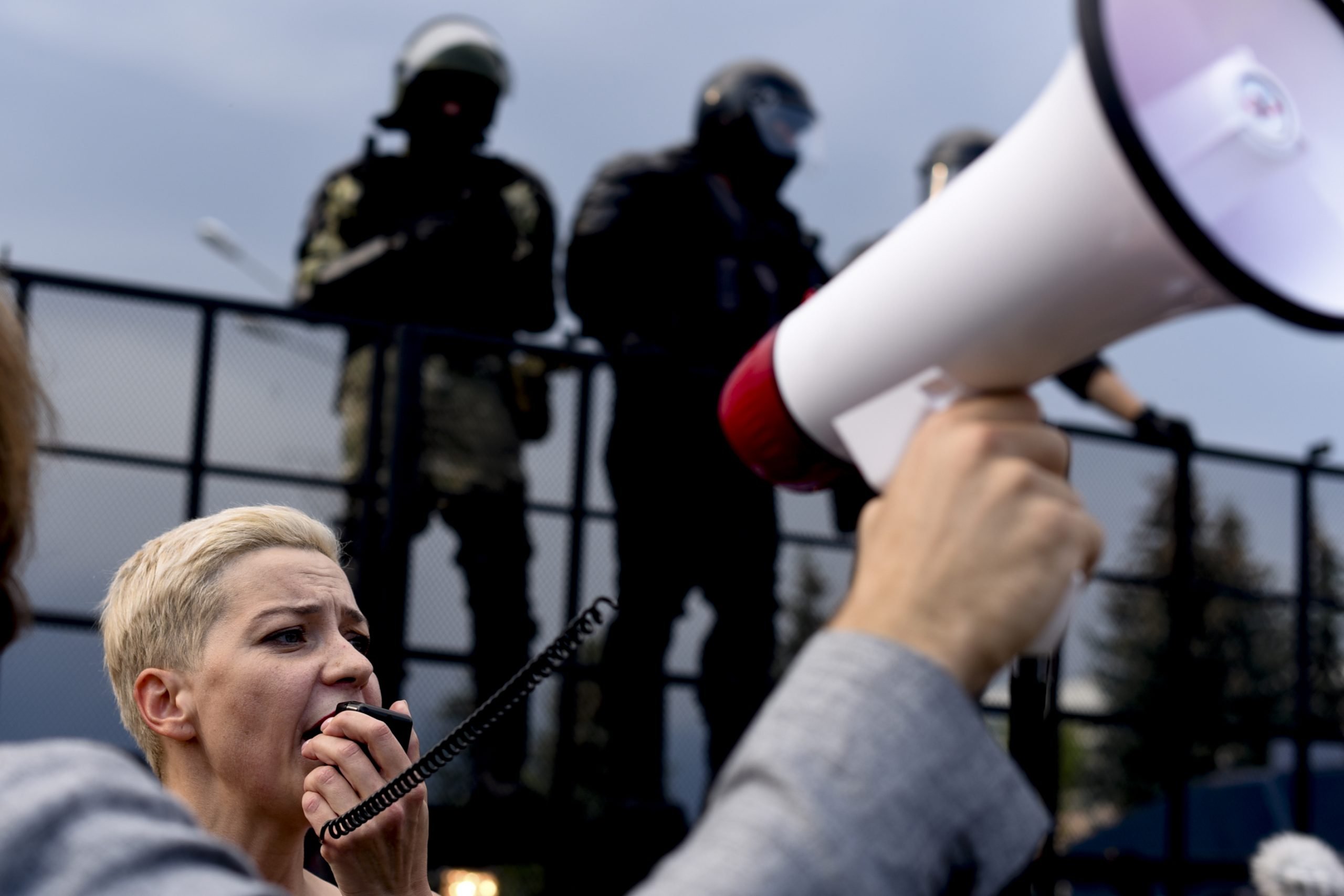
Belarus: UN Human Rights Council must take strong action on escalating human rights crisis in the country

In response to the escalating human rights crisis in Belarus, Amnesty International will address the UN Human Rights Council (HRC) on 18 September and demand that it take strong and decisive action to investigate the ongoing repression of post-election protests in the country and hold perpetrators of mass violations to account. 

Amnesty International will also use the Urgent Debate on Belarus, which the Council agreed to hold this week, to address Belarus’ consistent failure over the years to fully cooperate with the Council, including with the Special Rapporteur on Belarus, a mandate created by the Council.  

“Belarus has for too long and without sufficient consequence refused to cooperate with the Special Rapporteur on Belarus, notwithstanding the violations we have been witnessed and documented for years.  The situation has now deteriorated beyond anything we have seen in three decades of the country’s independence,” said Marie Struthers, Amnesty International’s Director for Eastern Europe and Central Asia. 

“The UN’s principal human rights body should send a clear message that the international community will not tolerate human rights abuses, particularly of the magnitude that Alyaksandr Lukashenka’s government has unleashed on its people. The world must stand with the victims of human rights violations in Belarus and support their pursuit of justice. The Council must establish an investigation into these human rights violations and put as much pressure on Belarusian authorities as possible to hold the perpetrators accountable.” 

The UN’s principal human rights body should send a clear message that the international community will not tolerate human rights abuses, particularly of the magnitude that Alyaksandr Lukashenka’s government has unleashed on its people

Marie Struthers, Amnesty International’s Director for Eastern Europe and Central Asia.

Background 

On 26 August, Amnesty International and 16 other international and Belarusian NGOs called on the HRC to act urgently on the human rights crisis in Belarus, including by launching an international investigation into the ongoing human rights violations.  

The Belarusian authorities have waged a crackdown on dissent in the months leading up to the 9 August presidential election in which the incumbent Alyaksandr Lukashenka sought re-election, and in the weeks after the vote. The authorities have arrested, intimidated and harassed hundreds of people challenging Lukashenka and questioning his official declaration of victory.  

There has been an outpouring of graphic images and compelling testimonies of the excessive use of force against peaceful protestors by police, widespread torture or other ill-treatment of detainees, and fabrication of criminal charges against leading activists, including, most recently, Maryia Kalesnikava. Amnesty International delegates witnessed the police crackdown on peaceful protesters in the capital Minsk on election night and subsequently.