Solving the “Social Dilemma”: Overhauling Big Tech’s business model

If there’s one thing 2020 has underscored, it’s our reliance on the online world for social connection and interaction. For many of us, online platforms and services like Facebook and Google’s offered a lifeline during the pandemic, allowing us to stay in touch with family and friends, to move work and schooling online and to get up-to-date health information. But this convenience comes at a cost to our human rights, including our mental health, as is powerfully shown in The Social Dilemma, a new documentary released on Netflix last week.

The Social Dilemma opens our eyes to the way our lives are constantly monitored – and controlled – by these platforms. It’s the Truman Show on steroids, monitoring one third of the planet.

Back in April former Google CEO Eric Schmidt expounded “the benefit of these corporations — which we love to malign — in terms of the ability to communicate … the ability to get information, is profound…” and said that people should be grateful that “these companies got the capital, did the investment, built the tools that we’re using now and have really helped us out.” In the documentary, however, Silicon Valley insiders paint a very different picture. They argue that the worst aspects of humanity keep manifesting themselves on these platforms as a direct result of how the platforms were designed.

These platforms are designed to optimize three things: i) how long can they keep eyeballs glued to screens; ii) how many new users they can get; and iii) how much ad revenue they can generate from serving ads to people whose eyeballs are on screens.

The Social Dilemma opens our eyes to the way our lives are constantly monitored – and controlled – by these platforms. It’s the Truman Show on steroids, monitoring one third of the planet. 

Rasha Abdul Rahim, Co-Director Amnesty Tech

This all feeds their underlying business model, which is essentially to harvest and monetize our personal information. This model’s fundamental characteristic is to aggregate vast amounts of data on people by keeping them on the platforms for as long as possible, use that data to infer incredibly detailed profiles on people’s lives and behaviour, and monetize it by selling those predictions to whoever wants to influence them.

As we warned in our 2019 report, the surveillance-based business model of Facebook and Google is not only inherently incompatible with the right to privacy, but poses a systemic threat to a range of other rights including freedom of opinion and expression, freedom of thought, and the right to equality and non-discrimination.

Algorithms on YouTube determine what video will play next, while on Facebook they determine the content on our feeds and what ads will be served to us. Very often these algorithms amplify disinformation and divisive content, fuel racism, and even influence our own beliefs and opinions.

The film reveals how teams comprising predominantly white men in Silicon Valley are explicitly tasked with exploiting the vulnerabilities of our human psychology: our addictive nature, our need for social validation and our bias towards incendiary and sensationalist content. Precisely because these companies worked out that this is the best way to keep us on for longer, get more and more data about us, make better predictions about us and profit from selling us ads.

In other words, the whole information ecosystem that currently serves one third of the planet was set up not to serve us but to manipulate and use us. Facebook and Google services appear “free” but, as former Google designer Tristan Harris says in the film, “if you’re not paying for the product, you are the product”. And the dominance of the companies’ platforms means it is now effectively impossible to engage with the internet without “consenting” to their surveillance-based business model.

Illustration of Facebook logo
Sebastien Thibault

Although the film positions this as a “social dilemma”, it does not need to be a dilemma at all. Despite what we have been led to believe, the internet does not need to depend on surveillance. People who signed up for platforms when they were far more privacy-respecting or before they were acquired by Facebook or Google now face a choice between leaving a service they depend on or submitting to constant surveillance. This is not – and should not be – a legitimate choice.

We urgently need governments to step up and introduce regulations to overhaul the business model and protect our rights. This a systemic and structural issue that won’t be easy to address and will require a mix of political, legal and structural solutions.

Efforts to set much stricter limits on the tracking and use of personal data won’t be enough if they don’t address the concentration of data – and power – in the hands of Facebook and Google. At the same time, the increasing chorus of politicians, regulators and academics who propose that Big Tech should be “broken up”, will fail to address the systemic human rights abuses unless they push for measures that holistically tackle the surveillance-based business-model itself.

No one approach will work on its own, nor can we solve the social dilemma alone. We need leadership and urgent action from our governments to protect us from the abuses of Big Tech.


Stranded Aussies denied human rights

The Australian government must act immediately to bring home the 25,000 Australians stranded overseas, or risk violating their human rights, Amnesty International Australia said today.

The government should leave no stone unturned; on top of increasing the cap they can charter additional flights, employ RAF resources, use airports other than Sydney, Perth, Adelaide, Brisbane, or use federal quarantine facilities to increase capacity for people to isolate themselves.

Amnesty International Australia campaigner, Joel Clark.

Several articles of international law explicitly state that people have the right to leave and return to their own country and not be deprived of the right to do either.

“At least 25,000 Australians, including up to 3000 deemed vulnerable, are stranded overseas – which is 25,000 people whose human rights are being violated,” Amnesty International Australia campaigner Joel Clark said.

“To get Australians home, the Federal Government needs to raise the caps they have in place that are preventing people from coming home. By raising it above the current arbitrary cap of 6,000 people returning per week, the government could have these people home in no time.

“The government should leave no stone unturned; on top of increasing the cap they can charter additional flights, employ RAF resources, use airports other than Sydney, Perth, Adelaide, Brisbane, or use federal quarantine facilities to increase capacity for people to isolate themselves.”

Background

  • The Universal Declaration of Human Rights says, “everyone has the right to leave any country, including his own, and to return to his country” (Article 13(2))
  • The International Covenant on Civil and Political Rights says, “No one shall be arbitrarily deprived of the right to enter his own country.” (Article 12(4))
  • Human Rights Committee General Comment 27, on CCPR Article 12, said: “In no case may a person be arbitrarily deprived of the right to enter his or her own country … there are few, if any, circumstances in which deprivation of the right to enter one’s own country could be reasonable.”

Kenya: Arrest of Amnesty International Kenya’s Chairperson, Renee Ngamau, is an attack on human rights defenders

Following last night’s arrest of Amnesty International Kenya’s Chairperson and advocate, Renee Ngamau, and today’s no show by the police in court, Amnesty International Kenya’s Executive Director Irungu Houghton said:

“Amnesty International condemns the arbitrary arrest of our Kenya Chairperson Renee Ngamau. We believe she was targeted simply for as acting as human rights defender to protect public land. The Kenyan Police Service must end harassment, intimidation and attack on Renee Ngamau, human rights activists and public land defenders.”

Amnesty International condemns the arbitrary arrest of our Kenya Chairperson Renee Ngamau. We believe she was targeted simply for as acting as human rights defender to protect public land.

Amnesty International Kenya’s Executive Director Irungu Houghton.

“Authorities should protect those defending other people’s rights, and not use the criminal justice against them.”

“Our Chairperson Renee Ngamau has been through an enormously stressful ordeal. She was arrested for the leadership she provides in her community as the Chairperson of the Jamhuri Phase 1 Residents Association. The Association has been peacefully protesting diversion of public land allocated for a children’s playground.

“On the basis of a single complaint, eleven police officers were mobilised to arrest Renee Ngamau from her home last night. This morning, not one bothered to show up in court. No one should ever be arrested simply for peacefully exercising their freedom of expression and right to peaceful assembly let alone arrested and arraigned in court. We call on the authorities to drop any charges and direct their energies towards investigating and prosecuting those responsible for the diversion of land away from public use.”

Background

Amnesty International Kenya Chairperson Renee Ngamau was arrested on the evening of 14 September for rallying her neighbours to peacefully oppose private development on public land designated as a playground. She is also the chairperson of her Jamhuri Phase 1 neighbourhood in Nairobi.

She was released on bail last night and ordered to appear before the Kibera Magistrate’s Court in Nairobi. After more than two hours of waiting in the court and no charges presented, she presented herself to the Kilimani Police Station to prevent re-arrest.

Independent investigation needed into the latest Indigenous death in custody

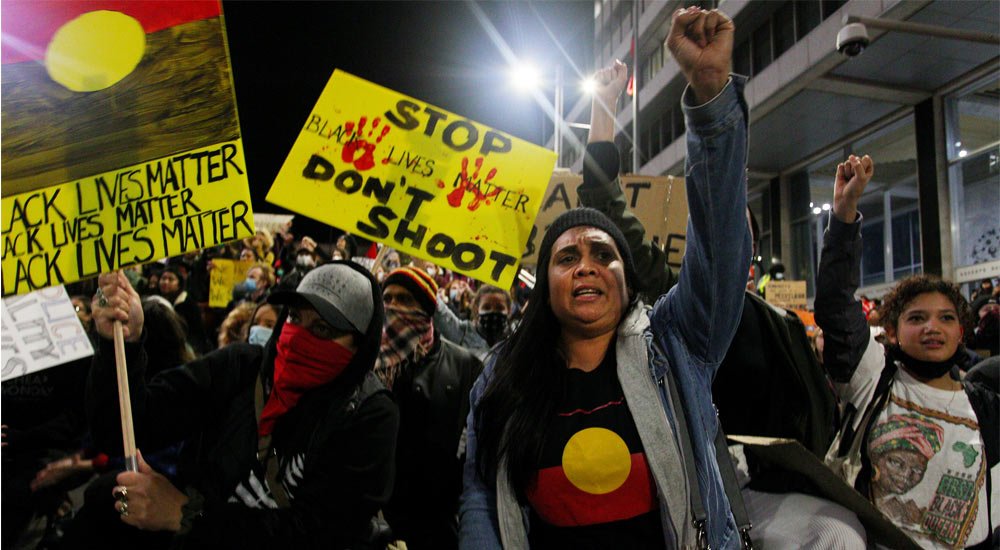
The latest death in custody of an Aboriginal woman in a Brisbane watch house this week is a shameful legacy of the government’s inaction on recommendations made in the 1991 Royal Commission into Aboriginal Deaths in Custody, Amnesty International said.

There have been more than 400 Indigenous deaths in custody since the Royal Commission made its recommendations, and must be investigated independently.

Queensland Police said in a statement that the Ethical Standards Command will investigate the death.

“The fact is that an investigation by police into the actions of police doesn’t have any credibility at all,” Amnesty International Australia Indigenous Rights Advisor, Rodney Dillon, said.

The fact is that an investigation by police into the actions of police doesn’t have any credibility at all.

Amnesty International Australia Indigenous Rights Advisor, Rodney Dillon.

“We have spoken with the woman’s family and they want a fully independent inquiry — Amnesty International Australia backs them in this request. Queensland has the opportunity to lead the way by investigating this tragic death properly. 

“It’s the very least the family should expect from a system which has failed them so badly.” 

Community spokesperson Wayne Wharton said there was concern for people who have specific needs and children being kept in watch houses.

“They need to find alternative accommodation for people who are sick – like access to rehab and diversion for young people rather than sending them into the prison system,” Mr Wharton said.

Cambodia: Youth targeted in ‘shocking’ wave of arrests

The Cambodian authorities must end their relentless assault on young human rights defenders and others peacefully expressing their political opinions, said Amnesty International today after a recent spate of arrests. 

These arrests are a shocking, all-out assault on Cambodia’s youth. Instead of encouraging the new generation of young Cambodians to fully participate in shaping the country’s future, Hun Sen’s government is determined to stamp out dissent in all walks of Cambodian life, from the clergy to the arts.

Ming Yu Hah, Amnesty International’s Deputy Regional Director of Campaigns. 

“These arrests are a shocking, all-out assault on Cambodia’s youth. Instead of encouraging the new generation of young Cambodians to fully participate in shaping the country’s future, Hun Sen’s government is determined to stamp out dissent in all walks of Cambodian life, from the clergy to the arts”, said Ming Yu Hah, Amnesty International’s Deputy Regional Director of Campaigns. 

Ten young people including a Buddhist monk and a musician have been arbitrarily detained and charged with ‘incitement’ between 13 August and 7 September.  

All ten detainees are considered prisoners of conscience by Amnesty International, meaning they have been detained solely for the peaceful exercise of their protected human rights. Amnesty International calls for the immediate and unconditional release of all prisoners of conscience wrongfully detained in Cambodia and throughout the world. 

Relentless spate of arrests in recent weeks 

On Friday, 4 September, three environmental human rights defenders affiliated with activist group Mother Nature Cambodia – Thun Ratha, a 28-year-old man, Long Kunthea, a 22-year-old woman, and Phuong Keorasmey, a 19-year-old woman – were initially arrested and later charged with “incitement to commit a felony” under Articles 494 and 495 of Cambodia’s Criminal Code on Sunday, 6 September.  

The arrests occurred as Long Kunthea sought to conduct a one-woman procession through Phnom Penh towards the residence of Prime Minister Hun Sen, with the stated aim of discussing environmental concerns with him. 

Also on Friday, 22-year old rapper Kea Sokun was arrested in Siem Reap and charged with incitement under Articles 494 and 495 of the Cambodian Criminal Code. Sokun is understood to have been targeted on the basis of a song he released in April called ‘Dey Khmer’ (which translates to ‘Khmer Land’) in which he commented on long-running sensitivities regarding the Cambodian-Vietnamese border. The song reached 1.3 million views on YouTube before being deleted under unknown circumstances. Other versions of the song were later re-posted on YouTube.  

In addition to these youths and environmental activists, at least five political activists and one trade unionist have been arbitrarily detained since the end of July amid an escalating crackdown on all forms of dissent. 

Detention of prominent rights defender spurred a string of further arrests 

Prisoner of conscience and prominent human rights defender Rong Chhun, the president of the Cambodian Confederation of Unions, was arrested on 31 July and charged with incitement after commenting publicly on land rights concerns at the Cambodian-Vietnamese border.  

On 13 August, two youth activists from Khmer Thavrak – Hun Vannak, a 38-year-old man and Chhouen Daravy, a 28-year-old woman – were arrested while calling for the release of Rong Chhun. Hun Vannak has previously been imprisoned in retaliation for his work to expose illegal sand dredging and its impact on local communities in Cambodia.  

On Sunday, 6 September, two more human rights defenders – Venerable Koet Saray, a Buddhist monk, and Mean Prommony, vice-president of the Khmer Student Intelligent League Association, were also arrested in Phnom Penh, apparently in retaliation for planning a demonstration at Phnom Penh’s Freedom Park to call for the release of Rong Chhun.  

On Monday, 7 September, two more youth activists were arrested, also apparently in retaliation for seeking to protest Rong Chhun’s imprisonment – Tha Lavy, a 20-year-old man affiliated with Active Citizens for Justice and Eng Malai (also known as So Metta), a 31-year-old woman affiliated with Khmer Thavrak. Eng Malai was arrested on Monday evening, shortly after leaving the Cambodian office of the UN High Commissioner for Human Rights in Phnom Penh, where she had sought refuge. 

Several of the recent arrests relate to allegations of encroachment on Cambodian villagers’ land at the Cambodian-Vietnamese border – a highly-sensitive issue in the eyes of the Cambodian authorities. Although Amnesty International takes no position on border disputes or claims of encroachment, territorial disputes are matters of legitimate public interest and as such, the expression of views regarding the border is protected under international human rights law, as is the freedom to seek, receive and impart information and ideas of all kinds, with very few legitimate restrictions.  

Recent youth-led protests 

In recent years, the Cambodian authorities have systematically suppressed the right to peaceful assembly by banning public gatherings and by attacking and criminalizing peaceful demonstrators. Despite this severe repression, youth-led protests have occurred regularly across Phnom Penh since Rong Chhun’s arrest, and the authorities have responded with abusive use of force and intimidation. On 18 August, 80 civil society groups in Cambodia called on the authorities to stop beating and arresting peaceful protestors. 

“Cambodian youth are saying loud and clear that they will not be silenced; they will not be intimidated; and that they have had enough. These daring young activists are standing up for the ideals of justice, equality and human rights. They must be protected and encouraged.” 

Authorities using repressive NGO law 

This Monday, Cambodia’s Ministry of Interior issued a statement justifying the crackdown on the basis that neither Mother Nature Cambodia nor Khmer Thavrak are registered under the repressive and widely-criticised Law on Associations and Non-Governmental Organisations (LANGO), which has been repeatedly used to justify the repression of legitimate grassroots activism since its passage in 2015. Mandatory registration of all NGOs operating in a country violates the right to freedom of association (guaranteed under Article 22 of the International Covenant on Civil and Political Rights).  

Meanwhile, Cambodian authorities have stepped up their intimidation of youth organizations, independent unions and workers’ rights NGOs by conducting arbitrary police inspections of the offices and staff records of many prominent organizations throughout early September.  

Myanmar: Leaked documents reveal global business ties to military crimes

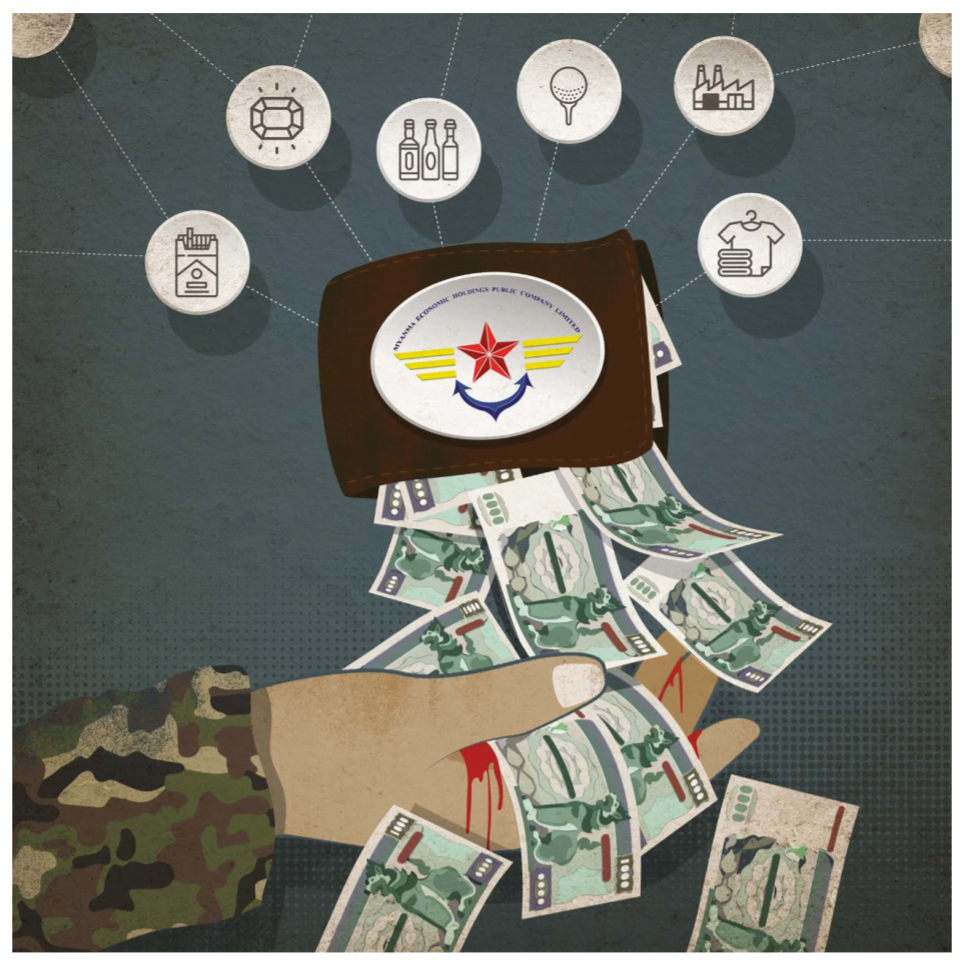
An Amnesty International investigation has exposed how international businesses are linked to the financing of Myanmar’s military, including many units directly responsible for crimes under international law and other human rights violations. Leaked official documents analyzed by Amnesty International reveal how Myanmar’s military receives huge revenues from shares in Myanmar Economic Holdings Limited (MEHL), a secretive conglomerate whose activities include the mining, beer, tobacco, garment manufacturing and banking sectors. MEHL has partnerships with a range of local and foreign businesses including Japanese beer multinational Kirin and South Korean steel giant POSCO.

MEHL shareholder records show that military units, including combat divisions, own about one third of MEHL’s shares. Records also detail links between MEHL and the Western Command, which oversees operations in Rakhine State, including atrocities committed against the Rohingya population and other ethnic minorities.  The report also provides information on the considerable annual dividend payments that shareholders have received since MEHL’s establishment in 1990.

“These documents provide new evidence of how the Myanmar military benefits from MEHL’s vast business empire and make clear that the military and MEHL are inextricably linked. This is not a case of MEHL unwittingly financing human rights violations – its entire board is composed of high-level military figures,” said Mark Dummett, Head of Business, Security and Human Rights at Amnesty International.

“The perpetrators of some of the worst human rights violations in Myanmar’s recent history are among those who benefit from MEHL’s business activities – for example, military chief Min Aung Hlaing owned 5 million shares in MEHL in 2011. In the face of this incontrovertible evidence, businesses who currently partner with MEHL must end these relationships responsibly.”

Global business links

Amnesty International’s research demonstrates that a direct link exists between MEHL’s business partners and human rights violations. MEHL works in collaboration with these business partners in establishing joint ventures or profit-sharing agreements in Myanmar; when profits are derived from these operations, they are provided to MEHL as shareholder. MEHL then disburses dividends to its own shareholders.

Amnesty wrote to eight companies who operate jointly with MEHL in Myanmar. These are:

Ever Flow River Group Public Co., Ltd, (EFR), a Myanmar logistics company; Kanbawza Group (KBZ), a Myanmar conglomerate with jade and ruby mining operations; Kirin Holdings, a Japanese beverage company; INNO Group, a South Korean property developer; Pan-Pacific, a South Korean manufacturer and exporter of clothing; POSCO, a South Korean steelmaker; RMH Singapore, a Singaporean fund with a tobacco operation in Myanmar; and Wanbao Mining, a Chinese metal mining company.

In its reply, Pan-Pacific announced that it is terminating its business partnership with MEHL in the wake of Amnesty’s findings and the publication of the UN Fact-Finding Mission report of 2019. KBZ and Kirin have stated they are reviewing their relationship with MEHL, while others did not provide such commitments or did not respond at all. Full copies of responses can be found in Annex I of the report.

These companies all partner with MEHL in operations inside Myanmar. However, a few have global reach. Kirin is one of the world’s largest beer brewers, and its drinks, such as Kirin, San Miguel, Lion and Fat Tire are sold in bars and shops all over the world. POSCO, one of the world’s largest steelmakers, produces a range of steel products for the automobile, construction, and shipbuilding industries.

These companies all partner with MEHL in operations inside Myanmar. However, a few have global reach. Kirin is one of the world’s largest beer brewers, and its drinks, such as Kirin, San Miguel, Lion and Fat Tire are sold in bars and shops all over the world. POSCO, one of the world’s largest steelmakers, produces a range of steel products for the automobile, construction, and shipbuilding industries.

Shedding light on a secretive relationship

MEHL was founded by Myanmar’s military regime in 1990 and is still directed and owned by serving and retired personnel. This link clearly provides the military with substantial revenue on top of its official budget, but the exact nature of the relationship is shrouded in secrecy.

Amnesty International has seen two documents which expose new details about how MEHL finances the military. The first is a filing which was lodged by MEHL with Myanmar’s Directorate of Investment and Company Administration (DICA) in January 2020. It states that MEHL is owned by 381,636 individual shareholders, who are all serving or retired military personnel, and 1,803 “institutional” shareholders, consisting of “regional commands, divisions, battalions, troops, war veteran associations”.

The second document is a copy of a confidential MEHL shareholder report from fiscal year 2010-11. As well as providing information on the identities of MEHL’s shareholders, it documents the considerable annual dividend payments that shareholders received between 1990 and 2011.

The shareholder report was shared with Amnesty International by Justice for Myanmar, an activist group that campaigns for justice and accountability for the people of Myanmar. The contents of the report are being made public on the group’s website[1], access to which was blocked in Myanmar on 1 September by the Ministry of Transport and Communications. According to a spokesman for the ministry, the website spreads “fake news”. Justice For Myanmar has responded stating this is a bid to silence critical voices.

The total amount of dividend payments made in this 20-year period to all shareholders was more than 107 billion Myanmar kyat (107,869,519,830) – about 18 billion US dollars according to the official exchange rate. Of this amount, MEHL transferred 95 billion kyat – the equivalent of approximately 16 billion US dollars – to military units.

Both documents confirm that MEHL’s shareholders include military units and high-ranking military officers directly implicated in crimes under international law and other serious human rights violations.

For example, the 2010-11 report lists as shareholders 95 separate military units that fall within the Western Command, the regional command covering and overseeing operations in Rakhine State. Together, they owned more than 4.3 million shares and received payments of more than 1.25 billion kyat (208 million USD) in 2010-11. The Western Command is also listed as an MEHL shareholder in the 2020 DICA document.

The headquarters of battalions from the 33rd and 99th Light Infantry Divisions are also listed as shareholders. Amnesty International has documented these divisions’ involvement in crimes against humanity against the Rohingya population, including massacres of women, men, and children, in Rakhine State, and war crimes in Kachin and northern Shan States.

The DICA report also names senior military commanders, including those who commanded troops involved in crimes under international law, as shareholders. Senior General Min Aung Hlaing, the Commander-in-Chief and head of the War Office, is listed as shareholder number 9252. In 2010-11 Min Aung Hlaing owned 5 million shares and received a dividend payment of 1.5 million kyat (250,000 USD). The UN has called for Min Aung Hlaing, who oversaw the brutal campaign against the Rohingya in 2017, to be investigated and prosecuted for genocide, crimes against humanity, and war crimes.

“While outsiders can’t know how these dividends are spent by military units, the size and regularity of these payments suggests that they cover operational costs,” said Mark Dummett.

“In providing this funding to military units, MEHL is boosting their resources and financing their operations which crimes against humanity and war crimes. Any company doing business with MEHL risks contributing to these violations and must take urgent steps to cut ties,” added Yadanar Maung, spokesperson of Justice For Myanmar.

MEHL’s “patron group”, which oversees the Board, includes the very officers responsible for crimes against humanity and other human rights violations, and therefore MEHL cannot be trusted to reform itself.  What is more, MEHL has shown no willingness to engage transparently with its business partners to demonstrate that it can reform its structure.

“MEHL’s business partners have a responsibility to respect human rights and seek to prevent or mitigate adverse human rights impacts linked to their operations. Given MEHL’s unwillingness to reform its structure, its business partners must assess their relationship to MEHL and responsibly disengage. This means taking into account credible assessments of potential adverse social, economic, and human rights impacts and taking steps to mitigate them when disengaging,” said Mark Dummett.

Amnesty International is calling on the Myanmar government to intervene to break the link between the armed forces and the economy. Part of this must be a thorough reform of the ownership and management of MEHL. The government should also establish a fund, using MEHL’s profits, to compensate the victims of human rights violations committed by military units that are financed by or are shareholders of MEHL.

Philippines: Absolute pardon granted to Pemberton an act of impunity

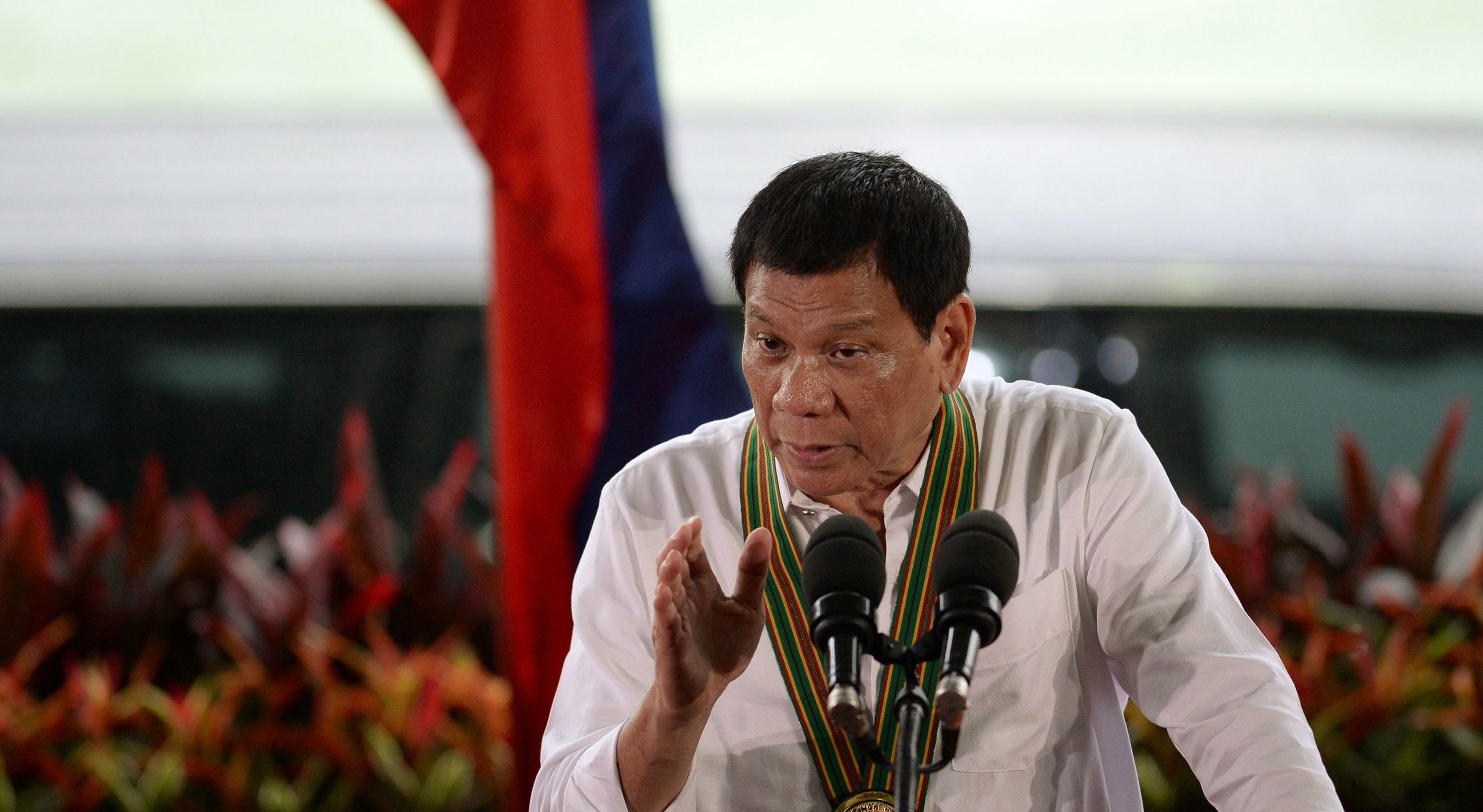
Responding to President Duterte’s granting of absolute pardon to U.S. Marine Lance Corporal Joseph Scott Pemberton convicted of killing Jennifer Laude, Amnesty International Philippines Director, Butch Olano, said:
“The absolute pardon granted by President Duterte to Lance Corporal Joseph Scott Pemberton is a tragic reminder of the prevailing culture of impunity in the country.


“President Duterte’s decision exempts Pemberton from serving the remaining time of his punishment for killing a Filipino citizen while on active duty in the Philippines, despite his testimony of admission and convincing evidence of his guilt beyond reasonable doubt.


“President Duterte’s decision exempts Pemberton from serving the remaining time of his punishment for killing a Filipino citizen while on active duty in the Philippines, despite his testimony of admission and convincing evidence of his guilt beyond reasonable doubt.

Amnesty International Philippines Director Butch Olano


“The President’s prerogative of clemency exists to correct mistakes made in a flawed judicial proceeding. The killing of Jennifer Laude, however, was carried out with blatant disregard for her life and dignity and proven in a court of law. The President’s decision to pardon Pemberton is ultimately an act of impunity and an impediment to obtaining justice.”

Background
On 7 September 2020, six days after U.S. Marine Lance Corporal Joseph Scott Pemberton filed a motion for his release under Good Conduct Time Allowance (GCTA), President Duterte granted him absolute pardon extinguishing all of his criminal liabilities without condition. Pemberton was convicted of homicide for killing Jennifer Laude in Olongapo City in 2014.


Pemberton has only served five years and eight months of his prison sentence of six to 10 years for killing Laude in 2014. His motion for release is the first time that the GCTA is being claimed by a US soldier while in solitary confinement, and not serving his jail term at the New Bilibid Prison in accordance with the Visiting Forces Ageement, a mutual defence treaty between the Philippines and the US.

UK: Assange extradition hearing will be a key test for UK and US justice

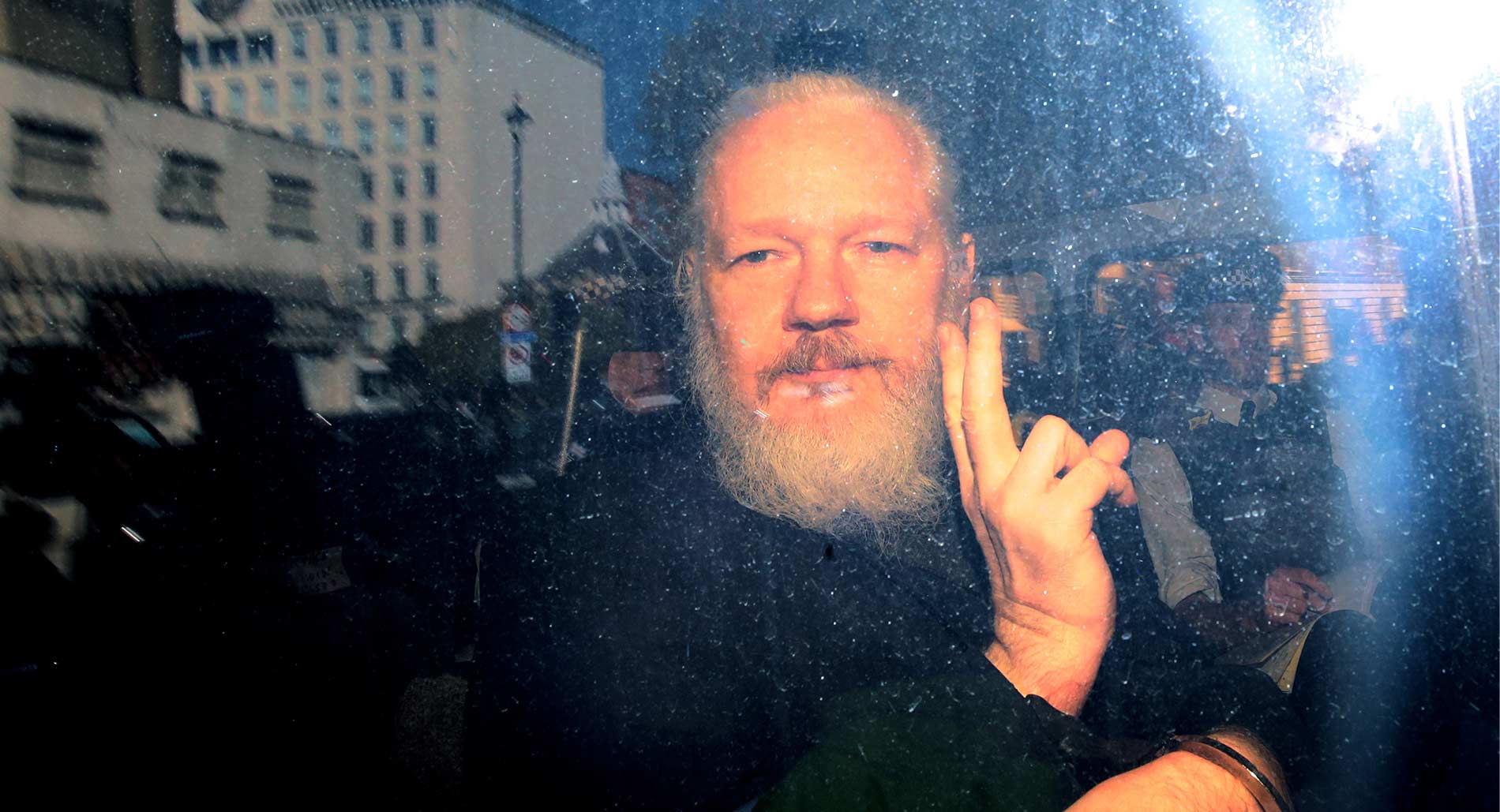
US authorities must drop all charges against Julian Assange relating to his publishing activities, and UK authorities must reject the related US extradition request, said Amnesty International today. Julian Assange’s extradition hearing resumes today and is expected to last several weeks.

The hearing will decide on the Trump administration’s request for Julian Assange’s extradition to the US, where he faces a sentence of up to 175 years for publishing materials that document possible war crimes committed by the US military.

“This hearing is the latest worrying salvo in a full-scale assault on the right to freedom of expression. If Julian Assange is prosecuted it could have a chilling effect on media freedom, leading publishers and journalists to self-censor in fear of retaliation,” said Amnesty International’s Europe Director, Nils Muižnieks.

This hearing is the latest worrying salvo in a full-scale assault on the right to freedom of expression.

Amnesty International’s Europe Director, Nils Muižnieks.

“If Julian Assange is extradited it will have far reaching human rights implications, setting a chilling precedent for the protection of those who publish classified information in the public interest.”

The US extradition request is based on charges that stem directly from the publication of classified documents as part of Assange’s journalistic work with Wikileaks. Publishing such information is a cornerstone of media freedom and the public’s right to access public interest information, and must be protected rather than criminalized.

In the US, Julian Assange could face trial on 18 charges, 17 of them under the Espionage Act; and one under the Computer Fraud and Abuse Act. He would also face a real risk of serious human rights violations including detention conditions that could amount to torture or other ill-treatment, including prolonged solitary confinement. Julian Assange is the first publisher to face charges under the Espionage Act.

The fact that Assange was the target of a negative public campaign by US officials at the highest levels undermines his right to be presumed innocent and puts him at risk of an unfair trial.

“The UK must abide by its obligations under international human rights law, which forbid the transfer of individuals to another country where they would face serious human rights violations,” said Nils Muižnieks.

Background:

Amnesty International also has concerns with regard to Julian Assange’s physical and mental well-being, particularly with the spread of COVID-19.

Conditions in UK prisons and detention centres are substandard. It is imperative that health and safety protocols are put in place to reduce the risk of COVID-19 infection, while ensuring that prisoners’ and detainees’ rights are protected. Bail or release should be considered for any detainee or prisoner who has serious underlying health conditions and is particularly at risk of infection.

See Amnesty International’s statement on prison conditions for Assange: https://www.amnesty.org/en/latest/news/2020/03/uk-assange-bail-application-highlights-covid19-risk-to-many-vulnerable-detainees-and-prisoners/

Indonesia: Men accused of holding ‘gay party’ face 15 years in jail

Responding to the arrest of nine men in Jakarta for holding what police described as a “gay party,” Amnesty International Indonesia Executive Director Usman Hamid said: 

“There is no legal justification for criminalizing the behaviour these men are accused of. Such a gathering would pose no threat to anyone. The authorities are being discriminatory and violating the human rights to privacy and family life, freedom of expression, and the freedom of assembly and association. 

“Raids like these send a terrifying message to LGBTI people. We call on the authorities to release all people arrested in the party and drop all charges against them. They must also stop these arbitrary and humiliating raids and stop misusing laws against loitering or public nuisance to harass and arrest people accused of same-sex activity. 

Raids like these send a terrifying message to LGBTI people.

Usman Hamid, Amnesty International Indonesia Executive Director.

“No one should be targeted and arrested because of their actual or perceived sexual orientation and gender identity. The police should be keeping everyone safe, not stoking more discrimination.” 

Background 

The Jakarta Police say that they raided a gathering of men in a full-service apartment in Kuningan, South Jakarta, on Tuesday 1 September 2020. Dozens of people were arrested of which nine, the alleged organizers of the gathering, were then detained. 

In a press conference yesterday, the police said they confiscated several condoms but found no illegal hazardous things, such as drugs and weapons. The nine were charged under article 296 of the Criminal Code Law that says “Any person who commits or facilitates obscene act with another person, shall be punished by a maximum one year and four months imprisonment and a maximum fine of IDR15.000.” The police also charged them with article 33 in conjunction with article 7 and or article 36 in conjunction with article 10 of the Pornography Law and thus make them face up to 15 years in jail. 

In Indonesia, LGBTI people are frequently harassed, intimidated, criminalized, and even killed, simply because of their sexual orientation, gender identity and expression. In the last few years, intimidation, attacks and discrimination against LGBTI people in Indonesia has increased after several public officials made inaccurate or misleading statements on the grounds of “defending the country’s public morality and public security.”  

Consensual same-sex relations are not crimes under the Indonesian Criminal Code. However, the Pornography Law has been widely applied and doesn’t relate to any of the actions or behaviours actually carried out by the people arrested or harassed under this law. 

All people, regardless of their sexual orientation or gender identity, are equal in dignity and rights. Everyone is entitled to all the rights and freedoms set forth in the Universal Declaration of Human Rights (UDHR), without distinction of any kind, such as race, colour, sex, language, religion, political or other opinion, national or social origin, property, birth or other status. 

Amnesty believes that denial of equal recognition of same-sex relationships prevents many people from accessing a range of other rights, such as rights to housing and social security, and stigmatizes people and relationships in ways that can fuel discrimination and other human rights abuses based on people’s real or perceived sexual orientation or gender identity. 

The UN Human Rights Committee has also affirmed that no individual can be denied the enjoyment of the rights protected by the International Covenant on Civil and Political Rights (ICCPR), including equality before the law and equal protection of the law, because of their sexual orientation. 

The Government must respect Indonesia’s international human rights obligations and prevent, investigate and eliminate transphobia, homophobia, gender-based violence, and criminalization of individuals due to their gender expression, identity or sexual orientation, including by revoking laws and regulations that legitimize systemic discrimination against them and implementing those that protect, respect, and fulfill their rights. 

No Senate support for Bill banning mobile phones in immigration centres

Responding to the decision by the Government to not include the Migration Amendment (Prohibiting Items in Immigration Detention Facilities) Bill in the Senate schedule, Amnesty International Refugee Coordinator, Dr Graham Thom, said:

“This decision proves the Government didn’t have the numbers to get this appalling Bill across the line. We applaud those key Senators who listened to the hundreds of thousands of people around the country who voiced their anger at this blatant attempt to remove the only lifeline immigration detainees have with the outside world – their mobile phones.

“We also appreciate MPs and Senators taking the time to look at the overwhelming evidence presented to the Committee that examined the Bill, which clearly highlighted why it is not only unnecessary but would also be damaging to those currently detained around the country.

“Now we ask Minister Dutton to see sense, show some humanity and drop this bill completely.”