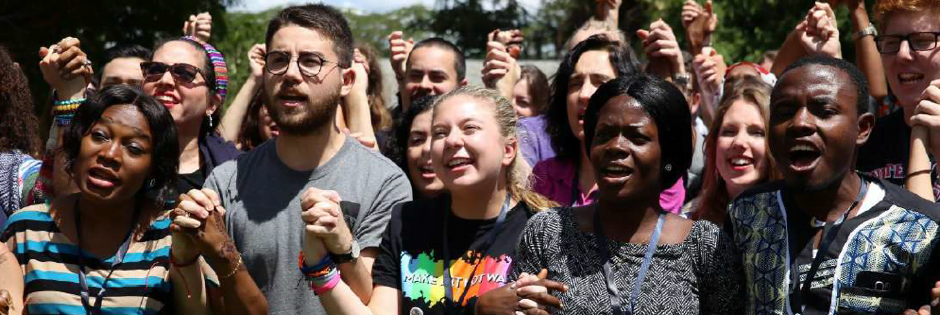
On International Youth Day, August 12,governments must be reminded to place young people at the centre of their COVID-19 recovery plans and the voices of young people must be heard.
International Youth Day is designed to give an opportunity to celebrate and mainstream young peoples’ voices, actions and initiatives, as well as their meaningful, universal and equitable engagement.
Chair of Amnesty International Australia’s Youth Advisory Group, Anita Nair, said: “The COVID-19 pandemic has highlighted the underlying inequalities which have plagued societies across the globe”.
“This International Youth Day will need to recognise the disproportionate effects the pandemic has had on young people.
“Historically we have seen that those who are present for decision making post crises have an unparalleled ability to shape the future of our societies, which is why it is vital young people have a seat at that table in Australia and around the world.
“The COVID-19 crisis affords us the opportunity to re-imagine the world we want to live in. The status quo is now unarguably different. There have always been sectors missing and marginalised in the recovery plans.”
Amnesty YAG Lead Activist Fin Spalding said: “On International Youth Day 2020 we urge governments and decision makers to include younger generations in the COVID-19 recovery plans. This is an opportunity for genuine and meaningful change – one which youth must be a part of and deliver”.
Governments who were lauded for releasing prisoners in response to COVID-19 outbreaks have excluded human rights defenders from the measures and continue to make new arrests of activists, journalists and critics, Amnesty International said today.
In a new briefing, “Daring to Stand up for Human Rights in a Pandemic”, which documents attacks on human rights defenders during the pandemic, the organization highlights the hypocrisy of governments including Egypt, India, Iran and Turkey, who have left prisoners of conscience to languish in appalling conditions despite widely publicized prisoner release programmes.
COVID-19 has been an added punishment for human rights defenders who are unjustly imprisoned, and has also been used as a pretext for further harassment, prosecution and even killings.
Lisa Maracani, Amnesty International’s Researcher on Human Rights Defenders.
“COVID-19 has been an added punishment for human rights defenders who are unjustly imprisoned, and has also been used as a pretext for further harassment, prosecution and even killings,” said Lisa Maracani, Amnesty International’s Researcher on Human Rights Defenders.
“The exclusion of human rights defenders from release measures underscores the political nature of their imprisonment. In Turkey for example, journalists, lawyers, activists and opposition politicians held in pre-trial detention on baseless charges remain behind bars despite government measures that have seen over 100,000 people released since April. It is plain to see that the Turkish government still fears criticism more than the pandemic.”
The new briefing documents attacks on human rights defenders during the COVID-19 period in 46 countries, and shows how “fake news” laws, movement restrictions, reduced police protection and heightened intolerance to criticism have led to new crackdowns around the world, including against whistle-blowers in the health sector and those highlighting inadequate responses to the pandemic.
Amnesty International has identified 131 people who speak up for human rights globally who have been harassed, prosecuted, killed or imprisoned on COVID-19-related pretexts – this figure is likely to be the tip of the iceberg.
“Instead of making space for human rights defenders to support their efforts to address the pandemic and prepare for a just recovery, states are taking counterproductive measures to silence perceived opponents,” said Lisa Maracani.
Excluded from release measures
On 25 March 2020, the UN High Commissioner for Human Rights urged all states to release “every person detained without sufficient legal basis, including political prisoners, and those detained for critical, dissenting views” in response to the COVID-19 pandemic.
However, several countries excluded human rights defenders from decongestion measures in prisons and other places of detention.
In India, for example, many students and activists who had participated in peaceful protests against India’s discriminatory citizenship law continue to be unjustly detained.
In Egypt, the government failed to release human rights defenders detained solely for expressing their views, as well as thousands of other pre-trial detainees, many of whom are facing overly vague “terrorism”- related charges amid concerns over breaches of due process.
In Turkey, decongestion measures have explicitly excluded those who are held in pre-trial detention, and those who are on remand for or have been convicted of offences under Turkey’s overly broad anti-terrorism laws. They include political and human rights activists, journalists, academics, and others who have spoken out against the government.
In Iran, authorities announced that they had temporarily released 85,000 prisoners but many human rights defenders continue to be held on politically motivated charges in appalling conditions.
They include Narges Mohammadi, a human rights defender who suffers from serious pre-existing health conditions and is showing suspected COVID-19 symptoms. The authorities continue to deny Narges Mohammadi health care in prison, and refuse to inform her of the results of a COVID-19 test taken on 8 July.
Amid thecrisis, Iranian authorities have also continued to arbitrarily arrest and imprison human rights defenders.
In other countries where prisons are already severely overcrowded, governments have continued to arrest human rights defenders on trumped-up charges, exacerbating the problem and putting more people at risk.
In Azerbaijan for example, the government has mounted a new wave of arrests and prosecutions of dozens of political activists, journalists and human rights defenders, often in response to their criticism of the government’s handling of the pandemic. Among those arrested are opposition activist Tofig Yagublu on bogus charges of hooliganism, and human rights defender Elchin Mammad, who was arrested on theft charges days after he published a report on the human rights situation in the country.
New arrests of human rights defenders have also been reported in Tunisia, Morocco, Niger, Zimbabwe and Angola, among others.
“With the COVID-19 crisis past its peak in much of Europe, it is vital that the international community does not turn away from the dire situations in countries where infection rates are growing,” said Lisa Maracani.
“International cooperation must also include pressuring governments to release people who are in prison simply for peacefully exercising their human rights, and who are now at serious risk of contracting COVID-19.”
“Sitting targets”
Amnesty International also warned that many human rights defenders have been put at risk by lockdowns which restrict their movement, making them sitting targets for those who want to silence their voices. In Colombia and Mexico for example, police protection measures have been reduced.
In Honduras, the most serious recent incident includes the possible forced disappearance of five young men, four of whom are activists with the Black Fraternal Organisation of Honduras (OFRANEH). They were taken from their homes on 18 July by men wearing police uniforms and have not been seen since.
In Colombia, civil society organization INDEPAZ has reported 166 killings during the first six months of 2020. Among them was Carlota Isabel Salinas Pérez, a women’s rights activist killed outside her home in March. Carlota was a community leader and had been collecting foodstuffs for families in need on the day she was killed.
“Now more than ever, the work of human rights defenders is essential in fighting for equal access to healthcare, food and shelter, and informing the public about the virus and ways to protect themselves. Governments who exploit this crisis to attack human rights defenders should know they are being closely watched,” said Lisa Maracani.“It is vital that governments provide effective protection to human rights defenders and ensure they are safe from those attempting to exploit the pandemic and silence them.”
New restrictions, increased police powers and the ability to suspend acts of Parliament have been introduced by the Victorian State Government to deal with a rapidly increasing number of positive COVID-19 cases.
We’re all thinking of our family, friends, colleagues and those we don’t know in Victoria as we try to navigate our way through this latest phase of the virus.
It’s also confusing to know what our rights are when our country is the only western democracy that does not have a framework, such as a human rights charter, that provides clear guidance on protecting both our health and our rights. Of course it is not a breach of our human rights to wear a mask, but the extraordinary unchecked powers our Governments are enacting add to the uncertainty that many feel
Governments should help protect our health and our rights
What’s clear is that we have to take care and be kind to each other through this incredibly difficult time and Amnesty broadly supports the steps taken by governments — State and Federal — to limit the spread of COVID-19 and keep us safe. However, our rights must be protected and rules should be applied equally to all people.
Being considerate of others and following medical advice does not mean we can’t still hold our governments to account for the kinds of emergency powers that have been triggered in Victoria to deal with the pandemic.
Although Australia does not have a national human rights charter, some states and Territories, including Victoria, do have a charter of human rights, meaning the laws and restrictions implemented under COVID, could be tested against standard human rights instruments – thus providing some level of accountability.
Here’s a breakdown of the restrictions, mandates and new powers in Victoria and what they mean for your rights:
What is a State of Disaster and what does it mean for your rights?
Victorian Premier Daniel Andrews has declared a State of Disaster, which is a trigger for the Emergency Management Act (EMA). Under this Act broad powers can be conferred to agencies such as the police. Victoria is already under a State of Emergency which was triggered by the “first wave” of COVID-19 in March, and which has subsequently been extended until August 16.
Under a State of Disaster, the Emergency Services Minister, currently Lisa Neville in Victoria, can “direct any government agency to do or refrain from doing any act, or to exercise or perform or refrain from exercising or performing any function, power, duty or responsibility”.
The State of Disaster came into effect on August 2, will last for at least a month and can be extended, as the State of Emergency has been extended.
Melbourne and the Mitchell Shire are from August 5th subject to Stage 4 lockdown measures and regional Victoria is on Stage 3 restrictions.
Additionally, those in Melbourne will be subject to a 8pm-5am curfew.
Curfews, quarantines and your rights
Amnesty International acknowledges that states can impose certain restrictions on some human rights in order to protect public health in the context of a pandemic such as the COVID-19 epidemic, but any such measures should be consistent with the wider international human rights framework.
Quarantines and curfews are only permissible under international human rights law, in particular the rights to health, personal liberty, safety and security, in limited circumstances. These restrictions should not be discriminatory, must respond to a pressing public or social need, pursue a legitimate aim, and be proportional to that aim. They should be of limited duration, subject to periodic review, and the least restrictive alternative must be adopted where several types of limitations are available.
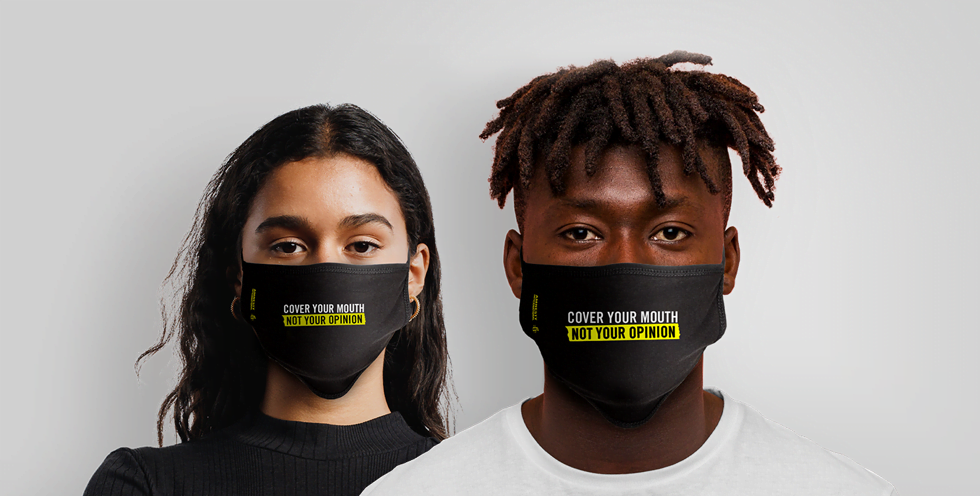
Mandatory face masks – cover your mouth, not your opinions
There is nothing in international human rights law against a state taking mandatory measures where there is a public health necessity, such as the prevention and control of COVID-19, however, mandatory measures must be implemented in accordance with international human rights law and key safeguards.
Amnesty continues to monitor government response to the COVID-19 pandemic to ensure measures to contain the virus are proportionate and applied without discrimination.
But common sense tells you that wearing a mask, if it is advised or mandated by health authorities, is a reasonable measure to protect your health and the health of others.
Increased police powers
Under the State of Disaster declaration, police can enforce the new regulations. As we’ve seen over the course of the pandemic with new powers given to emergency services to enforce, this can sometimes lead to discrimination and police overreach.
The public trust in police is absolutely essential for managing this crisis, and controversial early incidents directly undermined this goal.
Clear guidelines are needed to clarify both to the public and the police, where the lines of responsibility lay in COVID-19 social safety measures.
We understand the need for restrictions on movement in response to a one-in-100 year pandemic, but that response should still have human rights at its core and should be proportionate and applied with common sense.
What’s really alarming is the potential for vulnerable people in our community to be unfairly targeted.
We’re asking for transparency and accountability in how the police implement the COVID-19 restrictions
Amnesty International Australia is fighting for refugees to be reunited with their families in its submission to the inquiry into issues facing diaspora communities in Australia.
It is well recognised that families often become separated when people are displaced. Processes around, and the ability to, reunite with overseas family is a significant issue facing diaspora communities in Australia. Our submission makes three key recommendations to make it easier for families to be reunited.
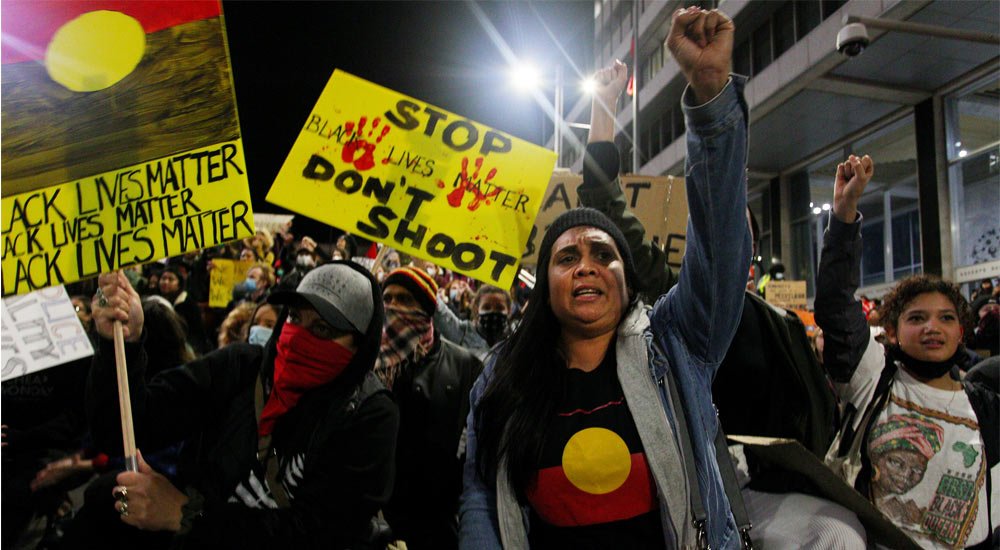
The release today of the Australian Government’s Close the Gap justice targets shows a disappointing lack of leadership in addressing the overrepresentation of Indigenous people in Australian prisons.
Amnesty International Australia Indigenous Rights Advisor, Rodney Dillon, said:
“These targets along with the failure to show leadership by committing to raise the age of criminal responsibility at Monday’s Council of Attorneys-General meeting contradicts the Government’s rhetoric on addressing the numbers of Indigenous people in Australian jails.
“Actions speak louder than words, and an important step in making real, systemic change by raising the age on Monday was wasted.
“Such a failure undermines the new Closing the Gap targets and all the work indigenous organisations have done to try and drag the Australian Government along.”
Key take-outs from the Closing the Gap report and why they fall short include:
Reducing rate of indigenous incarceration by 15% by 2031. That’s the same maths that led to the parity by 2093 target – even though the parity target is now omitted from the report.
Moving 30 percent of young Indigenous prisoners out of detention by 2031.
Amnesty International Australia, in its submission to the Senate Select Committee on Temporary Migration’s inquiry into temporary migration, has called for the abolition of temporary visas.
People on Temporary Protection Visas (TPV) and Safe Haven Enterprise Visas (SHEV) face a number of issues including: not having the ability to bring their family to Australia, not having access to Humanitarian Settlement Program employment opportunities, and not having access to JobKeeper.
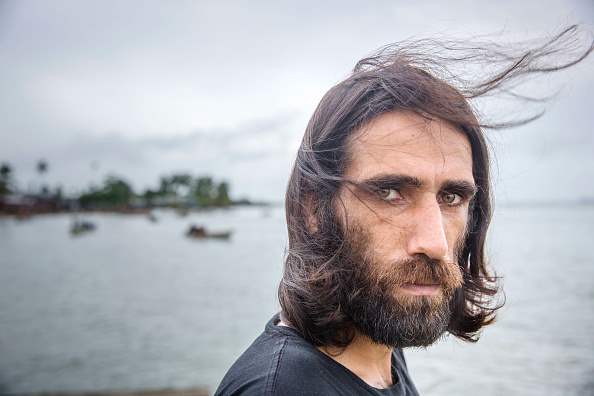
Amnesty International Australia welcomes the decision by New Zealand to offer refugee Behrouz Boochani permanent protection, and asks Scott Morrison to finally bring to safety hundreds of other refugees stuck offshore for the past seven years.
Responding to today’s announcement, Amnesty International Australia’s refugee coordinator, Dr Graham Thom, said:
“I first started speaking with Behrouz in early 2015 and I’m thrilled he has been offered permanent protection in New Zealand. But we mustn’t forget there are still hundreds of others stuck offshore who also need to be brought to safety. It’s time the Australian Government did the right thing and ended this cruel policy.
“There are alternatives. New Zealand has offered many times to resettle refugees. We just don’t understand why there needs to be any more delay. Let these people finally start to rebuild their lives in safety.”
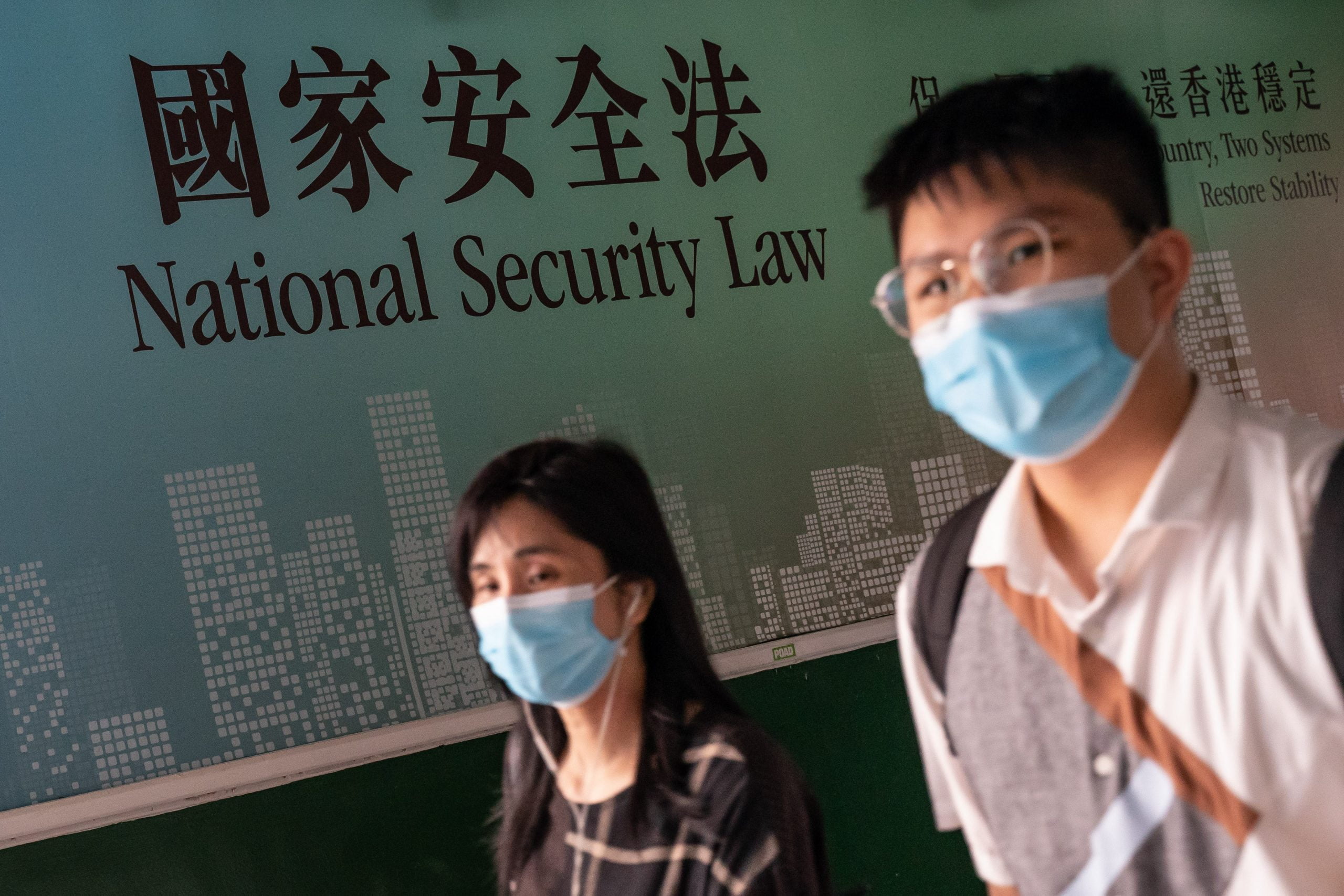
On 30 June, China’s top legislature unanimously passed a new national security law for Hong Kong that entered into force in the territory the same day, just before midnight. The law is dangerously vague and broad: virtually anything could be deemed a threat to “national security” under its provisions, and it can apply to anyone on the planet.
The Chinese authorities forced the law through without any accountability or transparency: it was passed just weeks after it was first announced, bypassing Hong Kong’s local legislature, and the text was kept secret from the public and allegedly even the Hong Kong government until after it was enacted.
Here are 10 reasons why everyone should be worried about this new law:
1. “Endangering national security” can mean virtually anything
Under this new law “secession”, “subversion”, “terrorism” and “collusion with foreign forces” incur maximum penalties of life imprisonment. But these offences are so broadly defined they can easily become catch-all offences used in politically motivated prosecutions with potentially heavy penalties.
The United Nations human rights office and expert bodies have already repeatedly expressed concerns about the national security law, stating the broadly worded legislation can lead to “discriminatory or arbitrary interpretation and enforcement which could undermine human rights protection”.
The central and Hong Kong governments have long accused individuals and civil society organizations of being steered by “foreign forces” in their activities, such as organizing and attending peaceful protests, receiving donations and criticizing the government. Anyone who participates in these activities is now potentially at risk of being charged for “colluding with foreign forces” and other new “crimes”.
Immediately after the law’s passage, authorities started to use it to crack down on legitimate and peaceful expression.
People were arrested for possessing flags, stickers and banners with political slogans. Police and officials have also claimed that slogans, T-shirts, songs and pieces of white paper could endanger national security and lead to criminal prosecution.
Two days after the law was passed, the Hong Kong government declared that “Liberate Hong Kong, the revolution of our times”, a common political slogan during last year’s protests, “connotes ‘Hong Kong independence”, or separating Hong Kong from China, and effectively forbade its use.
These examples show how the law and its usage contravene international human rights laws and standards. These stipulate that peacefully expressing one’s opinion about political systems does not constitute a threat to national security.
Demonstrators hold blank signs during a lunchtime protest at a shopping mall in Hong Kong. (Photo: Paul Yeung/Bloomberg via Getty Images)
3. The law tightens controls over education, journalists and social media
In the name of national security, the law gives the Chinese central and Hong Kong governments new expansive powers to oversee and manage schools, social organizations, media and the internet in Hong Kong.
The media industry has expressed concerns about the law’s potential impact on press freedom in Hong Kong. The New York Times, for example, has already decided to relocate some of their Hong Kong staff to South Korea.
Many worry that measures similar to those in mainland China will be rolled out to control foreign journalists. Currently, journalists must obtain accreditation from the Chinese government before they can legally work in mainland China.
The Hong Kong government has also attempted to excessively restrict the rights of students to enjoy freedom of expression on campus. The local Secretary of Education said students should not sing songs, chant slogans or conduct activities that contain political messages. Even discussing political issues in classrooms could now create risks.
The law also gives law enforcement agencies the power to remove online content or obtain user data without a judicial warrant. In response to these new and unfettered executive powers, major online platforms such as WhatsApp, Twitter, LinkedIn, Facebook and Google have suspended processing requests from the Hong Kong government for user data.
4. People could be taken to mainland China for unfair trials
Under the national security law, suspects could be removed to mainland China, handled within the mainland’s criminal justice system and tried under mainland law. This is the same prospect that sparked the series of large-scale protests from mid-2019.
Being charged with a national security crime on the mainland can lead to arbitrary or even secret detention. Those charged might not be able to contact their families and might be left without access to lawyers of their choice if they are placed under “residential surveillance in a designated location“ – a measure that enables investigators to hold individuals outside the formal detention system for periods up to six months. As is often the case, detainees held in this way are at great risk of torture and other ill-treatment. Human rights lawyer Li Heping was beaten, drugged and subjected to electric shocks when he was secretly detained during the 2015 lawyers’ crackdown.
5. The law applies to everyone on the planet
The wording of the Hong Kong national security law asserts jurisdiction over people who are not residents of Hong Kong and have never even set foot there. This means anyone on Earth, regardless of nationality or location, can technically be deemed to have violated this law and face arrest and prosecution if they are in a Chinese jurisdiction, even for transit. Accused foreign nationals who don’t permanently reside in Hong Kong can be deported even before any trial or verdict.
Social media companies, for example, can be asked to remove content deemed unacceptable by the Chinese government, even if these were posted outside of Hong Kong or if the companies’ offices and servers are located in other countries
6. The investigating authorities have new and extensive powers
Under the new law, investigating authorities can search properties, restrict or prohibit travel, freeze or confiscate assets, censor online content and engage in covert surveillance, including intercepting communications all without a court order.
The authorities can also require information from organizations and individuals, even if the information in question may be self-incriminating. Anyone failing to comply can be fined or imprisoned. This essentially removes for national security cases a person’s right to silence, an essential component of the presumption of innocence.
The rights to remain silent under questioning and not to be compelled to testify against oneself are generally recognized in international human rights law and standards and lie at the heart of the notion of a fair trial. They are broad, apply during questioning by the police and trial and for any crime, regardless of severity, and prohibit any form of coercion, whether direct or indirect, physical or psychological.
The Office for Safeguarding National Security in Hong Kong officially opened on 08th July, 2020. (Photo: Chan Long Hei/Bloomberg via Getty Images)
7. The Chinese government now has anational security arm in Hong Kong
The Chinese central government is setting up an Office for Safeguarding National Security in the heart of Hong Kong. The office and its staff do not fall under Hong Kong’s jurisdiction. This means any actions, including their operation in the city, are not reviewable by local courts or subject to local laws. Office personnel are not subject to inspection, search or detention by local law enforcement in Hong Kong. The office and its staff in effect enjoy complete immunity, regardless of what crimes or human rights violations they are accused of, in violation of the victims’ rights to justice, to establishment of the truth and to receive full reparations.
Mainland China’s national security officers have routinely violated the rights of individuals facing national security charges with impunity. These agencies systematically monitor, harass, intimidate and detain human rights defenders and dissidents, with evidence of torture and other ill-treatment.
8. The Hong Kong government also has a new body that is not subject to oversight
The Hong Kong government has set up another new body, the Committee for Safeguarding National Security, with a delegate from the Chinese central government to “advise” it.
The committee has the power to hand-pick personnel in law enforcement and prosecution to handle national security cases. Budget and appointment of personnel related to safeguarding national security will also bypass legislative scrutiny. The Chief Executive can appoint judges to handle national security cases in a way that appears to undermine judicial independence.
Under the new law, the committee does not have to disclose its work. Decisions made by the committee are not subject to review by the courts.
In addition, the Hong Kong Police Force has established a new national security division that can conduct covert surveillance without judicial control.
This arguably means the public cannot use legal procedures as a check against abuse of power and breaches of Hong Kong’s legal obligations, including human rights obligations under international and domestic law.
Riot police detain a man as they raise a warning flag on the national security law during a demonstration on July 1, 2020.
9. Human rights protections risk being overridden
Although the national security law includes a general guarantee to respect human rights, including core human rights treaties like the International Covenant on Civil and Political Rights and International Covenant on Economic, Social and Cultural Rights, other provisions in the law could override these protections.
The law grants immunities and vast exemptions to the national security institutions and their personnel and in fact states explicitly that it trumps any Hong Kong laws in case of conflict. This means that, on the face of it, the national security law could be seen to negate any existing human rights protection in the territory.
China’s own national security law has a similar provision on respect for human rights, yet this has provided little or no protection to people targeted: there are lawyers, scholars, journalists, pastors and NGO workers who have all been convicted of national security offences simply for exercising their freedom of expression and defending human rights.
The Hong Kong Chief Executive has repeatedly justified limiting human rights in the name of national security, including in ways that would violate international standards.
10. The law has already had an immediate chilling effect
This draconian law is so vague it prevents anyone from knowing how and when they might transgress it and has consequently had an instant chilling effect across the territory.
Many Hongkongers who were regularly sharing news online about the protests since June 2019 have shut down their social media accounts for fear of violating the law. Shops and restaurants that had previously posted banners and stickers in support of the protest movement removed them even before the law was in force. Within days, public libraries started to sort out books on “sensitive” issues and authored by activists critical of the government.
One hour after the law passed, prominent activist Joshua Wong withdrew from Demosisto, the pro-democracy group he led. Later, Demosisto announced its disbandment, and another key member, Nathan Law, announced that he had left Hong Kong. Law was worried that continuing his international advocacy work in Hong Kong could pose an imminent threat to his personal safety.
Within one week after the enactment of the law, at least seven politically active groups disbanded.
The Hong Kong national security law has failed to genuinely protect national security while safeguarding human rights. The consequences are grave – the undefined nature of key aspects of the law has created fear among people in Hong Kong, as no one knows what may constitute an offence of “endangering national security” and, hence, put them at risk of criminal prosecution, removal to the mainland or deportation from the territory.
It is recognized that every government has the right and duty to protect its citizens and that some countries have specific security concerns. But these may never be used as an excuse to deny people the right to express different political views or to exercise their other human rights as protected by international legal standards. It is quite clear that the Hong Kong national security law is another example of a government using the concept of “national security” to repress political opposition, with significant risks for human rights defenders, critical media reporting and civil society at large.
Stickers with messages in support of the pro-democracy movement are scraped from a wall outside a restaurant in Hong Kong..
The Malaysian authorities must immediately abandon plans to whip at least 20 Rohingya men who are being punished simply for trying to seek safety. The government should release all other jailed Rohingya refugees – including women and children – who have been unlawfully singled out, convicted and imprisoned for alleged “immigration offences,” which are contrary to international law, Amnesty International said today.
A Malaysian court has the authority to strike out a caning sentence against the Rohingya men in the coming days. The men, who were allowed to disembark from a boat along with hundreds of other people off the country’s coast in April, are part of a group of 31 Rohingya men convicted of so-called “offences” under the Immigration Act 1959/63 in June. All 31 men were sentenced to seven months in prison, with at least 20 of the group sentenced to three strokes of the cane.
“The plan to viciously beat Rohingya refugees is not only cruel and inhuman – it’s unlawful under international standards. To inflict such a violent punishment as judicial caning amounts to torture,” said Rachel Chhoa-Howard, Malaysia Researcher at Amnesty International.
“The men who face violent lashings on top of jail terms have already fled persecution and crimes against humanity in Myanmar. They also survived a dangerous journey at sea to Malaysia in search of safety. The inhumanity of this approach is atrocious.”
Together with the men, nine women were also convicted to seven months jail on similar charges of entering and staying in Malaysia without a valid work permit. Fourteen children have been charged, and are also facing jail terms. Malaysia’s Immigration Act imposes six strokes of the cane, fines and up to five years’ imprisonment for people who are deemed to be in Malaysia irregularly. Amnesty International understands that the hundreds of others who disembarked from the boat in question are currently being held in immigration detention.
Entering or staying in a country irregularly – in other words, without the government’s permission – should never be considered criminal offences. Under international human rights law, the criminalization of irregular migration exceeds the legitimate interests of states in regulating migration to their territories. Furthermore, every person – regardless of their migration status – has the right to liberty, and no one shall be subjected to arbitrary arrest or detention. In any case, children should never be detained for immigration reasons under any circumstances, as it is never in their best interests.
“The Malaysian authorities seem determined to make an example of these refugees. These shocking punishments, including the caning, must be quashed and the refugees released immediately,” said Rachel Chhoa-Howard.
“The government should protect the rights of all refugees seeking safety – it is every state’s obligation under international law. If they do not, the international community, including the UN, must take the government to task for their treatment of Rohingya.”
Malaysia has boasted of pushing refugee boats back in highly militarized operations. In June, Amnesty International and others received reports that the government was considering sending another boat of Rohingya refugees back out to sea by placing them on the same vessel they arrived in. On 14 July 2020, Prime Minister Muhyiddin Yassin stated that this plan would not be carried out, in response to a parliamentary question.
“The Malaysian government must stop their appalling mistreatment of Rohingya refugees, provide them protection in these difficult times, and treat them with basic humanity,” Rachel Chhoa-Howard said.
“Other ASEAN governments must also step up and adopt an approach of responsibility-sharing to ensure the protection of lives at sea. This is even more urgent, as hundreds more Rohingya refugees are understood to remain in open water, at risk of starvation and death after spending months seeking safe harbour.”
Background
Since the start of 2020, up to 1,400 Rohingya people have been stranded on boats in the Andaman Sea and the Bay of Bengal after undertaking extremely dangerous journeys, fleeing persecution in Myanmar and the hardships of refugee camps in Bangladesh.
In April, the Malaysian authorities allowed 202 Rohingya people to disembark from a boat adrift off the coast of Langkawi. Other boats have been pushed back by the coastguard and military and since returned to Bangladesh. The Bangladesh authorities have disembarked those on board and held some of them on the island of Bhashan Char, in the Bay of Bengal, with limited access to their families or humanitarian and protection services. These conditions may amount to arbitrary detention.
In early June, the Malaysian authorities allowed a second boat carrying 269 Rohingya people to disembark after its engine was damaged. Numerous people were reported to have died during the journey, including one woman whose body was found on board. Reuters then reported that, according to two anonymous Malaysian officials, plans were being made to put these latest survivors – men, women and children – onto a boat and send them back to sea. The head of the Malaysian maritime agency later refused to deny these plans, all while acknowledging that dozens on the ship had not survived. Prime Minister Muhyiddin Yassin later stated that the government would not be implementing such a plan, in response to a question from a Member of Parliament.
Amnesty International has previously documented how judicial corporal punishment in Malaysia amounts to torture. Government officials tear into the flesh of prisoners with rattan canes (rotan) travelling up to 160 kilometres per hour. The pain inflicted by caning is so severe that victims often lose consciousness as a result. Suffering can last for weeks or even years, both in terms of physical disabilities and psychological trauma. Under international human rights law, all forms of corporal punishment are prohibited – they violate the absolute prohibition of torture and other cruel, inhuman or degrading punishment and often amount to torture.
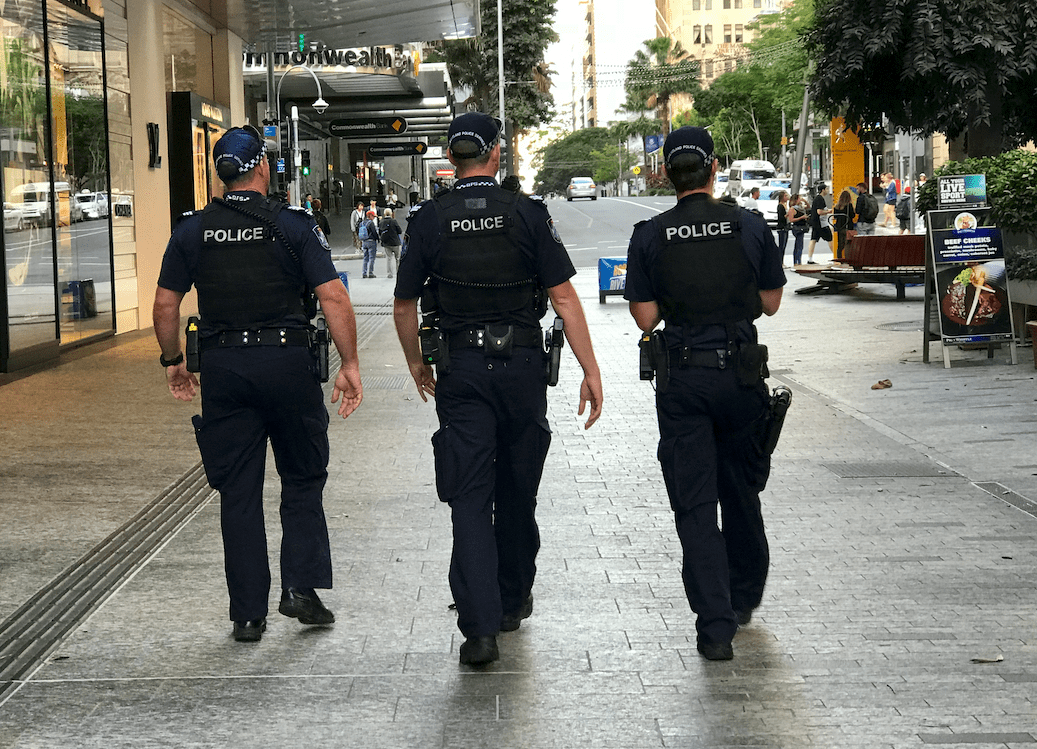
Amnesty International Australia has again called on Police services in New South Wales and Victoria to immediately and urgently release guidelines for policing infringements as tighter lockdown restrictions are applied to both states.
NSW Police internal guidelines – published today in media reports today following a freedom of information request – show that police were given a great deal of discretion when applying the fines, but the failure to release these guidelines to the public, effectively keeps the NSW public in the dark.
“Police are using the guidelines as a cloak, unfairly policing the most vulnerable. We’re very concerned that the lack of clarity around the regulations and how they’re applied by Police means that certain groups of people are being unfairly targeted in their application,” Amnesty International Australia campaigner Joel Clark, said.
Police are using the guidelines as a cloak, unfairly policing the most vulnerable. We’re very concerned that the lack of clarity around the regulations and how they’re applied by Police means that certain groups of people are being unfairly targeted in their application.
Amnesty International Australia campaigner Joel Clark.
“It’s a time for transparency, not secrecy. The support of the public for the extreme quarantine measures put in place have contained the spread of covid-19 so far, but public trust in authorities is crucial to the ongoing success of mitigating the re-emergence of the virus.
“As the situation evolves quickly in NSW and Victoria, people have the right to know and understand what they can and can’t do under the regulations, and how the Police will enforce them. How can anyone reasonably be expected to abide by the rules if they don’t know what they are?”
“In the first wave of lockdowns, we heard worrying reports of Indigenous people being harassed in their own homes, and we saw the reversal of a huge proportion of fines which goes to show just how opaque the regulations are for the average person on the street and how ripe they are for overzealous policing.”
“We’re asking everyone in the community to record and report instances of police overreach at https://covidpolicing.org.au/“