China: National security law must not become a weapon of fear

Responding to today’s passing of a national security law for Hong Kong by the Standing Committee of China’s National People’s Congress, the head of Amnesty International’s China Team, Joshua Rosenzweig, said:

“The passing of the national security law is a painful moment for the people of Hong Kong and represents the greatest threat to human rights in the city’s recent history. From now on, China will have the power to impose its own laws on any criminal suspect it chooses.

The passing of the national security law is a painful moment for the people of Hong Kong and represents the greatest threat to human rights in the city’s recent history.

Head of Amnesty International’s China Team, Joshua Rosenzweig.

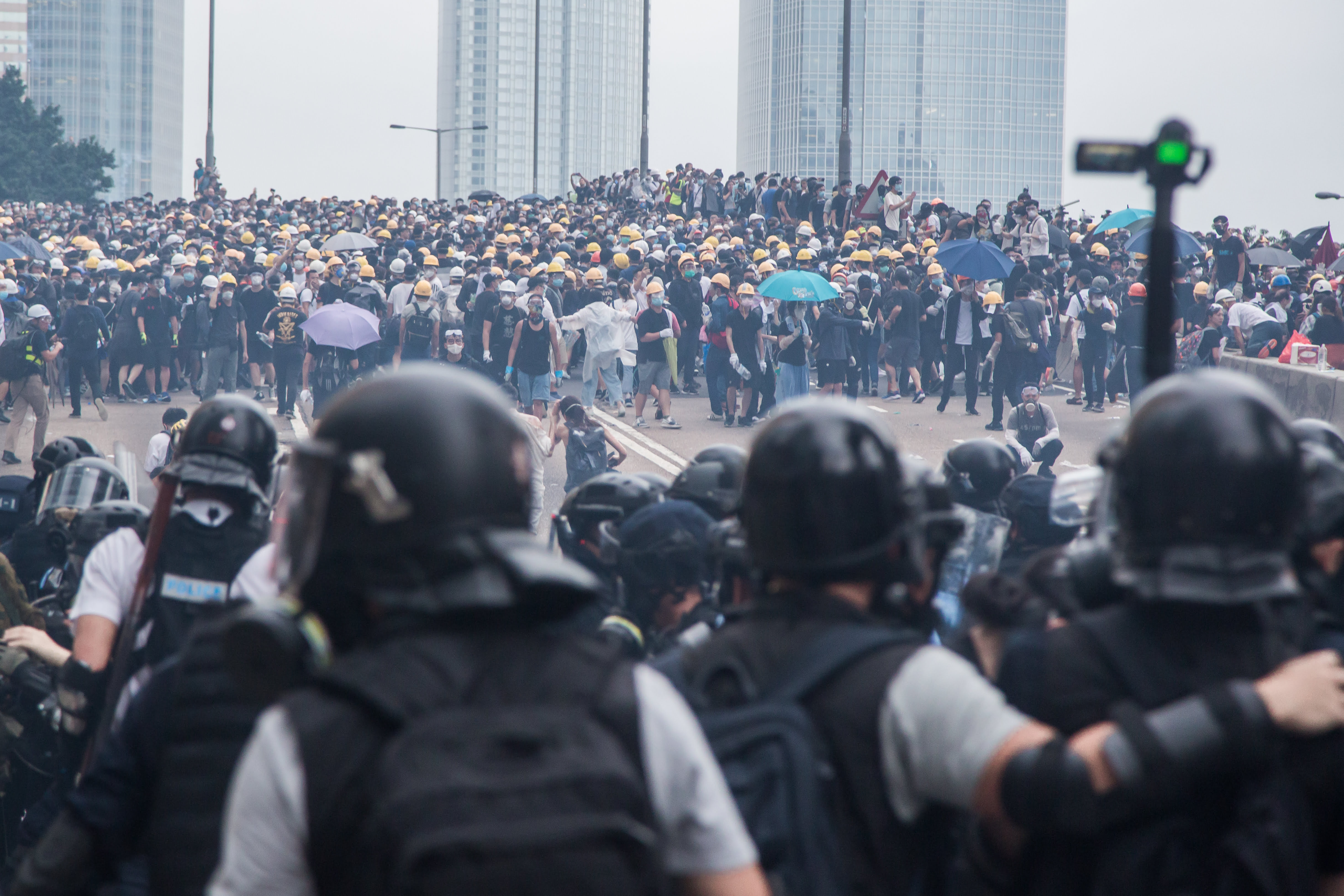
“The speed and secrecy with which China has pushed through this legislation intensifies the fear that Beijing has calculatingly created a weapon of repression to be used against government critics, including people who are merely expressing their views or protesting peacefully.

“The fact that the Chinese authorities have now passed this law without the people of Hong Kong being able to see it tells you a lot about their intentions. Their aim is to govern Hong Kong through fear from this point forward.

“China’s eagerness to pass this law quickly is also an ominous signal for the legislative elections coming up in Hong Kong in September, with a threat that the security law could be used against pro-democracy candidates.

“In implementing this law, the Hong Kong authorities must now strictly and demonstrably adhere to their own human rights obligations, and it is down to the international community to hold them to account.

“At this pivotal moment for Hong Kong, it is imperative that the national security law is not used to trample human rights and undermine the freedoms that distinguish the city from mainland China.”

Background

The national security law was passed today and is expected to be signed into law by Chinese President Xi Jinping, after which it will be listed under Annex III of the Basic Law – Hong Kong’s mini-constitution.

Amnesty International has a range of human rights concerns about the  law, under which all individuals, institutions and organizations in Hong Kong would be prohibited from “engaging in activities that endanger national security”.

The so-called crimes of separatism (or “splittism”), subversion, terrorism and “collusion with foreign or overseas powers” to endanger national security will be banned under the law. These broad, vaguely defined offences are similar to those that feature in China’s own National Security Law, which has been used to crack down on dissent.

The law would also authorize the Beijing central government and the Hong Kong government to set up a national security office in the city. In mainland China, such agencies systematically monitor, harass, intimidate and secretly detain human rights defenders and dissidents, with many indications of torture and other ill-treatment.

Hong Kong and Chinese officials have claimed there is an urgent need for security laws to counter the threat of “terrorism” and violence in the city. However, the protesters taking to the streets over the past year have been overwhelmingly peaceful.

This morning, Geneva time, Hong Kong’s Chief Executive Carrie Lam is slated to address the United Nations Human Rights Council. Last week, more than 50 UN human rights expert bodies mandated by the Council took the unprecedented step to jointly express concerns about the proposed national security legislation for Hong Kong and other actions taken by China. 
Europe: COVID-19 lockdowns expose racial bias and discrimination within police

Police enforcing COVID-19 lockdowns across Europe have disproportionately targeted ethnic minority and marginalized groups with violence, discriminatory identity checks, forced quarantines and fines, Amnesty International said in a new report.

Policing the pandemic covers 12 European countries and exposes a disturbing pattern of racial bias which is linked to concerns about institutional racism within police forces, and echoes wider concerns raised in the ongoing Black Lives Matter protests.

“Police violence and concerns about institutional racism are not new, but the COVID-19 pandemic and coercive enforcement of the resulting lockdowns have exposed just how prevalent they are,” said Marco Perolini, Amnesty International’s Western Europe Researcher.

“The triple threats of discrimination, unlawful use of force and police impunity must be urgently tackled in Europe.”

Discriminatory policing targeting minority ethnic people

The police enforcement of lockdowns disproportionately impacted poorer areas, which often have a higher proportion of residents from minority ethnic groups. In Seine-Saint-Denis, the poorest area of mainland France where the majority of inhabitants are Black or of North African origin, the number of fines for breaching the lockdown was three times higher than in the rest of the country, despite local authorities stating that respect for lockdown measures was similar to other areas. In Nice, a predominantly working class and minority ethnic neighbourhood was subjected to longer overnight curfews than the rest of the city.

Unlawful use of force by police often took place in the context of stop and search and identity checks as police enforced lockdown measures.

In the UK, one of the few European countries that collects ethnically disaggregated data on law enforcement, police in London registered a 22 percent rise in stop and searches between March and April 2020. During that time the proportion of Black people who were searched rose by nearly a third.

Amnesty International’s Evidence Lab verified 34 videos from across Europe showing police used force unlawfully, and in many instances when it was not required at all.

In a video posted online on 29 March, two law enforcement officials stopped a young man, reportedly of North African descent, on the street in Bilbao, Spain. Despite appearing to pose no threat to them, the police violently push him and hit him with a baton. While the two officers keep the man pinned against a wall with his hands behind his back, the man’s mother appears and tells the police officers that her son suffers from poor mental health. The police officer then hits her with his baton before three police officers tackle her to the ground.

According to Amnesty International’s analysis the law enforcement officials did not use the minimum amount of force necessary, and in fact it is questionable if any force was needed at all. Some of the neighbours who were filming were fined for “unauthorized use” of images of law enforcement officials.

Another video shows Samir, a 27-year-old Egyptian national who has lived in France for 10 years, being chased by police before jumping into the River Seine in Île-Saint-Denis on 26 April 2020.  The police officers can be heard using a derogatory term for Arabs (“bicot”), laughing at him and one officer says “you should have put a weight on his ankle”. He was subsequently beaten by the police in their van and held in custody. Although Samir was never charged with any offence, he was ordered to leave the country. The two officers identified were suspended for the racist insults.

Roma settlements subjected to militarized quarantines

In a display of discrimination against Roma in Bulgaria and Slovakia, both governments brought in mandatory quarantines on Roma settlements. In Slovakia they also tasked the military with enforcing them Amnesty International considers that the military is not suitable to carry out public health measures, and should only be used in law enforcement settings in which there is a clear reason showing that regular police officers are insufficient. No such reason exists in the present cases.

During mandatory quarantines in Bulgaria over 50,000 Roma were cut off from the rest of the country and suffered severe food shortages. A survey showed that the median income in Roma neighbourhoods went down by 61 percent between March and May 2020.

In Burgas, the authorities used drones with thermal sensors to take the temperature of residents in Roma settlements remotely and monitor their movements. Similarly, in the town of Yambol, the authorities used planes to “disinfect” the Roma neighbourhood, which experienced an outbreak of COVID-19 and was kept under strict quarantine even after the nationwide state of emergency ended. 

Refugee and migrant camps targeted

Asylum-seekers, refugees and migrants in camps and shared accommodation have also been targeted with selective quarantines in Germany, Cyprus and Serbia, and with forced evictions in France and Greece. 

For example, under the state of emergency in Serbia, the authorities imposed a special regime that selectively targeted government-operated centres housing refugees, migrants, and asylum-seekers. It placed them under a strict 24-hour mandatory quarantine and deployed the military to monitor the curfew.

“The state must stop imposing discriminatory quarantines on and forcibly evicting Roma, refugees and migrants from informal settlements and camps. They must instead safeguard the right to housing and health of everyone,” said Barbora Černušáková, Amnesty International’s Eastern EU Researcher.

People experiencing homelessness

People experiencing homelessness also suffered punitive measures under lockdowns. In Italy, ‘Avvocato di Strada’ NGO collected at least 17 cases in which people who are homeless received fines for not being able to comply with measures regarding self-isolation and restrictions on movement. Dozens more were fined by law enforcement officials in France, Spain and the UK.

“Authorities must address concerns about institutional racism, racial bias and discrimination within the police that have characterized their responses to the COVID-19 pandemic. It is time for such practices to end, and for Europe to confront the racism in its own backyard,” said Barbora Černušáková.

USA: End unlawful police violence against Black Lives Matter protests

  • Amnesty International identifies and maps out police violence nationwide since 26 May
  • Almost 500 videos and photographs of incidents analyzed
  • 125 incidents in 40 states highlight where police used force on peaceful protesters, journalists and bystanders
  • New campaign calls for wide-ranging police reform

Police forces across the USA committed widespread and egregious human rights violations against people protesting the unlawful killings of Black people and calling for police reform, Amnesty International said today, as it launched an interactive map of incidents of police violence and a new campaign calling for systemic changes in policing.

Amnesty International has documented 125 separate examples of police violence against protesters in 40 states and the District of Columbia between 26 May and 5 June 2020, a period when hundreds of thousands of people in the USA and other countries protested against racism and police violence and to demand that Black lives matter. The analysis shows that law enforcement officers violated human rights daily out on the streets instead of fulfilling their obligations to respect and facilitate the right of people to peacefully protest.

This unlawful use of force included beatings, misuse of tear gas and pepper spray, and the inappropriate firing of less-lethal projectiles, such as sponge rounds and rubber bullets. Those abuses were committed by a range of security forces from state and local police departments, federal agencies, and the National Guard.

“The analysis is clear: when activists and supporters of the Black Lives Matter movement took to the streets in cities and towns across the USA to peacefully demand an end to systemic racism and police violence, they were overwhelmingly met with a militarized response and more police violence,” said Brian Castner, Senior Crisis Advisor on Arms and Military Operations at Amnesty International.

“The time for applying band-aids and making excuses for a few ‘bad apples’ has passed. What’s needed now is systemic, root-and-branch reform of US policing that brings an end to the scourge of police use of excessive force and extrajudicial executions of Black people. Communities should not live in fear of being harmed by the very officers that have sworn an oath to protect them. Officers responsible for excessive force and unlawful killings must always be held accountable.”

Open source investigation into US protests

To evaluate these incidents, Amnesty International’s Crisis Evidence Lab gathered almost 500 videos and photographs of protests from social media platforms.

This digital content was then verified, geolocated, and analyzed by investigators with expertise in weapons, police tactics, and international and US laws governing the use of force.

In some cases, researchers were also able to interview victims and confirm police conduct with local police departments.  

Police violence in dozens of states

As the map shows, Amnesty International’s analysis reveals a dizzying array of violations by police forces across the country, including in 80% of US states.

On 30 May, a joint patrol of Minneapolis police and Minnesota National Guard personnel unlawfully shot US-manufactured 37/40mm impact projectiles at people peacefully standing on the front porches of their homes. After encountering the people recording with their smartphones, the forces ordered them to “get inside” and then yelled “light them up” before firing.

On 1 June, security personnel from a variety of federal agencies, including National Park Police and the Bureau of Prisons, as well as DC National Guard personnel, committed a range of human rights violations against protesters in Lafayette Square in Washington, DC. They used riot shields to shove protesters and media workers, misused a variety of crowd control agents, and tossed US-manufactured Stinger Ball grenades, which contain pepper spray and explode in a concussive “flash-bang” effect, throwing rubber pellets indiscriminately in all directions. The attack, which preceded a photo op by President Trump in front of a nearby church, was widely reported on by media, including a lengthy Washington Post video timeline for which Amnesty International contributed the weapons and tactical analysis.

Also on 1 June, in the Center City area of Philadelphia, state and city police used large amounts of tear gas and pepper spray to remove dozens of peaceful protesters from the Vine Street Expressway. One affected protester, Lizzie Horne, a rabbinical student, told Amnesty International:

“Out of the blue, they started breezing pepper spray into the crowd. There was one officer on the median who was spraying as well. Then they started with tear gas. Someone who was right in the front – who had a tear gas canister hit his head – started running back. And we were trying to help him, flushing his eyes and then he just fainted and started having a seizure. He came to pretty quickly. As we were finally lifting him up and start getting him out of the way, they started launching more tear gas; that’s when people started to get really scared. They started gassing in a kettle formation – we were against a big fence that people had to jump over, up a steep hill. The fence was maybe six feet tall. People started putting their hands up – but the cops wouldn’t let up. It was can after can after can. We were encapsulated in gas. We were drooling and coughing uncontrollably.

“Then the cops came from the other side of the fence and started gassing from that direction. After that, the police started coming up the hill and … they were hitting and tackling people. They were dragging people down the hill and forcing  them down on their knees, lining them up kneeling on the median on the highway with their hands in zip ties, and pulling down their masks and spraying and gassing them again.”

The violations were not limited to the largest cities. Local police inappropriately used tear gas against peaceful protesters in Louisville, Kentucky; Murfreesboro, Tennessee; Sioux Falls, South Dakota; and Albuquerque, New Mexico, among other towns and cities. And in Fort Wayne, Indiana on 30 May, a local journalist lost his eye when police shot him in the face with a tear gas grenade.

Legal analysis of use of force

Excessive use of force against peaceful protesters violates both the US Constitution and international human rights law. Law enforcement agencies at all levels have a responsibility to respect, protect, and facilitate peaceful assemblies.

While the majority of the protesters have been peaceful, some protesters have used violence. In many cases, however, rather than respond to individual violations, security forces have used disproportionate and indiscriminate force against entire demonstrations.

Security forces can only resort to use of force at public assemblies when it is absolutely necessary and proportionate to achieve a legitimate law enforcement objective, in response to serious violence threatening the lives or rights of others. Even then, authorities must strictly distinguish between peaceful demonstrators or bystanders, and any individual who is actively engaged in violence. The violent acts of an individual never justify the disproportionate use of force against peaceful protesters generally, and force is only justified until the immediate threat of violence toward others is contained.

Any restrictions of public assemblies – including use of force against demonstrators – must not discriminate on the basis of race, ethnicity, political ideology, or other social group.

Police reform urgently needed

In an Executive Order issued on 16 June, President Trump called for incentives to limit the use of chokeholds of the kind that killed George Floyd in Minneapolis last month, as well as a national database on allegations of excessive force by police.

Some state and city police forces have also rolled out partial reforms locally since the protests began, such as suspending the use of some crowd control weapons like tear gas. In Minneapolis, a majority of the City Council pledged to disband the police force and replace it with more effective public safety institutions.

Amnesty International is demanding real and lasting reforms to US policing across the board, including to:

  • Stop police extrajudicial executions of Black people and bring accountability for their deaths through independent, impartial investigations that lead to reparations for the victims and survivors;
  • Ensure the right to peaceful protest against police violence, without the threat of protesters, journalists or bystanders being targeted by further police violence;
  • Pass federal legislation including the PEACE Act, as well as state laws to restrict police use of force to only what is strictly necessary and proportionate;
  • End the “qualified immunity” doctrine, which prevents police from being legally held accountable when they break the law; and
  • Pass federal legislation to demilitarize police forces.

“Real, systemic and lasting police reform is needed at all levels to ensure that people across the country feel safe to walk the streets and express their opinions freely and peacefully without facing a real threat of harm from the very officers that are supposed to protect them. This is a Constitutional right that is mirrored in international human rights law; to deny this right with physical violence, tear gas and pepper spray is a hallmark of repression,” said Brian Griffey, USA Researcher/Advisor at Amnesty International.

United civil society across Australia call for a National Anti-Racism Strategy

Organisations representing Asian-Australians, Indigenous people, African-Australians, and diverse religions have joined forces demanding the Australian Government and Federal Opposition support the introduction of a National Anti-Racism Strategy.

30 organisations, including civil society groups and unions, have signed an open letter to the Prime Minister, Scott Morrison, and Leader of the Opposition, Anthony Albanese, calling for bi-partisan support for a strategy to eradicate the everyday racism experienced by Australia’s multicultural communities and First Nations people.

The call for a national strategy follows a sharp increase in complaints towards Asian-Australians since the beginning of February. According to the Australian Human Rights Commission, 30 per cent of all complaints made under the Racial Discrimination Act since then relate to COVID-19. 

This racist behaviour is in addition to the ongoing discrimination and racism experienced all too often by First Nations people in Australia. This is clearly reflected in all the socio-economic indicators like life expectancy rates, education outcomes, housing and over representation in prisons and juvenile detention.

Mary Patetsos, Chair of the Federation of Ethnic Communities Councils of Australia (FECCA), said: “What we have seen in the past and what we see today is that racism manifests in many ways. Personal vilification and systemic racism directly impact on the lives of ordinary people, it serves to discredit and harm human potential. Australia urgently needs a strategy both broad and specific to combat racism wherever it is manifest. Recent events are both a wake-up call and an opportunity.”

Osmond Chiu, a member of the Chinese Australian Forum and Per Capita Research Fellow, said: “Australia currently has no national strategy to stamp out racism and while we welcome recent comments by both the Prime Minister and Leader of the Opposition on this matter, we politely ask them to follow their words with actions and come together in bipartisan support of such a strategy. The increased reports of racism during this COVID-19 pandemic is appalling and unacceptable.”

Donnella Mills, Chair of National Aboriginal Community Controlled Health Organisation (NACCHO) said: “All Australians must acknowledge there is no place for racism in our country and we need them to support us in every effort to eliminate its harmful and hurtful impact on all our people. We should also work collaboratively to Close the Gap and improve the life outcomes for First Nations people in Australia.”

Sam Klintworth, National Director of Amnesty International Australia said:  “With tens of thousands of people taking action across Australia last weekend for Black Lives Matter, it is clear racism is an important issue that many want resolved. Without a national strategy, this worrying pattern of behaviour will continue to threaten our fundamental human rights as well as the social cohesion of our successful multicultural society.”

Amnesty International Australia seeking videos and testimony of pepper spray incident at Sydney rally

Responding to the use of pepper spray by NSW Police on activists at the peaceful protests on Saturday in Sydney, Amnesty International Campaigner Tim O’Connor said:

“Amnesty International Australia deployed 12 Human Rights Observers in Sydney for Saturday’s peaceful #BlackLivesMatter rally. Our Human Rights Observers have collected footage from the peaceful protest, and further material from outside and inside Sydney’s Central station, where police forcibly herded a large group of people.

“The use of ‘kettling’ tactics by police and the deployment of pepper spray, with seemingly little warning clearly caused significant distress and pain to people, and we are seeking further statements and evidence from those who witnessed or were directly affected.

Concerns have been raised that the use of pepper spray and kettling of protesters was not appropriate or proportionate. 

Amnesty International Australia campaigner Tim O’Connor

“Concerns have been raised that the use of pepper spray and kettling of protesters was not appropriate or proportionate. 

“Amnesty Australia staff and volunteers received training and then attended the demonstrations as Human Rights Observers to ensure all parties upheld human rights standards.

“Videos and other evidence taken by Amnesty’s Human Rights Observers are currently being analysed and should any issues arise from the analysis, appropriate action will be taken including, but not limited to an official report to the Law Enforcement Conduct Commission.”

9 powerful social change movements you need to know about

Rights are hard won and easily lost. Fortunately, the world is full of determined people ready to stand up, organise, and take collective action. Here’s nine people-powered social change movements that are sure to fill you with hope.

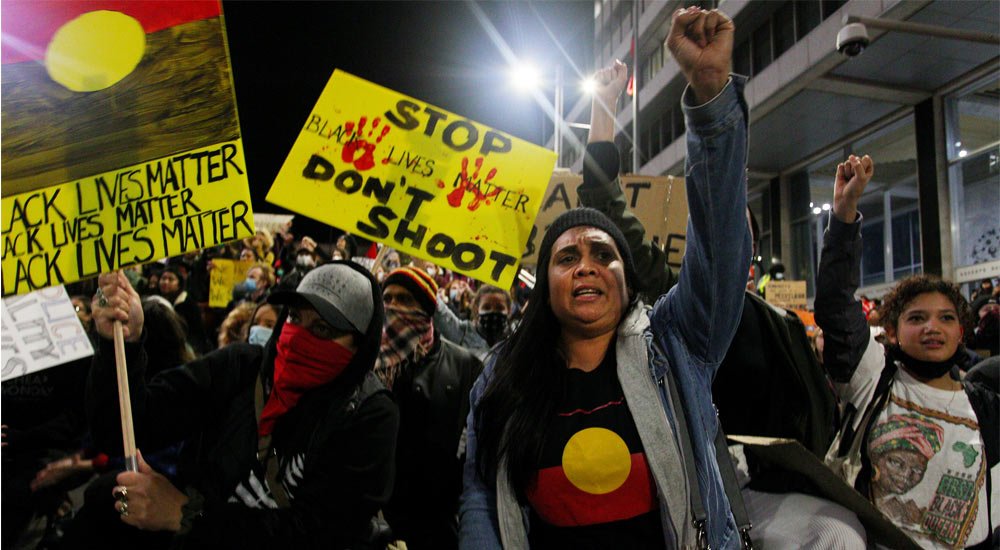
Protestors chant and bend down on their knees. They hold handmade red, yellow and black signs saying 'stop don't shoot' and Black Lives Matter. Woman in front raises her fist and is wearing an Aboriginal flag tshirt.
‘Black Lives Matter’ rally on June 02, 2020 in Sydney, Australia. (Photo by Lisa Maree Williams/Getty Images)

1. Black Lives Matter

With the killing of George Floyd by a US police officer in May 2020, the Black Lives Matter movement is an important one to support right now.

Activists Alicia Garza, Patrisse Cullors and Opal Tometi created the Black Lives Matter hashtag in 2013. It was part of their response to the acquittal of George Zimmerman for the killing of African-American teen Trayvon Martin.

Although it started in the US, Black Lives Matter is now a global human rights movement. It campaigns to end violence and systemic racism towards Black people and other people of colour. In Australia, Black Lives Matter has become synonymous with the 434 Aboriginal and Torres Strait Islander people who have died in police custody since the Royal Commission Into Aboriginal Deaths in Custody. Here’s some ways you can support Black Lives Matter in Australia.

“Black people. I love you. I love us. Our lives matter, Black Lives Matter”

Alicia Garza
A teenage girl with a beanie and two long plaits holds a big handmade sign with words in Swedish: Skolstrejk for Climatet. Next to her, a dark-skinned man holds a handmade sign saying: What Greta said.
Greta Thunberg and Amnesty’s Secretary General Kumi Naidoo, 2019. AI

2. Schools Strike for Climate

One girl with a protest sign outside Sweden’s parliament every Friday inspired a worldwide movement in less than one year. The Schools Strike movement (also known as Fridays for Future) wants politicians to act now on the climate crisis.

Greta Thunberg and the Schools Strike movement dominated headlines in September 2019, when around 6 million people attended their climate protests.

“I want you to panic”

Greta Thunberg
Vincent Lingiari (left) holds out his palm. Gough Whitlam (right) holds his hand above Vincent's and pours red earth into Vincent's palm. Brilliant blue sky above them.
Prime Minister Gough Whitlam pours soil into the hands of traditional land owner Vincent Lingiari, Northern Territory, 1975. Credit: Mervyn Bishop / Art Gallery of NSW

3. Indigenous land rights movement

The struggle for Indigenous land rights spanned decades. In 1963, the Yolngu people from Yirrkala in Arnhem Land presented parliament with the Yirrkala bark petitions, protesting to have their land and their rights returned.

A few years later Gurindji man Vincent Lingiari led 200 stockmen on the famous ‘Wave Hill Walk-Off’ for fair pay and decent working conditions. It soon sparked the Gurindji people to demand the return of their lands.

Torres Strait Islander man Eddie Mabo also played an important role. His campaign for land rights led to a High Court case that eventually overturned the lie of terra nullius.

“We want to live on our land, our way.”

Vincent Lingiari
Malala Yousafzai, the schoolgirl shot by the Taliban for campaigning for girls’ education was presented with an International’s Ambassador of Conscience award.
© Amnesty International

4. Girls’ rights to education

Malala Youfaszai grew up in the Swat Valley in Pakistan at a time when the Taliban had banned girls from attending school. Her peaceful promotion of girls’ education made her a target; the Taliban shot her on a school bus.

Malala survived. Today she still promotes women and children’s rights to education, working with young activists across the world. She is the youngest Nobel Prize laureate. If you haven’t yet read I Am Malala – do it.

“Let us pick up our books and pens. They are our most powerful weapons.”

Malala Yousafzai
Nelson Mandela revisits his prison cell on Robben Island, where he spent eighteen of his twenty-seven years in prison, South Africa, 1994.
Nelson Mandela © Jurgen Schadeberg (www.jurgenschadeberg.com)

5. Movement against apartheid

South Africa’s apartheid policy of the mid-20th century sanctioned racial segregation. It barred non-white South Africans from political and economic equality.

People held strikes and protests against their government’s apartheid policy for decades. This, along with economic sanctions, led to the end of apartheid in the 90s.

Nelson Mandela played a central role in the movement, and spent 27 years in prison for it. After the dismantling of apartheid, Mandela became South Africa’s first democratically elected leader.

“It always seems impossible until it’s done.”

Nelson Mandela
A close up photograph of people taking part in the Women's March on Washington DC on 21 January 2017. The image shows a mixed crowd of men and women holding placards and marching, some of whom are wearing pink hats. A young woman at the front of the shot holds a sign that says 'We wish not for control over others but for control over ourselves.'
© Mobilus In Mobili/Flickr

6. #MeToo

American activist Tarana Burke sparked the Me Too movement in 2006. She wanted to break the silence surrounding sexual assault, rape and harassment, and empower women through empathy and strength in numbers.

In 2017 the ‘Me Too’ hashtag went viral in connection to Harvey Weinstein. The movement has grown to include both men and women of all colors and ages, and aims to support marginalised people and communities.

“People are ready for something different.”

Tarana Burke
Amnesty activists at Brisbane Pride Festival. © Brisbane Pride

7. Marriage equality

On 9 December 2017, the right to marry in Australia was no longer determined by sex or gender. Hurray!  Equality Australia estimates that 15,600 people volunteered for the Yes campaign.

Marriage equality happened after decades of work raising understanding and acceptance. In 1978, around 500 people marched in Sydney to protest inequality for LGBTQI+ people. Supporters would go on to hold this event every year, becoming the Sydney Mardi Gras.

There’s still a lot to do to ensure equality for LGBTQI+ people in Australia, such as banning harmful ‘conversion’ practices.

“We just made the country a fairer, more equitable and just place.”

Ian Thorpe
A young woman with dark hair and wearing a white shirt smiles at the camera. Tree foliage is visible in the background.
Loujain al-Hathloul, freedom fighter in Saudi Arabia © Marieke Wijntjes / Amnesty International

8. Women’s rights to drive, Saudi Arabia

Determined, peaceful protesters pushed the Saudi Arabian government to overturn its ban on women driving. The Saudi authorities arrested many for their peaceful protests. The authorities overturned the ban in June 2018. But it came at a cost; they again imprisoned some of the campaigners who had worked so hard to win the right to drive.

Activist Nassima al-Sada is still in prison. Saudi Arabia’s authorities have detained Nassima without charge since July 2018.

“The rain begins with a single drop”

Manal al-Sharif, Daring to Drive: A Saudi Woman’s Awakening

9. Amnesty International

Amnesty International began in 1961 when two Portuguese students were jailed for raising a toast to freedom.

In response, British lawyer Peter Benenson decided to collect and distribute information about ‘prisoners of conscience’ – people imprisoned, tortured or executed because of their political views or religious orientation. He gave life to the vision of collective action that defines our work today.

Since then, Amnesty  has grown to a global human rights movement of over 8 million people in more than 150 countries and territories.

“Never doubt that a small group of thoughtful, committed citizens can change the world; indeed, it’s the only thing that ever has.”

Margaret Mead

Is there a social change movement that inspires you? What human rights injustice are you ready to change? Let us know!

Peaceful protest is a human right – police should work with organisers

Responding to attempts by NSW police to ban peaceful protests in Sydney tomorrow, Amnesty International Australia Campaigner, Joel Clark, said:

“Peaceful protest is a fundamental human right, and the NSW police should work with organisers to ensure that attendees can social distance, and protests can be carried out in a safe manner. Police must also commit to not fine anyone inadvertently breaking a Covid-19 guideline.

“Many Australians have been affected by the murder of George Floyd, and many Australians know that the same issues are part of everyday life for many Australians, particularly Indigenous people and people of colour.  Racism cannot be tolerated any longer, and the public must be able to use their voice to call it out.

“Amnesty calls on attendees to respect social distancing: maintain a 1.5 meter distance, wear masks, and wash their hands frequently.”

Philippines: UN ‘war on drugs’ report reveals urgent need for international investigation

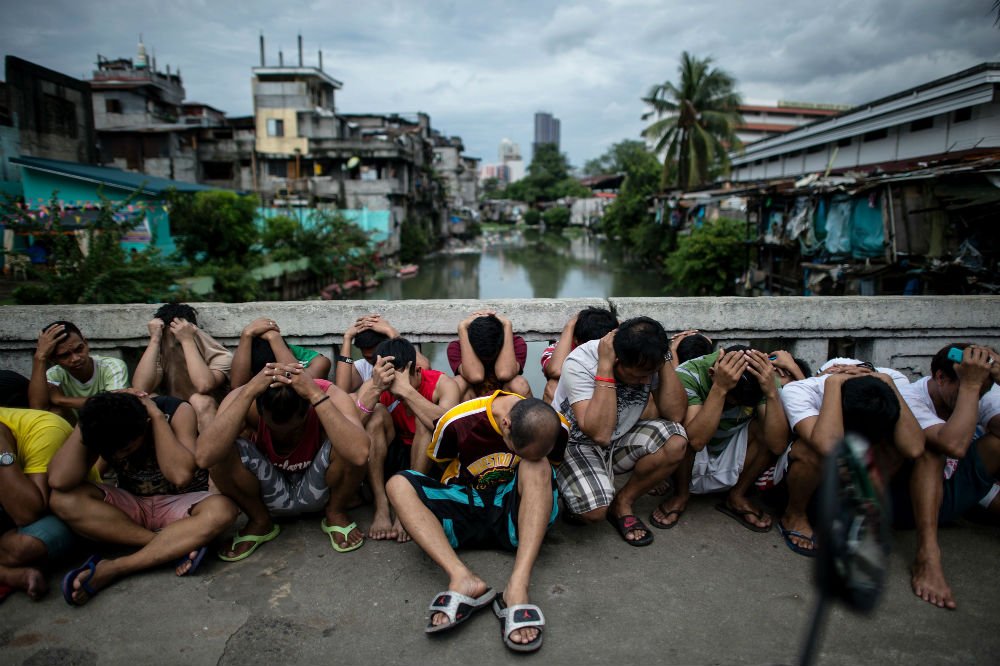
War’ has seen thousands murdered by police as part of a widespread and systematic attack against poor communities

President Duterte has explicitly encouraged police to commit extrajudicial executions and promised them immunity, while implicated police officers have received promotions

Amnesty is calling for international investigation into country’s human rights abuses

Investigation ‘a vital step towards addressing the near-total impunity fuelling ongoing human rights violations in the Philippines, some of which amount to crimes against humanity’ – Nicholas Bequelin

Responding to a UN report on the human rights situation in the Philippines released today, Nicholas Bequelin, Amnesty International’s Asia-Pacific Regional Director, said:

“This long-awaited report is a damning indictment of the Philippine’s ‘war on drugs’. 

“This failed ‘war’ has seen thousands murdered by the police as part of a widespread and systematic attack against poor communities in the name of combating drugs. Like the UN, we are deeply concerned by the total impunity enjoyed by those who have perpetrated these crimes, which has allowed for the proliferation of further serious human rights violations in the country.

“The report makes clear the critical need for further investigation into these violations. The UN Human Rights Council must now launch an independent international investigative mechanism on extrajudicial executions and other violations committed since 2016.

“Such a mechanism would be a vital step towards addressing the near-total impunity fuelling ongoing human rights violations in the Philippines, some of which amount to crimes against humanity. 

A president at war with his people

Today (4 June) the UN Office of the High Commissioner for Human Rights (OHCHR) released a report on the human rights situation in the Philippines. The report details extrajudicial executions and other human rights violations committed in the name of President Duterte’s so-called “war on drugs”, as well as ongoing attacks against the media, human rights defenders and political activists.

The report also notes an environment of near impunity for the killings; falsification of evidence during police raids conducted without warrants; repeated encouragement by the highest government officials to use lethal force in the “war on drugs”; threats to freedom of expression; and human rights abuses by non-state actors.

Since the beginning of the Duterte administration in June 2016, thousands of individuals mostly from poor and marginalised communities have been killed – either by the police or by unknown armed individuals, at least some with links to the police. Despite condemnation from human rights organisations and the international community, President Duterte has explicitly encouraged police to commit extrajudicial executions and promised them immunity, while implicated police officers have received promotions.

Climate of impunity

Attacks against human rights defenders and critics of the government—including activists, journalists, lawyers, church leaders, trade union leaders, and individuals and groups affiliated with the political left—have also increased under a climate of complete impunity. Most recently, the government shut down ABS-CBN, the country’s largest TV and radio network, and threatened to kill those violating COVID-19 quarantines and curfews.

Police must do more to address racism

Responding to the violent arrest of an Indigenous boy in NSW this week, Amnesty International Australia Indigenous Rights Advisor, Rodney Dillon, said:

“Sadly, this latest incident is an example of a long history of violence and discrimination leveled at Indigenous people by police all over the country since colonisation. There have been more than 400 Indigenous deaths in custody since 1991 – judging from the behaviour of police such as in this situation, it is no wonder why.

“The response from the NSW Police Minister also shows an alarming misunderstanding of the experience of Indigenous people who live with this discrimination and ingrained racism every day of their lives.

“There needs to be an independent body that investigates these incidents and a fundamental overhaul of our approach to justice in this country, specifically how it’s applied to Indigenous people. 

“The most simple and effective way to begin this change is to raise the age of criminal responsibility from 10 to 14 and give kids a chance for a healthy and happy life free of the criminal justice system.”

Activism Leadership Committee members

Australian Capital Territory & Southern New South Wales

No candidates nominated for this Region in 2020.

New South Wales

Swagota Kotoky

I believe that it is our duty to take care of people in need and Amnesty International provides me an opportunity to do so. I first started volunteering for Amnesty International in the year 2006 with their Toronto, Canada office and now am a co-convener for the Hornsby Action Group. As a mother of a young child, I have observed that children are naturally sensitive to understand in their own way what is right and wrong in any particular situation. Making children and youth aware and sensitized to human rights issues will build a better society for tomorrow and this is where I wish to contribute as a member of ALC. Professionally, I am a commercial contracts consultant for a multinational company and have more than fifteen years of experience as a legal counsel.

Nancy Mills

My name is Nancy Mills and I’ve been an Amnesty member since 2015.
I was born in Canada, arriving in Australia in December 1981. I worked at the NSW Ombudsman’s Office while studying part time for my law degree. I then worked as a prosecutor with the Commonwealth Director of Public Prosecutions. After retiring from the ATO in 2014, I graduated from UNSW with a Masters of Human Rights Law and Policy in.

I am also a volunteer magistrate for the NSW Law Society’s Mock Trial program.
I’m an active member of Sutherland Shire Amnesty and was convenor in 2017 and 2018. As an ally of the LGBTQI community (my child is transgender) I am a member of the NSW LGBTQI Network. I have helped organise, created placards and banners and taken part in Fair Days, Mardi Gras parades and many marriage equality, refugee rights, women’s rights and indigenous rights rallies. I have proof-read and helped draft a number of Amnesty submissions on LGBTQI issues, and recently co-authored Amnesty’s submission on the Second Draft of the Religious Discrimination Bill.
I look forward to increasing awareness and knowledge of Amnesty’s work, promoting Amnesty’s visibility in the community and working collaboratively with other human rights groups to promote human rights for all.

Kevin Sweeney

Kevin Sweeney photo

Kevin Sweeney is currently the Convenor of the Newcastle Action Group, a member of the NSW Activism Leadership Committee and has been a long term supporter of Amnesty International. He is a firm believer in the importance of defending human rights as a means of creating a more just society. He is particularly passionate about: bringing an end to the Australian Government’s blatant disregard for the rights of refugees and asylum seekers; ending offshore and indefinite immigration detention; and ending the inappropriate and counterproductive incarceration of children in our justice system.
Kevin is a medical practitioner and has worked in senior management in health service delivery and medical education. His qualifications are MBBS, DA(UK), DipRACOG, FRACGP and FAICD. He has a sound understanding of strategic planning, policy development, corporate finances and the effective operational implementation of policies and programs.
Kevin is looking to make a broader contribution to the strategic direction of Amnesty International Australia and bring the perspective of activists to strategic and policy decisions.

Queensland/Northern New South Wales

Philip Armit

Retired primary school teacher – 30 years in Learning Support.
An active member of Queensland Teachers Union during teaching career.
Active in Mackay Conservation Group for 8 years.
Currently living in Toowoomba where I’m active in local social justice issues, with Toowoomba for Climate Action as well as with Amnesty International.

Paul Toner

In my long involvement with AIA, starting as a Uni student back in the 1990s, I been an activist, a group convener, a Branch Committee member in two regions, a branch president and Board subcommittee member and Working Party Convener. I’ve even been to NAGMs in 2 centuries. I also have a degree in Engineering and I’m currently studying for a Masters of Information Technology.
I believe my years in the many roles I have held give me a strong understanding of what our Activists and members expect from AIA.

South Australia and Northern Territory

Henry de Cure

Saras Kumar

I’m Saras (she/her) and I live on Kaurna Country – the Adelaide Plains. I first got involved in Amnesty in the UK after having cousins who were Sri Lankan refugees come to live with us and learning about human rights through Amnesty ambassadors like Sting. After joining a local letter writing group (where I was the youngest member by about 30 years) I set up a school group. I used my Amnesty experience in campaigning and fundraising when I moved to Malaysia, to support local communities and conservation. In Australia, I have learnt much from working with First Nations People about a different type of society, one that values community wellbeing and nature and recognises that our spiritual, physical, social and mental health is interlinked with that of others and with nature. Their struggles spurred me to join the Group Organiser program where I caught the “Amnesty bug” and became secretary and then Regional President for SANT.

If elected, I will use my role on the ALC and/or General Meeting Voter, to support Amnesty activists and staff to develop and implement campaigns, share and learn from other activists and grow our activist community. The changes that COVID-19 have thrust upon us bring challenges as we can’t do our usual stalls, rallies and meetings but they also bring the opportunity to trial ways to be more inclusive and reduce our carbon footprint. I look forward to continuing our work together to create a sustainable and fair world.

Tasmania

Zainab Clark

I have been the co-convener of Amnesty Southern Tas Group since 2015. Our group is strong, vibrant and active and has held many events, with our major focus on Indigenous Rights and Refugees, including bringing Julian Burnside to share the screening of his documentary ‘Border Politics’.  We have shown numerous films about Asylum Seekers and Refugees at well-attended events and hold stalls as needed, including the two-day Write for Rights stall at the annual Cygnet Folk Festival.

We network closely with Amnesty’s Indigenous Advisor, Rodney Dillon, and have screened significant films with Rodney as guest speaker.  We have met with key politicians at Local, State and Federal level, including the Premier (gaining representation at COAG).  In 2016 we successfully petitioned for the Huon Valley LGA being declared a ‘Refugee Welcome Zone’.  We network with community groups and individuals such as Asylum Seeker Advocate Anne Moon; co-hosting events.

Recently I instigated and coordinated four of the five events of the Uyghur campaign in Tas.

I come from a Welfare and Disability background.  Have attended NAGM’s as observer and voter, also AI Leadership Workshops and RAR National Conference, with Southern Group co-convener and stalwart, Sylvia Merope. 

Was invited to join the ALC last year.  As a platform to further human rights and strengthen the impact of Amnesty regionally, it would be a privilege to remain one of the team.  

Victoria

Marjon Hilhorst

Marjon (MJ) is a volunteer and active member of Amnesty International. She joined the Amnesty International Student Group Amsterdam (AISA) when studying Political Science in the Netherlands. When she moved to Australia in 2018, she started working as an office volunteer at Amnesty International Australia in both the Social Media and Events teams. She created content for and managed the Instagram page for Amnesty International Victoria (@amnesty_vic) for 1.5 years. As part of the Events team, she processed event applications, designed promotional materials, and prepared materials for the action groups. In addition, she initiated and coordinated the Victorian Write for Rights Marathon, a letter-writing event featuring expert speakers, in 2018 and 2019. While she is passionate about social justice and defending human rights in general, she is particularly interested in women’s rights, children’s rights, and LGBTIQ rights.

 Margherita Mezzasoma

Margherita Mezzasoma currently holds the position of Regional Refugee Campaign Leader for Amnesty in Victoria. She works to build community support and the spirit of welcome for refugees in her region. She engages with different Amnesty action groups and community members, such as community organizations, sporting clubs and finally councils to get the My New Neighbour campaign into the community. She has been involved with Amnesty on the field of refugee rights since 2016. Moved from Italy three years ago, she is currently completing here master’s in international Relations at Melbourne University. Her study focus revolves around international governance and law, and international human rights regimes. She also completed a course at SciencesPo university in Paris on human rights and global development.

 She has been part of the VALC for over a year now and has worked to increase the involvement of the ALC in activist engagement.

Susanna Ritchie

I am a highly engaged member and activist leader here at AIA. I am currently Chair of AIA’s Diversity, Inclusion & Wellbeing Steering Group after 4 years on the National Board. I was Victorian Branch President (2013-2015) and have been a member of the Victorian Branch Committee/Activism Leadership Committee and the Footscray/Williamstown Action Group since about 2012. I have previous experience as a General Meeting Voter (2013, 2014 and 2019).
I am unwavering in my passion for developing positive relationships and improving communications across Amnesty, and throughout the broader human rights movement. I strive for transparency, accountability, inclusiveness, innovation and continuous improvement in all that I do, including at Amnesty.
During my time as Branch President and then as a Board Member, I helped drive and design AIA’s new membership growth strategy and AIA’s recent governance reform. I was also an early member of the Board’s Activism and Membership Sub-Committee and helped establish its role within our organisation.
I’ve had over a decade of advisory experience in both private practice and government. Now, in addition to being employed as a senior leader in the public service, I run a thriving workplace relations consultancy and law firm with her husband helping to unlock people power in business as well as in the community.

Western Australia

Lucette Barbier

David Forrester-Walker

I started writing Amnesty letters when at uni in the 1970’s, but have been more consistently active for the past 5-6 years.  Member of the Mt. Lawley group since 2014, every month I organise Urgent Action letters, and have participated and assisted in organising events such as stalls, quiz nights etc. In 2019 I was elected as a General Meeting Voter, and attended the national AGM in Sydney in October 2019. In March 2020 I organised and managed the successful stall at Hyde Park community fair which through the efforts of the whole team resulted in over 500 signatures for Write for Rights, a large number of people expressing an interest in becoming involved in Amnesty and a significant PR exercise to broadcast the Amnesty message.  

My primary focus is the international situation and concern about the willingness of governments around the world to breach basic human rights to further their own self-interest, and perpetuate their oppressive regimes against the wishes and interests of the people. Areas of interest include death penalty, freedom of expression, torture, oppression of minorities.

Euan Gleeson-Brown

Hi everyone! I’m Euan Gleeson-Brown, and I’m a third-year uni student at UWA. My involvement for human rights began when I first discovered amnesty in my first year of university when I came across a friend at an Amnesty campus stall. Through my uni club, I’ve organised a Refugee Rights week event in collaboration with other uni clubs, a kite-writing event in solidarity with Hong Kong and a volunteering event for a local homeless charity, putting together women’s sanitary packs. My experience being the President & Treasurer of Amnesty UWA, volunteering with the WA branch & Mt. Lawley group and presently collaborating with youth activists in YAG & the WA schools group has grown my passion for youth activism, and I hope to share my experience, excitement & creativity in the fight for human rights as a member of the WA ALC & GMV. Cheers! 

Fathi Jaouadi, (known as Saber).

My name is Fathi Jaouadi, (known as Saber).

I am a human rights advocate and a documentary Filmmaker.

I was involved in social justice movements from when I was a school student in Tunisia, which was suffering under a draconian dictatorship and had been for many decades. At the age of 15 years I found myself taking part in street protests to support imprisoned students, distributing leaflets and organizing student groups. When I was 18 years old, the Tunisian police arrested me for participating in a campaign against the American military operation in Iraq during the First Gulf War. I was released on bail after two months spent in prison and enduring torture in the secret police cells. I decided at that time to flee the country and escaped to Libya. For seven years I moved between many African countries looking for a safe place and was eventually granted UNHCR protection in Sudan where I finished my first University degree. It was during these years that I took on a different identity and became known as Saber. Dreaming of reaching Canada I was arrested in both Senegal and Ivory Coast, and if it weren’t for the UNHCR who stopped my deportation back to Tunisia, I would have faced 9 years imprisonment and 9 years administrative detention back in my homeland; a sentence imposed on me in absentia. 

After several tries, I reached London and applied for asylum. I had to wait 4 years until I got my refugee status. During this time I started my masters degree and became involved in human rights work in the MENA region.  I was a member of the International Committee to Defend the Prisoners of Conscience in Tunisia. We organised weekly sit-ins in front of the Tunisian Embassy in London for years and I took part in a 5-day hunger strike in protest against the death of political prisoners in Tunisia. I also became involved in human rights work in the Middle East and was one of the organizers who tried to break the illegal siege of Gaza. In this work we brought together many delegations of human rights advocates, doctors, lawyers, musicians and parliamentarians to visit Gaza by sea, and brought from Gaza students and people in need of medical assistance who had no other access to Europe.

In one instance our boat was attacked by the Israeli Navy and almost sunk, but thanks to a UN boat and the Lebanese Navy we were escorted to Lebanon. In another instance I was captured at sea by the Israeli Navy and was sent to an Israeli prison for a week. 

In 2011 following the Arab Spring and after 19 years in exile I was able to return to my homeland, Tunisia. I helped establish a community TV station (Tunisia News Network) to promote democracy and human rights in Tunisia. I lead a delegation of Lawyers from the National Lawyers Guild (US), Haldane Society of Socialist Lawyers (UK),and Mazlumder (Turkey), to Tunisia in 2011 to investigate US and European complicity in human rights abuses committed by the Tunisian regime. I also made a film about the Human rights abuses in Tunisia during the 2011 revolution.

Between 2014 and 2017 I was involved with the dispossessed and immigrant communities. I spent time with the exiled Kurdish Iranian community in Kurdistan struggling for autonomy in Iran; the African migrant communities in the suburbs of Paris, consistently marginalized from French society, and the Palestinian refugees in Lebanon, still living in the refugee camps that they have been in since 1948. All of these stories are documented in films I made.

I moved to Australia in 2019 and I was grateful to become involved with Amnesty. I am currently an ALC member and am interested in Indigenous issues and Refugee rights.

Richa Malaviya

Richa has been involved with Amnesty International since around 2014, committing to the organisation by undertaking a variety of roles in both a volunteer and staff capacity. Her interests include Indigenous rights, diversity, human rights under domestic law, inclusivity and cultural representation which were all fostered here at Amnesty! In 2014, Richa commenced as the PA to the Indigenous Rights Manager, Tammy Solonec, assisting with the launch of the Community is Everything campaign. Shortly after, she became the WA Youth Advisory Group representative, and then the WA Branch Secretary. She moved into the staff role of Indigenous Rights Campaigner assistant and on conclusion of that role, became the Vice President of the WA Branch. Over the last year, Richa’s focus has working with partnerships that celebrate diversity and ensuring that cultural representation and diversity is reflected within Amnesty structures.

Jacob Stokes

My name is Jacob and I am a postgraduate student studying international relations and national security focusing on the impact of war and conflict on poverty, social underdevelopment and refugee migration. I am an editor for the Organisation for World Peace and a Global Vision International ambassador, an organisation providing high-impact and high-quality marine conservation and community development programs worldwide. I am also a United Nations volunteer and have travelled to Thailand to work alongside local organisations on environmental sustainability projects. I have experience working with volunteers and organising field events through my time as a field coordinator for the Australian Labor Party.
I have been an Amnesty International member since 2019 and I believe grassroots activism is a great way to advocate for non-violent solutions to conflicts around the world. It is important for Australia to play a leading role in the Asia-Pacific to ensure the human rights of people in the region are protected and defended and that countries work together to solve conflicts peacefully. 
Volunteers are the heart of Amnesty International and I have enjoyed working alongside passionate and like-minded activists on a wide-range of human rights issues and hope to continue to do so by developing and motivating local human rights activism as part of WA’s Activism Leadership Committee.