‘While Refugee Week is a time of celebration, it’s also a chance to reflect on the issues that affect refugees the most’

This Sunday 19 June kicks off Refugee Week, so I thought I’d take this moment to introduce myself to you. My name is Zaki Haidari, and I’m Amnesty International Australia’s new Refugee Campaigner. I myself am a refugee, first coming to Australia from Afghanistan in 2012. 

I experienced the height of injustice growing up in my country. I have witnessed my people in Afghanistan being discriminated against and suffering genocide because of their ethnicity, beliefs and religion. For them, every single day their lives are at risk.

While Refugee Week is a time of celebration, it’s also a chance to reflect on the issues that affect refugees the most. And with over 100 million people currently displaced around the world, for me there’s one that stands out.

Australia’s Refugee and Humanitarian program is inadequate, and it is failing the people who need it the most.

Back in 2020, the previous Australian Government cut 5,000 places from our Refugee and Humanitarian program. This left just 13,750 places — the lowest it’s been in 45 years. This means that as people from places such as Ukraine, Myanmar and Afghanistan flee their homes and everything they have ever known, Australia is turning its back on them.

Before this year’s federal election, the now Labor Government committed to increasing the Refugee and Humanitarian intake to 27,000 places annually. If they’re going to do this, they’ll need to make it clear in their Federal Budget – due to be handed down in October this year.

It is crucial that we raise our voices now, and hold them to their promise. 

My journey to this point has been a long one. I started with Amnesty as a volunteer back in 2013. I was on a bridging visa, holding no working rights. Now, almost a decade later, I return to Amnesty as its Refugee Rights Campaigner, with a mission to advocate for people just like me. People who have escaped the unimaginable, and continue to experience human rights abuses just for seeking safety on Australian shores.

This Refugee Week and beyond I will continue to use my voice and experiences to fight for all those seeking asylum, so they can realise their full human rights and live in safety. I hope you’ll join me.

How you can take action today

  • Sign the petition calling on the government to raise Australia’s Refugee and Humanitarian intake
  • Attend an online event on Friday 25 June that we are co-hosting to celebrate community-led support for refugees, and explores the new Community Sponsorship Program

Amnesty works to support refugees and asylum seekers. We challenge injustice by campaigning for the Australian government to raise the humanitarian intake, improve community sponsorship and end offshore detention. Learn more about our Refugee Rights campaign here.
Malaysia: Move to abolish mandatory death penalty is ‘welcome step’ in right direction

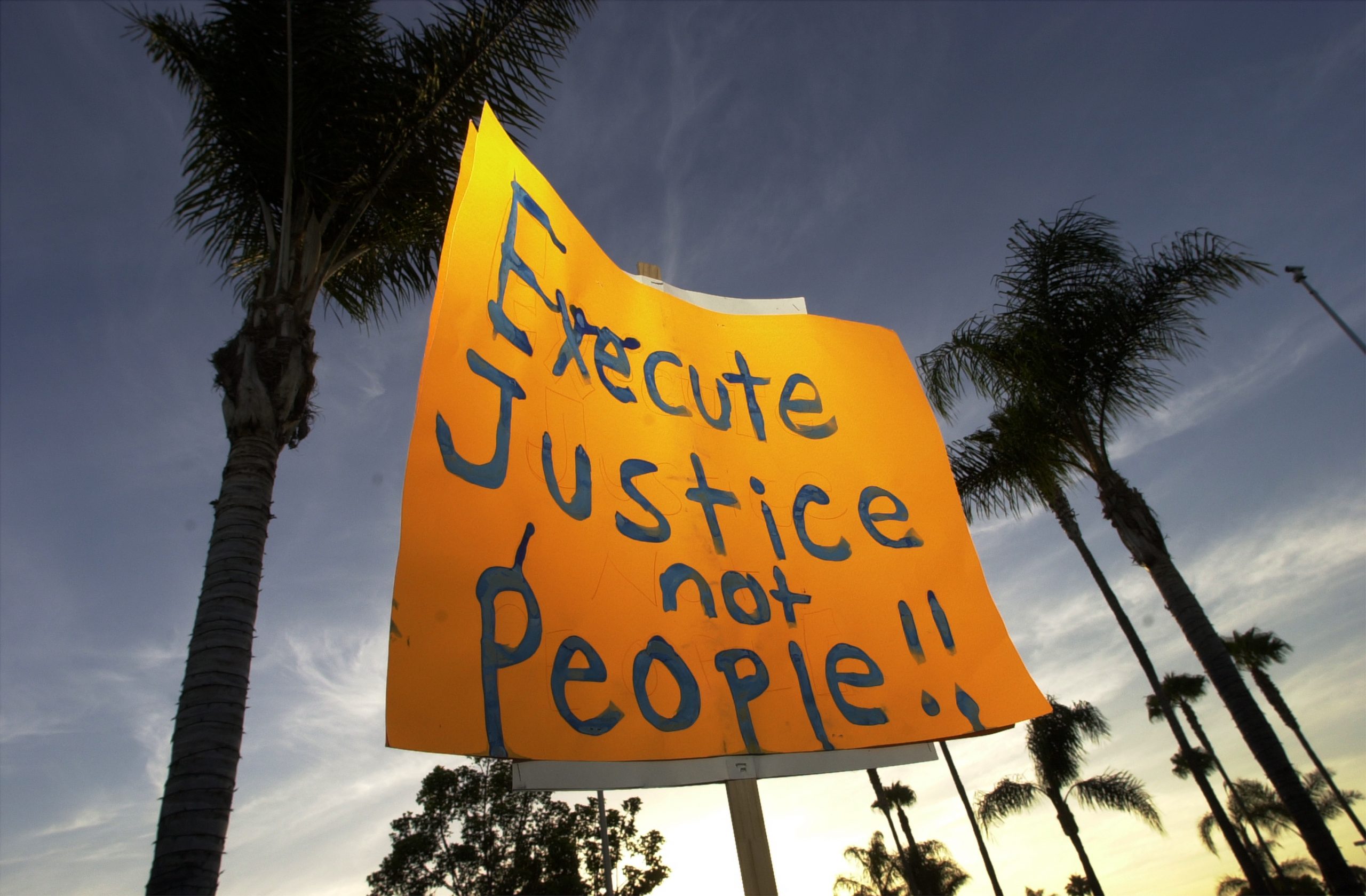
Responding to the announcement that Malaysia’s Cabinet has decided to work towards abolishing the mandatory death penalty, Amnesty International Malaysia’s Executive Director Katrina Jorene Maliamauv said:

“We applaud the government’s decision to abolish the mandatory death penalty and to grant judges discretion in sentencing. It’s a welcome step in the right direction, and we urge it to go further and work towards full abolition of this cruel punishment.

“The government should table the necessary amendments in Parliament without delay and establish a full review of all cases involving the mandatory death penalty with a view to commuting these sentences.

“We have seen and documented time and time again how the use of mandatory sentencing has disproportionately harmed the most marginalized and disenfranchised members of society, how the death penalty itself has not served as a unique deterrent to crime, and how its continued use has stifled the necessary and visionary work towards enabling fair justice and addressing issues at the root causes.

“The death penalty is also cruel, inhumane and a violation of the right to life. But today’s announcement by the government shows that human rights change is possible, and that the global trend towards abolition remains unstoppable. Malaysia’s decision should also set an example for other countries in the region.”

Background:
On 10 June 2022, the Minister in the Prime Minister’s Department (Parliament and Law) Wan Junaidi Tuanku Jaafar said that the government has agreed to abolish the mandatory death penalty. The Cabinet decision was reached after a presentation of a report by the Special Committee to Review Alternative Sentences to the Mandatory Death Penalty.  

Currently, 11 offences carry the mandatory death penalty in Malaysia, including for drug-related offences, which make up the majority of death penalty cases. The decision by the Cabinet would give judges discretion in sentencing. These amendments would still need to be tabled and passed in Parliament before they take effect.

The Cabinet decision includes calls for further studies to develop proposals for substitute punishments for 11 offences which carry the mandatory death penalty.

According to a Parliamentary written reply in February 2022, there are currently 1,341 people on death row in Malaysia, with 905 of the cases involving mandatory death sentences for drug trafficking.
Amnesty International opposes the death penalty in all cases without exception, regardless of the nature or circumstances of the crime, the guilt, innocence or other characteristics of the offender or the method used by the state to carry out the execution. 

Tasmania’s commitment to raise the age of detention to 14 welcome, time to raise the age of criminal responsibility 

Amnesty International Australia welcomed today’s announcement by Tasmania’s Government to raise the age of detention from 10 to 14.

Amnesty International Australia Indigenous Rights Advisor, Rodney Dillon, said:

“Although we don’t have a lot of detail on the plans at this stage, Amnesty welcomes this significant step in a smarter approach to justice.

“Putting children in prisons causes irreparable harm, governments know this, but continue to allow children to be subject to this treatment. 

“That the Tasmanian Government has recognised that children don’t belong in prison, and there are alternatives to dealing with crime, is a huge step forward.

“We would like to see the Government’s commitment to increasing the age of detention, reflected in a commitment to raise the age of criminal responsibility to 14 as well. 

“This is a significant racial issue in this country which we must confront because the fact is that First Nations kids are the ones overwhelmingly overrepresented in the system,” Dillon said.

Amnesty International Australia commissioned research in 2021 that showed most Australians support raising the age of criminal responsibility, with 49% believing it is currently set at 16.

“This proposal, like the ACT’s plan, involves investment in diversion programs which are proven to be a much more effective solution to problematic behaviour in young kids,” Dillon said.

“The Federal Minister for Indigenous Australians Linda Burney has committed to national leadership on this issue, so this latest move, from a Liberal-led state, is further proof Australia is ready for this reform so our kids can live happy and healthy lives.”

Explainer: What are conversion practices?

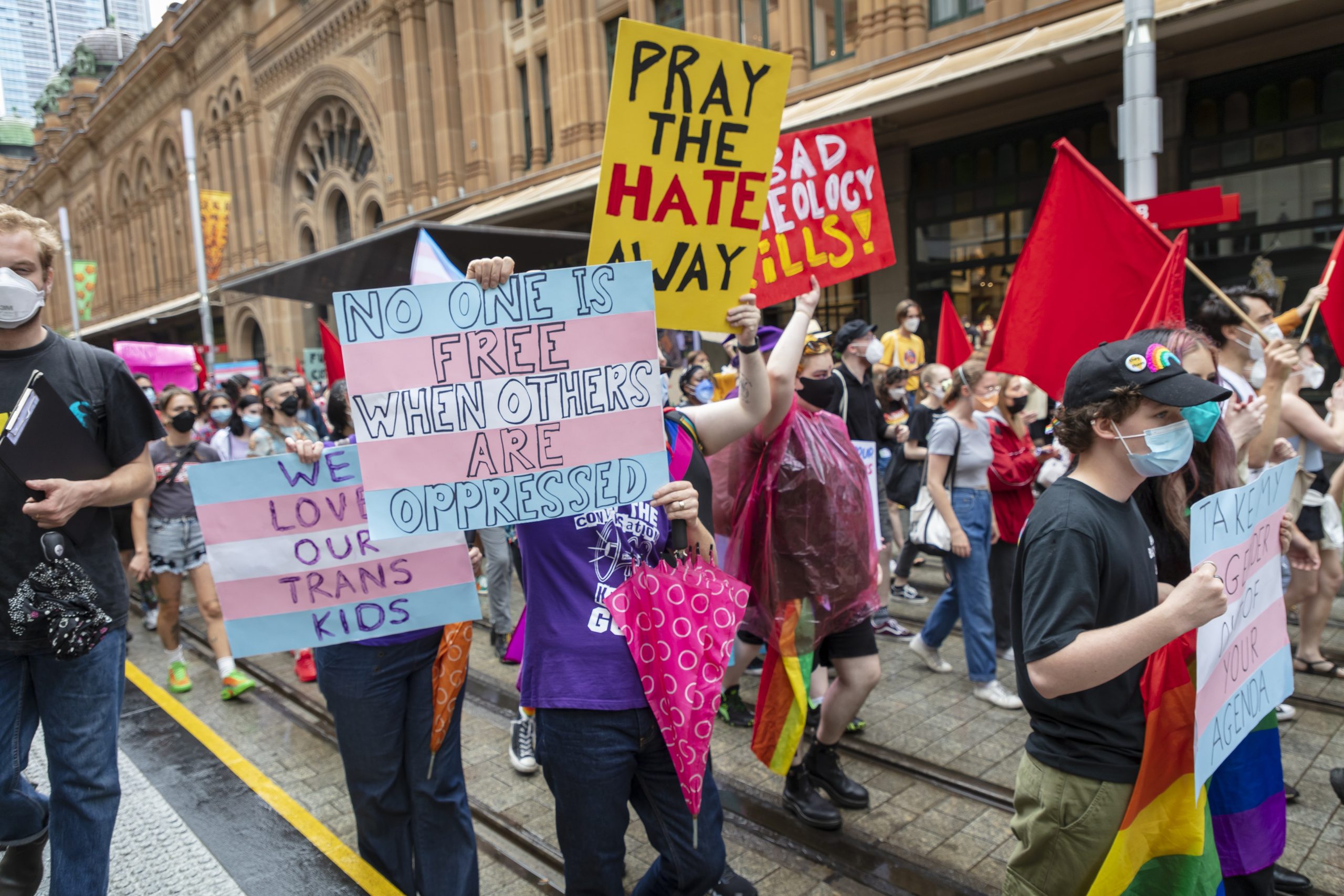
Conversion practices, also known as Sexual Orientation and Gender Identity Change Efforts (SOGICE), are formal therapeutic and informal practices which target LGBTQA+ people of faith with the false ideology that their sexual orientation, gender identity or gender and sexual expression can be changed or suppressed.

While these practices are commonly misrepresented in the media as ‘gay conversion therapy’, Australian survivor groups prefer the term ‘LGBTQA+ conversion practices’ as it more accurately captures the ways in which conversion ideology specifically targets LGBTQA+ people through practices beyond formal therapy.

History

The conversion movement became widespread in Australia by the 1970s and was originally known as the ex-gay movement. The movement operated under the belief that same-sex attraction or transgender identity/expression was ‘unnatural’ and could be altered through prayer, personal effort or through celibacy and/or heterosexual marriage. Some branches also saw same-sex attraction as the result of spiritual influence. These beliefs became the basis of conversion ideology and how it operates today.  

Conversion practices in the 1970s were a mix of psychoanalytic, psycho-therapy and spiritual practices including counselling, support groups, spiritual interventions, residential camps and accountability groups. By 1985, conversion practices had become both nationally and internationally formalised with a coalition of ‘ex-gay organisations’ in Australia and New Zealand forming Restoration Ministries, which later joined Exodus International a global ‘ex-gay’ umbrella group. 

In the 1990s social attitudes towards LGBTQA+ people shifted and the language of conversion practices became more implicit. Conversion practices were often described as “freeing” LGBTQA+ people from experiencing “unwanted” same-sex attraction or gender divergence. Despite this change in language, conversion practices remained largely the same. 

Common myths about conversion practices

“Conversion practices are outdated and easy to spot”

Media coverage of conversion practices often represents them as outdated, explicitly homophobic and formal. However, since the 1990s conversion practices have frequently hidden their anti-LGBTQA+ ideology by representing these practices as part of spiritual healing, mental health and religious liberty. These practices are often carried out in the context of pastoral care, prayer ministry, ‘accountability’ groups or in therapeutic contexts such as counsellors or life coaches. Because of this, they can often be difficult to spot and rationalised by religious groups as providing care for “unwanted” same-sex desire/gender expression. However, conversion practices can be identified by their common beliefs in conversion ideology. 

“Being against conversion practices is a threat to religious freedom”

While conservative religious beliefs about ‘sexual sin’ are often still considered harmful to LGBTQA+ people, religious beliefs are different to conversion practice ideology, which is the belief system which underpins all conversion practices.

Conversion practice ideology is the belief that all humans are born with the potential to develop into heterosexual, cisgender people and those that do not have had their development stunted through abuse, neglect, social influence, inappropriate parenting or spiritual issues. Those that are not cisgender or heterosexual are labelled as ‘broken’ and are thought to be fixed through celibacy, heterosexual marriage, consistent long-term devotion, spiritual mentoring, avoidance or suppression of all LGBTQA+ influences and ongoing conversion practices. It is believed that those who undergo this commitment will either become heterosexual and cisgender or will overcome their ‘sexual brokenness’. 

It is important to recognise that conversion practices and religious beliefs are very different. Advocacy groups are specifically targeting the use of conversion ideology practices which restrict the human rights of LGBTQA+ people. 

“It doesn’t happen anymore” or “conversion practices don’t happen in Australia”

According to the Human Rights Centre report Preventing Harm, Promoting Justice, 10% of LGBTQA+ Australians are vulnerable to conversion practices and there are currently at least ten organisations publicly advertising conversion practices in Australia and New Zealand. 

In Australia, legislation to combat conversion practices still has a long way to go. Thanks to the advocacy of survivors and allies, LGBTQA+ Victorians are now protected from harmful conversion practices. Victoria’s world-leading legislation came into effect in February 2022 – it is based on the most comprehensive research and informed by the most prominent survivor groups in the world. It goes to the heart of conversion ideology and practices, and carefully and incisively identifies religious practices where intent to change or suppress is present in the context of individual-focused interactions and where demonstrable harm results.

Laws banning conversion practices have also been passed in the ACT and Queensland. However, Queensland’s legislation is also among the weakest in the world – only covering extremely rare conversion practices that occur in formal healthcare settings. Survivors have also added that the ACT law is missing vital clauses seen in similar laws overseas.

What can we do to stop conversion practices?

Together, we can pressure Australian governments to work with survivors groups, such as SOGICE Survivors and Brave Network, to draft effective legislation to combat conversion practices. 

By signing Amnesty’s petition against conversion practices, you can support the Sexual Orientation and Gender Identity Change Efforts (SOGICE) Survivor Statement and call on the Australian Government to end conversion practices. 

Repeated excessive use of force against peaceful protests show disregard for Papuan voices

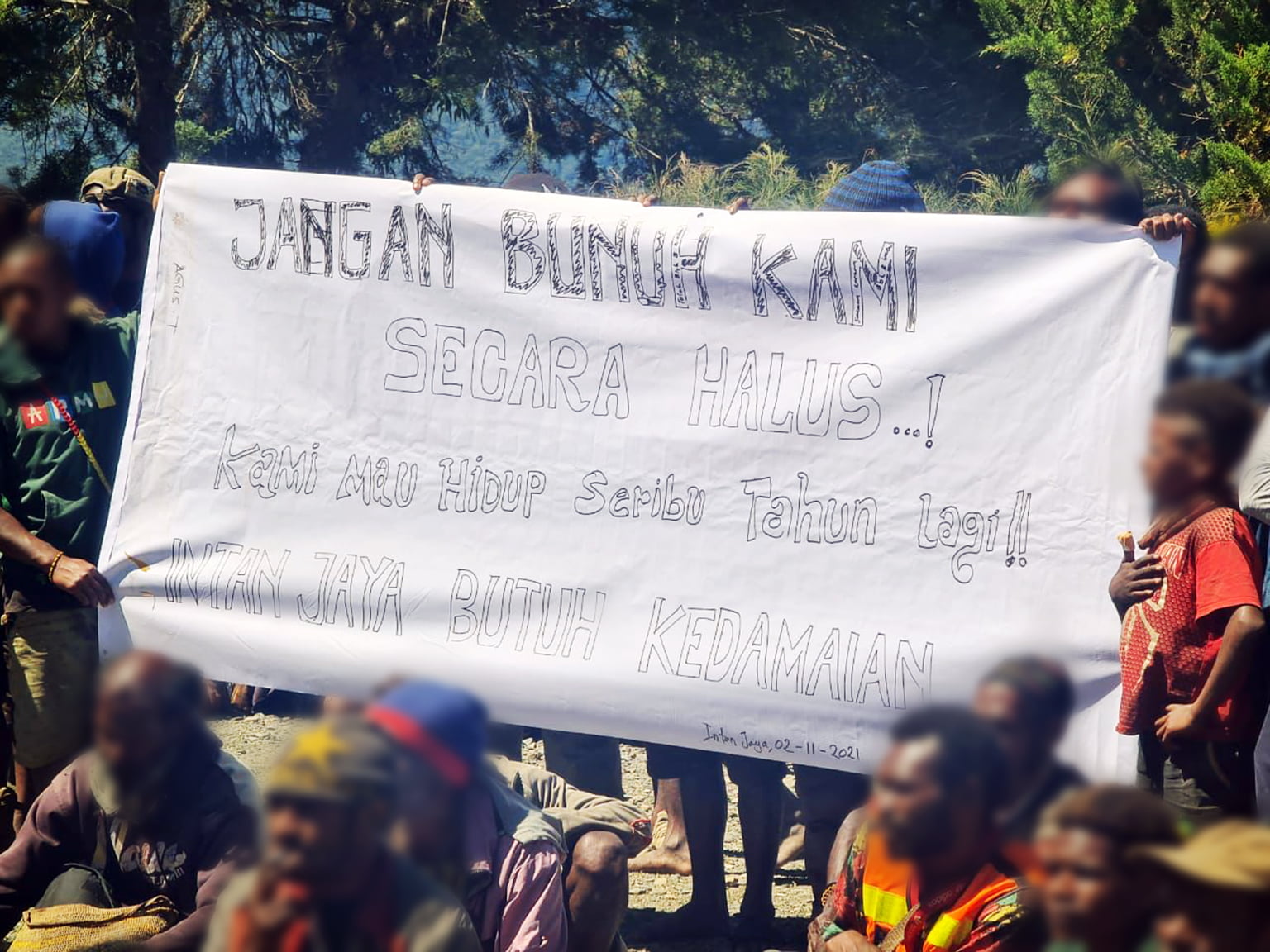
Indigenous Papuans expressing their opinions in peaceful demonstrations have once again been met with obstruction and excessive use of force from Indonesian police, Amnesty International Indonesia and Amnesty International Australia said today.

“Indigenous Papuans have a right to peacefully protest against government policies without running the risk of being arrested or beaten,” said Amnesty International Indonesia Executive Director Usman Hamid. “These repeated incidents show that the state has no respect for the voices of Indigenous Papuans.”

On Friday, 3 June, demonstrations were held in various towns across Papua, to protest the central government’s plans to split the provinces of Papua and West Papua into new autonomous regions. Activists, human rights defenders, and Indigenous Papuans have raised concerns that the new provinces will serve as an excuse to further militarize Papua, as each province in Indonesia is required to have its own military command and regional police force.

At least 44 protestors were arrested, including 13 people who are still in custody in Merauke at the time of writing, and at least 25 people were injured after police forcibly dispersed in four towns.

“Today’s protests, and the police’s response, is just the latest incident of many that show how the concerns of Iindigenous Papuans are not even listened to, let alone accommodated for,” Amnesty International Australia National Director Sam Klintworth said.

“It’s vital Australian Prime Minister Anthony Albanese use his visit to Indonesia to raise concerns about the continued use of force against peaceful protesters in Papua with President Joko Widowo. We also request the Prime Minister to urge Indonesia to genuinely listen to the Papuans in order to solve the conflict.” Klintworth said.

“The Indonesian government claims that it wants to ‘develop’ Papua and create prosperity for Papuans,” said Usman. “But how can Papuans be prosperous if their attempts to express opinions and aspirations are met with violence.”

Background

According to information Amnesty received from protesters, at least 44 people were arrested, and at least 25 people were injured in relation to the demonstrations. In Jayapura at least two people were arrested and 11 injured; 22 were arrested in Nabire; two were arrested and two were injured in Timika; five were arrested and 10 injured in Sorong; and 13 were arrested in Merauke.

Previously, on 10 May 2022, protestors holding similar demonstrations against the new autonomous regions were met with police batons and disproportionate use of water cannons. Seven Papuan activists, including staff of human rights watchdog KontraS, were also arrested on the same day. They were later released without charge, but police have said that they may be charged under the Electronic Information andTransactions (EIT) Law for spreading online fliers urging people to participate in the protests. 

On 15 March, two protesters who participated in similar protests in Yahukimo, Yakob Meklok and Esron Weipsa, were shot dead by police.

Last year, peaceful protests against the renewal of and revisions to the Special Autonomy Law for Papua, which is the basis for the creation of the new regions, were also met with disproportionate force.

On 14 July 2021, at least four students were injured in Jayapura after clashes with security forces. Police reportedly beat protesters using their fists, guns and rubber batons.

On 15 July, police dispersed protesters in front of the House of Representatives building in Jakarta. At least 50 people were arrested. One protester described being beaten, punched, stamped on and racially abused by members of the security forces before being pulled into a truck and taken to the Jakarta police headquarters. On 16 August, during another protest in Jayapura, security forces used water cannons, rubber batons, and baton rounds to disperse protesters.

While Amnesty International acknowledges the complex environment law enforcement officials often find themselves in when carrying out their duty they must ensure full  respect for the right to life, liberty and security of all persons, including those suspected of crime.

The use of force and firearms directly impacts on the right to life, which is protected under Article 6 of the International Covenant on Civil and Political Rights, which Indonesia is obliged to comply with as a state party. The use of force is therefore subject to strict human rights safeguards as set out in the UN Code of Conduct for Law Enforcement Officials (1979) and the UN Basic Principles on the Use of Force and Firearms by Law Enforcement Officials (1990). The use of force by law enforcement officials in Indonesia is further regulated by the Indonesian Chief of Police Regulation on the Use of Force in Police Action (No. 1/2009). Article 19 of the International Covenant on Civil and Political Rights (ICCPR) also protects the right to freedom of expression, including the right to protest.

Submission: the Australian Human Rights Commission’s Inquiry Into the Use of Alternative Places of Detention

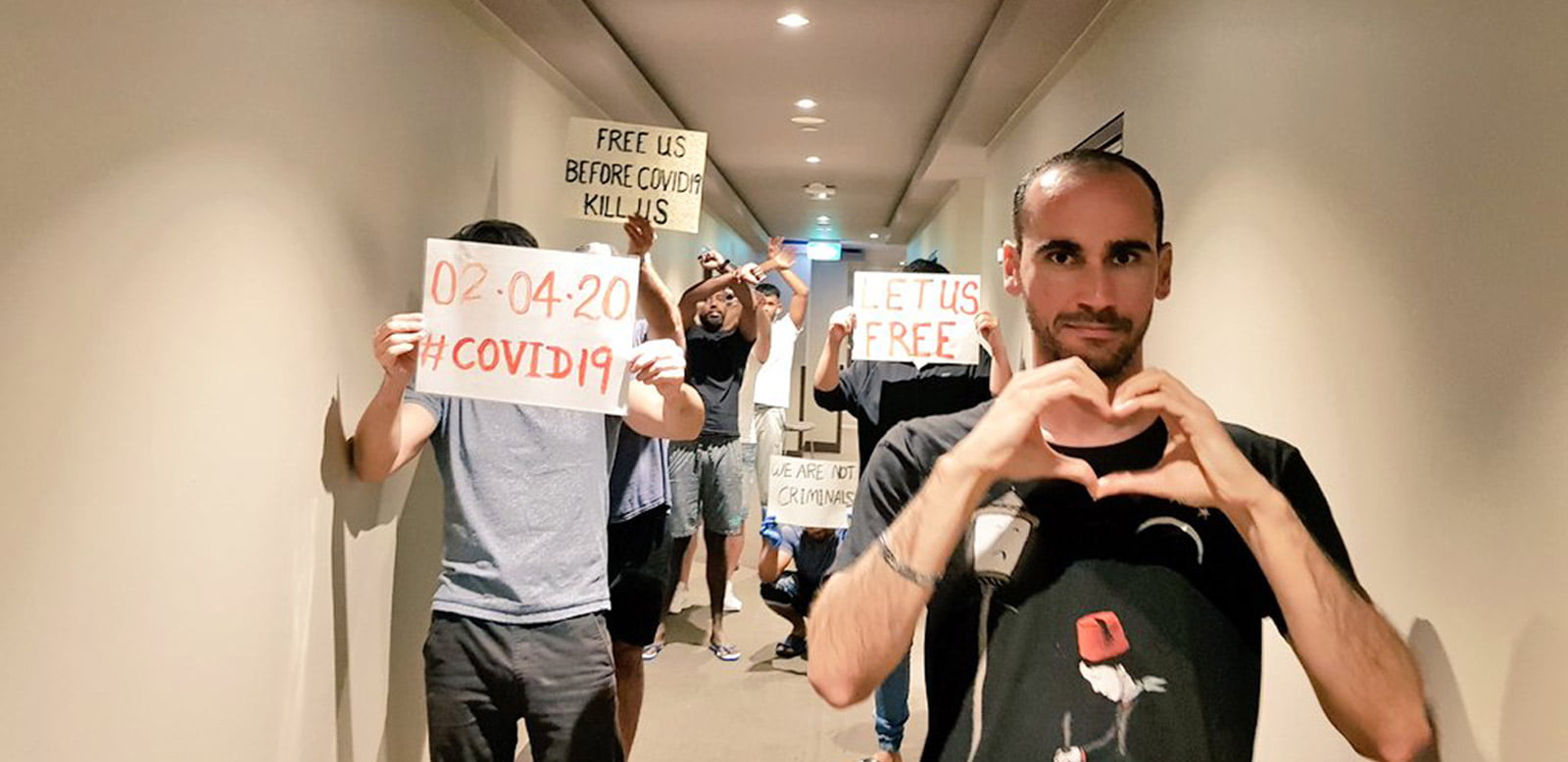
Amnesty International Australia has made a submission to the Australian Human Rights Commission’s inquiry into the use of Alternative Places of Detention (APODs).

In the submission, Amnesty advocates for ending the use of APODs as a form of ‘general’ detention, as well as establishing a uniform, fair, independent and impartial approach to the granting of a new class of bridging visa for refugees and people seeking asylum released into the community.

In addition, the submission seeks to outline legal proceedings before the Federal Court – supported by Amnesty and Marque Lawyers – in relation to the lawfulness of APODs under the definitions section of the Migration Act 1958 (Cth), as well as advocating for a uniform approach to compensation should those proceedings be successful.

Engagement Strategy for Culturally and Linguistically Diverse People, Organisations and Communities

Purpose and vision

The purpose of this Engagement Strategy is to prioritise the participation, cultural safety, inclusion of, and collaboration and partnerships with culturally and linguistically diverse people, organisations and communities. This includes people and communities of African descent, people of colour and people who are asylum seekers or refugees. This strategy does not apply to Aboriginal and/or Torres Strait Islander people and communities. Please refer to the following link for the Engagement Strategy for Aboriginal and Torres Strait Islander people, organisations and communities.

Our vision is to create an inclusive, representative, accessible, connected and culturally-safe movement for staff, activists and community partners from a culturally and linguistically diverse background, including people of African descent, people of colour and people with a lived refugee or asylum seeker experience.

Themes and objectives

Our Engagement Strategy has four themes: 

  • Culturally safe
  • Inclusive
  • Participation
  • Partnerships and collaboration

Culturally safe

To provide a culturally safe environment for staff, activists and volunteers from culturally and linguistically diverse backgrounds within Amnesty International Australia, and to increase our understanding and respect of the perspectives, skills and contributions of people from diverse cultural and linguistic backgrounds.

Inclusive

To increase the representation of culturally and linguistically diverse people across all levels of our movement and our governance structures.

Participation

To enable, and to remove barriers to, the full participation of people with lived experience in our work including through informing the development, delivery and evaluation of our work.

Partnerships and collaboration

To have strong, respectful, collaborative and positive partnerships and intercultural connections which inform our work and help us stand up together with culturally and linguistically diverse people and communities.

Engagement Strategy for Aboriginal and Torres Strait Islander People, Organisations and Communities

Purpose and vision

The purpose of this Engagement Strategy is to prioritise partnerships and collaboration, self determination, inclusion, representation and the cultural safety of Aboriginal and Torres Strait Islander people and communities in our organisation and movement.

Our vision for this Engagement Strategy is to create an inclusive, representative, accessible, connected and culturally safe movement for staff, activists, volunteers and community partners who are Aboriginal and Torres Strait Islanders. We are committed to ensuring that Aboriginal and Torres Strait Islander people lead the development, implementation and evaluation of the work that we do that impacts their communities. We want to have strong, collaborative and respectful partnerships with Aboriginal and Torres Strait Islander organisations and communities.

Themes and objectives

Our Engagement Strategy has four themes:

  • Culturally safe
  • Partnership, relationships and collaboration
  • Representation
  • Self determination

Culturally safe

To provide a culturally safe environment for staff, activists and volunteers who are Aboriginal and/or Torres Strait Islanders within Amnesty International Australia and to increase our understanding and respect of the perspectives and contributions of Aboriginal and Torres Strait Islander people.

Partnerships, relationships and collaboration

To have strong, respectful, collaborative and positive partnerships and relationships which inform our work, the way we work and help us stand up together with Aboriginal and Torres Strait Islander people, organisations and communities.

Representation

To increase the representation of Aboriginal and Torres Strait Islander people across all levels of our movement and our governance structures.

Self determination

The UN Declaration on the Rights of Indigenous Peoples affirms that Indigenous Peoples have the right to self-determination. By virtue of that right they freely determine their political status and freely pursue their economic, social and cultural development. Amnesty International Australia is committed to ensuring that Aboriginal and Torres Strait Islander Peoples, organisations and communities lead and have greater control over the campaigns that affect them and their communities including leading the development, delivery and evaluation of our work.

Amnesty calls on Western Australia and South Australia to end conversion practices

Amnesty International Australia, SOGICE Survivors and Ending Conversion Practices WA have written to South Australian and Western Australian State Government representatives asking them to end harmful LGBTQA+ conversion practices in their state by adopting Victoria’s world leading legislation, including the implementation of a Civil Response Scheme.

Survivor advocates, allies, researchers and legal advocates around the country together advocated for world-leading legislation in Victoria, which came into effect in February this year. Victoria’s legislation is based on the most comprehensive research and is informed by the most prominent survivor groups in the world. The expertise that went into building Victoria’s legislation has since been sought by governments, advocates and researchers around the world – in Canada, New Zealand, the UK, Germany, Indonesia, South Africa, Lebanon, Kenya and Nigeria.

The effectiveness of the law in ending harmful conversion practices hinges on the development and resourcing of the Civil Response Scheme, which has allowed the legislation the ability to address deceptive and prolific conversion ideology and practices in a fair and equitable way.

It is imperative that all governments in each state and territory emulate this world-leading model.

We call on the South Australian & Western Australian Government to implement this gold standard evidence-based model, including the creation of a sufficiently resourced body with powers of education, investigation and research.

Amnesty International Australia supports the SOGICE Survivor Statement, which outlines survivor-led recommendations for addressing the LGBTQA+ conversion movement, preventing further harm, and supporting survivors.

Stand with us and call on Australian governments to protect LGBTQA+ people from conversion practices.

Global Death Penalty Report: Death Sentences and Executions 2021

In 2021, the resort to the death penalty by a minority of states was on the rise, with some of the world’s most prolific executioners returning to business as usual and courts unshackled from Covid-19 restrictions.

Most known executions took place in China, Iran, Egypt, Saudi Arabia and Syria – in that order.

“Instead of building on the opportunities presented by hiatuses in 2020, a minority of states demonstrated a troubling enthusiasm to choose the death penalty over effective solutions to crime, showing a callous disregard for the right to life even amid urgent and ongoing global human rights crises”

– Agnès Callamard, Secretary General of Amnesty International

Despite these setbacks, the total number of recorded executions in 2021 constitutes the second-lowest figure, after 2020, that Amnesty International has recorded since at least 2010.  

Australia and the Asia Pacific region

Despite having a comprehensive plan to end the death penalty in the region, the Australian government has been almost entirely absent from recent campaigns against executions.

“Abolishing the death penalty is beyond the election cycle. Whoever forms government in Australia has the human rights obligation, to renew its commitment to creating a death penalty free region and end this cruel and inhuman punishment that does not have the deterrent effect its supporters claim”

– Rose Kulak, Amnesty International Australia campaigner

There was almost a 60% increase compared to 2020 in sentencing people to death – largely linked to increases seen in Bangladesh, India, Myanmar, Pakistan and Viet Nam.

Death penalty as a tool of state repression

In several countries in 2021, the death penalty was deployed as an instrument of state repression against minorities and protestors.

In Myanmar, death sentences were passed under martial law at an alarming rate; in Egypt, mass executions often followed unfair proceedings before special courts; in Iran, a disproportionate number of those executed belonged to the Baluchi minority.

Positive signs towards global abolition

Positive signs of a global trend toward abolition continued throughout 2021. Sierra Leone, Kazakhstan and the US state of Virginia adopted legislation to abolish the death penalty. A temporary moratorium on federal executions was established in the USA.

Although the global trend remains unmistakably in favour of abolition, the recorded increases in 2021 should act as a warning that it is not yet time to let off pressure. A world without the death penalty is within reach, but the fight for it must continue. Amnesty International opposes the death penalty in all cases without exception.

Find out more about Amnesty International Australia’s campaigns to end the death penalty and how you can help save lives today.

Join our Human Rights Defenders program to help us abolish the death penalty.