COVID-19 Commission must ensure vulnerable in our community are protected

Amnesty International Australia is calling for an urgent injection of funding for frontline services who are facing an explosion in demand for their services and a reduction in available volunteers.

Amnesty International campaigner Tim O’Connor, welcoming the establishment of the Independent National Coordination Commission for COVID-19, said: “Australia’s most vulnerable people are being forgotten in the response so far from Government, and we ask this new body to put them at the forefront of the next phase of this escalating pandemic.

“The homeless, survivors of domestic violence, Indigenous peoples, those struggling with mental health issues, refugees and migrant groups and individuals are contacting us in anxiety and with specific needs that need to be urgently addressed,” O’Connor said.

“While we welcome many of the measures the Government has taken in seeking to address the loss of jobs and incomes to individuals and businesses, the needs of our most vulnerable people must be promptly addressed. 

“There is an urgent need for resources to bolster the not for profit and charity organisations that provide the frontline services to many of our most vulnerable, or we risk many, many more lives.

“Indigenous communities have reported a lack of information, often compounded by a deficit of telecommunication and internet access. Domestic violence organisations are crying out for a national campaign to provide information on warning signs and shelter locations to manage what they worry is a problem about to exponentially increase. More than 1400 refugees are detained in unhygienic conditions posing a health risk to themselves and a much broader public health risk to the general public.

“This new body needs to put these vulnerable groups at the forefront, increase the resources available to these groups and ensure that every single decision that is made is balanced with the human rights of everyone as a primary consideration.”

20 human rights wins worth celebrating

As the world responds to the COVID-19 pandemic, it’s natural to have feelings of despair and fear. Against this backdrop of uncertainty, it’s more important than ever that we all stand together – and celebrate the good news when it breaks.

People may need to be physically distant right now, but we are always united in our humanity.

Here are 20 human rights wins worth remembering, and celebrating:

USA

Colorado abolishes the death penalty, becoming the 22nd US state to do so.

Dr. Scott Warren was also acquitted of charges of “harboring” migrants. Warren is both a geography professor, as well as an activist and volunteer for No More Deaths – an NGO that leaves emergency supplies for migrants crossing the border.

Ethiopia

Lecturer Firew Bekele was released without charges; as well as 3 of 5 journalists arrested under ‘terrorism proclamation’.

France

Pierre Mumber was acquitted after helping four West African asylum seekers. He was convicted of “facilitating irregular entry” after offering them hot tea and warm clothes.

Palestine

Photojournalist Mustafa al Kharouf was freed after 9 months in an Israeli prison.

Nicaragua

13 activists who were arrested for providing water to families arbitrarily detained, were released. They still however face charges, so the campaign for their freedom continues.

Nigeria

Prisoners of conscience Omoyele Sowore and Olawale Bakare were freed.

Pakistan

Human rights defender and Professor, Muhammad Ismail, received bail after a month jailed for his efforts to support his daughter – women’s rights defender Gulalai Ismail. However, he still remains at risk of a lengthy prison sentence as charges against him have not been dropped. We continue to call for all charges against him to be dropped.

Uzbekistan

Blogger and human rights defender Nasofat Olloshkurova was freed from a psychiatric institution where she had been held forcibly after reporting on a peaceful protest.

Viet Nam

the death sentence of Hồ Duy Hải was suspended, and his mother Nguyễn Thị Loan sent a message of thanks to Amnesty activists:

Thank you for saving my son’s life, no words could describe my sincere gratitude to all of you

Nguyễn Thị Loan

Vietnamese activist Trần Thị Nga was also released from prison in January.

Trần Thị Nga was released in January, after having served three years of a nine year prison sentence. She has since safely arrived in the USA along with her partner and two sons.

Myanmar

Filmmaker Min Htin Ko Ko Gyi was released from prison. He was detained in 2019 because of Facebook posts criticising the role of the military in politics.

The International Court of Justice also ordered Myanmar to take ‘provisional measures’ to prevent genocidal acts against the Rohingya people. The International Criminal Court (ICC) opened an investigation into their forcible deportation.

Bangladesh

The government announced it will provide education to half a million Rohingya refugee children who have been deprived, since fleeing crimes against humanity in Myanmar in 2017.

Qatar

Qatar announced the abolition of exit permits for all workers including domestic workers on 16 January. Two exceptions remain, however, so the campaign is not yet over.

Sierra Leone

It was found in court that the government ban on pregnant girls attending mainstream schools and sitting exams violates their human rights. It was ordered that the policy be revoked with immediate effect.

Tanzania

President Magufuli’s government swore in new commissioners to the Commission for Human Rights and Good Governance, two years after the previous office bearers had retired. This came one week after our report on repression under his leadership.

Senegal

Prominent activist Guy Marius Sagna was released on bail after three months in a high security prison, for taking part in a peaceful protest about rising electricity prices.

Equatorial Guinea

Activist Joaquin Elo Ayeto was freed without explanation, after being arbitrarily detained for almost a year.

I have been told of the work that you have done for me, and I want to thank the titanic effort by Amnesty International that has resulted in my release. I want to thank all the work that has been done to achieve my release

Joaquin Elo Ayeto

Iran

The Tehran Appeals Court reduced the prison sentence of Yasaman Aryani from 16 years to 5 years and 6 months. We continue to call on Iran to release Yasaman immediately and unconditionally.

Government must act now to protect the rights of Indigenous peoples

Amnesty International Australia called on the Federal Government to urgently protect the human rights of Indigenous peoples as part of its response to the COVID-19 pandemic.

One of the key areas where Amnesty has concerns is the increased risk to the health and safety of children who are on remand and are detained in adult watch houses.

“We’re talking about kids as young as 10 in adult prisons,” Amnesty International Australia Indigenous Rights Lead, Lidia Thorpe said.

“Most of these kids are later released without conviction, only underlining that it’s totally unacceptable to leave them in prison when they would be safer at home with their family. ”

Amnesty International Australia’s Indigenous Rights Lead, Lidia Thorpe.

Under the Convention of the Rights of the Child, which is binding on Australia and other international standards Detention of a child whether before the a trail or following a sentence must be used only as a measure of last resort, for the shortest appropriate period of time and principally separate from detained adults, but best avoided wherever possible.

Given that the spread of COVID-19 is a particular public health concern in custodial environments, the authorities should urgently release these children and seriously consider the same for other groups at special risks.

“It appears that there has been a lack of concern for the welfare and rights of marginalised groups in the COVID-19 response so far, including Indigenous peoples.” 

Reports earlier last week indicated that Aboriginal people in remote areas will be required to continue to attend “work-for-the-dole” group activities. These are activities they are required to attend to receive their welfare payments. These activities necessarily involve close contact with people, and make it almost impossible to follow  the government’s advice on social distancing to stem the spread of COVID-19. 

Furthermore, Indigenous peoples in Australia have historically experienced serious challenges in accessing healthcare, denial of relief payments to the cashless debit card, as well as high rates of poverty and overcrowded housing. All of this increases their risk of exposure to COVID-19, and makes it harder for them to access care and treatment if they do.

“It is entirely inappropriate and unreasonable to ask people to put their health and the health of their communities at risk, or lose their welfare payments,” Thorpe said.

“What this says clearly is that we’re running a two-tiered system: one for blackfellas, and one for everyone else.

“Everyone has the right to health, free from discrimination. Requiring people to risk exposure to COVID-19 to access their welfare payments, where access to health care is already problematic, is nothing short of outrageous.

“The government should take a firm stand on protecting the human rights of the most marginalised in our society, including remote Aboriginal communities, by ensuring they have the same opportunities to protect themselves from exposure to COVID-19 and the effects of infection as others living in Australia do.”

Thailand: Military conscripts face harassment, beatings and sexual abuse

A new investigation by Amnesty International exposes how the Thai military routinely subject new conscripts to a barrage of beating, humiliation and sexual abuse that often amounts to torture.

The organization’s new report, “We were just toys to them”, documents a widespread and long-standing pattern of abuse of new conscripts, including several incidents of rape.

“Abuses of new conscripts in the Thai military have long been an open secret. What our research shows is that such maltreatment is not the exception but the rule, and deliberately hushed within the military,” said Clare Algar, Amnesty International’s Senior Director for Research, Advocacy & Policy.

“Recruits described how sergeants and trainers brutally beat them with sticks and the butts of guns, sexually abused them and forced them to exercise until they fainted.”

“The full chain of command bears responsibility for this culture of violence and degradation. The Thai authorities must take immediate steps to stop these abusive and degrading practices before the upcoming annual military draft, as well as launch a commission of inquiry to investigate these crimes.”

Amnesty International conducted 26 interviews with former and serving conscripted soldiers and commanders, including officers. As well as physical punishments, current and former conscripts described a range of practices designed to humiliate, including being made to jump into septic tanks and forced to eat “like dogs” using only their mouths.

Reports of sexual abuse and humiliation were rampant. Interviewees described being forced by their commanders to masturbate and ejaculate in front of each other, and several described being sexually attacked or witnessing such attacks. Gay conscripts and those perceived to be gay described how they were routinely singled out for acts of sexual violence, harassment and discrimination.

Punishments by beatings, harmful exercises and humiliation

Conscripts described how they were often punished by being smacked, kicked and subjected to other types of beatings, with commanders using their hands, sticks, combat boots, helmets and, at times, the butts of their guns. 

“Not a single day passed by without punishment,” one interviewee told Amnesty International. “Every time the trainers have an excuse to punish you: you’re not chanting loud enough, you’re too slow in the shower, you failed to follow orders strictly, you smoked.” 

Another said: “A conscript […] was once caught drinking [alcohol]. He was hit hard and I saw blood coming out of his mouth.”

Conscripts also described being made to perform physical exercises far beyond their endurance as a form of punishment. This included being forced to stand in positions which often led to fainting or injury.

According to one person, “three to four people would faint every day. They have a clinic where these people would be sent.” Another told Amnesty International: “People who usually fainted would be treated, then return, then have to exercise again and faint again.” 

Sexual abuse, especially of gay conscripts

New recruits suffer rampant and routine sexual abuse by their commanders. A clear majority of conscripts told Amnesty that they had experienced or witnessed sexual abuse, or heard from its victims. Only two said they had not. 

A form of collective sexual abuse called “the train” was cited by nine conscripts who trained in nine different provinces during five different training cycles. Normally taking place in the bathing area, the practice involves forcing conscripts, while naked, to hold each other’s penises and stand or walk in a column or a circle.

Eight conscripts, trained in four different cycles in camps located in eight different provinces, told Amnesty International that they and dozens of fellow conscripts were collectively forced by commanders to masturbate and ejaculate in public. 

Conscripts who either identified or were perceived as gay are often targeted for sexual abuse because of their sexual orientation and gender identity or expression, including being forced to entertain and massage commanders, in situations that sometimes involve further sexual abuse.

Amnesty International documented three cases of rape, one case of attempted rape, one of simulated rape, and two other cases in which conscripts were coerced into providing “sexual favours” to commanders, which likely amounted to rape. Most – though not all – of the rape survivors self-identified or were described as gay. 

“These young conscripts are exposed to commanders who inflict sexual abuse, including rape and other forms of torture,” said Clare Algar.

“These are serious crimes under Thai and international law and those responsible should face justice.”

Urgent action needed ahead of the annual draft

The military draft takes place at the start of April at local recruitment centres throughout Thailand. Young men are required to undergo physical and psychological fitness tests ahead of enlistment. Women are not subject to conscription.

In 2018, 104,734 young men were enlisted out of the 356,978 who were initially summoned. Most conscripts are recruited into the army, and start their service in two cycles annually, in April to May and October to November. On 13 March, the authorities announced that the military draft due to begin in early April has been delayed by several weeks as a response to the Covid-19 outbreak.

All initially undergo 10 weeks to three months of general basic training before joining specific units, which may or may not require additional training.

Need for immediate steps and a commission of inquiry

In a written response to Amnesty International during this research, Deputy Chief of Staff Air Chief Marshal Chalermchai Sri-saiyud stated that the military follow a policy of “treating new conscripts as family members and friends.”

Not only are these statements hard to reconcile with the report’s findings, previous public outcry over reports of abused conscripts – including suspicious deaths – have never led to effective remedial actions from the authorities.

In the immediate term, Amnesty International strongly recommends that the military take a number of preventive measures, including issuing orders to explicitly prohibit all types of abuse detailed in the report, ensuring that trainers are under constant supervision from higher-ranking commanders and instituting night inspections by officers.

To guarantee a full and transparent examination of the root causes of prevalent abuses, Amnesty International also urges the National Assembly of Thailand to establish a commission of inquiry (COI) to investigate and report on the treatment of conscripts in the Thai military, as well as propose measures necessary to end all abuse of conscripts and end the culture of dehumanisation of conscripts within the Thai military.

This COI should be independent, professional and well-resourced and have powers to interview whomever it deems necessary – including former and serving conscripts and commanders – and obtain relevant documents.

“Following the tragic mass shooting in Korat last month, commander-in-chief Gen. Apirat Kongsompong conceded that the army needs to open up grievance channels for junior officers. To give meaning to these pledges, the Thai military would need to create a new unit that is authorised, trained and equipped to deal with soldiers’ complaints and act upon them,” said Clare Algar.

“It’s equally important that conscripts and other soldiers are allowed to complain safely and confidentially to the National Human Rights Commission. The authorities must encourage a culture that respects everyone’s dignity, irrespective of seniority, rank, sexual orientation and gender identity.”
Amnesty International Australia announces new board chair

Mario Santos has been named as the incoming Chair of Amnesty International Australia’s board. 

Santos replaces Gabe Kavanagh who has been a part of the board since 2011, and chair for the past three and a half years.

“I’ve been privileged to chair the board of this extraordinary organisation. Amnesty is really in my blood since I started volunteering in 2004,” Kavanagh said.

“Although I am sad to step down from this role, I am glad to hand the reins to Mario, a wonderful leader who brings a valuable blend of passion and professionalism to Amnesty, and I look forward to continuing my work on the board.”

Santos joined the Amnesty board in 2018, and most recently has served as Chair of the board’s Audit and Risk Committee and Co-Chair of the Diversity, Inclusion and Wellbeing Steering Group, as well as past roles in Amnesty’s local groups and as a Regional President. Santos brings international professional experience from his career in the education, publishing and intellectual property industries in the UK, China, US and Singapore, before moving to Australia.

“These are remarkable times in which the impact of climate change and public health crises will exacerbate existing inequalities and human rights violations. Our work for justice and equality is more important than ever,” Santos said. 

“Amnesty International Australia is an outstanding organisation with an outstanding senior management team and exceptional staff, members and activists. I thank Gabe for her inspiring leadership to date, and I appreciate her continuing service on the board. It is an honour to have been elected chair, and I look forward to working with everybody in the Amnesty movement for a world in which all people enjoy all human rights.”

Iran: Prisoner pardons welcome, but more should be freed

Responding to an announcement by the Iranian authorities that pardons will be granted to prisoners convicted of “security” offences who have a five-year prison sentence or less, and that those who have been granted leave in recent weeks will not be returned to prison, Philip Luther, Amnesty International’s Middle East and North Africa Research and Advocacy Director, said:

“Amnesty International welcomes the release of anyone detained as a prisoner of conscience, although they should not have been in prison in the first place.

“No one should spend a single day in prison for peacefully exercising their rights, and it is outrageous that so many prisoners of conscience remain unjustly jailed – including human rights defenders and many others detained for taking part in peaceful protests in November 2019 and January this year.

“Amnesty International is again calling on the Iranian authorities to immediately and unconditionally release all prisoners of conscience.” 

Pardons

Iranian authorities have announced that prisoners jailed for “security” offences who have a five-year prison sentence or less will be granted pardons, and that those who have been granted leave in recent weeks will not have to return to prison. Many prisoners defined by the authorities as jailed for “security” offences are actually prisoners held for politically motivated reasons.

The announcement said the pardons were, in part, to mark the occasion of Nowrouz (the Iranian New Year), which falls on 20 March, and two Islamic religious holidays. The pardons were also made in light of the “sensitive situation” of the country, in apparent reference to the spread of the coronavirus. In recent weeks, Iran has been granting prison leave after payment of bail, as authorities struggle to contain the spread of coronavirus, including in the country’s prisons.

Amnesty International urges transparency from ADF inquiry and whistleblower protection

Responding to revelations to air tonight on ABC’s Four Corners program that unarmed civilians were unlawfully killed by Australian special forces in Afghanistan, Amnesty International Australia’s Tim O’Connor said:

People have a right to know if the government they elected and the departments and services they pay for are behaving legally and ethically. 

Amnesty International’s Tim O”Connor.

“We remind the Australian Defence Force (ADF) and Australian Government that civilian casualties in the field of battle must be avoided if at all possible. Under International law, force must be proportionate, and must not be used when there is high risk of civilian casualties.

“For the ADF to be involved in situations where civilians, including children, have been killed or injured is of grave concern.

“The ADF Inspector-General must fully investigate the claims made in the program and it is critical that the Australian Defence Force is transparent about its involvement, and informs the Australian media and public as soon as possible.

“It is also vital that those whistleblowers who bring to light abuses of power, such as the unlawful killing of civilians, are protected as part of a healthy functioning democracy.”

Brazil: Two years after killing of Marielle Franco, Rio de Janeiro authorities must solve unanswered questions

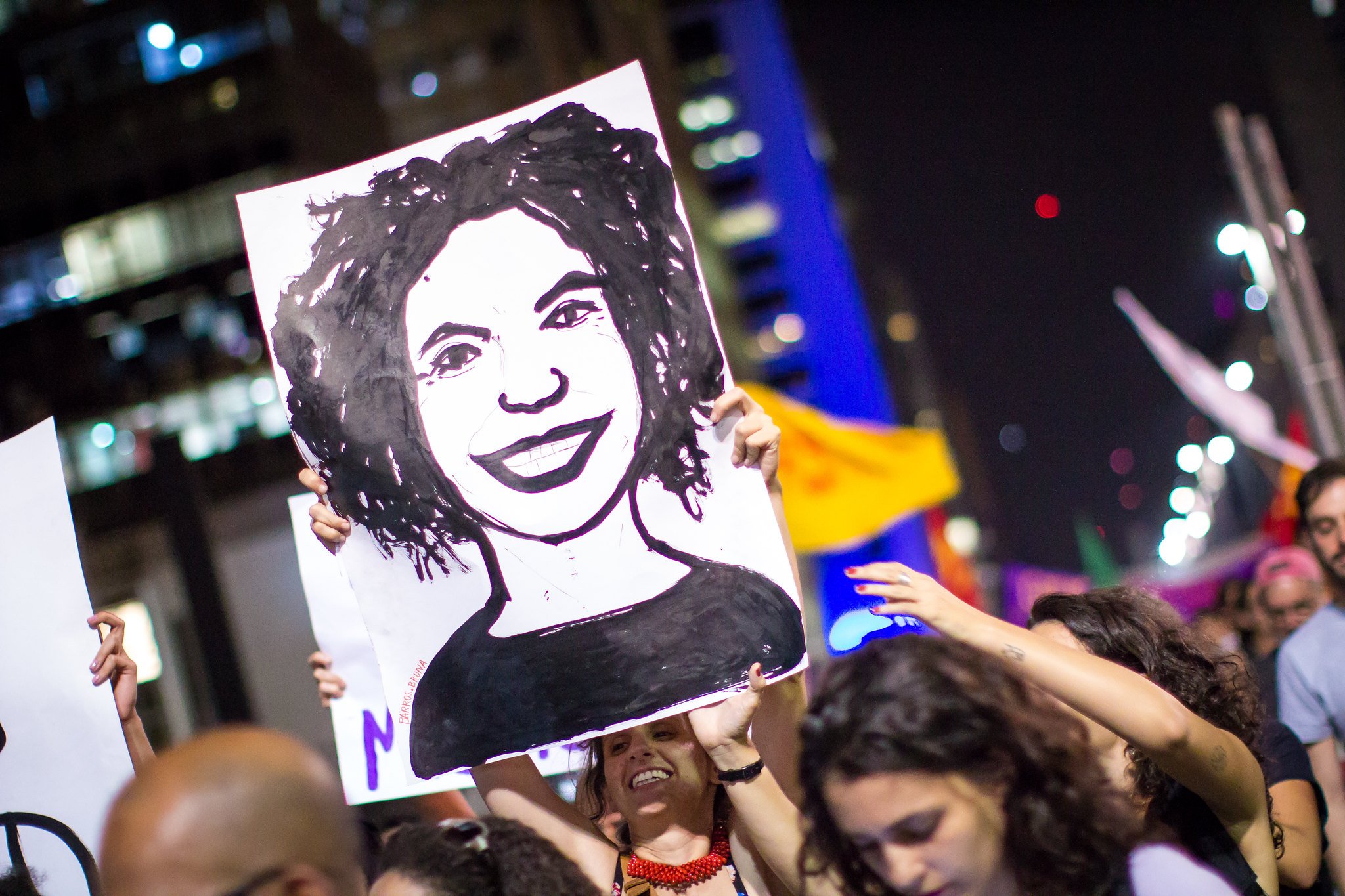
Two years after the fatal shooting of the human rights defender and Rio de Janeiro city councillor Marielle Franco, and her driver, Anderson Gomes, on 14 March 2018, the crime remains unsolved and has become an example of the impunity regarding violence against human rights defenders in Brazil, said Amnesty International today.

“Two years is too long to wait. The lack of solid results in identifying those who ordered the assassination, or clarifying the circumstances of the crime, that has characterized the last year of the investigation demonstrates that human rights defenders can be killed in Brazil and that these crimes go unpunished,” said Jurema Werneck, executive director of Amnesty International Brazil.

“Brazil needs to take this step forward and signal to the global community that it will not tolerate this or any other kind of violence against people like Marielle Franco, who mobilize to build more just societies. We know the investigation is being undertaken under strict secrecy, but transparency is not the same thing as telling secrets. Marielle’s and Anderson’s families, as well as society as a whole, have the right to know what has been done and what progress has been made in the investigation.”

The preventative detention on 12 March 2019 of two men accused of killing Marielle and Anderson was an important step forward in the investigation, but little progress appears to have been made since then in making clear the circumstances surrounding the killings, who ordered them, and why. 

On 13 March 2019, Amnesty International and Marielle Franco’s family met with the Governor of the State of Rio de Janeiro, Wilson Witzel, and the State Attorney General, Eduardo Gussem, who promised to make progress and conclude the investigation of the killings, as well as guaranteeing the speed, independence and transparency of the investigation. Yet, instead of this happening, the last year was characterized by leaks of information about the case, creating the impression that the authorities were stuck inside a labyrinth.

“We cannot avoid pleading, fighting and calling for justice for Marielle, who worked to build a better life for people. And we cannot sit still, without seeking the authorities in charge and going everywhere to ask for justice and try to find out who ordered the killing of Marielle Franco and why. We are going to go ahead with all the support we have been receiving from the world over, because today Marielle is a symbol of resistance for everyone, especially women,” said Marinete da Silva, Marielle Franco’s mother.

Monica Benicio, the widow of the murdered councilwoman, said she has experienced “Two years of great pain and struggle. To transform the grief into a struggle was not only a way to stay alive without my partner, but also a way of understanding that fighting for justice for her murder is a way of honouring her struggle as a human rights defender to ensure that nothing like the barbaric violence against her takes place ever again. The message that the Brazilian state is sending to the world is that some lives matter more than others and that this can happen again because there is impunity for those who kill a black, LGBTI woman from an impoverished background. How many more Marielles must die in Brazil?”

Amnesty International has requested new meetings with the Governor of Rio de Janeiro and the State Attorney General, in the hope of hearing from them about the investigative efforts undertaken over the last year, and to renew the global pressure on them to provide answers. The meetings were scheduled for Friday 13 March. Since day one of this case, 983,000 people worldwide have participated in Amnesty International’s campaign for truth and justice.

“We want to further amplify the voices of the 983,000 people who over the last two years have contributed to Amnesty International’s efforts to pressure the authorities for justice. We want more people to understand the importance of what Marielle did for those who are most in need in Rio de Janeiro and in Brazil, as well as her commitment to defending human rights. Marielle wasn’t better than anyone else and would not have wanted special treatment, but when a human rights defender is silenced, the rights of all people are threatened,” said Jurema Werneck.

In Amnesty International’s 2019 annual report on the state of human rights in the Americas, published on February 27, the organization noted that Latin America is the most dangerous region in the world for human rights defenders. In the last year Brazil has seen public authorities putting anti-human rights rhetoric into practice through administrative and legislative measures that have tangible effects restricting and violating people’s rights.

Ecuador: State must urgently adopt public policy to protect human rights defenders from the grave risks they face

Today, at the end of Amnesty International’s visit to Ecuador, the organization expressed concern about the lack of concrete measures taken by the state to guarantee the effective protection of human rights defenders, as well as highlighting the authorities’ persistent inability to carry out appropriate and effective investigations into attacks and threats against members of the Mujeres Amazónicas (Amazonian Women) collective. The organization also expressed concern at impunity for human rights violations committed during the October 2019 protests and the state’s failure to assess the impact of austerity measures on human rights.

“For any policy for the protection of human rights defenders to be effective, the authorities must first publicly recognize the legitimacy of human rights defenders’ work and foster an environment that enables them to carry out this work in safe conditions,” said María José Veramendi, Amnesty International researcher for South America.

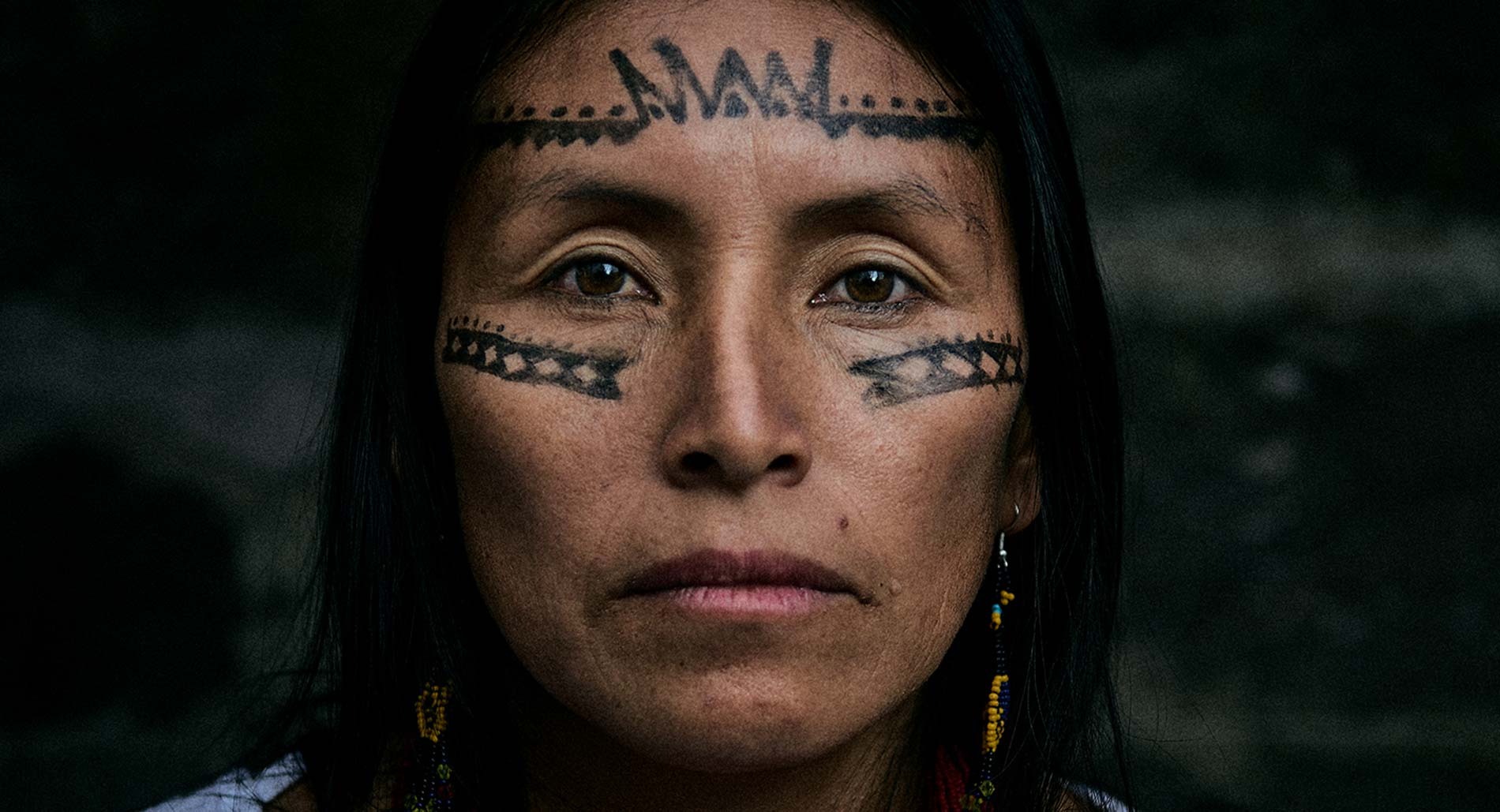
One year after the publication of the report “They will not stop us”, which exposed the flaws in the response of the Attorney General’s Office to a series of attacks and death threats against Patricia Gualinga, Nema Grefa, Salomé Aranda and Margoth Escobar, all members of Mujeres Amazónicas, Amnesty International’s research shows that investigations into these attacks have not made any significant progress.

“We want justice, we want our rights respected,” Mujeres Amazónicas told the Ecuadorian authorities. “We are women of peace, but we are also like a beehive: what affects one of us affects us all. We will be here as long as there are violations of human rights and of our territory.”

On 9 March, Amnesty International representatives and members of Mujeres Amazónicas handed over more a petition with than 250,000 signatures, collected in at least 168 countries, to the Director for Human Rights of the Attorney General’s Office, Daniel Eduardo Vejar Sánchez. The petition called on him to:

  • Initiate prompt, thorough, independent and impartial investigations into the attacks and threats against Patricia Gualinga, Nema Grefa, Salome Aranda and Margoth Escobar;
  • Investigate the possibility that these attacks may have been motivated by the human rights work of these women, and identify all the alleged material and intellectual authors and bring them to justice;
  • Design and implement a Protocol for the Investigation of Crimes against Human Rights Defenders, to strengthen coordination between the mechanisms and authorities responsible for conducting criminal investigations.

The Attorney General’s Office noted that there is currently “a [legal] gap on how such cases should be handled”. Amnesty International told the Attorney General’s Office that the lines of investigation and protection measures that the authorities have offered to victims continue to ignore possible motives for the attacks linked to the work of human rights defenders which could pose a challenge to large-scale economic interests. Furthermore, the investigations lack a gender perspective which recognizes how their role as women Indigenous leaders and human rights defenders could be viewed negatively because it defies the gender stereotypes imposed on women.

The Attorney General’s Office stated that it is working on internal guidelines for investigating cases where the victim is a human rights defender and provided detailed information on each of the investigations where there has been a lack of progress. Amnesty International expressed concern that driving investigations forward and the carrying out procedures is a state obligation and must not fall to the victims.

Amnesty International and Mujeres Amazónicas welcomed the commitment of the Directorates for Human Rights, for Legal Oversight and for the Victim Protection System of the Attorney General’s Office to go to Pastaza province, where the events occurred and investigations are ongoing, in the last week of March to verify the investigations on the ground.

Since the start of its campaign for the protection of Mujeres Amazónicas, Amnesty International has been calling on Ecuador to design and implement a public policy to protect human rights defenders and to guarantee the meaningful and effective involvement of people and communities defending human rights in developing the policy.

The Secretary of State for Human Rights, Cecilia Chacón, stated that she is leading a forum made up of various institutions, including the Attorney General’s Office, the Judicial Council, the Ministry of the Interior and the Ombudsman’s Office, which is working on a plan for the protection of human rights defenders that they hope to have finalized by October 2020.

The urgent need for such a policy is underscored by the fact that since 2019, Amnesty International has noted with concern human rights violations targeting several human rights defenders. These include, for example, criminal proceedings against the digital defender Ola Bini and the government’s undue interference in his case and the theft of information and harassment reported by organizations, such as Acción Ecológica and the Fundación Pachamama, that support people working to protect the Amazon from political and economic interests linked to extractive projects in Indigenous territories.

Amnesty International also referred to the human rights violations committed in the context of the national strike last October. Through prompt verification of audiovisual evidence, the organization identified five incidents that illustrate the unlawful use of force by the security forces during protests. In these incidents, police officers knocked people down, beat them and fired tear gas in an unnecessary and disproportionate manner, causing injuries.

In a meeting between Amnesty International and the Alliance of Human Rights Organizations – made up of the Comisión Ecuménica de Derechos Humano (Cedhu), the Comité Permanente por la Defensa de los Derechos Humanos (CDH), the Fundación Regional de Asesoría en Derechos Humanos (INREDH), Surkuna, the Fundación Idea Dignidad, and Amazon Frontlines – Alliance members criticized the lack of progress in the investigations into the deaths that occurred in the context of the national strike. Several Alliance members reported that their organizations had been the targets of harassment and threats for their work reporting human rights violations during the strike. Similarly, the President of the Confederation of Indigenous Nationalities of Ecuador (Confederación de Nacionalidades Indígenas del Ecuador, CONAIE), Jaime Vargas, told Amnesty International: “the state must stop seeing CONAIE as the enemy.”

Amnesty International expressed its concern about the death threats against the Ombudsman and the attacks on the important work that the institution he heads carried out during the national strike.

The Ombudsman, Freddy Carrión, warned of the “setbacks in the protection of human rights” in Ecuador and noted that, despite having promptly filed a complaint about the death threats against him, the Attorney General’s Office has failed to initiate a prompt, thorough and effective investigation to identify those responsible.

“Impunity is the common denominator between the human rights violations that occurred in the October strike and the attacks and threats committed against Mujeres Amazónicas. As long as those responsible are not investigated and punished, there is a risk that these events will be repeated, violating victims’ rights to truth, justice and reparation,” said María José Veramendi.

March update on Game Over: get people to safety

Human rights advocate and Game Over ambassador Craig Foster updates us on the campaign to end offshore detention and get people trapped in Papua New Guinea and Nauru to safety.

Thank you so much for your continued support of the Game Over campaign. We’re now a movement of 50,000 everyday Australians and building. Together we are demanding that Prime Minister Scott Morrison gets all those currently detained in Papua New Guinea and Nauru to safety. 

8 men stand in front of a battered football goal posts.
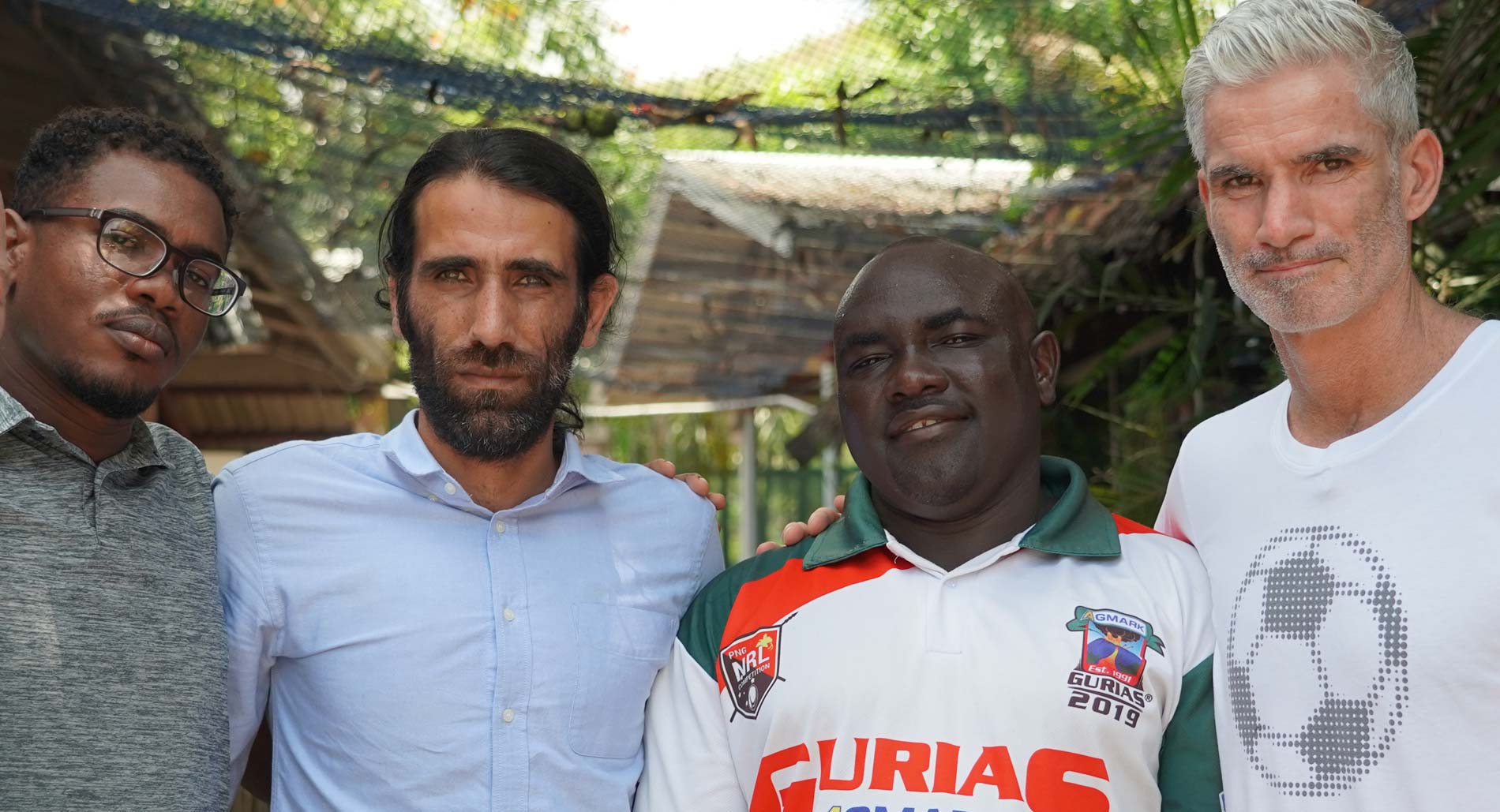
Craig Foster with some of the men that the Australian Government has left in Port Morseby. October 2019. © AI

Wins

Our collective voice has kept the pressure on the Australian government:

  • When we started the Game Over campaign in September 2019, the Australian Government was detaining 612 people in Papua New Guinea (PNG) and Nauru. Now, 439 people remain.
  • Amnesty and Human Rights Watch shone a light on the conditions in the notorious Bomana Immigration Centre in Port Moresby, attracting the world’s attention and leading to the centre’s closure. In the centre asylum seekers had no access to phones or the internet, and allegations of torture were rife.
  • The government has now evacuated to Australia seven of the eight women still on Nauru. This is thanks to work from the Medical Evacuation Response Group (MERG), made up of #GameOver partners such as the Asylum Seekers Resource Centre, Human Rights Law Centre, National Justice Project, Refugee Advice and Casework Service, Refugee Legal and the Refugee Council of Australia.

These are all important steps towards getting all people to safety, and it is vital that we acknowledge that progress is being made. But rather than complacency, this news should inspire and motivate us all to keep up the fight.

What else has been happening?

I recently visited Moz and Farhad, two refugees the Australian Government is holding at the Mantra Hotel in Melbourne. This is a place that the government refers to as an Alternative Place of Detention (APODs).

I first met Moz on my trip to Papua New Guinea at the end of last year. I consider him a friend. Under doctors’ advice, the government had brought Moz to Australia due to severe asthma. This was in November before the government repealed the Medevac Bill.

I didn’t think conditions could get worse for Moz. Yet what was meant to be a refuge has become just another nightmare. Locked in his room for 19 hours a day, he has almost no access to the outside world, let alone the proper treatment he was brought to Australia to receive.

He’s gone from one form of detention to another, and simply traded barbed wire for keycards.

Craig Foster (left) and Moz (right), a young man with dark hair, in a plain room with a beige background.
Craig Foster meets Moz in Papua New Guinea, October 2019. Credit: AI

This is not resettlement. My visit to the Mantra has only strengthened my resolve to ensure we get all those in PNG, Nauru and other places of detention around Australia to safety.

What you can do

We need to keep the momentum up and keep building this campaign to make sure the decision makers in Canberra hear our collective voice. There’s two ways to help today:

1. Social profile frame

Add this frame to your social media accounts to show your networks that you support safe, long-term and sustainable resettlement options.

2. Share the stories

3. Near Wollongong? Come to a #GameOver match this Saturday

On Saturday 14 March, one of our partnering sports clubs Albion Park City FC will play in the FFA cup with 10 refugees from PNG and Nauru on their shirts. I encourage anyone in the area who is able, to get down to Terry Reserve, Albion Park for a 12.30pm kick off to show your support.

What’s next?

I’ve been busy at work creating a coalition of organisations and sports clubs to join us; you can see some of the early results here. Keep an eye out for future updates in this space as we’ve got some big announcements coming.

People have been in detention for seven years. Our government must let people move on with their lives so they can resettle, rebuild and recover. I know that together we can make this happen.