IRAN: POINTED PELLETS, TEAR GAS AND RUBBER BULLETS FIRED AT PLANE PROTESTERS

Scores arrested after protests at shooting down of Ukrainian passenger plane

Injured being turned away from hospitals where doctors fear patients risk arrest

‘The situation in Iran right now is even more painful than death. They are killing us slowly; they are torturing us to death’ – an eyewitness to protests in Tehran

Verified video footage, photographs and testimonies from victims and eyewitnesses obtained by Amnesty International show that Iranian security forces used unlawful force against peaceful protesters demonstrating after the authorities’ admission they had shot down a Ukrainian passenger plane last week.

The evidence shows that during Saturday and Sunday (11-12 January) the security forces used rubber bullets, tear gas and pepper spray to disperse protesters, as well as kicking and punching them, beating them with batons and carrying out arbitrary arrests.

Testimonies and photographs obtained by Amnesty also indicate that the security forces fired pointed pellets from airguns at peaceful protesters, causing bleeding and painful injuries. Several people required surgical treatment to remove the pellets, as well as for injuries consistent with rubber bullet use. Such pellets are used for hunting and are completely inappropriate for use in any policing situation.

Amnesty’s Digital Verification Corps also verified dozens of videos showing the security forces firing tear gas into crowds of peaceful protesters.  

One of the videos verified by Amnesty shows two women in Tehran lying injured and bleeding on the ground. In another video recorded nearby, a woman is seen lying in a pool of blood crying out in pain. People helping them in the videos are heard to say they have been shot. Another video shows a man with a bleeding head wound. Two x-rays obtained by Amnesty clearly show pellets lodged in the knee joint of one protester and the ankle of another. Amnesty has also verified images of security forces carrying shotguns.

One man from the city of Shiraz, in Fars province, who said he went to light a candle in solidarity with the plane crash victims on 12 January, said the security forces outnumbered the crowd and created a “terrifying and intimidating atmosphere to frighten people away”.  He said, “They were swearing at and beating everyone with batons all over their bodies, it didn’t matter if they were just passing by”.

Another eyewitness, Mahsa from Tehran, described how the security forces fired tear gas into the entrance hall of a metro station to stop people leaving to join the protest:

“There was so much tear gas … I was so mentally stressed and anxious that I initially didn’t even realise that I had been shot … The special forces of the police were firing pointed pellets at people. My coat is now filled with holes and I have bruises on my body … The streets were filled with armed plain-clothed agents firing shots into the air and threating to shoot people … A member of the security forces chased me when they saw me filming the protest and that’s when I was shot in the leg with a pointed pellet … I’m in a lot of pain.”

Mahsa said the authorities had threatened doctors and she was turned away by three medical centres and even a veterinary clinic after seeking treatment. Yesterday, she was told by a doctor in a hospital in Tehran that she had to leave immediately because if the hospital’s intelligence department discovered she had been among the protesters she would be arrested. Amnesty has received similar accounts of clinics and hospitals in Tehran turning away injured people.

Mahsa added, “The situation in Iran right now is even more painful than death. They are killing us slowly; they are torturing us to death.”

Philip Luther, Amnesty International’s Middle East Research and Advocacy Director, said:

“Iran’s security forces have once again carried out a reprehensible attack on the rights of Iranian people to peaceful expression and assembly, and resorted to unlawful and brutal tactics.

“The Iranian authorities must end the repression as a matter of urgency and ensure the security forces exercise maximum restraint and respect protesters’ rights to peaceful expression and assembly.

“Detainees must be protected from torture and other ill-treatment, and all those who have been arbitrarily detained must be released.”

Scores of arrests, with reports of at least one sexual assault

There are reports that scores of people, including university students, have been arrested in cities where protests have taken place, including Ahvaz in Khuzestan province, Amol and Babol in Mazandaran province, Esfahan in Esfahan province, Shiraz in Fars province, Tabriz in East Azerbaijan province, and Tehran. Amnesty has received information that in at least two cities – Amol and Tehran – the authorities are denying detainees’ families information about their fate and whereabouts, amounting to enforced disappearance.

Amnesty has also received shocking allegations of sexual violence against at least one woman arbitrarily arrested by plain-clothed security agents and detained for several hours in a police station. According to an informed source, while in detention the woman was taken to a room where she was questioned by a security official who forced her to perform oral sex on him and attempted to rape her.

More than 300 killed in earlier wave of protests

The protests began on Saturday after the Iranian authorities admitted unintentionally shooting down a Ukrainian passenger plane following three days of denials. Protests expanded to include demands for a transformation of the country’s political system.

These latest protests followed a bloody crackdown in November which saw more than 304 people killed and thousands arrested. Amnesty has called on member of the UN Human Rights Council to hold a special session on Iran to mandate an inquiry into the unlawful killings of protesters, and the of wave of arrests, enforced disappearances and torture of detainees.


Viet Nam: Arrests and social media crackdown follow deadly clashes over land

  • Social media, particularly Facebook, is increasingly becoming weaponised by Viet Nam to go after those who peacefully speak their mind.” – Nicholas Bequelin

Vietnamese authorities have stepped up a countrywide crackdown marked by arrests and widespread social media censorship as they attempt to stifle public debate about a deadly land dispute, said Amnesty International today.

The intensifying assault on peaceful criticism follows clashes last week between police and residents of a village at the heart of a high-profile dispute, which left four people dead and sparked nationwide outrage. Official collusion over land deals have been a major source of discontent in Viet Nam.

“The Vietnamese government’s heavy-handed efforts to censor discussion of this land dispute are the latest example of its campaign to assert control over online content,” said Nicholas Bequelin, Amnesty International’s Regional Director.

“Social media, particularly Facebook, is increasingly becoming weaponised by Viet Nam to go after those who peacefully speak their mind. This is an unacceptable attack on freedom of expression and a clear attempt to stamp out dissent.”

In the past week, three activists have been arrested in relation to social media posts about the dispute in Dong Tam village, while dozens of Facebook users say they experienced restrictions on their activity.

Deadly land dispute

At 4am on 9 January, police launched an operation in Dong Tam village, 40km from Hanoi, the country’s capital. Dong Tam’s residents have protested the lease of the land to a military-owned telecommunications company for several years.

Authorities allege that the villagers used violence and that four people, including three police officers and the 85-year old village leader, Le Dinh Kinh, were killed in the clashes. They added that police arrested 30 people for “disrupting security.” On 14 January, authorities announced that they would bring charges of murder and “resisting a law enforcement officer” against 22 people.

The situation in Dong Tam has frequently been of huge interest to Vietnamese netizens, with villagers and their relatives in Hanoi sharing regular updates and Facebook Live broadcasts on the saga.

While Dong Tam village has been cordoned off by security forces since 9 January, a video testimony from Du Thi Thanh, Le Dinh Kinh’s wife, emerged on Facebook on 13 January. In the video, she alleges she was severely beaten by security forces in an attempt to force her to confess a role in the 9 January events.

While Thanh was released, dozens are still being detained incommunicado and are at grave risk of torture and other ill-treatment. In her testimony, Thanh states that four of her family members are in detention.

Amnesty International has documented appalling detention conditions in Viet Nam, with evidence of prisoners being tortured and otherwise ill-treated, routinely held incommunicado and in solitary confinement, kept in squalid conditions, and denied medical care, clean water, and fresh air.

“Authorities must urgently de-escalate this shocking situation,” said Nicholas Bequelin. “They must also establish the facts of what happened on 9 January, particularly in light of claims by an elderly woman that she was severely beaten. Anyone suspected of perpetrating violence, whether police or Dong Tam resident, should be brought to justice in fair trials.”

The land dispute in Dong Tam previously received national and international attention in April 2017, when villagers held 38 local officials and police officers captive for several days following the police’s arrest of four villagers for their alleged role in a blockade.

Rise in social media repression

Amnesty International is aware of a significant uptick in the Vietnamese authorities’ crackdown on social media activity in the aftermath of last week’s events at Dong Tam village.

Some Facebook users said they received the following message: “Due to legal requirements in your country, we have restricted access to your profile on Facebook. This means that other people in your country cannot see your profile, and may not be able to interact with you over Messenger.”

These restrictions were likely prompted by the Vietnamese authorities’ deployment of cyber troop capabilities to flood Facebook with reports complaining of individual users’ social media activity. Viet Nam is believed to have a cyber troop force numbering 10,000.

The YouTube channel of Radio Free Asia (RFA)’s Vietnamese service, which has half a million subscribers, likewise incurred a penalty from YouTube on the grounds of violating community guidelines, though no further explanation was provided. This prevented the news outlet from uploading videos or livestreaming for seven days, although the restriction had been lifted by Monday after RFA appealed.

On Saturday 11 January, state-run media outlet Hanoi Moi reported comments from a representative of Viet Nam’s Ministry of Information and Communications, praising Google and YouTube for their quick action in responding to requests from Vietnamese authorities after the clashes at Dong Tam. The same representative also lambasted Facebook for “reacting very slowly and bureaucratically.”

“The authorities want to muzzle discussion of what happened in Dong Tam and avoid it becoming yet another touchpoint for popular discontent. Silicon Valley cannot become complicit in this blatant attempt to keep Vietnamese citizens in the dark about human rights violations,” said Nicholas Bequelin.

Israel: Stop NSO Group exporting spyware to human rights abusers


Israel must revoke the export license of NSO Group whose spyware products have been used in malicious attacks on human rights activists around the world, Amnesty International said ahead of the latest court case to embroil the tech firm.

On Thursday, a judge at Tel Aviv’s District Court will begin hearing arguments as to why Israel’s Ministry of Defence (MoD) should restrict the activities of NSO Group. The firm’s Pegasus software has been used to target journalists and activists across the globe – including in Morocco, Saudi Arabia, Mexico and the United Arab Emirates.

“NSO continues to profit from its spyware being used to commit abuses against activists across the world and the Israeli government has stood by and watched it happen,” said Danna Ingleton, Deputy Director of Amnesty Tech.

“The best way to stop NSO’s powerful spyware products reaching repressive governments is to revoke the company’s export license, and that is exactly what this legal case seeks to do.”

The legal action is being brought by approximately 30 members and supporters of Amnesty International Israel and others from the human rights community. The action is supported by Amnesty International as part of a joint project with New York University (NYU) School of Law’s Bernstein Institute for Human Rights and Global Justice Clinic.

“In authorizing exports by NSO –a company that has sold its invasive software products to governments known to abuse human rights—the Ministry of Defence has failed in its human rights law obligations to protect the rights to privacy, freedom of expression and freedom of opinion,” said Sukti Dhital, Executive Director of the Bernstein Institute for Human Rights.

Last week, the Ministry of Defence asked the judge to dismiss the case, or if it proceeds to grant a gag order to restrict reporting on national security grounds.

“It is overwhelmingly in the public interest and for press freedom that this case is heard in open court. The Ministry of Defence must not be allowed to hide behind a veil of secrecy when it comes to human rights abuses,” said Danna Ingleton.

Digital attacks

The hearing is the latest legal action involving NSO Group. Last October, Facebook announced it is suing NSO Group after the firm exploited a vulnerability in WhatsApp to target at least 100 human rights defenders.

Amnesty International and others have documented the repeated use of NSO Group’s Pegasus spyware to target civil society and stifle freedom of expression. In October 2019, Amnesty uncovered targeted digital attacks using Pegasus against two prominent Moroccan human rights defenders – academic and activist Maati Monjib and human rights lawyer Abdessadak El Bouchattaoui.

In August 2018, an Amnesty International staff member received a message which contained a link purporting to be about a protest outside the Saudi Arabian embassy in Washington. It was sent at a time when Amnesty International was campaigning for the release of Saudi women human rights activists. If clicked, the link would have secretly installed NSO malware, allowing the sender to obtain near-total control of the phone.

Previous research also exposed the use of Pegasus to target at least 24 human rights defenders, journalists and parliamentarians in Mexico; Saudi activists Omar AbdulazizYahya AssiriGhanem Al-Masarir; award-winning Emirati human rights campaigner Ahmed Mansoor; and allegedly, murdered Saudi dissident Jamal Khashoggi.

Surveillance abuse

NSO Group claims it helps governments fight terrorism and crime, but it has failed to rebut mounting evidence linking its products to attacks on human rights defenders.

Although the company says it undertakes a rigorous review before sales of its products, these claims lack detail and, considering the number of attacks on civil society, appear to have been ineffective in numerous cases.

Despite announcing a new ‘Human Rights Policy’ in September, NSO has not accepted responsibility for the multiple reported instances of misuse of its surveillance technologies. 

States have an obligation to protect human rights in the context of corporate activities, including through regulation and oversight. All companies have a responsibility to respect human rights throughout their operations and supply chains. This means they must avoid causing or contributing to human rights abuses and take steps to identify and address human rights risks in their operations.

Cambodia: Drop bogus treason case against opposition leader Kem Sokha

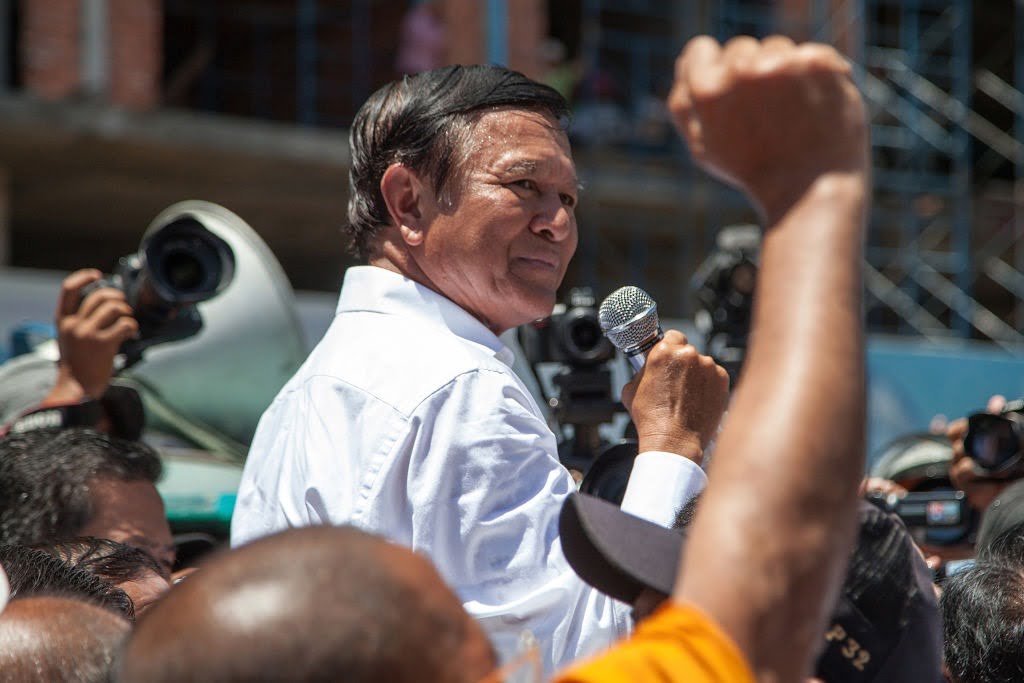
The Cambodian authorities’ treason charges against Kem Sokha, the leader of the country’s banned main opposition party, are bogus and should be dropped said Amnesty International today ahead of his trial hearing tomorrow.

Sokha, the President of the Cambodia National Rescue Party (CNRP), faces up to 30 years imprisonment if found guilty of treason. His trial at the Phnom Penh Municipal Court is scheduled to begin at 8.30am on 15 January 2020.

After two years held in arbitrary detention, the authorities have not presented a shred of credible evidence to support a charge of treason.

Nicholas Bequelin – Amnesty International Regional Director

“After two years held in arbitrary detention, the authorities have not presented a shred of credible evidence to support a charge of treason,” said Nicholas Bequelin, Amnesty International’s Regional Director. “The non-existent crime was politically manufactured to further the suppression of the opposition party. The Phnom Penh Court must acquit Kem Sokha to bring an end to this mockery of justice.”

Sokha, 66, was arrested in a midnight raid on his home in Phnom Penh on 3 September 2017 and later charged with “conspiracy with a foreign power”, or treason, under Article 443 of the Cambodian Criminal Code. He is accused of conspiring with the United States (US) government to illegally overthrow the Cambodian government.

The arrest occurred despite Sokha holding parliamentary immunity to prosecution. Authorities justified the arrest on the basis that the crime was ‘flagrant’, or caught red-handed, even though the only evidence presented was a video of a speech by Sokha from 2013.

“This prosecution, much like the allegations of a US-backed plot to overthrow the Cambodian government, has lacked credibility from day one,” said Nicholas Bequelin. “Rather than being based on facts and law, this concocted narrative is a front for the systematic denial of the rights to freedom of association and expression of millions who support the CNRP.”

“Over the past three years, the Cambodian authorities have weaponised the criminal justice system as a means of eliminating the CNRP. The dissolution of the party and the targeting of hundreds of its members through the courts constitute a concerted campaign of harassment against the political opposition.

“Kem Sokha’s charges must be voided and the rights of CNRP members must be fully respected to enable them to freely participate without discrimination in Cambodia’s political life once again.”

The Phnom Penh Municipal Court announced on 9 January that no more than 30 people will be able to observe the trial due to space limitations, and that all observers must register in advance. Many independent journalists and human rights monitors fear they are being denied access to observe the trial.

“The authorities are clearly trying to limit scrutiny of this politically-motivated trial. The gravity of these absurd accusations demands that the authorities uphold the highest standards of fairness and transparency, which requires holding a public hearing,” said Nicholas Bequelin. “It is essential that human rights monitors and journalists are given unhindered access to the trial.”

In the heavily edited video released by pro-government media prior to his initial arrest, Kem Sokha can be seen speaking to CNRP supporters in Australia. During the speech, Sokha tells supporters that he has received advice from advisers from the US in relation to effecting a change in the political leadership of Cambodia. There is no suggestion of violence or the use of force in the video excerpt.

Sokha was initially refused bail and sent to pre-trial detention in the remote maximum-security Correctional Center 3 prison on the border with Viet Nam in Tbong Khmum province. The United Nations Working Group on Arbitrary Detention declared Sokha’s detention arbitrary and illegal. He was released on bail and subjected to restrictive conditions amounting to house arrest in September 2018.

His bail conditions were eased in November 2019 as the Cambodian government came under scrutiny as part of the European Union (EU)’s potential revocation of trade preferences under the “Everything but Arms” (EBA) trade initiative due to human rights concerns. The revised bail conditions maintain a ban on engaging in all political activity and from leaving Cambodia.

The EBA scheme, under which the world’s least developed economies can benefit from tariff-free export access to European markets, requires compliance with international human rights and labour standards. A final decision and outcome to the EU’s review is scheduled for February 2020.

Since 2017, the CNRP has faced politically-motivated accusations that it has colluded with the US government to foment a so-called “colour revolution”, characterised as a coup by the Cambodian authorities. This accusation formed the basis of the arbitrary dissolution of the CNRP by the Supreme Court in November 2017.

Saudi Arabia: Why Amnesty will not attend sham C20 meetings

The global C20 civil society forum hosted this year by Saudi Arabia is a farcical attempt by the new G20 hosts to whitewash their dire human rights record.

Amnesty International has released a joint statement, along with Transparency International and Civicus, explaining why it will not be engaging in this year’s C20 process, a cycle of preparatory meetings leading up to the annual G20 summit, which started yesterday with a three-day “kick-off meeting”.

“The C20 is supposed to provide a platform for civil society voices from around the world to influence the G20 agenda. Since Saudi Arabia has locked up most of its own independent activists, the only domestic organizations present will be aligned with the government – which makes a mockery of the whole process,” said Netsanet Belay, Research and Advocacy Director at Amnesty International.

“The C20 in Riyadh is a sham. We cannot participate in a process which is being abused by a state which censors all free speech, criminalizes activism for women’s and minority rights, as well as homosexuality, and tortures and executes critics.”

Saudi Arabia took over the G20 presidency in December 2019. It has recently invested in expensive PR campaigns to improve its image, and hosted several high-profile sporting events which draw international visitors. But behind this carefully cultivated façade, Saudi Arabia’s human rights record is as appalling as ever.

Saudi Arabia is responsible for the extrajudicial execution of the journalist and peaceful critic Jamal Khashoggi. More than a year after his murder in October 2018, there has been no justice or accountability for his death.

The country’s leading women’s rights activists remain behind bars and on trial for their promotion of women’s rights in the country. Scores of other individuals, including human rights defenders, have been serving lengthy prison terms for their peaceful activism or have been arbitrarily detained for up to a year and a half without charges. The Saudi Arabian authorities have also carried out executions following unfair trials and routine torture and other ill-treatment in custody.

Background

The Saudi-led C20 process has already failed to guarantee the C20’s fundamental principles. The appointment of the Chairs of working groups and various committees was opaque and non-consultative, while arbitrary decisions have excluded experienced international groups. The C20 process is led by the King Khalid Foundation, which is connected to the Saudi Royal Family, and cannot be considered as transparent, inclusive and participatory. Since the Saudi authorities ban political parties, trade unions and independent human rights groups, there is no way the C20 meetings can be the free and open discussions they are designed to be.

The full statement is available here

In a dangerous world, human rights activists have been winning all year

With inequality, injustice and hate speech seemingly ever more prevalent across the globe, you’d be forgiven for thinking 2019 has been a bad year for human rights. Yet, we have also seen some significant wins. Activists the world over have been galvanised to stand up and fight for our human rights – and thanks to their relentless campaigning we achieved some striking leaps forward. Here are some highlights…

January

Legal abortion services were finally available to women in Ireland, following an historic referendum in May 2018 that marked a huge victory for women’s rights. It was the result of years of dedicated work by activists, including Amnesty International, to encourage a powerful conversation that helped catalyse the abortion debate in Ireland. This ultimately led to greater protection for those people who need an abortion there, and paved the way for the same inspiring progress in Northern Ireland later in the year.

Julián Carrillo, human rights defender from Coloradas de la Virgen, Chihuahua, Mexico, killed on 24 October 2018.


February

After spending 76 days in detention in Thailand, refugee footballer Hakeem al-Araibi was able to return to his home in Melbourne on 12 February. The Bahrain-born footballer had been detained upon arrival in Bangkok on 27 November 2018, due to an erroneous Interpol red notice, and faced the threat of extradition to Bahrain. A campaign launched by Amnesty and other groups to free the footballer, who is a peaceful and outspoken critic of the Bahraini authorities, grew into the #SaveHakeem movement. The campaign spanned three continents, engaging footballers, Olympians and celebrities, and drawing the support of more than 165,000 people.

Following international attention and campaigning by Amnesty, Saudi authorities overturned a call by the Public Prosecution to execute Saudi woman activist Israa al-Ghomgham for charges related to her peaceful participation in protests. Israa al-Ghomgham still faces a prison term, and Amnesty continues to campaign for her immediate and unconditional release.  

March

Vitalina Koval, Ukrainian LGBTIQ+ activist


In Ukraine, an International Women’s Day rally organized by human rights defender Vitalina Koval in Uzhgorod, western Ukraine, went ahead peacefully, with participants protected by police. The event marked a major change for the region, after similar rallies organised by Koval in previous years had been targeted by far-right groups, with police singularly failing to protect participants from violence.

AFRICOM admitted for the first time that its air strikes have killed or injured civilians in Somalia, after the release of Amnesty’s investigation The Hidden US War in Somalia: Civilian Casualties from Air Strikes in Lower Shabelle.Following this report, US military documents came to light confirming that the US authorities knew of further allegations of civilian casualties resulting from many of their air-strikes in Somalia.

Gulzar Duishenova with her sons in the courtyard of her house


Gulzar Duishenova had been championing disability rights in her country Kyrgyzstan for years. In March 2019, her persistence paid off when Kyrgyzstan finally signed up to the Disability Rights Convention. Amnesty supporters wrote nearly a quarter of a million messages backing her.

And in Iraq, just days after Amnesty and other NGOs raised the alarm about a draft cybercrime law that would seriously undermine freedom of expression there, the Iraqi parliament chose to withdraw the bill, confirming to Amnesty that its “concerns have been heard”.

April

In April, love triumphed when a ban on all LGBTI events in Ankara, Turkey, was lifted by the administrative appeals court. “This is a momentous day for LGBTI people in Turkey, and a huge victory for the LGBTI rights activists – love has won once again,” said Fotis Filippou, Campaigns Director for Europe at Amnesty International.

The District Court of The Hague issued an interim ruling in favour of Esther Kiobel and three other women who took on one of the world’s biggest oil companies, Shell, in a fight for justice. Esther has pursued the company for more than 20 years over the role she says it played in the arbitrary execution of her husband in Nigeria. Amnesty has shared over 30,000 solidarity messages with Esther Kiobel, and is supporting her Kiobel vs Shell case in The Hague. As a result of this hearing, the court in October 2019 heard for the first time the accounts of individuals who accuse Shell of offering them bribes to give fake testimonies that led to the ‘Ogoni Nine’ – who included Esther Kiobel’s husband – being sentenced to death and executed.  

President of Equatorial Guinea, Teodoro Obiang Nguema, announced that his government would introduce legislation to abolish the death penalty.

May

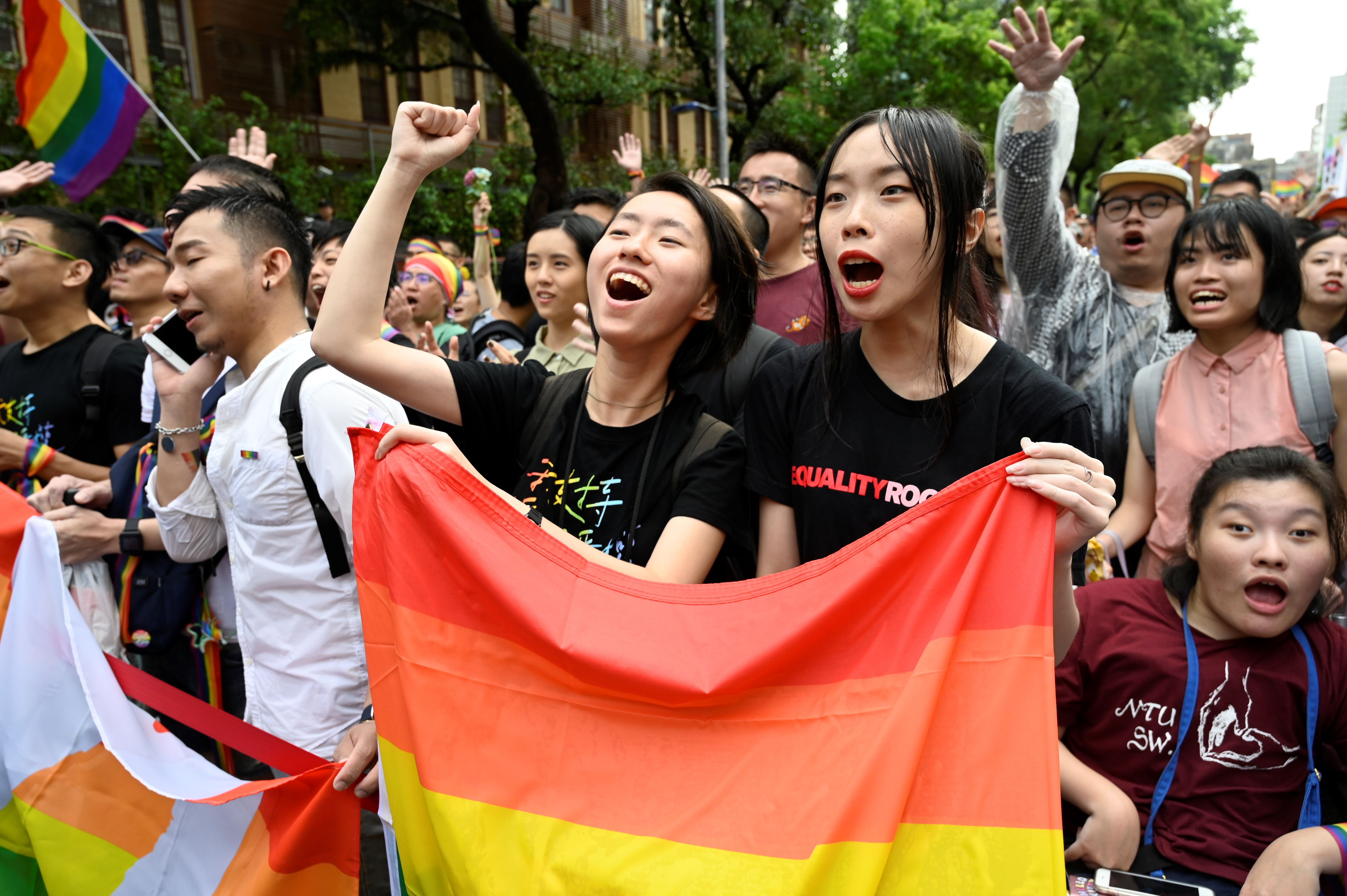
People march and celebrate in the streets of Taiwan, as same-sex marriage is passed on 17 May.


Taiwan became the first in Asia to legalize same-sex marriage after passing an historic law on 17 May, with the first same-sex weddings taking place on 24 May. Together with LGBTI rights groups from Taiwan, Amnesty had campaigned for this outcome for many years. We are now working to end all discrimination against LGBTI people in Taiwan.

Qatar promised more reforms to its labour laws ahead of the 2022 World Cup. Human rights pressure also played a role in FIFA’s decision to abandon plans to expand the 2022 Qatar World Cup to 48 teams, which would have involved adding new host countries in the region. Amnesty worked together with a coalition of NGOs, trade unions, fans and player groups, calling attention to the human rights risks of the expansion, including the plight of migrant workers building new infrastructure.

June

Greta Thunberg Leads Students on Seventh Climate March in Brussels


Climate change activist Greta Thunberg and the Fridays for Future movement of schoolchildren were honoured with Amnesty International’s Ambassador of Conscience Award 2019. The Fridays for Future movement was started by Greta, a teenager from Sweden who in August 2018 decided to miss school every Friday and instead protest outside the Swedish parliament, until it took more serious action to tackle climate change.

In a long overdue move, Greece passed legislation to recognize that sex without consent is rape, and Denmark’s government committed to doing the same. This development is testament to the persistence and bravery of survivors and campaigners for many years, and creates real momentum across Europe following 2018 Amnesty’s review of outdated legislation in 31 European countries and other barriers to accessing justice for rape survivors.

From 1 June 2019, contraceptives and family planning clinic consultations became free of charge in Burkina Faso. The change was seen as a response to our 2015 My Body My Rights petition and human rights manifesto calling for these measures to be put in place. With financial barriers removed, women in Burkina Faso now have better access to birth control, and more choice over what happens to their bodies.

July

People march for same-sex marriage in Northern Ireland

In a momentous and inspiring day for human rights campaigners, the UK parliament voted through a landmark bill on 22 July to legalize same sex marriage in Northern Ireland. The bill also forced the UK government to legislate for abortion reform in Northern Ireland, including decriminalization on the basis that a Northern Ireland Executive (government of NI) did not return in three months.

Also in July, in a US Congressional hearing, a senior Google executive gave the clearest confirmation yet that the company has “terminated” Project Dragonfly, its secretive programme to develop a search engine that would facilitate the Chinese government’s repressive surveillance and censorship of the internet. This followed Amnesty’s #DropDragonfly campaign, and hundreds of Google staff speaking out.

On 22 July, 70-year-old human rights defender and prominent Palestinian Bedouin leader Sheikh Sayyah Abu Mdeighim al-Turi was released from prison in Israel, after spending seven months in detention for his role in advocating for the protection of Bedouins’ rights and land. Sheikh Sayyah thanked Amnesty International and all those who took action on his behalf: “I thank you all very much for standing up for the right of my people and the protection of our land. While I was in prison, I felt and heard your support loud and clear, and it meant the world to me.”

August

Mauritanian blogger Mohamed Mkhaïtir, who was sentenced to death and held in arbitrary detention for more than five years after publishing a blog on caste discrimination, finally walked free.

Illustrated portrait of Mohamed Mkhaitir


In August, Saudi Arabia announced major reforms easing some of the major restrictions imposed on women under its repressive male guardianship system, including allowing them the right to obtain a passport which should make it possible for them to travel without permission from a male guardian. The changes also grant women in Saudi Arabia the right to register marriages, divorces, births and deaths and to obtain family records. While we welcome these changes, people campaigning for women’s rights remain in prison, and we must do all we can to fight for their freedom.

September

An Ahmed H stunt in Budapest


Syrian national Ahmed H. was finally allowed to return home, after being imprisoned and then held in immigration detention in Hungary for more than four years. He had been arrested on terrorism charges after being caught up in clashes on the Hungarian border. At the time he was helping his elderly parents, who were escaping Syria and were crossing into Hungary as refugees. An amazing 24,000 people joined the #BringAhmedHome campaign, calling on Cyprus to allow Ahmed to return to his family.

A court in Tunis acquitted 18-year-old activist Maissa al-Oueslati, after she faced trumped-up charges that could have resulted in her imprisonment for up to four years. Maissa and her 16-year-old brother had been arbitrarily detained by police earlier in the month for filming a protester threatening to set himself on fire in front of a police station.

October

A woman raises her fist in a crowd in Northern Ireland, as abortion becomes decriminalized.


At midnight on Tuesday 22 October 2019, after a last-minute effort by the DUP to overturn the bill, same sex marriage became legal in Northern Ireland, while abortion was decriminalised. All criminal proceedings were dropped, including those against a mother who faced prosecution for buying her 15 year-old daughter abortion pills online.

Grainne Teggart, Amnesty International’s Northern Ireland Campaign Manager, said it was the beginning of a new era for Northern Ireland, in which the nation was freed from oppressive laws that police people’s bodies and healthcare. “Finally, our human rights are being brought into the 21st century. This will end the suffering of so many people. We can now look forward to a more equal and compassionate future with our choices respected.”

November

Portrait of Behrouz Boochani


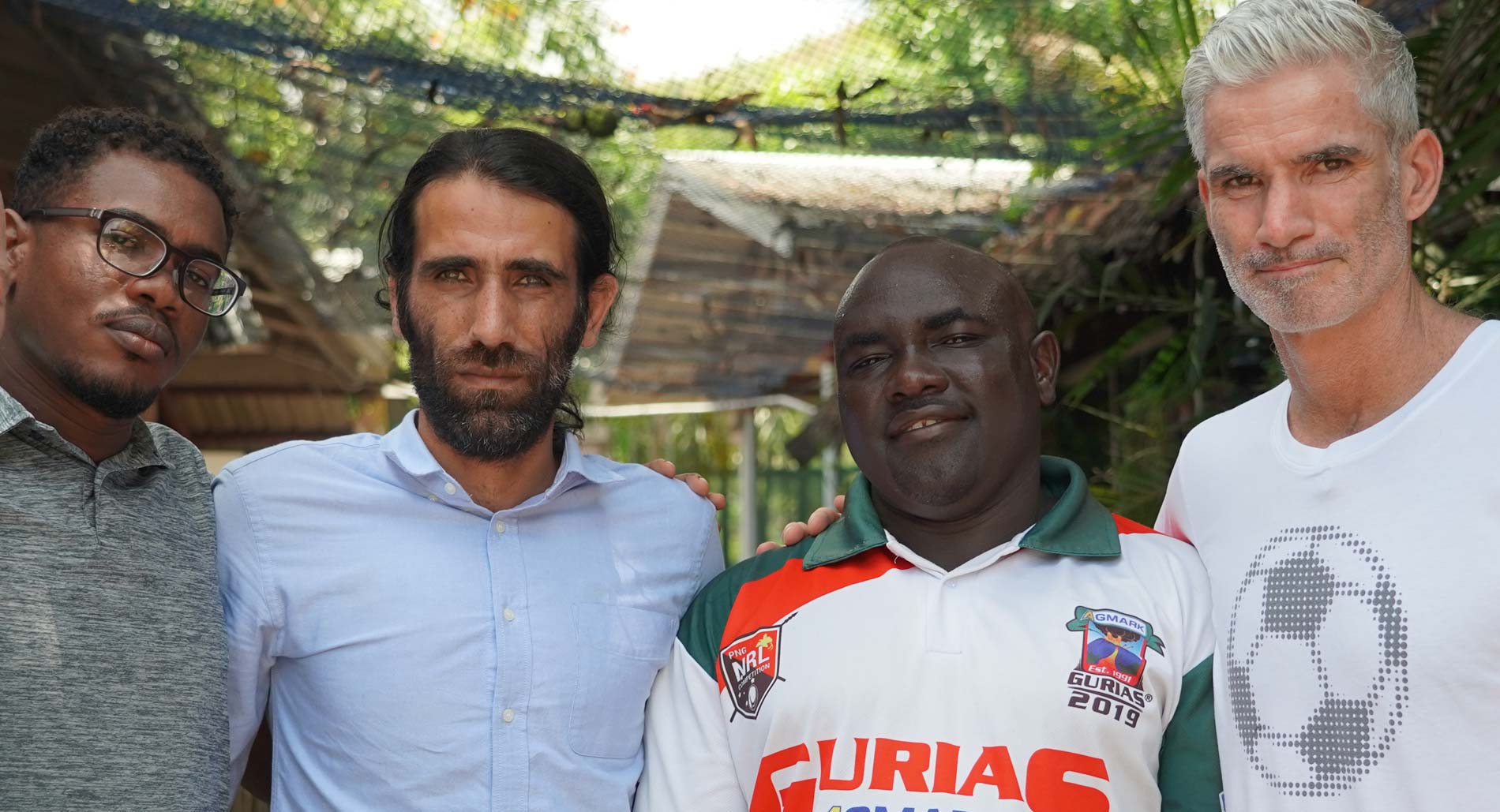
Kurdish-Iranian award-winning journalist and refugee Behrouz Boochani arrived in New Zealand to attend a special WORD Christchurch event on a visitor’s visa sponsored by Amnesty International. It was the first time Boochani, known for his work reporting on human rights abuses from within the Australian government’s refugee detention centres, had set foot outside Papua New Guinea since he was detained on the country’s Manus Island in 2014.

Portrait of Dr Scott Warren

Humanitarian volunteer Dr Scott Warren was found not guilty by a court in Arizona of charges linked to helping migrants on the US-Mexico border. In a similar case, Pierre Mumber, a French mountain guide who gave hot tea and warm clothes to four West African asylum seekers in the Alps, and was acquitted of “facilitating irregular entry”.

December

Alberto Fernández is inaugurated as President of Argentina on 10 December. As president-elect, Fernández announced he would push for the legalization of abortion as soon as he took office, saying: “It is a public health issue that we must solve.”

The Philippines’ Commission on Human Rights said that 47 major fossil fuel and carbon-polluting companies could be held accountable for violating the rights of its citizens for the damage caused by climate change. The landmark decision paves the way for further litigation, and even criminal investigations, that could see fossil fuel companies and other major polluters either forced to pay damages, or their officials sent to jail for harms linked to climate change.

The regional Economic Community of West African States’ (ECOWAS) Court of Justice rejected a 2015 ban imposed by the government of Sierra Leone preventing pregnant girls from sitting exams and attending mainstream school – and ordered the policy to be revoked with immediate effect.

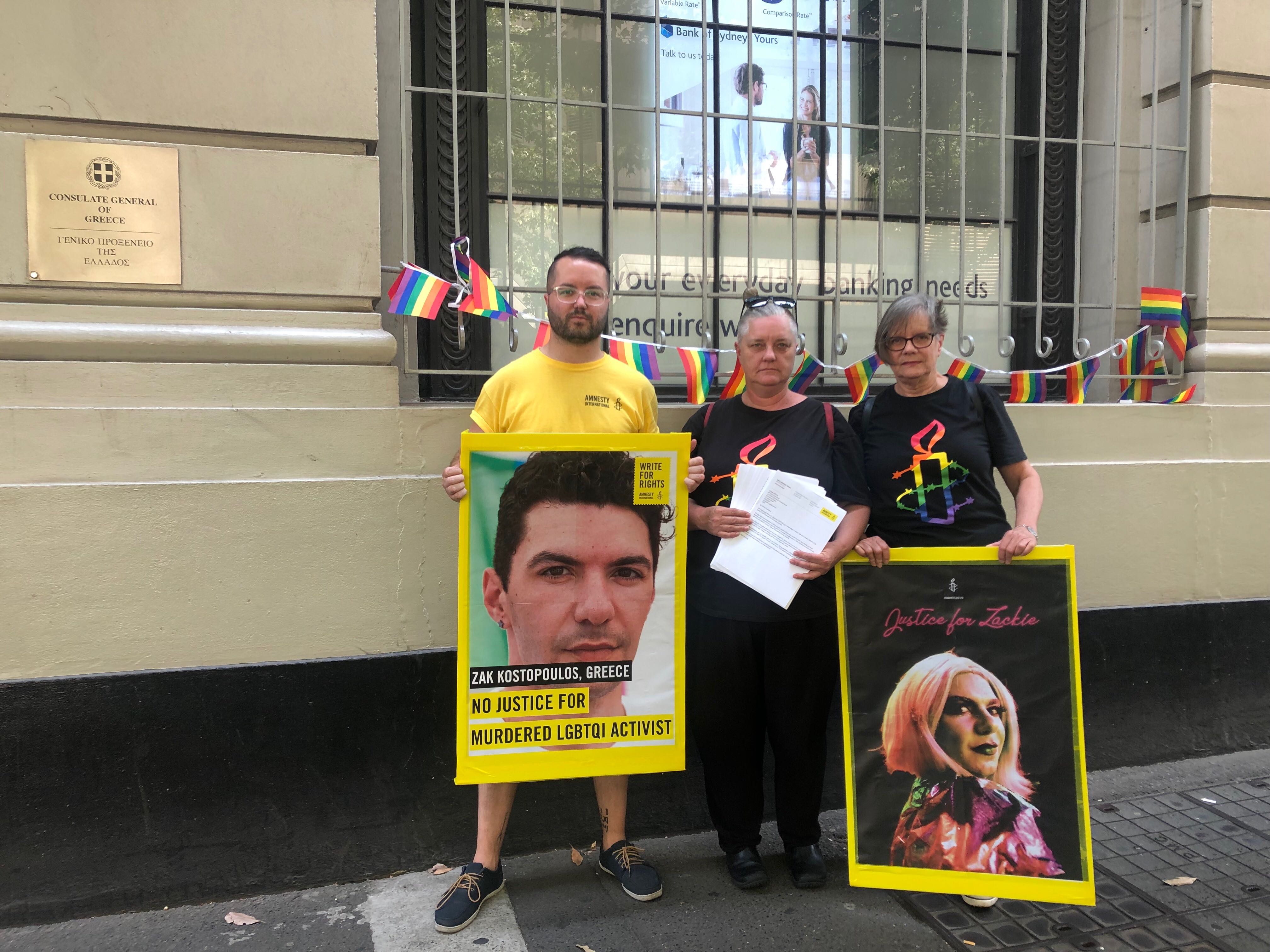
Brisbane and Sydney-siders demand #justiceforzachie at Greek consulates

Almost 10,000 signatures have been handed to the Greek Consulates in Sydney and Brisbane as part of a global Amnesty International campaign demanding justice for murdered Greek LGBT activist, Zackie.

December 21 marks 15 months since Zackie was murdered. He was a tireless defender of the rights of LGBTI people and HIV-positive persons.

Video footage shows that Zackie was brutally beaten by two men after entering a jewelry shop in central Athens. Footage also shows police arriving and violently attempting to arrest Zackie who was dying on the ground. The video shows an officer forcefully driving his leg into his neck and another kicking him with equal force. According to the forensic report, Zackie died from the multiple injuries he sustained.

Amnesty International Australia campaigner, Nikita White said that justice has not been done for Zackie or his family, and the investigation has been long and problematic. 

“Zackie and his family deserve justice. The investigation has been completed – even though delayed. Two civilians and four police officers have been charged with deadly bodily harm, but no indictment has been announced. 

“Zackie was murdered, and this must be reflected in the charges and sentences,” said White.

“Australians have been shocked by Zackie’s case. People have taken action at Pride events around the country standing with Zackie’s family. We won’t stop fighting until an indictment is announced.”

9,211 Australians signed the petition demanding justice for Zackie. They are joined by nearly 70,000 around the world – from Switzerland to South Korea – who are handing over petitions to Greek authorities around the world. 

The Amnesty International Australia LGBTQI Networks have also marched for Zackie at Sydney, Brisbane and Perth Pride events to bring attention to his case. 

Iran: Thousands detained, at risk of torture in post-protest crackdown

  • Thousands arrested including children as young as 15
  • Detainees subjected to enforced disappearance and torture
  • At least 304 people killed according to credible sources

Iran’s authorities are carrying out a vicious crackdown following the outbreak of nationwide protests on 15 November, arresting thousands of protesters as well as journalists, human rights defenders and students to stop them from speaking out about Iran’s ruthless repression, said Amnesty International today.

The organization has carried out interviews with dozens of people inside Iran who described how, in the days and weeks during and following the protests, the Iranian authorities have held detainees incommunicado and subjected them to enforced disappearance, torture and other ill-treatment.

At least 304 people were killed and thousands were injured between 15 and 18 November as authorities crushed protests using lethal force, according to credible reports compiled by the organization. The Iranian authorities have refused to announce a figure for those killed.

“Harrowing testimony from eyewitnesses suggests that, almost immediately after the Iranian authorities massacred hundreds of those participating in nationwide protests, they went on to orchestrate a wide-scale clampdown designed to instil fear and prevent anyone from speaking out about what happened,” said Philip Luther, Middle East and North Africa Research Director at Amnesty International.

Video footage verified by Amnesty’s Digital Verification Corps, backed up by witness testimony, shows Iranian security forces opening fire on unarmed protesters who did not pose any imminent risk. The majority of the deaths that the organization has recorded occurred as a result of gunshots to the head, heart, neck and other vital organs indicating that the security forces were shooting to kill.

The UN has stated that it has information suggesting that at least 12 children are among those killed. According to Amnesty International’s research, they include 15-year-old Mohammad Dastankhah, who was shot in the heart in Shiraz, Fars province, as he passed by the protests on his way home from school, and 17-year-old Alireza Nouri, who was killed in Shahriar, Tehran province.

“Instead of continuing with this brutal campaign of repression, the Iranian authorities must immediately and unconditionally release all those who have been arbitrarily detained,” said Philip Luther.

“The international community must take urgent action, including through the UN Human Rights Council holding a special session on Iran to mandate an inquiry into the unlawful killings of protesters, horrifying wave of arrests, enforced disappearances and torture of detainees, with a view to ensuring accountability.”

Wave of mass arrests

On 17 November, the third day of protests, state media reported that more than 1,000 protesters had been arrested. On 26 November, Hossein Naghavi Hosseini, a spokesperson for Iran’s parliamentary committee for national security and foreign policy, said 7,000 people had been arrested. The authorities have yet to provide an official figure.

Several sources independently told Amnesty International that security forces are still carrying out raids across the country to arrest people in their homes and places of work.

Children as young as 15 have been detained alongside adults, including in Fashafouyeh prison, Tehran province, which is notorious for torture and other ill-treatment. Other places where detainees have been held are military barracks and schools.

Various government officials, including the Supreme Leader and the head of the judiciary, have labelled protesters as “villains” and “rioters” and associated protesters with foreign powers. State media has called for the death penalty to be used against protest “leaders”.

Also being targeted for arbitrary arrest and detention are journalists, students and human rights defenders, including minority rights and labour rights activists, and people from ethnic minority groups.

Journalist Mohammad Massa’ed was arrested on 23 November after posting a tweet about the near-total internet shutdown imposed by the authorities between 16 November and around 24 November. He was released on bail several days later.

Activist Soha Mortezaei was one of dozens of students arrested during a protest at Tehran University on 18 November. She has been detained without access to her lawyer or family since. Security officials based in the university had previously threatened to torture her with electric shocks and detain her in a mental hospital.

Minority rights activists arrested include Akbar Mohajeri, Ayoub Shiri, Davoud Shiri, Babak Hosseini Moghadam, Mohammad Mahmoudi, Shahin Barzegar and Yashar Piri who were all arrested in their places of work in Tabriz, East Azerbaijan province.

Some prisons and detention centres are now reported to be experiencing severe overcrowding. On 25 November, the head of the city council of Rey in Tehran province expressed concern to reporters that Fashafouyeh prison is extremely overcrowded and has neither the capacity nor the facilities to accommodate such large numbers of detainees.

At least two people who participated in the protests told Amnesty International they are in hiding fearing for their lives and said many others are in a similar situation.

One person said: “I have been in hiding since I was seen and filmed by the security forces at the protests. They beat me with a baton before I escaped. I am now in hiding with a serious leg injury. I am not safe because they have gone to my house to arrest me. My situation right now is no different to being in prison.”

While some of those arrested have been released, many remain detained incommunicado, denied access to their families and lawyers. A number of families told Amnesty International they are deeply concerned about loved ones who require access to medical treatment, given the authorities’ appalling track record of denying medical care to people in prisons.

Torture and other ill-treatment

Eyewitness accounts and video evidence indicate that some detainees have been subjected to torture and other ill-treatment, including through beatings and floggings. One person said that a family member who was released on bail emerged with bruises and cuts to his face and head and is so traumatized from his experience that he refuses to leave the house.

One video verified and geolocated by the Digital Verification Corps shows handcuffed detainees being taken into the grounds of Mali Abad police station in Shiraz, Fars province, and then beaten, punched and kicked by security forces.

Credible sources have informed Amnesty International that in Raja’i Shahr prison in Karaj, Alborz province, hundreds of detainees, including children, were brought in trucks to the prison. They say that handcuffed and blindfolded detainees have been punched, kicked, flogged and beaten with batons by security forces on a daily basis.

Victims and eyewitnesses have also told Amnesty International that Iranian security forces have raided hospitals and medical centres across the country, arresting injured protesters and transferring them to detention centres, thereby denying them access to potentially life-saving medical care.

One source said that intelligence officials forced managers of a hospital in Khuzestan province to provide them with a list of names of newly admitted patients.

Another man described how he was arrested by plain-clothes officers as he was about to be discharged from a hospital in Alborz province after being treated for a gunshot wound to the stomach. He said he saw “many other people with gunshot wounds and other injuries” at the detention centre.

“The authorities have an obligation to protect all detainees from torture and other ill-treatment. Given the systematic use of torture in Iran, it is crucial that the authorities provide UN officials, mandate holders, and other relevant experts immediate access to detention centres and prisons to conduct fact-finding investigations,” said Philip Luther.

“Without urgent international pressure thousands will remain at risk of torture and other ill-treatment.”

Enforced disappearance and incommunicado detention

In dozens of cases reported to Amnesty International, detainees have had little or no contact with their families since their arrest and some have been held in conditions amounting to enforced disappearance, which is a crime under international law.

Relatives have told the organization they have visited police stations, prosecution offices, Revolutionary Courts, prisons and other detention centres to search for loved ones who have been forcibly disappeared but the authorities are refusing to provide them with information.

The mothers of a group of minority rights activists who were arrested during raids in East Azerbaijan province and West Azerbaijan province said the authorities said they had “no intention” to provide them with information. “We can do whatever we want with your children. We can detain them for however long we want, even for 10 years… We will execute them and you will not be able to do anything about it,” he said.

Those subjected to enforced disappearance include Kurdish labour rights activist Bakhtiar Rahimi, who was arrested at his place of work in Marivan, Kurdistan province, on 27 November. There has been no news of his fate or whereabouts since. This is especially worrying since he suffers from kidney and heart problems and needs daily medication and specialist health care.

“The world must not stand by in silence as the Iranian authorities continue to commit widespread human rights violations in their ruthless bid to crush dissent,” said Philip Luther.

Craig Foster, Ian Chappell join call to get people trapped offshore to safety

Australian sports stars Craig Foster and Ian Chappell have joined forces to launch Game Over – a campaign to get all refugees and asylum seekers stranded on Nauru and Papua New Guinea to safety.

“With the recent repeal of the life-saving Medevac Bill, getting people to safety from the dire conditions they’re in on Nauru and in Papua New Guinea is more urgent than ever,” Foster said.

“People seeking Australia’s protection have traditionally found a warm welcome in their grassroots sporting communities where sport is the universal language. We know there are communities right around Australia who are willing and able to help us get people languishing offshore to safety in third countries.

“All people deserve safety and a bright future: Australians won’t stand by any longer while politicians turn a blind eye to the suffering of people warehoused offshore. It’s time to call ‘Game Over’ and get these people to safety so they can rebuild their lives.”

Cricket legend and refugee rights advocate Ian Chappell has joined the Game Over campaign to emphasise the urgency of getting people to safety.

“When Craig told me about Game Over, I was delighted to support this worthy humanitarian cause. These are innocent people who are in conditions that are worse than jail. They have also been in limbo for so long it has destroyed their health. They deserve a fair go – that should be an unarguable human right.”

Samad Adbul from Pakistan is one of the young people who have spent the best years of their life languishing in offshore detention. A keen cricketer, the sport has helped him maintain hope.

“I grew up watching Australian cricket – it was a strong side. Ricky Ponting was the captain, my favourite player was Adam Gilchrist, then there was Matthrew Hayden, Michael Clarke, Brett Lee, Shane Warne, Jason Gillespie. Oh my goodness, such a strong side,” Samad said.

“Right now I’m in Australian care for six, seven years. I really like the people of Australia, the people who have already supported me. It’s been seven years now and I’m still stuck. I’ve lost seven years which are the most important years of my life. I quit my studies… I quit everything.

“I’d love to go to New Zealand. If Peter Dutton doesn’t want me to go to Australia, I won’t go to Australia.

“The most important thing for me is my freedom. I’m young, I don’t want to lose my life here.”

Former Socceroo Captain Alex Tobin has also committed his support joining 28,135 Amnesty International supporters who have already thrown their weight behind the campaign calling Game Over and encouraging Australia to get all on Nauru and Papua New Guinea to safety.

For more information go to www.gameover.org.au

Climate change the leading human rights concern for young Australians

According to one of the largest global surveys Amnesty International has ever undertaken, young Australian adults echoed the concerns of their counterparts in 22 countries by nominating climate change as the most important issue for the global community.

Amnesty’s polls asked young adults to give their views on the current state of human rights in their country, which issues they feel are most important, and whether their leaders are doing a good job with regard to human rights, or not. 

Climate change and pollution ranked as the top two concerns facing Australia for the Australians surveyed. 

Hundreds of thousands of people attended climate strikes around Australia in 2019 and more than 2500 businesses also joined the strikes by allowing staff to attend. 

Young Australians demonstrated their commitment to direct action with more than half indicating that protest (55%) and non-violent civil disobedience (55%) were effective ways to initiate human rights change. 

“With the recent rushed legislation in Queensland to crackdown on climate protesters and our Federal Government criticising protestors and threatening to ban secondary boycotts, it’s clear that people’s right to freedom of expression and assembly are being jeopardised.

“These results indicate the value young people place on their right to freedom of assembly and expression and any erosion of this vital human right is totally at odds with the views of young Australians,” Amnesty International Australia National Director Sam Klintworth said.

“Human rights should be at the heart of policy decisions no matter who holds government, a human rights act would protect all of our inalienable and indivisible rights.

“At their core, human rights are about respecting the dignity, equality and freedom of everyone. Someone’s quality of life should not be determined by factors beyond their control – be it race, nationality, gender, socio-economic background, sexuality or age.”