World Human Rights Day

It’s World Human Rights Day!

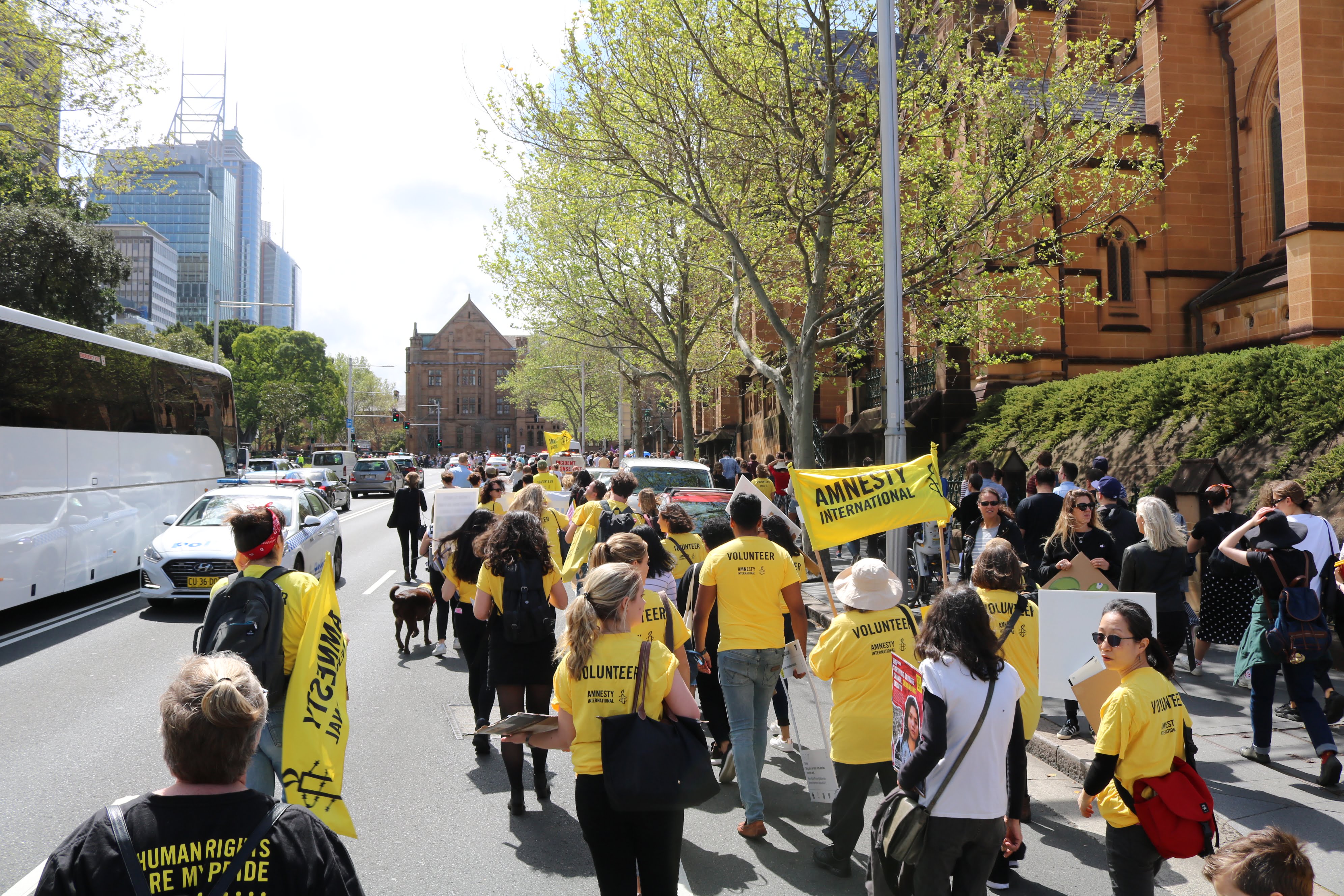
Human Rights are the basic freedoms and protections that belong to every single one of us. To coincide with this years theme “Youth standing up for human rights”, we surveyed young people aged 18 – 25 in 22 different countries, about their opinions on human rights and the state of the world. Respondents were asked to give their views on the current state of human rights in their country, which issues they particularly care about, which rights they feel may be under threat, and whether their leaders are doing a good job with regard to human rights or not. Our biggest global survey ever, insights demonstrate that young people have emerged as a powerful voice to be reckoned with on the global stage – and that their determination could shape the future of our world.

Young people think climate change is the biggest issue facing the world

If you are under 34 years old, you have never experienced a month of below average global temperatures. The climate crisis has come of age with millennials and generation Z, and they are hyper aware of this. Young people are conscious of the direct link between climate change and human rights including the right to life, health, food, water and housing. 41% of 10,000 young people surveyed said climate change was one of the most important issues facing the world, making it the most commonly cited issue globally. Earlier this year, hundreds of thousands of people attended attended climate strikes around Australia, and more than 2,500 businesses joined the strikes by allowing staff to attend.

Air pollution is a big concern for young people

The second largest concern of young people globally is air pollution. This comes as no surprise, given the UN calls air pollution and climate change “two sides of the same coin” due to greenhouse gases and other air pollutants being major causes of climate change. Young people, and children especially, are more vulnerable to health impacts linked to air pollution. According to the World Health Organization, 90% of the world’s children breathe toxic air.

Young people believe governments have the most responsibility to protect human rights 

While young Australians demonstrated their commitment to direct action with more than half indicating that protest (55%) and non-violent civil disobedience (55%) were effective ways to initiate human rights change, they still believe that the government has the most responsibility to protect and uphold our human rights – including the responsibility of climate action.
Solomon Islands: Minister should meet directly with local communities over mining concerns

The Solomon Islands Minister of the Environment should conduct face-to-face consultations with local communities on Wagina Island to hear their concerns before deciding the fate of a proposed open-cast bauxite mine there, Amnesty International said today.

The Minister is expected to decide soon whether to uphold a March 2019 Environmental Advisory Committee (EAC) decision that overturned the mining licence, after residents raised fears it could impact livelihoods on the island.

“The Solomon Islands government must ensure that all affected communities are genuinely and meaningfully consulted about this proposal,” said Richard Pearshouse, Head of Crisis and Environment at Amnesty International.

“The Minister should sit down with local communities on Wagina Island and hear their concerns.”

Wagina Island is a remote island of approximately 80 km2 in north-west Choiseul Province. Its residents are originally from Kiribati, having been relocated in the early 1960s by the British colonial administration. Estimated at around 2,000 people, they live by subsistence farming, fishing and seaweed farming.

In 2013, the Ministry of the Environment granted a Solomon Islands-registered company, Solomon Bauxite Limited (SBL), a permit to mine bauxite on Wagina Island. The following year, Wagina residents opposed the mine in the country’s High Court, which issued a stay of proceedings so that the case could be heard by the EAC.

In March 2019, the EAC overturned the Ministry of Environment’s consent for the mine. The EAC found that the Environmental Impact Statement (EIS) for the proposed mine – which is required under national law – had insufficient information to assess the impacts of the proposed mine, and that the legislative procedures for public consultation and publication of the EIS were not followed.

SBL has appealed the EAC’s decision to the Minister of the Environment. In meetings and correspondence with Amnesty International, the company has stressed that it has always complied with the laws applicable to its operations and has acknowledged the importance of upholding human rights. 

Amnesty International visited Wagina Island in July 2019 and interviewed a dozen islanders about their concerns, as well as 10 others familiar with the issue, including representatives of national and provincial governments, civil society organizations, journalists and lawyers. The organization also reviewed background documents, including meeting minutes and a copy of the 2012 EIS and its 2013 supplement.

“There is much apprehension about the potential environmental and social impacts of this mine and many community members told Amnesty International they did not feel sufficiently informed or consulted about it,” said Richard Pearshouse.

Some residents of Kukson and Nikamuroo villages and Benyamina islet told Amnesty International that they are concerned about the possible impacts from mining on fishing and sea-weed farming from mine run-off or disturbances to fresh groundwater discharges into the sea.  

The EIS states that: “The [residents of Wagina] do not currently use either the mine or the processing facility sites for any productive purpose.” However, some residents told Amnesty International they use some of the land covered by the proposed mine for purposes including gardening and harvesting timber for housing.

“The government of the Solomon Islands needs to resolve the issues of land ownership and use on this part of Wagina. Taking away land that people occupy and use without following due legal process runs the risk of forced evictions,” said Richard Pearshouse.

According to the EIS, the development will include an open pit mine, a bulk carrier wharf and small boat wharf, airstrip, administration offices, a power station, fuel farm, and accommodation for about 150 employees (who with family members may reach 1,000 people). The proposed mining involves trucking approximately 150 truckloads of bauxite, each with a 35 to 50 tonne payload, for 16 hours each day. The proposed life of the mine is between 16 and 20 years.

A consultation meeting on the proposed mine was held in Kukson village in February 2013. Official government minutes from that meeting show only 23 villagers attended and that no-one attended from Nikamuroo (the village closest to the proposed mine). The EAC found deficiencies in the process of raising public awareness about this consultation meeting and the application for a licence. 

Wagina residents told Amnesty International that four copies of the 2012 EIS were sent to the Island after the February 2013 consultation meeting. The 2012 EIS was supplemented by another EIS in June 2013, approximately four months after the meeting in Kukson. According to Amnesty International’s interviews with residents of Wagina, no consultation meetings took place to discuss this new information.

“The absence of full, accurate and timely information and the lack of any follow-up on questions raised by those who were able to attend the one consultation meeting, raises concerns about whether the engagement with affected communities can be considered genuine or meaningful,” said Richard Pearshouse.

The Minister’s review should include checking the date of any meetings with affected communities, where the meetings took place, whether all sections of the community – including women and those who cannot read – could participate effectively, what language meetings were held in, what advance notice and information was given, and what specific issues were discussed. 

Governments have a duty to respect and protect human rights in the context of business activities. All companies have a responsibility to respect human rights throughout their operations, independently of a state’s own human rights obligations. To meet this responsibility, companies should have in place an ongoing and proactive human rights due diligence process to identify, prevent, mitigate and account for how they address their impacts on human rights. This may require going beyond the legal requirements in the country where they are operating.

Iraq: Testimonies emerge of coordinated attacks which killed at least 20 protesters

Amnesty International has gathered detailed eyewitness testimony of the coordinated attack by unidentified gunmen in Baghdad last night, which claimed at least 20 lives and left more than 130 injured.

The organisation also verified footage from Baghdad that corroborated testimony of witnesses who described the arrival of fleets of gunmen.

Witnesses describe how “endless gunmen” arrived in pick-up trucks and minivans whilst others who had mingled with the crowd shot and stabbed protesters and attacked and set fire to parts of the Garage al-Sinak building.

Lynn Maalouf, Amnesty’s Middle East Research Director, said:

“The testimony we have a gathered leaves little doubt that this was a well-coordinated attack and raises serious questions as to how heavily-armed gunmen in a fleet of vehicles were seemingly able to pass through Baghdad’s checkpoints and inflict such a bloody onslaught.

“The testimony we have a gathered leaves little doubt that this was a well-coordinated attack and raises serious questions as to how heavily-armed gunmen in a fleet of vehicles were seemingly able to pass through Baghdad’s checkpoints and inflict such a bloody onslaught. 

Lynn Maalouf, Amnesty’s Middle East Research Director.

“Last night’s attacks are by far one of the most bloody in an ongoing campaign of intimidation and violence against protesters. Iraqi authorities must urgently investigate these attacks and bring the perpetrators to justice and immediately act to ensure protesters are protected. Failure to do so would send a message that such abuses will be tolerated.” 

One witness told Amnesty: “They came to kill. They opened fire immediately. They targeted people by shooting straight at them, not in the air. They were not masked. I do not think they cared if anybody saw them.”

Another witness told Amnesty: “They came in pick-up trucks and mini vans. Endless gunmen. We don’t know how they drove through Baghdad unstopped with all its checkpoints.”

A third witness said: “It was terrifying, especially because the situation had been so calm for the past few days. The protesters were hopeful and had given so much importance to being organized and peaceful. Everyone felt strong after the Prime Minister’s resignation.”

For full testimonies (anonymous) see below.

Testimony 1. Male protester/journalist

It was terrifying, especially because the situation had been so calm for the past few days. The protesters were hopeful and had given so much importance to being organized and peaceful. Everyone felt strong after the Prime Minister’s resignation, and after the way the tribes protected protesters in the south. Whoever did this last night, did not want this peace to last. They want people to be too scared to come to the street or challenge the status quo. Now protesters think that this is not the last of it. We all think they will come back for us.

They came in pick-up trucks and mini vans. Endless gunmen. We don’t know how they drove through Baghdad unstopped with all its checkpoints…Whoever it was that came to kill. They opened fire immediately. They targeted people by shooting straight at them, not in the air. They were not masked. I do not think they cared if anybody saw them. They had…Kalashnikovs. I did not see any stabbings or any other types of weapons. The lights went out in parts of al-Sinak and Khilani.

Maybe because the internet cannot be shut down anymore, they now want to shut the lights out on us, but we saw everything.

Testimony 2. Male protester

Last night I was not too far away from the building (Al-Sinak Garage) when there was a ripple of panic. People started saying there are gunmen. We started running…In that instance, we saw the pick-up trucks and vans of the gunmen arriving. They started shooting in all directions at the protesters. It all seemed as if it had been planned.

Testimony 3. Male protester

I was there last night. I saw Kalashnikovs.

We heard and saw BKCs (machine guns). I saw an empty box for BKC ammunition. At least seven BKCs were mounted on pick-up trucks that entered the area of the al-Sinak bridge and the al-Sinak Garage. My friend saw some of the gunmen carrying BKCs.

It is unclear how it started. What became clear is that they had already planted people among the crowds. Because when they entered, they came in two directions: one from Bab al-‘Adhem and the other from Al-Khilani Square. They started shooting immediately when they got near the Garage [building]. They entered the building and the fire was because of the clashes inside the building. A group of them reached the Al-Sinak bridge as well and started shooting at protesters.

They had complete control of the area from Abdel-Qader al-Gailany Shrine to the Al-Khilani Square – the entire road through Al-Sinak until the bridge. They had armed men in civilian clothing shooting at protesters. They controlled it until about 6am. It’s not true that they retreated during the night. Nobody is going to give you exact timing because it was complete chaos. It was our worst fears come true.

Amnesty International’s Secretary General steps down

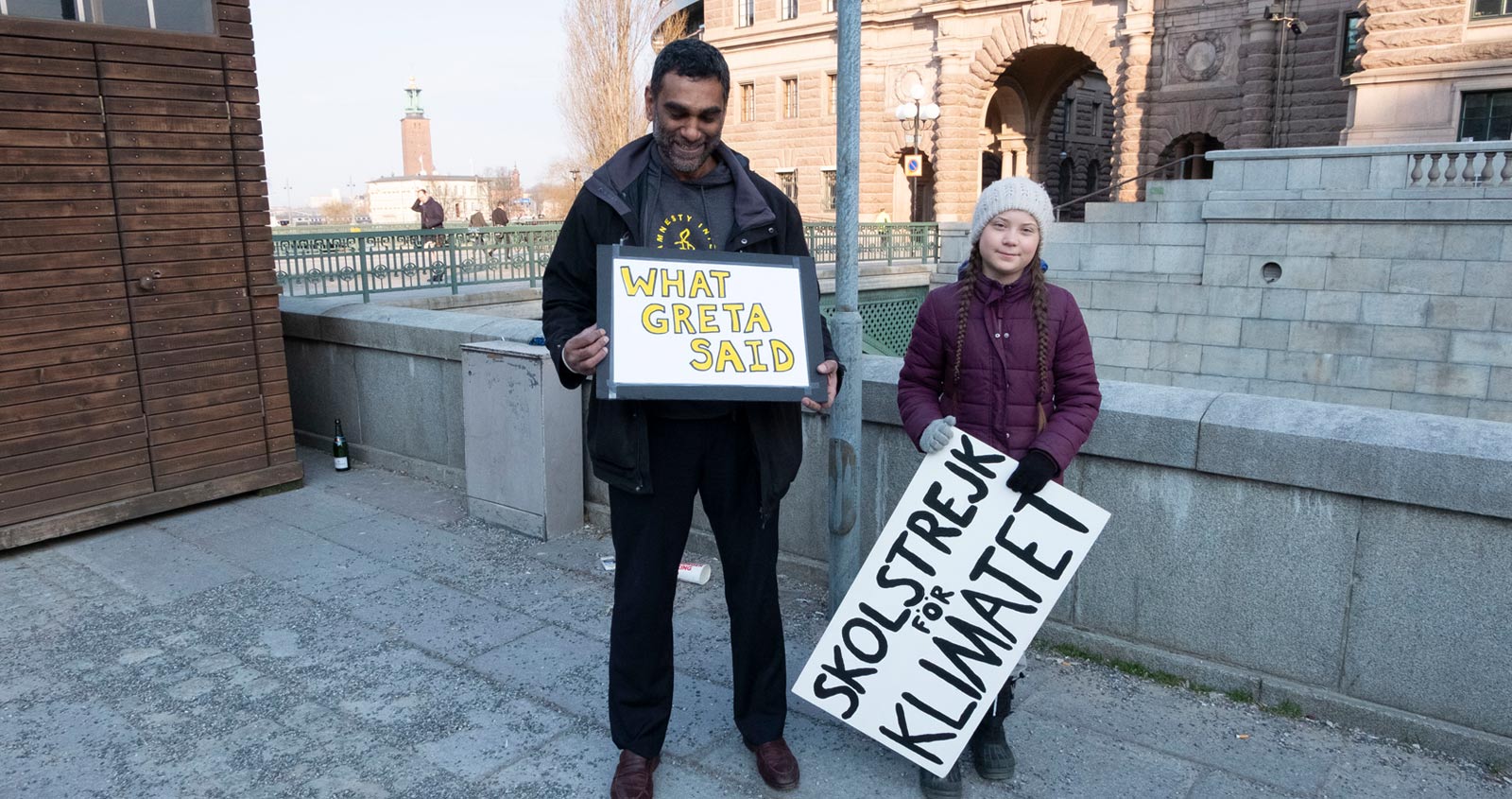
It is with regret that Amnesty International can confirm that following medical advice, Kumi Naidoo, the organization’s Secretary General, has made the decision to step down from his position due to health-related reasons. His resignation has been accepted by the International Board and he will hand over his responsibilities on today, 5th December.

“I have long considered Amnesty International as one of humanity’s most important global assets, and it is with a heavy heart that I have taken the decision to step down from my position. Now more than ever, the organization needs a Secretary General who is fighting fit and can see through its mandate with vitality that this role, this institution, and the mission of universal human rights deserve,” said Kumi Naidoo, Amnesty International’s Secretary General.

“It has been a huge privilege to have worked with our excellent and committed staff and volunteers at the International Secretariat as well as with our Sections. I have been inspired by the important and courageous work being done by our movement. But due to my health, I have no choice but to take this painful decision and step down. I need to recover my health and figure out a more sustainable way to continue to contribute to the struggle for justice in the future.”

Kumi took the decision to step down following medical advice after a pre-existing medical condition worsened in recent months.

Amnesty International’s International Board has accepted his resignation and Kumi will hand over his responsibilities to the Deputy Secretary General, Julie Verhaar, with immediate effect. She will now take up the role of Acting Secretary General until a replacement is recruited.

“It is with reluctance, but understanding, that we have accepted Kumi’s resignation. During his tenure as Secretary General he has shown true leadership helping us shape our next global strategy and ensuring that we can meet the human rights challenges facing the world,” said Sarah Beamish, Chair of Amnesty International’s International Board.

Kumi intends to honour several longstanding commitments in his capacity as outgoing Secretary General in the month of December, as long as his state of health permits. He is determined that there should be a carefully phased transition – and he will step down in January when he will start a period of medical leave.

Indonesia: Two people whipped unconscious in ‘vicious’ public punishments

Responding to reports that a woman and a man lost consciousness as they were whipped during separate public punishments handed by authorities in Aceh today, Amnesty International Indonesia’s Executive Director, Usman Hamid, said:

“The fact that two people were beaten unconscious today, in two separate incidents, is a damning indictment of the authorities who let his happen on their watch. These punishments are cruel, inhuman and degrading, and amount to torture.”

“These whippings are a shameful and vicious public spectacle. No-one deserves to face this unspeakable cruelty. The authorities in Aceh and Indonesia must immediately repeal the law which imposes these punishments, and bring them in line with international standards and Indonesia’s human rights obligations under its own constitution.“

Background

In East Aceh, a man was beaten unconscious and required reanimation while authorities executed a punishment of 100 lashings for extra marital sex. He was taken to hospital after the punishment was complete. His co-defendants, another man and a woman, were given the same punishment.

In a separate incident in Aceh Tamiang, local media reported that a woman sentenced to 30 lashes fell unconscious while the punishment was being carried out. Her punishment may be resumed at a later date, when she is considered healthy enough to be beaten again.

In Aceh, canings are regularly carried out in public spaces drawing large crowds where people take photographs and video, which can add to the humiliation and long-term suffering of those who are subjected to this cruel punishment.

The Aceh Islamic Criminal Code was passed by the Aceh parliament (DPRA) in 2014 and came into effect throughout Aceh Province on 23 October 2015. Shari’a bylaws have been in force in Aceh since the enactment of the province’s Special Autonomy Law in 2001, and are enforced by Islamic courts. These laws in some cases provide for up to 200 lashes as punishment.

Punishable offences include consensual intimacy or sexual activity for unmarried couples, consensual sex outside marriage, same-sex sexual relations, the consumption and sale of alcohol, and gambling. Under international human rights law all forms of corporal punishment are prohibited – they violate the absolute prohibition of torture and other cruel, inhuman or degrading punishment and often torture.

‘More people will die’: Medevac repeal a shameful day

Shaminda Kanapathi, a refugee who has spent more than six years in offshore detention said he is fearful of the consequences of this repeal of the Medevac legislation in Parliament today.

The decision of the Australian Government to repeal the Medevac Bill is devastating for all of us in Nauru and Papua New Guinea.

Shaminda Kanapathi

“The decision of the Australian Government to repeal the Medevac Bill is devastating for all of us in Nauru and Papua New Guinea. This same Government has kept us trapped for so many years. So many of us are so very sick. The Australian Government has destroyed our health and our freedom and now they must take responsibility for the terrible impact I am fearful of – that more people will die and all the Parliamentarians who voted to repeal Medevac will be responsible.”

Amnesty International Australia Refugee Advisor Graham Thom said the focus must now be on how to quickly resolve the issue of the more than 500 people still languishing in offshore detention.

“It’s a shameful day when the Australian Parliament turns its back on sick people in desperate need of medical attention. Let’s not forget that this offshore detention system is the one under which 12 innocent people have died.

“Medevac was not perfect, but it allowed people to access life-saving medical treatment in a timely manner.

“With this option now unavailable to refugees and asylum seekers under Australia’s care, the focus must now be on moving everyone still stuck in limbo on Nauru and in PNG  to safety without delay.”

Yemen: War and exclusion leave millions of people with disabilities in the lurch

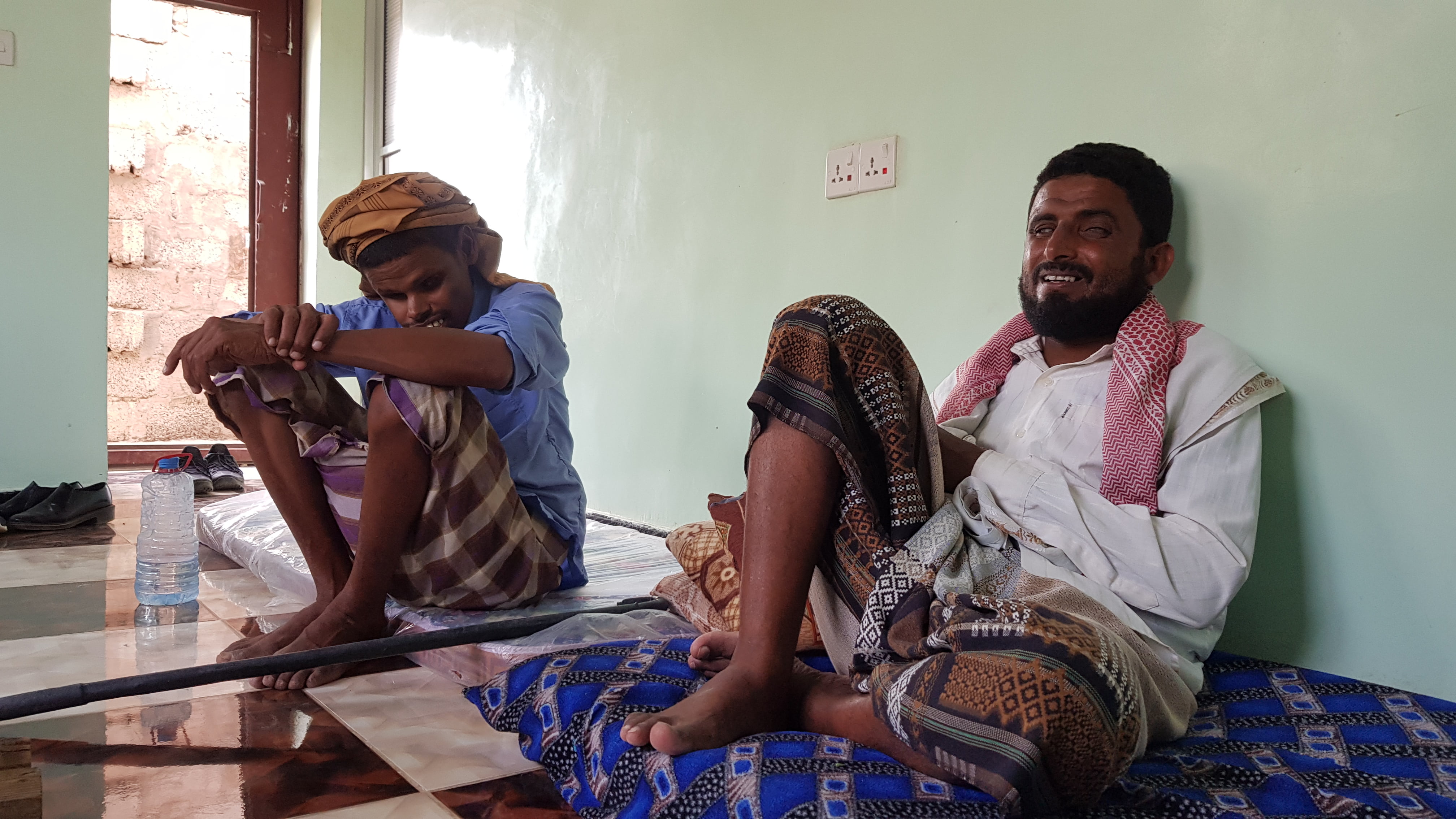
Millions of people with disabilities in Yemen have not only endured years of armed conflict but are also among those most excluded amid what the United Nations has called the world’s worst humanitarian crisis, Amnesty International said today.

Excluded: Living with disabilities in Yemen’s armed conflict is being published on the International Day of Persons with Disabilities (3 December). It follows six months of research, including visits to three southern Yemeni governorates and interviews with almost 100 people – documenting the experience of 53 women, men and children with a wide spectrum of disabilities.

“Yemen’s war has been characterized by unlawful bombings, displacement and a dearth of basic services, leaving many struggling to survive. The humanitarian response is overstretched, but people with disabilities – who are already among those most at risk in armed conflict – should not face even greater challenges in accessing essential aid,” said Rawya Rageh, Senior Crisis Advisor at Amnesty International. 

“International donors, the United Nations, and humanitarian organizations working with the Yemeni authorities must do more to overcome the barriers that prevent people with disabilities from meeting even their most basic needs.”

Violence and forced displacement

People with disabilities experience compounded difficulties fleeing violence. Many told Amnesty International they undertook exhausting displacement journeys without wheelchairs, crutches or other assistive devices. Almost all of them depended on their families or friends. “The journey was torturous… I was transferred from bus to bus – in total four buses… My neighbour carried me,” said Migdad Ali Abdullah, an 18-year-old with limited mobility and difficulties in communicating, describing the 18-hour trip he took in early 2018 alongside his family from Hodeidah to a displaced persons camp in Lahj.

Some people with disabilities were left behind as their families fled because they were separated in the chaos, or because the trip was too difficult for the person with a disability to undertake. 

Where people with disabilities could escape, the journey would often worsen their health condition or impairment. Some acquired a disability, at times because warring parties failed to give effective notice of attacks impacting civilians. A 92-year-old woman who already had limited mobility said she fell, breaking multiple bones, as she was trying to flee fighting in her village in Ta’iz.

In camps for the displaced, Amnesty International observed design flaws affecting people with disabilities. This includes the design of latrines, as well as the location of aid distribution points – both of which strip people with disabilities of their independence and dignity by forcing them to rely on their families or others. A 75-year-old man with limited mobility said he needs to have his sons take him to the latrine: “They drag me. They can’t carry me.”

Staggering needs going unmet

Yemen is a state party to the Convention on the Rights of Persons with Disabilities, and has laws designed to protect the country’s at least 4.5 million people – 15% of the population – who have disabilities, according to World Health Organization estimates. Reliable data is scarce, and given the impact of the ongoing conflict, some experts believe the actual number is higher.

Public health care and social welfare have been hard hit by Yemen’s war and economic collapse, resulting in a systematic failure to guarantee the rights of people with disabilities. Many rely on handouts or fend for themselves – with some forced into poverty to pay for basic supplies like medicines or adult diapers. One man with a disability was forced to beg along the highway.

Family members said they sold belongings or delayed rent and other crucial payments to prioritize costs associated with supporting a loved one with a disability. The mother of a three-year-old girl with epilepsy and spinal muscular atrophy said:

“I sold the furniture in my house and took her to Sana’a to get her treatment there. … Four months later, I could see she was not moving or laughing or playing. I took her up [to Sana’a] again. … The other day I even asked my friend about selling my kidney. I would sell my kidney and buy her a year’s worth of medication, the shoes she needs and everything else.”

Assistive devices are also in very short supply. People with disabilities who do have them told Amnesty International they are often not fit for purpose – for example, wheelchairs that are no match for the rugged terrain of displacement camps, or ill-fitting prosthetic devices. Southern Yemen has only one prosthetic centre, which has to send some types of prosthetics abroad for repairs.

Yemen’s repeated conflicts have brought on a mental health crisis, with a significant proportion of the population – including many children – severely traumatized. An average 25-year-old Yemeni has lived through 14 armed conflicts in their lifetime. Yet there is hardly any psychosocial support; there are only 40 psychiatrists in the entire country, most of them based in cities. 

Need for better inclusion 

Amnesty International recognizes that humanitarian organizations are facing enormous challenges in Yemen. But they can take some straightforward actions to improve their response. For example, they should collect and analyse better disaggregated data on the full range of people with disabilities under their care. They should also include people with disabilities directly in the design and delivery of aid, thereby ensuring their right to participate in decisions affecting their lives. 

“People with disabilities worldwide rightly demand that no decisions be made ‘about us, without us’ – and Yemen is no exception. International donors must step up to fully fund humanitarian pledges and do a better job of ensuring that people with disabilities in Yemen are not left behind,” said Rasha Mohamed, Yemen Researcher at Amnesty International. 

“Relatively simple things can go a long way to address the gaps – like directly seeking input from people with disabilities, providing more and better-suited assistive devices, and providing latrines that meet their specific needs.”

Iran: Death toll exceeds 200 in Iran protests

The number of people believed to have been killed during the Iranian authorities’ crackdown on recent demonstrations has risen to at least 208, after assessing the latest reports Amnesty International has received. The real figure is likely to be higher.

Amnesty compiled the death toll from reports whose credibility it ascertained by interviewing a range of sources inside and outside Iran, including victims’ relatives, journalists and human rights activists involved in gathering the information. It then crosschecked the information.

Extensive video footage verified and analysed by Amnesty’s Digital Verification Corps shows the Iranian security forces shooting at unarmed protesters.

Dozens of the deaths have been recorded in Shahriar city in Tehran province – one of the cities with the highest death tolls.

According to information gathered by Amnesty, families of victims have been threatened and warned not to speak to the media, or to hold funeral ceremonies for their loved ones. Some families are also being forced to make extortionate payments to have the bodies of their loved ones returned to them.

Philip Luther, Amnesty International’s Middle East Research and Advocacy Director, said:

“This alarming death toll is further evidence that Iran’s security forces went on a horrific killing spree, that left at least 208 people dead in less than a week.

“Those responsible for this bloody clampdown on demonstrations must be held accountable for their actions.

“Since the Iranian authorities have previously shown they are unwilling to carry out independent, impartial and effective investigations into unlawful killings and other arbitrary use of force against protesters, we are calling on the international community to help ensure accountability.”

Amnesty calls for Police to stop detaining kids while States and Territories work to raise the age

At its annual Council of Attorneys-General (CAG) meeting last week, Australian lawmakers extended a review into raising the minimum age of criminal responsibility from 10 to at least 14. Now, Amnesty International Australia is calling on the nation’s police to effect a moratorium on arresting and detaining children younger than 14 until the recommendations of the working group are handed down.

“Reviews take a long time, and children are being trapped in the quicksand of youth justice system and have no time left to wait. While this review continues, children under 14 should not be arrested and detained,” Amnesty International Australia Indigenous Rights Advisor Rodney Dillon said.

“The will for reform of this archaic legislation is there, but as consultation takes place on implementation plans, children will continue to be arrested and imprisoned. There are already 603 children between 10-13 years in prisons around the country, we can’t let this number grow when we know the damage it causes. 

“Evidence shows that imprisonment of young children increases recidivism and removing children from society causes long-term harm, stripping them of future opportunities. Children deserve to be with their family, friends, in school and in community-led programs that lead to better outcomes and a brighter future.”

Amnesty International Australia has written to Police Commissioners around Australia to request a moratorium on detaining children younger than 14.

The will is there to raise the age, now we need action

Responding to the Communique from the Council of Attorneys-General today in Adelaide which progressed the review of raising the minimum age of criminal responsibility of 14, Amnesty International Australia Indigenous Rights Manager Tammy Solonec said: 

“We know there is the will to raise the age in Australia, but it’s disappointing that the Communique hasn’t noted that. This is, though, a significant step forward in seeing Australia heed the advice of all the experts and bring us in line with international standards.

“Progressing the review is the right thing to do. However we’ve been discussing this for a long time and now the conversation must include committing to implementation plans.

“The longer the Attorneys-Generals delay, the more children get caught in the quicksand of the youth justice system, and we can’t sit idly by and watch this happen. Steps need to be taken now to get kids out of prison.”

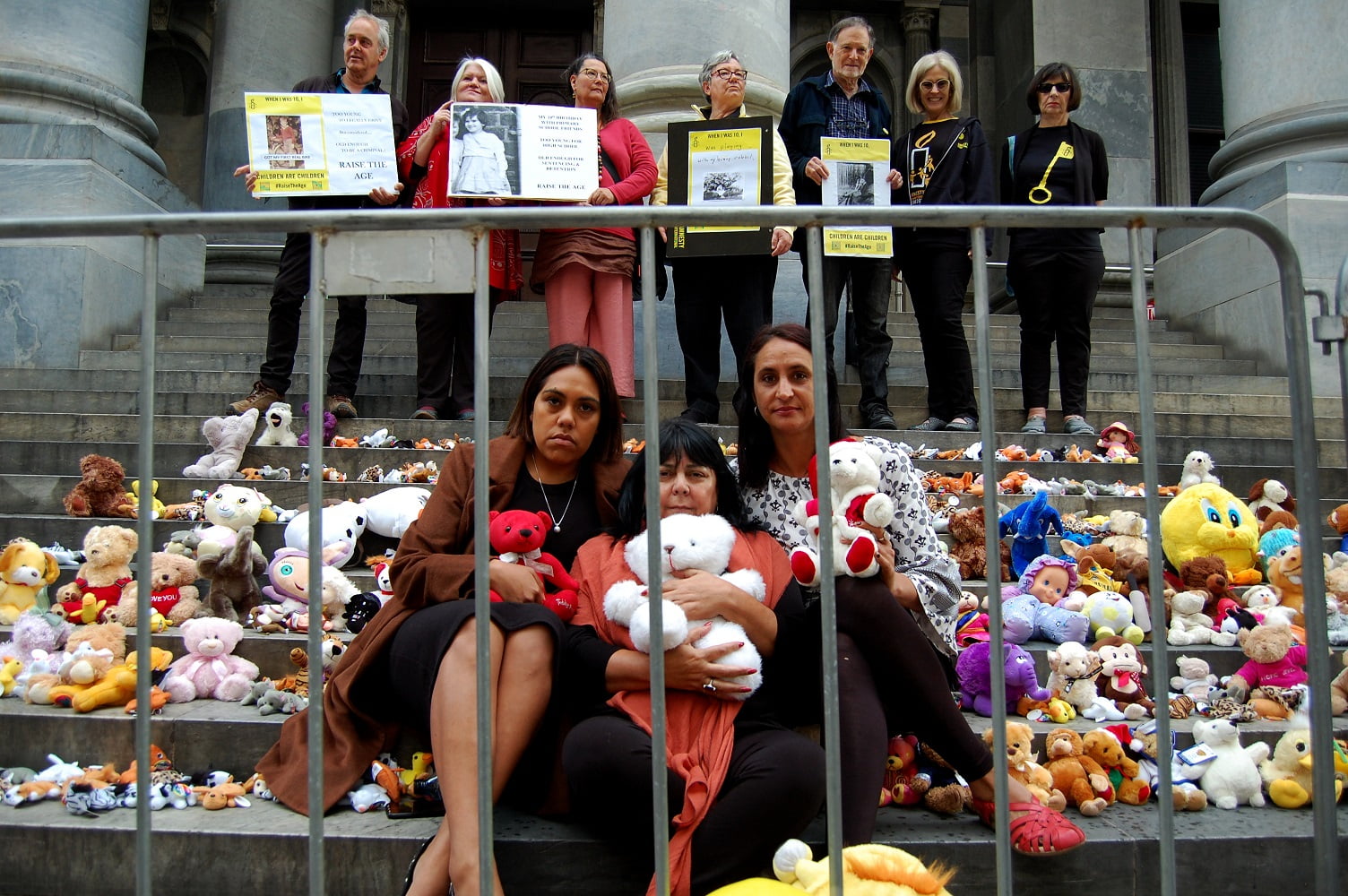
This morning, Amnesty International activists placed 603 teddy bears on the steps of South Australian Parliament representing the 603 young people aged 10-13 in prison on an average night. 

More than 57,000 people have signed Amnesty International’s petition calling on governments to raise the minimum age of criminal responsibility.