Lebanon: Military forces must end arbitrary arrests and torture of protesters

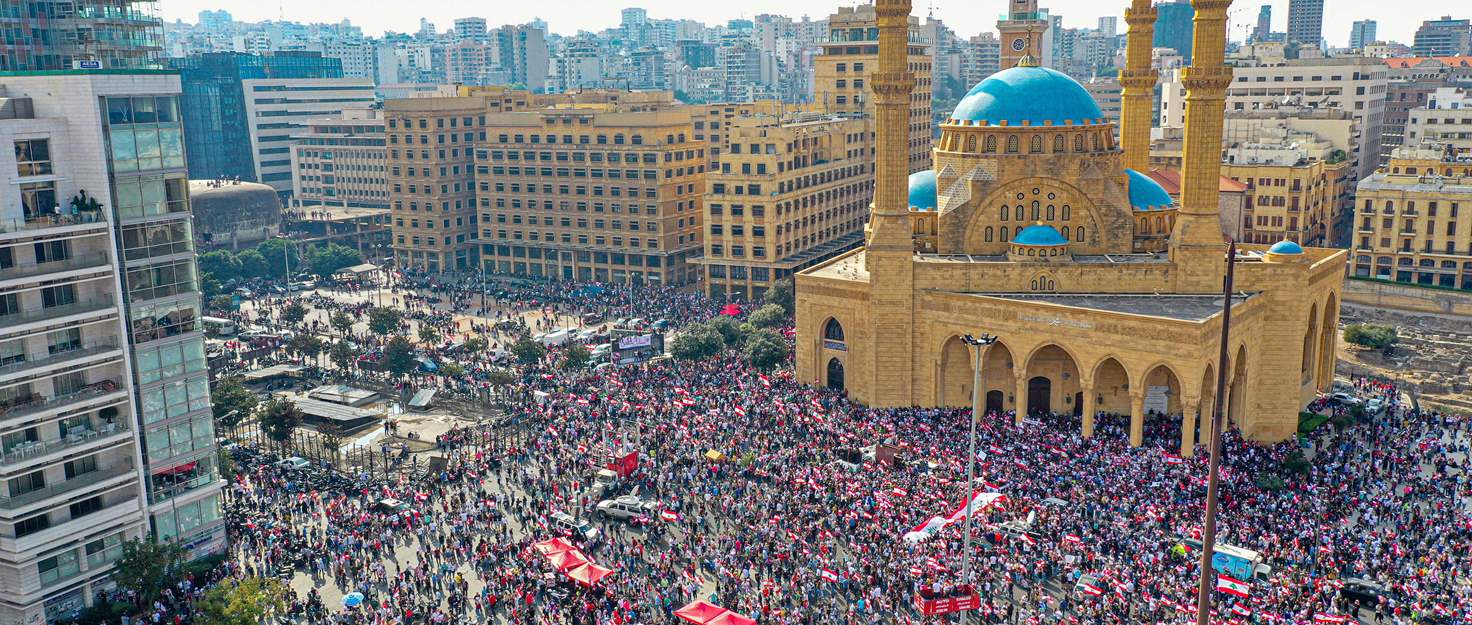
Lebanese armed forces must end the arbitrary arrests, torture and other ill-treatment of peaceful protesters, Amnesty International said today as nationwide protests entered their seventh week. The past weeks have seen scores of protesters arrested by both military and security forces across Lebanon.  

The organization interviewed eight protesters recently arrested and detained and a lawyer representing a number of protesters. Testimonies have been gathered and video footage and medical records reviewed. The protesters described being subjected to a catalogue of abuse, including arrests without warrant, severe beatings, insults and humiliation, blindfolding and forced confessions. Some were detained in unknown locations, denied access to lawyers or contact with their families, as well as access to medical care and had their phones searched. Two people told the organization that they had been subjected to mock executions.

“The Lebanese Armed Forces must immediately put an end to these abusive practices and ensure it is protecting the rights of peaceful protesters to their freedom of peaceful assembly and expression, rather than punishing them simply for exercising their human rights,” said Lynn Maalouf, Amnesty International’s Middle East Director of Research.

“Over the past three weeks, we have seen the military beat and drag through the streets peaceful protesters. At a time of heightened political and social tensions, armed forces must exercise restraint. These brutal actions send an extremely worrying signal and they must be promptly, thoroughly and effectively investigated by the civilian justice system to ensure that those responsible are brought to justice in fair trials.”

At least two protesters are now being summoned and charged before the military court. Amnesty International calls on the authorities to stop trying civilians in military court and to ensure that perpetrators of torture and other forms of ill-treatment are promptly, thoroughly, and effectively investigated by a civilian justice system and not the military justice system to ensure impartiality and to provide victims with their right to a remedy.

Brutal arbitrary arrests

On the night of 27 November, according to the Committee of Lawyers to Defend Protesters in Lebanon, members of the Army intelligence arrested and detained two young men in the southern district of Marjeyoun after they had been tagging slogans on walls in support of the protests. They were interrogated and released the next day.

In seven other cases documented by Amnesty International, military forces, including the military intelligence, conducted the arrests and the beatings. All seven individuals were subsequently released following periods ranging between a few hours and up to six days.

On 14 November Samer Mazeh and Ali Basal were walking together in Gemmayzeh, a main street close to the downtown area where protesters have been gathering in the capital Beirut, when a group of around five men in civilian clothing approached them. At that point, and after a brief exchange, an army vehicle arrived and a member of the army intelligence forces stepped out and attacked them. According to Samer: “He pressed my face to the ground and handcuffed me. They moved me to the vehicle where I was beaten. They covered my face with my shirt and put my head down. Ali was arrested too and they made him sit on my head. I said I was suffocating. One of them said I don’t care if you suffocate.”

According to both Samer and Ali, they were then taken to an unknown location, still blindfolded, forced to get on their knees, after which the men loaded their weapons and pointed their rifles to their heads. They were then taken to a detention center. “When we arrived [to the detention center], they asked me to say I am a donkey instead of my real name. They also said Michel Aoun [the President] is a crown on your head. The officer asked, is this the one who insulted the president? And he slapped me on my face,” said Samer.

In another case that took place 13 November in Baabda, where a peaceful protest was taking place on the road to the Presidential palace, Khaldoun Jaber was approached by two men in civilian clothing who told him they wanted to talk to him. Instead however, he told Amnesty that they dragged him away from the protesters, after which, a group of around 30 men wearing the vests of the Military intelligence forces suddenly started beating him severely with sticks on his back, according to his testimony.

He added that he was then blindfolded, dragged to an unknown location and tortured. “They blindfolded me and moved me to an unknown place. Later I knew from the lawyer that I was being detained at the Ministry of Defense. During the interrogation, they hit me and asked me who was paying us, who was pushing us to take to the streets, and who was feeding us. I was hit with sticks on my back, on my ribs, and on my leg. I was not allowed to contact a lawyer or my family who did not know where I was. I was not offered food and I was not allowed to smoke. They only provided me with water,” he said.

Chris Haddad was also amongst those brutally beaten, dragged on the street, and then arrested by the army on 5 November in Jal el Dib, alongside eight other protesters. He explained: “Three soldiers attacked me with their sticks. They put my jacket on my face, and dragged me as they were hitting me on my back all the way to the opposite side of the road where they had their vehicles parked.”

Fadi Nader was also amongst those beaten and arrested by the army on that day: “They hit me aggressively and dragged me to the other side of the road. I tried to escape but they caught me again. When they put me in the military vehicle, a soldier hit me on my head with a stick. They knew very well who to arrest as most of us were known faces during this protest movement. We were beaten in the vehicle several times,” he said. A member of the Lawyers’ Committee, Nermine Sibai, told Amnesty International that they had started filing complaints, based on the anti-torture law and the Code of Criminal Procedure, for a number of cases, including some of those documented here above.

This pattern of abuse in effect violates Lebanese domestic laws as well as Lebanon’s obligations under international law, including Law number 65 which criminalizes torture and other cruel, inhuman or degrading treatment or punishment and the Code of Criminal Procedure which sets out detainees’ rights to due process, including the right to promptly contact a lawyer and their family, and have access to medical care when arrested. Furthermore, the anti-torture law specifies the public prosecutor’s duty to refer any torture cases to ordinary courts within 48 hours.

Two other individuals also recounted to Amnesty International how, on 26 October, a large group of soldiers had attacked them and then arrested them, taking them away from the shops where they worked, as a protest was taking place nearby in Beddawi in Tripoli. Both were subjected to verbal and physical abuse, leading to serious wounds in the heads. The Lebanese Armed Forces refused to communicate their whereabouts to their lawyers and families until their release from a military prison six day following their arrest, on 31 October. At least two of these individuals have since been indicted by the military court and summoned to appear for trial next year.

“The Lebanese authorities must respect the due process and fair trial rights of individuals during any arrests, including explaining the charges for the arrest, that they be able to promptly contact their lawyers and families, and be protected from torture and other ill-treatment. Furthermore, these cases must be investigated by a civilian court, in accordance with Lebanon’s anti-torture law and its legally binding international obligations. As per these, the state and military prosecutors have an obligation to immediately transfer any cases before the military court to a civilian court, to ensure individuals’ right to a fair trial and access to remedy,” said Lynn Maalouf.

Remembering Mhelody Polan Bruno: Transgender Day of Remembrance

Photograph by Abbey Ashfield-Crook

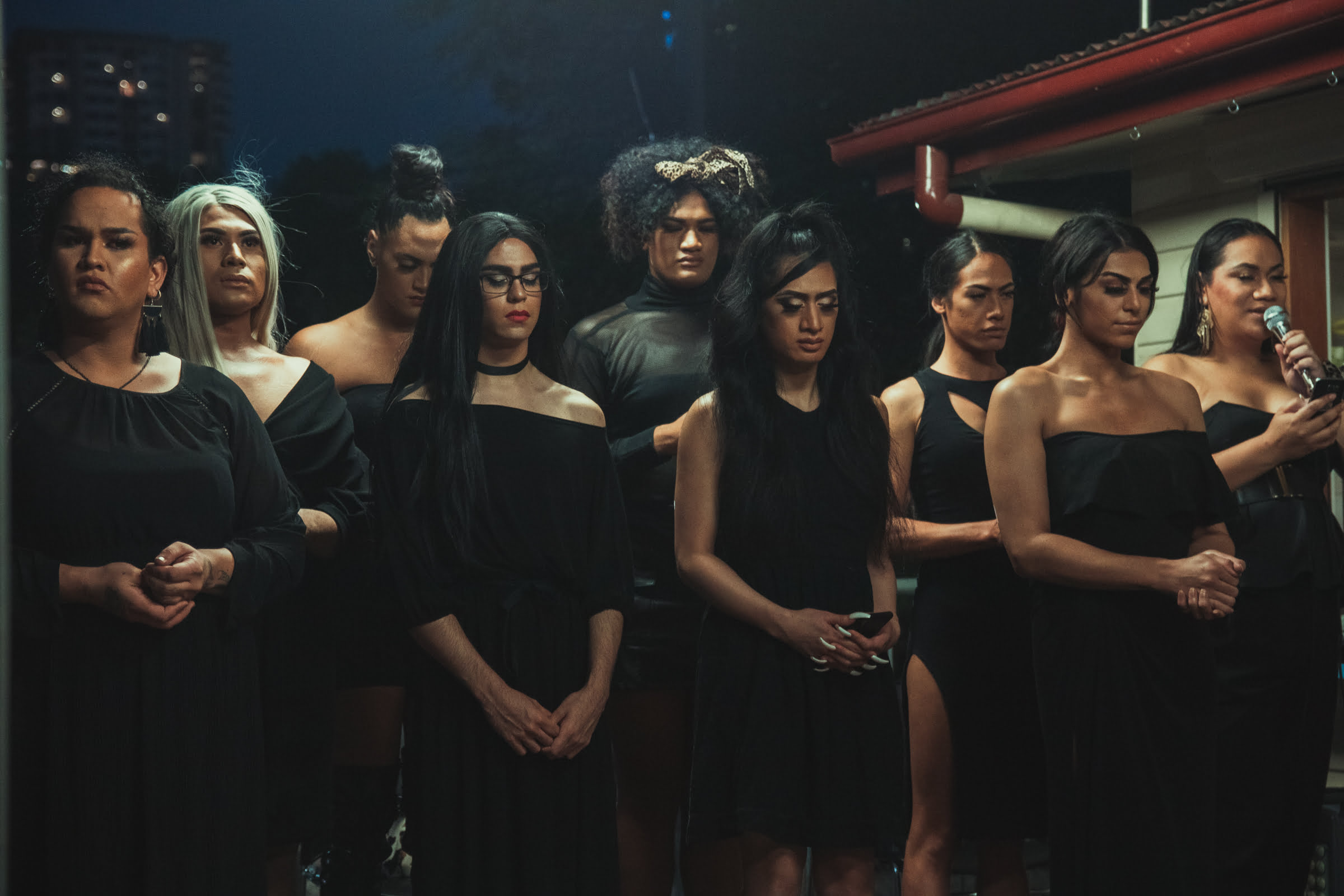
Amnesty International Queensland LGBTQI Network  commemorated Transgender Day of Remembrance with a candlelight vigil in memory of Mhelody Polan Bruno, transgender woman of colour who was recently murdered in Wagga Wagga, New South Wales.

Mhelody was just twenty five years old, worked hard as the sole breadwinner of her family, and was the celebrated beauty queen back home. Mhelody is sadly one of many transgender people who are killed annually in acts of transphobia.

Ella Ganza of the Runway Movement wrote and delivered a powerful call to action in her poem about violence against transgender people, specifically transgender women of colour:

You will find us at the cemetery, amongst the darkest secrets,
Our identity – unknown
An act of your violence, never to have been rescued.  
We have been pushed to the bitter end
No longer seen as beings
Treated as monsters, ostracized & vilified.
Our purpose merely dreamt
A journey to have never left the beginning.
Our refuge is each other
A sanctuary where only we know the struggle
An equation with no answer
Left without a formula.
We walk high because we have to
Our battle scars are concealed, primed, contoured.
You are forced to see only what we allow you to see,
Our beauty, luscious body, ravishing hair, enticing features and our statuesque physiques.

A femininity that has been built of a lifetime of pain, hate, rejection, discrimination. Marginalised even in our own community, silenced in that very rainbow. How are we to celebrate when the victory isn’t ours.

Trans women of colour, yes us.
Tired of losing sisters to the colonial supremacy.
Does our fantasy ever become a reality?
Will we ever be rid of the trauma???
Do we ever reach acceptance
Why not now? When will this day come? How will it happen? Who?

The answer is YOU.  All of YOU.

Help us, liberate us, stand with us.  Our sisterhood is how we trans women have survived through the years.  But the question is do you accept us as part of your sisterhood?

#stopkillingus

#justiceformhelody

#transisbeautiful

#wearemhelody

#translivesmatter

#iammhelody

#transwomenarewomen

#transwomanispower

#faafafinelivesmatter

#transiconic

Ella Ganza is a transgender activist and founder of Runway Movement, a collective of queer people of colour from all parts of Brisbane who aim to make a difference through art, advocacy and creating platforms for queer people of colour.

Photograph by Abbey Ashfield-Crook

Transgender Day of Remembrance is an annual observance that honours the memory of the transgender people whose lives were lost in acts of transphobic violence. The past twelve months have seen over three hundred transgender and gender diverse people reported as murdered, globally. This figure confirms we are experiencing the highest era of violence against transgender people in history. These statistics are likely to be much higher in reality and do not count those who have lost their lives to suicide, either, consolidated by the National LGBTI Health Alliance. It is now more important than ever for all of us to stand together with transgender people who are fighting for their human rights. 

You can join the Amnesty International Queensland LGBTQI Network to take action to protect the human rights of all LGBTQI people.

Photograph by Abbey Ashfield-Crook

From slurs to sexual violence, women human rights defenders come under global attack

Governments are failing to protect women human rights defenders (WHRDs) who routinely face a wide range of gender specific attacks, including rape, because of their work promoting rights relating to women, gender equality and sexuality, Amnesty International said in a new report on International Women Human Rights Defenders Day.

“Challenging power, fighting discrimination: A call to action to recognize and protect women human rights defenders” reveals that these activists continue to be assaulted, threatened, intimidated, criminalized and even killed for their campaigning. This is despite repeated commitments, including the passing of a UN resolution six years ago, to enhance their protection.

“Women human rights defenders are attacked because of who they are and what they do. ”

Amnesty International Secretary General Kumi Naidoo

“Women human rights defenders are attacked because of who they are and what they do. The risks are even greater for those facing intersecting forms of discrimination – if you are a woman and from a racial minority, indigenous, poor, lesbian, bisexual or trans, a sex worker, you have to fight so much harder to have your voice heard by those in power,” said Kumi Naidoo, Amnesty International’s Secretary General.

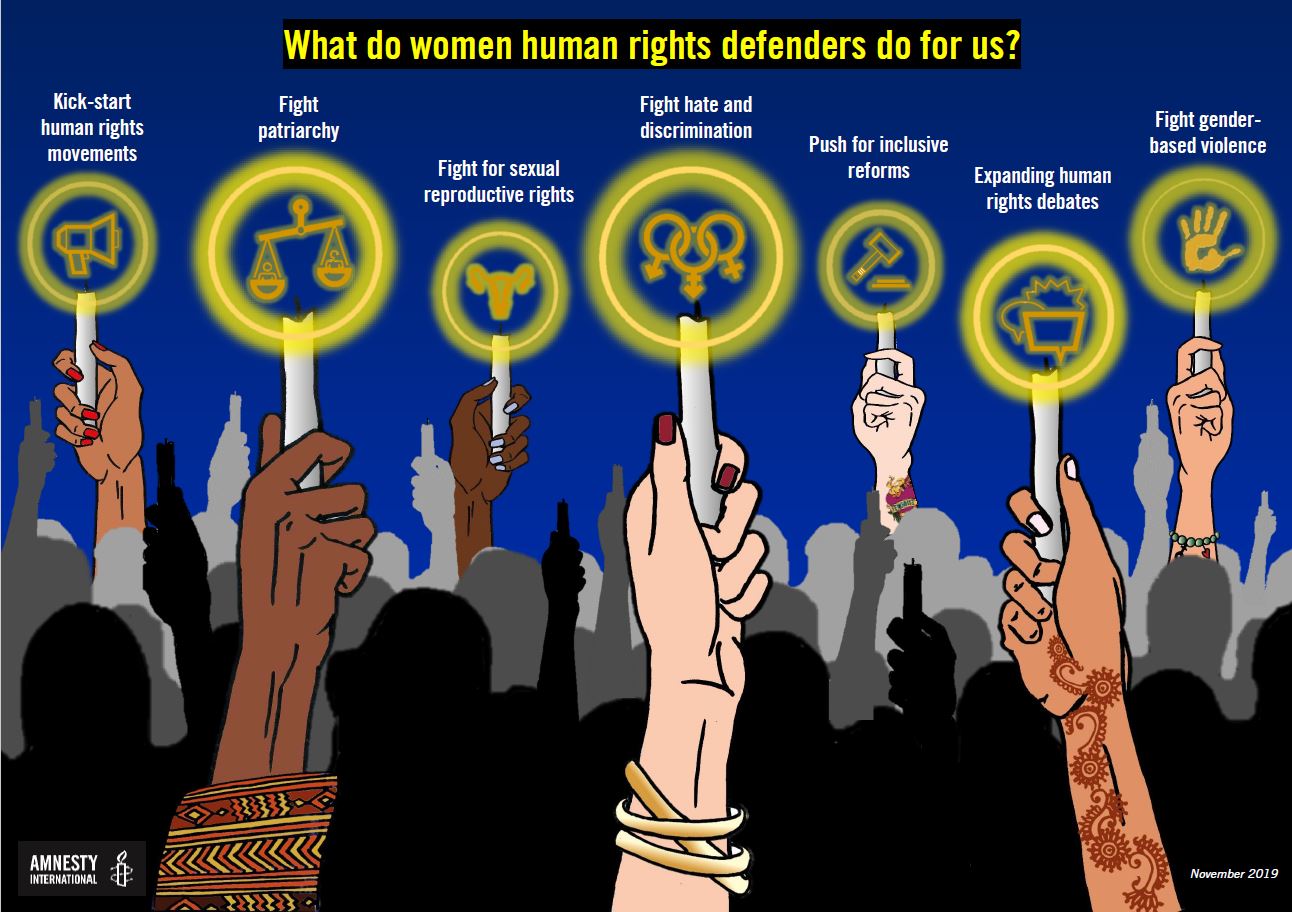
“All over the world, women human rights defenders are speaking out against injustice, abuse and discrimination, often because they have experienced it first-hand. They are central to human progress: they fight for human rights and against patriarchy and racism, while pushing for ground-breaking reforms on so many fronts. Governments must live up to their commitment to ensure these activists can operate freely and safely.”

Politics of demonization 
While the feminist human rights movement to protect the rights of women, LGBTI people and other marginalized groups is as robust as ever, it has come under growing pressure in recent years from politicians, religious leaders and violent groups spreading politics of demonization. Because women human rights defenders are often at the forefront of progress, they often are the first to be targeted in increasingly frequent backlashes against a more inclusive, fairer world.

For example, in Poland, women human rights defenders who have led massive street protests against efforts to restrict access to abortion have faced attacks and documented other violations of the rights of women and LGBTI people that are occurring in a climate where racist, anti-immigration sentiment has increased. 

Sexual violence
Violence, including sexual violence as a form of torture, is often used against WHRDs to silence them.

In Bahrain, Ebtisam El-Saegh, a WHRD with the human rights organization SALAM for Democracy and Human Rights, was sexually assaulted, badly beaten, kicked in the stomach and kept standing for most of the seven hours she was being interrogated while in detention in 2017. 

“I was threatened that they would harm my family and that they would bring my husband and torture and electrocute him. The men told me ‘no one can protect you’,” she told Amnesty International.

In Egypt, Malak al-Kashef, a 19-year-old transgender WHRD was arrested in March 2019 following her involvement in peaceful protests in Cairo. She faced trumped-up charges of “aiding a terrorist organization” and “misusing social media to commit a crime punishable by law”. 

While in detention, she was subjected to a forced anal examination and other forms of sexual assault. Even though she was undergoing gender affirming treatment, Malak was placed in an all-male detention facility which put her at increased risk of sexual violence. She was eventually released in July 2019.

Unlike other defenders, WHRDs are more likely to suffer violence and other types of pressure from their partners and family members. They may face domestic violence and abuse based on cultural notions of “honour”, threats of divorce, or being forcibly separated from their children.

Smear campaigns
Women activists are often subjected to smear campaigns which vilify their “deviant behaviour” and are designed to fuel hostility against them.

After rescuing migrants from the central Mediterranean Sea in June 2019, Carola Rackete, the Italian captain of the Sea-Watch 3 rescue boat, was repeatedly insulted by the Italian Minister of Interior who called her a pirate and a criminal. His slurs were followed by vicious verbal attacks by others who incited sexual violence against her while also targeting her gender and appearance. 

In Mauritania, Mekfoula Brahim, a WHRD who has campaigned for an end to female genital mutilation, was branded an apostate in 2016 Facebook posts after defending a blogger sentenced to death for criticising those who use religion to discriminate minorities. The slur exposed her to the risk of being prosecuted and sentenced to death.

Amnesty International is calling on states to investigate attacks on WHRDs and hold those responsible to account. States must also educate the public about people’s right to defend all human rights, as well as provide funding and protection mechanisms tailored to the needs of WHRDs. “Crucially, all  those with power must recognize women human rights defenders as key agents of change in securing justice, equality, peace and sustainable development. These women need to be celebrated and protected for the courageous work they do to improve all our lives, but especially those of the most marginalised communities,” said Kumi Naidoo.

Background:
Women human rights defenders (WHRDs) is an inclusive term that represents the struggle for recognition of the specific challenges faced by women who engage in the defence of any human right, and people of all genders who defend women’s rights or work on a range of gender-related issues and sexuality.

Amnesty International has long worked alongside WHRDs and is part of the Women Human Rights Defenders International Coalition. For this report, published on 29 November to mark International Women Human Rights Defenders Day, the organization drew from its analysis and research and also that of other allies. Additionally, the report contains fresh input from 23 activists in 21 countries interviewed between February and April 2019. 

Amnesty welcomes Senator Lambie’s statement on Medevac

In response to an announcement by Tasmanian Senator Jacqui Lambie that she will not support the repeal of the Medevac Bill unless a certain, unknown condition is met, Amnesty International Australia Refugee Advisor Graham Thom said:

“We welcome Senator Lambie’s recognition of the efforts of all the groups including Amnesty International and our supporters and the wider community in assisting her in making a decision.

“Australians have shown they support Medevac, because they understand that doctors, rather than politicians or bureaucrats should be making medical decisions.

“It is simple: Medevac gives people access to the health care that they need and can’t get in Australia’s horrific offshore detention regime. People are literally being evacuated out of life-threatening conditions that the Australian government put them and continues to hold them in. Critical ill people need to be assured they can access the life saving treatment they require to survive. Nothing more, nothing less.

“There should be no conditions on the lives of refugees, and we urge Senator Lambie to save Medevac and protect the lives of very vulnerable people.”

Kanapathi Shamindan, a Tamil refugee who remains in limbo in one of the world’s most dangerous cities,  more than six years after seeking safety in Australia, said the offshore detention regime has devastated the physical and psychological health of people seeking Australia’s protection.

“For almost seven years now the combination of indefinite detention and the lack of medical care has destroyed the mental health and physical health of refugees in offshore processing. We have already lost 12 innocent men. No one has died since the Medevac laws were introduced. Medevac is saving lives,” he said.

Egypt: State Security Prosecution operating as a ‘sinister tool of repression’

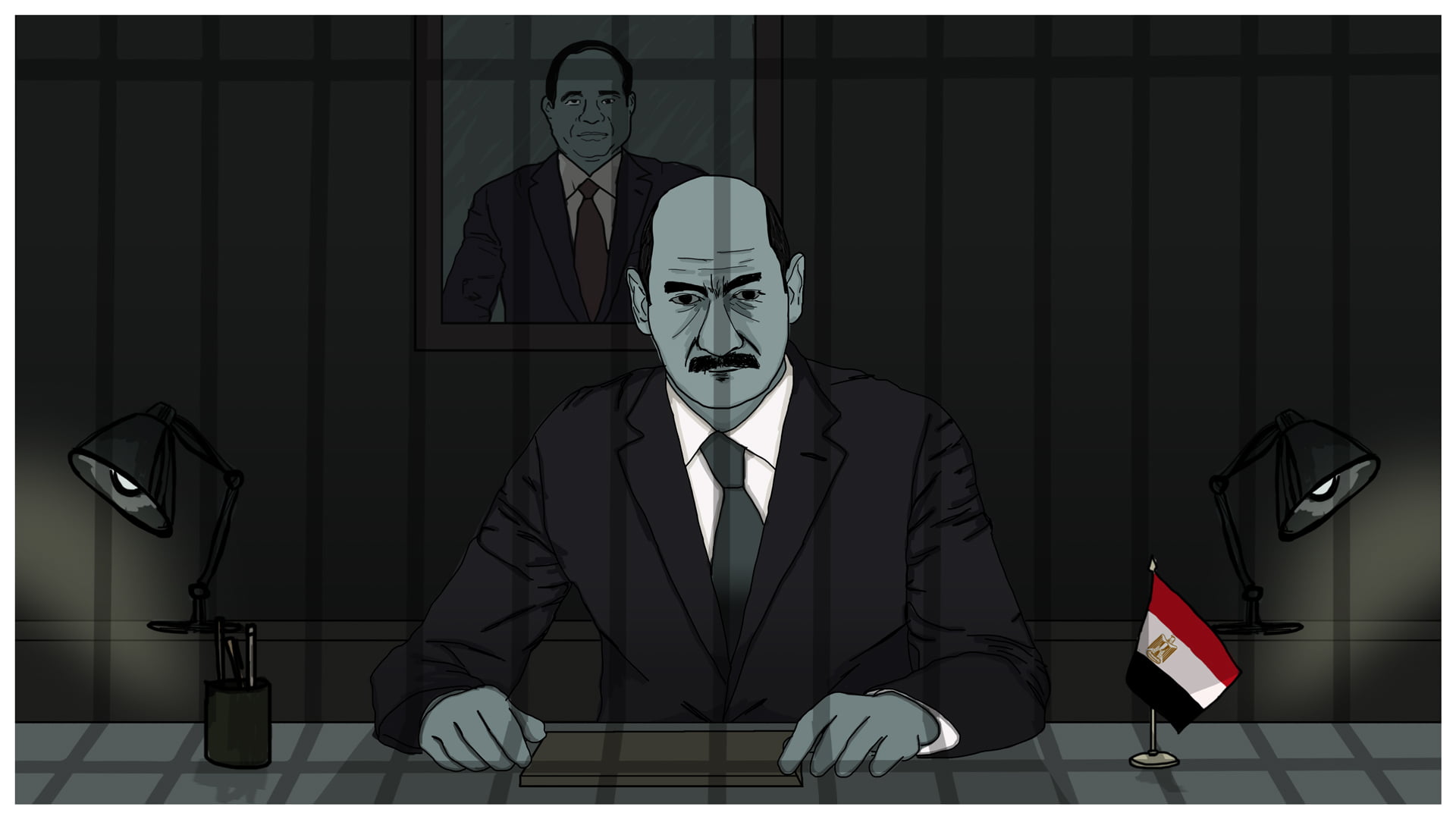
A new report published by Amnesty International exposes how Egypt’s Supreme State Security Prosecution (SSSP) is routinely misusing counter-terror legislation to prosecute thousands of peaceful critics and suspend guarantees to fair trial.

The report, Permanent State of Exception, reveals how the SSSP, a special branch of the Public Prosecution responsible for investigating national security threats, is complicit in enforced disappearances, arbitrary deprivation of liberty, torture and other ill-treatment. It has detained thousands of people for prolonged periods on spurious grounds and rampantly violated detainees’ fair trial rights.

In Egypt today, the Supreme State Security Prosecution has stretched the definition of ‘terrorism’ to encompass peaceful protests, social media posts and legitimate political activities

Philip Luther, Research and Advocacy Director for the Middle East and North Africa at Amnesty International

“In Egypt today, the Supreme State Security Prosecution has stretched the definition of ‘terrorism’ to encompass peaceful protests, social media posts and legitimate political activities, resulting in peaceful government critics being treated as enemies of the state. The SSSP has become a central tool of repression whose primary goal appears to be arbitrarily detaining and intimidating critics, all in the name of counter-terrorism,” said Philip Luther, Research and Advocacy Director for the Middle East and North Africa at Amnesty International.

“Many of those prosecuted by the SSSP were detained for peacefully expressing their opinions or defending human rights and should never have been arrested in the first place.”

Amnesty International’s report documents the cases of dozens of human rights defenders and peaceful critics of the government who have been brought before the SSSP. 

They include Zyad el-Elaimy, a human rights lawyer and member of the Egyptian Social Democratic Party, who was arrested for attempting to co-found a parliamentary coalition called the “Hope Coalition” to run in the  2020 parliamentary elections, and Abeer el-Safty, a journalist who has been detained following her refusal to be coerced by the police into voting in a 2019 referendum.

Rise of the SSSP

Since President Abdel Fattah al-Sisi came to power in 2013, there has been a nearly threefold increase in the number of cases prosecuted by the SSSP – from around 529 in 2013 to 1,739 in 2018.

The meteoric rise in SSSP prosecutions has enabled the authorities to detain suspects nominally in “pre-trial detention” pending investigations, but in reality, many are detained for months and years without evidence, based on secret police investigations and without recourse to an effective remedy. This has in effect allowed the authorities to replicate the long-term administrative detention practices under the emergency law which were a hallmark of the Mubarak era in Egypt until a 2013 Supreme Constitutional Court ruling found the relevant provision unconstitutional.

Since then, the SSSP has consistently flouted the powers available to it in order to target opponents of the government. This comes in a context where an unprecedented crackdown on human rights in Egypt has been taking place over the past six years. Astate of emergency has been renewed continuously by President Abdel Fattah al-Sisi since 2017.

“The SSSP, along with the National Security Agency (NSA), a special police force, and counter-terrorism courts have emerged as a parallel justice system for detaining, interrogating and trying peaceful dissidents. The normalization of the SSSP’s role points to a permanent state of exception, where the rights to liberty and fair trial as well as freedom from torture are suspended for anyone accused of ‘terrorism’,” said Philip Luther.

Amnesty International’s report documents the cases of 138 people detained by the SSSP between 2013 and 2019. It is based on more than 100 interviews, as well as reviews of official court and police documents, medical records, videos and reports by NGOs and UN agencies. 

Of these cases, 56 individuals were detained for participating in protests or for statements they made on social media, 76 were detained based on their political or human rights activities or background and six were accused of involvement in incidents of violence.

Most were investigated on accusations of membership in or aiding a terrorist or other illegal group with the aim of harming public order or security. Yet in practice many were detained solely on the basis of secret police investigations, which Egypt’s top court ruled in 2015 do not on their own constitute evidence, or on the basis of online content that criticised the Egyptian authorities but did not constitute incitement.

Prolonged arbitrary detention

The report highlights how the SSSP has routinely abused the special powers that it is afforded under Egyptian law – usually reserved for judges – which allow it to order the prolonged pre-trial detention of suspects for up to 150 days. Detainees can submit a request to appeal the decision but it is left to the SSSP’s discretion which cases will be heard in front of an actual judge rather than a SSSP prosecutor.

After the first 150 days, the SSSP then requests special “terrorism circuit courts” to renew the detention of suspects every 45 days. Even at this stage, the SSSP gets to decide who gets to appeal judges’ decisions and who do not. Even when judges order the release of detainees, the SSSP has circumvented judicial orders by ordering the detention of suspects in connection with new charges.

Using these tools, the SSSP has arbitrarily detained thousands for months and sometimes years, based on vague “terrorism”- related accusations. Amnesty’s investigations found that detainees were kept in pre-trial detention for an average of 345 days and in one case for 1,263 days, before being released without being referred to trial. During that time, detainees were rarely questioned more than once.

Al Jazeera journalist Mahmoud Hussein, who was accused of broadcasting false news, has been detained since 23 December 2016. His detention was repeatedly renewed, first by the SSSP then by a judge, until May 2019 when his release on probation was ordered. However, the SSSP ignored the decision and ordered his detention once more on new accusations.

Complicity in torture and enforced disappearances

Amnesty International’s report also highlights how the SSSP is complicit in enforced disappearance and torture. It systematically neglects to investigate allegations of such abuse and admits confessions extracted through torture as evidence in trials. In some cases, defendants were subsequently sentenced to death and executed on the basis of this evidence.

The report documents 112 cases of enforced disappearance for periods of up to 183 days by security forces, mostly by the NSA.

Human rights lawyer Hoda Abdelmoniem remained subject to enforced disappearance for three months. During that time she appeared in front of the SSSP and informed them that the police was detaining her in an undisclosed location without access to her lawyer or family, but prosecutors did not take any action to investigate, nor did they order her to be transferred to a regular place of detention, until after 90 days of enforced disappearance.

The report also reveals that the SSSP failed to investigate 46 cases of torture or other ill-treatment documented in Amnesty International’s report. Human rights activist Esraa Abdelfattah told the SSSP that NSA officers had abducted, beaten and tortured her including by attempting to strangle her. Prosecutors failed to open an investigation into these allegations.

The SSSP also systematically failed to inform defendants of their rights, denying them access to lawyers and subjecting them to coercive questioning, including by keeping detainees blindfolded, holding them in inhumane conditions and threatening that they would be sent back to the NSA to face torture and interrogation.

“It is outrageous that an institution intended to bring legal proceedings to deliver justice is so blatantly flouting its responsibilities to guarantee fair trial rights and is instead complicit in the torture and enforced disappearance of detainees,” said Philip Luther. 

“Egyptian authorities must open a public commission of inquiry into the role of the SSSP in prolonged arbitrary detention, violations of fair trial rights, and complicity in police abuses.”

Lawyers representing clients facing prosecution by the SSSP also reported being subjected to threats, harassment, arrests and detention in connection with their work. Human rights defenders and lawyers Mahienour el-Masry and Mohamed el-Baqer were both detained while representing detainees at the offices of the SSSP.

Whitewashing the crackdown

Two months ago, Egyptian authorities responded to a rare outbreak of protests with a massive wave of arrests, detaining more than 4,000 people, many at random, within a matter of weeks. The SSSP has been investigating the vast majority of these cases for their alleged involvement in protests and in connection with “terrorism” related accusations.

“On a global stage, Egyptian authorities have sought to whitewash their crackdown on freedom of expression by claiming they are clamping down on ‘terrorists’. But in reality, the Egyptian authorities consider even peaceful opposition and expression as “terrorism”. The international community must not be fooled by this deceptive rhetoric,” said Philip Luther.

“Egypt’s international allies must not sacrifice their human rights principles for the sake of business and security ties. They must press the Egyptian authorities to reform the SSSP and release all those detained for peacefully expressing their opinions or defending human rights.”

Brazil: Halt illegal cattle farms fuelling Amazon rainforest destruction 

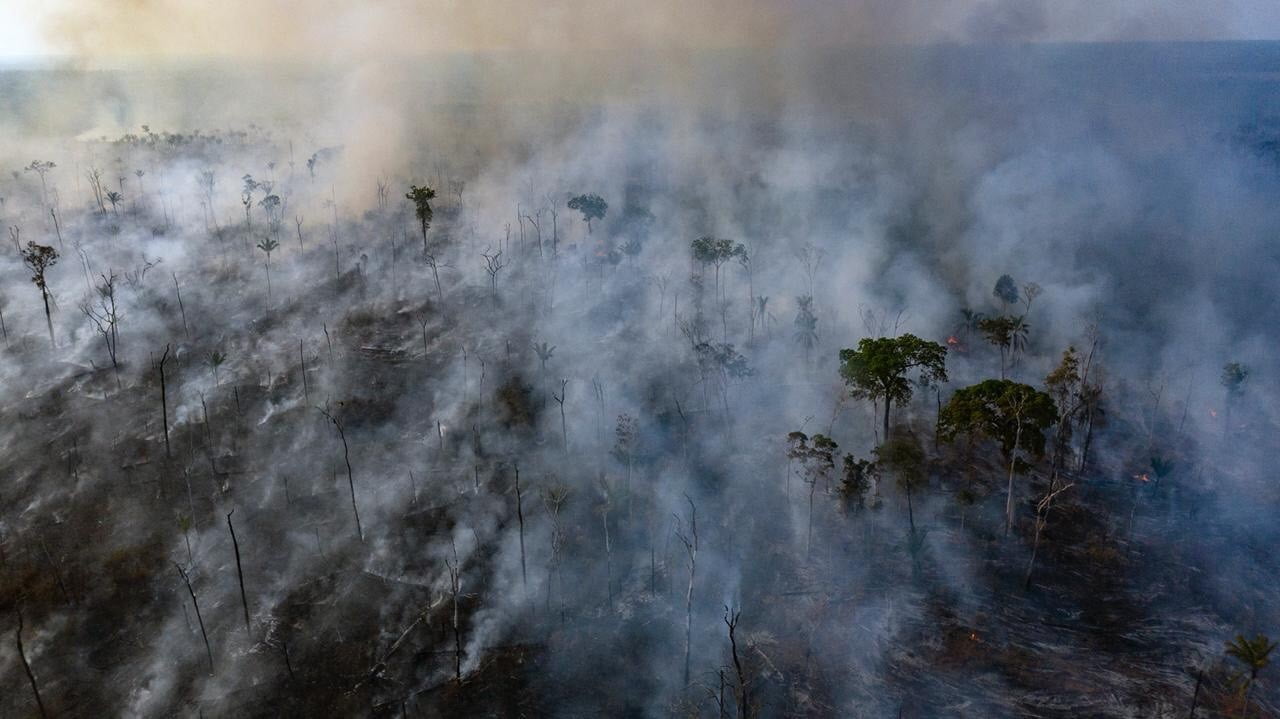
Cattle farming is the main driver of illegal land seizures on Reserves and Indigenous territories in Brazil’s Amazon, fuelling deforestation and trampling on the rights of Indigenous and traditional people living there, Amnesty International said in a new report today.

Fence off and bring cattle: Illegal cattle farming in Brazil’s Amazon was released as Amnesty International Brazil, alongside Indigenous leaders from the Amazon, presented a petition with more than 162,000 signatures to Brazilian authorities calling on them to stop illegal seizures of protected land in the Amazon.

“Illegal cattle ranching is the main driver of Amazon deforestation. It poses a very real threat, not only to the human rights of Indigenous and traditional peoples who live there, but also to the entire planet’s ecosystem,” said Richard Pearshouse, Head of Crisis and Environment at Amnesty International.

“While the Bolsonaro administration slashes environmental protections at the Federal level, some state authorities are effectively enabling the illegal cattle farming which destroys protected areas of the rainforest.”

Around two-thirds of the areas of the Amazon deforested between 1988 and 2014 have been fenced off, burned and converted to grazing pasture – almost 500,000 km2, a total land area equivalent to five times the size of Portugal. Amnesty International’s report documents how some state authorities are effectively enabling cattle farming in protected areas.

Ground investigation
Amnesty International visited five protected areas in Brazil’s Amazon throughout 2019: the Karipuna and Uru-Eu-Wau-Wau Indigenous territories and the Rio Ouro Preto and Rio Jacy-Paraná Reserves (in Rondônia state), and the Manoki Indigenous territory (in Mato Grosso state).

Reserves are areas designated for the protection of the environment, the livelihoods and culture of its traditional populations including the sustainable use of its natural resources. Along with Indigenous territories, they are protected under Brazilian law and international treaties.

Official data, satellite imagery and site visits by Amnesty International show how illegal land seizures, by and large linked to cattle ranching, are on the rise in all five of these areas.

Pattern of converting forest to farmland
Cattle farmers and grileiros –private individuals who illegally seize land – follow a broad pattern to convert tropical rainforest into pasture in Brazil’s Amazon. Plots of land in the forest are identified, trees are cut down and cleared, and then fires are lit (often repeatedly in the same area), before grass is planted and cattle then introduced.

New roads being cut and the appearance of campsites in the protected forest are among the warning signs that this process has begun. Amnesty International documented how these activities have been rife in the Uru-Eu-Wau-Wau Indigenous territory in Rondônia, much of which overlaps with the Pacaás Novos National Park, where a federal environmental agent said more than 40km of new roads had appeared since 2017.

Another tell-tale sign that illegal farmers and grileiros are trying to seize land is the fencing off and burning down of large areas of the forest. Amnesty International witnessed and recorded drone footage of this happening in Manoki Indigenous territory in Mato Grosso on 23 August 2019.

A Manoki leader told Amnesty International it was part of intensified efforts by ranchers to destroy protected forest and convert the land to cow pasture. Amnesty International observed cattle grazing in at least six different locations in Manoki territory.

The organization analysed remote sensing burn data and satellite imagery across the five territories and a clear pattern emerged. In multiple cases, satellite imagery captured land being burned adjacent to areas with cattle visibly roaming freely within protected areas. In some cases, probable paths from cattle moving through recently burned areas were visible.

Intimidation by armed invaders
Indigenous and traditional residents in four of the five protected areas told Amnesty International how these new invasions have often been accompanied by violence, threats and intimidation. At the fifth site, Rio Jacy-Paraná reserve, virtually all the original inhabitants have now been forcibly evicted from the reserve and are afraid to return because armed invaders involved in cattle farming now live on their land.

Government agencies with the mandate to protect the reserves have also been targeted. An environmental agent near Uru-Eu-Wau-Wau territory told Amnesty International: “We were surrounded by invaders. Thirty-two men, mostly hooded, arrived by foot behind us, with bottles of gas…. There was a lot of shouting, threats, calling us ‘thugs’.” The tense standoff lasted over an hour before the assailants left, but several weeks later they began sending the environmental agents audio messages with threats of violence.

In some cases, including in the Uru-Eu-Wau-Wau Indigenous territory, the threat of armed violence against Indigenous peoples and environmental protection workers has been so severe that the armed forces and federal police have had to intervene.

Enabling illegal cattle ranching
Amnesty International’s research revealed that, not only has the Bolsonaro administration cut funding to and otherwise undermined environmental and Indigenous protection agencies, but some state agencies are effectively enabling cattle ranching in protected areas.

State laws require state animal health control agencies to visit and register farms and track cattle movements.

Amnesty International filed Freedom of Information (FOI) requests with state authorities in both Rondônia and Mato Grosso to access data on the number of cattle grazing in protected areas and on cattle movement. Rondônia’s animal health control agency responded with incomplete data. Despite receiving five different FOI requests, Mato Grosso authorities declined to share any data at all. The data that Amnesty International obtained for Rondônia shows that there were over 295,000 cattle in Indigenous territories and environmentally protected areas in that state in November 2018.

“The public has a right to know about cattle ranching in protected areas – after all, this is criminal activity. Brazilian authorities must make this information publicly available and take meaningful steps to end illegal cattle farming in protected areas,” said Richard Pearshouse.

“This report is part of our ongoing research into the rights implications of cattle ranching and illegal deforestation in Brazil’s Amazon. Companies in this sector are on notice: the scrutiny of Brazil’s cattle industry is about to increase.”

For more background on Amnesty International’s work on the crisis in the Brazilian Amazon, see:

China: End hollow denials and give answers to victims of horrific Xinjiang abuses

Responding to another leak of official Chinese government documents (labelled “The China Cables”) detailing the framework for facilities that led to abuses of hundreds of thousands of predominantly Muslim ethnic groups in detention camps in the Xinjiang Uyghur Autonomous Region (Xinjiang), Amnesty International’s Campaigns Director for East Asia, Lisa Tassi, said:

“China’s continued denial of the existence of detention centres in Xinjiang grows ever more futile in the face of ever-mounting evidence. This latest leak is yet further proof of its systematic persecution of ethnic and religious minorities in China on a sickeningly vast scale.

“The abuses described in these leaked documents match the harrowing testimony Amnesty International has received from former detainees of mass internment camps in Xinjiang, as well as from relatives of those still missing.

“With each passing week, the world learns more about the horror China is unleashing on its own citizens in Xinjiang. It is time for the Chinese government to ditch its feeble counter-narrative, including the claim of providing ‘vocational training’ to people in the camps. Instead they should provide immediate answers to the hundreds of thousands of people desperate for information about their loved ones.

“If China has nothing to hide, it should allow truly independent human rights monitors immediate and unfettered access to Xinjiang – something it has steadfastly refused to do so far, despite repeated requests from Amnesty International and others.

“These damning leaks should be the catalyst for the international community to increase pressure on the Chinese authorities to end this human rights catastrophe.”

Background

Amnesty International’s 2018 briefing ‘Where Are They?’ documented an intensifying government campaign of mass internment, intrusive surveillance, political indoctrination and forced cultural assimilation against Uyghurs, Kazakhs and other predominantly Muslim ethnic groups living in Xinjiang.

Most of the detainees’ families have been kept in the dark about the fate of their loved ones and are often too frightened to speak out themselves.

The internment of predominantly Muslim ethnic groups in Xinjiang has intensified since March 2017, when a “Regulation on De-extremification” was adopted in the region. Open or even private displays of religious and cultural affiliation, including growing an “abnormal” beard, wearing a veil or headscarf, regular prayer, fasting or avoidance of alcohol, or possessing books or articles about Islam or Uyghur culture can be considered “extremist” under the regulation.

The authorities have justified the extreme measures as necessary to counter what they claim to be “terrorism” and to ensure national security. 

Leaked documents obtained by the International Consortium of Investigative Journalists (ICIJ) – and shared with 17 international media partners – on Sunday revealed the framework that the Chinese government set up to build the facilities that led to abuse of hundreds of thousands of predominantly Muslim ethnic groups who are being subjected to brainwashing and other ill-treatment in detention camps in Xinjiang. This followed the leak of 400 pages of internal documents to the New York Times last week.

Chile: Deliberate policy to injure protesters points to responsibility of those in command

The security forces under the command of President Sebastián Piñera – mainly the army and Carabineros (the national police) – are carrying out widespread attacks using unnecessary and excessive force with the intention of injuring and punishing protesters. These attacks have so far resulted in the deaths of five people and the torture, ill-treatment and serious injury of thousands of others, said Amnesty International today at the end of research mission in the country.

The intention of the Chilean security forces is clear: to injure demonstrators in order to discourage protest, even to the extent of using torture and sexual violence against protesters.

Erika Guevara-Rosas, Americas director at Amnesty International.

“The intention of the Chilean security forces is clear: to injure demonstrators in order to discourage protest, even to the extent of using torture and sexual violence against protesters. Instead of taking measures to curb the very grave human rights crisis, the authorities, under the command of President Sebastián Piñera, have pursued a policy of punishment for over a month, adding yet more people to the staggering number of victims, which is continuing to rise to this day,” said Erika Guevara-Rosas, Americas director at Amnesty International.

“Individual criminal responsibility for these events does not stop at the prosecution of the person who pulled the trigger. Guaranteeing justice and non-repetition of these incidents, must involve sanctions against those superiors who, in the full knowledge of the crimes committed by officials under their command, have ordered or tolerated them day after day.”  

According to the National Human Rights Institute (NHRI), at least five people have died at the hands of the security forces and more than 2,300 have been injured; more than 1,400 of those injured sustained gunshot wounds and 220 severe eye trauma. In addition, the Public Prosecutor’s Office has registered more than 1,100 complaints of torture and other cruel, inhuman or degrading treatment, as well as more than 70 crimes of a sexual nature committed by public officials. According to the national police, none of its officials has died, but some 1,600 have been injured, 105 of them seriously. 

The demonstrations in Chile began in mid-October in response to a fare increase on public transport. In the context of the extreme levels of inequality in the country, the protests have since expanded to include demands for a more just society in which the state guarantees rights such as the rights to health, water, quality education and social security. 

Amnesty International believes that human rights violations and crimes under international law committed by members of the security forces are not isolated or sporadic incidents, but reveal a consistent pattern of violations throughout the country, indicating the modus operandi of the security forces, above all by the national police. Given the degree of coordination required to continue such violent repression of protests for more than a month, it is not unreasonable to surmise that those in command at the highest level bear responsibility, either because they ordered or tolerated the repression. Such a far-reaching presumption can, of course, only be clarified by an independent and impartial judicial authority. 

President Piñera’s decision to deploy the army onto the streets after imposing a state of emergency has had catastrophic consequences. Both those in command who decided to deploy the army using lethal weapons for policing operations during demonstrations, as well as the officers who shot protesters resulting deaths or serious injuries must be investigated and, if where there is sufficient evidence, brought to justice before independent and impartial courts. 

During and after the state of emergency, those in command of the national police, as well as a succession of superior officers, far from exercising effective control in order to prevent or repress violence by their subordinates, allowed them to continue acting in the same way, resulting in a constant high volume of complaints by protesters of ill-treatment, torture and irreparable eye damage. Their failure to prevent such acts, when it is their duty to do so, means that they bear personal criminal responsibility under international law. 

So far, Amnesty International has documented 23 cases of human rights violations in the regions of Valparaíso, Tarapacá, Bío-Bío, Antofagasta, Coquimbo, Maule and Araucanía, as well as in 11 communes in the Santiago Metropolitan Region between 19 October and 11 November. In addition, Amnesty International has obtained more than 130 pieces of audiovisual and photographic evidence – all of which have been verified by its Digital Verification Corps and weapons and ammunition expert – of unnecessary and excessive use of force.  

Crimes under international law and grave human rights violations – intentional and widespread nature of violations

  1.  USE OF LETHAL FORCE

Amnesty International has documented five deaths caused by the actions of members of the security forces during the state of emergency declared by President Piñera on 19 October: four at the hands of army officers and one by a member of the national police. Two were the result of the use of military grade weaponry.

By analysing images, the organization was able to confirm that the army used lethal weapons indiscriminately against unarmed protesters in at least four situations. The use of GALIL ACE and FAMAE SG 540 semi-automatic rifles and semi-automatic handguns firing live ammunition was identified. Although more sporadic, the organization was able to verify that members of the Chilean Investigation Police (PDI) and the national police also fired live ammunition. International standards prohibit the use of such weapons to disperse protests. 

Romario Veloz, a 26-year-old Ecuadorian national, died after he was shot in the neck by a soldier as he was taking part in a small march in the city of La Serena. When they arrived at a local park, soldiers opened fire indiscriminately on the protesters assembled there. Videos of shooting show Romario walking along calmly with his hands in his pockets.

At that same event, Rolando Robledo, aged 41, was shot by a soldier and wounded in the chest. He spent several days in a coma in a critical condition. According to witnesses, officials did not help either of the men and the army fired again on protesters who were trying to help the wounded.

In Curicó, José Miguel Uribe was shot in the chest by a soldier and died. Minutes earlier, 25-year-old José Miguel had been at an improvised roadblock erected by young people in the area to stop traffic and put pressure on the authorities.  The military arrived and, without warning, opened fire on those present. According to witnesses, no uniformed official tried to help José Miguel even though they saw him collapse.

  1. Torture and ill-treatment

One of the most common ways of inflicting injuries on protesters has been through ill-treatment and, to a lesser extent, torture – a crime under international law. In addition to a case of death resulting from police ill-treatment, Amnesty International has documented three cases of torture, including torture using sexual violence. 

Alex Núñez, aged 39, died as a result of a vicious beating by police officers. Alex was crossing a demonstration in order to make a delivery in Maipú, Santiago Metropolitan Region, when he was stopped by three police officers. They threw him to the ground and started kicking him violently about the head and chest. He died the next day as a result of his head injuries.

To date, the Chilean Public Prosecutor’s Office has recorded a total of 16 complaints of rape or sexual abuse by security forces, including the case of Josué Maureira, who was raped with a baton while in police custody. In addition, several members of the national police inflicted injuries on his buttocks with a sharp object, beat him, kicked him and insulted him because of his sexual orientation. 

In an emblematic case of torture and ill-treatment, police officers severely beat a person (whose identity has been withheld), causing irreversible loss of vision in one eye, fracturing his nose, dislocating his shoulder and breaking three ribs, resulting in a punctured lung. Twelve officials attacked him while he was demonstrating peacefully carrying a pan and a spoon in Ñuñoa Square in Santiago. 

Another case occurred in the Isla de Maipo district of the Santiago Metropolitan Region, where national police officials beat Cristóbal Alexis “Flen”, aged 30, from the time of his arrest until his release several hours later. When the injuries were first recorded, a police officer was present and prevented the doctor from making a thorough record of all his injuries. Amnesty International received repeated reports of such practices, which constitute attempts to conceal a crime. When Amnesty International interviewed “Flen” 19 days later, both his eyes were still bleeding and he had bruises on various parts of his body. 

The organization has also documented nine instances when the police and army ran over or tried to run over protesters while they are walking in the street in the cities of Colina, Quilpué, Santiago, Viña del Mar and Valparaíso. For example, Manuel Rebolledo, aged 23, was run over by a soldier and killed in the city of Talcahuano. 

In addition to the documented cases, Amnesty International verified more than 30 pieces of audiovisual evidence showing how the police and the military have inflicted cruel treatment on members of the public without justification and for no apparent reason. This violence to disperse peaceful protests was directed against people who had been detained, those who had been restrained and against children and adolescents in vulnerable situations, in the cities of Valparaíso, Santiago, Viña del Mar, Antofagasta and Concepción. 

  1. Serious injuries and potentially lethal weapons

Although international law requires that firearms using potentially lethal ammunition (such as rubber pellets) be used only in exceptional circumstances when a person’s life or physical integrity is in danger and in a way that causes as little harm as possible, Amnesty International has documented the constant and inappropriate use of firearms by officials during the protests. 

In addition to one death linked to the use of pellets, the organization has documented, through the use of image verification, 14 cases of harm to physical integrity, seven of them involving irreversible eye damage, and has confirmed almost 20 police operations of this kind. Analysis of the images shows that police officers (and to a lesser extent soldiers) have used Benelli M3 and Escort AimGuard shotguns firing potentially lethal ammunition in an unjustified, widespread and indiscriminate manner and in many cases aiming at people’s heads.  

According to a medical report, Kevin Gómez, aged 24, died of a “thoracic lung injury caused by multiple projectiles” on 21 October in the city of Coquimbo. According to witnesses, a solider opened fire on Kevin with a shotgun, without warning and at close range, despite the fact that the young man was unarmed.

In one case, a 15-year-old girl at a peaceful gathering in the Cerrillos neighbourhood of the Santiago Metropolitan Region was hit by multiple pellets fired by a police officer from a moving police car. The pellets hit her in the left eye, forehead, shoulder and neck.  

In another incident, a 24-year-old youth was walking down a street in the capital city recording the police’s actions when he was hit 18 times by pellets fired by a police officer. In that same video he can be heard remonstrating with police officers for assaulting his friend and one officer then responds by shooting him, at point blank range and aiming at the upper body, resulting in injuries to both his legs, arms, chest, nose and eye, causing severe trauma to the eye.

The misuse of tear gas in alarming quantities on at least 11 occasions has been identified, including in hospitals, universities, homes and even schools, seriously affecting children, adolescents and others requiring special care. Tear gas has been fired directly at people and at close range using Penn Arms L137-3 grenade launchers, causing serious injuries, including eye damage. 

A police officer fired a tear gas canister at 24-year-old Natalia Aravena as she was demonstrating peacefully hitting her in the right eye; he had given no prior warning.  Natalia is one of dozens of people who have sustained severe eye damage from the impact of tear gas canisters and water cannon during demonstrations. 

The use of smoke grenades has also been identified. These can be extremely toxic and are designed for use in armed conflicts and their use in the context of policing demonstrations is inappropriate. This is reported to have happened on 14 November in Temuc, when medical and rescue workers were attacked with water cannon and a smoke grenade as they were trying to help the injured.

Restriction on the work of human rights defenders

During the month-long crisis in Chile, countless human rights movements and organizations have been caring for the injured, ensuring respect for detainees and following up cases through the justice system.

However, on several occasions the authorities have hindered the work of lawyers, human rights defenders and medical personnel, preventing them from accessing police stations, hospitals and medical centres. For example, between 21 and 22 October, NHRI officials were prevented from entering the public accident and emergency hospital “Posta Central” where dozens of people injured by state officials were being treated. Amnesty International has also learned of cases of people being beaten or shot with pellets and injured while they were providing first aid, as well as activists and defenders being threatened for carrying out their work.

For example, on 29 October, Jorge Ortiz, an NHRI official, was hit by six pellets while acting as an observer during a demonstration in a square in Santiago along with other members of his team. Although all were wearing the clearly identifiable yellow NHRI uniform and could be seen by the police, one of the officers shot Jorge for no reason and officers failed to provide any assistance after he was hit. 

“The situation in Chile cannot go on like this. The authorities must ensure that human rights defenders and civil society organizations can continue to do their work freely, without any form of pressure, threat or retaliation,” said Ana Piquer, executive director of Amnesty International Chile.

“Unfortunately, the violations that occurred during this crisis are not new; they have been repeatedly highlighted by Amnesty International and the rest of Chilean civil society in recent years. This tragic page in Chile’s history must serve once and for all to ensure that the institutional and structural reforms demanded by society, such as reforming the police and guaranteeing social rights, are carried out.” 

Based on this research, Amnesty International makes the following preliminary recommendations:

1. The authorities must end the repression as a matter of urgency, giving specific orders to the security forces to exercise maximum restraint in the use of force, which should only be used in a progressive, proportionate and differentiated manner, in line with relevant international standards. The authorities must also ensure clearly and emphatically that the use of lethal and potentially lethal weapons are never used as a deterrent, but resorted to only in exceptional circumstances to address a clear and present threat to the life or physical integrity of protesters or law enforcement officials.  

2. The justice agencies must investigate the responsibility of those in command for the human rights violations and crimes under international law committed in the context of this crisis by members of the army and police, in accordance with the Chilean legal system and international standards. 

3. The authorities must ensure that the legitimate demands of the population are met. The necessary legislative and public policy reforms must be applied urgently to effectively guarantee economic, social, cultural and environmental rights for all people, without discrimination and with particular attention paid to those at greater risk. The authorities must also ensure that the process to devise a new constitution that protects and promotes all human rights is participatory and inclusive. 

4. The authorities must undertake a serious and thoroughgoing reform of the police force. This should include reviewing its regulatory framework, with a view to transforming the institution in order to ensure that all its actions adhere to human rights standards, and putting rigorous control and accountability mechanisms in place.  
Iran: More than 100 protesters believed to be killed as top officials give green light to crush protests

Verified video footage, eyewitness testimony from people on the ground and information gathered from human rights activists outside Iran reveal a harrowing pattern of unlawful killings by Iranian security forces, which have used excessive and lethal force to crush largely peaceful protests in more than 100 cities across Iran sparked by a hike in fuel prices on 15 November, said Amnesty International today.

At least 106 protesters in 21 cities have been killed, according to credible reports received by Amnesty International. The organization believes that the real death toll may be much higher, with some reports suggesting as many as 200 have been killed. State media have reported only a handful of protester deaths, as well as the deaths of at least four members of the security forces.

Video footage shows security forces using firearms, water cannons and tear gas to disperse protests and beating demonstrators with batons. Images of bullet casings left on the ground afterwards, as well as the resulting high death toll, indicate that they used live ammunition.

“The authorities must end this brutal and deadly crackdown immediately and show respect for human life,” said Philip Luther, Research and Advocacy Director for the Middle East and North Africa at Amnesty International.

“The frequency and persistence of lethal force used against peaceful protesters in these and previous mass protests, as well as the systematic impunity for security forces who kill protesters, raise serious fears that the intentional lethal use of firearms to crush protests has become a matter of state policy.”

Top government officials including Iran’s Supreme Leader Ali Khamenei have issued statements describing protesters as “villains” and giving security forces a green light to crush demonstrations.

Under international law, security forces may only resort to the use of lethal force when strictly unavoidable to protect against imminent threat of death or serious injury.

Amnesty International is also calling on the Iranian authorities to respect the rights to freedom of peaceful assembly and freedom of expression, including through lifting the near-total block on internet access designed to restrict the flow of information about the crackdown to the outside world.

Hundreds of demonstrators blocked roads, using their parked cars as a form of protest. Verified video footage reviewed by Amnesty International shows riot police smashing windows of cars with drivers still inside.

According to eyewitness accounts corroborated by video footage reviewed by Amnesty International, snipers have also shot into crowds of people from rooftops and, in one case, a helicopter.

While most of the demonstrations appear to have been peaceful, in some instances, as the crackdown by security forces escalated, a small number of protesters turned to stone-throwing and acts of arson and damage to banks and seminaries.

“Even if a small minority of protesters have resorted to violence, police must always exercise restraint and use no more force than is strictly necessary, proportionate and lawful in response to the violence they are facing. Violence by a few individuals does not justify a widespread reckless response,” said Philip Luther.

Several eyewitnesses have said that security forces have been taking away dead bodies and injured people from roads and hospitals. In a pattern consistent with past practices, intelligence and security forces have refused to return the bodies of many of the victims to their families or have forced families to bury their loved ones in a rushed manner and without an independent autopsy to establish the causes and circumstances surrounding the deaths. This is contrary to international law and standards on the investigation of unlawful killings.

State media reported that, as of 17 November, more than 1,000 protesters had been arrested since the protests began.

Among those detained is human rights defender Sepideh Gholian, who was arrested on 17 November after taking part in the protests by peacefully holding up a sign about the petrol prices. Her whereabouts are currently unknown and

Amnesty International fears that she is at risk of torture and other ill-treatment, in light of the authorities appalling track record of torturing detained human rights defenders.

“Anyone detained solely for peacefully taking part in demonstrations, expressing support for them or criticizing the authorities must be immediately and unconditionally released. All detainees must be protected from torture and other ill-treatment,” said Philip Luther.

The organization is calling for immediate action from the international community, including the UN and the EU, to hold the Iranian authorities to account for carrying out unlawful killings and violently repressing the right to freedom of expression and peaceful assembly.

Internet shutdown

On 16 November, less than a day after the protests began, the authorities implemented an ongoing near-total shutdown of the internet, shutting off nearly all means of online communications for people inside Iran. The resulting information blackout is a deliberate attempt by the authorities to prevent people from sharing images and videos of the deadly force being used by security forces.

According to the NGO NetBlocks, Iran’s connectivity to the outside world has fallen to 4% of ordinary levels since the protests began. All mobile networks have been disconnected and there is a near-total national internet and telecommunication blackout, although some users have still been able to access the internet through the use of virtual private networks (VPNs) and other means.

“Shutting down communications over the internet is a systematic assault on the right to freedom of expression and suggests that the authorities have something to hide. Iranian authorities must immediately lift all restrictions on access to the internet and social media to allow people to share information and freely express their opinions,” said Philip Luther.

Systematic and co-ordinated crackdown

Various government officials including the Supreme Leader, president and head of the judiciary have demonized the protesters and warned that security forces will confront protesters with force.

On 16 November, Iran’s interior minister said that the authorities will no longer show “tolerance” and “self-control” towards the protesters, despite mounting reports of protester casualties.

During a speech on 17 November, Iran’s Supreme Leader described the protesters as “villains” who were incited to violence by counter-revolutionaries and foreign enemies of Iran. He ordered security forces to “implement their duties” to end the protests, effectively giving the green light for the brutality to continue.

Judicial and security bodies have also sent threatening mass text messages warning people to stay away from “illegal gatherings” or face legal action.

“Instead of giving a green light to brutality, the Iranian authorities must rein in their security forces to prevent further bloodshed. The long-standing pattern of impunity for unlawful killings and injuries in Iran is bound to continue unless independent impartial investigations are conducted into all suspected instances of arbitrary and abusive use of force, and those who commit such serious crimes and violations are held to account,” said Philip Luther.

“The UN and individual member states must publicly denounce Iran’s bloody crackdown. They should press the Iranian authorities to give access to independent human rights observers to hospitals and detention centres in the country, lift the blocking of the internet and invite UN mandate holders to conduct fact-finding visits.”

Malaysia: Caning of four men is a terrible warning to LGBTI people, while more await trial

Four men have been caned after being convicted of ‘attempt of sexual intercourse against the order of nature’, said Amnesty International Malaysia, in signs of an increasing crackdown on LGBTI people in the country.

Another six individuals are due to face trial on the same charges. Amnesty International calls on authorities to drop the charges immediately.

“These vicious punishments against LGBTI people are the actual crimes being committed here,” said Executive Director of Amnesty International Malaysia, Shamini Darshni Kaliemuthu.

“The Religious Police used more than 50 officers to ensnare these men in a sting operation – all to bring hateful charges and inflict cruel, degrading punishments. The whole affair is a scandal and a judicial travesty.”

The case began after eleven men were charged with ‘attempt of sexual intercourse against the order of nature’ following a raid and arbitrary arrests made at a private event held last year. A director from the Malaysian religious department, JAIS, said that after monitoring the men on messaging app WeChat, its officials conducted a sting operation involving more than 50 law enforcement officers.

On 7 November, the case against five of the men who pleaded guilty to the charge was heard by the Selangor Syariah (Sharia) High Court. Four individuals were sentenced to an RM4,800 fine, six months’ imprisonment and six strokes of the cane. Another was sentenced to a RM4,900 fine, seven months’ imprisonment and six strokes of the cane.

Of the five, four were caned and then released, pending appeal of their jail sentence. A fifth man was not caned as he is seeking to appeal his entire sentence, including the caning. The remaining six individuals who are pleading not guilty will face trial today (November 19).

“Authorities should drop charges against the six other men before they suffer the same unjustifiable treatment,” said Shamini Darshni Kaliemuthu.

“Same-sex relations are not a crime. Yet the Malaysian authorities are going to terrible lengths to vilify LGBTI people by exacting these cruel punishments.”

LGBTI people in Malaysia face discrimination and criminalisation under existing laws. Both common law and Syariah law systems criminalise same-sex relationships. Under the current government, LGBTI people have faced growing discrimination and persecution.

In September 2018, two women were given six strokes of the cane on the orders of the Terengganu Syariah High Court for ‘sexual relations between women’, sparking international outcry. Caning is a form of cruel, inhuman and degrading punishment, which is prohibited absolutely under international law, and may amount to torture.

“Malaysia should be creating an environment in which LGBTI people are free from discrimination, not ensnaring and beating innocent people,” said Shamini Darshni Kaliemuthu. “The Malaysian authorities must repeal all repressive laws against LGBTI people, outlaw cruel punishments, and ratify the UN Convention against Torture.”