Good news: attacks on Colombian human rights defender investigated!

On 28 August, Colombia’s National Prosecutor announced an investigation into attacks against human rights defender Danelly Estupiñan.

Following national and international pressure, the Prosecutor agreed to appoint a special prosecutor to lead the investigation. Danelly will also have direct access to the work of the investigation.

What happened?

Danelly stands up for the rights of Colombia’s afro-descendent population as part of the organisation Black Community Process. She runs workshops about human rights and how to campaign for communities affected by large infrastructure projects.

But human rights defenders in Colombia are too often the victims of threats and targeted killings.

In July men broke into her house and there are reports that people have paid to have Danelly killed. Unknown men also followed her family, taking photos.

She reported her safety concerns to the Office of the Prosecutor, but they did not take action. Instead, the surveillance of Danelly increased.

Attacks against human rights defenders in Colombia

The situation for human rights defenders in Colombia is critical. In January 2018, Frontline Defenders reported that Colombia was the most dangerous country in the Americas for human rights defenders. 

The Office of the United Nations High Commissioner for Human Rights reported that at least 105 human rights defenders were killed in Colombia in 2017. 

Amnesty International’s annual report noted in 2017 that there continued to be an alarming rate of attacks against defenders of the rights of Indigenous and Afro-descendant people, peasant farmers and women.

According to the organisation Somos Defensores, there were 234 attacks against human rights defenders between January and March 2019. Of these attacks, 25 were killings. Since 2016, these has also been a marked increase in the killing of women human rights defenders. 

Many threats against human rights defenders were attributed to paramilitary groups, but in most cases of killings it was difficult to identify which groups were responsible. However, the nature of the work carried out by the victims suggests that several of them may have been killed because of their human rights work.

Criminal investigations into the threats, attacks, and killings are continuously flawed and little progress is made.

How did Amnesty respond?

Upon hearing of Danelly’s safety concerns, Amnesty issued an Urgent Action. Urgent Actions are a simple idea: when someone is in imminent danger of serious human rights violations, the authorities responsible are flooded with thousands of letters from across the world. In August, people around the world wrote letters to the Prosecutor calling for an investigation.

In Australia, over 11,000 people also signed a petition calling on Colombia’s authorities to launch an immediate investigation into Danelly’s harassment and to ensure she is protected.

What next?

Amnesty will monitor the investigation and work with Danelly to ensure she can carry out her work in safety.

We will continue to campaign to ensure that human rights defenders in Colombia are able to carry out their work in safety, without fear of threats or attacks.

Good news: Evelyn Hernández declared innocent!

On 19 August 2019, El Salvador’s authorities declared Evelyn Hernández innocent of ‘homicide’, after losing her pregnancy in 2016.

Evelyn had been imprisoned under El Salvador’s draconian anti-abortion laws and sentenced to 30 years in prison for the obstetric emergency. This is the first time such a sentence has been overruled in a re-trial.

What happened?

In April 2016, Evelyn Hernández, 21, suffered an obstetric emergency in her home in El Salvador which resulted in the loss of her pregnancy.

Once at the hospital, staff reported her to the police. She was arrested and later sentenced to 30 years in prison for ‘aggravated homicide’ in 2017.

But during the re-trial, the judge declared Evelyn innocent, stating that there was insufficient evidence to demonstrate that she had committed a crime.

Reproductive rights in El Salvador

Since 1998, El Salvador has criminalised abortion in all circumstances, even when the pregnancy is the result of rape, or when the life or health of the pregnant woman or girl is at risk.

Women like Evelyn who suffer obstetric emergencies are often wrongly convicted of homicide under these laws. According to Amnesty International’s partner organisations, at least 19 women are currently in prison or continue to face charges in these circumstances.

Many women and girls have lost their lives or have suffered permanent injury due to the abortion ban, as it forces them to resort to unsafe, secret abortions – or to carry a pregnancy to term even when it puts their life and health at risk.

Amnesty has documented the case of a nine-year old girl who fell pregnant as a result of abuse and was forced to carry her pregnancy to term, putting her life at risk.

How did Amnesty respond?

Nearly 12,000 Australians took action calling for Evelyn’s release in 2017.

In 2018 Amnesty delivered a petition with 268,630 signatures from people in 60 countries calling for El Salvador’s Legislative Assembly to decriminalise abortion in cases of rape; sexual abuse of a minor; when the health or life of the pregnant person is at risk; or in cases of fatal fetal diagnosis.

What next?

El Salvador’s public prosecutor’s office has appealed the ruling that absolved Evelyn Hernández of charges against her. The public prosecutor’s office must immediately end this appeal, and ensure that neither Evelyn, nor any other woman, be deprived of their freedom again.

It’s time for El Salvador to end their criminalisation of abortion. Amnesty International will continue to rally against El Salvador’s total abortion ban and ensure the rights of women and girls are protected.

Good news: Malak is free!

On 16 July, 19-year-old Malak al-Kashef was finally freed from prison in Egypt. Malak al-Kashef, a transgender woman, was arbitrarily detained for over 4 months in the all-male Mazra’at Tora prison. 

What happened?

National Security Agency officers raided Malak’s home in Giza, Egypt on 6 March 2019. It was four days later that her family learned she had been taken to an undisclosed location. She did not have a lawyer present.

Authorities ignored official medical documents that state she is undergoing gender affirming surgery and put Malak in an all-male detention facility. Malak is a human rights defender known for her outspokenness on LGBTI rights in Egypt. She became known in 2017 for publicly documenting her transition on social media.

Malak’s arrest appeared related to her calls for peaceful protests following a major train crash in Cairo’s central train station on 27 February that killed at least 25 people. She was held on trumped-up charges of ‘aiding a terrorist organisation’ and ‘misusing social media to commit a crime punishable by law.’

Egypt’s persecution of human rights

In 2019, Egyptian authorities have launched the biggest crackdown under President Abdel Fattah al-Sisi’s rule, rounding up more than 2,300 people – at least 111 of them children. The authorities have carried out sweeping arrests of hundreds of peaceful protesters as well as carrying out more targeted arbitrary arrests of human rights lawyers, journalists, political activists and politicians. 

In recent years, Egypt’s authorities have waged a sinister campaign targeting LGBTI people, carrying out dozens of arrests and forced anal examinations, blatantly violating human rights.

 The authorities in Egypt often arrest and prosecute LGBTQI individuals on the basis of their real or perceived sexual orientation and gender identity. In 2018 Egyptian authorities arrested 32 people after a rainbow flag was displayed at a Mashrou’ Leila concert in Cairo. The Public Prosecutor also announced an investigation into the rainbow flag “incident.” The authorities also arrested several men and accused them of “public indecency” and “habitual debauchery” in 2018.

How did Amnesty respond?

Amnesty supporters around the world took action, including almost 15,000 people in Australia who signed an online petition calling on the Egyptian government to release Malak. Australian LGBTQI networks wrote letters calling for her release.

What next?

“No one should be punished for expressing solidarity with LGBTI individuals or based on their perceived sexual orientation.”

Najia Bounaim, Campaigns Director for North Africa

Practices which discriminate against LGBTQI people and are blatant violations of human rights, including forced anal examinations and the arrest of LGBTQI individuals on the basis of their real or perceived sexual orientation and gender identity, must end.

The Egyptian authorities should also end the wave of mass arbitrary arrests and release all those who have been detained for peacefully exercising their right to freedom of expression and assembly.

Together, the Amnesty movement will continue to stand with LGBTQI rights defenders and peaceful protesters in Egypt, who are simply demanding their rights.

USA: Trump’s monstrous move to exit Paris climate pact shows contempt for the lives of millions

Responding to news that Donald Trump is moving to formally exit the Paris climate agreement, making the US the only country in the world not to be part of the pact, Amnesty International’s Secretary General Kumi Naidoo said:

“Selfish, reckless and monstrous, the continued attempt to pull the US out of the Paris Agreement is potentially the single most destructive act of the Trump presidency.

“President Trump may believe his commitment to fossil fuels will win him votes, but it will also cost lives. By putting his own personal agenda before the needs of the world’s population, he is wilfully vandalising global attempts to save humanity. 

Amnesty International Secretary General, Kumi Naidoo.

“The climate emergency is one of the greatest threats to human rights of our age – its effects wreaking famine, poverty and homelessness on great swathes of the globe. And as the world’s second biggest carbon emitter, the US has a pivotal role to play in preventing the human rights catastrophe that will be inevitable unless greenhouse gas emissions are drastically reduced.

“By pursuing an exit of the Paris Agreement, President Trump is sending a clear message to the hundreds of millions of people whose existence is threatened by the climate crisis: he doesn’t care whether they live or die.”

Background

President Trump is beginning a year-long process to formally exit the Paris climate agreement. He will not be able to finalize the withdrawal until a day after the US presidential election in November 2020.

The pact is the world’s most ambitious climate change agreement, ratified by 125 countries and entering into force in November 2016. Under the Paris Agreement, the United States had committed to reduce emissions by 26–28% below 2005 levels by 2025.

Without strong action to prevent it, climate change is expected to cause 250,000 deaths per year between 2030 and 2050 due to malaria, malnutrition, diarrhoea and heat stress. More than one billion people will see a severe reduction in water resources with a 2°C rise in the global mean temperature. It would increase the number of people at risk of hunger by at least 600 million by 2080 and displace at least 330 million people through flooding.

Hundreds of millions of people would be denied their rights to life, health, food, water and housing. The adverse effects are likely to be disproportionately experienced by those living in poverty, particularly women and girls, Indigenous Peoples and others disadvantaged due to discrimination.


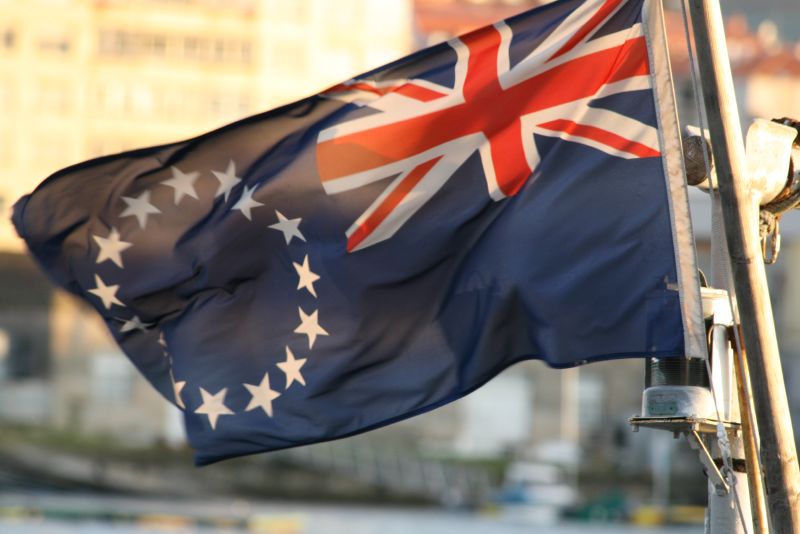
Cook Islands continues to criminalise homosexuality

Responding to reports that the Parliament of the Cook Islands has backed down on its promise to decriminalise homosexuality, Amnesty International Australia campaigner Joel Clark said: 

“We all have the right to be treated equally, no matter our sexual orientation or gender identity. Despite recent wins for equality around the world, in many countries the right to express our sexuality is still being challenged.

“The Cook Islands has a chance to be on the right side of history in decriminalising homosexuality, and we hope that its Parliament will be stronger than to bend to the will of pressure groups that seek to deny people their basic human rights to express their sexuality freely.”

Turkey: Hundreds arrested in crackdown on critics of military offensive in Syria

Hundreds of people have been detained in Turkey for commenting or reporting on Turkey’s recent military offensive in northeast Syria and are facing absurd criminal charges as the government intensifies its crackdown on critical voices, said Amnesty International in a report published today.

‘We can’t complain’ reveals how last month’s offensive – Operation Peace Spring – was accompanied by a wave of repression in Turkey which swept up anyone who deviated from the government’s official line. Journalists, social media users and protesters have been accused of “terrorism” and subjected to criminal investigation, arbitrary detention and travel bans. If prosecuted and found guilty, they could face lengthy prison sentences.

“As the tanks rolled across the Syrian border, the government took the opportunity to launch a domestic campaign to eradicate dissenting opinions from media, social media and the streets. Critical discussion on issues of Kurdish rights and politics has become even further off limits,” said Amnesty International’s Europe Director, Marie Struthers.

“Language around the military incursion was heavily policed, and hundreds of people who expressed their dissenting opinions about Turkey’s military operation were rounded up and are facing investigations under anti-terrorism laws.”

Silencing of journalists

On 10 October, a day after the offensive began, Turkey’s broadcasting regulatory body (RTÜK) warned media outlets that there would be zero tolerance of “any broadcasting that may negatively impact the morale and motivation of […] soldiers or may mislead citizens through incomplete, falsified or partial information that serves the aims of terror”.

On the same day, two journalists were detained. Hakan Demir of the daily newspaper Birgün was questioned over a tweet on the paper’s official Twitter account based on an NBC report stating that “Turkish warplanes have started to carry out airstrikes on civilian areas.”

Meanwhile Fatih Gökhan Diler, managing editor of the Diken news website, was detained after publication of an article with the headline “SDF claim: two civilians lost their lives”. Both journalists were accused of “inciting enmity and hatred” before being released with overseas travel bans pending the outcome of criminal investigations. 

Police also burst into the home of journalist and human rights defender, Nurcan Baysal, at 5am on 19 October. She told Amnesty International: “Having my home raided and my children terrorized by 30 heavily armed, masked police officers simply for some social media posts calling for peace, shows the level of suppression of freedom of expression in Turkey.”

Journalist Özlem Oral was detained on the same day and questioned over tweets criticizing ‘Operation Peace Spring’ which were posted on a Twitter account not even her own. She was released the next day with an overseas travel ban, required to regularly report at a local police station, and not to leave İstanbul where she lives.

On 27 October, lawyer and columnist Nurcan Kaya was detained at Istanbul airport for criticizing the offensive by tweeting “We know from experience how everything you call a peace operation is a massacre”.” She was released after questioning the same day,but received an international travel ban.

It is not just Turkish journalists that have been targeted. On 25 October, President Erdoğan’s lawyers announced that they filed a criminal complaint against the director and editor of French magazine Le Point, following the publication of the October 24 issue which used the cover headline “Ethnic cleansing: the Erdoğan method” in its coverage of the military offensive. The lawyers claimed the cover is insulting to the president, a crime under Turkish law.

Targeting of social media users

In the first week of the offensive alone, 839 social media accounts were under investigation for “sharing criminal content” with 186 people reportedly taken into police custody and 24 remanded in pre-trial detention, according to official figures.

One social media user, who was detained and accused of “propaganda for a terrorist organization” had retweeted three tweets, one of which read: “Rojava [the autonomous Kurdish area in northern Syria] will win. No to War”. Like others, these tweets did not come remotely close to constituting evidence of an internationally recognizable crime.

He was given an overseas travel ban and required to report to a local police station twice a month. One lawyer told Amnesty International: “Using the words ‘war’, ‘occupation’, ‘Rojava’ has become a crime. The judiciary says ‘you cannot say no to war’.”

Targeting of politicians and activists

“Operation Peace Spring” has also been used by the government as a pretext to escalate its crackdown on opposition politicians and activists. Several MPs are currently subject to criminal investigations including Sezgin Tanrıkulu, who is facing a criminal probe for comments he made in the media, and a tweet which read: “Government needs to know this, this is an unjustified war and a war against the Kurds.”

According to lawyers from the Bar Association in Şanlıurfa province, at least 54 people were taken into police custody in the province by counter-terrorism officers on 9 and 10 October. Among them were members of the Kurdish-rooted leftist opposition People’s Democratic Party (HDP), as well as members of left-wing opposition trade unions.

Within the first week of the military offensive at least 27 people, many of whom were affiliated with HDP, were detained in Mardin province on terrorism-related charges. Detainees included the elected mayor of the town of Nusaybin. The government later replaced her with the unelected district governor.

On 12 October the Saturday Mothers, relatives of victims of enforced disappearances who have been holding peaceful vigils every Saturday since 2009 to remember their loved ones, were warned by police that they would break up the vigil “if they utter the word ‘war’”. The peaceful gathering was violently broken up as soon as the statement that criticized the military operation was read out.

“Since the start of the military offensive, Turkey’s already entrenched atmosphere of censorship and fear has deepened, with detentions and trumped-up charges used to silence the few who dare to utter any challenge or criticism of ‘Operation Peace Spring’,” said Marie Struthers.

“The Turkish authorities must stop gagging opinions they don’t like and end the ongoing crackdown. All charges and prosecutions of those targeted for peaceful expression of their opposition to Turkey’s military operations should be immediately dropped.”


Amnesty International Australia talks to Wonthaggi resident, Sylvia Davey, about the wonders of sponsoring a refugee family

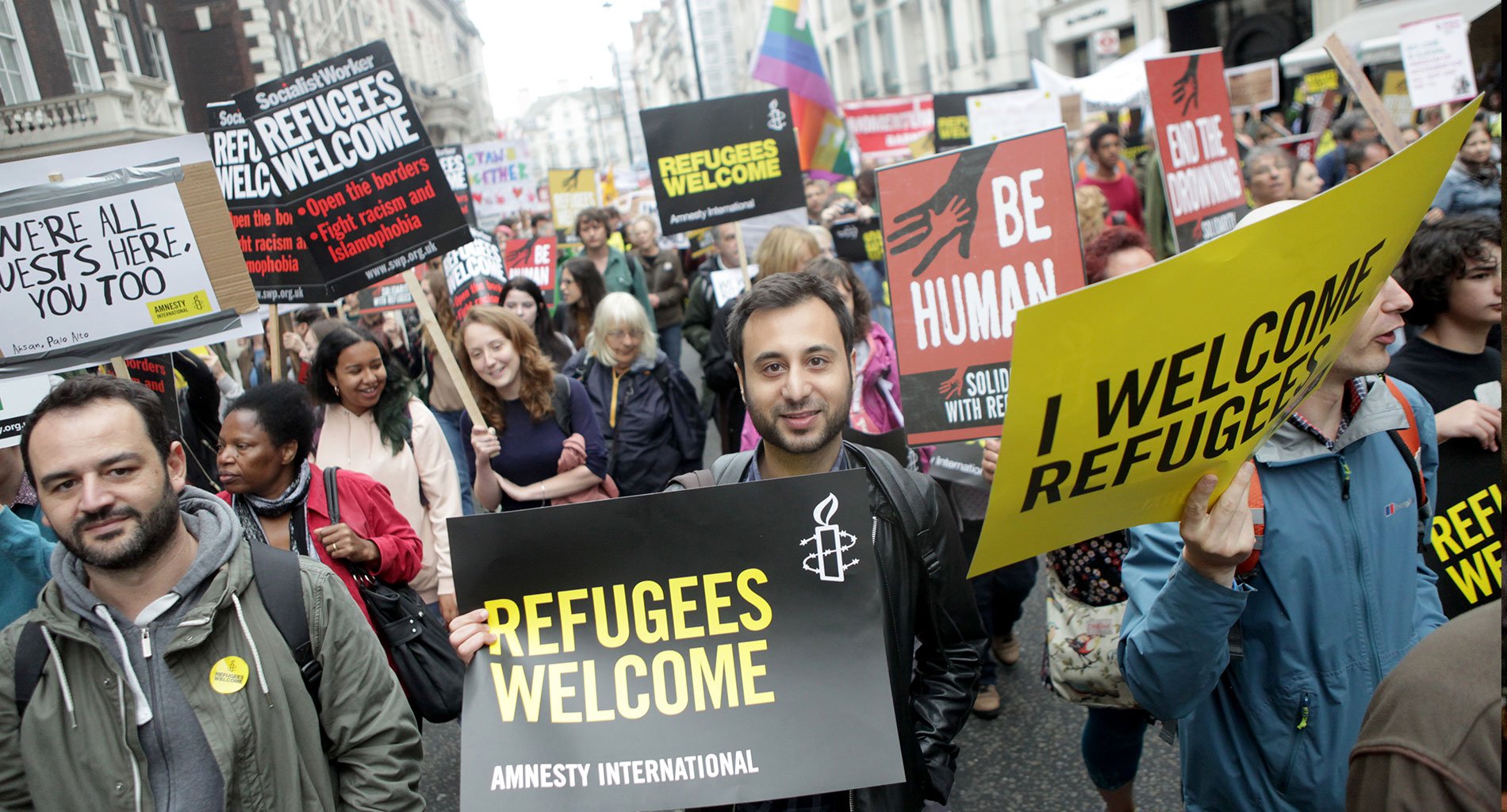
As part of the My New Neighbour series of events celebrating the stories of refugees welcomed into communities across Australia, Amnesty International will be talking to Sylvia Davey, whose sponsorship of a Burmese family more than 10 years ago transformed her life.

The event will be held at the Warragul Library on November 6, between 6pm and 7pm.

Sylvia will be talking with Amnesty International Australia’s Shankar Kasynathan, about her friendship with Mua Hsay who, at the age of 15, stepped on a landmine as she and her family fled from the army. After more than 15 years in a refugee camp, Mua, her husband and two small children finally made it to Wonthaggi on the Bass Coast following their sponsorship by Sylvia and her husband. Today, Mua’s husband works in the local abattoir, her eldest is a trainee chef and her youngest is finishing Year 11.

Sylvia says she wanted to sponsor a family because she felt “guilty” for being so lucky to grow up and live in a country like Australia. She says the experience has changed her life and out of it has grown a wonderful friendship. 

Amnesty’s My New Neighbour campaign highlights the efforts of so many neighbourhoods and communities that have provided a safe way for refugees to rebuild their lives in Australia. 

“We believe that by shining a light on these communities and mobilising more groups to follow suit, we will send a strong message to the Government that Australians want to help and that the existing Community Sponsorship Program (CSP) which places an unnecessary financial and administrative strain on these communities needs to be reformed,” Kasynathan said.

The event will be held at the Warragul Library on November 6, between 6pm and 7pm.

Iraq: Gruesome string of fatalities as new tear gas grenades pierce protesters’ skulls

The Iraqi authorities must ensure anti-riot police and other security forces in Baghdad immediately stop using two previously unseen types of tear gas grenade to kill rather than disperse protesters, Amnesty International urged today after its investigation found they caused at least five protester deaths in as many days.

Amnesty International carried out telephone and email interviews with numerous eyewitnesses, reviewed medical records and consulted medical professionals in Baghdad as well as an independent forensic pathologist about the horrific injuries caused by these grenades since 25 October. 

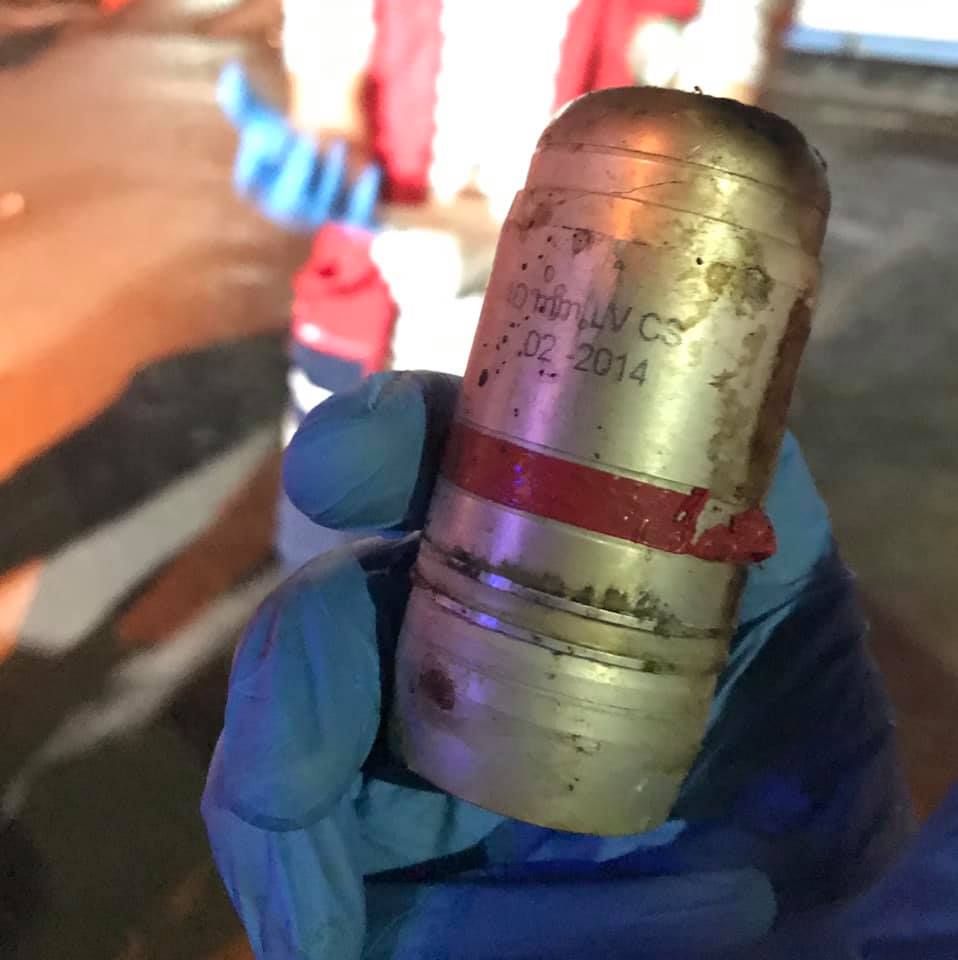
The organization’s Digital Verification Corps geolocated and analyzed video evidence from near Baghdad’s Tahrir Square documenting the fatalities and injuries – including charred flesh and “smoking” head wounds. Its military expert identified the types of tear gas grenades being used as two variants from Bulgaria and Serbia that are modelled on military grenades and are up to 10 times as heavy as standard tear gas canisters, resulting in horrific injuries and death when fired directly at protesters. 

“All the evidence points to Iraqi security forces deploying these military-grade grenades against protesters in Baghdad, apparently aiming for their heads or bodies at point-blank range. This has had devastating results, in multiple cases piercing the victims’ skulls, resulting in gruesome wounds and death after the grenades embed inside their heads,” said Lynn Maalouf, Middle East Research Director at Amnesty International. 

“The lack of accountability for unlawful killings and injuries by security forces, responsible for the vast majority of casualties this past month, is sending the message that they can kill and maim with impunity. The authorities must rein in the police, ensure prompt, impartial, effective investigations, and prosecute those responsible.”

Eyewitness testimonies

Amnesty International interviewed nine eyewitnesses – including protesters and medical volunteers – who described the police use of these tear gas grenades near Baghdad’s Tahrir Square between 25 and 29 October. 

Witnesses described how earlier in October anti-riot police had used hand-thrown tear gas canisters, but switched to firing the grenades on or around 25 October, and the deaths and injuries have spiked since then. Multiple witnesses said up to 10 grenades – which the protesters refer to as ‘smokers’ – are fired at a time into crowded areas, emitting a type of smoke that smells different from any tear gas they had previously witnessed.

One female protester told Amnesty International: “One [‘smoker’] landed close to me and I could barely breathe. It was like my chest was broken. The medical volunteers gave me a ventilator. I think I would have died. I have been exposed to tear gas before and it did not feel this way.”

One male protester said: “Since 25 October, the anti-riot [police] has not stopped launching tear gas and ‘smokers’ into the crowd, whether provoked or not. It is continuous and random… They are not using them to disperse, they are using them to kill. All the deaths in Baghdad have been from these canisters going inside the protesters’ bodies. They do not think about the fact that there are families and children in the crowds.” 

Another male protester told Amnesty International his friend was killed after being hit in the head with one of the grenades on 28 October, and he personally witnessed another death and an injury caused by security forces using them on 26 October.

“I saw the ‘smoker’ hit a man in the waist and it charred his clothes. It ripped his clothes away… The grenade came from about 150-200 metres away. He fell right where he was and we dragged him to the tuktuk. The grenade came horizontally,” the protester said. “I saw another man … that was hit in the shoulder. I did not see the moment of impact but he was screaming a lot.” 

Iraqi protester.

Another male protester described how a man who got one of the grenades lodged in his skull fell instantly to the ground and smoke was coming out of his head. 

Medical volunteers described how the grenades were being fired directly into crowded areas of peaceful protesters, causing people, including children, to faint or suffocate: One said: “They fire it straight into the crowds. Not in the air. Directly at people. It’s savage.”

Video evidence of gruesome casualties

Amnesty International discovered, verified and geolocated several online videos filmed between 25 and 29 October in areas near central Baghdad’s Tahrir Square, a focal point of the protests.  

These videos showed five men who had suffered severe head trauma apparently caused by grenades. In one video filmed on 25 October on the north-eastern side of Jimhouriya Bridge, a male protester can be seen unconscious or dead, with a clear wound in the back of his skull from which smoke or gas is seeping.  

The same effects can be seen in another video filmed the same day in the same location – here a different male protester has a similar wound on the right of his skull. Another video filmed on either 25 or 26 October shows a group of protesters walking over Jimhouriya Bridge in the direction of the city’s Green Zone. Suddenly, a male protester falls to the ground clutching his head. Plumes of smoke or gas are seen coming from the wound.  

Amnesty International received CAT-scan imagery from medical workers in Baghdad. The imagery, which Amnesty has verified, confirms deaths caused by severe head trauma. The horrific injuries in all of these images are caused by entire grenades embedded in the victims’ skulls.

Military-grade grenades used on protesters 

Two models of grenade are responsible for these injuries: Serbian 40mm M99s, manufactured by Balkan Novotech, and 40mm LV CS grenades, likely manufactured by Bulgarian company Arsenal. Unlike most tear gas grenades used by police forces around the world, these two types are modelled after offensive military grenades designed for combat. Research by Amnesty International has found that due to their weight and construction they are far more hazardous to protesters.

A typical 37mm police-style tear gas grenade weighs between 25 and 50 grams, and consists of several smaller canisters that separate and spread out over an area. In contrast, the Serbian and Bulgarian 40mm military-style grenades documented in Baghdad consist of a single heavy slug and are between five and 10 times heavier, weighing 220 to 250 grams. 

“As both the police and military grenades are fired with a similar muzzle velocity, meaning they travel through the air at the same speed, the grenades that weigh 10 times as much deliver 10 times the force when they strike a protester. This is why they have caused such horrific injuries,” said Brian Castner, Amnesty International’s Senior Crisis Adviser on Arms and Military Operations.

Unprecedented pattern of death

All less-lethal weapons can kill when used incorrectly. And tear gas canisters should never be fired directly at people. However, all experts interviewed by Amnesty International – including military and policing experts, medical doctors, and forensic pathologists – agree that both the number of deaths and horrific nature of the injuries from the point-blank firing of these heavy 40mm tear gas grenades is unprecedented.

A forensic pathologist confirmed to Amnesty International that they had “never seen such severe injuries from this cause before”. The expert noted that “the severity of injury and the angles of entry” strongly suggest the grenades were fired directly at the victims rather than ricocheting off the ground.  

Speaking to Amnesty International on condition of anonymity, a medical worker at a hospital close to Tahrir Square to which the majority of victims with head trauma were taken, reported that the facility had received “six to seven head injuries per day since Friday [25 October]”. “Of those, five had metal projectiles or canister[s] lodged into their skulls”. The medical worker said that they had never seen such injuries in such frequency before.

“Any less-lethal weapon designed for crowd control can be deadly if deployed incorrectly. But what we’ve documented with these grenades in Baghdad goes far beyond misuse of a ‘safer’ weapon – the very design of the grenades being used is maximizing the horrific injuries and death. Iraq’s police force must recall them from use immediately. There must be an independent and impartial investigation into their use and into other cases of unlawful killings and injuries during the protests,” said Lynn Maalouf.
Protests around the world explained

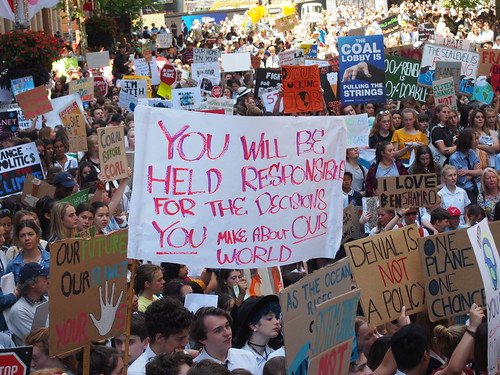
The past few months have seen a seemingly massive surge in protests globally. From the streets of Hong Kong to La Paz, Port-au-Prince, Quito, Barcelona, Beirut and Santiago, we have witnessed a huge wave of people taking to the streets to exercise their right to protest and demand change from those in power.

Sadly, a common thread throughout these protests has been an extremely harsh response from the state, which in many instances have amounted to gross violations of human rights.

Amnesty International has documented signs of abuse and violations at protests in BoliviaLebanonChileSpainIraqGuineaHong Kongthe UKEcuadorCameroon and Egypt in October so far.


Please Donate Today


In places like Hong Kong the protests have lasted over a long period of time despite police crackdowns, whereas in other countries demonstrations were quickly repressed through tactics such as mass arrests. In Egypt more than 2,300 people were detained for taking part in demonstrations this September. If referred to trial, it would be the largest protest-related criminal case in Egypt’s history.

At Amnesty International we always make it clear that protesting peacefully is not a crime, it is in fact a human right. The way governments have by and large chosen to respond to these protests has been massively disproportionate, unwarranted and therefore unlawful.

Protesters are exercising their human rights and should be allowed to do so. But what is just as important is that the reasons why people are taking to the streets are also often linked to human rights concerns. 

Corruption

Allegations of government corruption have helped to spark massive waves of protests across Chile, Egypt and Lebanon.

In late September thousands of people took part in demonstrations nationwide across Egypt. Many gathered in Tahrir Square, Cairo, famous from the 2011 protests that toppled the previous head of state Hosni Mubarak. The protests were triggered by a series of viral videos claiming high-level corruption in the Egyptian military.  

And in Lebanon, one of the overwhelming drivers to the calls for the government’s resignation – and more broadly the change of political establishment – is the latter’s perceived corruption and failure to provide basic social and economic rights. Tellingly, people have been calling for all ministers and public officials to be held accountable for what people perceive to be stolen public funds.

The abuse of public funds through corruption is not only a criminal concern, it’s also a human rights issue because it often results in the diversion of funds away from essential services. Under human rights law governments are required to make the best use of resources to ensure people can live in dignity.

https://twitter.com/lynn_maalouf/status/1185605339779158018?ref_src=twsrc%5Etfw%7Ctwcamp%5Etweetembed%7Ctwterm%5E1185605339779158018&ref_url=https%3A%2F%2Fwww.amnesty.org%2Fen%2Flatest%2Fnews%2F2019%2F10%2Fprotests-around-the-world-explained%2F

Cost of living

Where corruption is a concern so too is the cost of living. In Chile, demonstrations were kicked off by students after the government announced a hike in transport fares in Santiago de Chile, the country’s capital.

Since then the protests have snowballed to cover the vast number of government policies that have placed a burden on the economic, cultural and social rights of ordinary people across Chile. People’s concerns about inequality are underscored by the fact that Chile has one of the worst levels of income inequality.

People’s legitimate concerns over the increasing cost of living have been made worse by the fact that many governments are also imposing harsh economic austerity measures, like in Egypt and Ecuador.

Climate Justice

The burning injustices of climate change and environmental degradation have increasingly become the focus of protests in the past year. From Indigenous activists who are leading the charge against environmental degradation, to the emergence of civil disobedience-led groups which have dominated headlines in the UK, to mass protests over the government’s handling of wildfires in Bolivia, more and more people are taking to the streets to express their concern over how leaders are responding to this crisis.

But one of the standout moments came in September, when more than 7.6 million people took part in a week of climate strikes in 185 countries. The protests were organized by Fridays for Future, a youth-led movement started by Swedish activist Greta Thunberg who started striking outside her parliament only just over a year ago. 


Please Donate Today


Political freedom

This month saw massive mobilizations and demonstrations occurring in Barcelona and the rest of Catalonia after Spain’s Supreme Court sentenced 12 Catalan political leaders and activists. 

And in India protests have been held after the government of India’s unilateral decision to revoke Article 370 of the Indian Constitution which guaranteed special autonomy to Jammu & Kashmir and split the state into two separate union territories. All these amendments and changes were made amidst a complete communication blackout, curfew on movement and mass detentions of political leaders and activists in the region. 

Hong Kong has been home to arguably one of the biggest and most sustained protests linked to political freedoms this year. The protests started in April 2019 after the government of Hong Kong proposed a bill that would have allowed extraditions to mainland China.

People have taken to the streets in record-breaking numbers. While the government eventually dropped plans to introduce the draft law, the protests have evolved into a much wider call for change, which include calls for a full review of the police response and political reforms to allow them to choose Hong Kong’s leaders themselves. 

For the latest news and updates on protests around the world follow @amnestypress on Twitter.

NSW must learn from past failures – high-risk units don’t work

Responding to the announcement by the NSW Minister for Communities and Disability Services Gareth Ward that the NSW Government will “strengthen security” in youth prisons in the wake of an incident at the Frank Baxter Youth Justice Centre in July this year by introducing a high-risk units in that centre, and Cobham Youth Justice Centre, Amnesty International Indigenous Rights Manager, Tammy Solonec said:

“Introducing high-risk units is not only disappointing, it’s wrong. The same tactic was used in Western Australia’s Banksia Hill youth prison where it was an abject failure resulting in the mistreatment of children, including solitary confinement.”

Amnesty International Australia Indigenous Rights Manager, Tammy Solonec.

Amnesty International Australia wrote to Minister Ward shortly after the incident at the Frank Baxter Youth Justice Centre in response to media reports of the possibility of high-risk units being introduced. The letter warned that high-risk units caused further harm to children in Western Australia. The Minister has not responded. 

In its 2017 Inspection Report of Banksia Hill Detention Centre, the WA Inspector of Custodial Services found that boys in the Centre’s high-risk unit, known as the Intensive Support Unit “remained disadvantaged compared to the rest of the population”, saying “we continue to hold concerns about the regime, and particularly the isolation experienced by the two boys in the ISU. For much of the time their social interaction had only been with each other, and one or two other boys who had shared a wing with them in the ISU at various stages.” 

In 2018, Amnesty International raised concerns about the boys who were held in the unit. This resulted in an inquiry into which recommended reform of behaviour management practices, including the prohibition of solitary confinement. One of the boys was separated from others for more than 400 days. 

“We know that separating and punishing children often enables the abuse of those children such as by solitary confinement, separation and other punishments.” Ms Solonec said.

“It is extremely damaging for children to use such punitive measures. Ongoing support within youth prisons is what is needed: sufficient access to psychiatric, psychological and social support, access to education, access to family and visitors, and access to health services. 

“The Minister must revisit this ill-conceived plan. Why does he think it will work in Frank Baxter or Cobham, when all it did in Banksia HIll was harm children? 

“What the NSW Government should be doing is banning solitary confinement, improving support for detained children and staff, and ensuring that the detention of children is only used as a last resort for, especially young children.”