China: UN human rights chief must seize critical opportunity to address crimes against humanity in Xinjiang 

The United Nations High Commissioner for Human Rights must address crimes against humanity and gross human rights violations when her team visits China’s Xinjiang Uyghur Autonomous Region this week, Amnesty International said today as the UN’s long-awaited trip got under way.

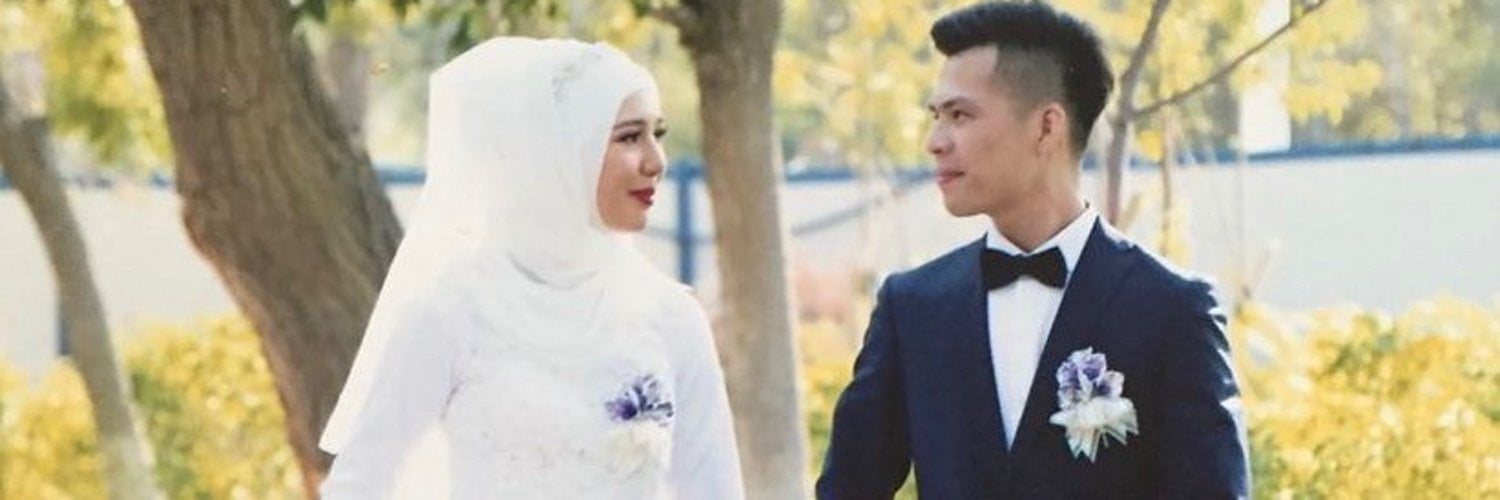
A team led by High Commissioner Michelle Bachelet will spend six days in China including Xinjiang, where Amnesty International has documented systematic arbitrary imprisonment, torture and persecution of Uyghurs, Kazakhs and other predominantly Muslim ethnic minorities.

“Michelle Bachelet’s long-delayed visit to Xinjiang is a critical opportunity to address human rights violations in the region, but it will also be a running battle against Chinese government efforts to cover up the truth. The UN must take steps to mitigate against this and resist being used to support blatant propaganda,” said Agnes Callamard, Amnesty International’s Secretary General.

“Lasting six days, this visit will only be able to scratch the surface of addressing crimes against humanity in Xinjiang. But at the very least Bachelet’s visit must focus on the victims of China’s crackdown: the Uyghurs and other Muslims who have been targeted and the many families overseas who are tormented by not knowing where their relatives are held and how to pursue justice, truth and reparation.”

Amnesty International and other human rights groups have repeatedly called on the Chinese authorities to allow independent UN human rights experts and other human rights monitors access to Xinjiang – a demand that is finally being granted with this brief visit by the Office of the High Commissioner for Human Rights (OHCHR).

The UN must avoid becoming complicit

The High Commissioner committed to speaking to key stakeholders prior to her visit. However, the UN team faces a serious challenge to ensure this visit meets their stated standard of being truly “unfettered”, “meaningful” and “including unsupervised interviews”. 

“Bachelet will be aware of repeated steps taken by the Chinese authorities during previous visits by UN human rights envoys to impose strict surveillance and undermine access, including by detaining identified interviewees and potential interlocutors and warning others to feign absence.” 

Amnesty International has also documented instances of detainees from minority groups in Xinjiang being coached for days in preparation for foreign visitors, instructed to respond to visitors’ questions with pre-scripted lines on threat of punishment.

“The OHCHR must avoid becoming complicit in the Chinese government’s attempts to cover up human rights violations, potentially by using the visit itself as ‘proof’ of their falsity,” Callamard said.

“The itinerary of the visit should not be imposed by the Chinese authorities but guided by the mandate of the visit and grounded on human rights methodology, including by being victim-centered. Above all, Bachelet’s team must be able to conduct an impartial assessment of the situation on the ground and be fully transparent about the details of the trip, the terms of their agreement with the government and its delivery on the ground.”

Since September 2018, when the High Commissioner first sought access to Xinjiang “in light of deeply disturbing allegations of large-scale arbitrary detentions of Uighurs and other Muslim communities”, numerous organizations have published further detailed and well-corroborated information on the situation. In June 2021, Amnesty International launched a comprehensive report documenting how China’s crackdown against predominantly Muslim ethnic minorities in Xinjiang amounted to crimes against humanity.

Based on dozens of testimonies, the report described a “dystopian hellscape” encompassing grave violations against detainees, systematic state surveillance of millions of people, and efforts to root out the religious traditions, cultural practices and local languages of the region’s Muslim ethnic groups.

Amnesty International launched an international campaign, initially focusing on more than 70 individuals, calling for the release of all people arbitrarily detained in camps and prisons, and for the closure of the internment camps. Just this month Amnesty has collected details of a further 40 missing or detained individuals as news of Bachelet’s visit has prompted more families to come forward seeking justice for relatives in Xinjiang who have disappeared and are believed to be detained.

Bachelet’s visit is also a chance to secure a long-lasting communication channel between the OHCHR and the local authorities with regards to future queries from families about the fate and whereabouts of their loved ones.

“Hundreds of thousands of Chinese Uyghurs and other Muslim minorities are looking to Bachelet’s team to start the process of holding China to account over its campaign of terror in Xinjiang,” Callamard said.

“This UN visit must amplify victims’ efforts to track down their loved ones by actively seeking out known detainees and leaving no stone unturned in trying to find them. It must contribute to uncovering the truth that the Chinese government has long been trying to hide.”

Calls to release OHCHR report

The OHCHR has already compiled its own report on human rights violations in Xinjiang, which Bachelet said was being “finalised” last year. It has not yet been made public, despite repeated requests from Amnesty International and almost 200 other NGOs.

“It is crucial that the findings of the UN mission to China are released in a timely manner. Their publication must not suffer the same unexplained delays as the OHCHR report on Xinjiang, which the world is still waiting to see. The OHCHR must make public all its findings about human rights violations in China without further delay,” Callamard said.

Amnesty International Australia calls on newly elected Labor Government to put human rights at the centre of policy

Following the election of the Labor Party to form the next Federal Government, Amnesty International Australia National Director, Sam Klintworth, said:

“Amnesty International congratulates Prime Minister-elect Anthony Albanese on his 2022 election victory. The newly elected government is now in an ideal position to ensure people and their human rights are at the core of policy making decisions that benefit all of society.

“It’s clear from this result that Australians want to put behind us the hateful and divisive rhetoric on trans peoples’ rights, urgently act on the climate crisis and ditch temporary protection visas, as well as taking a more humane approach to refugee policy.

“We are calling on the Prime Minister to ensure all Australians have a fair go and to protect and defend the human rights of everyone, everywhere. An individual’s quality of life should not be determined by factors beyond their control – be it race, nationality, gender, socio-economic background, sexuality or age.

“The Government has a perfect opportunity now to formalise all of our rights in an Act of parliament.”

Qatar: FIFA should match $440m World Cup prize money to fund major compensation programme for abused migrant workers  

FIFA should earmark at least $440m to provide remedy for the hundreds of thousands of migrant workers who have suffered human rights abuses in Qatar during preparations for the 2022 World Cup, Amnesty International said in a new report today, six months ahead of the tournament’s opening game.  

In an open letter accompanying the report, Amnesty International and a coalition of human rights organizations, unions, and fan groups urged FIFA’s president Gianni Infantino to work with Qatar to establish a comprehensive remediation programme. As well as providing compensation for all labour abuses related to hosting the tournament in Qatar, they should ensure that abuses are not repeated, both in Qatar and in future tournaments. 

To remedy the litany of abuses committed since 2010, when FIFA awarded hosting rights to Qatar without  requiring any improvement in labour protections, the organizations called on FIFA to at least match the $440m it hands out in prize money at the World Cup. 

“Given the history of human rights abuses in the country, FIFA knew⁠—or should have known⁠—the obvious risks to workers when it awarded the tournament to Qatar. Despite this, there was not a single mention of workers or human rights in its evaluation of the Qatari bid and no conditions were put in place on labour protections. FIFA has since done far too little to prevent or mitigate those risks,” said Agnès Callamard, Amnesty International’s Secretary General. 

“By turning a blind eye to foreseeable human rights abuses and failing to stop them, FIFA indisputably contributed to the widespread abuse of migrant workers involved in World Cup-related projects in Qatar, far beyond the stadiums and official hotels.”  

The sum of $440 million is likely to be the minimum necessary to cover an array of compensation costs and to support initiatives to protect workers’ rights in the future, Amnesty International has estimated. However, the total sum for reimbursing unpaid wages, the extortionate recruitment fees paid by hundreds of thousands of workers, and compensation for injuries and deaths could end up being higher, and should be evaluated as part of a participatory process with unions, civil society organizatons, the International Labour Organization and others. 

“While it may be too late to erase the suffering of past abuses, FIFA and Qatar can and should act to provide redress and prevent further abuses from taking place. Providing compensation to workers who gave so much to make the tournament happen, and taking steps to make sure such abuses never happen again, could represent a major turning point in FIFA’s commitment to respect human rights,” said Agnès Callamard. 

Unfulfilled responsibilities and obligations 

As expressed in the UN Guiding Principles on Business and Human Rights, and recognized by its own policies, FIFA has a responsibility to remedy human rights abuses it has contributed to. This responsibility should cover not only workers building football-specific facilities such as stadiums and training sites, FIFA-accredited hotels and the broadcast centre, but also the services required to operate these facilities. It should also cover those workers involved in building and servicing the transport, accommodation and other infrastructure required to host more than a million visitors expected to travel to Qatar to watch the tournament.  

Equally, Qatar is also obliged to ensure remedy for every abuse on its territory, whether linked to the World Cup or not. While there has been some progress through both the Supreme Committee for Delivery and Legacy’s initiatives and Qatar’s welcome programme of labour reforms, their respective limited scope and weak enforcement have meant that serious human rights abuses persist and migrant workers have had limited access to remedy. Ultimately, abuses suffered by workers over the past decade on all projects needed for this World Cup, have largely remained unaddressed. 

“For years, the suffering of those who made this World Cup possible has been brushed under the carpet. It is about time FIFA and Qatar came together to work on a comprehensive remediation programme that puts workers at its centre and ensures that no harm remains unaddressed,” said Agnès Callamard. 

“Under international law and by FIFA’s own rulebook, both Qatar and FIFA have obligations and responsibilities respectively to prevent human rights abuses and provide remedy to victims. The remediation fund Amnesty International and others are calling for is entirely justifiable given the scale of abuses that have been suffered, and represents a small fraction of the $6 billion revenues FIFA will make from the tournament.”  

Amnesty International is calling on FIFA and Qatar to set up a programme with the full participation of workers, trade unions, the International Labour Organization and civil society. They must also learn from the experiences of other remediation programmes, such as the scheme that followed the 2013 Rana Plaza disaster in Bangladesh, in which more than 1,300 workers lost their lives. 

Beyond this tournament, Amnesty International is also calling on FIFA to guarantee that human rights abuses of migrant workers are not repeated, and ensure that the awarding of all future tournaments and events follow a rigorous assessment of risks to human rights along with clear action plans to prevent and mitigate potential abuses identified. New human rights criteria were used in the bidding process for the 2026 FIFA World Cup, but do not appear to have been applied in the decisions to award the 2021 FIFA Club World Cup first to China, then to the United Arab Emirates. 

Background 

Since 2010, hundreds of thousands of migrant workers have faced human rights abuses while employed to build the stadiums, hotels, transport and other infrastructure necessary to host the 2022 World Cup. The vast majority of migrant workers in Qatar have, for example, paid illegal recruitment fees averaging more than $1,300 per worker to secure their jobs, while before 2020, all were restricted in their ability to change jobs or leave the country. For more information about the human rights abuses faced by migrant workers in Qatar, see here

Since 2018, Qatar has introduced a series of important labour reforms that aim to improve workers’ rights, but a lack of enforcement means that abuses persist. Improvements for workers on official FIFA sites, such as stadiums, were also introduced in 2014 via the Supreme Committee’s Worker Welfare Standards, but these standards are not universally respected and only cover a minority of the hundreds of thousands of workers on World Cup-related projects. One positive initiative launched by the Supreme Committee in 2018 includes an agreement with contractors on official World Cup sites to reimburse the recruitment fees of 48,000 workers, though this again remains a minority of all workers who have worked on projects essential to the World Cup.

FIFA’s response to Amnesty International’s report is available in the Annex here

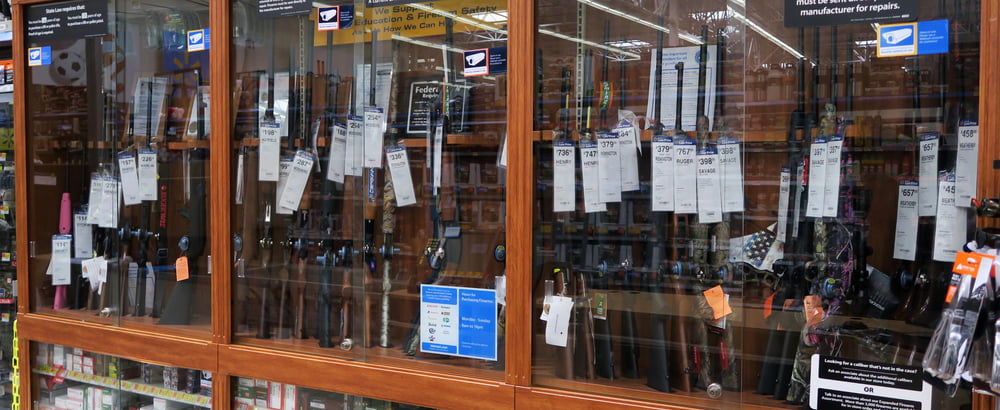
Congress must commit to funding community violence prevention, as US sees wave of gun violence from coast to coast

Ahead of President Biden’s visit to Buffalo, New York and responding to this weekend’s mass shootings across the country, Ernest Coverson, End Gun Violence Campaign Manager at Amnesty International USA, said:

“Tomorrow, President Biden arrives in Buffalo, New York as the community mourns the murder of 10 of its residents. Americans should not have to wonder if they will be killed while grocery shopping, or in any other part of their lives. In the span of 48 hours, the United States saw 312 incidents of gun violence – from Laguna Woods, to Chicago, to Milwaukee and beyond – resulting in the deaths of 127 people and wounding a further 294 people. Every single life lost, every single survivor of gun violence marks a profound failure of the U.S. government and leadership to protect its own people.

“We must be clear-eyed in our shared understanding of the facts: white supremacists have fed a narrative of replacement theory, a pernicious and dangerous view that is propagated by some U.S. politicians, political commentators, and journalists. What took place this weekend in Buffalo was racism, antisemitism, and bigotry. We must all stand united in understanding the forces that have brought the United States to this dangerous juncture. 

“Speeches alone are not enough. Unfortunately, there will be another Buffalo and more weekends of violence – it’s not a matter of “if,” but when. Right now, Congress has the ability to pass the Break the Cycle of Violence Act (H.R. 4118, S. 2275), which would provide $5 billion in funding for community violence prevention and intervention programs across the country. In city after city, these programs save lives and lower the number of gun homicides by nearly 50%. This legislation alone is not a solution, but it’s a start to rebuilding safety in affected communities. This moment requires more than thoughts and prayers, it requires leadership. The United States has compromised credibility to advance human rights globally while it tolerates systemic racism and violence stoked by racial hatred at home. 

“We remain committed and in solidarity with the families affected by this weekend’s violence.” 

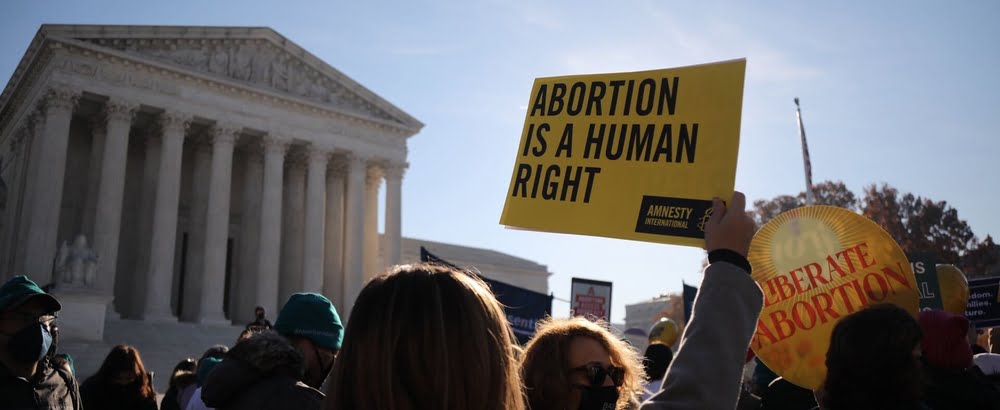
Abortion rights in Australia and why you should care about Roe v Wade

The phrase Roe v Wade has taken on an emblematic quality in the struggle for abortion rights around the world, and with the landmark 1973 decision of the US Supreme Court under threat, it’s a reminder that reproductive rights are both hard-fought and not guaranteed.

What is Roe v Wade?

The landmark decision was handed down by the US Supreme Court after a mother of three from Texas (dubbed Jane Roe by the court to protect her identity) took the State – in this case its representative, local district attorney Henry Wade – to court over her right to choose to terminate the unwanted pregnancy.

The legal victory was based on the interpretation of the right to privacy as enshrined in the US Constitution.  

But all that may change: following the move by several US states to severely restrict abortions, in a leaked draft majority opinion, the conservative-majority Supreme Court  appears likely to wind back this historic ruling. Some states have so-called trigger legislation in place which will immediately restrict the right of people to have abortions.

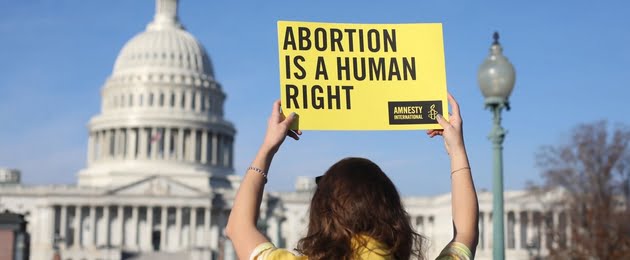
Let’s be clear: abortion is a human right. Safe abortion access is essential for realising the full range of human rights and achieving gender, social, reproductive and economic justice and Amnesty International calls for universal access to safe abortions for all people who need them.

What we know is that criminalising abortion doesn’t stop it, it just makes them unsafe. 

What are your rights in Australia?

Abortion was decriminalised entirely in Australia in 2021 when South Australia was the last jurisdiction to strike the procedure from the criminal code. NSW only decriminalised abortion in 2019.

In most jurisdictions, abortion is available on request up to 24 weeks gestation at which point two doctors must approve a termination. But each jurisdiction has different laws:

ACT – no gestational limit, but must be provided by a medical doctor

NSW/QLD – freely available until 22 weeks and then with the approval of two doctors

NT/VIC – available until 24 weeks and then with the approval of two doctors

SA – freely available until 22 weeks and 6 days and then with the approval of two doctors

TAS – freely available until 16 weeks and then with the approval of two doctors

WA – freely available until 20 weeks and then with the approval of two doctors

The protection of people’s reproductive rights have been further strengthened by the establishment of so-called safe zones around clinics providing abortion services making it illegal to harass people using those services. These are in place in all jurisdictions.

Implications of Roe v Wade for Australia

It’s worth remembering just how recently abortion was removed from the statues and there have been many attempts by Federal politicians over time to restrict people’s access to safe medical termination. The abortion drug RU486 is still subject to major restrictions, due to a deal done by conservative politicians in the 1990s.

Any regression in protection of the right to abortion would not only stand to damage the global perception of the United States; it would also set a terrible example that other governments and anti-rights groups could seize upon around the world in a bid to deny the rights of women, girls and other people who can become pregnant. Overturning Roe vs Wade would become the symbol of a major backlash all over the world, putting recent progress at risk and endangering the health and lives of millions.

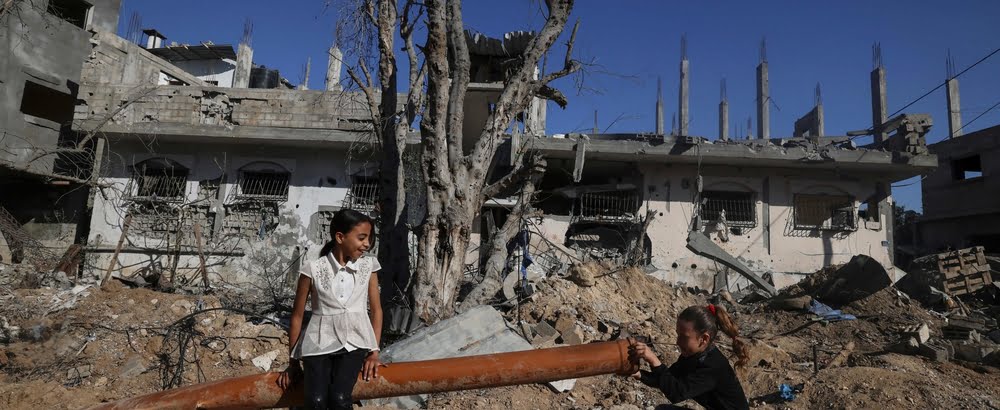
Israel/OPT: Increase in unlawful killings and other crimes highlights urgent need to end Israel’s apartheid against Palestinians

Israeli authorities must end unlawful killings, willful injury, arbitrary arrests, torture and other ill-treatment, persecution and collective punishment against Palestinians, including many children, Amnesty International said in a public statement published today.

In the latest incident, Palestinian journalist Shirin Abu Akleh was shot in the head on 11 May while covering an Israeli military raid in the city of Jenin, in the northern occupied West Bank. Palestinians have been killed or injured as a result of the Israeli forces’ use of excessive force when policing protests or carrying out search and arrest raids. Some Palestinians appear to have been killed in acts that amount to extrajudicial executions, which constitute a crime under international law.

“The killing of veteran journalist Shirin Abu Akleh is a bloody reminder of the deadly system in which Israel locks Palestinians. Israel is killing Palestinians left and right with impunity. How many more need to be killed before the international community acts to hold Israel accountable for the continuing crimes against humanity?” said Saleh Higazi, Amnesty International’s Deputy Director for the Middle East and North Africa.

The violence has been escalating since Israeli Prime Minister Naftali Bennett took office on 21 June 2021, with the months of March and April seeing the highest number of Palestinians and Israelis killed outside of armed hostilities in Israel and the Occupied Palestinian Territories (OPT) in any two months since 2008. Between 21 June 2021 and up until 11 May 2022, Israeli forces killed at least 79 Palestinians, including 14 children in the OPT according to United Nations Office for the Coordination of Humanitarian Affairs (UNOCHA) and Amnesty International’s records. In March, Israeli forces killed 12 Palestinians, including three children. Another Palestinian was killed by an Israeli settler. During the month of April 2022, Israeli forces killed at least 22 Palestinians, including three children, according to Amnesty International’s records. Separate attacks by armed Palestinian individuals killed 18 people in cities across Israel since 22 March.

The alarming escalation in serious violations comes at a time when top Israeli officials have threatened further violence against Palestinians. Since the current escalation of violence, Israeli government officials, including Prime Minister Naftali Bennett, have made repeated statements that incite violence and encourage the use of unlawful force in addition to giving orders to shoot Palestinians who pose no imminent threat. Other politicians have also openly incited violence, highlighting the extent of Israel’s institutionalized discrimination against Palestinians. While Palestinian authorities in the West Bank have condemned all Palestinian attacks on Israeli civilians, spokespeople for some Palestinian armed groups have encouraged such attacks.

“States around the world have a moral and legal responsibility to take immediate action to put an end to the continuing crimes perpetrated by Israel against Palestinians to maintain the calamity of apartheid. The Prosecutor of the International Criminal Court should set the course for justice, truth and reparation to end the impunity that encourages these ongoing crimes,” said Saleh Higazi.

Amnesty International has spoken to nine witnesses, three lawyers representing Palestinian detainees, in addition to examining video and photographic evidence, making field observations, and collating information from human rights organizations, to analyze patterns of unlawful killings, arbitrary detention, torture and other ill-treatment, and collective punishment of Palestinian communities. Amnesty International also corroborated information on fatal attacks against civilians in Israel by armed Palestinian individuals.

The killing of Palestinian children

Since the beginning of 2022 until 8 May, Israeli armed forces killed eight Palestinian children in circumstances that appear to be unlawful, including excessive and reckless use of lethal force, according to records kept by Amnesty International. In addition, an armed settler killed one Palestinian child during this period.

On 13 April 2022, Israeli forces fired at 16-year-old Qusai Fuad Mohammad Hamamra as they were policing a protest by Palestinians near the entrance to Husan, a town near Bethlehem. According to Defense for Children International Palestine, a human rights organization, Hamamra sustained multiple gunshot wounds. At least one bullet struck him in the head. The Israeli army said in a statement that a person in Husan was shot after hurling a Molotov cocktail at Israeli soldiers, who were not injured.   

“I saw the blood at the place where he was shot,” said Amina Hamamra, Qusai Hamamra’s mother. “It was like when you slaughter a sheep. No one could get near because of the shooting. He had dreams. I had dreams for him. Now they are over.”

Brutal attacks at the al-Aqsa mosque

For the duration of Ramadan, which started on 3 April, and until 8 May, the Israeli authorities have restricted access for Muslim worshippers to the al-Aqsa mosque in East Jerusalem, and set up semi-permanent checkpoints to block access on roads that lead to the mosque.

Israeli police have brutally attacked worshippers in and around the mosque and used violence that amounts to torture and other ill-treatment to break up gatherings. According to the Palestine Red Crescent Society, on 15 April, Israeli armed police detained more than 400 Palestinians, many of them children, following a six-hour escalation that left at least 150 Palestinians injured by rubber bullets and beatings with batons.  

According to eyewitnesses, the police aimed at the upper body, including the face, back, and chest, when firing rubber bullets. They also targeted journalists, paramedics, women, elderly people and men with disabilities.

One eyewitness said: “Paramedics set up a tent on the mosque esplanade and the tent came under fire from rubber bullets, too. People who tried to reach the injured to carry them to the medical tent were shot at.”

Attacks against Israeli citizens

Separate attacks by armed Palestinian individuals killed 18 people in cities across Israel, including three police officers and two foreign nationals, since 22 March. Six Palestinian attackers were killed by Israeli forces while one attacker was killed by an armed Israeli citizen.

On 7 April, a Palestinian from Jenin refugee camp shot at people in a restaurant in Tel Aviv, killing three people and injuring a dozen more.

Following the attack, the Israeli authorities arbitrarily restricted freedom of movement for all residents of Jenin until 17 April. The two main military checkpoints controlling movement in and out of the city were declared closed. Palestinian citizens of Israel and Palestinian traders from Jenin were not allowed to cross the checkpoints for business, and approximately 5,000 permits for religious access were revoked.

Attacks against civilians are shocking and rightly condemned by spokespeople across the world. Israel has a duty to protect everyone under its control and value the life of all equally, by tackling the root causes of violence and acting to end apartheid. Israel has proved time and again that it can care less for international law, thus it is the duty of states around the world to take action, hold Israel accountable, and dismantle its apartheid against Palestinians,” said Saleh Higazi.

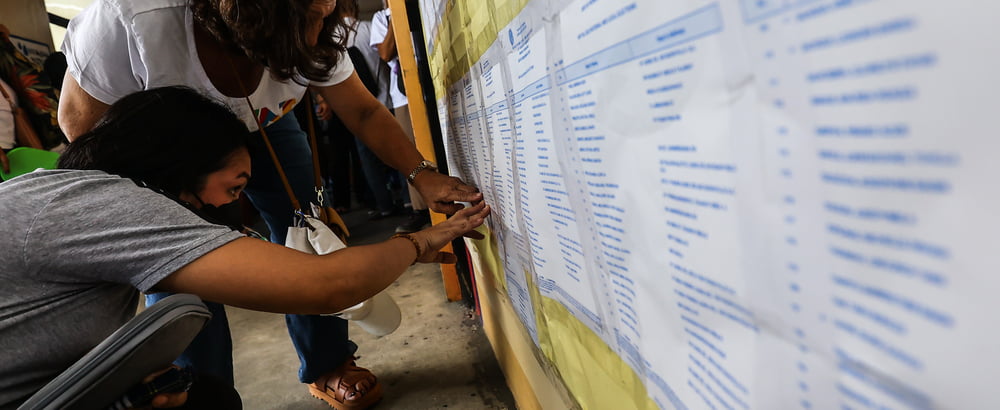
Philippines: Elections point to ominous moment for human rights

With Ferdinand “Bongbong” Marcos Jr and Sara Duterte poised to win the Philippine elections, Amnesty International’s Asia-Pacific Deputy Regional Director Emerlynne Gil said:  

“Ferdinand ‘Bongbong’ Marcos Jr and Sara Duterte’s past avoidance of discussing human rights violations in the Philippines is deeply concerning. During the campaign period, it seemed that they were deliberately refusing to take a position on past and present violations – including those committed under martial law in the 1970s and early 1980s, and in the context of the Rodrigo Duterte administration’s ‘war on drugs’. 

“If confirmed, the Marcos Jr administration will face a wide array of urgent human rights challenges. The new government should make a dramatic course correction and move away from the past six years under Rodrigo Duterte, when authorities increased attacks against political opponents and human rights defenders, cracked down on press freedom and oversaw widespread and systemic killings in the so-called war on drugs. 

“The widespread arbitrary arrests and detentions, torture and extrajudicial killings that occurred in the martial law era and violations committed more recently during the Duterte administration must never be allowed to happen again.

“Amnesty International will not waver in its commitment to call out human rights violations and bring perpetrators to account, including for violations committed in the past. It is only through a genuine commitment to justice, truth and accountability for such violations that the Philippines can move forward in building respect for the rule of law and human rights.” 

Background: 

Though results have not been officially announced, Ferdinand “Bongbong” Marcos Jr is set to emerge victorious, according to reports and initial tallies. He would take up the post after President Rodrigo Duterte, who served from 2016 to 2022. The Philippine Constitution only allows for one six-year presidential term. 

Davao City Mayor Sara Duterte, the daughter of President Duterte, is poised to win the vice-presidency, which is voted on separately. Other top posts up for grabs included senators, congressional representatives, and major local posts including provincial governors and city mayors.  

Marcos Jr is the son of former President Ferdinand Marcos, who declared and presided over martial law in the Philippines from 1972-1981. During the campaign period, various monitoring groups observed an increased prevalence of disinformation through social media platforms, aimed at dismissing accounts of grave human rights violations during martial law. 

In the lead-up to the election, Amnesty International called on all candidates to put human rights front and centre in their campaigns after six years of a murderous “war on drugs” and the rise in impunity for these and other human rights violations during President Rodrigo Duterte’s administration. 

Ukraine: Russian forces must face justice for war crimes in Kyiv Oblast – new investigation

Russian forces must face justice for a series of war crimes committed in the region northwest of Kyiv, Amnesty International said today in a new briefing following an extensive on-the-ground investigation.

The briefing, ‘He’s Not Coming Back’: War Crimes in Northwest Areas of Kyiv Oblast, is based on dozens of interviews and extensive review of material evidence. Amnesty International documented unlawful air strikes on Borodyanka, and extrajudicial executions in other towns and villages including Bucha, Andriivka, Zdvyzhivka and Vorzel.

An Amnesty International delegation, led by the organization’s Secretary General, has been visiting the region in recent days, speaking with survivors and families of victims, and meeting with senior Ukrainian officials.

“The pattern of crimes committed by Russian forces that we have documented includes both unlawful attacks and wilful killings of civilians,” said Agnès Callamard, Amnesty International’s Secretary General.

“We have met families whose loved ones were killed in horrific attacks, and whose lives have changed forever because of the Russian invasion. We support their demands for justice, and call on the Ukrainian authorities, the International Criminal Court and others to ensure evidence is preserved that could support future war crime prosecutions.

“It is vital that all those responsible, including up the chain of command, are brought to justice.”

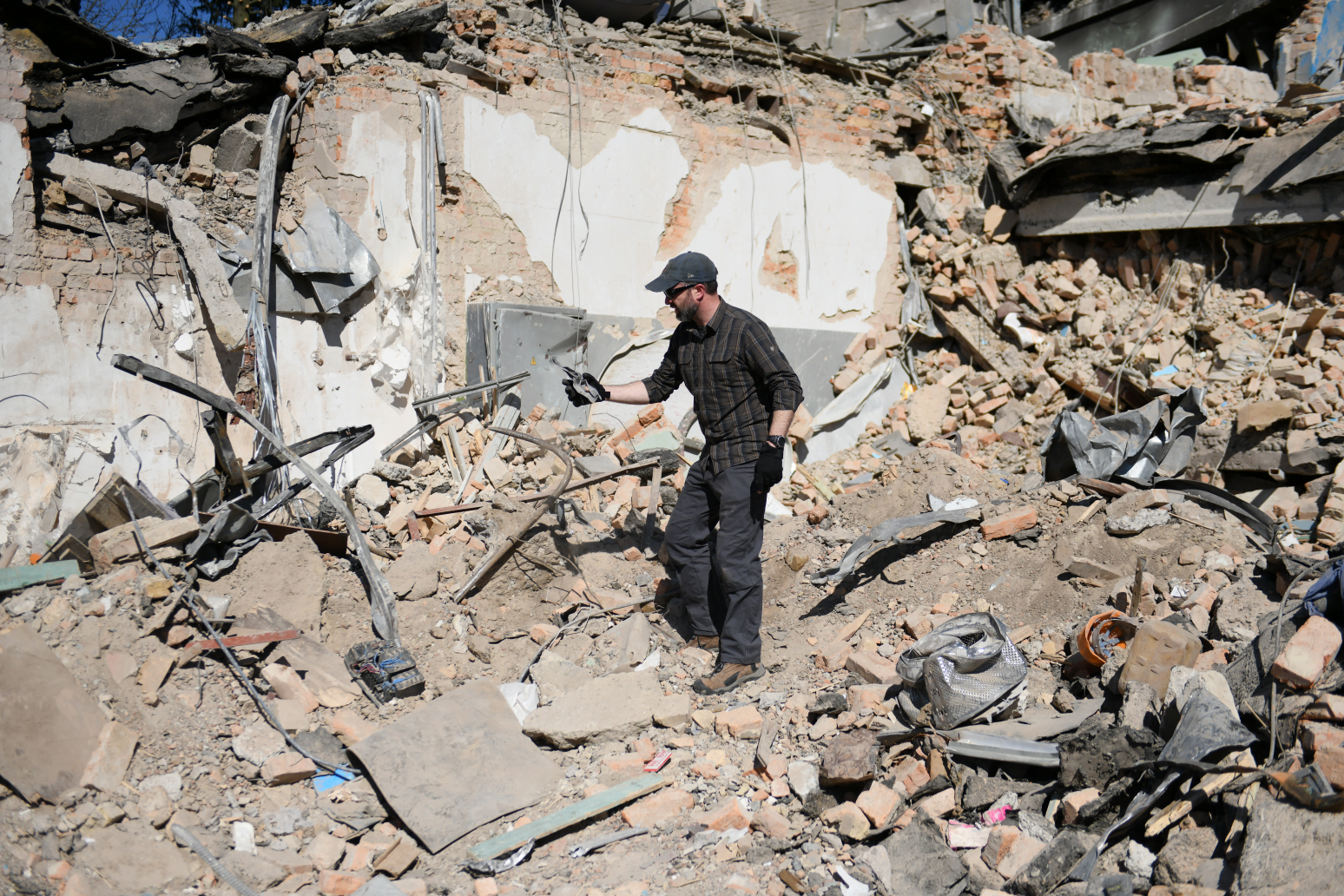
In Borodyanka, Amnesty International found that at least 40 civilians were killed in disproportionate and indiscriminate attacks, which devastated an entire neighbourhood and left thousands of people homeless.

In Bucha and several other towns and villages located northwest of Kyiv, Amnesty International documented 22 cases of unlawful killings by Russian forces, most of which were apparent extrajudicial executions.

During 12 days of investigations, Amnesty International researchers interviewed residents of Bucha, Borodyanka, Novyi Korohod, Andriivka, Zdvyzhivka, Vorzel, Makariv and Dmytrivka, and visited sites of numerous killings.

In total, they interviewed 45 people who witnessed or had first-hand knowledge of unlawful killings of their relatives and neighbours by Russian soldiers, and 39 others who witnessed or had first-hand knowledge of the air strikes that targeted eight residential buildings.

Unlawful air strikes in Borodyanka

On 1 and 2 March, a series of Russian air strikes hit eight residential buildings in the town of Borodyanka, approximately 60 kilometres northwest of Kyiv, which were home to more than 600 families.

The strikes killed at least 40 residents and destroyed the buildings, as well as dozens of surrounding buildings and houses. Most of the victims were killed in the buildings’ basements, where they had sought shelter. Others died in their apartments. 

On the morning of 2 March, a single strike killed at least 23 people in Building 359 on Tsentralna Street. The victims included five of Vadim Zahrebelny’s relatives: his mother Lydia, his brother Volodymyr and wife Yulia, and her parents Lubov and Leonid Hurbanov.

Vadim told Amnesty International: “We [Vadim and his son] left Building 359 just after 7am. However, my mother and my brother and his wife and her parents insisted on staying in the basement because they were afraid of getting shot by Russian soldiers if they went out on the streets. About 20 minutes after we left, Building 359 was bombed and they were all killed, together with other neighbours.”

Vasyl Yaroshenko was close to one of the buildings when it was hit. He said: “I left my apartment to go do some work in the garage, as my wife was about to take a couple of older neighbours down to the basement. When I reached the garage, about 150 metres from the building, there was a huge explosion. I ducked behind the garage. When I looked, I saw a large gap in the building. The whole middle section of the building had collapsed – exactly where residents were sheltering in the basement. My wife Halina was among those killed. I still see her by the door of our apartment, the home where we lived for 40 years.”

On 1 March, a series of air strikes targeted six other buildings nearby. At least seven people were killed in Building 371 on Tsentralna Street, including Vitali Smishchuk, a 39-year-old surgeon, his wife Tetiana, and their four-year-old daughter Yeva.

Vitali’s mother Ludmila told Amnesty International: “As the situation deteriorated, it became too dangerous to move from one part of the town to another. There were tanks on the streets… People were frightened to be outside.

“I was speaking to my son and telling him to leave, but he was worried about going outside. They sheltered in the basement for safety – but the bomb destroyed the middle section of the building, where the basement was.”

No fixed Ukrainian military targets are known to have been located at or around any of the buildings which were struck, though at times armed individuals supporting Ukrainian forces reportedly fired on passing Russian military vehicles from or near some of those buildings. Knowingly launching direct attacks on civilian objects or disproportionate attacks constitute war crimes.

Amnesty International has created a new interactive 360-degree representation of the extensive damage caused by the air strikes in Borodyanka, which can be viewed here.

Unlawful killings northwest of Kyiv

The town of Bucha, approximately 30 kilometres northwest of Kyiv, was occupied by Russian forces in late February. Five men were killed in apparent extrajudicial executions by Russian forces in a compound of five buildings set around a courtyard close to the intersection of Yablunska and Vodoprovidna streets, all between 4 and 19 March.

Yevhen Petrashenko, a 43-year-old sales manager and father-of-two, was shot dead in his apartment on Yablunska Street on 4 March.

Yevhen’s wife Tatiana told Amnesty International that she was in their building’s basement, while Yevhen had remained in their apartment. He had gone to help a neighbour when Russian soldiers were conducting door-to-door searches. Tatiana lost contact with Yevhen, whose body was then found in his apartment by a neighbour the next day.

At her request, Russian soldiers allowed Tatiana to visit the apartment. She said: “Yevhen was lying dead in the kitchen. He had been shot in the back, [near his] lungs and liver. His body remained in the apartment until 10 March, when we were able to bury him in a shallow grave in the courtyard.”

Amnesty International researchers found two bullets and three cartridge cases at the scene of the killing. The organization’s weapons investigator identified the bullets as black-tipped 7N12 armour-piercing 9x39mm rounds that can only be fired by specialized rifles used by some elite Russian units, including units reported to have been operating in Bucha during this time.

A collection of Russian military papers recovered in Bucha, which Amnesty International researchers analysed, gives further indications as to the units involved. They included conscription and training records belonging to a driver-mechanic of the 104th Regiment of the VDV, the Russian Airborne Forces. Notably, some VDV units are equipped with specialized rifles that fire the armour-piercing 9x39mm round.

On 22 or 23 March, Leonid Bodnarchuk, a 44-year-old construction worker who lived in the same building as Yevhen Petrashenko, was also killed. Residents who were sheltering in the basement told Amnesty International that Russian soldiers shot Leonid as he was walking up the stairs, then threw a grenade into the stairwell. They later found his maimed body slumped in a pool of blood on the stairs.

Amnesty International researchers found large blood stains over several steps on the stairs leading to the basement, as well as burn marks and a pattern of damage on the wall consistent with a grenade explosion.

In neighbouring towns and villages, Amnesty International collected further evidence and testimony of unlawful killings, including apparent extrajudicial executions: some victims had their hands tied behind their back, while others showed signs of being tortured.

In the village of Novyi Korohod, Viktor Klokun, a 46-year-old construction worker, was killed. Olena Sakhno, his partner, told Amnesty International that some villagers brought her Viktor’s body on 6 March. She said: “His hands were tied behind his back with a piece of white plastic, and he had been shot in the head.”

Oleksii Sychevky’s wife Olha, 32, and father Olexandr, 62, were killed when the car convoy they were travelling in was fired upon by what they believed were Russian forces.

Oleksii told Amnesty International: “The convoy was all fleeing civilians. Almost all of the cars had kids inside. When our car had just reached a line of trees, I heard shots – first single shots, then a burst of gunfire.

“The shots hit the first vehicle in the convoy, and it stopped. We were the second vehicle and we had to stop, too. Then we were hit. At least six or seven shots hit our car. My dad was killed instantly by a bullet to the head. My wife was hit by metal shrapnel, and my kid [son] was also hit.”

Amnesty International researchers who visited Bucha, Borodyanka and other nearby towns and villages in April, after victims had been exhumed (either from the rubble of collapsed buildings, or from the shallow, temporary graves in which many had been buried), found that many family members were unhappy with treatment of victims’ remains. Family members were concerned that the processing of remains was chaotic, that they were not kept properly informed, and that remains in some cases were not being correctly identified.

Pursuing justice for war crimes

Extrajudicial executions committed in international armed conflicts constitute wilful killings, which are war crimes. Indiscriminate and disproportionate attacks carried out with criminal intent are also war crimes.

All those responsible for war crimes should be held criminally responsible for their actions. Under the doctrine of command responsibility, hierarchal superiors – including commanders and civilian leaders, such as ministers and heads of state – who knew or had reason to know about war crimes committed by their forces, but did not attempt to stop them or punish those responsible, should also be held criminally responsible.

Any justice processes or mechanisms should be as comprehensive as possible, and ensure that all perpetrators of war crimes, crimes against humanity, genocide, and the crime of aggression in Ukraine, from all parties to the conflict, are brought to justice in fair trials, without recourse to the death penalty. In addition, the rights of victims must be at the forefront of investigating and prosecuting international crimes, and all justice mechanisms should adopt a survivor-centred approach.

Amnesty International’s documentation of violations of human rights and international humanitarian law committed during the war in Ukraine is available here.

National day of action highlights need for human rights focus from candidates at the Federal election

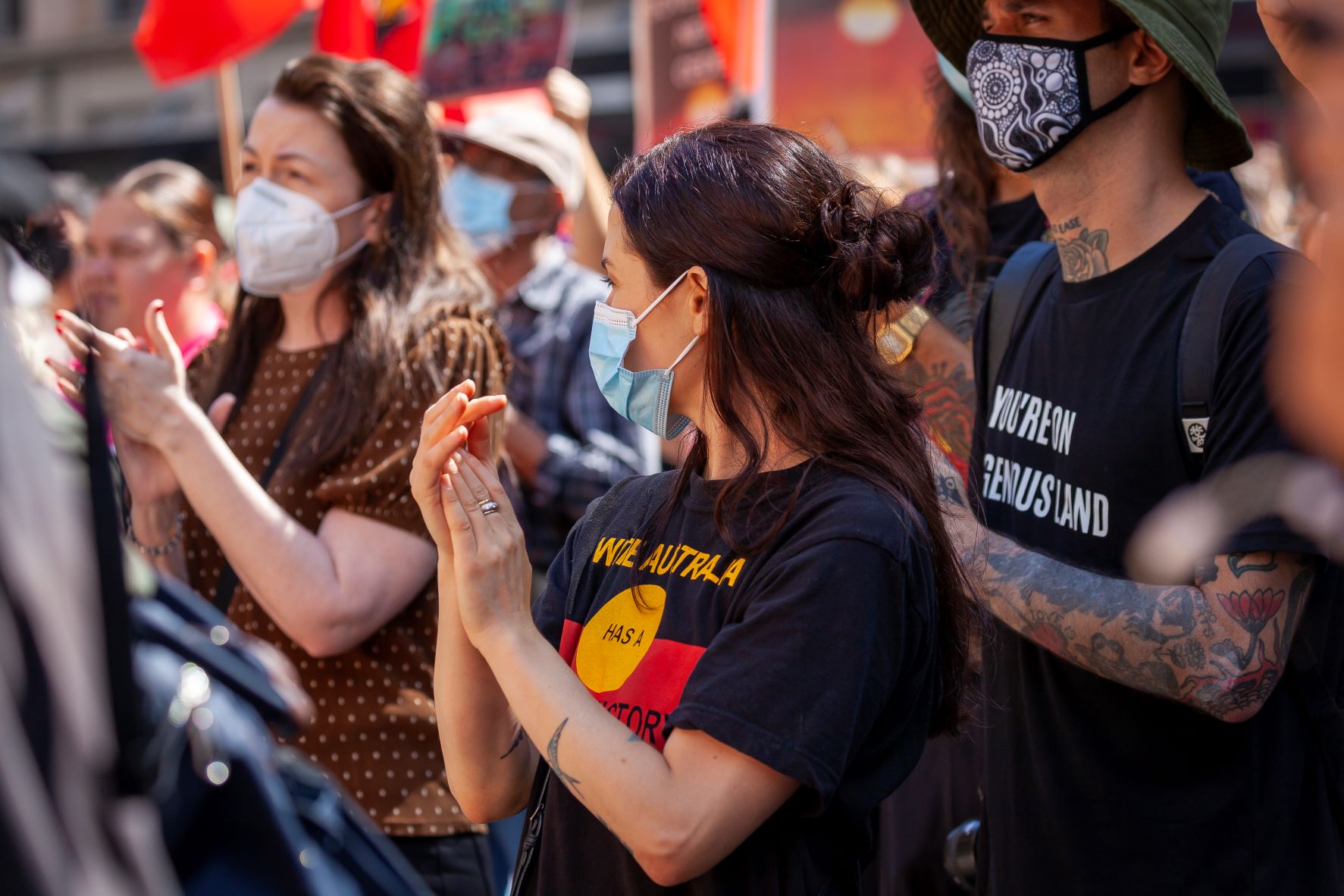
Amnesty International Australia supporters will hold events right around the country in a National Day of Action to urge candidates in the Federal Election to address human rights in their policy platforms.

Activists from across the country will be uniting online to write to candidates about the importance of upholding and advocating for human rights on Saturday May 7.

“The Covid-19 pandemic and the climate crisis have laid bare the devastating consequences of abuse of power, structurally and historically,” Amnesty International Australia National Director, Sam Klintworth, said. “These crises may not define who we are, but it has shown us what we should not be. The foundations for a sustainable, post-pandemic society rest not merely on recovery. It requires accountability, human rights, and a reshaping of our relationship to our environment, economy and each other.”

“This Federal Election is one where we must as a matter of urgency ask our elected representatives to address the critical issues of our time, including the climate emergency and First Nations peoples rights.”  

“Amnesty International is calling on the next Australian Government to put human rights – both here at home and abroad – at the heart of all policy decisions and to re-establish Australia’s place in the world as a free, fair and caring country and a human rights leader,” Klintworth said. 

Australia played a crucial role in developing the Universal Declaration of Human Rights, adopted by the United Nations on December 10, 1948. But Australia today remains the only liberal democracy without overarching human rights protection, and issues of racism, discrimination, children’s rights and the right to seek asylum, among others, continue to beleaguer our society. 

“At their core, human rights are about respecting the dignity of every one of us. Human rights matter because someone’s quality of life should not be determined by factors beyond their control – race, gender, socio-economic background, sexuality or age. The work of government is central to whether and how these rights are protected.”

Amnesty International’s Human Rights Agenda is calling on politicians and the next Federal Government to, among other things: 

  • Legislate a National Human Rights Act to protect and promote dignity, equality and respect for all peoples in Australia;
  • Increase the minimum age of criminal responsibility to at least 14 years of age and stop trapping children in the quicksand of the criminal justice system;
  • Increase the annual refugee resettlement intake to at least 30,000 people and end the system of offshore detention a
  • Strengthen 2030 carbon emissions target and significantly accelerate the phase-out of fossil fuels, including coal and gas

USA: If confirmed, Supreme Court decision could endanger abortion rights around the world

In response to reports that the Supreme Court is preparing to overturn abortion rights in the United States, Agnes Callamard, Amnesty International’s Secretary General, said:

“Overturning Roe vs. Wade would not only be the outcome of decades of hateful campaign against women’s rights; it would also be deeply racist and classist. Women of color and poor women would be disproportionately affected by any decision to end safe and legal abortion. If it overturns Roe vs. Wade, the Supreme Court would be demonstrating complete disregard for extensive evidence of the life-threatening implications of the criminalization of abortion and the consequential number of deaths resulting from recourse to unsafe abortion. Such a decision would thus constitute a violation of the right to life and the prohibition of torture.

“While moves to decriminalize and legalize abortion in places like Argentina, Ireland, Mexico and Colombia in the last few years have been a huge win for the global community, there are grim signs that the United States is out of step with the progress that the rest of the world is making in protecting sexual and reproductive rights. We fervently call on the US authorities to protect the right to legal and safe abortion. Anything less would be a gross failure to uphold human rights, including the rights to life, health, bodily autonomy, privacy and dignity.

Any regression in protection of the right to abortion would not only stand to damage the global perception of the United States; it would also set a terrible example that other governments and anti-rights groups could seize upon around the world in a bid to deny the rights of women, girls and other people who can become pregnant. Overturning Roe vs. Wade would become the symbol of a major backlash all over the world, putting recent progress at risk and endangering the health and lives of millions.”