No Home for Children: US Government Detention of Children at Homestead Facility Cruel and Unlawful, Says New Amnesty International USA Report
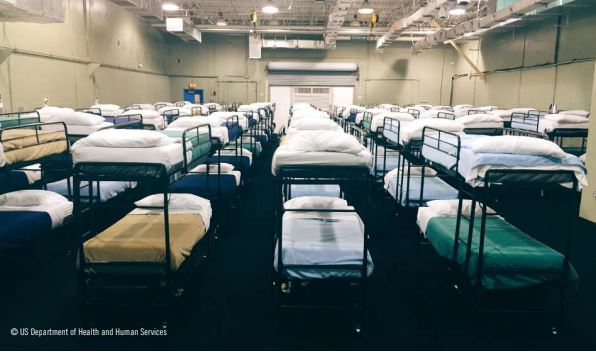
The Homestead facility housing children who travelled alone to the United States must be shut down as quickly as possible, a new Amnesty International USA report finds, and children should immediately be placed in licensed, small-size shelters and released to appropriate sponsors. The unlawful conditions at this facility are a direct result of US government policies designed to punish rather than protect people trying to rebuild their lives.
The report, “No Home for Children: The Homestead ‘Temporary Emergency’ Facility,” describes the inadequate conditions of the facility, which embodies the disastrous consequences of U.S. policies toward children seeking protection.
“Homestead is not a home for children,” said Denise Bell, researcher for refugee and migrant rights and Amnesty International USA. “Homestead is an industrial line for processing mass numbers of children, instead of focusing on their best interests. The message from this administration is clear: if children come to the US fleeing for their lives, the government will lock them up and make it as difficult as possible to secure their release.”
Amnesty International visited the facility twice, first in April 2019 and then again in July 2019. In early April, over 2,100 children from ages 13 to 17 were housed there. It expanded to nearly 2,500 children at its height of operation and is now reportedly detaining just under 2000 children. While the number of children held at the facility has fluctuated while it has been in operation, no child should ever be held in detention.
Many of the children held at Homestead faced persecution and targeted violence in Central America, where their governments are unwilling or unable to protect them. They made an arduous journey across thousands of miles to the United States, either by themselves or sometimes alongside a family member or trusted adult from which they were later separated.
Despite this, children at Homestead continue to be held in a facility where they are subject to inadequate care. While detained at the facility, children are held in a restrictive setting, where they are required to follow a highly regimented and strict schedule, wear ID badges with barcodes that are scanned when they enter and leave buildings, and request basic services by filling out request forms. Girls must even submit a request form if they need a sanitary pad. While the children receive educational services, classes do not follow the Miami-Dade County public school curriculum. Many of these children speak Indigenous languages and face barriers in accessing services at all.
At one point, children at Homestead spent an average of 89 days there according to the facility director. When Amnesty International visited in April, children at the facility were detained for a reported average of 52 days before children were either released to sponsors or transferred to another facility where their detention continued. In some cases, children have tried to escape the facility.
“Children detained in Homestead are frightened, alone, and far from home. The vast majority have sponsors willing to take them, many of whom are parents and family members,” said Denise Bell, researcher for refugee and migrant rights at Amnesty International USA. “The prolonged and indefinite detention of children was a crisis of the government’s own making. The administration chose to make it as difficult as possible to release these children by putting potential sponsors at risk of deportation due to an unnecessary information-sharing policy. This policy perpetuated family separation by another name and must be rescinded.”
The report calls for the closure of the Homestead facility. Children should never be detained, but if they are, it should be for the shortest possible length of time in the least restrictive setting possible. The continued use of temporary facilities such as Homestead and any new similar facilities should be discontinued.
Amnesty is also calling for investigations into the conditions at the Homestead facility and other government facilities detaining migrant children, as well as increased access for NGOs and members of Congress who wish to see Homestead and other facilities detaining children for themselves.
“The facility in Homestead, Florida must be shut down as quickly as possible and children should be immediately placed in licensed, small-size shelters and released to appropriate sponsors. The senseless detention of children who faced horrific violence and persecution in their home countries, only to be put behind bars in the United States, is a stain on the US human rights record. Children who come to the US should be treated just like any other children and receive our care, not our contempt,” said Bell.
Amnesty International Australia has joined more than 50 LGBTIQ+ advocates, organisations and allies in a joint statement in support of an affirming Religious Discrimination Act.
Joint LGBTIQ+ community statement in support of religious discrimination protections
We, the undersigned LGBTIQ+ advocates, organisations and allies, place on the public record our support for protections from discrimination for people of all faiths, and for people who don’t hold religious beliefs, provided these laws do not sanction new forms of discrimination against others.
As members of LGBTIQ+ communities, we have seen and experienced firsthand the immense harm discrimination causes. Discrimination has a devastating impact on physical and mental health, and an individual’s sense of acceptance and belonging.
We strongly believe that no one should be treated as ‘less than’ because of who you are or what you believe.
For more than forty years, we have advocated for the removal of discrimination against people on the basis of their sexual orientation, gender identity or sex characteristics. We have stood in solidarity with women, Aboriginal and Torres Strait Islander peoples, people from culturally and linguistically diverse backgrounds, people with disability and many others in their fight for equal treatment under the law.
So too we stand with all people of faith in their fight against discrimination because of their religious beliefs, including discrimination against people because they don’t hold religious beliefs. We recognise and acknowledge the many LGBTIQ+ people of faith, and the positive steps taken by many faith groups and schools to model genuine inclusion, showing how the rights of all can be integrated harmoniously.
We call on the Australian Parliament to introduce laws that appropriately strengthen that shield of protection for people facing discrimination because of their religious beliefs or because they don’t hold religious beliefs.
Equally, we caution the Australian Parliament against laws that would give some people within society a ‘sword’ to use their beliefs to harm others by cutting through existing anti-discrimination protections.
We will oppose any new laws which would give religious groups a license to discriminate against others in a way that would sanction mistreatment or wind back the clock on equality.
And we will continue to call for the removal of existing laws which allow religious schools to exclude and discriminate against LGBTQ students and teachers across the country, and from critical government funded services.
Australia has long prided itself as being the land of the fair go. Australians have consistently demonstrated that they value equality before the law – as shown by the overwhelming majority who voted YES during the marriage equality postal survey, including people of faith.
Australia is well on the path towards becoming a more equal place, and we support fair and balanced protections from discrimination for all people which move us forward on this journey.
Signatories:
A Gender Agenda
ACON
ACT LGBTIQ Ministerial Advisory Council
Activate Church
AIDS Action Council
AIS Support Group Australia
Aleph Melbourne
Amnesty International Australia
Australian Catholics for Equality
Australian Council of Social Services
Australian GLBTIQ Multicultural Council
Australian Marriage Equality
Australian Transgender Support Association of Queensland
Bisexual Community Perth
Curtin University Centre for Human Rights Education
Democracy in Colour
Equal Voices
Equality Australia
Equality Gilmore
Equality Tasmania
Gay & Lesbian Counselling Service of NSW
GLBTI Rights in Ageing
Goulburn Valley Pride
Human Rights Law Centre
Intersex Human Rights Australia
Just Equal
LGBTI Legal Service
Minus 18
National LGBTI Health Alliance
Parents of Gender Diverse Children
PFLAG Tasmania
Public Interest Advocacy Centre
Queensland AIDS Council
Queer Society
Rainbow Families NSW
Rainbow Families Victoria
Rainbow Territory
Social Justice Commission of the Uniting Church of Western Australia
Responding to the UN Human Rights Council voting in favour of a resolution to monitor and report on the critical human rights situation in the Philippines – including unlawful killings in the context of the “war on drugs” Amnesty International Australia Campaigner Tim O’Connor said:
“We’re extremely pleased Australia used its hard-fought position on the UN Human Rights Council to support the resolution to investigate and document the deadly campaign of extrajudicial killings in the Philippines.
“This vote not only provides hope for thousands of bereaved families, and the Filipinos bravely challenging the Duterte administration’s murderous ‘war on drugs’, but it also sends a clear signal that the international community won’t look away on these egregious human rights abuses.
“Now the Philippines needs to cooperate with the UN Human Rights Office leading the investigation and take urgent measures to halt the brutal killings that have become the hallmark of the Duterte administration’s campaign. If they do not, the Council may take further and more robust action. From here on, pressure on the architects of the government’s murderous policies will only grow stronger.”
Background
Last night, the UN Human Rights Council voted in favour of a resolution, tabled by Iceland, requesting the UN Office of the High Commissioner for Human Rights (OHCHR) to provide a detailed report on the situation of human rights in the Philippines, and for it to be presented to and discussed by the Human Rights Council at its 44th session.
The resolution passed with 18 votes in favour, 14 against and 15 abstentions.
The resolution follows years of campaigning by national and international civil society groups, including Amnesty International. Just ahead of the vote, Amnesty International released a new report documenting ongoing violations and crimes under international law committed as part of the “war on drugs.”
The list of current Human Rights Council member states – which includes the Philippines – is available here.
During NAIDOC week, Amnesty International Australia is joining the National Peak Body for Aboriginal and Torres Strait Islander Legal Services (NATSILS) to call on the Federal Government to commit to retaining the Indigenous Legal Assistance Program (ILAP).
In the Federal Budget 2019-20, the Government announced that from 2020 funding for Aboriginal and Torres Strait Islander Legal Services would be mainstreamed into a national mechanism, abolishing the ILAP.
“At a time when we are the most incarcerated people in the world, there is clear, demonstrated support for the Government to maintain its commitment to self-determined ATSILS by retaining the Indigenous Legal Assistance Program,” said Cheryl Axleby, Co-Chair of NATSILS.
Over 100 legal, health, disability, social justice and human rights organisations are behind the call to retain the ILAP, signing an open letter to the Federal Government on the issue.
Amnesty stands with them to ensure ATSILS can continue to provide vital legal services to Aboriginal and Torres Strait Islander communities.
These calls are supported by a recent independent review of ILAP that recommended the Commonwealth funding to be delivered through a standalone and specific program that directly funds ATSILS and NATSILS.
Amnesty International Australia today called on Prime Minister Scott Morrison to support a resolution before the United Nations (UN) to investigate and report on the campaign of extrajudicial killings in President Duterte’s “war on drugs”.
We’re seriously concerned Australia is going to miss an opportunity to save people’s lives
“We’re seriously concerned Australia is going to miss an opportunity to save people’s lives if it does not support Iceland’s resolution for the UNHCR to investigate this campaign of extrajudicial killings and hold the Duterte regime to account,” Amnesty International Australia Campaigner Tim O’Connor said. “That direction has to come from the Prime Minister.”
“The Philippines government has admitted to more than 6000 people being brutally killed in its so-called war on drugs, but our independent research indicates that this number is much higher.
“The reality is that if your name appears on a ‘drugs watch list’, you’re as good as dead whether or not you have actually been involved taking or selling drugs.
“The Australia Government must use its position on the UN Human Rights Council to hold this murderous regime to account” O’Connor said.
“These killings follow a pattern that has now become routine, and are carried out in the near-total absence of accountability in a climate of continued incitement from the president and other high-level officials.
“Trading relationships should not stand in the way of standing up for basic human rights.”
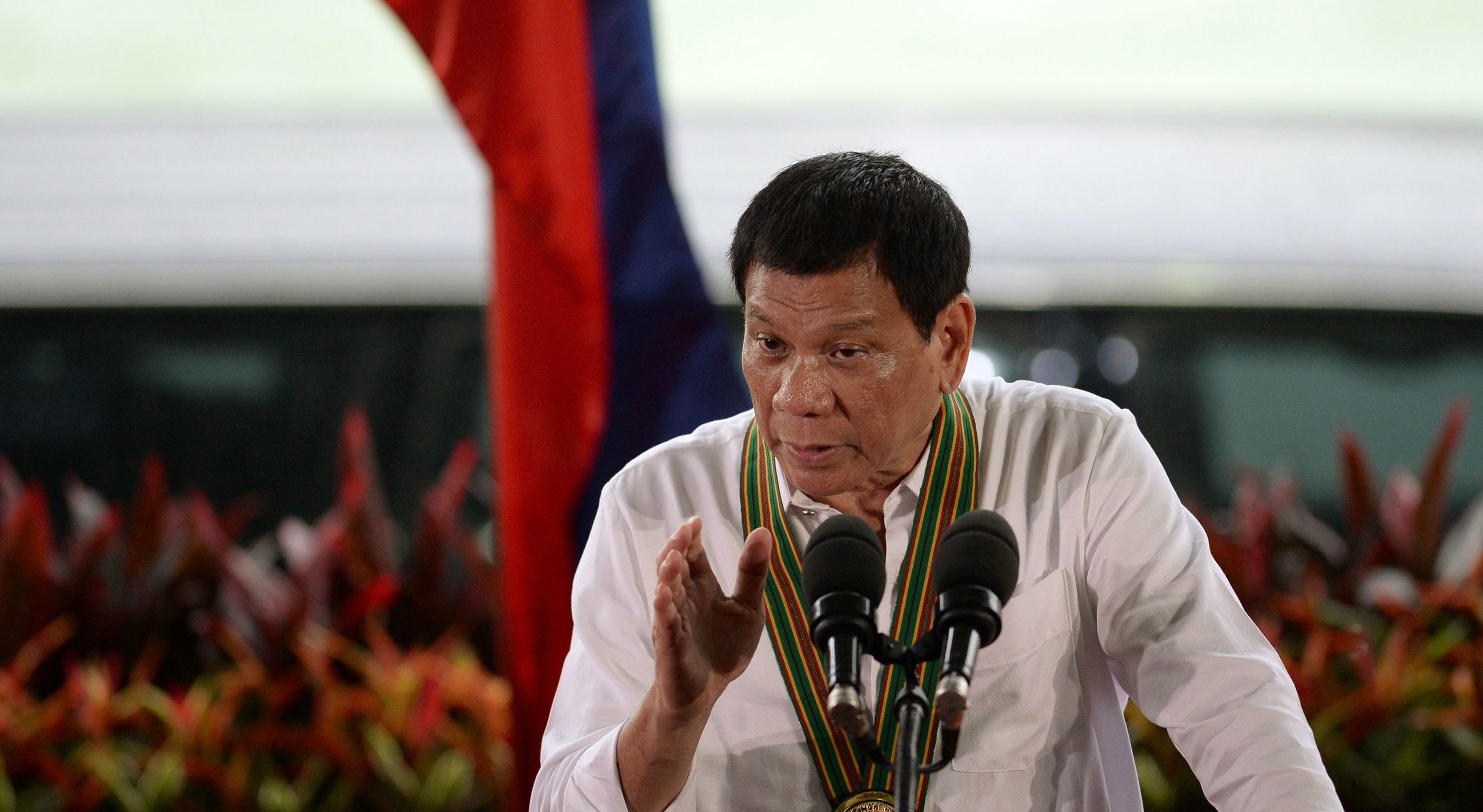
Police in the Philippines are operating with total impunity killing people from poor neighbourhoods as part of President Duterte’s murderous anti-drugs campaign, Amnesty International said today.
In a new report, “They just kill”, Amnesty is calling for the UN Human Rights Council to immediately open an investigation into gross human rights violations and possible crimes against humanity committed as part of Duterte’s “war on drugs”.
“Three years on, President Duterte’s “war on drugs” continues to be nothing but a large-scale murdering enterprise for which the poor continue to pay the highest price.”
The report joins a growing volume of evidence that the human rights violations committed in the Philippines’ murderous “war on drugs” constitute crimes against humanity.
“They killed him like an animal”
In its investigation, Amnesty identified 20 cases in which 27 people were killed, many of which appear to be extrajudicial executions across Bulacan province between May 2018 and April this year.
In every police operation Amnesty examined, police cited the same “buy-bust” justification: an undercover drug sting where suspects were armed and fought back, “prompting” the use of lethal force.
Families and witnesses repeatedly refuted police accounts. In one case, police claimed Jovan Magtanong, a 30-year-old father of three, fired at them, and that they recovered a .38 calibre gun and sachets of illicit drugs from the scene of the incident.
However, witnesses said he was sleeping alongside his children when officers knocked on his house door asking for another man. Jovan’s family said he did not own a gun and had not used drugs for over a year.
“They killed him like an animal”, a family member told Amnesty International.
In the majority of cases reviewed by Amnesty, those killed were said to have been on so-called “drug watch lists” compiled by the authorities outside of any legal process.
These lists effectively serve as guides for the police of people to arrest or kill. Local officials down to the neighbourhood level are pressured to show results by collecting the names of “users,” “pushers,” “financiers,” and “protectors” in their area.
These lists provide further evidence of the government’s targeting of poor and marginalised communities.
Systematic killings
The Philippine government has acknowledged at least 6,600 killings at the hands of police. Evidence points to many thousands more killed by unknown armed persons with likely links to the police.
Amnesty has previously exposed how the police had systematically targeted mostly poor and defenceless people across the country while planting “evidence”, recruiting paid killers, stealing from the people they kill, and fabricating official incident reports.
President Duterte has repeatedly defended his administration’s “war on drugs”, saying people involved in drugs are “criminals” and that their killing is “justifiable”.
Nicholas Bequelin, Amnesty International’s Regional Director for East and Southeast Asia, said:
“Three years on, President Duterte’s “war on drugs” continues to be nothing but a large-scale murdering enterprise for which the poor continue to pay the highest price.
“It is time for the United Nations, starting with its Human Rights Council, to act decisively to hold President Duterte and his government accountable.
“It is not safe to be poor in President Duterte’s Philippines. All it takes to be murdered is an unproven accusation that someone uses, buys, or sells drugs.
“Everywhere we went to investigate drug-related killings ordinary people were terrified. Fear has now spread deep into the social fabric of society.”
Fifty years ago, nine New York police officers stormed the Stonewall Inn on Christopher Street and began aggressively searching the bar’s patrons. They demanded identification and arrested anyone they suspected of being gay or dressed in a way that didn’t conform to mainstream society’s narrow understanding of gender.
The events that followed would spark the modern LGBTI rights movement, inspiring the first LGBTI Pride parade down Christopher Street.
In 1969, it was still illegal to be gay in most parts of the US. For many lesbian, gay, bisexual and transgender people, nights out at places like the Stonewall Inn were the only times where they could openly be themselves. The venue was known for its celebration of inclusion and also became a safe space for sex workers and the homeless.
In the early hours of 28 June 1969, as police started harassing everyone in the bar and dragging them into the backs of squad cars, the Stonewall patrons didn’t just protest a police raid on a bar: They were protecting their home.
How did the Stonewall Riots start?
There is still some debate over the exact moment the riots started. But people who were there that night agree that three women of colour, Marsha P Johnson, Sylvia Rivera and Stormé Delarvarie were pivotal in inspiring the other guests to rise up against the police.
Police raids at the Stonewall Inn were by no means a rare occurrence. In fact, regardless of where they were or how openly they expressed themselves, many LGBTI people lived in constant fear of being arrested for “crimes against nature”, being attacked or losing their jobs and livelihoods if they were ever discovered. In the face of such blatant oppression and violence, a few voices of resistance ignited that first spark.
Like many transgender people at the time, Marsha and Sylvia faced constant harassment, particularly from the police. Since it was illegal for people assigned male at birth to wear women’s clothes (and vice versa) they and other trans women and drag queens at the Stonewall Inn were forced into the bathroom, strip searched and arrested if it was revealed that they were born with male characteristics.
Human Rights Defenders, Sylvia Rivera and Marsha P Johnson
Marsha and Sylvia refused to comply with these demands and decided to defend themselves, intensifying the tension between the police and the customers. Only moments later, you could hear people chanting: “We shall overcome” and “Gay Power” from down the street which provoked crowds to gather outside the venue.
Meanwhile, Stormé Delarvarie, a biracial lesbian from Louisiana, was outside and was shoved into the back of a squad car after being beaten over the head by a police helmet. She shouted to onlookers outside, “Why don’t you do something?”. The crowd responded to her call and jumped to defend those who were still inside.
Stormé Delarverie
People started throwing coins and bottles at the police, forcing the officers to retreat into the bar. Trash cans were thrown through the window as the crowds grew outside. For many of the people there that night, it was the first time that they could stand up and declare that they weren’t going to tolerate discriminatory treatment from the police or anyone else any longer.
The officers called in back up in an effort to control the protestors, even bringing in tear gas to scatter the riots, but the crowds outside continued to grow. It would be another four days before the riots simmered to a close.
Defending human rights at the Stonewall Riots
The riots at the Stonewall Inn are an iconic demonstration of how a single decision, an instinctive reaction to injustice, can be the first step to igniting a movement that can change the course of history.
When Marsha and Sylvia decided to go out that night, there was no way they could have imagined that their actions would become defining moments in the struggle for LGBTI rights around the world. Although they had been active campaigners for trans people’s and sex worker’s rights, their participation in the Stonewall Riots would lead them to found STAR (Street Transvestite* Action Revolutionaries) as well as becoming key leaders in the Gay Liberation Front.
Similarly, Stormé Delarverie was a known figure in the LGBTI community on Christopher Street and was a regular drag king performer and emcee at some of the venues in the area. After Stonewall, she became known as “The Guardian of the Lesbians” and worked as a bouncer at some of the lesbian bars in the West Village. She passed away in 2014 and lived to see same sex marriage become legally recognized in New York in 2011.
“I’m a human being that survived. I helped other people survive”
– Stormé Delarverie
They proved that sometimes it just takes one moment of bravery to show people what the world could look like if they join the crowd of voices demanding equality and liberation.
Stonewall’s legacy
A year after Stonewall on 28 June 1970, people returned to the Stonewall Inn and marked the anniversary as Christopher Street Liberation Day. This parade became known as the first LGBTI Pride festival and served as a catalyst to other movements and events across the globe.
Even though LGBTI people had long-standing acceptance in many cultures around the world, the centuries preceding what would become known as the Gay Liberation Movement were dominated by a primarily Western narrative of gender and sexuality that forced many to repress their true selves and conform to society’s expectations.
The Stonewall riots were the first step in a series of events in the late 20th century that would pave the way for legal and social change that would improve the lives of LGBTI people. The people who organized the protests that night became examples that would embolden LGBTI people around the world to resist bigotry and embrace diversity.
Decades after the riots, there are now hundreds of Pride festivals around the world, with thousands of participants every year. Although it can still be incredibly dangerous to participate in LGBTI activism in some parts of the world, to most people attending these events, Pride is a time for LGBTI+ people to celebrate and be celebrated by their communities, a noteworthy sign of progress when you think about the way Marsha, Sylvia and Stormé were attacked 50 years ago. But their legacy stands to remind us that Pride was, and always will be, built on the tradition of protest, outrage and a hunger for equality.
*This term was commonly used when STAR was founded, but many gender fluid and transgender people now consider it inaccurate and offensive.
Fiona* is devastated at how much Queensland’s justice system failed her son.
In January, Fiona’s 15-year-old son Mark* spent three weeks in the Brisbane City Watch House for stealing chocolates and paint cans from a shop.
Police took Mark to the Brisbane City Watch House, a maximum security detention facility designed to temporarily hold adults. From there, Mark should have been transferred to the Brisbane Youth Detention Centre. But the youth prison was full so Mark’s stay at the police watch house continued.
In a watch house, children like Mark are treated as adults: kept alongside them; subjected to strip searches and solitary confinement; and deprived of the education their peers receive in school or youth prisons.
Mark spent his time alone in a small cell. Hours turned to days, then weeks.
Navigating a broken system
Fiona is an Indigenous woman living in South Brisbane. She’s an active member of her community, and she worked at her local Aboriginal and Torres Strait Islander health service for many years.
From chatting with Fiona, it’s clear that she loves Mark an enormous amount. Mark is a talented and passionate dancer and artist. He’s also diagnosed with autism and Asperger’s syndrome, two developmental disorders. Mark does not always communicate freely with Fiona, and he struggles with anger management.
Fiona’s attempts to navigate Queensland’s broken justice system left her incredibly frustrated. First, Fiona was kept in the dark while Mark was detained. For two weeks, no one called her. She didn’t know where Mark was being held – but she guessed Brisbane’s youth detention centre.
Fiona’s guess should have been correct – children in detention should be kept in youth prisons, facilities which cater to childrens’ needs. Queensland’s police manual states that police watch houses are only to be used as a last resort for detaining children, and that children must not be kept in watch houses for overnight stays.
Then, Fiona’s bail request was denied: two weeks had not been enough to complete a psychometric assessment for Mark.
This is common in Queensland’s broken bail process – poor funding means bail assessments are incredibly slow. Since September 2018, the number of children held in Queensland on remand (that is before their guilt or sentence have been determined) has not fallen below 80 per cent. Some of these children are innocent.
Fiona worries that the unwelcoming environment and constant police presence would have likely aggravated Mark’s developmental disorders.
Calls for support unheeded
Fiona’s frustrations with the system are not new — she says Mark has been left to suffer from a very young age. Fiona has been through years of pain while begging for support.
“He has practically missed 90 per cent of his education since Year Two, facing almost weekly suspensions,” she says.
“I’ve been crying out for help for years, we have tried to get psychologist support but when it has come to a follow up, we’ve had nothing. He has been traumatised and brutalised by the system.”
Programs do exist to help families, such as the Aboriginal and Torres Strait Islander Community Health Service in Brisbane who provide community medical care and youth services for in-need families. However, many families continue to feel unsupported. Fiona spoke anecdotally of holiday programs with informal behavioural criteria — Mark had been rejected multiple times from such programs.
Community-led initiatives lacking
Another problem is that the diversion programs that do exist are not community-led. The staff “don’t know the local cultural sites, stories, history, dream time stories, or community Elders,” Fiona says.
Fiona longs for a program that engages local Indigenous children with their culture and Elders, and taking them to live on country. However, she says her community has never enjoyed one.
“These kids are growing up without an identity, they need to understand their cultural identity. They need people to take an interest in them and do positive things with them”.
Mark is now living in Rockhampton with his father. Rockhampton has helped Mark. He has learnt more about his culture and made positive relationships within his father’s community.
“It’s sad to say, but I’m relieved to have him away from me [to his father in Rockhampton], otherwise, I don’t know what would be happening to him now.”
Looking to the future
Across Queensland, there are countless others like Mark and Fiona – families deprived of greatly-needed support, who then fall victim to a brutal prison system. As of 10 May 2019, Brisbane City Watch House held 89 children — at least half of them were Indigenous and at least three were 10 years of age.
Fiona is passionate about improving her community. She and a group of Indigenous women hold poetry nights and sell artwork (including artwork made by Mark) to provide local families with food and household appliances.
Fiona tells me her story is the community’s story. We must demand governments stop the cyclical disenfranchisement of Indigenous communities everywhere.
By Liam Thorne
* Names and identifying details have been changed to protect the privacy of individuals.
Think signing petitions, attending rallies, and bugging your members of parliament doesn’t do anything? Here’s proof that it does – and this is just a teaser. Every day we hear incredible stories of hope overcoming adversity, and people just like you leading positive change, all around the world. Thank you for defending human rights!
1. Reuters journalists released in Myanmar
In May, Myanmar’s authorities pardoned and released Reuters journalists Wa Lone and Kyaw Soe Oo.
The two put their own safety on the line to investigate the Myanmar military’s crackdown on the Rohingya people. While they were investigating the abuses, they were invited to meet police officers for dinner. The policemen handed Wa Lone and Kyaw Soe Oo some documents, and they were immediately arrested. They were sentenced to seven years in prison, just for doing their jobs.
Almost 20,000 Australian supporters signed a petition to release the journalists, and over 50 organisations sent a joint letter to Aung Suy Kyi demanding their release. Thai journalists and Amnesty Thailand supporters also played a big part in calling for Wa Lone and Kyaw Soe Oo’s release.
Following an unfair trial, Hakeem had been convicted of vandalising a police station in his home country of Bahrain (he had been playing in a televised football match at the time of the alleged offence). He found refuge in Australia in 2018.
Hakeem had travelled to Thailand on his honeymoon, only to be arrested and threatened with deportation back to Bahrain and certain danger.
Amnesty supporters mobilised worldwide to call on the Thai authorities to return Hakeem to his wife, friends and teammates in Melbourne. With Amnesty supporters working together with the Gulf Institute and other organisations, the movement to #SaveHakeem quickly grew: spanning three continents and more than 165,000 people, including football teams, Olympians and celebrities.
“Thank you all, you have given me big support to be strong. I love you all and thank you from the heart. Well done. We did it.”
One year after being attacked at an International Women’s Day rally, Vitalina Koval once again took to the streets to celebrate International Women’s Day on 8 March. Far-right groups had openly promised to attack the rally, but it was well-protected and a genuine success.
Vitalina had been attacked with paint at a 2018 International Women’s Day rally she’d organised, even sustaining chemical burns to her eye.
From the Czech Republic to Chile, Amnesty activists took action calling for those responsible to be held to account, and for Ukraine to protect Vitalina and activists like her. In February 2019 Amnesty staff met with the Ministry of the Interior and handed over 400,000 names in support of Vitalina. The Ministry confirmed that they were closely watching the investigation into the attack against Vitalina.
Egyptian photojournalist Mahmoud Abou Zeid, also known as Shawkan, was released in early March after spending more than five and a half years in prison.
In 2013 Shawkan was imprisoned for photographing the Egypt’s police violently dispersing peaceful protesters at a Cairo sit-in. He faced the death penalty simply for doing his job as a journalist.
More than 43,000 Amnesty International Australia supporters demanded that the Egyptian authorities to release Shawkan and drop all charges against him, including some well-known Australian journalists. Years passed but Amnesty supporters didn’t give up; students at Amnesty’s Nordic Youth conference protested outside the Egyptian Embassy in Norway in 2017.
Finally, after more than five years of pressure, the Egyptian authorities released Shawkan earlier this year.
Aasia Bibi, a Christian farmworker, had been convicted of blasphemy and sentenced to death in 2010. Despite being acquitted of all charges by the Supreme Court in 2018, the Pakistani Government gave in to demands by a violent mob, stopping her from leaving the country and having the Supreme Court review its ruling.
Many Amnesty supporters worked to defend Aasia’s human rights – signing petitions and sending letters to the authorities to demand her death sentence be overturned, then asking that Aasia be safely resettled.
In March the President of Kyrgyzstan signed into law the ratification of the Convention on the Rights of Persons with Disabilities (CPRD).
When Gulzar Dushenova lost her legs in a car accident she made it her life’s mission to ensure people with disabilities can live with dignity and move around freely. In 2018 Amnesty supporters joined with Gulzar and other disability rights advocate to call on the Kyrgyzstan Government to ratify the Convention – sending letters to Kyrgyzstan’s Government in support of Gulzar’s mission.
It worked – on 20 December, Kyrgyzstan’s Parliament made a first move towards ratifying the CPRD, before signing it into law on 14 March 2019.
“I am grateful for all the support and solidarity from so many of Amnesty International’s activists who care about our rights despite being from a different country.”
7. Women’s rights activists released in Saudi Arabia
After a 10-month ordeal, Saudi activists Iman al-Nafjan and Aziza al-Yousef were released on bail in March.
Shortly before lifting their ban on women driving in June 2018, the Saudi authorities detained several activists and imprisoned them without charge. Activists like Iman and Aziza, who had campaigned for women to be allowed to drive in Saudi Arabia, were put behind bars. Some of the activists were also tortured and sexually assaulted.
Amnesty activists all around the world mobilised, calling on Saudi Arabia to release the activists. In the United Kingdom, people held a ‘beep for freedom protest’ outside the Saudi Embassy. Activists also protested in France, Spain, Norway, Belgium, and the Netherlands. In Australia, people like you took action on International Women’s Day and helped us lobby the Australian Government to act.
It’s great news that Iman and Aziza are now free, however we are still demanding the release of other peaceful human rights activists in Saudi Arabia, including Nassima al-Sada.
Basuki Tjahaja Purnama, known as Ahok, was released from prison earlier than expected, on 24 January.
Ahok is a former governor of Jakarta and a Christian. He had been convicted of blasphemy against Islam and sentenced to two years imprisonment in May 2017.
Nearly 15,000 Australians signed an Amnesty petition for Ahok. On his release, Ahok’s supporters gathered outside the detention centre to greet him.
9. Hanan Badr el-Din released from detention in Egypt
After years of pressure from people across the globe, the Egyptian authorities released human rights defender Hanan Badr el-Din in April.
Hanan is the co-founder of the Families of the Forcibly Disappeared Association, which she founded after her husband disappeared in July 2013. Egypt’s authorities arrested her in May 2017, charged with belonging to a banned group and ordered that she be detained for 15 days. That 15 days turned into almost two years of pre-trial detention.
Amnesty action groups around the world mobilised for Hanan during Amnesty’s Write for Rights 2017 campaign, and over 500,000 people took action for her release around the world.
Iranian human rights defender Golrokh Ebrahimi Iraee was released from prison on 8 April after completing her sentence. In Australia, 30,000 people took an action calling for Golrokh’s release.
Golrokh had been imprisoned after writing an unpublished story about Iran’s practice of stoning. The story describes a young woman who watches the film The Stoning of Soraya M and becomes so enraged that she burns a copy of the Qur’an.
During her detention Golrokh alleges that she was subjected to hours of interrogation while blindfolded and that interrogators repeatedly told her that she could face execution.
Golrokh’s husband Arash and her good friend Atena, an anti-death penalty campaigner, are also imprisoned by Iran’s authorities, and we continue to call for their immediate release.
Write for Rights at Amnesty Australia National AGM, 2018. copy; AI
11. Tayseer released from prison in Abu Dhabi
In February Jordanian journalist and poet, Tayseer Salman al-Najjar was released from al-Wathba prison in Abu Dhabi.
Tayseer was detained in Abu Dhabi in 2015 because of a comment he posted on Facebook criticising the United Arab Emirates and praising the resistance in Gaza. After Tayseer’s arrest, thousands of Australian Amnesty supporters called on the authorities to release him.
After Tayseer’s release, his wife said to Amnesty:
“You have been like a family to Tayseer and me. Thank you for your continuous support.”
After spending months in prison, activist Amal Fathy has now been released.
Egypt’s authorities imprisoned Amal in May 2018 after she posted a video on Facebook that criticised the government for failing to address sexual harassment. Shortly after posting the video, police raided Amal’s home in the middle of the night and detained her, along with her husband and young child. Her family was released, but Amal remained in prison.
Tens of thousands of people around the world demanded that Amal be freed, including hundreds of people in Turkey who all mailed letters to the Egyptian Government on Amal’s behalf.
Amal Fathy was released on house arrest in December 2018, and in February 2019 her house arrest was lifted.
The Attorney General of the State of Morelos has opened a criminal investigation into the killing of Samir Flores Soberanes. Samir was shot dead in February at his home in Mexico. He had been a vocal opponent against a proposed power project, the Proyecto Integral Morelos.Mexico has also granted protection measures to several members of his movement.
After his death, thousands of supporters took to the streets of Mexico City to demand justice. In March 2019 we asked our supporters to sign a petition demanding the authorities conduct a ‘prompt, thorough and impartial’ investigation. 7351 actions taken by Amnesty Australia supporters were sent to the authorities in May.
15. Oyub Titiev is finally free
After almost a year and a half behind bars, human rights defender Oyub Titiev has been released from prison in Chechnya.
Oyub was sentenced to 5 years in prison on fabricated charges. The Head of Chechnya had previously called Oyub and his colleagues “enemies of the people” and promised “to break their spine”.
Amnesty supporters, in Australia and around the world, mobilised for Oyub’s release during the 2018 World Cup. His case was featured during SBS’s World Cup coverage, and across the Australian media.
“I am grateful to everybody who supported me, without your help this release would not have happened. Once more, a massive thank you!”
In response to news that the Sharrouf children will be returning to Australia Dr Graham Thom, Amnesty International Australia Refugee Coordinator said:
“These children being returned home to their family is a great achievement for the Australian Government and a welcome relief for the people aiding them on the ground.
“Yet around sixty Australian daughters, mothers, sisters, brothers and cousins remain trapped in this desperate part of Syria. The Australian Government must do all in its powers to return all Australian women and children who remain trapped in these camps.
“Conditions in the camps are dire. Children are going without food and water and their safety is constantly threatened by violence, disease and malnutrition. These children did not choose the hardships they are currently enduring.
“Amnesty International urges the Australian Government to urgently intervene and save these mothers and children as soon as possible so that they can all return to Australia, where they belong.”