Amnesty International welcomes Queensland Youth Justice Amendment Bill

Responding to Queensland’s Youth Justice Amendment Bill introduced today, Amnesty International Australia Indigenous Rights Advocate, Joel Clark said:

“This is serious reform that goes a long way towards fixing Queensland’s broken youth justice system. By addressing major concerns around bail, this reform will  have a positive effect on remand rates. It will reduce the number of kids in prison, meaning that the government will no longer have to rely on watch houses.

“The amendments allow kids to get the support that will help them thrive and get them out of the youth justice quicksand,” Clark said.

“This is serious reform that goes a long way towards fixing Queensland’s broken youth justice system. By addressing major concerns around bail, this reform will  have a positive effect on remand rates. It will reduce the number of kids in prison, meaning that the government will no longer have to rely on watch houses.”

The Bill, which is before the Queensland Parliament and will be determined when Parliament next sits in late July or early August, outlines key reforms to address issues that were exposed in ABC Four Corners’ Inside the Watch House including:

  • Ensuring that detention of children as a last resort applies in regards to bail,
  • A new principle requiring the youth justice system (including, for example, courts, legal representatives and the Office of the Director of Public Prosecutions) give priority to proceedings for young people who are remanded in custody,
  • A requirement for young people who are arrested and detained to be brought before the Children’s Court as soon as practicable and within 24 hours, or if the court cannot be constituted within 24 hours of the arrest, on the next available day, and
  • A prohibition on locking up children solely because the child lacks accommodation, or has no apparent family support, and
  • Special care and protection for children under 14.

“These are massive steps forward for youth justice reform in Queensland. To ensure that kids never have to face the horrors that were exposed in the Brisbane City Watch House. We also call on  Parliament to legislate that children be prohibited from being held overnight in watch houses and to raise the age of criminal responsibility to at least 14 years.

“This reform has come about due to long and sustained campaigning from many organisations that should be proud of the positive impact that they have had on the lives of children in Queensland.”

UK must refuse extradition of Julian Assange to the United States

Following the formal extradition request by the United States to the United Kingdom for Julian Assange and ahead of tomorrow’s extradition hearing in the Westminster Magistrates’ Court, Massimo Moratti, Amnesty International’s Deputy Director for Europe, said:

“The British government must not accede to the US extradition request for Julian Assange as he faces a real risk of serious human rights violations if sent there. The UK must comply with the commitment already made that he would not be sent anywhere he could face torture, ill-treatment or the death penalty.

“The UK must abide by its obligations under international human rights law that forbid the transfer of individuals to another country where they would face serious human rights violations. Were Julian Assange to be extradited or subjected to any other transfer to the USA, Britain would be in breach of these obligations.”

Hong Kong: ‘Excessive’ police force against peaceful protesters condemned

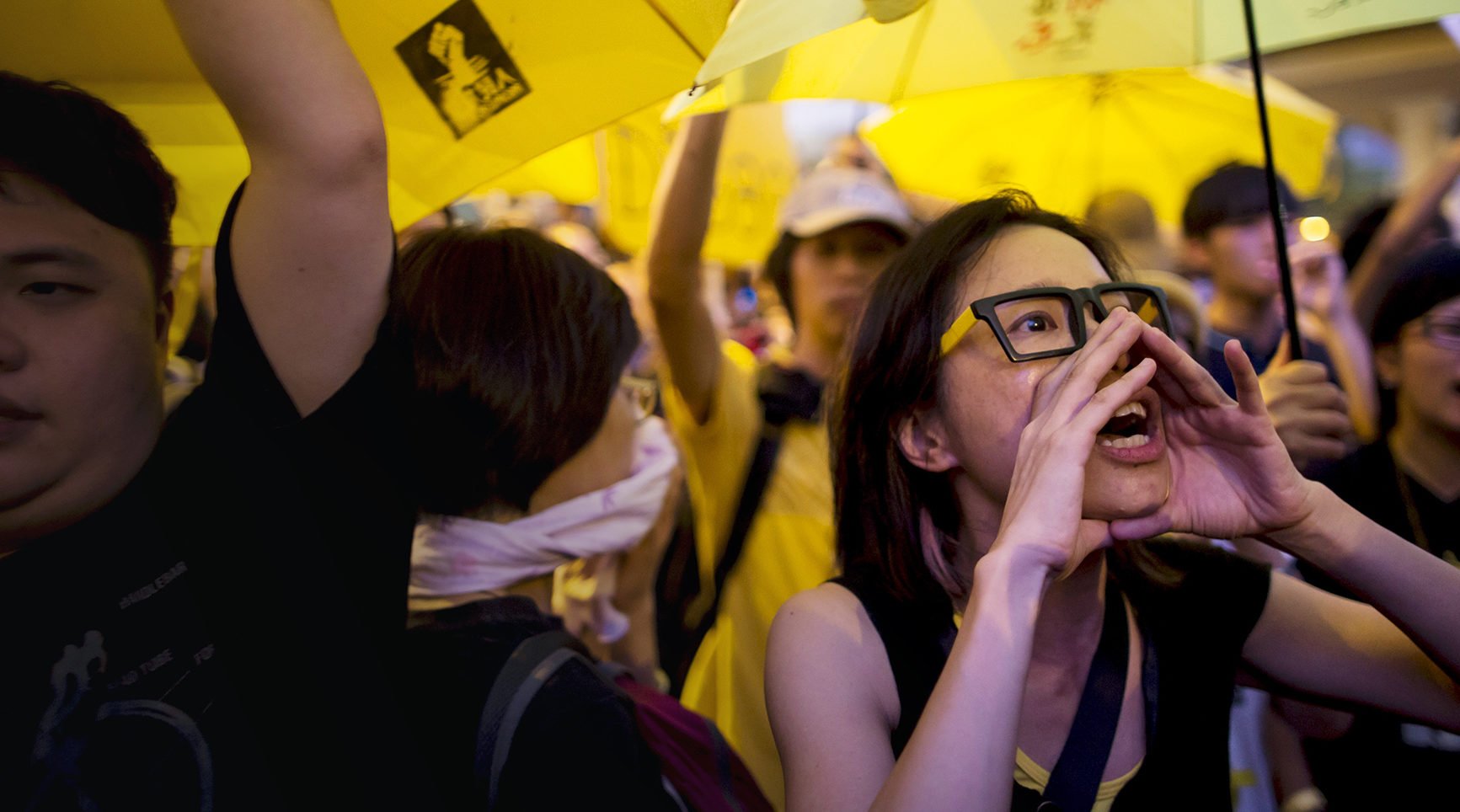
Amnesty International has condemned the use of force against largely peaceful protesters by Hong Kong police – who used tear gas, guns firing bean bags and rubber bullets, batons and pepper spray – to disperse a demonstration against the extradition bill in central Hong Kong today.

Man-Kei Tam, Director of Amnesty International Hong Kong, said:

“The ugly scenes of police using tear gas and pepper spray against overwhelmingly peaceful protesters is a violation of international law.

“Police have a duty to maintain public order, but in doing so they may use force only when strictly necessary. Hong Kong’s police have today failed to live up to this standard.

“The police have taken advantage of the violent acts of a small minority as a pretext to use excessive force against the vast majority of peaceful protesters.

“Tear gas and projectiles like rubber bullets are notoriously inaccurate and indiscriminate, and can result in serious injury and even death. They should only ever be used in a targeted response to specific acts of violence and never to disperse peaceful protesters.

“This excessive response from police is fuelling tensions and is likely to contribute to worsening violence, rather than end it. We urge the Hong Kong police not to repeat such abuses against peaceful protesters, and instead ensure people can legitimately exercise their rights. We also remind police that using force against protesters already brought under control is unlawful.”

British-made tear gas likely used on protesters

Pictures shared on social media appear to show CS gas canisters fired at civilians during clashes in Hong Kong today have been produced by British defence contractor Chemring Defence, formerly known as PW Defence.

Oliver Feeley-Sprague, Amnesty International UK’s Military, Security and Police Programme Director, said:

“Amnesty UK is extremely concerned that pictures appear to show that British-made tear gas is being used against peaceful protesters in Hong Kong.

“The use of tear gas against civilians is shocking, and we want the UK Government to prevent any further supplies of crowd control equipment supplied to Hong Kong that risks being used to threaten legitimate protests.

“The world is watching closely what is happening in Hong Kong, and we urge the authorities there to exercise restraint.”

Extradition Bill

Earlier today, thousands of protesters in Hong Kong took over streets around the city’s government headquarters to demand the authorities withdraw proposed amendments to the extradition law. Police started dispersing protesters in the afternoon, using tear gas and pepper spray, and in some instances guns firing bean bags and rubber bullets. Some protesters were taken away by the police.

While the afternoon saw increasing clashes between front-line police and protesters in some locations, the tear gas deployed by police affected areas far beyond those skirmishes, where no violence had taken place at all. Some escape routes had also been blocked off by police, limiting opportunities for demonstrators to leave the area.

The proposed law new extradition arrangements would have the effect of enabling the handover of persons in the territory of Hong Kong to mainland China. If enacted, this law would extend the ability of the mainland authorities to target critics, human rights activists, journalists, NGO workers and anyone else in Hong Kong. Amnesty Hong Kong recently joined more than 70 other NGOs in a joint letter to Hong Kong’s Chief Executive, Carrie Lam, calling for the proposed extradition law amendments to be dropped because they pose a direct threat to human rights.

5 reasons some people think the world needs the death penalty

Campaigner Michael Hayworth answers some of the tougher questions – like why it is fundamentally important to abolish the death penalty?

Anti-death penalty campaigners can rattle off 25 different reasons why we need to abolish the death penalty: its cruel, degrading, inhumane, what about families, it’s just wrong and world peace.

Most of us can do this so quickly that we cause a small whirlpool in the organic latte that we proudly paid $4.80 for at a garage in the industrial estates of inner western Sydney.

Despite the overwhelming global trend against executions, a number of reasons for the death penalty continue to come up. Here is my attempt to respond to them.

1. We need to be ‘tough on crime’

Everyone agrees that crime is bad and we need to stop it. This seems sensible and logical in every way, until we ask the question: do we need the death penalty to be ‘tough’ on crime? The answer is no, we don’t.

The fallacy that crueler punishments deter crime doesn’t take into account that there are complex social and economic factors that drive crime rates, and secondly, that criminals don’t often plan on getting caught or think through all the consequences of their actions.

“Since Canada stopped executing the murder rate has dropped by 44 per cent”

Simplified statistics don’t help either.

Did you know that since Canada stopped executing the murder rate has dropped by 44 per cent? Does this mean that stopping executions will stop murders? Of course not, but it does demonstrate that the issues that drive and prevent crime are too complex to fit into a one line statistic or sound-byte.

The point here is that preventing crime takes long-term research into the causes, effective police work and rehabilitation. All of which can happen without the use of the death penalty.

2. ‘They did the crime, they should do the time’

Various iterations of this comment came thick and fast when Amnesty began calling for the clemency of Australians Andrew Chan and Myuran Sukumaran, currently on death row in Bali for drug offences. Ironically, with the death penalty, we are not talking about time, we are talking about the opposite.

Both men acknowledge their crimes and recognise that they must face punishment. But a death sentence deprives people of the opportunity to reform. Myuran Sukumaran and Andrew Chan are great examples of reform, one running art classes and the other studying to be a pastor. Their reform has come so far that a former governor of Kerobokan prison has argued they shouldn’t be executed.

Take action now button

Many others who languish on death row across the world have acknowledged their crime and reformed. There is no benefit to the state in killing these people, a senseless deprivation of life.

The immediate counter argument is that the threat of death forces people to reform. Again, the evidence for this simply isn’t conclusive.

Criminal justice systems the world over have had great success of reform without the threat of death, and often due to programs that focus on offender rehabilitation.

3. The criminal justice system is fair

Australia’s criminal justice system is largely fair, but that certainly can’t be said of many of the countries using the death penalty. We know that the death penalty is applied overwhelmingly to the working class, ethnic minorities and other marginalised groups. This happens not because people in these categories are more prone to crime, but because they have less access to legal resources.

Ask any criminal lawyer whether or not the amount of legal resources available on a particular case makes a difference and they will give you a deadpan ‘yes’. Legal support might not get the verdict is changed, but mitigating circumstances can be presented, alternate arguments explored and evidence double-checked. All of this makes a difference to whether a death sentence is handed down.

“We can’t give back a life once it is taken, and for one I would prefer a cautious approach to even the slightest possibility of taking an innocent person’s life”

Many justice systems are stacked against the person charged with the crime. Siti Zainab is an Indonesian national on death row in Saudi Arabia. Siti was a domestic worker who, after horrific treatment at the hands of her employer, allegedly killed a member of the household. Domestic workers are often unable to escape their employers treatment in the Gulf and Siti reportedly suffers from a mental illness.

Regardless of the country, a fair criminal justice system does not mean an infallible one – errors can and do occur. Troy Davis was executed in Georgia, USA after seven of nine key witnesses changed their testimony, some going so far as to argue for Troy’s innocence.

We can’t give back a life once it is taken, and for one I would prefer a cautious approach to even the slightest possibility of taking an innocent person’s life.

4. It is cheaper and more humane to execute people.

Even I was surprised by the facts on this one. A study done in California discovered that it was actually more expensive to execute a person than to keep them in jail for life. Yes, that’s right – the amount of time and money spent on taking a person’s life is greater than keeping them in prison.

For those of us who think there is a humane way to execute, let’s reflect on how some executions actually occur.

Often prisoners are woken with no knowledge they are to be killed, taken to a remote location, tied to a post and shot in the chest. If they don’t die, a captain takes a pistol and shoots them in the head. For hangings, people are sometimes strapped to a steel board to stop them moving as they are wheeled up to a noose.

Governments often keep this information on executions secret, even to the point of loading some of the guns with blanks so no one definitively knows who in the firing squad fired the death blow.

Whichever way you look at it, killing another human isn’t humane, not even close. And when you get to the details it is simply vengeful and cruel.

5. But what about [insert horrible despot here]: surely they should be executed?

There are a lot of people who have done horrific, unspeakable things, but modern societies should not join their ranks by also carrying out a murder. People are judged by their actions, and killing another human being is about as profound as actions come.

We can’t take back death, we know that systems make mistakes and we are lucky enough to live in a country where the majority of people oppose this cruel punishment.

“We can’t take back death, we know that systems make mistakes and we are lucky enough to live in a country where the majority of people oppose this cruel punishment”

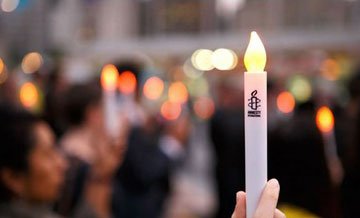
This knowledge give us an opportunity, a chance to ask our neighbours in the region to end this practice. Today, thousands of Australians will start a movement and light candles at vigils all across the country to end the backslide towards execution in Asia.

It might sound simple but we shouldn’t underestimate the capacity of a group of Australians to change the world.

An edited version of this story first appeared on news.com.au

Find out more about the Amnesty International Australia’s campaigns against the death penalty and how you can help save lives today.

Join our Human Rights Defenders program to help us abolish the death penalty.

Climate activists Greta Thunberg and the Fridays for Future movement honoured with top Amnesty Award

Climate change activist Greta Thunberg and the Fridays for Future movement of school-children (represented by School Strike 4 Climate in Australia) have been honoured with Amnesty International’s Ambassador of Conscience Award for 2019, the human rights organisation announced today.

“The Ambassador of Conscience Award is Amnesty International’s highest honour, celebrating people who have shown unique leadership and courage in standing up for human rights. I can think of no better recipients this year than Greta Thunberg and the Fridays for Future climate strike movement,” said Kumi Naidoo, Secretary General of Amnesty International.

“We are humbled and inspired by the determination with which youth activists across the world are challenging us all to confront the realities of the climate crisis. Every young person taking part in Fridays for Future embodies what it means to act on your conscience. They remind us that we are more powerful than we know and that we all have a role to play in protecting human rights against climate catastrophe.”

The Ambassador of Conscience Award was founded in 2002 to celebrate individuals and  groups  who  have  furthered  the  cause  of  human  rights  by  acting  on  their conscience,  confronting  injustice  and  using  their  talents  to  inspire  others.   Previous awardees include Nelson Mandela, Malala Yousafzai, Harry Belafonte, Ai Weiwei, the Youth  Groups  of  West  and  Central  Africa,  Angélique  Kidjo,  the  Indigenous  rights movement in Canada, Alicia Keys and Colin Kaepernick.

A youth movement determined to change the world, the Fridays for Future movement was started by Greta Thunberg, a teenager from Sweden who in August 2018 decided to miss school every Friday and instead protest outside the Swedish parliament until it took more serious action to tackle climate change. Her efforts to raise awareness of the climate crisis quickly went global. More than 1 million young people from all over the world took part in the most recent global day of Fridays for Future school strikes on 24 May. Demonstrations were held in more than 100 countries,including Australia, Brazil, India, Nigeria, Pakistan, United Kingdom, Germany, Japan, the Philippines and Uganda.

“It is a huge honour to receive Amnesty International’s Ambassador of Conscience Award on behalf of Fridays for Future. This is not my award, this is everyone’s award. It is amazing to see the recognition we are getting and know that we are fighting for something that is having an impact,” said Greta Thunberg.

“To act on your conscience means that you fight for what you think is right. I think all those who are part of this movement are doing that, because we have a duty to try and improve the world. The blatant injustice we all need to fight against is that people in the global south are the ones who are and will be most affected by climate change while they are the least responsible for causing it.”

A human rights crisis

While the climate crisis is usually understood through the impacts it is having on our natural environment, the devastating consequences of these impacts on people, both now and in the future,make it an urgent human rights issue as well. Climate change compounds and magnifies existing inequalities. And its effects will continue to grow and worsen over time, creating ruin for current and future generations. Amnesty International has said that the failure of governments to act on climate change may well be the biggest inter-generational human rights violation in history.

“Human rights and the climate crisis go hand in hand. We can’t solve one without solving the other. Climate change means people won’t be able to grow food, their homes will come under threat and their health will be compromised. Governments have a duty to protect us, so why are they doing nothing to stop climate change from devastating our lives?” said Greta Thunberg.

Amnesty International calls on states to scale up climate action substantially and to do so in a manner consistent with human rights. One of the crucial ways this can happen is if the people most affected by climate change, such as children and young people, are able to engage in efforts to address and mitigate climate change. They should be provided with the necessary information and education to participate meaningfully in discussions and should be included in decision-making that directly affects them.

“Sometimes I feel really sad because some of the people I try to talk to won’t listen. Some people insult us, others think we are politicians, and others ignore us entirely, they tell us maybe we won’t finish what we’ve started. But I can assure everyone that we are really determined to finish what we have started, because our futures are on the line,”said Kananura Irene, a Fridays for Future activist from Kampala, Uganda.

The youth activists behind Fridays for Future are now calling on adults to join them. On Friday 20 September, ahead of the United Nation Climate Action Summit in New York, activists will commence a week of climate action with a worldwide strike for the climate. Amnesty International supports the call for all adults who are able to join the strike and show solidarity.

“Young people are often told they are the leaders of tomorrow. I am so glad that Greta Thunberg and the Fridays for Future activists ignored that message. If they wait until tomorrow, there will be no future for any of us. They have proved that they are already leaders, and now it’s time for adults to follow their lead,” said Kumi Naidoo.  

Rape law amendment in Greece ‘a historic victory’ for women

Greece to become ninth out of 31 European countries to recognise that sex without consent is rape

“This is a historic victory, not just for the campaigners who have fought long and hard for this day, but for all women in Greece” – Eirini Gaitanou

Responding to today’s last-minute decision by the Greek government to amend the criminal code to recognise in law that sex without consent is rape, Eirini Gaitanou, Amnesty International’s Greece Campaigner, said:

“This is a historic victory, not just for the campaigners who have fought long and hard for this day, but for all women in Greece.

“This newly-amended law finally recognises the simple truth that sex without consent is rape, and makes it clear that physical violence is not required for the crime to be considered rape.

“It is now time for everyone involved in the criminal justice system to be given clear guidance as to how this change in the law must be implemented to make it easier for survivors to get justice.

“Shockingly, Greece will be only the ninth country in Europe to recognise that sex without consent is rape. However, today’s last-minute climb-down by the government demonstrates that change is possible and should give hope to people campaigning for consent-based laws wherever they are.”

Draft law amended today

The draft version of the law, amended today, had not only failed to recognise the simple truth that sex without consent is rape but it also would have restricted further the existing legal definition of rape that requires physical violence.

Under the Istanbul Convention, ratified by Greece on 18 June 2018, rape and all other non-consensual acts of a sexual nature must be classified as criminal offences.

The assumption in law or in practice that a victim gives their consent because they have not physically resisted is deeply problematic since “involuntary paralysis” or “freezing” has been recognised by experts as a very common physiological and psychological response to sexual assault.

This focus on resistance and violence rather than on consent has an impact not only on the reporting of rape, but also on wider awareness of sexual violence, both of which are key aspects in preventing rape and tackling impunity.

Changing laws will not in itself eradicate rape, but it is a crucial step along the way as they have the power to enable justice and influence attitudes about what rape is.

The Greek government recently conducted a public consultation on the legal definition of rape. Amnesty submitted analysis and called on the government to amend Article 336 to ensure rape is based on absence of consent.

Let’s talk menstruation – and the women breaking the taboos around it

“It’s that time of the month.” “Red October.” “On the blob.” Many people would rather call menstruation anything than what it is. But in parts of the world the stigma around menstruation goes far beyond euphemisms. For some girls, menstruating means being hidden away in cattle sheds or banned from their houses; others struggle to afford tampons and pads and are forced to make do with rags. Some women have even been arrested or interrogated for their peaceful activities to change this stigma.

Yet things are starting to change. We spoke to five brilliant human rights activists breaking the taboos surrounding menstruation.


Zhanar Sekerbayeva, 36, Kazakhstan
LBQ activist and founder of ‘Feminita


In Kazakhstan, we’re still unable to call menstruation what it is. Instead, people use euphemisms such as Red Aunty, Red October or Red Army. My mum is a paediatrician and when I had my first period she threw me a piece of cloth, without explaining what it was for or how to use it. Some people bury their bloody panties outside, while others use contaminated rags, causing reproductive damage.

“At school, if a girl’s period leaks onto her clothes, everyone laughs, and her teacher will send her home.”

Something needs to be done. That’s why I joined a group of peaceful protestors in Almaty, Kazakhstan, to participate in a photo shoot aimed at tackling the taboos around menstruation. We took hand-drawn posters with slogans and pictures. After the demonstration I went to a café and when I came out, seven policemen were waiting for me. They ordered me to go to the station and said if I didn’t, they’d use physical force.

I was charged with minor hooliganism. I was interrogated by a judge and she questioned me endlessly about the poster I was holding. She also asked questions like “Are you married? Do you have any children? Are you pregnant?”

I told her I was an open lesbian and to question me about a partner, not a husband. It was an interesting experience, albeit a stressful and scary one, but when I see people facing injustice, I have to act.


Hazel Mead, 23, UK
Activist and illustrator 


The UK is more progressive than many other countries, but growing up I always felt shame about my period. I think this is because periods weren’t talked about at school and, when they were, they were referred to with a plethora of euphemisms – ‘that time of the month’ was mine. It also wasn’t something you’d discuss with men, which adds to this idea that menstruation is this big shameful secret. At school, in jobs even, I would hide a pad up my sleeve or make sure I was wearing pockets on period days.

I use illustration to start conversations about and normalise periods. Near the start of my career I started creating satirical pieces about the tampon tax after attending the #FreePeriods protest. I volunteer my drawing skills to Bloody Good Period frequently, as their work to ensure asylum seekers and homeless people have access to period products is something I completely believe in. I was also part of Freda’s campaign to get hotels, schools, airlines and offices to provide free period products. In my personal life I am also talking about my period more. I no longer use euphemisms, and call pads and tampons ‘period products’ rather than ‘sanitary products’, which implies that periods are unclean.

“This year the UK government announced it would provide free period products in secondary schools and colleges in England from the next school year. This wasn’t my doing, but I have been part of this movement behind all the campaigning for change. There is still so much to be done to break menstrual taboos and injustices, but little by little as we keep making noise, we’re seeing change.”


Samikshya Koirala, 21, Nepal
Youth Executive at Amnesty International Nepal


In Nepal, girls who are menstruating can be hidden away from the sun and from men for up to 15 days. Some girls are even exiled to cattle sheds – it’s a tradition known as ‘chhaupadi’.

I was 11 when I had my first period. A grand event was taking place at home, but I wasn’t allowed to go because I was menstruating. Instead I was hidden away in a dark room at a relatives’ house, far from my home. I was really looking forward to the event and I cried until my eyes were swollen.

I was hidden away for five days. After I came out, I wasn’t allowed to touch the male members of my family for 11 days or go into the kitchen for 19 days. I couldn’t bring myself to tell my friends where I had been – I was the first person in my class to get my period and I was so shy.

One day, a group of young women came to my school to talk to us about menstruation. That was the day everything changed – they taught us so many things and empowered us with knowledge to challenge the traditions. At first my family was angry, and I had to make them understand that we have this tradition because menstruation used to be much more difficult to manage. Now we have pads and it’s much cleaner. It was a difficult process, but there are no longer any restrictions surrounding menstruation in my family.

I am part of Amnesty International’s Student Group at Kathmandu University, and I am changing the way people think about menstruation in the broader sense. We’re making videos, hosting rallies and running community programmes in rural areas for boys and girls. When we hear kids talking about these issues openly, it’s a proud moment for us.

In Nepal, we need to start changing mindsets around the superstitions surrounding menstruation – and I think we’re doing a great job so far.


Poulomi Basu, 36, India
Transmedia artist and activist


I grew up in a patriarchal Hindu household in India, so I am familiar with the use of ritual and tradition as a mechanism to control women. When I started menstruating I wasn’t allowed to enter the kitchen during my period nor could I participate in any festivities. It was only by leaving home that I could be free from patriarchal control and irrational practices and traditions. This is not an option for many women growing up in similar circumstances.

I met Tula, 16, from Nepal, who is barred from household chores during her period, and spends this time working as a porter to contribute to the family’s income. She carries everything from firewood to heavy satellite dishes long distances across rugged terrain so richer families can watch TV. A trip can take her three days and she makes the equivalent of 20 US cents for her efforts. She does this all while studying for her school exams.

Lakshmi, a single mother of three young children in Nepal, is forced into exile by her mother-in-law when she menstruates. Her five-year-old son Roshan is too young to be without his mother and endures the exile alongside her. Despite all the obstacles, Lakshmi’s instinct to protect and provide for her children is undefeated. Her story is a testament to her resilience in the face of such violence and stigma.

I’ve even seen women sent to exile, whilst bleeding post child birth, making it very dangerous for women’s maternal health and reproductive health.

I partnered with Water Aid and launched the ‘To be a girl’ campaign to provide reusable sanitary pads to 130,000 girls across Nepal, India and parts of Africa. I also worked with Action Aid and launched the ‘My Body Is Mine’ campaign to get women to speak up and reclaim the narratives over their own bodies. Through powerful art and storytelling, virtual reality films and workshops in communities, we’re bringing agency to women and helping them speak up against violence. Art has the power to change hearts and minds.

Finally, our efforts have played a role in putting pressure on the Nepalese government who finally criminalised chhaupadi in 2018. Though this is a huge positive step, in some communities the ruling has just driven the practice underground. That’s why this work is more important now than ever.


Haafizah Bhamjee, 22, South Africa
Student and Youth Activist 


“Period poverty exists, especially at university. You can’t even talk about menstruation, let alone whether you can afford sanitary products, so girls suffer in silence. It’s dehumanizing”.

My friends and I are trying to change this, through our #WorthBleedingFor campaign. Most people think university is a luxury for the rich, but it’s not. Poor people go to university too. Some students sleep in the library, others line up to receive grocery packs, and lack of access to sanitary pads is a real problem. We’re pushing for universities to install sanitary pad dispensers in bathrooms, and we’ve contacted the local government to provide free pads for girls in schools. We’re also encouraging girls to speak about their experiences.

Seeing people take action feels good. The change is gradual, but it’s exciting. A group of girls have even made a video about #WorthBleedingFor showing our campaigning work. Knowing we’re having an impact is amazing.


 This story was originally published on The Lily.

Response to AFP Raids on Australian Press

Today’s raids by the Australian Federal Police on Australian journalists are the latest in what is emerging as a pattern of secrecy and curtailment of free speech from the Australian Government.

Amnesty understands that the raids on the ABC relate to the Australian Defence Force’s involvement in civilian deaths in Afghanistan. Amnesty has continuously called on the Australian Government to be transparent in its role in these and all civilian casualties.

Journalism is not a crime. A free press holds those in authority to account, exposing corruption and human rights abuses. That includes investigating and highlighting instances where the military break the laws of war or government oversteps community expectations.

The raids on the ABC and News Corp journalists appear to be an attack on freedom of expression and on journalists doing their job. This will have a chilling effect on this critical function of a healthy democracy, and Amnesty questions whether the government hopes these tactics will discourage whistleblowers from coming forward and holding the government to account.

Freedom of expression is a basic human right, as protected under the Universal Declaration on Human Rights, and a right the Australian government claims it wants to protect.

That includes freedom to express opinions that do not discriminate, and to seek, receive and impart information and ideas through any media and regardless of frontiers.

The Government should champion a free press, not attempt to stymie it.


Eight issues behind Indigenous youth suicide

By Dr. Hannah McGlade Curtin

As a Noongar woman, a mother, and human rights advocate I have been very shocked and saddened by the tragic loss of young lives in my community. Young Aboriginal children and youth are ending their lives before they’ve had a chance to build them. Our national health bodies have called for an urgent political response to the crisis, and I agree this must be addressed now by government before more lives are lost.

Across Australia, our children and young people are taking their own lives and communities are reeling with the pain and suffering from the loss. This sensitive topic may overwhelm you with sadness and confusion. It’s hard to understand what can be driving children and youth to end their lives.

Already this year, more than 50 Indigenous people across the country have taken their lives— with youth and children comprising more than half of those deaths. Earlier this year in the Kimberley of Western Australia, the Coroner inquired into the deaths of 13 Aboriginal children, calling for implementation of the fundamental human rights principle of self-determination into government policies and practices. The Coroner was right to advocate for self determination, because denial of Aboriginal people’s human rights lies at the heart of what is taking place.

With that in mind, here are eight issues behind Aboriginal youth suicide that must be addressed.

  1. Colonisation

History and the impact of colonial dispossession of Aboriginal people from their lands, and the violence inflicted on people for resisting, is still relevant today. Aboriginal people experienced massacres, forcible removal into missions and reserves which were run harshly – not unlike concentration camps, and were denied the right to equality and citizenship until as late as the 1960’s. We need a Truth Telling process and Makaratta as called for at Uluru, so there is accountability and justice for what has happened in the past.

  1. No Treaty or Reparations

There was no Treaty or reparations process for what took place, which was cultural genocide according to the Human Rights Commission in the inquiry ‘Bringing Them Home’, which examined the forcible removal of Aboriginal children and separation from their families. This history, along with colonial violence, has left deep psychological scars that still exist today for the survivors and their families. Indigenous people are not able to recover properly from a genocidal past where there are no proper processes in place to make amends.

  1. Intergenerational Trauma

We must accept the reality of Intergenerational trauma, which is pain from trauma left unhealed that can unknowingly be passed down from generations. Evidence about the ongoing impacts of the Stolen Generations history is now known, as the children of the survivors are more likely to have health problems, be incarcerated and have their own children removed. We haven’t made real commitment to healing from the past, and Aboriginal people, including our children, are still paying the price of a genocidal past.

  1. Racial Discrimination and Vilification

Aboriginal people were subjected to a myriad of laws such as the Native Welfare Act 1905 in Western Australia that legitimated racism and racial discrimination on a daily basis. Aboriginal people were segregated and forced to live on missions and reserves. Children of mixed race were the property of the Native Protector and deemed a threat to the nation. While overtly racist laws may no longer exist, racism remains a real problem in Australia today. Racism and discrimination can be direct, overt, or it can happen when people don’t even realise that their negative attitudes and assumptions are based on racial stereotypes and prejudice. It can also take the form of structural inequality and systemic discrimination. That is, laws and systems that don’t take into account and impact more harshly Aboriginal people’s lives. Racism and racial abuse impacts Aboriginal people in a traumatic way and can lead to children and youth ending their lives.

  1. Poverty, housing & homelessness

Aboriginal people, as a result of the past, experience intergenerational poverty and may be struggling with housing and homelessness. This wealth inequality is causing food insecurity and lack of access to basic necessities. This makes it hard for children to obtain an education and for people to find jobs to work their way out of poverty. Employment and education outcomes and opportunities are critical to addressing suicide. Having a meaningful life makes sense. Stress and suffering associated with poverty, homelessness or overcrowding in homes, can make children vulnerable to abuse, including sexual abuse, and also increases vulnerability to suicide.

  1. Family Violence and sexual abuse

It is true that our women and children experience very high levels of family violence. Colonisation and patriarchy denigrated our people’s traditional culture where women and men had their own roles described as ‘separate but equal’. Colonisation perpetrated horrific violence and abuse, including sexual abuse, against people. Aboriginal women’s bodies were devalued and abused. It’s critical that we develop our own human rights informed responses to family violence. In the Aboriginal community it is well known that many children and youth who experienced family violence and sexual abuse have later taken their lives. We have to remember that not all the offenders are Aboriginal men, and we need to acknowledge and support women’s leadership and knowledge in this area.

  1. Overrepresentation in the criminal justice system

Trauma and ongoing deprival of human rights is a vicious cycle, which leaves too many people caught up in the criminal justice system. There is mass incarceration of our people, including children as young as ten years old. Racial profiling, racism in the courts and the role of poverty in crime are relevant. Courts and prisons for children and youth are not rehabilitative or safe places. They are too often violent and unsafe environments that heighten trauma and increase likelihood of suicide and self-harm.

  1. Child removal

Aboriginal families are having their children removed at unprecedented levels, higher than ever before. Aboriginal women are deemed unfit to mother by non-Aboriginal social workers because they are victims of family violence, live in poverty and may use substances, which is a known coping mechanism to trauma. Removing children from mothers and families increases trauma profoundly and especially on the mothers, many of whom are young people themselves. We all want children to be safe, but widespread and traumatic removal practices that negate Aboriginal strengths and decision making are not the answer. The national Family Matters campaign supports Aboriginal human rights and models such as Aboriginal Family Led Decision Making (AFLDM) to ensure that children are safe and stay in families. We have to remember that it was also more than twenty years ago that our national human rights body recommended that Aboriginal people be tasked with child protection authority in the ‘Bringing Them Home’ inquiry. To date, this has only occurred in Victoria.

There are many underlying reasons driving Aboriginal children and youth to commit suicide, and we need a national urgent response by government. Responses to this national crisis must be informed by self-determination and human rights principles. While we can never undo the past, we can respect Aboriginal people’s human rights today— especially as the violation of human rights lies at the heart of this tragic loss of innocent children and young people’s lives.


Dr Hannah McGlade is a Nyungar human rights lawyer and academic who has published widely on many aspects of Aboriginal human rights issues, especially those affecting the lives of Aboriginal women and children. Her Ph.D manuscript received the Stanner Award and she is the author of  Our Greatest Challenge, Aboriginal children and human rights. At present, Hannah is the Senior Indigenous Research Fellow at Curtin University and also a member of the Noongar Child Protection Council, the Aboriginal Family Law Service and the Djinda Family Services.

As the first Aboriginal woman to graduate from a Western Australian law school in 1995, Hannah has been active in law reform, advocacy and community development. In recognition of her outstanding work in the Noongar community, including in relation to the repatriation of the former Sister Kate’s Children Home lands, Hannah received the 2008 WA NAIDOC Outstanding Achievement Award.

In 2016 Hannah (who holds a Masters in International Human Rights Law) was appointed the Senior Indigenous Fellow at the United Nations Office of the High Commission for Human Rights in Geneva, during which time she assisted with the work of the Expert Mechanism on the Rights of Indigenous Peoples and presented to the Human Right Council. She has advocated and appeared before a number of UN human rights bodies, including the UN Committee on the Elimination of Race Discrimination (2017) where she represented Aboriginal child rights and also as an advisor to the Australian Law Reform Commission 2017 Inquiry into Indigenous incarceration which has called for a national review into Aboriginal children and out-of-home care.

The Myanmar military has committed fresh war crimes and other human rights violations in Rakhine State, according to evidence published by Amnesty International today (29 May).

  • New abuses come after government order to “crush” armed group
  • Military units responsible for past atrocities are committing war crimes, while deployment of additional units suggests involvement of senior generals
  • International community is failing – ICC referral urgently needed


“The new operations in Rakhine State show an unrepentant, unreformed and unaccountable military terrorising civilians” – Nicholas Bequelin

In a new report, ‘No one can protect us’: War crimes and abuses in Myanmar’s Rakhine State, Amnesty shows how the Myanmar military have repeatedly killed and injured civilians in indiscriminate attacks since January this year.

Military forces have carried out extrajudicial executions, arbitrary arrests, torture and other ill-treatment, as well as enforced disappearances. The military operation is ongoing, raising the prospect of additional crimes being committed.

Amnesty’s 46-page report examines the period of intense military operations that followed coordinated attacks on police posts by the Arakan Army, an ethnic Rakhine armed group, on 4 January this year. The new operation followed a government instruction to ‘crush’ the Arakan Army.

Nicholas Bequelin, Regional Director for Southeast Asia at Amnesty International, said:

“Less than two years since world outrage over the mass atrocities committed against the Rohingya population, the Myanmar military is again committing horrific abuses against ethnic groups in Rakhine State.

“The new operations in Rakhine State show an unrepentant, unreformed and unaccountable military terrorising civilians and committing widespread violations as a deliberate tactic.

“Authorities are compounding the misery of civilians by blocking the supply of medicine, food and humanitarian relief to those in need, including children.

“Civilians in Rakhine State are paying the heaviest price from the military’s assaults and their aftermath – yet the government continues to choose to remain silent about this spiralling crisis.”

Newly-deployed units, same pattern of atrocities

Amnesty’s report uncovers evidence of abuses committed by Myanmar troops implicated in past atrocities, including specific divisions and battalions under the Western Command. Amnesty has further confirmed that newly-deployed units from the 22nd and 55th Light Infantry Divisions are responsible for many fresh violations.

From interviews and other evidence, including satellite imagery, Amnesty documented seven unlawful attacks which killed 14 civilians and injured at least 29 more. Most of these attacks were indiscriminate, and some may have been direct attacks on civilians. In one incident in late January, a seven-year-old ethnic Rakhine boy died after a mortar almost certainly fired by the Myanmar military exploded in Tha Mee Hla village in Rathedaung Township, during fighting between the military and the Arakan Army. Although the boy was severely injured, it took several hours before Myanmar soldiers gave his family permission to take him to a hospital. He died the following day.

In another incident in mid-March, a Myanmar military mortar exploded in Ywar Haung Taw village in Mrauk-U Township, injuring at least four people and destroying a house belonging to Hla Shwe Maung, a 37-year-old ethnic Rakhine man.

He said: “I heard an explosion. It was very loud and there was a big fireball that fell around us… I grabbed my daughter in my arms… [when] we looked back half of our house’s roof was gone.”

Amnesty reviewed satellite imagery which confirmed the destruction of a building in Ywar Haung Taw village, as well as the presence of new artillery at the police base close by.

Attacks on Rohingya

While ethnic Rakhine communities have borne the brunt of violations committed by the Myanmar military recently, other communities, including the Rohingya, have also suffered.

On 3 April, a military helicopter opened fire on Rohingya labourers cutting bamboo, killing at least six men and boys and injuring at least 13 others.

One survivor told Amnesty: “The helicopter came from behind the mountain. Within minutes it fired rockets. I was running for my life thinking about my family and how I would survive.”

Arrests and torture

Amnesty further documented seven cases of arbitrary arrest in Rakhine State since January. These arrests were exclusively of men, usually ethnic Rakhine men of fighting age, and were often accompanied by torture and other ill-treatment aimed at obtaining information about the Arakan Army.

One 33-year-old ethnic Rakhine man said: “[The soldier] asked, ‘Where do the Arakan Army keep their weapons?’ I replied ‘I don’t know, I’m not Arakan Army’… I remember a punch and a kick, then they hit my head with a rifle… I tried to cover my head with my hands but they started kicking and beating [me]. There was blood on my hands, face and head.”

Amnesty documented the enforced disappearance of six men – one ethnic Mro and five ethnic Rakhine – in mid-February. A witness said she last saw one of the men in military custody. Since then, families have had no information about their loved ones’ fate and whereabouts.

More than 30,000 people have been displaced in this latest violence. However, the Myanmar authorities have blocked humanitarian access to the affected areas.

Arakan Army

While ethnic Rakhine communities have long fostered political grievances against Myanmar’s central government, the Arakan Army is led by a younger generation of ethnic Rakhine nationalists. Currently, the Arakan Army is estimated to have a fighting force of up to 7,000 troops. Established in 2009, it has fought alongside other ethnic armed organisations in northern Myanmar and in recent years has clashed sporadically with the military in Rakhine and in the neighbouring Chin State.

While the Myanmar military was responsible for the overwhelming majority of violations documented by Amnesty, the Arakan Army has also committed abuses against civilians, including abductions. The Arakan Army has also threatened and intimidated village administrators and local business people, warning them in letters against interfering with the group’s activities. The letters were each accompanied by a bullet and bore the Arakan Army’s official seal.

Crimes against humanity still unpunished

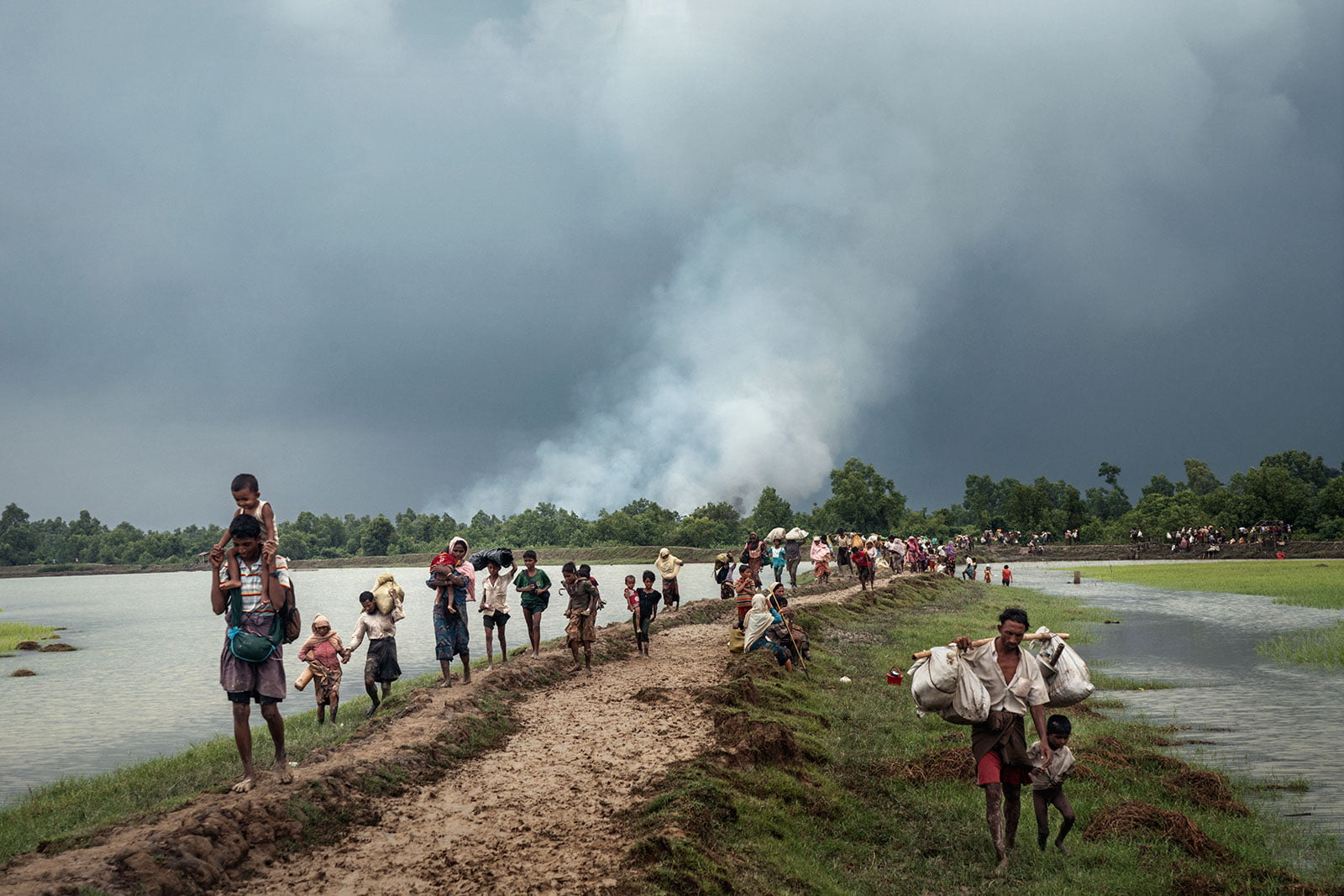
The latest military operation in Rakhine State was launched less than 18 months after the Myanmar security forces perpetrated crimes against humanity against the Rohingya population. More than 900,000 Rohingya refugees are still living in camps in neighbouring Bangladesh, and Amnesty’s new report provides yet more evidence that it is not safe for them to return.

This fresh evidence lends even greater urgency for the UN to act on the full range of crimes committed by the Myanmar military in Rakhine State, and in northern Myanmar’s Kachin and Shan States. A UN Fact-Finding Mission has called for senior military officials to be investigated and tried for crimes against humanity, war crimes and genocide.

In the absence of any domestic accountability, Amnesty is calling on the UN Security Council to urgently refer the situation in Myanmar to the International Criminal Court and impose a comprehensive arms embargo. Myanmar’s international partners must also rethink their relations with the Myanmar military leadership and implement targeted sanctions against senior officials through multilateral bodies like the European Union and the Association of South East Asian Nations.

Nicholas Bequelin said:

“With Myanmar’s military committing atrocities as brazenly as ever, it’s clear international pressure needs to intensify.

“Again and again, the international community has failed to stop the Myanmar military’s crimes and protect the civilian population. The Security Council was established to respond to exactly these kinds of situations, it’s time it took its responsibility seriously.”

In March, Amnesty conducted a total of 81 interviews, including 54 interviews in Rakhine State and 27 other interviews with people living in conflict-affected areas. They included ethnic Rakhine, Mro, Rohingya and Khami villagers, belonging to the Buddhist, Christian and Muslim faiths. Amnesty also reviewed photographs, videos and satellite imagery, and interviewed humanitarian officials, human rights activists and other experts.