Manus: Surge in suicide attempts illustrates crisis of Australian policy

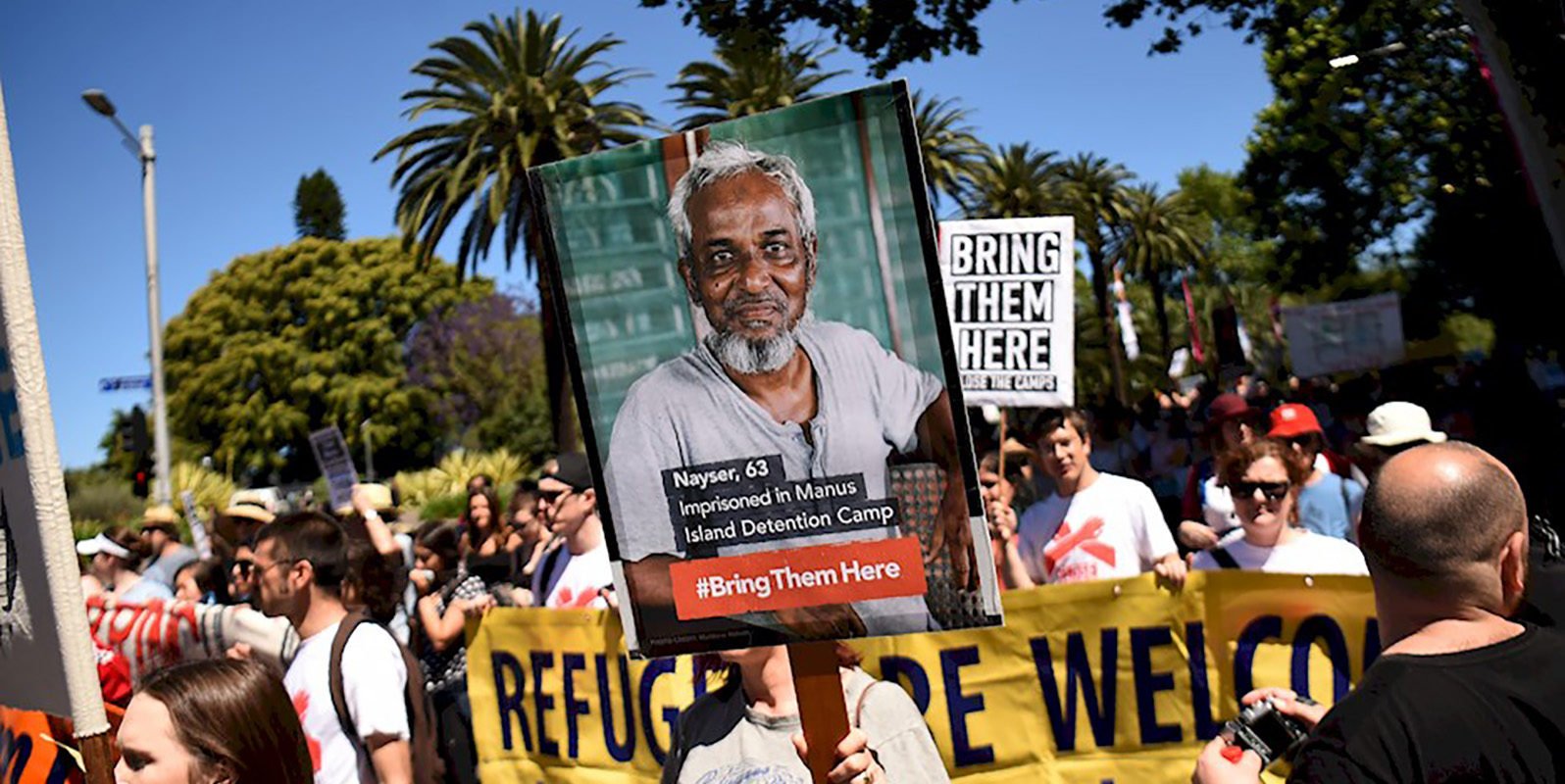
Responding to reports that several men sent to Manus Island (Papua New Guinea) by Australia have attempted suicide or self-harm in the past week, Kate Schuetze, Amnesty International’s Refugee Researcher said:

“These alarming reports are the latest indication that life for refugees on Manus Island is unbearable. There could not be a more urgent incentive for the Australian government to remove these people to safety immediately.

“The hundreds of refugees and asylum seekers Australia has exiled to Manus Island and Nauru are living in open air prisons. We were already seeing a rise in suicide attempts after a decision to shut down trauma and torture counselling and slash health services around 18 months ago. Refugees trapped on Manus Island and Nauru have been denied their safety, freedom and dignity for six years.

“The newly-elected Australian government has promised to repeal legislation which allows severely ill people to be transferred to Australia based on the advice of medical professionals rather than government bureaucrats.  It is only a matter of time before tragedy strikes again. We are urging the government to demonstrate that it has a scrap of humanity left and end the abuse of refugees on Manus Island by bringing them to Australia.”

Background

On 23 May 2019, media carried reports that men had attempted suicide or self-harm on Manus Island since the re-election of Australia’s government. Australia’s Prime Minister, Scott Morrison, has previously pledged to repeal the ‘medevac bill’, passed on 13 February 2019, which allows refugees in Manus and Nauru needing urgent medical attention to be brought to Australia.

Celebrating National Reconciliation Week 2019!

National Reconciliation Week runs annually from 27 May – 3 June, book-ended by the anniversaries of the 1967 Referendum and the Mabo decision. This year’s theme is “Grounded in Truth, Walk Together with Courage”.

National Reconciliation Week is a time for all people to learn about our shared histories, cultures, and achievements, and to explore how each of us can contribute to achieving reconciliation in Australia. The theme this year is asking us to continue the call for a comprehensive process of truth-telling about Australia’s colonial history.

Rodney Dillon, Indigenous Rights Advisor for Amnesty International Australia and Palawa man said,

”People have to understand the history of what’s happened. They took our lands, then they took our children away, they took our wages and enslaved our people. People have been suffering from this ever since. We can’t go ahead with reconciliation until we talk about the things that were done to our people, so people can understand the truth of what happened.”

Black and white blurry image of Aboriginal people stand in a row, chained together by their necks, wearing riji (carved pearlshell) as they stand in the mangroves of Broome, c. 1910.

Chained Aboriginal people wearing riji (carved pearlshell) as they stand in the mangroves of Broome, c. 1910.
Supplied: Broome Historical Society, courtesy Freney Collection.

For me, it’s about people having the courage to look at the past. It’s not about guilt, it’s about having the courage to understand it. We need this done now before it’s forgotten.

Can you imagine how our people would feel if everyone knew the truth about our history? That would be a celebration. That would be true reconciliation.”

Rodney Dillon, Palawa man, Indigenous Rights Advisor

So what can you do?

Amnesty encourages all of our supporters to consider how you can be part of reconciliation between Aboriginal and Torres Strait Islander people and the broader community. You could:

Reconciliation isn’t just something that we do once a year. Meaningful reconciliation means developing mutually beneficial respectful relationships with Indigenous peoples and communities. Aboriginal and Torres Strait Islander peoples are asked to be part of reconciliation all of the time, whereas non-Indigenous Australians can choose to participate or not. We encourage you to be someone who chooses to participate in reconciliation.

“Forgive my children for not fasting” – Ramadan in Xinjiang

Ramadan is here. Across the world, Muslims will begin fasting during daylight hours as part of this month-long observance.

But in the Xinjiang Uyghur Autonomous Region (Xinjiang), Chinese authorities see fasting as a “sign of extremism”.

Open or even private displays of religious affiliation – including growing an “abnormal” beard, wearing a veil or headscarf, regular prayer, fasting or avoidance of alcohol – are categorized as “signs of extremism” in some locations.

Any of these can land you in one of Xinjiang’s internment camps, which the government calls “transformation-through-education centres” and are reportedly arbitrarily detaining up to 1 million people.

Numerous counties in Xinjiang have posted notices on government websites in recent years, stating that primary and secondary school students and Communist Party members were not permitted to observe Ramadan.

Mass internment and surveillance have intensified in recent years, but Muslim religious and cultural practices have long been discouraged in the region.

Ramadan in schools

Gulzire, a Uyghur woman from Yining, in Xinjiang’s northwest, said that when she was attending high school in in the early 2000s, her teachers urged students not to fast because they needed good nutrition to prepare for their public exams. Some students fasted anyway and stayed in the classroom to rest during lunch instead of going home or going to the canteen to eat. To discourage fasting, teachers would go into the classrooms to check on students. Gulzire remembers showing a teacher the lunch she brought as proof that she was not fasting. But she said the restriction was not very strictly enforced back then, and some still managed to fast secretly.

These restrictions were also not uniformly enforced across China. When Gulzire left Xinjiang to study in the southern Chinese city of Shenzhen in 2006, she was pleasantly surprised by the openness she found there. During religious festivals, Shenzhen University would bus Gulzire and her Xinjiang friends to the mosque or to other religious and cultural events. She said her classmates – most of whom came from China’s Han ethnic majority, were also very open-minded and supportive of Uyghur cultural practices.

A turn of events

Things took a turn for the worse in the summer of 2009. Inter-ethnic violence in Urumqi, Xinjang’s capital, left nearly 200 dead. In response, a much stronger military and security presence was deployed throughout Xinjiang, stoking even more tension.

Gulzire said her parents told her to stop going to mosque, even in Shenzhen. Fearful of being labeled an extremist family, they also stopped talking to her about the Qur’an and stopped saying festival greetings to her over the phone, such as “Qurban bayram mubarek” (Greetings on the Festival of Sacrifice), like they used to.

Things also changed at Gulzire’s university in Shenzhen. A Uyghur teacher from Urumqi was sent to her university. And when the school arranged for a bus to take students to the mosque during Ramadan, this teacher called a meeting with leaders of the university and stopped students from going. Gulzire believes the teacher felt that these were activities not allowed in Xinijang and should therefore be considered “extremist”.

Since then, the situation has continued to deteriorate. A series of laws were passed to justify religious and ethnic discrimination, and the crackdown intensified in Xinjiang.

According to a regulation passed in 2017, people can be labelled “extremist” for refusing to watch public radio and TV programmes, wearing burqas or having an “abnormal” beard.

In April 2017, the government reportedly published a list of prohibited names, most of which were Islamic in origin, and required all children under 16 with these names to change them.

Well wishes from outside Xinjiang

This Ramadan, many Muslims in Xinjiang are separated from their loved ones – some are missing, while others are known to be in internment camps.

Radio Free Asia journalist Gulchehra Hoja left China 18 years ago. It was only after she moved to the United States that she was finally able to fully observe Ramadan. Speaking of her time in Xinjiang, she said:

“I remember only elderly people like my grandma were fasting and making dua (prayer) asking Allah to forgive her children for not fasting. Now it’s my turn to continue to pray for my family and the entire Uyghur people.”

Watchhouses: The Palaszczuk Government cares more about political points than children’s lives

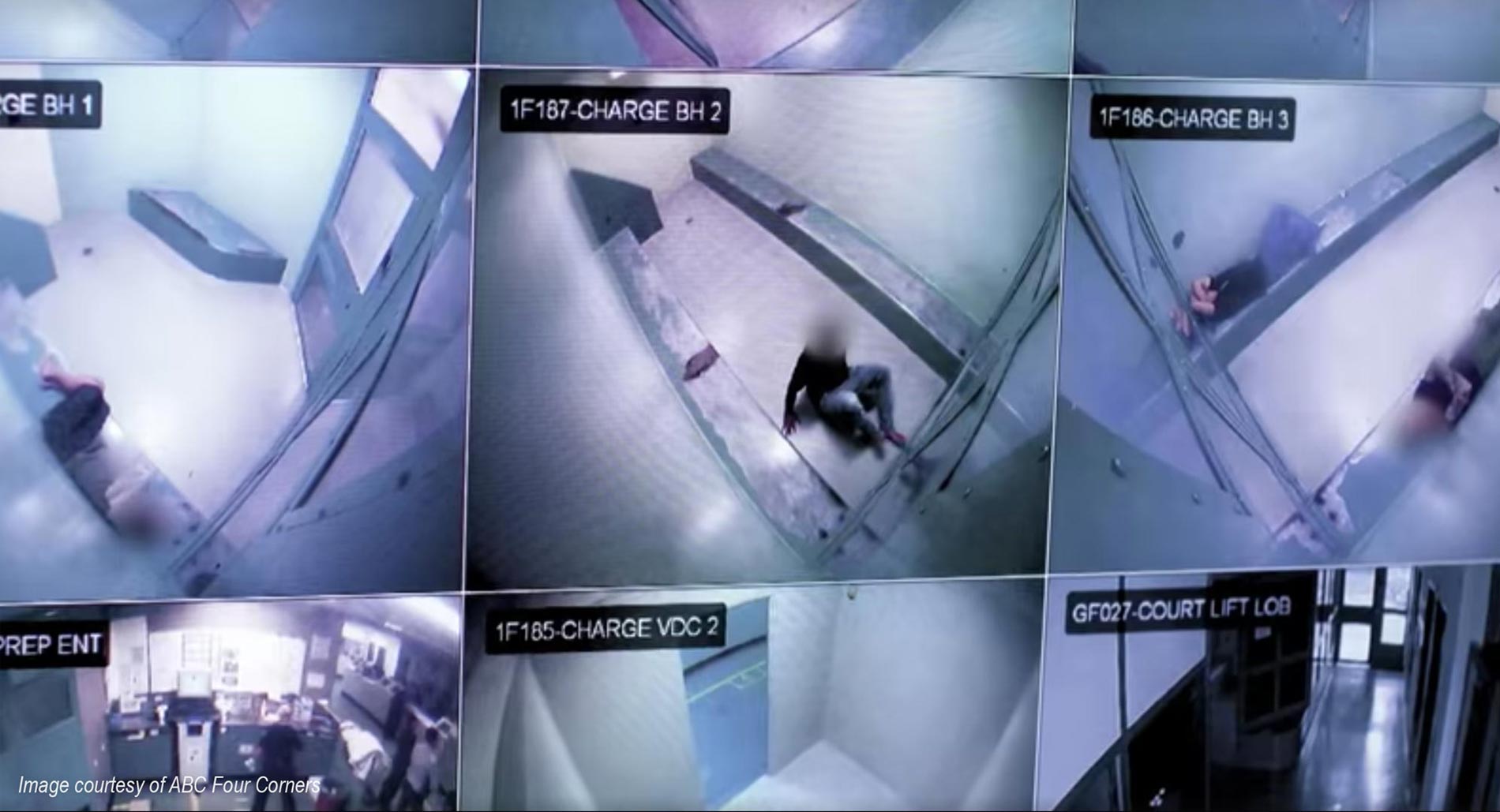
Amnesty International have condemned the Palaszczuk Government for actively avoiding taking action on the issue of Queensland children in adult watchhouses.

Today they have used all the parliamentary tricks of the trade to avoid finding a solution to the watchhouse crisis including:

  • Delaying and shortening question time
  • Avoiding answering questions on watch houses
  • Attempting to gag the debate over the blue card bill (which would allow debate on the LNP-proposed 72 hour cap)
  • Filling the ministerial statement time with talk about the federal election and a potential Shorten government

Joel Clark, Indigenous Rights Advocate at Amnesty International said:
“After ignoring the issue for years, the Palaszczuk Government have now done everything they can to avoid taking action on watch houses in parliament today.

“It’s a callous tactic to avoid conceding to their opposition and admitting they’ve got it so wrong until now. The Premier appears to be more focused on protecting her ministers from calls to sack them, than protecting vulnerable children and complying with police procedures. We condemn this lack of action in the strongest terms, and remind Palaszczuk that as a result of her tactics, 67 kids will again be sleeping in watchhouses across Queensland tonight.”

Investigations and 72 hour caps are not the solution to watchhouse issues

The Queensland Opposition today announced that they will introduce a bill to cap the time children are held in police watch houses at 72 hours.

In response, Rodney Dillon, Amnesty International Australia Indigenous Rights Adviser, said:

“While any action on the traumatising use of watchhouses is to be welcomed, three days of detention is still three days too many. The Queensland Police Operational Procedure Manual already stipulates that children should not be kept in a watch house overnight – and that is what should be legislated.

“Unlike the Government, the Opposition has at least proposed a way to get kids out of watch houses as soon as possible. The Government’s so-called “investigation” is too little, too late.

“They know what the problem is. They have been told by us, by the Public Guardian, and by the Youth Advocacy Centre for the past year. Only now that these atrocities have been made public are they listening. An investigation is simply a delay tactic and a smokescreen to mask the Government’s lack of action.

“It’s time to move the conversation away from what to do with kids in detention and towards giving children and their families the support they need to prevent offending.

“The Government must focus on keeping kids out of detention in the first place through community-led prevention programs, and raising the age of criminal responsibility to at least fourteen.”

Venezuela: Crimes against humanity require a vigorous response from the international justice system

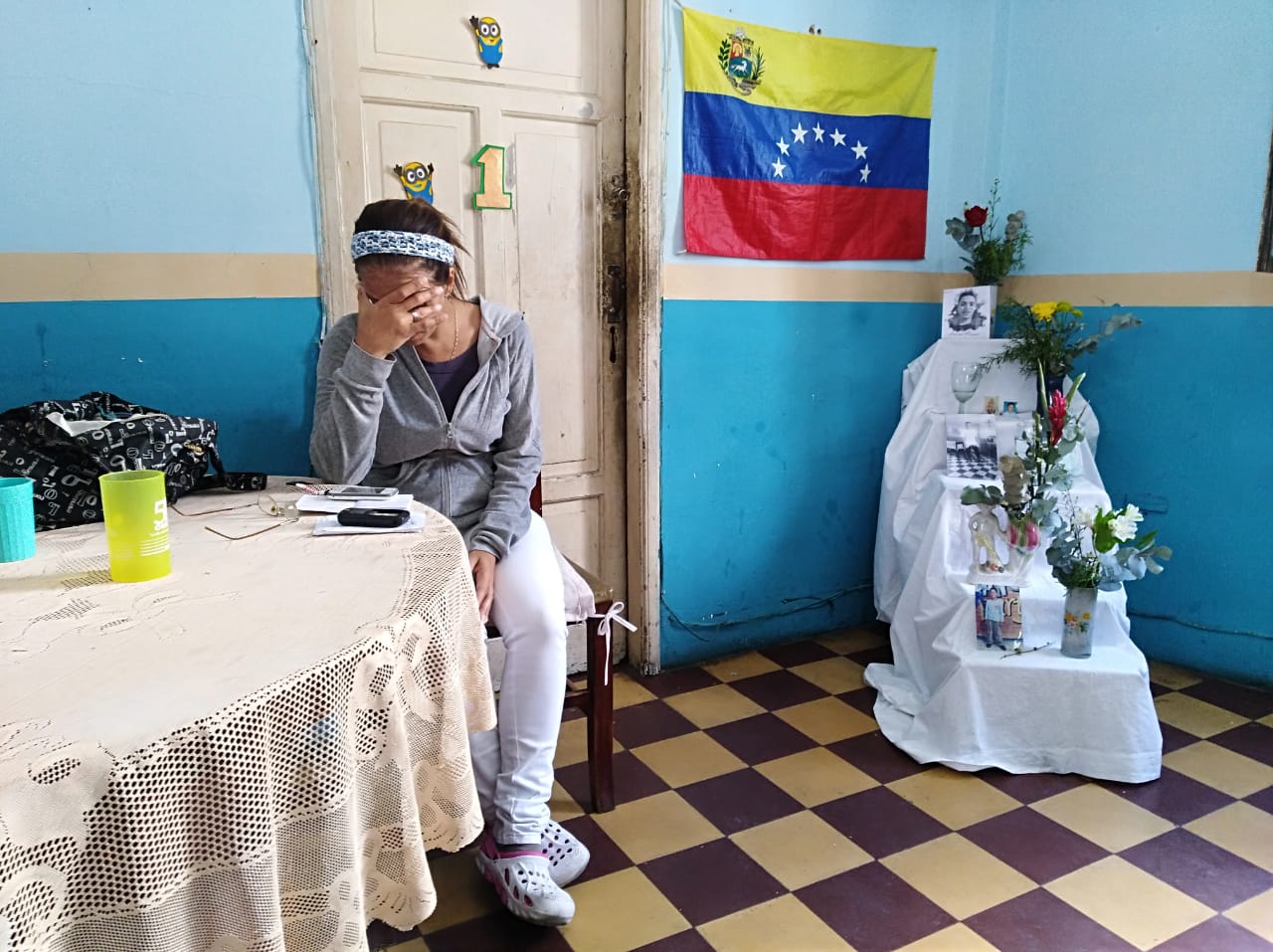
Selective extrajudicial executions, arbitrary detentions, and deaths and injuries caused by the excessive use of force by Nicolás Maduro’s government as part of a systematic and widespread policy of repression since at least 2017 may constitute crimes against humanity, said Amnesty International today in its new report on the events in Venezuela in late January 2019: Hunger for justice: Crimes against humanity in Venezuela.

“As we have been saying for years, in Venezuela there is a systematic policy of repression against opponents or those perceived to be opponents simply because they are protesting, for which Nicolás Maduro’s government must be held accountable before the international justice system”, said Erika Guevara-Rosas, Americas director at Amnesty International.

“We call on all states to urgently show their unequivocal support for the victims of these events and ensure that these crimes do not go unpunished. The international community cannot turn its back on the victims of this unprecedented crisis, whether they remain inside Venezuela or have left the country.”

Crimes under international law and human rights violations were committed consistently throughout almost every part of the country in January, with a high level of coordination between security forces at state and national levels. They did not take place at random, nor were they isolated. They formed part of an attack planned and led by the security forces against individuals identified as or perceived to be opponents, particularly in impoverished areas, with the objective of neutralizing or eliminating them.

Authorities at the highest level, including Nicolás Maduro, knew about these public and appalling acts and took no measures to either prevent or investigate them. Amnesty International therefore believes that covering up these and subsequent events forms part of the policy of repression.

The nature of the attacks in January, in terms of the seriousness of the conduct, the number of victims, the timing and geographical circumstances, the level of coordination by the security forces, as well as the signs of similar patterns in 2014 and 2017, leads Amnesty International to believe that the Venezuelan authorities committed crimes against humanity and should answer to an independent and impartial judicial body.

Amnesty International recommends that the UN Human Rights Council establish a commission of inquiry during its next session in June and July 2019. It also recommends the activation of universal jurisdiction by countries genuinely concerned about the situation in the country. The Office of the Prosecutor of the International Criminal Court, which began a preliminary examination on Venezuela at the start of 2018, should also take these events into consideration.

The serious deterioration in living conditions and the systematic violation of economic, social and cultural rights continue to affect the majority of the population in Venezuela and have forced more than 3.7 million people to flee the country. At least 3 million are in other Latin American or Caribbean countries and many need international protection.

“Faced with grave human rights violations, shortages of medicines and food and generalized violence in Venezuela, there is an urgent hunger for justice. The crimes against humanity probably committed by the authorities must not go unpunished”, said Erika Guevara-Rosas.

“Until there is a clear way forward towards truth, justice and reparations, Venezuela will continue to be mired in this extremely serious human rights crisis and repression that has been going on for some time now. What happened at the beginning of 2019 and more recently at the end of April is proof of that.”

Additional information

Amnesty International conducted a research mission in February this year and interviewed dozens of victims of crimes under international law and grave human rights violations committed mainly between 21 and 25 January, a period in which there were mass protests against Nicolás Maduro’s government throughout the country.

The investigation demonstrated an alarming shift in the repressive policy towards those who demonstrated against Nicolás Maduro’s government, most of whom belong to poor communities.

From 21 to 25 January, at least 47 people in 12 of the country’s 23 states were killed during the protests, all of them from gunshot wounds. At least 33 of these people were killed by state security forces and six were killed by third parties acting with the approval of the authorities during the demonstrations. Eleven of the deaths were extrajudicial executions, six of which Amnesty International documents in detail in this report.

During these five days, more than 900 people were detained arbitrarily across almost every state in the country. Detainees included children and teenagers. It is estimated that approximately 770 people were detained on a single day, 23 January, the date on which protests were convened throughout Venezuela.

Since 2014, Amnesty International has documented the pattern of the Nicolás Maduro government’s policy of repression, which includes the excessive use of force against demonstrators, cruel and inhuman treatment and torture, with the objective of neutralizing social protest. Through analysis of 22 cases, the organization has identified and denounced patterns of arbitrary detentions for political motives that have occurred every year during the Maduro government and has identified at least six prisoners of conscience.

Amnesty International has also denounced more than 8,000 extrajudicial executions by the security forces between 2015 and 2017 and gathered detailed documentation on eight cases that showed a similar pattern of attack against young men living in poverty. This evidence allows the organization to recognize the systematic and widespread nature of the repression in January 2019.

Officials admit QLD Watchhouses ‘a bit of a messy situation’

Just a day after the shocking Four Corners investigation into watch houses, Amnesty International Australia has uncovered documents from 2018 that show officials have been aware of the issues for some time, with a key member of the Watchhouse Response Team calling circumstances in the watch houses in Queensland  “a bit of a messy situation”.

The documents, obtained through Freedom of Information, show correspondence between Leanne Beikoff, Manager Watchhouse Response Team and the Department of Child Safety, Youth and Women (CSYW) stating that the Brisbane City Watch House was being used as a statewide overflow facility without “any discussion or planning re what we do with the young people once they get to Brisbane”.

Issues with complaint accountability

The documents also uncovered issues with complaints processes, with complaints being pushed between government officials. One incident saw the Department of Child Safety, Youth and Women (CSYW) reject and close a complaint about the watch house as ‘a police matter’ with no action taken. Only after the Office of the Public Guardian re-submitted the complaint on the basis that the child was only in the watch house on the behest of CSYW was the complaint dealt with.

Other worrying information uncovered included:

  • A young boy sustaining a needle stick injury from a needle found in his mattress
  • Concerns over the continuing decline and withdrawal of supports available to the kids at Brisbane City Watch House
  • Transfers to the Brisbane Watch House from regional watch houses taking up to three days and requiring significant overtime and overnight accommodation
  • A young girl remaining in detention despite being bailed

Amnesty International first raised concerns about children being held in watch houses with the Minister for Child Safety, Youth and Women Di Farmer, in June 2018. Further letters were sent in November 2018 and December 2018. In February 2019 Amnesty sent Minister Farmer a list of 2655 alleged human rights violations. No substantive response to these allegations has been received.  

Rodney Dillon, Indigenous Rights Advisor at Amnesty International Australia said:

“These new documents show that people inside the system already knew it is broken, and yet the government continues to allow the inappropriate use of watch houses. Minister Farmer has known about many individual issues in Brisbane City Watch House as we’ve raised them with her on several occasions. Enough is enough. The time for talk is over, there must now be direct action on these issues. We can no longer stand by and watch as children are damaged by a broken system.

“Amnesty is calling on the Queensland Government to immediately improve youth justice by raising the minimum age of criminal responsibility, fixing the remand system and investing in Indigenous, community-led solutions that prevent kids entering the justice system and reduce repeat offending. There is no excuses to brush these issues under the carpet any more.”

Julian Assange: Rape allegations must be treated with utmost seriousness

Reacting to the news that the Swedish Prosecution Authority has re-opened its investigation into a rape allegation against Julian Assange, and will issue a formal extradition request to the UK by 14 June 2019, Massimo Moratti, Amnesty’s Deputy Director for Research for Europe said:  

“Rape allegations should always be treated with utmost seriousness. It is vital that the allegations against Julian Assange are properly investigated, in a way that respects the rights of both the complainant and the person under investigation.  

“We urge both the Swedish and UK authorities not to extradite or otherwise send Julian Assange to the USA, where there is a very real risk that he could face serious human rights violations.” 

Next government must enshrine human rights in Federal Act: Amnesty

Amnesty International Australia has called on the party that forms government after next Saturday’s election to protect all Australians’ human rights by enshrining them in a Federal Act of Parliament.

“Human rights should be at the heart of policy decisions no matter who holds government.”

“Human rights should be at the heart of policy decisions no matter who holds government,” Amnesty International National Director Claire Mallinson said.

“As the successful Marriage Equality plebiscite showed, Australians value protecting people’s rights in law. Now is the perfect opportunity to formalise everyone’s rights in an Act of parliament,” Amnesty International Australia National Director, Claire Mallinson, said.

While Victoria, Queensland and the ACT have human rights acts, Australia is one of the only western democratic nations that doesn’t have a federal act or a bill of rights.

The key tenets of the Human Rights Act Amnesty International proposes include:

  • Ending the over-representation of Indigenous children and young people in Australia’s criminal justice system
  • Working to eradicate violence against women
  • Supporting the creation of safe and legal routes for people seeking asylum
  • Taking a lead role around the world in abolishing use of the death penalty
  • Ending the practice of gay conversion therapy and enshrine Intersex rights in law
  • Ensuring Australians who have a disability have their human rights respected
  • Increasing the age of criminal responsibility from 10 to the international standard of 14 years of age
  • Reducing carbon emissions, phase out fossil fuels subsidies and support those whose human rights are infringed by effects of climate change

“At their core, human rights are about respecting the dignity of everyone.Someone’s quality of life should not be determined by factors beyond their control – be it race, nationality, gender, socio-economic background, sexuality or age,” Mallinson said.

“The work of government is central to whether and how these rights are expressed, or limited.”

“I miss you my dearest” – Nasrin Sotoudeh’s letters to her children from prison

Iranian lawyer and women’s rights activist Nasrin Sotoudeh’s heartbreaking letters from prison reveal the trauma inflicted on families by the government that claims to protect them.

Nasrin Sotoudeh is a lawyer who has never shied away from doing what’s right in Iran. In her long and impressive career, she has exposed the injustices of the death penalty and campaigned for children’s rights. Most recently, she defied degrading laws that force girls as young as nine to wear a hijab or face prison, flogging or a fine. Nasrin has been sentenced to a total of 38 years and 148 lashes after two unfair trials because she demanded choice for women and girls. She will have to serve 17 years of this sentence.

Nasrin Sotoudeh is also a mother of two. Her commitment to justice and equality for her clients set Iran’s authorities against her. They have thrown her in jail twice: once in 2010 and now again in 2018. Both times, Nasrin was torn from her beloved children – and her children from their brave and loving mother. Over that period, she wrote a number of letters from prison to her son Nima, now aged 11 and her daughter Mehraveh, now 19. As these excerpts show, Nasrin’s anguish at being what she is – someone who must defend what’s right at all costs – makes her question her own choices as a mother. It is an unjust situation wrought not by her choices, but by a repressive government determined to break her. As many would agree, Nasrin is being the best mother she can be, by showing her children that truth and justice are principles worth fighting for – and that being a good mother doesn’t mean choosing between your values and your kids.

March 2011

Hello my dearest Nima,

Writing a letter to you is so very difficult. How do I tell you where I am when you are so innocent and too young to comprehend the true meaning of words such as prison, arrest, sentence, trial and injustice?

Last week you asked me, “Mummy, are you coming home with us today?” and I was forced to respond in plain view of the security agents: “My work is going to take a while so I’ll come home later.” It is then that you nodded as if to say you understand and took my hand, giving it a sweet, childlike kiss with your small lips.

How do I explain that coming home is not up to me, that I am not free to rush back to you, when I know that you had told your father to ask me to finish my work, so I can come back home? How do I explain to you that no “work” could ever keep me so far away from you?

My dear Nima, in the past six months, I have found myself crying uncontrollably on two occasions. The first time was when my father passed away and I was deprived of grieving and attending his funeral. The second was the day you asked me to come home and I couldn’t come home with you.

My dearest Nima, in child custody cases, the courts have repeatedly ruled that, when it comes to visitation rights, a three-year-old child cannot be left with their father for 24 consecutive hours. This [is] because the courts believe that young children should not be away from their mothers for 24 hours and that such a separation would result in psychological damage to a child.

This same judiciary, however, is ignoring the rights of a three-year-old child under the pretext that his mother is seeking to “act against the national security” of the country.

It goes without saying that I was not seeking in any way to “act against national security” and that, as a lawyer, my only objective has always been to defend my clients under the law.

I want you to know that, as a woman, I am proud of the heavy sentence rendered against me and honoured to have defended many human rights defenders. The relentless efforts by women have finally proven that regardless of whether we support or oppose them, we can no longer be ignored.

Hoping for better days,

Maman Nasrin


April 2011

To my dearest Mehraveh, my daughter, my pride and joy,

It has been six months since I was taken away from you my beloved children. Throughout these six months we were only allowed to see each other a few times and, even then, in the presence of security agents. During this time, I was never allowed to write to you, to receive a picture, or even meet with you freely without any security restrictions. My dear Mehraveh, you, more than anyone, understand the sorrow in my heart and the conditions under which we were allowed to meet. Each time, after each visit and every single day, I struggle with the notion of whether or not I have taken into consideration and respected my own children’s rights. More than anything, I needed to be sure that you, my beloved daughter, whose wisdom I very much believe in, did not accuse me of violating my own children’s rights.

I once told you: “My daughter I hope you never think that I was not thinking of you or that it was my actions that deserved such punishment… Everything I have done is legal and within the framework of the law.” It was then that you lovingly caressed my face with your small hands and replied: “I know, Mummy… I know…” It was on that day that I was freed of the nightmare of being judged by my own daughter.

My dearest Mehraveh, just like I was never able to disregard your rights and always sought to protect them to my fullest capacity, I was also never able to disregard the rights of my clients.

How could I abandon the scene as soon as I was summoned by the authorities, knowing that my clients were behind bars? How could I abandon them when they had hired me as their legal counsel and were awaiting their trial?

It was my desire to protect the rights of many, particularly the rights of my children and your future, that led me to represent such cases in court. I believe that the pain that our family and the families of my clients have had to endure over the past few years is not in vain. Justice arrives exactly at the time when most have given up hope.

I miss you my dearest and send you one hundred kisses,

Maman Nasrin


September 2018

Hello my dearest Nima,

I don’t know how to start this letter. How can I forget that this year you have to start school without me and even without your father by your side, and simply tell you that this year is a normal year like any other year? How can I ask you to go to school on time, do your homework, study well and be a good boy until we return?

I would hate to speak such words to you as a mother because I know that in your young life you have had to live through the constant trauma of visiting me in prison, being prohibited from visiting me, and the fear of injustice.

As a mother, I cannot ask you to forget my existence and think to yourself that you do not have a mother at all, just so that I can pursue my work and struggle [for human rights] with a clear conscience. May I never be this cruel to you.

***

My job as a lawyer, which is under constant attack in Iran, is pulling me – and this time also your father – into the storm of injustice and cowardice that is destroying the community of Iranian lawyers.

These days I am thinking about you constantly, about how lonely you must feel and about our dear Mehraveh, who has made us proud and who is now forced to care for you and be your mother and father at the same time.

I am sending you my tears of love, hoping they make the injustice of our time a little more tolerable for you.

I send you thousands of kisses for I have not seen you in far too long.

Maman Nasrin