Five reasons to abolish the death penalty

With the fourth anniversary of the executions of Australians Andrew Chan and Myuran Sukumaran in Indonesia fast approaching, we must continue to challenge the notion of “an eye for an eye”.

Here are five reasons why.

1. You can’t take it back

The death penalty is irreversible. Absolute judgments may lead to people paying for crimes they did not commit. Texas man Cameron Todd Willingham was executed in Texas in 2004 for allegedly setting a fire that killed his three daughters. Following his execution, further evidence revealed that Willingham did not set the fire that caused their deaths. But it came too late.

A mug shot of Cameron Todd Willingham. There are two photo side-by-side. One shows Willingham looking towards the camera, the other shows Willingham's side profile.
Cameron Todd Willingham © Peter K. Levy / Flickr

2. It doesn’t deter criminals

There is no credible evidence that the death penalty deters crime more effectively than a prison term. In fact, evidence reveals the opposite.

Since abolishing the death penalty in 1976, Canada’s murder rate has steadily declined and as of 2016 was at its lowest since 1966.

3. There’s no ‘humane’ way to kill

The 2006 execution of Angel Nieves Diaz, by a so-called ‘humane’ lethal injection, took 34 minutes and required two doses. Doctors have said that it is likely Diaz’ death was painful.

Other brutal methods of execution used around the world include hanging, shooting and beheading. The nature of these deaths only continues to perpetuate the cycle of violence and may not alleviate the pain already suffered by the victims’ family.

4. It makes a public spectacle of an individual’s death

Executions are often undertaken in an extremely public manner, with public hangings in Iran or live broadcasts of lethal injections in the US. According to UN human rights experts, executions in public serve no legitimate purpose and only increase the cruel, inhuman and degrading nature of this punishment.

“All executions violate the right to life. Those carried out publicly are a gross affront to human dignity which cannot be tolerated,” said Hassiba Hadj Sahraoui, Amnesty International’s Deputy Director for the Middle East and North Africa.

“All executions violate the right to life. Those carried out publicly are a gross affront to human dignity which cannot be tolerated.”

Hassiba Hadj Sahraoui

5. The death penalty is disappearing

In 2017 two countries – Guinea and Mongolia – abolished the death penalty for all crimes.

Today, 106 countries (the majority of the world’s states) have turned their backs on the death penalty for good.Those that continue to execute are a tiny minority standing against a wave of opposition.

There are countless arguments for and against the death penalty. In an imperfect world where we can never be sure we have ever got the “worst of the worst” is it ever justified to take a life?

Find out more about the Amnesty International Australia’s campaigns against the death penalty and how you can help save lives today.

Join our Human Rights Defenders program to help us abolish the death penalty.
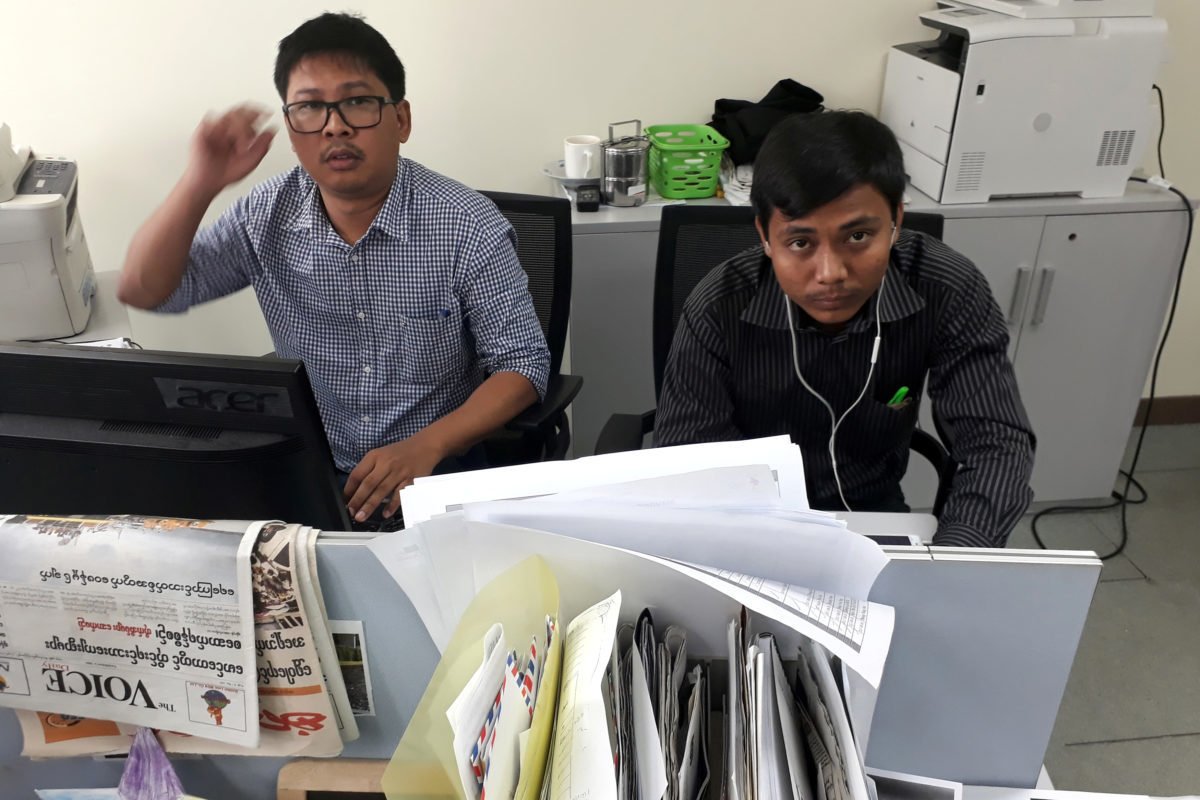
Myanmar: Genuine press freedom must follow release of Reuters journalists

Responding to news of the amnesty and release of Reuters journalists Wa Lone and Kyaw Soe Oo, Nicholas Bequelin, Amnesty International’s East and Southeast Asia Director said:

Today marks an important victory for press freedom in Myanmar. The case against Wa Lone and Kyaw Soe Oo was a travesty of justice from start to finish and they should never have spent a day in prison.

“Today marks an important victory for press freedom in Myanmar. The case against Wa Lone and Kyaw Soe Oo was a travesty of justice from start to finish and they should never have spent a day in prison.

“While all those who campaigned for their release welcome the government’s decision, the reality is the country retains a range of repressive laws used to detain journalists, activists and any perceived critic of the authorities. Until these laws are repealed, journalists and activists remain under a permanent threat of detention and arrest.

“In recent weeks, Amnesty International has recorded a surge in politically motivated arrests – most for criticism of the military. The government must follow through its rightful decision to free Wa Lone and Kyaw Soe Oo by releasing all other journalists and prisoners of conscience detained on hollow charges, and by repealing all laws that keep a chokehold on freedom of expression.”

Background

Reuters journalists Wa Lone and Kyaw Soe Oo were arrested in Yangon, on 12 December 2017. At the time, the two were investigating a massacre of 10 Rohingya men and boys committed by members of the Myanmar security forces in northern Rakhine State, for which seven Myanmar soldiers were later jailed by a military court.

The two journalists were charged with breaching the Official Secrets Act and on 3 September 2018 sentenced to seven years in prison. An appeal to the Yangon High Court was rejected in January 2019. On 16 April 2019, Wa Lone, Kyaw Soe Oo and their colleagues were award the 2019 Pulitzer Prize for international reporting.

Recent weeks have seen an alarming spate of politically motivated arrests and detention. These include:

  • On 12 April, film director and a founder of the Myanmar Human Rights, Human Dignity International Film Festival Min Htin Ko Ko Gyi was detained in connection with Facebook posts critical of the military and the 2008 Constitution;
  • On 19 April, authorities announced they were opening a case for “online defamation” against Ye Ni, the editor of the Burmese section of The Irrawaddy for an article which the Myanmar military deemed “one-sided”;
  • On 22 April a group of five people was taken into custody and are facing charges of defamation and making “statements conducing to public mischief” after they live-streamed a satirical Thangyat performance mocking the Myanmar military during Myanmar’s new year festival.

These arrests are made possible by a range of repressive laws, which have for years been used to silence critical voices. To date, the NLD-led government – and parliament – has largely failed to take action to repeal or amend those laws that are incompatible with international human rights laws and standards. Instead, both the government and the military have actively used such laws to curb freedom of expression, association and peaceful assembly.

Political leaders must act on demands of striking students

Political Leaders Must Act on Demands of Striking Students

Amnesty International Australia is in full support of the action by students right across Australia on their #ClimateElection Day of Action on Friday May 3.

Extreme weather-related disasters and rising seas will destroy homes and ruin people’s ability to earn a living. And unless emissions are reduced significantly, around 600 million people are likely to experience drought and famine as a result of climate change. There’s a direct link between climate change and human rights, including the right to life, health, food, water and housing.

Amnesty International Australia campaigner Tim O’Connor said:

“Denied the formal opportunity to vote, these impressive young people are using their right to free expression to put pressure on politicians to not only take their concerns seriously, but to take action.  School kids may be unable to vote in the upcoming Federal election but they are still engaging in the political process and making themselves heard.

“Action around the world is forcing Governments to wake up to the climate crisis. Just this week the UK Parliament has declared a climate change crisis following weeks of protests. Climate change is not a fringe issue, nor is it a debate. It is a very real and fundamental human-rights emergency that requires immediate action from our political leaders.

“We congratulate and stand in solidarity with the passionate and committed students in their call for immediate action on climate change.

“Amnesty, together with partners like Student Strike for Climate, are pressing governments and institutions like the UN to take urgent action on climate change. This isn’t about charity or aid, it’s about fundamental human rights.”

Media freedom muzzled as journalists are targeted for telling the truth

Southern Africa: Media freedom muzzled as journalists are targeted for telling the truth

  • Mozambique becoming increasingly hostile towards journalists
  • Zambia and Zimbabwe among countries where media space continues to shrink
  • Amnesty calls for states to stop treating journalists with contempt

Media freedom remains under threat in several countries in southern Africa with journalists put in jail for simply doing their job, Amnesty International said today as it took stock on World Press Freedom Day.

“In the past year, we have seen blatant attempts to muzzle the media and restrict the right to freedom of expression in countries such as Madagascar, Zambia, Mozambique and Zimbabwe with journalists being harassed or jailed simply for doing their work, with far-reaching implications including self-censorship,” said Deprose Muchena, Amnesty International’s Regional Director for Southern Africa.

“This onslaught is undermining the very essence of free societies, where journalists must be able to do their work without fearing intimidation, harassment or other reprisals.”

In Madagascar, investigative journalist Fernand Cello spent nearly two years in jail after he was convicted on trumped up charges related to his work, concerning the fabricated accusations that he stole a cheque book. He was acquitted by the Fianarantsoa Appeal Court on 2 April 2019.

In Mozambique, a radio journalist, Amade Abubacar, is out on bail pending his trial after languishing in pre-trial detention for almost four months after he was arrested for interviewing a group of displaced people who were fleeing attacks by militant groups in their homes in Cabo Delgado in January. Amade is facing trumped-up charges of “public incitement” and insulting public officials through electronic media among others.  A date for his trial is yet to be set.

In December last year, investigative journalist Estacio Valoi was abducted by the military and held incommunicado for two days in Mocímboa da Praia district, north of Pemba, accused of spying and aiding and abetting militant groups. He was later released without charge, although his equipment remains confiscated by the military for “further investigation”.

In June 2018, Pindai Dube, a journalist working for eNCA, an independent television news station based in South Africa, was arrested by police in Pemba and accused of spying. He was released three days later without charge.

In Zambia, the Editor-in-Chief of The Rainbow Newspaper, Derrick Sinjela, is currently serving an 18-month jail sentence after being convicted in December 2018 on contempt of court charges for publishing an opinion piece written by an activist alleging corruption in the judiciary. Sinjela was unfairly convicted and jailed for criticizing the judiciary over a case that had been completed.

In early March, authorities suspended the broadcasting license of independent news station, Prime TV, for 30 days citing failure to comply with the conditions of its broadcasting license. The station was later re-instated after almost a month of blackout.

In Zimbabwe, police raided the offices of online news site 263 Chat and fired tear gas into the newsroom after chasing reporter Lovejoy Mtongwiza to the adjacent offices of 263 Chat’s on 4 April. This was after he filmed the removal of street vendors by the police in the capital, Harare.

“Authorities must stop treating the media with contempt and open up the space for journalists to do their work safely without having to look over their shoulders,” said Deprose Muchena.

“A vibrant and independent press is essential for the enjoyment of human rights. Journalists should not be treated as enemies of the state.”

Assange must not be extradited to the US

Julian Assange must not be extradited to the US

Following the announcement of Julian Assange’s arrest, and request for extradition to the United States, Massimo Moratti, Amnesty International’s Deputy Director for Research in Europe, said:

“Amnesty International calls on the UK to refuse to extradite or send in any other manner Julian Assange to the USA where there is a very real risk that he could face human rights violations, including detention conditions that would violate the absolute prohibition of torture and other ill-treatment and an unfair trial due to his work with Wikileaks.

“We are aware of allegations of rape and other sexual violence against Julian Assange, which should be properly investigated in a way that respects the rights of both the complainants and the accused and be brought to justice if there is sufficient evidence against him. If the Swedish government decides to pursue an extradition of Mr. Assange from the UK, they must also uphold the principle of non-refoulement and  not extradite or otherwise send him on to the USA.

“We urge the UK authorities to comply with the assurances provided to Ecuador that he would not be sent anywhere he could face the death penalty, torture or other ill-treatment.”

Palaszczuk Government Youth Justice announcement doesn’t go far enough

In response to the announcement of the Queensland Youth Justice Action Strategy to reduce the rates of children on remand, Joel Clark, Amnesty International Indigenous Rights Advocate said:

“More than 80% of children held in detention in Queensland are on remand, many of them being held in watch houses, by police without the necessary training and skills to deal with children.

“Watch houses are no place for kids. They are designed to temporarily hold adults. Children are being held for prolonged periods of time without access to education, family visits or appropriate health services. Today’s announcement does not go far enough to address these issues.

“Amnesty welcomes the prevention and early-intervention elements of the package, particularly a commitment to expand Queensland’s restorative justice program, and a ‘transition to school’ program. We first raised this with the Government in September last year – it is good that some progress has finally been made.

“However, under international law Queensland has an obligation to use prison as a last resort. More beds and transition centres are not the solution. Moving kids from watch houses to detention centres does nothing to address the underlying causal factors that see children trapped in the justice system.

More than 80 children are currently being held in watch houses across Queensland. Today’s announcement does little for these children. Something must be done immediately.

Queensland must also prioritise legislative reform, including the Bail Act and raising the minimum age of criminal responsibility to at least 14.

Six ways to call out racism and bigotry when you see it

As powerful as the national outpouring of solidarity has been following the Christchurch attacks, it’s not enough on its own. Tony Blackett of Amnesty International NZ offers some ways you can take further action against racism.

If the last couple weeks have shown us anything, it’s that now, more than ever, we need the human courage to stand up for what is right. We need the bravery to speak out, to support threatened communities, to build a society based on equality, compassion and unity.

It’s been inspiring to see how many people have channelled their love and hope towards our grieving Muslim whānau these past weeks. New Zealanders have flatly rejected the Christchurch gunman’s hate-filled ideology. But as powerful as this national outpouring of solidarity has been, it’s not enough on its own.

Christchurch did not happen in a vacuum. The atrocity was at least partly the result of a creeping normalisation of white supremacist ideology and the rise of openly Islamophobic world leaders, a devastating reminder that bigotry still simmers below the surface. If we’re serious about solidarity, we need to redouble our efforts to challenge racism and bigotry wherever we see them. Here are some steps you can take:

Listen to people who experience racism

Discrimination isn’t always obvious – it can be subtle and insidious, disguised as jokes or political opinions. Talking to people who’ve experienced racism is the best way to increase your understanding of the issue. Even if we can’t walk a mile in someone else’s shoes, we can certainly do more listening. The more we hear, the more our frame of reference shifts, so we can start noticing all those things that build up to make people feel excluded.

Lean in to awkward conversations

Responding to misguided opinions, whether they come from friends, relatives or strangers, can be a minefield. Calling someone out on their views is awkward at best and scary at worst. On the one hand, you want to say something, but doing so can lead to an argument, without actually convincing them of anything.

But it is possible to change people’s minds, especially if you’re clever about communication. The Christchurch attacks have created an invitation for us to join conversations that are uncomfortable about race and religion that we’ve needed to have for a long time – join them.

Keep your cool

It’s hard to be polite when someone’s spouting offensive comments, but ask yourself what you can achieve by losing your temper. Embarrassing someone by lecturing them or making loud accusations is probably going to make them defensive and shut down the conversation. Keep your cool – this might mean taking a breather and speaking to them privately later. You’ll have more chance at persuading people if you talk about how their words make you feel. Saying, “what you said earlier really upset me” is more likely to have an impact than yelling at them.

Talk about people, not numbers

There’s a lot of misinformation behind racist opinions and it’s important to challenge these. But telling stories about real people is more likely to produce an empathetic response than reeling off facts and figures to make your point. If someone’s complaining about immigration, for example, don’t just bombard them with stats about global refugee numbers and quotas. Instead, ask them what they would do if they were in a dangerous or hopeless situation – wouldn’t they do anything they could to keep their family safe? Wouldn’t they try to go to country where they could live freely?

Think about the language you use

Language has the potential to dehumanise. For example, it’s common to hear talk of “migrants” and “refugees” as if all these millions of people were one undifferentiated mass. Collective nouns contribute towards stereotypes and obscure the personal stories that help people feel empathy. So instead of just saying “refugees”, talk about “people who have had to leave their homes”. Share stories you have heard about individuals and don’t define them by their status or religion.

Talk about what you’re for, as well as what you’re against

At Amnesty International we’re not just against racism – we’re for a society that respects and protects the human rights of everyone, that thrives on multiculturalism and is enriched by diverse communities.

Research increasingly points to the fact that fear and pessimism activate a confirmation bias that increases…you guessed it, fear and pessimism. Conversely, hope and optimism trigger positive emotions and win over persuadable audiences. Many of the human rights wins of recent years have been based on campaigns that brilliantly communicated hopeful visions for the future rather than complaining about the status quo. Think of Ireland’s “Together for Yes”, or marriage equality campaigns in New Zealand and around the world that focused on love, freedom and family.

Look at it this way: the story of Christchurch has two parts. The first is the horrific killing of 50 people who should have been safe here, by an attacker radicalised by white supremacism. The second is the overwhelmingly empathetic response from all kinds of New Zealanders, which has garnered international attention and praise.

We have something to be inspired by in the wake of this tragedy, so try appealing to that empathy and speaking to people’s better selves. Remind them that this country can set a global example for how to respond to racist terror – but only if we all get on board.

Humanity means people living freely and without fear. Humanity is our shared commitment to each other. Let’s stand with humanity.

Tony Blackett, Amnesty International New Zealand

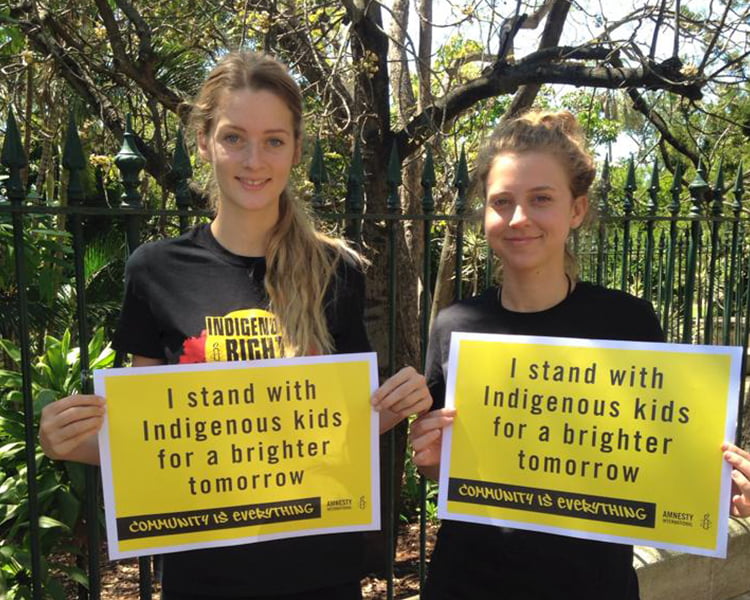
Action needed to end kids being locked up

Amnesty has welcomed that the ALP has recognised the need to address the ongoing over-representation of Aboriginal and Torres Strait Islander people in the justice system at a Federal level, but is calling for action on locking kids up.

Rodney Dillon, Indigenous Rights Adviser at Amnesty International Australia said:

“Prevention and diversion are key to any successful program. The announcements today would be a step in the right direction towards building safe and connected communities that support Indigenous people rather than locking them up. Indigenous-led solutions are key and we welcome the establishment of a national justice reinvestment body and investment into ATSILS and justice reinvestment more broadly.

“However the ALP has missed an opportunity to address the growing problems with the youth justice system, by raising the minimum age we can lock up kids.

“It is fundamentally wrong that Australia continues to lock up children as young as 10 despite the growing evidence that it can harm them and trap them in the justice system.

“A child arrested before the age of 14 is three times more likely to be locked up as an adult than a child arrested after 14. Indigenous kids are 25 times more likely to be locked up than non-Indigenous kids.

“Other countries have a median minimum age of 14, which is the age recommended in the latest medical research and by the UN Committee on the Rights of the Child. Australia must stop lagging behind the rest of the world and raise the minimum age immediately.”

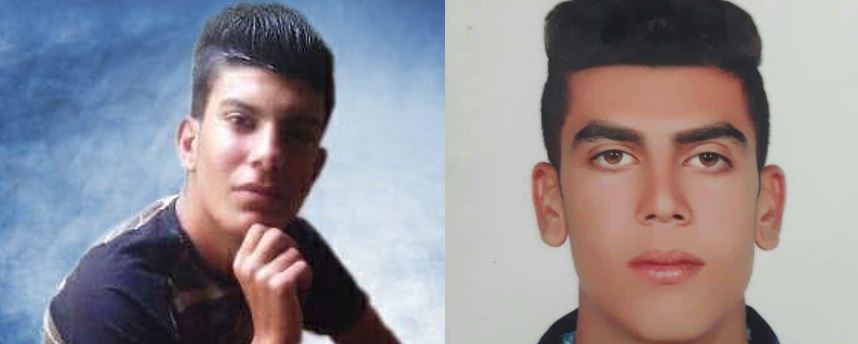
Iran: Two 17-year-old boys flogged and secretly executed in abhorrent violation of international law

The Iranian authorities have flogged and secretly executed two boys under the age of 18, Amnesty International has learned, displaying an utter disdain for international law and the rights of children.

Mehdi Sohrabifar and Amin Sedaghat, two cousins, were executed on 25 April in Adelabad prison in Shiraz, Fars province, southern Iran. Both were arrested aged 15 and convicted on multiple rape charges following an unfair trial.

According to information received by Amnesty International, the teenagers were unaware that they had been sentenced to death until shortly before their executions and bore lash marks on their bodies, indicating that they had been flogged before their deaths. Their families and lawyers were not informed about the executions in advance and were shocked to learn of the news.

The Iranian authorities have once again proved that they are sickeningly prepared to put children to death, in flagrant disregard of international law.

“The Iranian authorities have once again proved that they are sickeningly prepared to put children to death, in flagrant disregard of international law. It seems they cruelly kept these two boys in the dark about their death sentences for two years, flogged them in the final moments of their lives and then carried out their executions in secret,” said Philip Luther, Middle East and North Africa Director at Amnesty International.

“The use of the death penalty against people who were under 18 at the time of the crime is strictly prohibited under international human rights law and is a flagrant assault on children’s rights. It is long overdue for Iranian parliamentarians to put an end to this harrowing situation by amending the penal code to ban the use of the death penalty against anyone who was under 18 at the time of the offence.”

Iran remains the top executioner of children in the world. As a state party to the Convention on the Rights of the Child and the International Covenant on Civil and Political Rights, Iran is legally obliged to treat anyone under the age of 18 as a child and ensure that they are never subjected to the death penalty or life imprisonment.

Mehdi Sohrabifar and Amin Sedaghat had been held in a juvenile correction centre in Shiraz since 2017. On 24 April, they were transferred to Adelabad prison, apparently without knowing the reason. The same day, their families were granted a visit with them, but they were not told that it was in preparation for their execution.

The next day, on 25 April, the families suddenly received a call from Iran’s Legal Medicine Organization, a state forensic institute, informing them of the executions and asking them to collect the bodies.

The legal proceedings leading to the two boys’ conviction and sentence were unfair and flagrantly violated the principles of juvenile justice. Following their arrest, they were held for two months in a police detention centre, where they said they were beaten. They also had no access to a lawyer during the investigation stage.

The practice of subjecting children to police questioning in the absence of a guardian or lawyer violates the Convention on the Rights of the Child, which provides that children in conflict with the law must be guaranteed prompt legal assistance.

Amnesty International has recorded the execution of 97 individuals in Iran who were under the age of 18 at the time of the crime between 1990 and 2018. More than 90 others remain at risk of execution.

The fact that Mehdi Sohrabifar and Amin Sedaghat’s executions were not made public before their cases were made to known to Amnesty International reinforces the organization’s concern that the real number of executions of juvenile offenders in the country is actually higher than the figure it has recorded. Juvenile offenders currently on death row are also at risk of being executed in secret if their cases are not brought to the attention of human rights organizations for public campaigning and advocacy.

“We have identified a trend in which Iran’s authorities are carrying out executions of juvenile offenders in secret and without giving advance notice to the families, seemingly in a deliberate attempt to avoid global outrage This makes it all the more important for influential international actors such as the EU to increase their diplomatic and public interventions to pressure Iran to end the use of the death penalty against juvenile offenders,” said Philip Luther.

Many have spent prolonged periods on death row – in some cases more than a decade. Some have had their executions scheduled and postponed repeatedly, adding to their torment. Such conditions of uncertainty causing severe anguish and mental distress amount to cruel, inhuman and degrading treatment.

The use of the death penalty for rape is not permitted under international law, which states that its use must be restricted to the most serious crimes involving intentional killings.

Amnesty International opposes the death penalty in all cases without exception regardless of the nature of the crime, the characteristics of the offender, or the method used by the state to kill the prisoner. The death penalty is a violation of the right to life and the ultimate cruel, inhuman and degrading punishment.

Amnesty welcomes the ALP’s recognition of the over-representation of Aboriginal and Torres Strait Islander people in the justice system, but action needs to be taken to #raisetheage

Amnesty has welcomed that the ALP has recognised the need to address the ongoing over-representation of Aboriginal and Torres Strait Islander people in the justice system at a Federal level, but is calling for action on locking kids up.

Rodney Dillon, Indigenous Rights Adviser at Amnesty International Australia said:

“Prevention and diversion are key to any successful program. The announcements today would be a step in the right direction towards building safe and connected communities that support Indigenous people rather than locking them up. Indigenous-led solutions are key and we welcome the establishment of a national justice reinvestment body and investment into ATSILS and justice reinvestment more broadly.

“However the ALP has missed an opportunity to address the growing problems with the youth justice system, by raising the minimum age we can lock up kids.

“It is fundamentally wrong that Australia continues to lock up children as young as 10 despite the growing evidence that it can harm them and trap them in the justice system.

“A child arrested before the age of 14 is three times more likely to be locked up as an adult than a child arrested after 14. Indigenous kids are 25 times more likely to be locked up than non-Indigenous kids.

“Other countries have a median minimum age of 14, which is the age recommended in the latest medical research and by the UN Committee on the Rights of the Child. Australia must stop lagging behind the rest of the world and raise the minimum age immediately.”