Open letter to politicians re Christchurch

An Australian white-supremacist and terrorist stands charged with murdering at least 50 people in Christchurch New Zealand last Friday. This tragedy has highlighted that white-extremism and associated divisive far-right ideology is becoming normalised in Australia and has enormous and tragic consequences. Whilst this catastrophic tragedy has saddened and angered our community, it is not entirely surprising. Racism and hatred when left unchecked can become extremist action.

And yet some of our Federal politicians actively divide rather than proactively unite our country. As an elected Member of Parliament you need to be genuine in your acceptance of this, and we urge you to commit to change it.  Too often some in our political class fail to question or condemn hate and racism until something tragic occurs. Condemnation today is not enough. Denunciation does not change the systems and structures that allow racism to flourish. It is your duty to stand up for the muslim community, not just through rhetoric but by taking action.

We must stand united against the deep-rooted, racist beliefs that drive these atrocious acts and we must  address them. Discussion around immigration has too often been divisive and dehumanising in this country. Such pronouncements,  actively play to the stereotypes that cause fear and misunderstanding. When our leaders tell us a certain type of person isn’t welcome in Australia, they signal that those people are a risk, and should not be trusted. This language sends a message about the people already here that look like them, sound like them, and have the same faith as them. Such pronouncements are both irresponsible and unfair. This language bleeds out into the broader community, breeding the racism and hate that saw more than 50 people being killed.

We must stop racism and challenge its normalisation. Politicians have a duty to be an active part of that by framing immigration positively, by refusing to take part in fear mongering and stereotyping and by actively welcoming diversity in our decision making.

Some politicians’ regularly misuse and support freedom of speech to espouse racial hate and bigotry. This enables racism to fester. When it rises, it can result in situations like we have seen in Christchurch. Hate “manifestos” are distributed and championed as examples of free speech. In reality these are tools of extremism that divide and harm our community. Practicing the right to freedom of speech comes with the responsibility to ensure that such speech does not lead to harm.

The outpouring of support and grief following the Christchurch shootings has shown that many everyday Australians, including hundreds of thousands of Amnesty International Australia supporters, care about doing the right thing: we are inclusive and welcoming, accepting and warm. But these everyday actions will amount to nothing if an environment of hate and fear is fostered by decision makers. Even one racist is one too many.

Together we have shown we can create genuinely inclusive, diverse and welcoming communities. If we break down the systemic barriers to inclusion and diversity that remain in Australia we will beat racism and division with understanding and acceptance. Now is the time to stand in solidarity with the Muslim community in both words and action.

Yours sincerely,

Tim O’Connor

Impact Manager

Amnesty International Australia
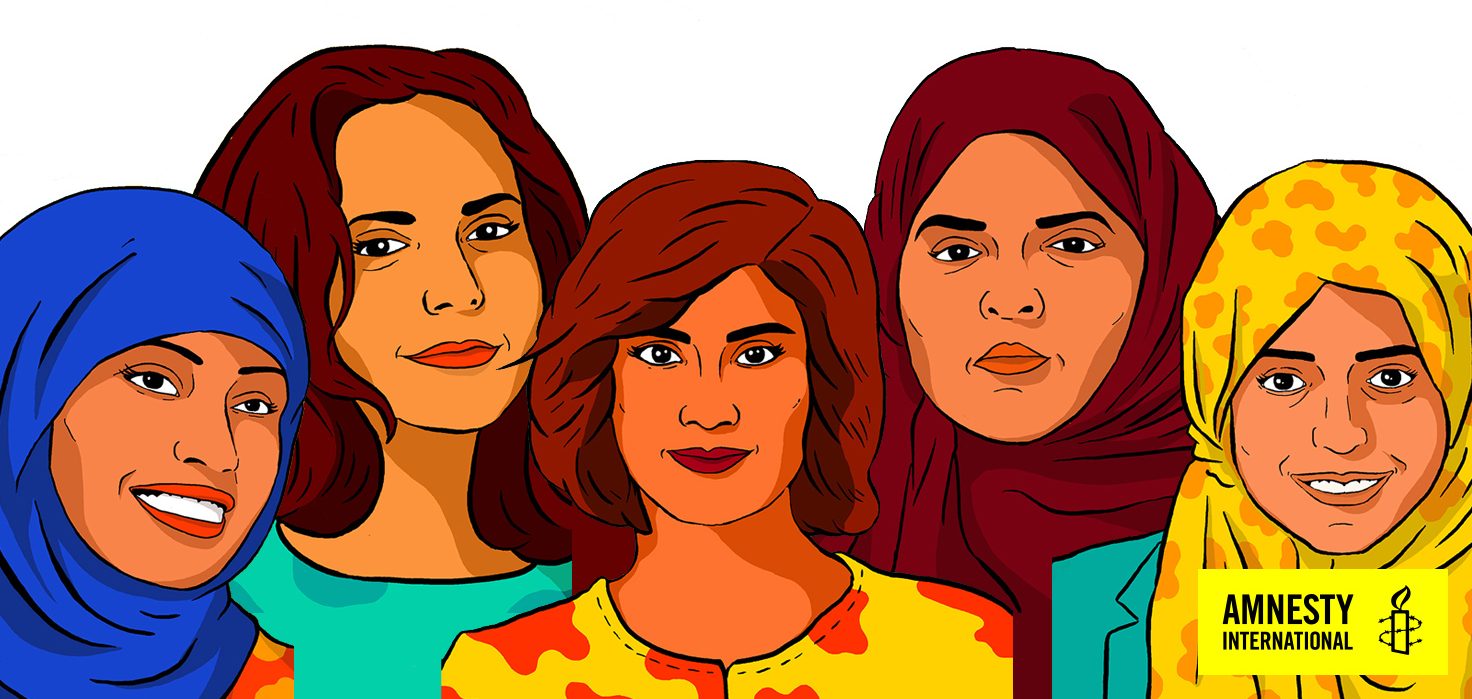
Saudi Arabia: Women activists persecuted under bogus charges

The prosecution of 11 women activists before a Criminal Court in Riyadh for their human rights work and contact with international organizations is an appalling escalation of the Saudi authorities’ crackdown on peaceful activism, Amnesty International said today.

Some of the women were charged with promoting women’s rights and calling for the end of the male guardianship system. The women were also charged with contacting international organisations, foreign media and other activists, including their contact with Amnesty International

“The charges against the activists are the latest example of the Saudi authorities abusing legislation and the justice system to silence peaceful activists and deter them from working on the human rights situation in the country. This trial is yet another stain on the Saudi authorities’ appalling human rights record, and shows how empty the government’s claims of reform really are,” said Samah Hadid, Amnesty International’s Middle East Campaigns Director.

“Activists brought to trial today are amongst Saudi Arabia’s bravest women human rights defenders. They have not only been smeared in state-aligned media for their peaceful human rights work, but have also endured horrendous physical and psychological suffering during their detention. We urge the Saudi authorities to drop these outrageous charges and release the women activists immediately and unconditionally,”

#MyNewNeighbour update

The wins in the #MyNewNeighbour campaign continue into 2019. Three-months into the year and the campaign is now 29 councils strong, thanks to the ongoing hard work, and dedication of activists Australia-wide.

This year we saw the first councils in South Australia get behind community sponsorship. With Port Adelaide and Adelaide City council both raising their voices in support for alternative pathways and welcoming refugees. South Australian activist campaign lead Elijah Winters and the refugee network in Adelaide have been instrumental in this success. Helen Donovan from the Adelaide City Council, flagged Amnesty activists efforts as being a critical factor in the motion being tabled and passed.

South Australia is not the only state to keep the momentum going. The second council in Queensland, the council of Quilpe joined the call in February and most recently the Town of Victoria Park, became the third West Australian council.

The grassroots power behind  #MyNewNeighbour is changing the hearts and minds of communities right across Australia. Activists far and wide, in regional towns and metropolitan cities are making sure that every opportunity to draw attention to the need for alternative solutions for refugees is taken.

The Sunshine Coast group in Maroochydore, Queensland connected with comedian Claire Hooper and got her to throw her voice behind the Community Sponsorship program.

Sunshine Coast group with Claire Hooper

The Refugee Network in WA capitalised on the Perth festival by collecting actions before the launch of Festival show ‘Speechless’ and WA activist refugee campaign lead Claire Birch taking to the stage after the show to champion the campaign

Claire Birch discussing #MyNewNeighbour on the panel discussion at “Speechless” opera

Beatrice Head convener of The South Eastern group knows only too well the the growth and change that can arise from people power and a year in managed to secure the local Wesley Uniting Church’s support.

Beatrice Head & The Southern Eastern Group

These wins have already got 2019 off to a really strong start for #MyNewNeighbour, and they continue to show what we can achieve when we build power at a local level. Thank you to everyone who continues to be dedicated to a better plan for refugees. Keep up the good fight.

Students’ right to protest vital part of Australia’s democratic process

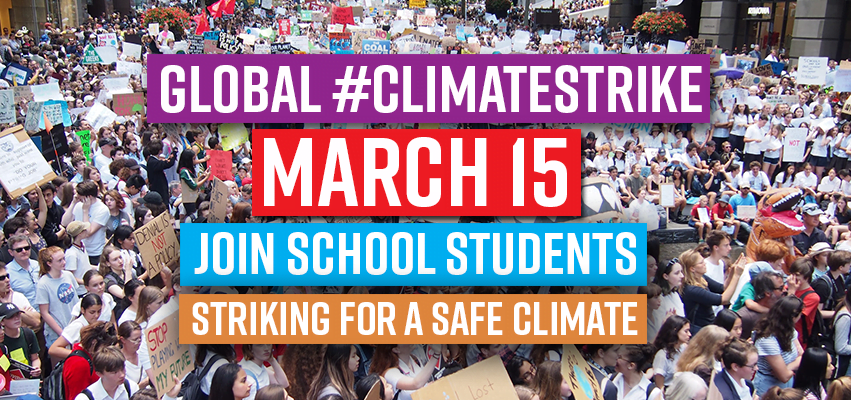
In response to reports of threats of expulsion and action being taken against teachers supporting the School Strike for Climate marches taking place around the country tomorrow, Amnesty International Australia’s Manager Campaigns Tim O’Connor said:

“It’s deeply disappointing to hear reports of students being threatened with expulsion and teachers facing disciplinary action for supporting a fundamental right of our democracy: the freedom of assembly and the right to protest.

“These basic rights have delivered all sorts of benefits to Australia and are central to our country’s democratic values.

”Australians standing up for the values they believe in has led to important social and legislative change such as women achieving the vote, seeking justice for Indigenous Australians and more recently marriage equality. These people-powered movements have changed Australia for the better.

Amnesty International stands together with all students who are organising and taking part in school strikes for climate change.

“The fact is that young people, the future leaders of Australia, are frustrated their voices aren’t being heard by our government, who have failed to meaningfully address climate change. We should support them in peacefully engaging in the democratic process to have their voices heard on the issue of climate change.”

Student striker Harriet O’Shea Carre, 14 years old, said: “As school students, we’re sick of being ignored. We’re sick of our futures being turned into political footballs. We feel sick when we see the climate impacts that are already devastating communities here and around the world. It’s time for our politicians to stop making decisions about us without us”.

O’Connor continued: “We should all recognise and support non-violent direct action to campaign for human rights. Amnesty International stands together with all students who are organising and taking part in school strikes for climate change.

“Climate change presents one of the most urgent and pervasive threats to our human rights, especially the rights of young people, and we only have a short window of time to protect the world in which we live.

Regional activists leading the way on My New Neighbour

Inspired by stories of regional towns in NSW and Victoria implementing programs to support and welcome people from refugee backgrounds, the Amnesty Southern Tasmania Group has been quietly but determinedly demonstrating the power of activist led community organising to create change across Australia.

In early 2018 in the Country Women’s Association hall in the town of Cygnet, group conveners Sylvia Merope and Zainab Clark sat down with the Tasmanian community organiser and other Amnesty members to create a plan to get their local council to help save the lives of refugees through community sponsorship.   

Over the following months, the group collected petition signatures at local markets and met with Lions Clubs, Probus, Country Women’s Associations, Churches, sporting clubs, local arts councils, gardening groups and Councillors to talk about the benefits of community sponsorship for the region. They collected many letters in support of community sponsorship in Southern Tasmania.

Their impressive commitment to the My New Neighbour campaign led them to hosting two major events in support of My New Neighbour in December a week apart.  The first being a screening of The Merger at the Franklin Theatre, and the second featuring Julian Burnside as an honored guest screening of the Border Politics on International Human Rights Day in December.   Both events were sold out beyond capacity, with hundreds of people coming to learn about Amnesty and show their support for refugees.

The Southern group members ongoing relationship with local community groups and council has allowed them to secure a meeting with the Mayor of Huonville Rebecca Enders this month to discuss making community

On Tuesday the 12th of March the group met with the honourable Mayor of Huonville Rebecca Enders and welcomed her commitment to supporting a motion to expand and improve community sponsorship of refugees. The council will take it to a formal vote in April following a workshop with councillors and community groups.

We often picture activism as something that happens in the big cities at sit-ins and marches.  The regional activists like the southern group shows that community organising has the power to carry Amnesty’s campaigns further and deeper into traditionally conservative communities, and can yield long term changes in public attitudes towards people seeking refuge in Australia.

Celebrating Human Rights Act victory in QLD

Former Branch President of QLD & Northern NSW Paul Toner describes how community organisations and everyday Queenslanders came together to call for our basic human rights be protected under law…and won!

In February 2019 the Queensland government finally passed a Human Rights Act. It was the result of a four year campaign by community groups holding the government to account. Here’s some history on how it all happened.

In 2015 Labor won the state election, but to form government needed the support of an independent MP. This MP, Peter Wellington, had a list of conditions for the partnership to work. It included the QLD government committing to an enquiry for a Human Rights Act.

A coalition of community groups representing Queenslanders of all walks of life formed. This was the beginning of the Human Rights Act for Queensland campaign. Amnesty International QLD & Northern NSW became a member of this group.

The campaign required holding the Queensland government to its promise of an enquiry. Many Amnesty groups in QLD raised this issue with MPs. Our groups in Chermside and Townsville were especially vocal. It then became part of the Community is Everything campaign in QLD. Particularly in the Heads Held High report in 2016.

When the enquiry began in 2016, a parliamentary subcommittee called for public feedback. This happened through written submissions and public hearings. Several Amnesty groups and individuals made submissions at the time. The Townsville group were also invited to speak to the subcommittee at a hearing. They ensured that there was a supportive voice for human rights in regional QLD.

The result of the enquiry saw the QLD Labor party commit to a Human Rights Act as part of its platform. With Labor winning the 2017 state election we had to hold them to their word.

The Human Rights Act coalition spent much of 2018 following up with QLD MPs to ensure this would happen. The Government released the Draft Act in 2018 for comment. Again Amnesty groups made submissions on improvements to the Act.

Finally in February this year the Act passed into law! While not perfect the Act is a giant leap forward in human rights protection. Much needed in a state that only recently held 17 year olds in adult prisons. It covers our basic rights and further discussion on this will lead to more protections.

I want to give a big thank you to all our QLD activists who contributed to the campaign over the last 4 years. Also a thank you to Aimee McVeigh and the other leaders of the Human Rights Act for Queensland coalition. Your dedication and hard work at driving the campaign led to this well earned victory!

Women must play an active role in shaping Syria’s future

Syrian women must have an official and active role in shaping the country’s future Amnesty International said today, as it launched a new campaign highlighting the gender-based violations women have experienced during the conflict and the failure to include them in discussions and decision-making about the future.

The campaign Unheard No More: Syrian women shaping Syria’s future illustrates how since the beginning of the Syrian crisis in 2011, women have been subjected to multiple violations and abuses including arbitrary detention, enforced disappearance, abduction and gender-based violence at the hands of the Syrian authorities and other parties involved in the conflict.

The new campaign, being launched on International Women’s Day, invites members of the public to send Syrian women a message of solidarity calling for equal and effective representation in the political process.  The campaign aims to amplify the voices of women playing crucial roles as active members of Syrian society by becoming activists, peaceful protesters, organisers of humanitarian relief and founders of organisations and community centres.

“Eight years since the start of the crisis, Syrian women have suffered tremendously over the course of the conflict, yet they’ve not given up and have instead become brave everyday heroes. They are political activists and they report abuses committed by those in power. Many of these women are the sole providers for their families and risk their own lives speaking up,” said Samah Hadid, Amnesty International’s Middle East Campaigns Director.

“Women’s participation in political processes is fundamental for achieving gender equality and human rights for all. The international community, especially Iran, Turkey and Russia, must pressure the Syrian government and armed opposition groups to end sexual and other gender-based violence and discrimination. They must also consult with women and ensure that they are represented effectively in peace talks, negotiations, the drafting of the constitution and other peace-building processes.”

Amnesty International interviewed 12 women activists who fled the Syrian conflict and sought safety in neighbouring countries and elsewhere. The women told the organisation how they were arbitrarily detained, abducted and held in poor conditions with limited access to basic services. They also talked about how they were shunned by their families after their release and how they were harassed and received death threats for their humanitarian and political activism, as well as for trying to find out the fate of loved ones who had been forcibly disappeared or abducted.

“Syrian women must be included in discussions about the past and future of their country, at the local, regional and international level. Ending gender-based discrimination is crucial to ensure accountability and a just society in Syria,” said Samah Hadid.

The women Amnesty International spoke to expressed concern over being under-represented in the decision-making process about Syria’s future. They said that in some instances, only women representing the government or opposition had been included in those discussions.

Background

Since 2011, Amnesty International has documented gender-based violations against women carried out by the Syrian government and armed opposition groups.

The organisation’s findings show that women detained by the Syrian authorities have been subjected to invasive security checks upon arrival at detention centres, in some cases, amounting to rape . Women in detention reported either witnessing or having been subjected to sexual harassment or assault by guards. Women were also detained alongside male detainees and watched over by male guards. They also were denied access to medical treatment for chronic illnesses.

Amnesty International has also documented how armed groups in Idlib and Aleppo violated international humanitarian law by abducting women and forcing them to work in kitchens in informal detention centres run by armed groups. They have also been subjected to corporal punishment, such as stoning and flogging including for alleged offences such as sexual intercourse outside marriage.

Securing Amnesty’s future in challenging times

In recent times Amnesty has experienced increased challenges to our regular giving income. The cost of fundraising has steadily increased over the past few years and more significantly in 2018.

As a result, Amnesty International Australia been looking at the best ways to withstand these challenges and ensure we can continue to defend human rights in Australia and around the world.  Ultimately, this has led to us building a new operating model in consultation with our staff.

The new model will connect rights-holders, businesses, communities, sector colleagues and advocates together to push against the tide of human rights violations around the world, making Amnesty the place where Australians committed to human rights come to be part of a community working towards a better world, a community where they can amplify their power to make positive change.

As part of this process, we have unfortunately had to say goodbye to some talented employees and much-valued colleagues. The decision to make redundancies is never taken lightly and we looked at many options for securing Amnesty’s future while minimising the impact on our employees, including retention or redeployment wherever possible.

We are seeing rising hate, extremism and human rights abuses all over the world. Now more than ever we must stand strong against injustice. These changes will help us improve our ability to defend human rights and secure the future of Amnesty International Australia so we can continue to stand up against human rights abuses wherever they happen.

Tonga activist proud to be “like a lady”

Invisibility seems like an unlikely problem for Joey Joleen Mataele. Radiating both strength and warmth in equal measure, she was one of the most striking figures at the second Asia-Pacific Rainbow Families Forum, a meeting of delegates from 27 countries hosted once again last year in Hong Kong.

Three decades ago she founded the Tonga Leitis Association, an advocacy and support group for leitis – an appropriation of the local word “fakaleiti” literally meaning “like a lady”. Leitis most closely correlate to transgender women as they are understood throughout much of the world, but with an important but subtle difference – leitis are part of an old local cultural tradition encompassing men whose gender expression do not conform to stereotypes and take up roles usually reserved for women in Tongan society. Leitis are, and have always been, at the core of the island community.

A woman wearing a white top with a purple jacket smiles into the camera. In the background is a neighbourhood street with trees and white picket fences.
Joey founded the Tonga Leitis Association, an advocacy and support group for leitis – an appropriation of the local word “fakaleiti” literally meaning “like a lady” © Pohiva Tevita Tu’amoheloa

Joey says her priority is changing people’s attitudes before changing the country’s laws. “If you don’t think positively about the future,” says Joey. “Then nothing will work.” And by the looks of things, the situation for Tongan leitis is improving. “When I was 14 and went to church in my blue dress it was the talk of the town,” she says, recalling the stir she made and how much things have changed. When AIDS hit Tonga in the 1980s the first victim was a member of the leiti community, and for years thereafter the group was synonymous with the condition, with people even calling them “AIDS” in the streets. But no more.

This change, she says, is the result of concrete action by leitis themselves. Every year the group hosts the Miss Galaxy Pageant, a beauty contest and celebration that has become a fixture of Tonga’s annual calendar, and celebrates its 25th anniversary last July.

Aside from this successful yearly event, leitis regularly make themselves known in the community. Every weekend, leitis can be found in churches up and down the island preparing floral arrangements for Sunday’s religious services. Other days they handle the cooking and decorating for conferences and offer classes on floral arrangement and food preparation for underprivileged villagers. Community-based organising, according to Joey, is the key to building trust and changing attitudes. “People know about the work we’ve done,” she says. “We’ve earned their respect.” Through these acts of visibility and resilience, Tonga’s leitis have worked their way into people’s hearts.

A woman in a purple dress talks to two other women at a party.
Leitis regularly make themselves known in the community. They help in Sunday’s religious services, and offer classes on floral arrangement and food preparation for underprivileged villagers © Pohiva Tevita Tu’amoheloa

Even among Tonga’s church leaders the leitis have made inroads. Although some still preach against them – largely parachute evangelists aloof to the larger community – Joey is welcome at the Catholic church where she worships. The priests, she says, are “more concerned with my contribution to the church community than my fashion sense.”

Joey admits that much remains to be done when it comes to safety and acceptance within societal institutions. Many leitis continue to be thrown out of their homes due to homophobia and transphobia and end up at a safehouse set up by the Tonga Leitis Association. And although more leitis feel empowered to come out to their families, Tongan law, influenced by that of Great Britain in the previous century, still officially regards same-sex relationships as a crime.

Recently, Pacific Island countries such as Fiji, Vanuatu, Nauru and Palau have repealed such outdated colonial-era provisions. The Cook Islands are also in the process of doing the same. These changes are part of a welcome trend towards greater equality and legal protection for LGBTI people in the Pacific Islands. With the determined efforts of the Tonga Leitis Association and others, Tonga may well be the next to repeal legal provisions that violate the human rights of LGBTI people.

These fierce women show us why we still need International Women’s Day

It has been more than 40 years since the UN chose 8 March as the day to celebrate the power and efforts of women worldwide. A rallying call for feminists everywhere, it has thrown light on sexism and misogyny, while amplifying the voices of sisters everywhere. But with all the progress women have made, is it really still necessary?

These women show us it really is. And the millions of women around the world who are joining the International Women’s Day strike agree. While many will march, many others will stay home, showing their solidarity in other ways. From the right to drive to the right to have their identities recognised, these fierce women – from every region in the world – are showing us that Women’s Day is as valid today as it was 44 years ago.

Seo Ji-hyun, South Korea’s #MeToo pioneer

A young South Korean woman leaning against a desk looks towards the camera with a serious expression on her face.
Seo Ji-hyun, South Korea’s #MeToo pioneer © AFP/Getty Images

Seo Ji-hyun is a bona fide trailblazer in South Korea, spawning a #MeToo movement that has exposed several public figures for their acts of abuse. In January 2018, Seo, a public prosecutor, accused her boss of groping her at a dinner. When she complained, he retaliated by having her transferred to a remote town. In January 2019, he was sentenced to two years in prison for abusing his power. Since Seo’s courageous decision to go public, other women have followed suit, leading to a string of charges against a number of alleged abusers.

“The only power I had was the truth. And the only thing I could do was speak the truth.”

– Seo Ji-hyun

Loujain al-Hathloul, freedom fighter in Saudi Arabia

A young woman with dark hair and wearing a white shirt smiles at the camera. Tree foliage is visible in the background.
Loujain al-Hathloul, freedom fighter in Saudi Arabia © Marieke Wijntjes / Amnesty International

In a society where women’s movement and behaviour are controlled by men and the government, Loujain chose a different route. She’s made headlines around the world for her audacious efforts to secure freedom for women in Saudi Arabia. She once live-tweeted herself driving into the country from the United Arab Emirates and was detained for 73 days as a result. An early proponent of the right to drive movement, Loujain and her fellow activists scored a victory for women’s rights when the driving ban was finally lifted in June 2018. But Loujain and other woman’s rights activists are still in prison, locked up since May 2018. Held without charge, they are accused of being “Agents of Embassies” and have been tortured and sexually harassed in prison.

“[Loujain is] the hero of many women and girls across Saudi Arabia and throughout the world. We cannot stand by and watch her suffer.”

– Loujain’s brother, Walid

Make your choice and support Loujain and her fellow activists today.

Nancy Arias Arteaga and Esperanza Lucciotto, two mothers for justice in Mexico

Nancy and Esperanza have made the only choice they could: they’re demanding justice for the murders of their daughters, Alondra and Karla. Alondra was found dead in her apartment, having endured constant abuse from her boyfriend. Karla had accused her boss of sexually harassing her and was later found murdered at her workplace. Mexico has one of the highest rates of murders of women in the world, with 3,357 women murdered in 2017 alone. Such murders happen in a landscape shaped by entrenched inequalities between the genders and a brutal devaluing of women’s lives. Esperanza’s dogged determination to have her daughter’s killer brought to justice has seen her threatened and harassed. But neither she nor Nancy are giving up.

“I don’t want other girls to go through this. I do what I do in honour of Alondra’s memory.”

– Nancy Arias Arteaga

14 brave women say no to hate in Poland

Six women of different age groups look defiantly at the camera.
14 women activists who stood up to fascism in Poland © Grzegorz Żukowski

When demonstrators called for a “white Poland” during an independence march in 2017, 14 women chose to defy the racism and fascism on display. Their message was simple: “Fascism stop”. But their choice – of equality and unity over hate and division – made them a target for attack. A group of demonstrators kicked, spat at and screamed at the women. “They first pulled away our banner, then started tearing our clothes and kicking us. I was kicked several times in my back,” recalls Elzbieta, one of the women. Instead of properly investigating the assault on the women, the authorities convicted them of obstructing a lawful assembly. On 13 February, a judge ordered the investigation into the assault to be re-opened. Now, the prosecutors must find the attackers – not justify their violence.

The 14 women continue to stand strong. Let’s stand with them.

Knifar Women challenge sexual violence in Nigeria

A group of women wearing brightly coloured clothes and headscarves look towards the camera.
Women from Bama, Nnigeria, who formed the Knifar Women’s Movement to campaign for justice © Amnesty International

After surviving years under the brutal rule of the armed group Boko Haram in northeast Nigeria, hundreds of women faced violence and abuse by the military. Threatened, harassed and raped by those who were meant to protect them, a group of these women chose to get organised. Known as the Knifar Women, they are a growing movement of individuals forging a new narrative of survival, strength and justice.

“We again ask government to release our husbands and ensure we are reunited with our loved ones.”

– Knifar Women of Nigeria

Add your voice to their call.

Joey Joleen Mataele, living life on her terms in Tonga

When Joey was 14, she chose to live as the woman she knew she was – a decision that put her at odds with family and school friends who only saw her as the male body she was born in. Joey is a Leiti, a community of – in Western terms – LGBTI+ people with deep roots in Tonga’s cultural past. Pre-colonial Tonga had a very fluid notion of gender which allowed Leitis, who include trans people, to thrive. But with the advent of colonialism and Christianity, attitudes towards Leitis have been tainted by prejudice. “When I was 14, I got raped by my father’s head of security. My father said, ‘He asked for it.’ He told me so many times to stop acting like a woman. And I think that’s when I decided that I am not going to tolerate any more of this.”

“I decided to leave school because I couldn’t handle the harassment, the physical abuse. That’s when I made the decision: I am going to be somebody someday.”

– Joey Joleen Mataele