Amnesty: NSW Opposition sets positive youth justice benchmark with policy announcement

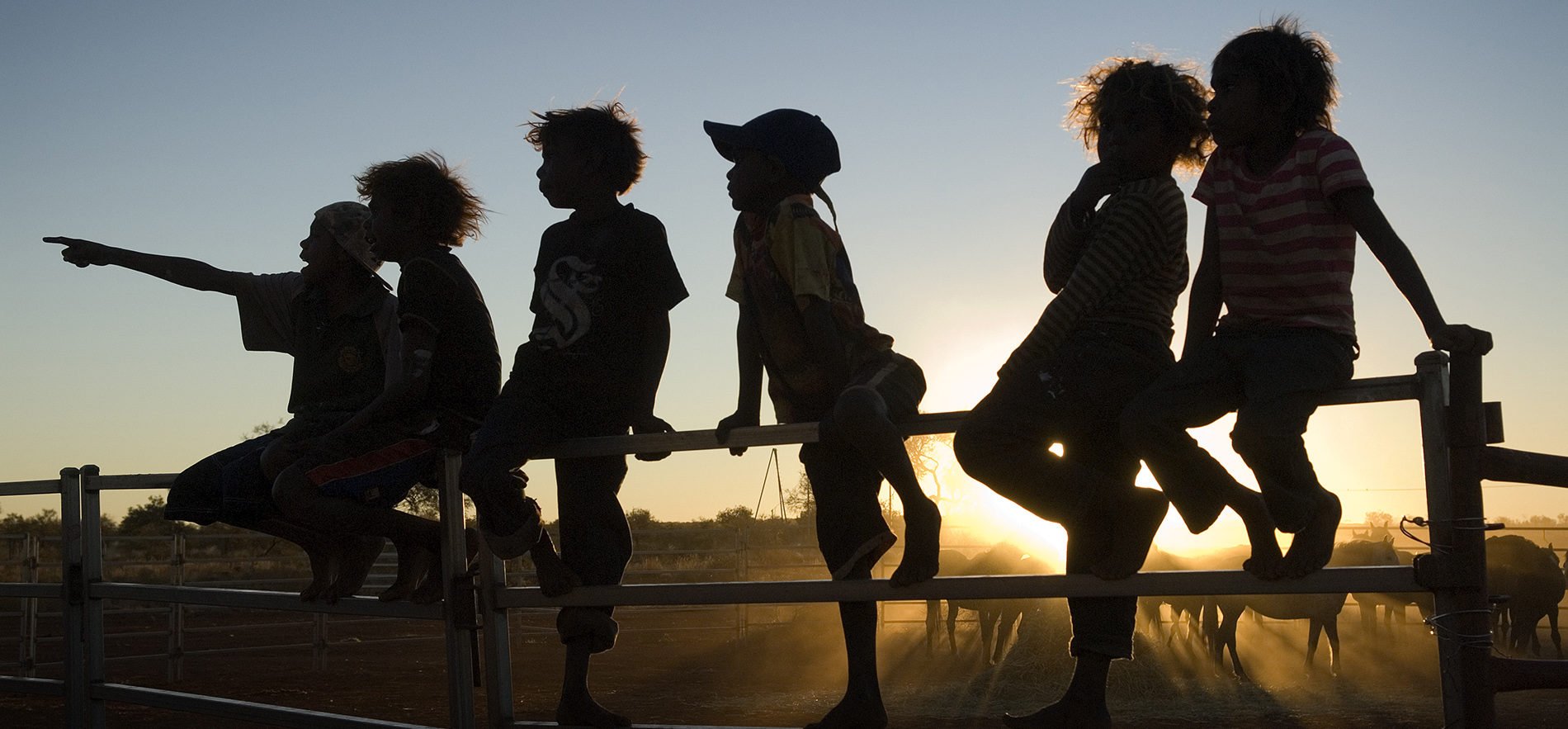
The New South Wales Opposition today announced that a Labor Government will, if elected, appoint an Aboriginal Affairs Advocate for Children and Young People, adopt Justice Reinvestment principles and fund three new pilot programs.

In response, Joel Clark, Amnesty International Australia Advocacy Adviser, said:

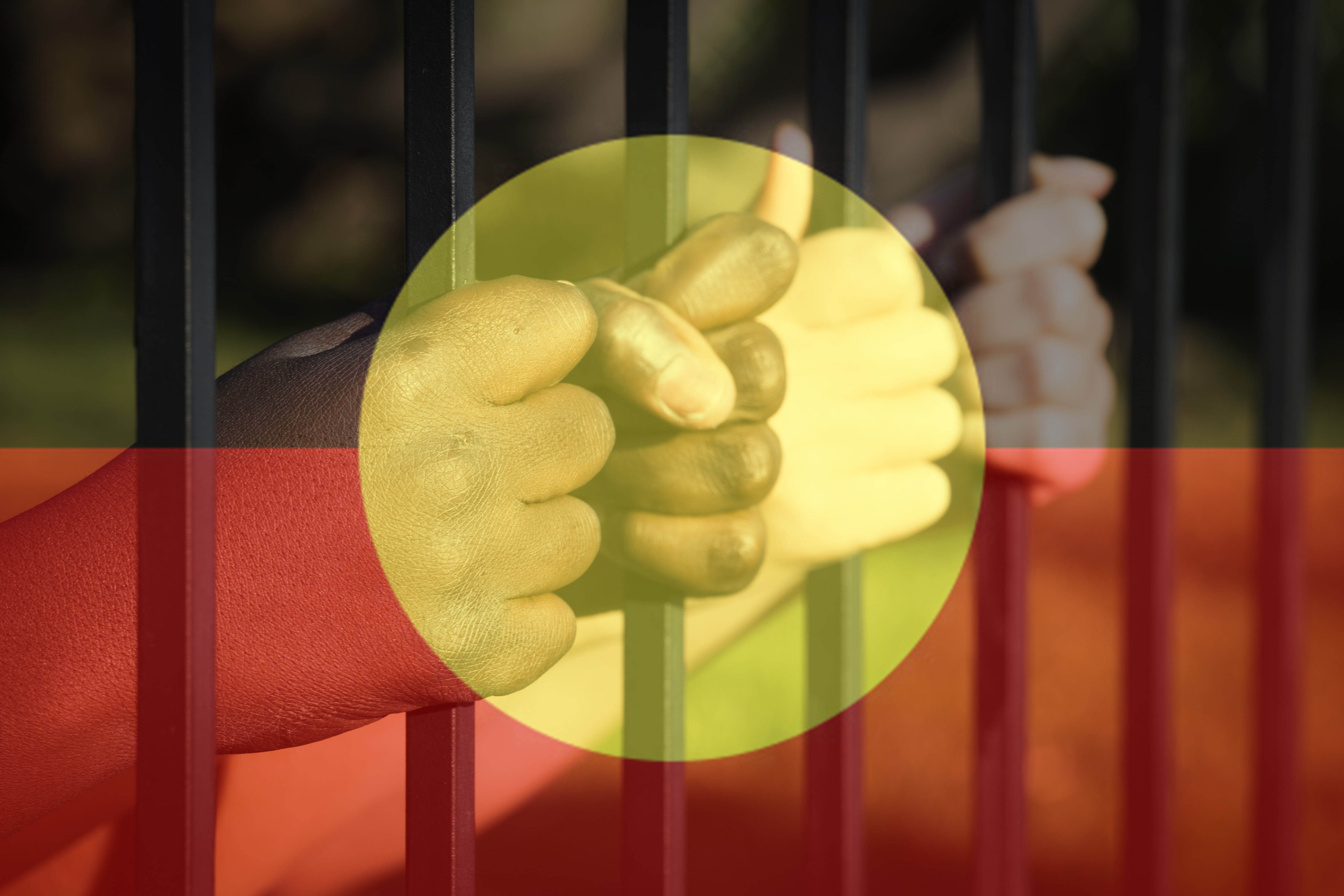
“Justice reinvestment and the appointment of an Aboriginal Affairs Advocate for Children and Young People are commitments that every state and territory government and opposition should be making if they are serious about ending the overrepresentation of Indigenous children in the justice system.

“We know justice reinvestment works. In Bourke, the Maranguka Justice Reinvestment initiative has led to a 38% reduction in charges across the top five juvenile offence categories, and a 23% reduction in police-recorded incidents of domestic violence. An expansion of this policy into other communities that need it is incredibly important and welcome.

“Other states and territories are all at different stages when it comes to justice reinvestment. A strong, consistent approach needs to be taken so we can replicate the benefits that Bourke has experienced, reaching the people that need it – particularly Indigenous children – right around the country.

“In addition, an Aboriginal Affairs Advocate for Children and Young People is a voice that is needed to ensure that someone in government has their back. If we are going to continue to tolerate the shocking fact that nationally Indigenous children are 26 times more likely to end up behind their bars than their non-Indigenous peers, we need someone looking out for them in government.

“Amnesty calls on every state and territory government to meet the benchmark that these announcements have set, and again urges the Federal Government to show national leadership when it comes to youth justice”.

Laws designed to silence: The global crackdown on civil society organizations

Australia’s crackdown on civil society: keeping company with repressive regimes like Azerbaijan, Belarus, China, Egypt, Hungary, Pakistan and Russia

Controversial legislation restricting the activities of charities and advocacy groups passed by the Australian Parliament last year has drawn strong criticism in a new report from Amnesty International.

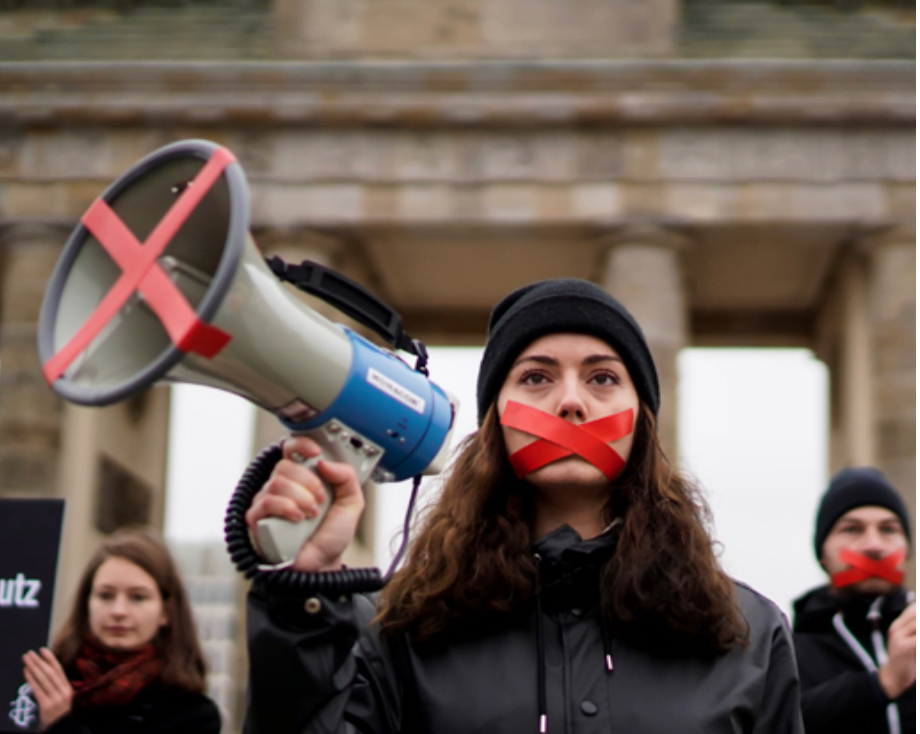
The report, ‘Laws designed to silence: the global crackdown on civil society organizations’, highlights the global trend to use restrictive legislation to target civil society organizations and human rights defenders who speak out against unjust laws and government practices, challenge public opinion or those in power, and demand justice, equality, dignity and freedom.

Australia is among countries such as Azerbaijan, Belarus, China, Egypt, Hungary, Pakistan and Russia in being criticised for passing restrictive laws which often silence critical and diverse views and opinions and inhibit the ability of organisations and individuals to scrutinise governments.

“It’s shocking to think that Australia is noted in the same breath as some notoriously repressive regimes, but the reality is that over the past decade, there has been a concerted effort to stifle civil society in the name of ‘national security’,” Amnesty International Advocacy Manager Emma Bull said.

The National Security Legislation Amendment (Espionage and Foreign Interference) Act 2018 imposes criminal penalties for sharing what is broadly defined as “sensitive” information. While the legislation contains certain provisions to protect journalists, it does not contain safeguards to protect whistle-blowers who divulge information about human rights abuses or other information of public interest, nor for other human rights defenders or organisations who may discuss human rights concerns with representatives of foreign governments or international human rights mechanisms.

“By passing this draconian law, Australia is effectively criminalising organisations which expose human rights violations or that share information with the UN, which is a key right protected by the UN Declaration on human rights defenders.”

“The analogy of boiling a frog is apt – we have to be alive to the repression by stealth this kind of legislation represents.”

Amnesty International is calling for the explicit and public recognition by states of the legitimacy of civil society organisations and human rights defenders, as well as their work, and is urging all states to repeal all laws and regulations that place unnecessary burdens upon them.

Australia’s crackdown on civil society: keeping company with repressive regimes like Azerbaijan, Belarus, China, Egypt, Hungary, Pakistan and Russia

Controversial legislation restricting the activities of charities and advocacy groups passed by the Australian Parliament last year has drawn strong criticism in a new report from Amnesty International.

The report, ‘Laws designed to silence: the global crackdown on civil society organizations’, highlights the global trend to use restrictive legislation to target civil society organizations and human rights defenders who speak out against unjust laws and government practices, challenge public opinion or those in power, and demand justice, equality, dignity and freedom.

Australia is among countries such as Azerbaijan, Belarus, China, Egypt, Hungary, Pakistan and Russia in being criticised for passing restrictive laws which often silence critical and diverse views and opinions and inhibit the ability of organisations and individuals to scrutinise governments.

It’s shocking to think that Australia is noted in the same breath as some notoriously repressive regimes, but the reality is that over the past decade, there has been a concerted effort to stifle civil society in the name of ‘national security’

“It’s shocking to think that Australia is noted in the same breath as some notoriously repressive regimes, but the reality is that over the past decade, there has been a concerted effort to stifle civil society in the name of ‘national security’,” Amnesty International Advocacy Manager Emma Bull said.

The National Security Legislation Amendment (Espionage and Foreign Interference) Act 2018 imposes criminal penalties for sharing what is broadly defined as “sensitive” information. While the legislation contains certain provisions to protect journalists, it does not contain safeguards to protect whistle-blowers who divulge information about human rights abuses or other information of public interest, nor for other human rights defenders or organisations who may discuss human rights concerns with representatives of foreign governments or international human rights mechanisms.

“By passing this draconian law, Australia is effectively criminalising organisations which expose human rights violations or that share information with the UN, which is a key right protected by the UN Declaration on human rights defenders.”

“The analogy of boiling a frog is apt – we have to be alive to the repression by stealth this kind of legislation represents.”

Amnesty International is calling for the explicit and public recognition by states of the legitimacy of civil society organisations and human rights defenders, as well as their work, and is urging all states to repeal all laws and regulations that place unnecessary burdens upon them.

10 things you need to know about Venezuela’s human rights crisis

The human rights crisis that has engulfed Venezuela for the past few years has shattered the lives of millions of people. Here’s what you need to know.

1. Excessive use of force

Much of the current unrest in Venezuela can be traced back to 29 March 2017, when the Supreme Court of Justice – backed by President Nicolás Maduro – moved to take over the National Assembly, where the opposition holds a majority. This triggered protests that were repressed by the Maduro administration with the unlawful and disproportionate use of force. Between April and July 2017, more than 120 people were killed, around 1,958 were injured and more than 5,000 were detained amid mass protests.

2. Mass protests

In 2018 there were 12,715 protests across the country, according to the Venezuelan Observatory of Social Conflict. These have continued in 2019 after President of the National Assembly Juan Guaidó called for mass demonstrations against Maduro.

Amnesty’s report ‘Nights of Terror’ revealed how Venezuelan security forces and government-sponsored civilian armed groups have violently broken into people’s homes as a way of intimidating them against taking part in demonstrations or any other form of protest.

3. Repression escalating

State authorities have undertaken a systematic policy of repression throughout the crisis, but recent patterns suggest this is intensifying.

In the report ‘This is no way to live’, Amnesty revealed how state-backed security forces were using lethal force with intent to kill against the most vulnerable and socially excluded people in the country under the pretext of “fighting criminality”.

There have been numerous reports of human rights violations against protesters in early 2019, particularly in poor areas hardest hit by the crisis, and where pro- Maduro armed groups are concentrated. Venezuelan civil society organizations say 41 people have died in this year’s protests.

4. Children among detained

State authorities have used the justice system to illegally harass those who think differently. According to the Venezuelan organization Foro Penal, 988 people were arbitrarily detained between 21 and 31 January 2019. Among those detained were 137 children and adolescents, of whom 10 are still in detention. There have also been allegations of torture and other ill-treatment of detainees. Foro Penal estimates the number of people currently detained for political reasons is 942.

5. Civilians tried in military courts

Arrested protesters have frequently been tried in military courts, which is against international law. Those prosecuted have faced charges such as “association with intent to incite rebellion” and “attacking a sentinel”, which are specifically designed for military personnel. It is yet further evidence of the authorities’ determination to silence dissent.

6. Three million refugees and migrants

It is estimated that more than three million people have fled Venezuela since 2015, equivalent to 10% of the population, according to UN figures. The majority have sought refuge in Brazil, Chile, Colombia, Ecuador and Peru. Most have cited the denial of their rights to health and food as their main reason for leaving. In other words, they are fleeing for their lives. Amnesty International has urged governments across Latin America and the Caribbean to give Venezuelan refugees access to the asylum application processes in their countries.

7. Crackdown on free speech

There have been numerous reports of violations of the right to freedom of expression, including the arbitrary detention and/or deportation of at least 19 media workers, both nationals and non-nationals. In January 2019, at least 11 journalists were detained in a single week.

8. Economic meltdown

Inflation in Venezuela stood at a staggering 1,698,488% in 2018, according to the National Assembly. The International Monetary Fund (IMF) estimates that in 2019, the annual inflation rate will reach 10,000,000%. Meanwhile, the official minimum wage in Venezuela is US$6 a month – and this is the income of a large part of the population. The inevitable outcome is that many people cannot afford basic goods.

Shortages of basic supplies such as food and medicine have left millions of Venezuelans facing alarming living conditions which are getting worse every day. Measures adopted by the state authorities have hit wages and workers’ rights. Up until 2013, the Venezuelan authorities had made great progress in terms of economic and social rights, but this trend has been emphatically in reverse in recent years.

9. Government in denial

Nicolás Maduro has repeatedly denied that the country is experiencing a human rights crisis. More damaging still, he has refused to recognize the shortages of food and medicines. The few public official statistics on the welfare of the population are contradicted by the reports of independent bodies.

Because the authorities have denied these shortages, they have not accepted the international humanitarian assistance that has been repeatedly offered. This has had a catastrophic impact, especially on the most vulnerable.

10. Damaging US sanctions

On 28 January, the US government announced new measures that prevent the Venezuelan state oil company from exporting crude oil to the USA while stopping US suppliers selling the products that Venezuela needs to process its heavy crude oil. Given that the Venezuelan economy is heavily dependent on oil exports and that the USA is one of Venezuela’s main trading partners, these measures are likely to make life even harder for people living in the country.

Amnesty calls on WA Government to focus on keeping kids from behind bars

The Western Australian Government today announced the Premier’s Priorities. One of the targets announced is to:

Reduce the overrepresentation of Aboriginal people in custody: By 2028-29, reduce the number of Aboriginal adults in prison by 23 percent from 2017-18 numbers.

And with regards to children:

Reduce youth reoffending: By 2022-23, have no more than 50 per cent of young offenders return to detention within two years of release.

In response, Tammy Solonec, Amnesty International Australia Indigenous Rights Manager said:

“Reducing the overrepresentation of Aboriginal adults in custody is an incredibly important goal to have. Amnesty International welcomes its inclusions in the Our Priorities vision.

“The target to ensure that no more than 50% of young offenders return to detention within two years of release is also important and welcomed, but it is disappointing that the government hasn’t set targets to keep them out of prison in the first place.

“The best way to reduce this shameful overrepresentation of Aboriginal people in WA’s justice system is to recognise that adults start as kids, and invest in programs that prevent offending. We need to keep children out of the quicksands of the justice system, because we know that once they are in, it’s incredibly hard to leave.

“If a child is locked up for the first time before the age of fourteen, they are three times more likely to reoffend as an adult. Therefore it makes sense to provide programs that prevent offending altogether, as well as programs designed to stop repeat offending.

“We are calling for an optimistic approach to juvenile justice, and a hopeful outlook for our children – the government must do all they can to keep kids from behind bars.

“The best thing that the Western Australian government can do to keep kids out of prison is to raise the age that they can be locked up from ten to fourteen, and to invest in Indigenous-led early intervention and prevention programs.

Myanmar: Human rights violations continue in Rakhine State

The Myanmar military is blocking access to food and shelling villages and 5,200 people have been displaced since December.

Myanmar security forces have shelled villages and blocked civilians from accessing food and humanitarian assistance in Rakhine State, Amnesty International said today, amid a crackdown since armed attacks by the Arakan Army in early January. Security forces have also used vague and repressive laws to detain civilians in the area.

“These latest operations are yet another reminder that the Myanmar military operates without any regard for human rights. Shelling inhabited villages and withholding food supplies are unjustifiable under any circumstances,” said Tirana Hassan, Director of Crisis Response at Amnesty International.

Amnesty International has received reports that army divisions involved in atrocities against the Rohingya in August and September 2017 have been deployed to Rakhine State again in recent weeks.

“Despite international condemnation of the Myanmar military’s atrocities, all evidence suggests that they are brazenly committing yet more serious abuses,” said Tirana Hassan.

These violations come after a UN Fact-Finding Mission called for the criminal investigation and prosecution of senior Myanmar officials for crimes under international law against the Rohingya population in Rakhine State, and against ethnic minorities in Kachin and northern Shan States.

Arakan Army attacks

On 4 January 2019 – Myanmar’s Independence Day – an ethnic Rakhine armed group known as the Arakan Army carried out coordinated attacks on four police posts in northern Rakhine State, reportedly killing 13 police officers. The Arakan Army has fought the military as part of an alliance of armed groups in northern Myanmar and, as it has moved its attention to Chin and Rakhine State in recent years, has clashed sporadically with security forces there.

Days after the 4 January attacks, Myanmar’s civilian government instructed the military to launch an operation to “crush” the Arakan Army, which the government spokesperson referred to as a “terrorist organisation”. The military has since moved considerable assets and troops into the region, which local activists and media reports have said include soldiers from the 99th Light Infantry Division (LID). Amnesty International and others implicated that division in atrocities against the Rohingya in 2017 and against ethnic minorities in northern Shan State in 2016.

According to the UN, more than 5,200 men, women and children had been displaced by the ongoing fighting by 28 January. They are overwhelmingly from predominantly Buddhist ethnic minorities, including the Mro, Khami, Daingnet and Rakhine.

Amnesty International interviewed by telephone 11 people affected by the fighting, as well as humanitarian officials and local activists in Rakhine State. Most said they fled their villages after the security forces shelled nearby or placed restrictions on food.

Unlawful attacks

Three people from Auk Pyin Nyar, a predominantly ethnic Mro village in Tha Lu Chaung village tract, Kyauktaw Township, told Amnesty International that two artillery or mortar shells exploded within a hundred metres of their village on 21 December 2018. As the villagers fled early the following morning, they heard more shells exploding nearby.

“I heard the explosions of heavy artillery and people even got dizzy,” a 64-year-old farmer recalled.

Another farmer from the same village, who returned days later to collect some belongings, said money was stolen from houses after people fled. He blamed Myanmar soldiers, who were seen in and around the village at the time.

A 24-year-old man from a predominantly ethnic Mro village in Tha Yet Pyin village tract, Buthidaung Township, similarly described hearing artillery or mortar shells exploding around his village on 13 January 2019. The villagers fled to the local monastery and then, later that day, to an informal displaced persons camp in Done Thein village, in neighbouring Kin Taung village tract. The man returned to his village four days later, to collect family registration documents, and saw damage to some houses in the village, as well as the local school. He said money had been taken from some houses, at a time when the Myanmar security forces controlled access to the village.

Media reports have detailed several other incidents. The Irrawaddy and Radio Free Asia reported that a seven-year-old boy named Naing Soe was critically injured when an artillery shell exploded near his home in Tha Mee Ha village tract, Rathedaung Township, around 26 January 2019. Radio Free Asia said that the Myanmar military fired into the village after soldiers triggered an improvised explosive device (IED) nearby. Both news outlets reported that the Myanmar military looted valuables from the village. The Irrawaddy also reported that on 16 January 2019, two brothers, aged 18 and 12, were seriously injured when an artillery shell exploded by their house in Maungdaw Township.

Although Amnesty International could not definitively determine the Myanmar military’s responsibility for each individual attack that injured civilians or damaged or destroyed civilian property, such unlawful tactics have long been a hallmark of the military’s operations against armed groups. In a June 2017 report, Amnesty International documented in detail indiscriminate shelling by the Myanmar military during its operations in Kachin and northern Shan States, which killed and injured civilians and displaced thousands.

“These unlawful attacks are sowing fear in many villages,” said Tirana Hassan. “Hundreds, if not thousands, of civilians have been displaced from their homes as a direct result.”

Restrictions on food and aid access

A 34-year-old woman from a remote ethnic Mro village in Kyauktaw Township told Amnesty International that Myanmar soldiers and police restricted the amount of rice that could be brought to her village. The villagers were already experiencing shortages of basic food supplies, as the fighting that erupted nearby in December 2018 prevented them from harvesting rice or bamboo, a key cash crop.

As the situation worsened, a group of people from the village, including the 34-year-old woman, went to a police station and military checkpoint near Taung Min Ku Lar village to request permission to carry rice back to their village. She said the security forces told them they could bring a maximum of six pyi (a Burmese unit equivalent to a 2.56-litre container) of rice and would need an authorisation letter from the security forces.

“We talked among ourselves that it was impossible to live in our village anymore,” she told Amnesty International. “We didn’t want to move to a [displaced persons] camp, but we couldn’t trade what we found in the forest, and we couldn’t get through enough supplies.”

The village emptied, as did several neighbouring villages facing similar circumstances.

A local activist told Amnesty International that he had helped obtain recommendation letters from the police to allow people to move around Kyauktaw Township, but the authorities are still stopping people from carrying food, claiming that it is to curtail supply lines to the Arakan Army.

The Myanmar authorities have also imposed further restrictions on humanitarian access in Rakhine State. On 10 January, the Rakhine State government barred all UN agencies and international humanitarian organisations, except the International Committee of the Red Cross (ICRC) and World Food Programme (WFP), from operating in five conflict-affected townships. Many organisations have had to stop their humanitarian assistance, undermining emergency response and relief efforts in one of Myanmar’s poorest and most underdeveloped regions.

The Rakhine State authorities have, along with ICRC and WFP, provided some cash and in-kind assistance to people displaced by the fighting, but recipients described it as insufficient and inconsistent. Several humanitarian officials said the restrictions also seem to be a way to keep international eyes off the military’s operations.
Putting people at the heart of our work.

Amnesty International Australia is making  changes to our operational model to ensure we move forward as a sustainable organisation that delivers impact for many years to come. 

Amnesty activists at MP Christopher Pyne's office in Adelaide. © Private
Amnesty activists at MP Christopher Pyne’s office in Adelaide. © Private

Human rights are under threat everywhere we turn. The politics of demonisation drive exclusion and hate, extremism and abuse. Technological change is more frenetic and many organisations have shifted their focus on how they deliver impact to adapt. At the same time, we have less resources to work with, and face an increasingly competitive fundraising environment.

With these many and varied challenges facing our movement, the Amnesty Australia Board has taken the decision to create a new operating model, the People Powered operating model.

The new People Powered model is designed to ensure we deliver on our core business: protecting and defending more lives. We want to be a powerful organisation where activists come together to form a community that protects and defends human rights globally. This new model will ensure that Amnesty will be the best and most effective place for Australians committed to human rights to:

  • Make a connection with human rights values
  • Be part of a community working towards a better world
  • Amplify their power to make positive change.

This shift in our operating model will, of course, mean changes. Staff resources are being reduced and will be reorganised to make activist support more targeted as well as more consistent between those who can access our Action Centres and those who can’t. Through these changes we will be focused on making sure your activism and the great work you are doing to fight bad guys will be a priority.

“The new People Powered model is designed to ensure we deliver on our core business: protecting and defending more lives.”

There will be challenges as we work together to figure out what that support looks like  – but there is also an exciting opportunity ahead of us to make our activism stronger and more impactful.

Amnesty activists at Brisbane Pride Festival. © Brisbane Pride

Meetings to discuss the people powered model with Amnesty’s senior leadership team are happening now in Action Centres right across the country.

If you are keen to learn more about what is happening to develop this model and to stay up to date with information from the board please check out the activist consultation site . This site is here to keep you all informed as we go through this transition and is updated regularly.

Amnesty welcomes ACT Government’s choice of prevention and diversion over prisons

The ACT Government today announced a new major justice reinvestment program, ‘Building Communities Not Prisons’. In response, Tammy Solonec, Indigenous Rights Manager at Amnesty International Australia, said:

At every opportunity possible, governments should be choosing to focus on prevention and diversion, not building more prisons. By launching a major justice reinvestment program over building a new $200m prison, the ACT Government has signalled that they want safe and connected communities, not people behind bars.

“It is important that justice reinvestment programs have a whole-of-community approach with clear mechanisms to work with Indigenous organisations and communities. The ACT Government also has the opportunity to extend this program to children through the development of their Blueprint for Youth Justice, expected to be launched later this year. Raising the age of criminal responsibility to at least 14 years must also be part of the blueprint.

“We know that once kids are locked up, they easily become stuck in the quicksand of the justice system. Justice reinvestment keeps kids out of prison and in their communities.”

“We know that once kids are locked up, they easily become stuck in the quicksand of the justice system. Justice reinvestment keeps kids out of prison and in their communities.

“In New South Wales, the Maranguka Project, an Aboriginal community-led justice reinvestment program delivered a saving of almost $3m to the town of Bourke, and a 23% reduction in police-recorded incidents of domestic violence, and a 38% reduction in charges across the top five juvenile offence categories.

“Amnesty International calls on all governments to take notice of this very positive step forward by the ACT Government and to review their own commitments to justice reinvestment, including projects already underway.”

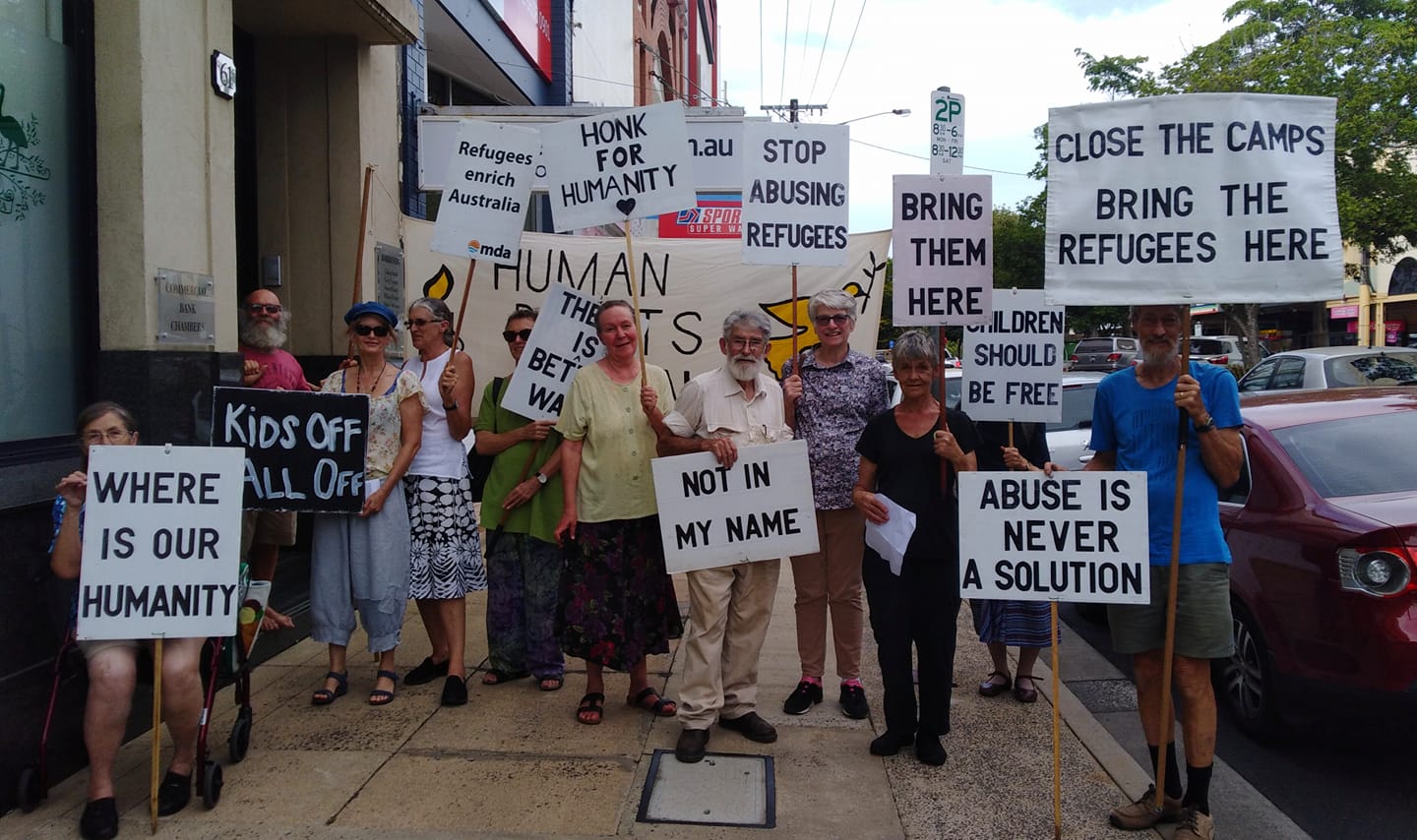
3 years and about 150 vigils: The Lismore Amnesty Group are keeping the candle burning

The Lismore Amnesty Group will mark their 3rd year anniversary next week, on 18 February, of holding vigils outside of their local MP’s office.

On February 18 in 2016 the first vigil was held in Lismore to protest against the returning of baby Asha to Nauru after being treated at Lady Cilento Hospital for burns suffered while being held in offshore detention.

Anne Tuart, the Lismore Group Convenor turned up to this first vigil and has been going every since. As the vigil was wrapping up Anne told the organisers that she would join them the next month for the next vigil. They told her in no uncertain terms that these vigils are being held weekly. Anne has been going weekly ever since!

Vigils also supported the No Business in Abuse, a local campaign which called on the Southern Cross University to drop Broadspectrum and its security subcontractor, Wilson Security, service providers for Manus Island and Nauru detention centres. Their local campaign was successful, Wilson Security no longer have any work with the Southern Cross University.

Anne is very clear that while the Amnesty group ensures that the vigils continue, they are community based and collaborative. Participants are members of a variety of local/regional groups, organisations and residents. The vigil goers include the Lismore Amnesty group, Remembering and Healing Inc, Federal loves refugees, Sanctuary Northern Rivers, Labor Northern Rivers, NSW Nurses & Midwives Association, local Uniting Church, Kyogle action group, No Business in Abuse, Ballina Region for Refugees, Lismore Quakers Group, Northern River Greens, Presentation Society Lismore, , Lennox Head Women’s Group, Knitting Nannas, the Page GetUp! group and residents of surrounding towns of Kyogle, Ballino, Casino and Lismore.

The vigils are calling for the closure of detention centres on Manus Island and Nauru and for the asylum seekers to be brought here. They also mark important dates. For example last year in July the community held a silent vigil to mark the 5 years since the government’s offshore processing policy. This vigil included 12 empty seats with cardboard tombstones of the 12 people who have sadly lost their lives in offshore detention centres.

Interestingly more people attend vigils on the weeks when there is more media coverage of refugee and asylum seeker issues. For their first vigil of the 2019 about 20 people turned up. One of the locals who joined in for the first time said she had been driving past the vigil every week, but she couldn’t drive past anymore!

Alongside the weekly vigils Anne writes and delivers a weekly letter to MP Kevin Hogan on behalf of the community.

You can check out the letters and find more out about the weekly vigils from the community facebook page.

The group have been hugely successful in gaining media coverage. For example the Lismore Echo covered the silent vigil in July 2018 on the front page, on page 3, 19 and 40!

Last year I travelled to Lismore to join in one of the vigils. Senator Richard di Natale dropped by to say hi to the community members and to thank them for the persistence and compassion.

The Lismore Amnesty Group and their cohorts, and our action groups Australia wide are the reason the Amnesty candle continues burn. Thanks to all of you amazing people for ensuring that we continue to light up the darkness.


Rohingya refugees: When is a crisis no longer a crisis?

Amnesty International researchers are meeting with Rohingya refugees in Cox’s Bazar in Bangladesh to find out more about their experiences and conditions in the camp. This is the first in a series of blogs about the trip by Alex Neve, Secretary General Amnesty International Canada.

Dhaka, Bangladesh

As I arrive in Bangladesh, joining an Amnesty International delegation that is here for two weeks to meet with and hear from Rohingya refugees in the country, a specific question comes to mind. In this world of ours – a world marked of late by far too much conflict, hate and division – when and why is a crisis no longer seen to be a crisis?

In a world which feels to have an ever-shortening attention span and seems only able to give real attention to two or three emergencies at once, we forget and move on from today’s or this week’s crisis more quickly than ever.

Meanwhile, politicians regularly bandy the word crisis about to inflame tensions and score political points when it isn’t a crisis by any measure; be it Donald Trump’s manufactured border wall crisis or the overblown rhetoric around a supposed-influx of refugees crossing the Canada/US border. We see quick resort to the word crisis in those situations, largely to undermine support for refugee protection.

That certainly describes the circumstances faced by the Rohingya people. No longer on the front page. Not at the top of everyone’s Facebook feeds. No upcoming special meetings at the UN Human Rights Council or Security Council.

And that is a key reason why we are here.

In the fall of 2017, international attention (including in Canada) was transfixed on the massive human rights and humanitarian crisis that was unleashed when Myanmar’s security forces mounted an unrelenting campaign of attacks against Rohingya villages. It was by no means the first episode of cruelty the Rohingya have endured at the hands of the military and even the public in Myanmar; as the systemic, deliberate discrimination they face, enshrined in law, goes back decades and is so entrenched as to constitute the international crime of apartheid. But it was, by far, the very worst, ever.

Within only a few months, 700,000 Rohingya had fled across the border into Bangladesh, joining some 300,000 refugees who have fled there in previous years, such that Bangladesh, an already over-crowded country with a high proportion of the population living in poverty, is now sheltering one million Rohingya refugees. And some eighteen months after the violence and attacks that forced them from their homes, there has been no improvement on the ground in Myanmar, no renewed sense of dignity and protection, and no prospect of being able to return home safely in the foreseeable future. Quite the contrary, we have documented fresh attacks by the Myanmar military in Rakhine State in recent weeks, including shelling villages, blocking access to food aid and detaining civilians.

Conditions in the refugee camps are extremely difficult. That we know even before we arrive in the Cox’s Bazar region of Bangladesh. The levels of funding that UN agencies and humanitarian organizations receive from donor governments are far below what is needed. Prospects for education and livelihoods in refugee communities are minimal at best. And there have been off and on suggestions that the Bangladesh and Myanmar governments may be readying to encourage refugees to return. Sounds like a serious, continuing crisis.

Over these two weeks we will hear directly from Rohingya refugees living in the camps – from elders and from the young, from women and men, and from those who have been here for many years and others perhaps only for a few months.

Above all we will listen to their experiences; and what action is needed to ensure their rights are respected and upheld.

What, of course, needs to happen in Myanmar, including justice and accountability for those responsible for this crisis, such that conditions improve, and safe and voluntary return is possible?

What is lacking in the camps, be it measures to improve safety for women and girls, provide schooling for children, or institute support and livelihood programs for refugees, all with an eye to recognizing that this is a crisis that is not ending anytime soon?

What about impending worries such as returns to Myanmar or relocation elsewhere in Bangladesh, including possible plans to turn a low-lying island in the Bay of Bengal into a refugee camp?

What about the role of the international community? How to generate more financial assistance, to meet short term needs but also longer-term development? And what about the possibility of resettlement opportunities for some refugees, to Canada and elsewhere?

And all of this in a world which has, to put it mildly, shown less compassion and understanding and more fear and punishment to refugees as of late.

For Amnesty, the bottom line is how to strengthen solidarity with Rohingya still in Myanmar and the one million living as refugees in Bangladesh – from Canada and elsewhere around the world – in the face of a crisis that is, yes, absolutely still exactly that.