Medivac Bill a welcome step towards humanity for refugees
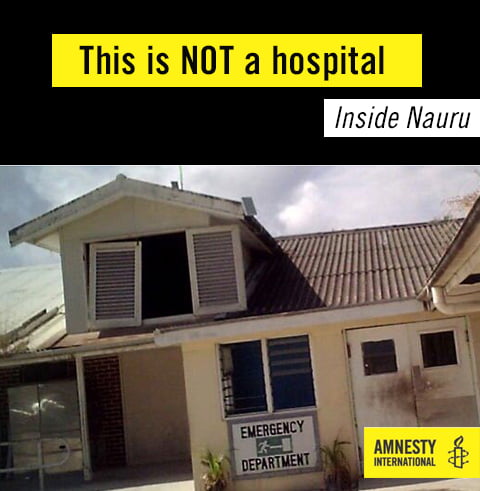
In response to the Medivac Bill passing the senate and the Prime Minister’s announcement that Christmas Island will be reopening Amnesty International Australia Refugee Coordinator Graham Thom said:
“The passing of the Medivac Bill is a welcome step towards humanity for the refugees on Manus and Nauru. It is reassuring that public opinion is finally being reflected in parliament through the many people that fought so hard to get the bill through.
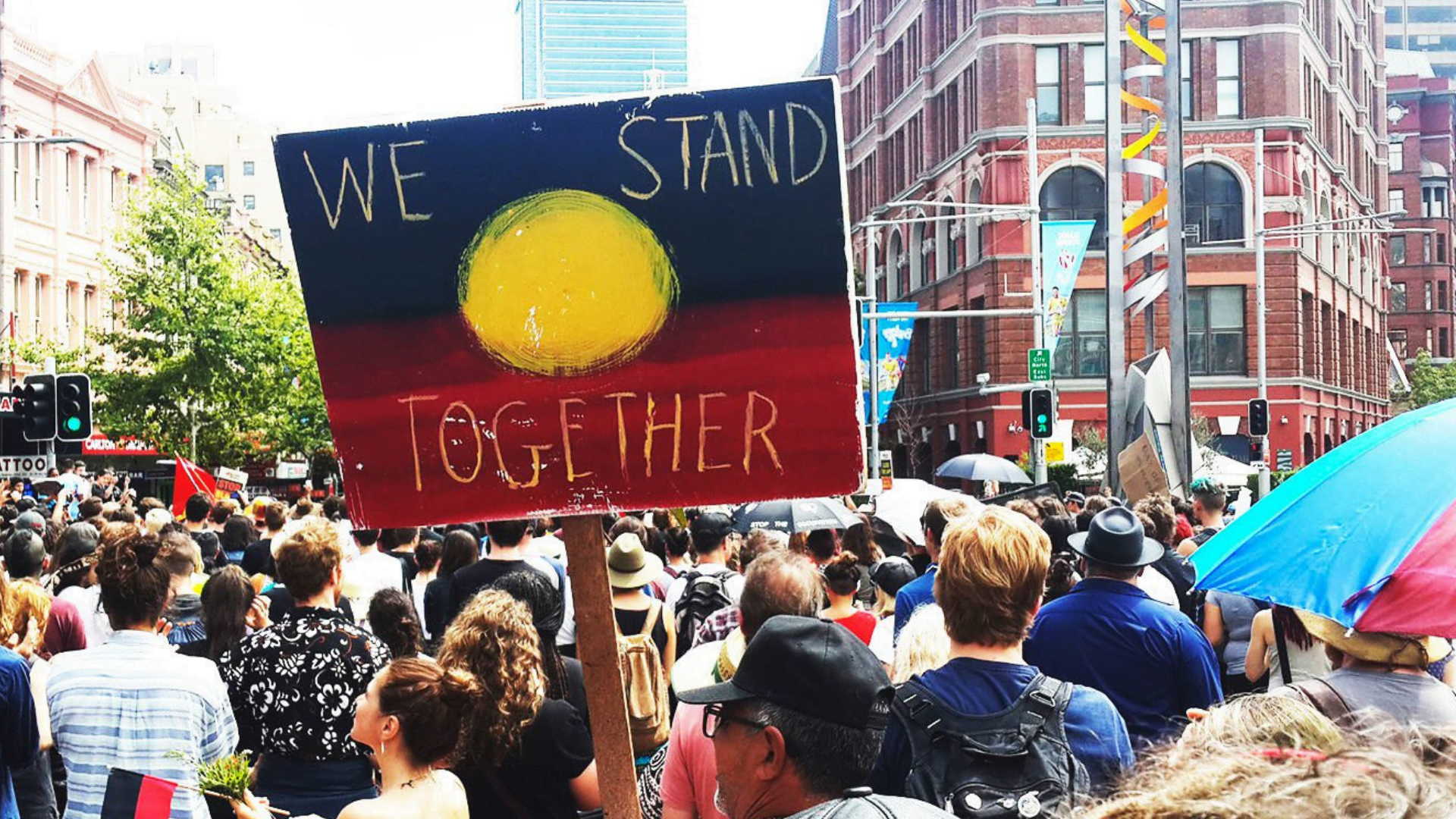
“We have seen both through the public’s support for the Medivac bill, and the recent case of Hakeem al-Araibi, that the Australian public do value and care about refugees and that public opinion has shifted.
“In Hakeem’s case the Australian government recognised this and worked hard to ensure he was returned to Australia. But many other people with the same recognised refugee status as Hakeem remain detained in terrible conditions on Manus and Nauru.
“Most of the people on Manus Island and Nauru are recognised refugees who have proven their lives would be in danger if they were returned to their countries of origin.You can’t demonise the refugees on Manus and Nauru on one hand while welcoming others and praising their contribution to Australia.
“They are not simply pawns to be used to score political points, they are human beings who deserve a safe place to live and access to adequate healthcare.
“We are disappointed by the announcement today that Christmas Island is to reopen. We have seen time and time again that offshore processing is broken and creating yet another offshore centre for sick refugees will not fix the issue. Re-opening Christmas Island is nothing short of a cruel and unnecessary political stunt.”
The Queensland Government today became the first state to release a whole-of-government report card on efforts towards Closing the Gap. In response, Rodney Dillon, Indigenous Rights Adviser, at Amnesty International Australia, said:
“Government and community solutions to close the gap of disadvantage between Indigenous and non-Indigenous Australians must be driven by data.
“Report cards are one step towards this and Amnesty International Australia welcomes the Queensland Government’s Closing the Gap Report Card. All governments should now do the same.
“The Queensland report card does show however, that there is much work still to be done – with more than half of the targets not on track to be met.
“The glaringly obvious omission from this report card and from the Closing the Gap Framework itself, is clear reporting on justice targets. At a time when Queensland youth detention centres are overcrowded, and kids are being held in watchhouses at alarming rates, this isn’t acceptable.
“The small amount of information on youth justice that was included showed that nearly 40% of Indigenous kids being locked up are under the age of 15, compared to only 23% of non-Indigenous kids.
“We need to be able to compare these figures, and other justice-related national indicators, to set targets that will reduce Indigenous overrepresentation. Targets – that include national reporting obligations and measures of transparency – are a proven mechanism to achieve real progress and accountability for change.
“There has been a deafening call from the community and Indigenous leaders to include Justice Targets in the Closing the Gap Framework and Federal Government must ensure youth justice is included in any refresh of the targets. Amnesty is also calling on the Queensland Government to lobby for their inclusion. If Queensland is serious about making a difference in this area, they will let their voice be heard in Canberra through COAG.”
Hakeem is home! On 12 February he arrived at Tullamarine airport in Melbourne and into the arms of his joyous wife.
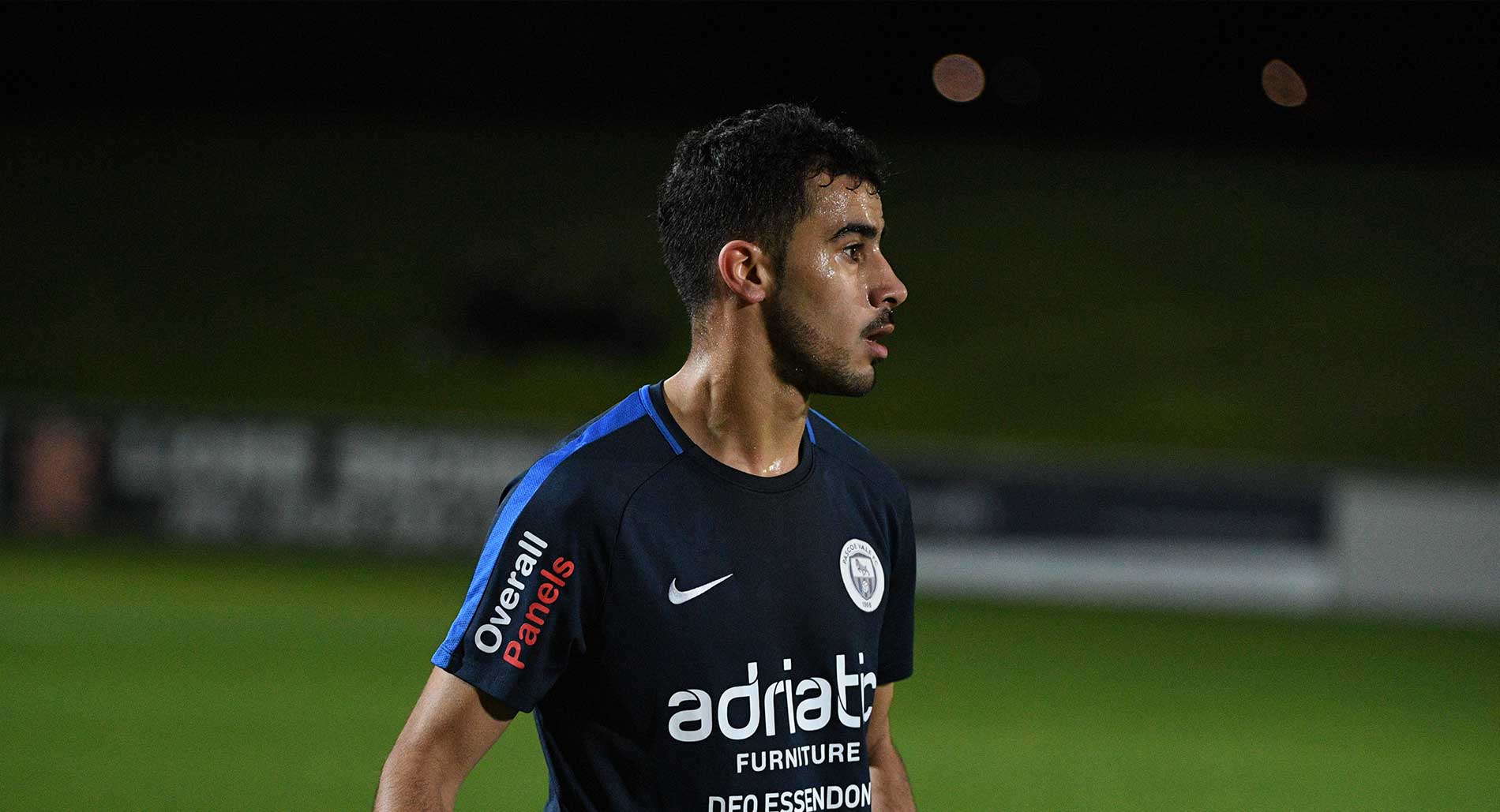
The Thai authorities have now dropped the falsified case against Melbourne-based footballer Hakeem al-Araibi. He had spent 76 days unjustly imprisoned in Thailand and for every single one of those days, he faced deportation to danger in Bahrain.
Thank you for making Hakeem’s freedom a reality. Today you’re celebrating alongside Hakeem, his wife, friends and football team.
Hakeem’s wife thanks you
Hakeem’s wife had been separated from her husband since his arrest on their honeymoon in November last year.
On his release, Hakeem’s wife sent this message to you and everyone else who helped free Hakeem:
My heart is now full with gratitude. Just so thankful that these tears are falling out of relief and joy.
I’m especially grateful for all people who supported Hakeem around the world. Finally this nightmare has ended, and I am very happy to see everyone happy with me at this moment.
I would like to say thank you Australian Government for all this support, thank you Amnesty International, Human Rights Watch, Lawyers, Craig, Andrew, Sarah, Pascoe Vale Club, GIDHR, Sayed, all journalists, the Australian people, friends and family and everyone who has supported.
“Thank you all, you have given me big support to be strong. I love you all and thank you from the heart. Well done. We did it.”
What happened?
Hakeem fled Bahrain in 2014 after he was convicted in an unfair trial of vandalising a police station, even though he was abroad and playing in a televised football match at the time.
In 2017 Hakeem al-Araibi found refuge in Australia. A talented footballer, he resumed his career playing for Pascoe Vale FC in the Victorian football league. Since finding refuge in Australia, he has spoken out about human rights abuses in Bahrain, including the torture he suffered in detention.
In November Hakeem traveled with his wife to Thailand for their honeymoon, but was detained on arrival after the Bahrain authorities initiated an Interpol red notice for him– effectively an arrest warrant. This goes against Interpol’s own regulations which ban red notices against refugees on behalf of the country they fled from. The red notice was lifted, yet Thailand continued to detain Hakeem and were considering deporting him back to Bahrain.
We all knew that Hakeem faced imprisonment and torture if sent back to Bahrain. So Amnesty supporters mobilised worldwide to call on the Thai authorities to him return to his friends, colleagues and teammates in Melbourne.
The movement to #SaveHakeem grew from an Amnesty petition to span three continents and tens of organisations. It mobilised football teams from the local to the national, engaged Olympians and celebrities, and gathered the support of thousands of people worldwide.
Supporter across the world joined together. We partnered with other organisations, such as the Gulf Institute, and together mobilised more than 165,000people to add their voice to #SaveHakeem.
Former Socceroos captain and Amnesty ambassador Craig Foster kept the media momentum going, even visiting Hakeem in prison to let him know that he wasn’t alone – you were all by his side, every step of the way.
Our movement showed that we would not stop until Hakeem was free.
On 11 February our movement heard the good news: Thailand’s Attorney General had ordered that Hakeem would be going home to Australia.
What’s next?
This is why the Amnesty movement exists – to show people who face some of the worst injustices that they will never face them alone, and to ensure their human rights are realised.
Together we must keep mobilising worldwide for people like Hakeem. We must continue meeting with governments, writing media stories, documenting evidence, gathering lawyers’ advice and activating our communities.
Behind the scenes, a lot of work goes into sustaining the attention on a case like Hakeem’s – and there are countless people languishing behind bars right now, who fear they’ve been forgotten. All this is only possible with your support. Please consider becoming a regular giver today and help bring hope to more people like Hakeem.
The Rohingya refugees in Bangladesh have yet to come to terms with the trauma they had experienced in Myanmar. Multimedia Producer Ahmer Khan visited Cox’s Bazar to document in photographs the Rohingya people with what they held dearest to them during their troubled escape from home. Words by Saad Hammadi, Amnesty International South Asia Campaigner.
Last November, when word spread of a possible repatriation of a few thousand Rohingya refugees, hundreds sought sanctuary in other camps in Cox’s Bazar to escape a forced return and avoid being identified.
In the desperately overcrowded camps across Ukhiya in Cox’s Bazar, many Rohingya refugees have still not recovered from the trauma they experienced in Myanmar. That painful escape from home still haunts them.
On 25 August 2017, Myanmar’s military launched a deadly crackdown on the Rohingya people from the country’s northern Rakhine state. Homes were razed, villages burned down, women and children raped, and thousands killed in grisly crimes against humanity.
The military crackdown prompted more than 720,000 Rohingya men, women and children to flee their homes and seek refuge in Bangladesh. Many of these people have fled their homes with whatever they could put together, starved, as they walked through the hills across Maungdaw and Buthidaung townships to finally reach Tombroo, Teknaf, Shah Pari Dweep and other bordering areas of southern Bangladesh.
When the security forces came for them, the only option for many was to get away on foot. Even as the hundreds of thousands made it to Bangladesh, some however, succumbed to their wounds and illness on their way.
Amina Khatoon, 40, used a split bamboo pole to shoulder her ailing mother, with the support of a cloth tied to it. Her mother passed away before they could reach Bangladesh. The remains of the bamboo pole is all she has to remember her.
Many refugees who made it to Bangladesh hold smallest of their possessions close to their heart. In the sudden exodus, a few carried with them just a Quran, a few their identity cards.
Others brought with them essential items such as a cooking pot or the stick that had helped 100-year-old Naseema Khatoon make the arduous journey.
In Ukhiya, for days many were stranded in the forests on the two sides of the highway. They had finally managed to squeeze themselves into the already overcrowded Balukhali and Kutupalong camps. The refugees have settled for the smallest of space that they could find for themselves to spend the nights in the threadbare camps on the mud mounts in the hill areas.
The makeshift homes built using tarpaulins and bamboos make a temporary shelter of roughly 20 to 35 square-feet each, for about four to 10 members of a Rohingya family. The camps are densely populated with 60,000 to 95,000 people per square kilometre, even more than the most densely populated cities in the world today. There are close to one million Rohingya refugees in the camps stretched across 6,000 acres, making the camps near Cox’s Bazar the largest refugee camp in the world.
Bangladesh has generously allowed a huge population of the refugees into the country despite its own economic and demographic challenges. It is a low-income country and world’s most densely populated. The only space for the refugees could be found when the authorities cut down forests in the hills of Cox’s Bazar.
The International Criminal Court has launched a preliminary investigation into the deportation of the hundreds of thousands of the Rohingya refugees from Myanmar into Bangladesh. It is critical that the international bodies continue their efforts to bring the perpetrators of the crimes committed against the Rohingya people in Myanmar to accountability.
In the meantime, until the conditions are safe, voluntary, dignified and sustainable for the Rohingya refugees to return to their homes, the international community must take shared responsibility for the fate of the Rohingya people. While their efforts must afford Bangladesh with financial and technical assistance to tackle the crisis, countries must look at the potential of the Rohingya people as part of third country relocation in the event of a long-term crisis situation, where judicial investigation and justice for the Rohingya can take time and a repatriation may be too soon, too dangerous.
In response to reports that Hakeem al-Araibi will be returning home to Australia, Claire Mallinson, National Director of Amnesty International Australia said:
“Amnesty is delighted to hear that after two long months Hakeem al-Araibi is finally coming home, and welcomes the Thai government’s decision to uphold Hakeem’s human rights.
This would not have been possible without all the hard work and persistence of everyone involved.
“While it has been a long and arduous two months in detention for Hakeem, Thailand has done the right thing in dropping the case against him. There has been overwhelming support for Hakeem from Australia and abroad, incredible work from Amnesty Ambassador Craig Foster with support from the football, sporting and Olympic communities, human rights organisations, the Australian government and public as well as our colleagues in Amnesty Thailand. This would not have been possible without all the hard work and persistence of everyone involved.
“Hakeem’s plight and the overwhelming support he received has received shows that the Australian public stand up for justice and for what is right. We look forward to welcoming Hakeem home today.”
It’s awards season in Hollywood, and a year since a #MeToo-dominated Oscars ceremony made sexual harassment a global talking point. Critics will be watching to see what, if anything, has changed in the film industry since the Harvey Weinstein scandal broke.
But the #MeToo movement has made ripples far beyond LA. Away from the spotlight there are many amazing women who are fighting against sexism, harassment and violence, braving discrimination and stigma in their quest for change.
Punjita, Rashmila and Ashmita, three activists from Nepal, embody this spirit of determination.
In July 2018, a 13-year-old schoolgirl named Nirmala Pant was raped and murdered in Nepal’s Kanchanpur District. This brutal crime, and the lack of effective investigation by the authorities, started a wave of protests across Nepal. Meanwhile two women accused the former Kathmandu mayor of sexual harassment, inspiring others to come forward with their stories.
Here Punjita, Rashmila and Ashmita describe why speaking out about harassment and violence is so important and tell us why Nepal needs a #MeToo movement.
Punjita Pradhan is the co-founder of Utkarsha Nepal, which supports victims of sexual violence
Punjita Pradhan (front centre) with other activists
“The protests following Nirmala’s murder sparked media coverage saying Nepal was having its ‘#MeToo moment’. Although there are parallels with global movements, some of the issues I work on are a particular problem in Nepal, which is one of the poorest countries in the world. For example, there are thousands of children in Nepal who live and work on the streets, and they are especially vulnerable to sexual abuse. These children cannot rely on the authorities to protect them.
“Victim blaming is still the knee-jerk response for many in Napal.”
– Punjita Pradhan
“Although Nepal has laws against gender-based violence and harassment, very few cases are reported. Those that are usually end in an out-of-court settlement – but then the victims still have a lifetime of stigma to contend with. Victim blaming is still the knee-jerk response for many in Nepal.
“There is supposed to be a minimum six-month jail term for domestic violence or sexual abuse, but in reality, the perpetrators are often released after a single night. So even if a victim reports a case, there is no guarantee of their safety afterwards.
“I used to work as a journalist, and I faced sexual harassment from the police, army and my colleagues – experiences which I realised so many women share. One friend told me a story I couldn’t forget. In her neighbourhood there was a woman who had recently got married and she was being constantly groped by her new brother-in-law. She didn’t want to report it – she was scared that her marriage would break down, she would be blamed for enticing that man and she would have to carry the shame all her life.
“I’ve found that many women with depression or anxiety have faced sexual abuse at least once, and usually multiple times in their lives.”
– Punjita Pradhan
“Stories like this prompted me to quit my job as a journalist and start Utkarsha Nepal. Our aim is to create awareness about sexual harassment and abuse and to remove the stigma. Very few people in Nepal are willing to talk openly about these issues. We work in schools and colleges promoting understanding about mutual consent and healthy personal boundaries. We also provide counselling, healing and legal support for victims.
“In my experience as a counsellor, I’ve found that many women with depression or anxiety have faced sexual abuse at least once, and usually multiple times in their lives. When there is no justice, their trauma is prolonged.
“It’s important that we include men in this discussion too. Men who have experienced sexual abuse themselves may be more likely to go on to abuse others. This is one reason why it’s essential that victims feel they have someone to talk to.
“There have recently been some improvements in terms of awareness, and it’s great that these conversations are coming out in the open, especially with women coming forward about their experiences with high-profile men. But there is still a long way to go. In November, a government minister summoned the editors of five state newspapers and instructed them not to print any criticism of the government’s response to the murder of Nirmala Pant. The government is still so afraid of speaking about these issues.”
Rashmila Prajapati used to work for Kathmandu local government. She now runs an NGO that campaigns against sexual violence and teaches self-defence for women and girls.
Rashmila Prajapati
“In October 2003, I received a letter from my employer, the Kathmandu Mayor’s Office, saying my service had been terminated. No explanation was given, even though I had worked there for six years. Over the next few days articles started appearing in local and national news saying I had been sacked for corruption. It was a terrible time.
“My boss kept hinting that I would be promoted if I spent time alone with him.”
– Rashmila Prajapati
“I knew the real reason I’d lost my job. A few years earlier I had resisted repeated sexual advances from my boss. He kept hinting that I would be promoted if I spent time alone with him. He tried to hold my hand and touch me in ways I didn’t like. I told him straight that this was not going to happen, and shortly afterwards his tenure ended. But when he was reinstated in 2003, one of the first things he did was to fire me.
“When I was fired, friends suggested taking legal action, but I was not sure that I would get justice. There was no law against sexual harassment then and my harasser was powerful enough to create “fake proof” of my corruption, even though I was innocent. So I kept quiet – for fifteen years.
“Then, in 2018, I read a status on Facebook: a woman journalist was alleging sexual harassment at the hands of the same man. I knew I couldn’t stay silent anymore. So I shared my story on Facebook. I wanted to prove that victims of harassment are not voiceless.
“My post was shared widely on social media and was all over the news the next day. Even then powerful people tried to cover up for my harasser and paint me as a liar. The man I accused of harassment, who was in a very powerful post, threatened to sue me and repeated the corruption allegations against me. He is no longer in the post, but this is not just about one man. Nepal has many serial predators who have been misusing their power and positions for years. They include politicians, bureaucrats, actors, writers, business people and others. It’s high time we reveal them.
“We have worked with internationally renowned martial artists, and our instructors are all martial artists with black belts.”
– Rashmila Prajapati
“In a way I was lucky. I was able to resist that man’s advances because my family’s financial position was strong and I had other options for work – I used to teach in a college. But I kept thinking about the women who didn’t have options like mine. That’s why in 2012, I co-founded an organization called Women Empowerment Nepal, which works against sexual violence and teaches self-defence skills to women and girls.
Rashmila teaching self-defence
“We have worked with internationally renowned martial artists, and our instructors are all martial artists with black belts. Self-defence is not about fighting, but instilling confidence. So far we have taught more than 3,000 women and girls. Besides the physical tactics, we help women to identify risks and teach them about the law and their rights.
“Though I could not fight against the injustice that happened to me then, I am determined to raise my voice against sexual violence now.”
– Rashmila Prajapati
“Our aim is to make women believe that they can and should defend themselves against sexual harassment and violence. Often the participants are shy at first but they definitely get into it!
One of the self-defence classes Rashmila runs
“Though I could not fight against the injustice that happened to me then, I am determined to raise my voice against sexual violence now. I want to help create a society that is safe and free for everyone.”
Ashmita Sapkota is a Campaigner at Amnesty International Nepal, which is working to educate women across the country about their rights
Ashmita Sapkota
“Through our campaigning on violence against women, and our human rights education program, Amnesty Nepal has been raising awareness about the issue of sexual harassment and gender-based violence.
“Some people living in big cities are aware of the global #MeToo movement, but the vast majority of women in rural areas – who are most at risk of harassment and abuse – are not aware of these conversations.
“But for there to be true gender equality in Nepal, we need to empower women economically and socially.”
– Ashmita Sapkota
“There are many challenges when it comes to talking about these issues in the Nepali context. Sexual harassment is just not taken seriously, which means women don’t have much faith in the justice system and are reluctant to open up. Plus, many of the perpetrators are powerful people which makes it even more difficult and means it is often the victims who end up being blamed and stigmatized.
“There have been some recent positive changes. There have been public displays of solidarity, from both men and women, towards the brave women who have spoken up.
“Women have the best knowledge of the problems and struggles that discrimination causes.”
– Ashmita Sapkota
“But for there to be true gender equality in Nepal, we need to empower women economically and socially. We need to fight against our country’s patriarchal mindset that views women as less than men, and that means educating both men and women.
Amnesty International Nepal staff
“It’s so important that women are at the forefront of conversations about these issues. We have the best knowledge of the problems and struggles that discrimination causes, which is why I’d encourage women in Nepal to get involved in human rights activism. It’s challenging of course, but even a small change gives us hope and satisfaction.”
In the aftermath of Jair Bolsonaro’s election on an openly anti-human rights agenda, a climate of fear remains in Brazil. Yet, young people are rising up and making their voices heard. Amnesty International met seven human rights activists who reveal what life is like in Salvador, Brazil, and how they’re tackling violence against women, racism and homophobia head on.
“I’ve been living in a state of fear since I was little” – Lidiane, 33
They are there to protect you, but they can hurt you at any moment. Since I was a little girl, this is the image I’ve had of the police. My childhood was littered with the sound of gunshots. Growing up, I didn’t realise what they were, but now I know how fatal they are.
I live in a favela where police frequently come to my community. They never offer any information or say who they’re looking for, but they will attack anyone who gets in their way. Over the past few years, the situation has escalated, so we’re establishing curfews and we are constantly monitoring the situation.
I’ve been living in a state of fear since I was a little girl. That’s common in Salvador, Brazil. This fear has fuelled my passion to fight for justice. When I went to university I wanted to study law. It was a way to be inside the system and represent the needs and the issues of the people in my community.
The fight for justice has not been without its obstacles, though. As a black woman, I have limited access to certain opportunities. Every day, I face three stereotypes – I am from the periphery, I am a woman and I am black.
Becoming part of Amnesty International was a turning point. I’ve spent my life fighting for human rights and questioning gender inequality. When I attended my first meeting, I met people who had similar stories to me. They wanted to take a different path and transform their communities.
As a practicing lawyer, I am working on two cases in my community, providing support to those who can’t afford it. I want to prove to others that we have the right to dream and that it is possible to overcome the barriers we face. We might be moving towards an increasingly dictatorial state, but if we unify my hope is we can come together, resist and change the direction of this country.
My father was an alcoholic. We all suffered because of it. He would come home from work and beat my mother, myself and my siblings. Sometimes we would escape during the early hours and seek refuge at my family’s house until my father left for work. He had a rifle, and my mother was afraid of what he would do with it.
I learned to cope – I had to. My mother didn’t have the strength to leave, so as I was the eldest I would confront my father the most. I’d put myself in the middle of the fight to protect my mother. I didn’t want to see him bash her head into the wall or break her back.
My father stopped drinking about four years ago, but I don’t feel like I’ve fully dealt with what happened. I haven’t had any therapy and when I speak about what I went through I still feel the same wave of emotions.
I’ve found hope through standing up for other women suffering from domestic violence. Many of my friends and neighbours have also suffered gender-based violence. That’s why this cause is so important to me and why I want to empower women to get out of these situations.
Being part of Amnesty International’s Youth Group in Salvador made me realise I am not alone. It’s important to be part of something bigger, especially given the current climate.
President Bolsonaro is planting words that go against human rights. I am hopeful, though, that people will open their eyes and see that there is another way to live. When you work together you meet people who have lived the same realities as you, and everyone is welcomed and represented. By working together, we give ourselves a voice.
I was born and brought up in a rural village in Bahia, Brazil, where racism was a daily part of life.
My parents understood the importance of education. Despite the little money we had, they still sent me to private school. I was one of just two black students. I was insulted a lot by students and teachers. One of the teachers named me “little blackie” and on one occasion, the teacher threatened to punch me in the face.
I understood the teacher was being prejudiced, so I decided to rise above it. I thought to myself, “I am going to be somebody”.
I studied Theology at university and later went on to complete a Masters in Gender studies. While I was at university I got more involved with youth movements, including Amnesty International, and learned about human rights.
As destiny would have it, I am now a teacher at that same school where I suffered discrimination and prejudice. I am currently working on a project to ensure human rights education is a key part of the school curriculum and I already teach human rights in my own classes.
Even though we’re living in challenging times, social movements in Brazil are growing stronger. Human rights education is a seed that can transform our way of seeing the world. My hope is that all the seeds I plant will bloom into something for the world.
“My mum was murdered by her ex-husband” – Maira, 32
When I was 20, my mum was murdered by her ex-husband. He was unable to accept the end of their relationship.
Violence against women is rife in Brazil – and my mum’s case is one of many. I spent a year in mourning. It was hard to find the strength to keep going. I thought I’d never laugh again. It had always just been me and my mum – she was the most important person in my life.
At first, I found it hard to work on issues like gender-based violence and feminism as they were so close to my heart. Today I have more courage to talk about these things.
I’ve drawn strength from other strong women, such as my two aunts – one of whom is like a second mother. Without them, I wouldn’t be the woman I am today. They’ve been so supportive and they’ve given me a reason to keep living.
Since my mother died, seeing injustice really affects me. It spurred me on to join Amnesty International’s youth group in Salvador. I realised the meaning of life, the richness and value of it. It’s amazing being part of a group of likeminded people. They support my ideas and we make them happen!
The next few years are going to be difficult. However, there’s an inner force of power within us and we won’t keep quiet. There’s a movement of unity in Brazil – we won’t give up.
“My rights are attacked nearly every day” – Jamille, 26
I’ve faced so many barriers just because I am a black woman – my rights are attacked nearly every day. I am a student at the university in Salvador. I am here to make up diversity quotas, so people don’t think I deserve my place at university, when it’s my right to be here.
But I still have hope. Living in this society inspires me every day. I am proud to say I am a human rights activist. It’s a way of reaffirming to people that human rights are for everybody and that we must defend them.
Given the current climate, I am fearful nothing will change, but my hope is that together we create a world that is more welcoming to diversity and less unequal. It’s up to us to create this world together.
“I am black. I am gay. I am a human rights educator” – Israel, 28
My story of activism starts with me – and what I’ve been through. I am a black man, I am a gay man, I am a human rights educator.
Salvador is a dangerous place to grow up, especially if you’re young, poor and black. The colour of your skin makes you much more vulnerable to violence. For me, though, the hardest part of growing up in this society was knowing I was gay. My family are super Christian and I thought I would go to hell if I told them the truth.
When I met my husband I knew I had to tell my parents. At first, they said they were OK with it. One week later, my mother screamed that ‘the demons of homosexuality’ should leave the house. I’ve been with my husband for eight years and we’ve adopted two children, but my family still don’t want to know us.
I dove head first into activism. A lot of men don’t think it’s OK to be gay, but I want to let them know it is. That’s why I run a project in public schools, where I teach kids about bullying, diversity, gender, sexuality and human rights. I am also part of Amnesty International’s Youth Group in Salvador. Everyone who is part of the group is so brave. They stand up for everybody, regardless of race, gender, class or sexuality, and they fight for justice.
I am making my voice heard through education – it’s key to human rights and it’s a way to cut through violence. My work does make me fearful. Human Rights Defender Marielle Franco was shot and killed, just for standing up for the rights of others. It could happen to me too, but the fight continues.
“Find people who are fighting for human rights” – Blenda, 24
Salvador has the highest black population in Brazil, but I still face a lot of racism.
When I was 13 kids at school would make fun of my hair. They used to throw paper balls at me and stick gum in my hair. As a result, I grew up with low self-esteem and anxiety which led to depression.
I’ve been interested in charity work since I was 12, but many of the organizations I volunteered for never addressed racial issues. When Amnesty International Brazil launched its Black Youth Alive campaign in Salvador, I was so excited as I hadn’t seen any other NGOs working on this issue.
I’ve been an activist for three years now. One of the highlights is how we use the Quilombox to carry out our work. The Quilombox is a box containing mobilisation tools, which doubles up as a projector. The box of materials provides an opportunity to discuss human rights through spoken word, dance and hip hop. It was created by different human rights activists around the country, with the support of Amnesty International. It’s an incredible resource because it means we can learn from other young people in Brazil. These are the types of tools we need in Brazil. The next few years are going to be difficult, especially for young black people.
It’s important to find people who are fighting for better human rights conditions. It’s these people that have helped me and made me feel part of something bigger.
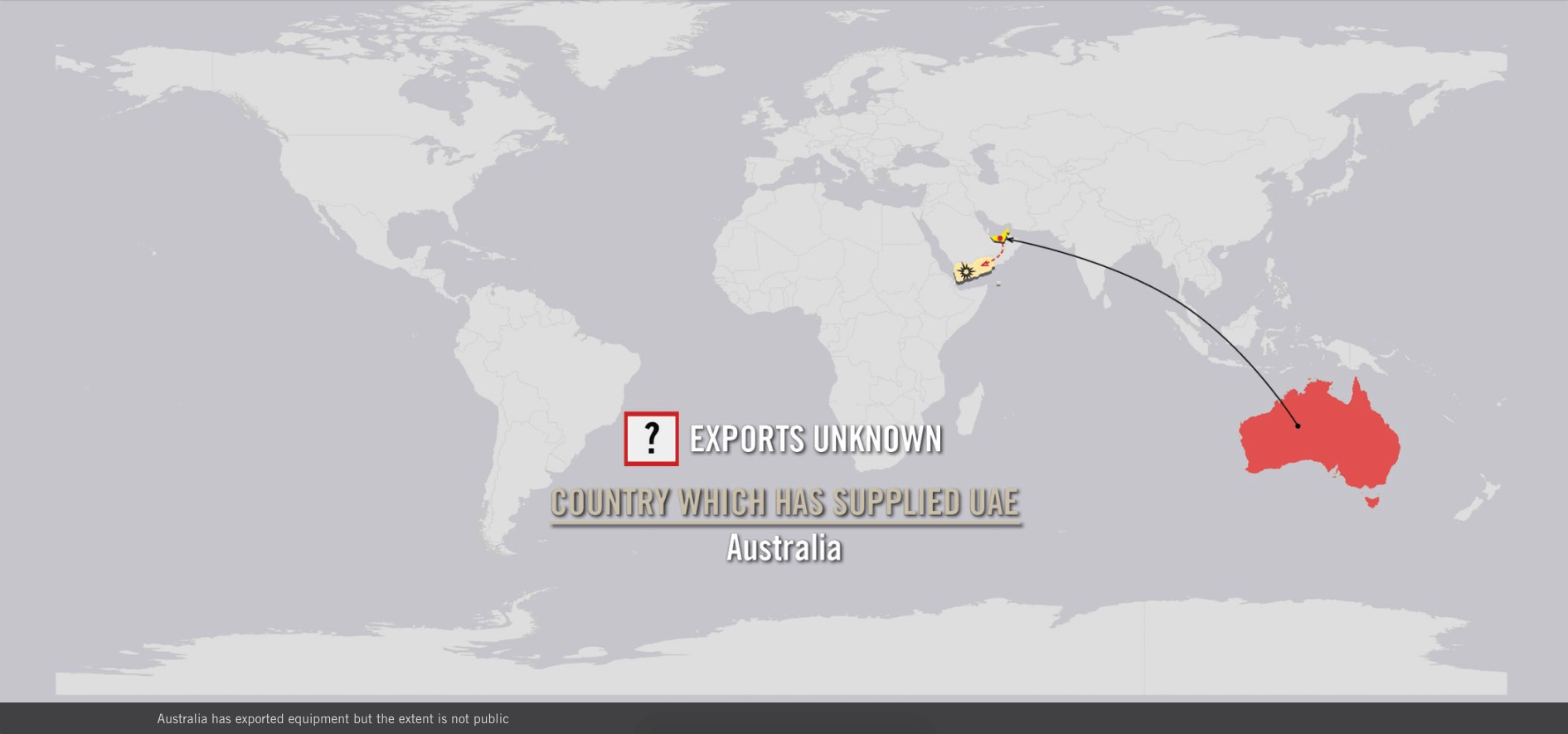
Arms supplied by Australia to the United Arab Emirates are potentially being diverted to militias engaged in the bloody Yemeni civil war, new research from Amnesty International has revealed.
The investigation, When arms go astray: Yemen’s deadly new threat of arms diversion to militias, shows how the UAE has become a major conduit for armoured vehicles, mortar systems, rifles, pistols, and machine guns – which are being illicitly diverted to unaccountable militias accused of war crimes and other serious violations.
Amnesty International analysed open-source evidence around the battle for Hodeidah and found that military vehicles and weapons supplied to the UAE are now widely in use by militias on the ground.
The armed groups on the receiving end of these dodgy arms deals – including “The Giants”, the Security Belt and Elite Forces – are trained and funded by the UAE, but are not accountable to any government. Some of them stand accused of war crimes, including during the recent offensive on the port city of Hodeidah and in the UAE-backed network of secret prisons in southern Yemen.
Amnesty International has repeatedly asked the Australian Government for information regarding its supply of arms to both the UAE and the Kingdom of Saudi Arabia without response.
Australia continues to fuel the conflict in Yemen by transferring military equipment to the Kingdom of Saudi Arabia and the UAE
“Despite mounting pressure from around the world, Australia continues to fuel the conflict in Yemen by transferring military equipment to the Kingdom of Saudi Arabia and the UAE,” Diana Sayed, Crisis Campaigner at Amnesty International Australia said.
“Denmark, Finland, the Netherlands and Norway have suspended arms transfers to the UAE and in December the US Senate voted to end American military assistance for Saudi Arabia’s war in Yemen. Australia must now follow suit.
“The UN has concluded that all parties to the conflict in Yemen may be guilty of war crimes. But despite the evidence that arms sold to Saudi Arabia and the UAE will be used to carry out violations of international humanitarian law in Yemen, Australia continues to export military equipment. As a global arms control leader Australia must take decisive action now and cease the trade of all military equipment to Saudi and the UAE-led coalition.”
States supplying arms to UAE
Since the outbreak of the Yemeni conflict in March 2015, Western states and others have supplied the UAE with more than US$5 billion worth of heavy conventional weapons – including aircraft and ships – small arms, light weapons and associated parts and ammunition.
Despite the serious violations attributed to the UAE and militias it backs, the following states have recently supplied the Emiratis with arms: Australia, Belgium, Brazil, Bulgaria, Czechia, France, Germany, South Africa, South Korea, Turkey, the UK and the USA, among others.
A wide variety of US-supplied armoured vehicles equipped with heavy machine guns, including M-ATV, Caiman and MaxxPro models, have been documented in the hands of UAE-backed militias Security Belt, Shabwani elite forces and “The Giants”.
Belgian Minimi light machine guns, also likely sold to the UAE, are being deployed by “The Giants”. Other weapons used by UAE-allied militias in Hodeidah include Serbian-made Zastava MO2 Coyote machine guns and the Agrab armoured-truck-mounted Singaporean 120mm mortar system – the UAE is the only country known to purchase this combined weapon system.
Elsewhere in Yemen, the UAE has directly trained and funded militias including the Security Belt and Elite Forces, which operate a shadowy network of secret prisons known as “black sites”.
Amnesty International and others have previously documented these forces’ role in enforced disappearances and other violations at these facilities – including detention at gunpoint, torture with electric shocks, waterboarding, hanging from the ceiling, sexual humiliation, prolonged solitary confinement, squalid conditions and inadequate food and water.
The UAE-backed militias running these black sites wield Bulgarian rifles and drive US armoured vehicles.
Violating the Arms Trade Treaty
Many of the states that continue to supply arms to the UAE are party to the global Arms Trade Treaty. Some have other legal obligations as EU members or under domestic laws not to transfer arms being used to commit war crimes. By persisting in transferring arms to the UAE, despite overwhelming evidence those arms are being used in war crimes and other serious violations in Yemen, they are flouting these obligations.
Amnesty International again calls on all states such as Australia to stop supplying arms to all parties to the conflict in Yemen until there is no longer a substantial risk that such equipment would be used to commit or facilitate serious violations of international humanitarian and human rights law.
However dire and widespread the human rights abuses of the last year may feel, we each have a role to play in making the world we want to live in a better place for all. Here are just five things you can do for human rights this year:
1. Spread the word on social
One of the easiest ways to take action for human rights is to rally support using social media. If you’re active on Facebook, Twitter or Instagram, make positive use of your networks and show your friends there is power in numbers. Share a petition or campaign update to raise awareness, or post an inspiring photo or quote and call on your connections to support human rights.
Fundraising events are an excellent way to defend human rights in your community. Appeal to friends, family and colleagues to sponsor you to take part in a city run or a swimming challenge – and ask your employer if they’ll match dollar for dollar what you raise.
If exercise isn’t your thing, introduce some fundraising into your social life by hosting a game night, barbecue or garden party. Offer your guests $2 snags or hand round a cookie collection jar, with proceeds going towards protecting human rights.
3) Volunteer
Whether you have top-notch admin skills, can create awesome graphics, or are a dab hand at investigative research; there are many ways to help by offering up your talents. It might be one day a month or a full year but your welcome support makes a real impact to human rights campaigns. Check out the volunteering opportunities available in your area, and register your interest online.
Whether your focus is refugee rights or indigenous justice, you can compel others to take action through the power of conversation. “Research shows real-life conversations are incredibly powerful,” says a representative from Equality. “They are what changes hearts and minds.”
Talk to people about human rights this year – who knows whose opinion you’ll influence.
On Tuesday February 10, news trickled into Amnesty’s offices that the Parliament of Kyrgyzstan ratified the Convention on the Rights of Persons with Disabilities. Gulzar Duishenova, one of 2018’s Write for Rights cases, has been campaigning for ratification for 15 years.
She’s made it her life’s mission to ensure people with disabilities can live with dignity and move around freely. She’s met officials,organised training, and pushed for action on social media.
This news comes after Amnesty activists all around the world banded together during Write for Rights to support Gulzar and 8 other women silenced for speaking out .
As we wrap up Write for Rights in Australia, we’re well and truly on our way to meeting our offline action target. During Write for Rights, you got over 15,000 people to take action for these women.
You spoke to tens of thousands of people at nearly 100 events; holding letter writing marathons in Melbourne, community events in Adelaide, and collaborations with artists and other organisations all around the country.
In countries all around the world, Amnesty activists picked up their pens to combat injustice. Check out this Twitter thread of Write for Rights activism from Argentina to Zimbabwe.
Our international colleagues are currently planning to deliver the millions of actions collected all around the world. It’s important to send your actions back to your Action Centre as soon as possible so we can include them in these handovers. Watch out for more updates on the deliveries, and hopefully more good news for Gulzar and all of the Write for Rights cases!
What’s happening in Quarter 1?
We’re continuing to focus on women who’ve been silenced because they spoke out for human rights. The world would be a poorer place without women standing up for human rights – so let’s stand with them.
“International support is the most powerful tool that women like me can get. Every single signature for the petition to get me free, made a difference. Now I’m free. I’m no fairy tale, I am a true story.”
Teodora Del Carmen Vasquez, sentenced to 30 years in prison after suffering a stillbirth under El Salvador’s total ban on abortion. She was released in 2018.
There are resources available online to support your activism. Additional resources, including updated concertina cards, have arrived in Action Centres. Let your ASC or CO know if you need any of these!