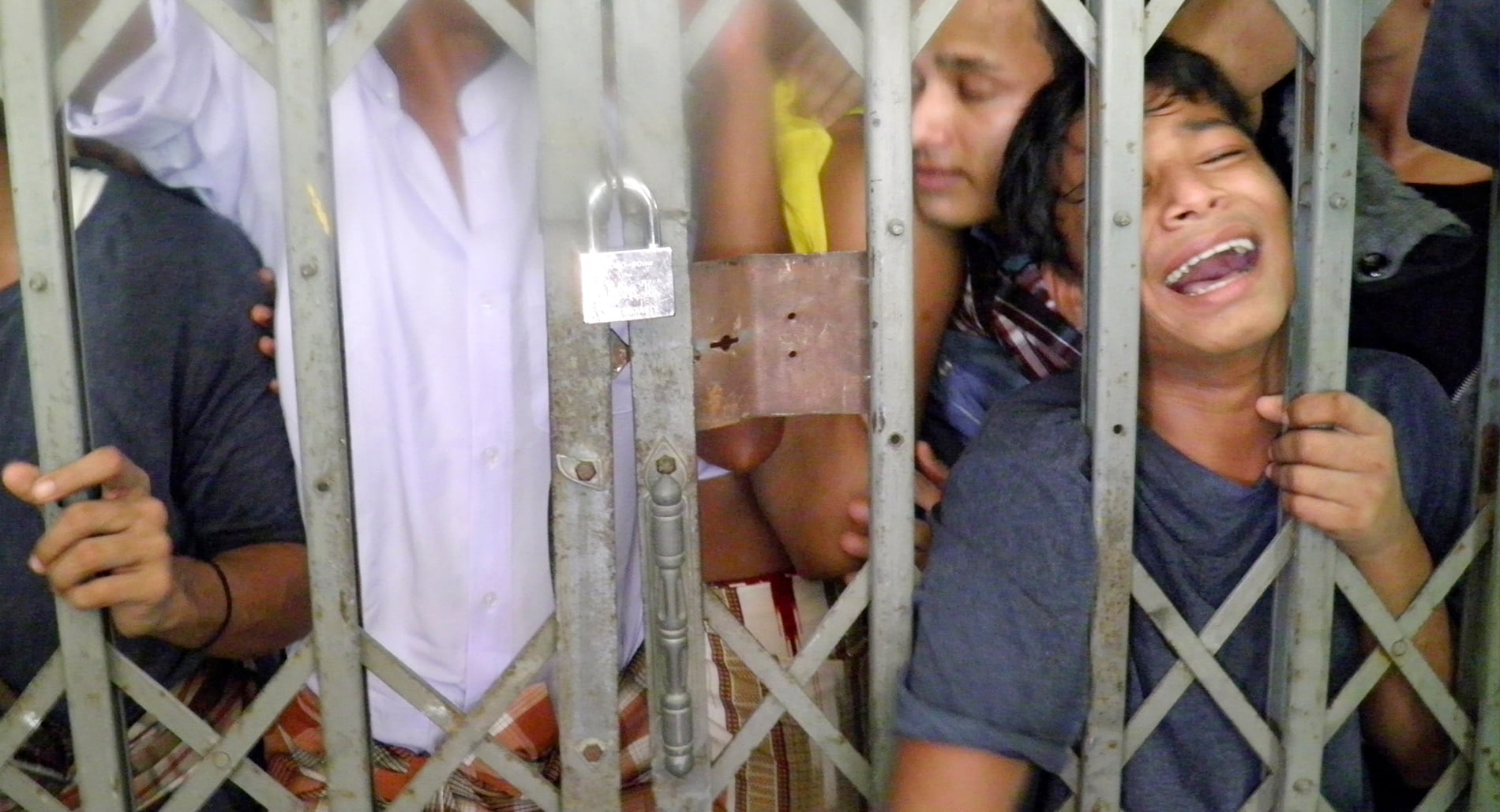
Look What Amnesty’s Women’s Rights Network Achieved in 2018!

This year Amnesty stood up for women’s right to be free from violence, harassment and abuse in all its forms. In the first part of 2018 we campaigned to stop the alarming levels of abuse and harassment women face on social media.

Our University groups held creative actions and stalls around the country during o-week, focusing on stopping online abuse of women. New and refreshed Amnesty women’s rights networks were established in every region and took action to hold Twitter to account for the scale of abuse faced by women on their platform.

In May, Twitter bowed to pressure and announced that it has revised its strategy for fighting online abuse including changes in the way it identify and displays tweets from accounts used by trolls.

Our national Women’s Rights Network is currently collecting actions for Amnesty’s 2018 Write for Rights cases – all of them are brave women who have faced persecution for protecting the rights of others.  The Victorian Women’s rights network had an extremely successful stall at the St Kilda Markets, collecting 451 actions in support of women like Atena who is in prison in Iran for campaigning against the death penalty.   

The national women’s network has big plans for 2019 – to find out more about how you can get involved in contact your region’s action centre or check out the online Activism Planner to RSVP to the next National Women’s Rights Catch-Up

Submission: Australian Labor Party National Platform

Amnesty International Australia have made a submission to the Australian Labor Party National Platform consultation in the lead up to the 48th Australian Labor Party Conference in December 2018.

Our submission focuses on key aspects concerning human rights in Australia.

This includes establishment of a Human Rights Act, raising the age of criminal responsibility to fourteen, and improving Australia’s humanitarian programme and immigration policies.

READ OUR SUBMISSION HERE

Oppressive, sexist policies galvanize bold fight for women’s rights in 2018

Women activists around the world have been at the forefront of the battle for human rights in 2018, Amnesty International said today as it launched its review on the state of human rights over the past year.
The human rights group also warns that the actions of “tough guy” world leaders pushing misogynistic, xenophobic and homophobic policies has placed freedoms and rights that were won long ago in fresh jeopardy.
“In 2018, we witnessed many of these self-proclaimed ‘tough guy’ leaders trying to undermine the very principle of equality – the bedrock of human rights law. They think their policies make them tough, but they amount to little more than bully tactics trying to demonize and persecute already marginalised and vulnerable communities,” said Kumi Naidoo, Secretary General of Amnesty International.
“But it is women activists who have offered the most powerful vision this year of how to fight back against these repressive leaders.”
The findings are published in “Rights Today”, a major review analysing the human rights situation in seven regions around the world: Africa, Americas, East Asia, Europe and Central Asia, Middle East and North Africa, South Asia and South East Asia. The launch marks the 70th anniversary of the Universal Declaration of Human Rights – the first global bill of rights, which was adopted in 1948 by the world’s governments.

2018: Women rise up

The burgeoning power of women’s voices should not be underestimated, notes the review. While women’s rights movements are well established, female activists have dominated the biggest human rights headlines from the past year. And women-led groups like Latin America’s Ni una menos have galvanised mass movements on women’s rights issues on a scale not seen before.
In India and South Africa, thousands took to the streets to protest endemic sexual violence. In Saudi Arabia and Iran respectively, women activists risked arrest to resist the driving ban and forced hijab (veiling). In Argentina, Ireland and Poland, demonstrators rallied in vast numbers to demand an end to oppressive abortion laws. In the USA, Europe and Japan, millions joined the second #MeToo-led women’s march to demand an end to misogyny and abuse
However, the report notes that we cannot celebrate the “the stratospheric resurgence of women’s activism” without addressing the driving force behind why so many women have mobilised to demand change.
“Women’s rights have consistently been placed a rung below other rights and freedoms by governments who believe they can pay lip service to these issues while doing little in reality to protect the rights of half the population” said Kumi Naidoo.
“Worse still, many of the current crop of leaders in the world have launched fresh attacks on women’s rights with their misogynistic and divisive narratives. These leaders try to argue that they are protecting traditional values that represent family interests, but the truth is, they are pushing an agenda that denies women basic equality.”
Rights Today points to a growing body of policies and laws designed to subjugate and control women, especially around sexual and reproductive health. These include a push from Polish and Guatemalan law-makers to advocate for stricter abortion laws, while in the USA, funding cuts to family planning clinics have put the health of millions of women at risk.
Women activists have risked their lives and freedoms to bring to light human rights injustices. They include Ahed Tamimi, a Palestinian child activist who was unjustly imprisoned for daring to stand up for her people; Loujain al-Hathloul, Iman al-Nafjan and Aziza al-Yousef, three activists who are now detained in Saudi Arabia for campaigning on women’s rights; and Marielle Franco, who was brutally murdered in Brazil earlier this year because she fearlessly fought for human rights.

2019: A landmark year to turn the tide on women’s rights

Kumi Naidoo noted that the anniversary of the international bill of rights for women in 2019 – the Convention on the Elimination of all Forms of Discrimination against Women (CEDAW) – will be an important milestone that the world cannot afford to overlook.
The bill, which will turn 40 next year, is widely adopted. Yet many governments have only adopted it under the condition that they can reject major provisions that are designed to secure women’s freedoms, such as pursuing a national policy to eliminate all forms of discrimination against women in law and practice and committing to eliminating discrimination against women in marriage and family relations.
Amnesty International is urging governments to take action to ensure that women’s rights are upheld – this includes not only commitments to international standards, but changes to harmful national laws and proactive measures to empower women and protect their rights.
“The fact that so many countries have only partially accepted the international bill of women’s rights is evidence that many governments think protecting women’s rights is just a PR exercise to make them look good, rather than a priority they need to address urgently,” said Kumi Naidoo.
“All around the world, women on average earn far less than their male peers, have far less job security, are denied access to political representation by those in power, and face endemic sexual violence that governments continue to ignore. We have to ask ourselves why this is. If we lived in a world where in fact it was men facing this kind of persecution, would this injustice be allowed to continue?

FINAL WEEKS OF PARLIAMENT HAVE FAILED HUMAN RIGHTS

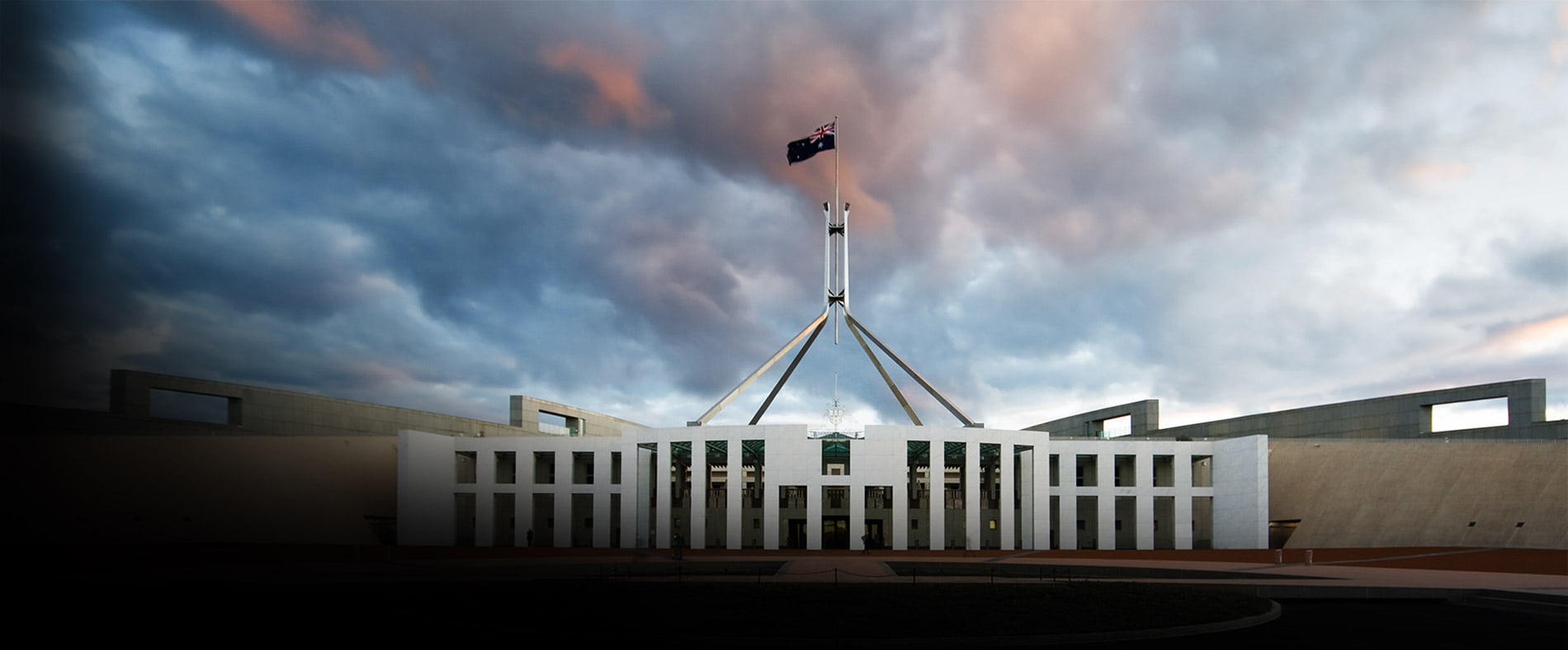
As another parliamentary year came to a close yesterday, Australia’s political leaders have failed to fulfil our human rights obligations, Amnesty International said.

“It is heartbreaking that politicians have left work for their summer holidays whilst the lives of so many men, women and children are in their hands”, said Amnesty International Australia’s Advocacy Manager, Emma Bull.

“The failure of the Government to bring refugees and people seeking asylum in urgent need of medical treatment to Australia to receive the care they need is gobsmacking. Doctors, not politicians, are the experts in health care and must be at the centre of decision making for the people in our care.

“There are many things Australia and regional countries can do to end the hell on Manus Island and Nauru and prevent such suffering in future but this week we’ve failed to even take the first step. The Prime Minister has the power to bring people to safety now, he needn’t wait for Parliament to resume in February. Amnesty will keep campaigning for him to take immediate action.

“At the same time, politics has failed the LGBTQI community again as parliament stalled on removing discrimination against kids and teachers in schools. Children around the country will go into yet another school year with religious schools being able to expel them on the basis of their sexuality.

“In the last 18-months the LGBTQI community have been put through a postal vote and multiple inquiries on their human rights. It was time for the government to act quickly and decisively but instead we saw delay and indecision.

A last minute capitulation by the Labor Party has seen legislation rushed through granting Australia’s security and intelligence agencies extensive powers to force encryption services to open encrypted messages.

“That these are ‘world first’ laws is nothing to boast about. These surveillance powers are unprecedented globally and could weaken internet security for all Australians, with limited oversight or accountability, making us all less safe online.”

Yemen: Sweden Talks should address human rights concerns

Participants to the Yemen talks in Sweden should prioritise key human rights issues, Human Rights Watch, Amnesty International, and Mwatana Organization for Human Rights said today.

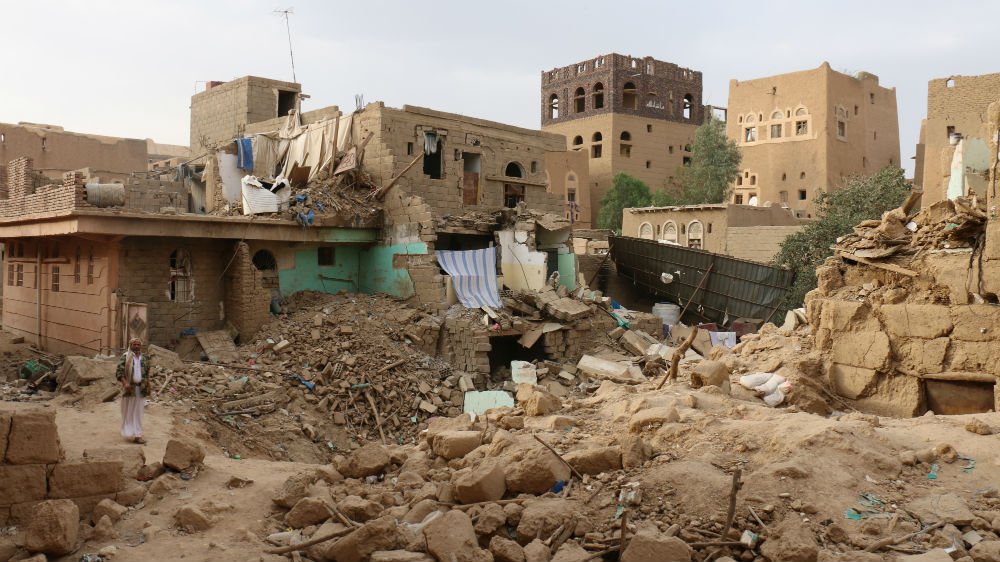
The issues should include removing impediments to the free flow of humanitarian aid and vital commercial goods such as food and fuel, the fate of detainees, and ending attacks on civilians and civilian objects. Talks should also address how best to ensure justice, truth, and reparation for victims of war crimes.

“While the warring parties may narrowly focus on their strategic interests, concerned governments should press them to ensure that these talks also take into account the need to protect millions of Yemeni civilians,” said Priyanka Motaparthy, acting Emergencies director at Human Rights Watch.

“If human rights take a back seat to political goals, Yemenis may be no better off than before these talks began.”

The talks, the first since 2016, reportedly began with discussions around an exchange of prisoners, securing agreement around the short-term future of Hodeidah, a key port city, and reopening the Sana’a airport to commercial traffic.

Addressing starvation

In October 2018, the United Nations Emergency Relief Coordinator warned that 14 million people – half of Yemen’s population – could be at risk of starvation if immediate steps are not taken to address the humanitarian situation. To comply with international humanitarian law, warring parties should take immediate steps to facilitate the flow of aid, and commercial supplies to the broader population and access by humanitarian agencies.

During the Sweden talks, the Yemeni government – and, by extension, the Saudi Arabia and United Arab Emirates-led coalition – should make a commitment to reopen Sana’a airport to commercial traffic. Meanwhile, the government, and the coalition that backs it, and the Huthis should ensure that humanitarian aid and lifesaving commercial supplies can reach the civilian population through Hodeidah and Saleef ports and onward to those who need these supplies in Yemen.

The coalition suspended all commercial flights to Sana’a in August 2016. Aid agencies have pressed the coalition to reopen the country’s main airport, noting that commercial flights “often bring in vital supplies and allow the free movement of civilians.”

Mwatana, a leading Yemeni human rights organization, documented cases in which people with chronic illnesses were unable to travel abroad for treatment, including one woman needing heart surgery who died. Hodeidah and the nearby Saleef port are vital entry points for food, fuel, and medicine that the population needs for survival. While fighting in Hodeidah has de-escalated since 12 November, armed clashes continue on the southwest and eastern edges of the city, as well as in several nearby districts. A recent UN report stated that deliveries to Hodeidah’s port decreased 47% during a two-week period in November.

“Parties can agree to very specific steps, implemented immediately, that are necessary to save Yemeni lives,” said Radhiya al-Mutawakel, Chairperson of Mwatana Organization for Human Rights.

“Releasing the arbitrarily detained, opening the airport, and ensuring commercial shippers free access to the port, are necessary steps to support the civilian population.”

Huthi forces have blocked and confiscated aid, denied access to populations in need, and restricted the movement of ill civilians and aid workers, with an acute impact on Yemen’s third largest city, Ta’iz. International humanitarian law requires all parties to allow and facilitate the “rapid and unimpeded passage” of humanitarian aid and humanitarian workers to affected civilians, and to allow free and safe passage for civilians who wish to leave areas. In Sweden, the warring parties should prioritize agreeing to concrete steps to ensure that civilians have safe passage out of areas particularly affected by fighting, like Ta’iz and Hodeidah.

The warring parties have engaged in armed conflict in a manner that has also exacerbated the humanitarian crisis and deepened civilian suffering, the rights groups said. The coalition has repeatedly struck infrastructure critical to the civilian population, while Huthi forces have repeatedly laid mines as they withdrew from areas, including along Yemen’s western coast, hindering humanitarian access, and preventing civilians’ safe return home. The Huthi armed group should pledge to provide maps of mined areas to facilitate humanitarian access, and they should stop using antipersonnel mines altogether.

Fate of detainees and forcibly disappeared

Talks should also address the fate of forcibly disappeared people and detainees, in particular those arbitrarily detained and held without charge by the Huthis, the Hadi government, and the United Arab Emirates.

Human Rights Watch, Amnesty International, Mwatana, the UN, and others have documented arbitrary detention, mistreatment, and torture in Huthi, Yemeni and UAE-controlled facilities, as well as cases of people forcibly disappeared.

Ahead of the talks, the ICRC announced that the warring parties had agreed to “the release, transfer and repatriation of conflict-related detainees.” All parties should also release anyone arbitrarily detained or detained for involvement in peaceful political activities, such as journalists, human rights defenders, and members of the Bahá’í community, as well as vulnerable groups, such as children. While both sides have recruited children during the conflict, the Huthis are responsible for the majority of child recruitment cases verified by the UN. During the talks, the parties to the conflict should agree to release captured children and pledge to end use of child soldiers.

The warring parties should immediately provide a list of all detention sites and of everyone currently in detention or who have died in custody. Parties should allow international monitors immediate access to unofficial detention facilities.

Setting the stage for accountability and redress

Talks should also allow for criminal investigations and, if there is sufficient admissible evidence, prosecutions of all those suspected of crimes under international law. While the talks in Sweden are set to focus on immediate confidence-building measures, any future discussions should support international investigations, transitional justice, and full reparation to victims as key elements of any agreement.

Impartial investigations into alleged war crimes are only the first step toward meeting international legal obligations regarding accountability for abuses and justice for victims. Coalition members should investigate alleged serious violations by their armed forces and people within their jurisdiction and appropriately prosecute anyone responsible for war crimes, the groups said. The coalition should also provide reparation to victims of unlawful attacks and support a unified, comprehensive mechanism for providing ex gratia (“condolence”) payments to civilians who suffer losses due to military operations. The Huthi armed group should appropriately investigate commanders and fighters suspected of criminal responsibility for crimes under international law, and provide redress to civilian victims.

“While many politicians have tried to say justice, truth, and reparation should not be an issue in these discussions, Yemenis deserve justice for the harm they have suffered,” said Lynn Maalouf, Amnesty International’s Deputy Regional Director for the Middle East and North Africa.

“The obligation to investigate unlawful attacks doesn’t start at the end of the conflict, it applies now. Investigations, prosecutions and redress are meant both to address the wrongs already done but also to help pave the way for preventing future wrongs.”
Minister Payne must call on Indonesia to deliver justice after brutal killings in Papua

Following the horrific killing of dozens of construction workers by armed men in Nduga, Papua, Amnesty International urges Australian Foreign Minister Marise Payne, on her trip to Indonesia tomorrow, to call for authorities to immediately and independently investigate the attack, and for that investigation not to lead to further rights violations.

In response to the attack, Amnesty International Indonesia’s Executive Director Usman Hamid said:

“We are deeply shocked by the killings in Nduga, and grieve with those who lost loved ones. Authorities must conduct a prompt, thorough, independent and impartial investigation into the attack and ensure that all those involved are brought to justice in fair trials, without recourse to the death penalty.

“It is vital that the government response to the killing does not lead to further human rights violations. Security forces have a track record of violent clampdowns and this abhorrent act should be no justification for going down that path. The unspeakable attacks must not be used as a pretext to roll back freedoms and crack down on human rights. Authorities must also ensure that security forces provide safety for all people, without discrimination, following the attack in Papua.”

Amnesty International acknowledges the complex environment in which law enforcement officials often find themselves in when carrying out their duty in Papua region. However, even in such situations, law enforcement officials must ensure full respect for international human rights law, including the protection of the rights to life, liberty and security of persons, and must uphold international standards on the use of force at all times.

Failure to respect human rights will contribute to an ever-escalating cycle of hostility and violence with an increasing risk of more lives being lost or in danger – including their own.

Amnesty International takes no position on the political status of any province of Indonesia, including calls for independence.

Background

Speaking to media on 4 December 2018, police said that the 31 people who were killed were workers of state-owned construction company PT Istaka Karya who were currently building a bridge in Nduga. The police immediately claimed that local armed groups were behind the attacks and deployed personnel, backed by the military, to find those responsible.

Beats for Bravery

On the 24th of November, Amnesty Fremantle held their inaugural Beats for Bravery event. In the picturesque courtyard of the Fremantle Arts Centre, talented local musicians and artists came together to stand up for human rights.

8 art works on isles lined up on walkway in the courtyard of the Fremantle Arts Centre
Artworks for auction at Beats for Bravery

The event was comprised of two parts; the first was a concert, with amazing performances from 5 local musicians including Grievous Bodily Calm and Lucy Peach, all who donated their time and dedicated their performances to the work that Amnesty continues to do for human rights.


In addition to the concert, there was a silent auction of eight artworks, generously donated by artists, varying from abstracts from David Spencer and Jo Darbyshire, to crochet and ceramic sculptures by Holly O’Meehan. Our philanthropy manager, Chamira Gamage, came from Sydney to run a special pre-event mixer for some of our donors. With event-goers placing bids throughout the evening, combined with our entry donations and raffle ticket sales, we were able to raise thousands of dollars to go towards continuing Amnesty International’s research into human rights abuses around the world.

Amnesty tent in the courtyard of the Fremantle Arts Centre at Beats for Bravery
Attendees enjoying Beats for Bravery

Beats for Bravery was a celebration of the 70 year anniversary of the Universal Declaration of Human Rights, which enshrined the inalienable rights of all people. However, it was also an opportunity for the Fremantle community to stand up for, and stand up with, brave human rights defenders.


We used the evening as an opportunity to take action for Amnesty’s Write for Right campaigns, focusing specifically on the case of Nonhle Mbuthuma. Nonhle is a South African activist, campaigning for her ancestral land rights against a Perth-based titanium mining company. This case resonated well in the Fremantle area, as there are a vast number of environmental activists in the community. Our guest speaker for the event was Kate Kelly, a local conservationist and convenor of the Save Beeliar Wetlands, Rethink the Link and Clean State campaigns. She observed that “environmental and human rights, and access to them, are standards against which we can measure the integrity of civil society and democratic progress”, as she spoke on her experience in the environmental activism space.


Beats for Bravery was opened with an address from Fremantle Mayor Brad Pettitt, who spoke to the welcoming nature of the Fremantle community, and its reputation for creating progressive changes towards equality and diversity. Amnesty’s own Community Organizing manager Sarah Gooderham inspired attendees to action- resultantly, over 85% of attendees took action for our Write for Rights campaign.


We couldn’t have put this event on without the work of our amazing volunteers, both from within our existing activist group and also some new recruits, whose effort made this night the success that it was!

Beats for Bravery volunteers standing in front of the Amnesty tent
Volunteers for Beats for Bravery

THAI AUTHORITIES MUST RETURN BAHRAINI REFUGEE TO AUSTRALIA

Amnesty International Australia  has today called on the Thai authorities to end the detention of Bahraini national and Australian resident Hakeem al-Araibi, which is ongoing despite the reported lifting of the INTERPOL Red Notice that led to him being detained.

“Hakeem will not be safe until he is back on Australian soil, Diana Sayed, Campaigner for Amnesty International Australia said.

“Hakeem’s life will be in danger if he is deported to Bahrain.  As a recognised refugee with approved travel documents he should never have been detained. We are pleased to hear reports of the Red Notice being lifted – but despite this – the Thai authorities continue to detain him.

“Thai immigration must release him now and allow him to come home to Australia.”

Travelling on an Australian travel document, al-Araibi was detained with his wife upon his arrival in Bangkok on Tuesday 27 November 2018.

Amnesty has received reports that Hakeem and his wife were transferred into detention at Suan Plu immigration detention centre (IDC) on Sunday 2 December. On 3 December, Hakeem was taken to court and served with a 12-day detention order. On his way back to Suan Plu IDC, his mobile phone was confiscated.

Hakeem was sentenced to ten years in prison in an unfair trial in Bahrain in 2014. It was not the first time he has been persecuted and suffered serious human rights violations. A former player of Bahrain’s national soccer team, he has spoken out about a senior Bahraini official’s practice of torturing footballers who participate in demonstrations. He was himself arrested in November 2012 and tortured.

He has since spoken publicly about his torture, stating “They blindfolded me (… and) beat my legs really hard, saying: ‘You will not play soccer again. We will destroy your future’.”

Later, al-Araibi fled to Australia, where he was recognized as a refugee in 2017.

He was informed upon his arrival in Bangkok he would be returned to Bahrain, where he almost certainly faces imprisonment and torture.

His detention followed an INTERPOL Red Notice against him – issued by Bahrain on the basis of the unfair criminal conviction against him in 2014.

Under international law, it is prohibited to return an individual to a territory place when there is a reasonable fear that the individual will be at real risk of suffering torture or other serious human rights violations.

“The Australian government have recognised the need to give Hakeem and his family refuge from persecution in Bahrain. The Thai government must recognise and respect his status as a refugee and send the family back to Australia – or risk sending him to a horrible fate in Bahrain”.

Amnesty at Labor National Conference

You’re invited!

On 16-18 December the Labor Party is holding it’s National Conference in Adelaide. Amnesty’s refugee campaigner Shankar Kasynathan and Amnesty’s Advocacy & External Affairs Manager Emma Bull will be there to influence the Labor Party’s policy platform on our key campaign areas – like community sponsorship and raise the age.

Party conferences are a great way for us to engage in the political process and ensure human rights are front and centre. Amnesty is hosting an event at Labor Fringe. Please join us to gain critical insights into the State of Play of Human Rights in the Asia Pacific with Sabrin Farooqui , Chris Hayes MP, Andrew Giles MP, and Shankar Kasynathan.

Here is all the information:

When: 4-5pm Monday 17 December

Where: Riverbank Room 5, Adelaide Convention Centre

How: You can buy tickets here. Tickets get you into all the Fringe events so take a look at the Program for the other exciting speakers and events.

Feel free to let the Government Relations team know if you can help out on the day or if you are attending so they can look out for you (emma.bull@amnesty.org.au)

p.s. Amnesty is also part of the Community Refugee Sponsorship Initiative (CRSI) and one of our partner organisations on that campaign, Save the Children, is also hosting an event on Community Sponsorship 10-11am Monday.

NAGM 2018: Highlights

Amnesty International Australia’s National Annual General Meeting (NAGM) was held on 27–28 October 2018. The meeting marked an historic event which has created a new system of governance, one that opens up decision making to more activists than ever before.

Kate Waterford was elected as Vice President at this year’s NAGM – a heartfelt congratulations to Kate and an enormous thank you to her predecessor Simon Rumore. Mario Santos and Liz Cohen were elected as ordinary Board members at the meeting.

Watch highlights from this year’s meeting and hear why people love being members of Amnesty.

So what happened at NAGM?

After extensive consultation, deep thinking and lively discussion over the last two years, the Amnesty Australia Board developed a new governance model that required changes to be made to our Constitution.

At NAGM, delegates voted in favour of a Special Resolution to adopt the new Constitution, with more than 80 per cent support.

What happens next?

Now we begin the hard work of turning this vision into a reality, creating a structure and culture we can all be proud of over the next 18 months.

This is not a task solely for the board or staff. All of Amnesty’s branch committees, networks, local groups and members will work together to bring our new model to life. There is room for a lot of creativity in regional areas to adapt our new model in ways that achieve the greatest human rights outcomes and inspire the most people to take action. Now is one of the most exciting times to get more involved with Amnesty!

How can I get more information?

For more information visit our Rethinking Governance site read the new ConstitutionIf you have any questions or wish to engage further with the Board, please email the Rethinking Governance working group at rethinkinggovernance@amnesty.org.au or contact your voting delegate (your Branch Committee representatives have the best contact details).