Philippines must end harassment of Duterte critic Maria Ressa

Responding to the news that Maria Ressa, executive editor of news outlet Rappler, has posted bail following charges of tax evasion, Nicholas Bequelin, Amnesty International’s Regional Director for East and Southeast Asia and the Pacific, said:

“The Duterte administration is singling out one of its most potent critics with politically motivated charges. Rappler’s fearless journalism has helped to expose the deadly reality of the so-called ‘war on drugs’ – and the thousands of unlawful killings of poor and marginalized people perpetrated in its name.

“Maria Ressa is a multi-award-winning journalist. The President and his spokespersons have consistently targeted Rappler for its reporting and Duterte has personally banned Maria Ressa from attending press briefings at the presidential palace.

“Authorities should end this harassment and let Maria Ressa and her team do their job as reporters. Following the arrest and detention of Senator Leila de Lima in February 2017, another leading critic of the murderous ‘war on drugs’, this is just the latest appalling step in this government’s chilling campaign of repression, obstruction and intimidation.”

Background

Rappler has been a consistent critic of President Rodrigo Duterte and his administration, publishing detailed investigations into some of the thousands of extrajudicial executions committed by police and other unknown armed persons during drug-related operations.

Ressa has recently received a prestigious press freedom award from the World Association of Newspapers and News Publishers. In February, a Duterte spokesman said that President Duterte himself had ordered presidential security staff to bar Rappler reporter Pia Ranada and Ressa from entering the presidential palace.

An arrest warrant was issued after Maria Ressa and Rappler Holdings, of which she is the president, were charged with violating the tax code in 2015 in relation to funds received through Philippine Depositary Receipts (PDRs), a financial instrument that allow foreigners to invest in a Filipino company. In January 2018, the Philippines Securities and Exchange Commission (SEC) temporarily revoked Rappler’s registration on the basis that it had violated foreign ownership rules in relation to the same funding.

Amnesty denounced the decision at the time. The Court of Appeals has since ruled that Rappler and its donors had operated in good faith, and that the revocation order was excessive.

Did you know this about rape?

Sex without consent is rape. It’s as simple as that.

But myths and gender stereotypes related to rape and consent are widespread in our societies, including in court rooms.

Knowledge is power when it comes to fighting rape. Here, Amnesty’s Senior Campaigner on women’s rights in Europe, Monica Costa Riba, explains five undeniable truths about rape and sexual assault.

1. The majority of rapes are committed by people known to the victim

A common assumption is that rapes are mostly committed by strangers. But in fact, the majority of rapes are committed by someone known to the victim. Perpetrators can be a friend, a colleague, a family member, partner or ex-partner. The ‘stranger myth’ sends the wrong message that a sexual assault committed by someone known to the victim is not rape. An alarming 11 percent of respondents to a 2016 survey on attitudes on gender-based violence in Europe expressed a view that to force sex with an intimate partner should not be illegal.

2. Often, victims of rape do not physically resist

There should be no assumption, in law or in practice, that a person gives consent because they have not physically resisted. Just because a woman doesn’t have visible injuries, didn’t’ say ‘NO’ or did not show resistance, doesn’t mean she was not raped. Despite the expectation that a ‘model’ rape victim will fight the attacker back, freezing when confronted with a sexual attack has been recognised as a common physiological and psychological response, leaving the victim unable to oppose the assault, often to the point of immobility. For example, a 2017 Swedish clinical study found that 70 per cent of the 298 women rape survivors assessed, experienced ‘involuntary paralysis’ during the assault.

3. False rape reports are rare

There is no evidence to sustain that false reports are common. Rapes are hugely under-reported due to lack of trust in the justice system or because of fear of not being believed. The reality is that it takes a lot of courage and determination to report a rape. And when they do so, women are often blamed and humiliated, being repeatedly asked what they did to provoke it or why they put themselves in a particular situation. Survivors deserve to be believed, their reports should be thoroughly investigated and they should get the support they are entitled to.

4. What women wear is not to blame

The assumption that what a woman wears can provoke a man to rape her stems from rooted stereotypes about male and female sexuality. However, in reality, women are being raped or assaulted while wearing any type of clothing. No type of clothing is an invitation for sex or implies consent. What a woman was wearing when she was raped is simply not relevant. Rape is never the victim’s fault. An understanding that sex without consent is rape is the first step to change social attitudes that further harm rape victims.

5. Alcohol and drugs can never be an excuse to justify rape

Just as what a women wears can never imply consent, having sex with a person who is incapable of consenting because of alcohol or drugs, is also rape.

If you have been affected by rape or sexual assault, please contact 1800RESPECT for confidential information, counselling and support services.

NSW Branch Committee Updates 2018

November 2018

Want to find out what is happening next year?

Join our NSW regional update on 17 December at 6:30pm to 8:00pm.

The NSW Branch Committee wants to share our ideas for 2019, when the BC will become the NSW Activism Leadership Committee (ALC).

Who are we and what will we be doing?

The primary purposes of an Activism Leadership Committee are to:
• support members and activists in their region to be active participants in human rights campaigns and activism strategy; and
• co-ordinate regional events and member activities.

What opportunities will there be for the ALC as well as Amnesty International members and activists?

To get the answers to these questions and more, please join us in person, online or by telephone.

The regional update will be at the Amnesty office, Level 1, 79 Myrtle Street, Chippendale and will also be online via Zoom video conference at:
https://amnestyau.zoom.us/j/876192095

If you don’t have Zoom already, you can download Zoom for free from here (https://www.zoom.us/download – client_4meeting).

Alternatively, you can dial in by phone at (02) 8015 2088 – meeting ID 876 192 095.

If you would like to know more, please email our wonderful Secretary Glyn at nswbranchsecretary@amnesty.org.au.

Rob Roylance
NSW Branch Committee Member

September 2018

Come along and join a Branch Committee meeting, in person or online.

Your Branch Committee members were elected at the AGM in May this year and they invite you to join them at a meeting!


Your 2018 NSW Branch Committee representatives are (left-right & top-bottom): Rob Roylance, Sumedha Pagadala, Aleesha Nathan, Glyn Mather (Secretary), Verity Appleby, Francine Caratti, Chris Walsh (Treasurer), Katerina Barbour (NSW Regional Rep), Randa Warda (President). Not in photo: Lauren Frost.


Interested to know what happens at NSW Branch Committee (BC) meetings?  Why not consider joining as an observer? You can do this in person or online via Zoom video-conferencing.  If you don’t have Zoom already, you can download Zoom for free from here.

Your BC meets on the third Tuesday of each calendar month in the Chippendale Action Centre to consider various NSW activism and State issues as they arise.  Meetings begin at 6:30pm and finish at 8:30pm.

The BC also reviews the monthly report from the President, the Treasurer and the NSW Community Organiser.

Anyone from the Amnesty movement is welcome to attend, but only BC Members are able to vote if a vote is taken on any matter.

If you would like to join a BC meeting or find out more about them, please email our wonderful Secretary Glyn at nswbranchsecretary@amnesty.org.au .

Rob Roylance
NSW Branch Committee Member

August 2018

First, a big thank you to all who have taken the time to fill in the NSW Diversity Survey.  We need more responses, so if you have not yet completed this survey, please read on to learn more.

The purpose of the survey is to help us understand more about our supporters in NSW and who they are.  The data we collect will be used to improve our communications, and to ensure we have different opinions and perspectives represented in all that we say and do.

It will also help us to answer questions and provide information about the make up of the Amnesty movement and those who work to support human rights in our state.

The survey is anonymous and all the questions are optional to either answer or not.  The information requested includes the following:

  • gender, age, place of birth, languages spoken, education level, employment status, income level, marital status, religion, political affiliation
The Diversity Survey has been sent out to all our NSW supporters and so far we have received 574 responses.  

We need more responses to have a statistically meaningful sample that we can rely upon. 

After the survey has been completed we will be sure to share the results with you.

Please click here to complete the survey. Survey closes 5pm, Friday 10 August.

Thank you for your help!

Rob Roylance
NSW Branch Committee Member

For any further information about the Branch Committee please email to: nswbranchsecretary@amnesty.org.au

Five amazing Aboriginal women who shaped history

When it comes to brave women fighting for their rights, Rosa Parks, the suffragettes and Helen Keller might all spring to mind. But you might not know these five amazing Aboriginal and Torres Strait Islander women, who used empowerment and activism to change Australia for the better.

1. Shirley Colleen Smith (1924-1998)

Shirley Smith, better known as Mum Shirl, was a prominent Wiradjuri woman, social worker and humanitarian. Her remarkable work included helping to set up services like the Aboriginal Legal Service, Medical Service, Housing Company, the Tent Embassy and the Aboriginal Children’s Service. These services still contribute to Aboriginal and Torres Strait Islander welfare in New South Wales and have inspired similar ones around the country.

Where did the name “Mum Shirl” originate?

When Shirley’s brother was in prison, she would visit and talk with him and the other inmates. Her visits proved beneficial to the people she talked with, so she decided to keep visiting.

When the prison officers questioned her about her relationship to the prisoners, she’d reply, “I’m their mum!” – hence, becoming beloved Mum Shirl.

2. Gladys Elphick (1904-1988)

A descendant of the Kaurna and Ngadjuri people, Gladys was known to the community simply as Auntie Gladys. She was a women’s rights advocate in South Australia who began active committee work with the South Australian Aborigines Advancement League in the 1960s.

In 1964 Gladys became the founding president of the South Australian Council of Aboriginal Women, which actively campaigned for the 1967 referendum. Gladys was also involved in setting up the Aboriginal Community Centre and the College of Aboriginal Education in Adelaide. To put the cherry on the cake, she also co-founded the South Australian Aboriginal Medical Service.

3. Essie Coffey (1924-1998)

Improving the rights and equality of Aboriginal and Torres Strait Islander people was on the agenda for rights campaigner, Essie Coffey. She co-founded the Western Aboriginal Legal Service and the Brewarrina Aboriginal Heritage and Cultural Museum. Essie served in government bodies and community organisations including the NSW Aboriginal Advisory Council and the NSW Aboriginal Lands Trust.

Essie was an inaugural member of the Council for Aboriginal Reconciliation and received a Medal of the Order of Australia in 1985. Not that this Muruwari woman could be a greater gift to Australia, she was also a loving mother of 18 children (eight biological and 10 adopted).

4. Joyce Clague (1938)

Joyce may be 80 years old but she is still a civil rights activist today! Joyce is a Yaegl Elder whose desire for social change for Aboriginal and Torres Strait Islander people saw her influence the instigation of the 1967 referendum. Later, she campaigned to encourage Aboriginal and Torres Strait Islander voting enrolments, leading to 6,500 more enrolments.

The following year, Joyce stood for the Legislative Assembly of the Northern Territory and in 1969 she convened the Federation Council for Advancement of Aborigines. This extraordinary woman also became a representative of the World’s Churches Commission to Combat Racism.

In 1977, Joyce was awarded the Member of the Order of the British Empire (MBE), something her father encouraged her to accept on behalf of Aboriginal people.

Showing her humorous side, Joyce refers to her MBE as More Black than Ever.

Adding the bow on top of these achievements, Joyce went on to stand for pre-selection for the Australian Labor Party for seats in both houses in New South Wales.

5. Professor Megan Davis (1975)

Last, but not least is Cobble Cobble woman, Megan Davis. Megan is an Indigenous rights activist and human rights lawyer. As a Professor of Law, Megan directs the Indigenous Law Centre at the University of New South Wales. She sat on the Expert Panel on the Recognition of Aboriginal and Torres Strait Islander Peoples in the Constitution and became the first Aboriginal woman to be elected into a United Nations body, the Permanent Forum on Indigenous Issues.

More recently, Megan sat on the Referendum Council. She was one of their principle designers for the constitutional dialogues and National Constitutional Convention. This process culminated in the creation of the Uluru Statement from the Heart, and the “Voice. Treaty. Truth.” movement, which will also be the NAIDOC theme for 2019.

Louise O’Reilly is a writer, blogger and radio presenter from Perth. She is a loving mother, devoted wife and entrepreneur. Louise writes about Aboriginal social justice and empowerment.

Rohingya repatriation: What happens next?

Since August 2017, more than 720,000 Rohingya people have fled a vicious campaign of violence by the Myanmar security forces and sought refuge in neighbouring Bangladesh.

A planned repatriation program has stalled after no Rohingya refugees living in camps in Cox’s Bazar agreed to voluntarily return to Myanmar. Under a joint agreement between Myanmar and Bangladesh that sidestepped international safeguards, Rohingya refugees could be returned to Myanmar at any time.

Following a violent military crackdown in August 2017, during which thousands were killed, the conditions in Rakhine State remain dangerous for Rohingya people.

The forcible return of Rohingya refugees to Myanmar is unlawful, premature, and puts their lives, liberty and other key human rights at risk.

Smouldering debris of burned houses in Warpait village, a Muslim village in Myanmar’s Rakhine State, 14 October 2016 © AFP PHOTO / YE AUNG THU

What is life like for Rohingya refugees in Bangladesh?

Across Bangladesh, there was an outpouring of sympathy for the Rohingya people. On a visit to the Rohingya refugee camps, Bangladesh’s Prime Minister Sheikh Hasina declared that if Bangladesh could feed their 160 million people, it could feed hundreds of thousands of Rohingya refugees.

While the Bangladeshi government has generously hosted the refugees, they have not given them refugee status – leaving them without legal status on either side of the border. Bangladesh is not a signatory to the UN Refugee Convention.

The refugees are squeezed into threadbare shelters, mostly made of flimsy tarpaulin and bamboo. During the severe monsoon season, many homes were at risk of damage, and at least three Rohingya refugees died following mudslides in camps in Cox’s Bazar. Thousands of families were relocated and shelters reinforced but the camps remain overcrowded and at risk of cyclones.

A camp in a buffer zone between the Bangladesh-Myanmar border.
A makeshift camp for Rohingya refugees in a buffer zone on the Bangladesh-Myanmar border © Amnesty International

What’s the problem with repatriation to Myanmar?

The Rohingya people have the right to return to and live safely in Myanmar – it is their home, and they must be allowed to return if they choose. But governments must not organise returns unless they can be sure they are safe, voluntary, and dignified. None of those conditions have been met as yet.

The UN refugee agency, UNHCR, is overseeing the returns process. The organisation will interview every family that has expressed willingness to go back to Myanmar to make sure the return is voluntary before they can be repatriated. Refugees should also be given the option to remain in Bangladesh – forcibly returning refugees from Bangladesh to Myanmar, a process known as refoulement, violates international law.

The Rohingya people have faced decades of discrimination and segregation that amounts to apartheid – an entrenched system that has to be dismantled before any repatriation goes ahead. The Rohingya must be given equal rights and citizenship and be protected from any more human rights violations.

Those responsible for the horrific abuses against the Rohingya, including top officials in the Myanmar military, must be held to account. As it stands, almost all perpetrators remain at large and continue to evade justice, while maintaining positions of power that enable them to perpetrate more violations. The Rohingya people cannot be left living in fear of a fresh wave of violence that will, if they survive, drive them across the border yet again. You can call on Australia to play a leadership role on human rights and place sanctions on all Myanmar military leaders.

A man in a Myanmar military uniform stands up in an open-top car at a military parade. There are two other people in the car with him, also in military dress. Blurred in the background we can see a line of flags from different countries.
Chief Senior General Min Aung Hlaing, commander in chief of the Myanmar armed forces, inspects troops during a ceremony to mark the 71st Armed Forces Day in Myanmar’s capital Naypyidaw on 27 March 2016 © YE AUNG THU/AFP/Getty Images

What needs to happen next?

To ensure the safe return of Rohingya refugees to Myanmar, the governments of Bangladesh and Myanmar must:

  • uphold their commitment that Rohingya refugees will only return safely, voluntarily and with dignity
  • ensure that refugees in Bangladesh are able to make free and informed choices about return, based on access to full and impartial information about conditions in Rakhine State
  • support Rohingya people to remain in Bangladesh if they choose to do so
  • ensure that Rohingya refugees are consulted and included in all decisions affecting their future.

The international community also has an important role to play to make sure returns are not forced. Australia, along with other countries, must push Myanmar to create conditions that allow for safe, voluntary and dignified returns, and share the responsibility, including financially, of hosting almost a million refugees.

A Rohingya woman and her young son smile at the camera
Senowara, a Rohingya refugee now living in Bangladesh with her child © Salman Saeed / Amnesty International

Article by Katie Young, Online Editor

Standing up for rights in 2018

As 2018 draws to a close, we’d like to share with you the impact you’ve helped Amnesty make to protect the rights of vulnerable people this year.

With our sincere thanks for your support, here is a look at what you’ve achieved, and how we’ve worked to make it happen.

It is a privilege to stand with you for justice.

The Amnesty Team


US GOVERNMENT ENDANGERS ASYLUM SEEKERS WITH UNLAWFUL POLICIES

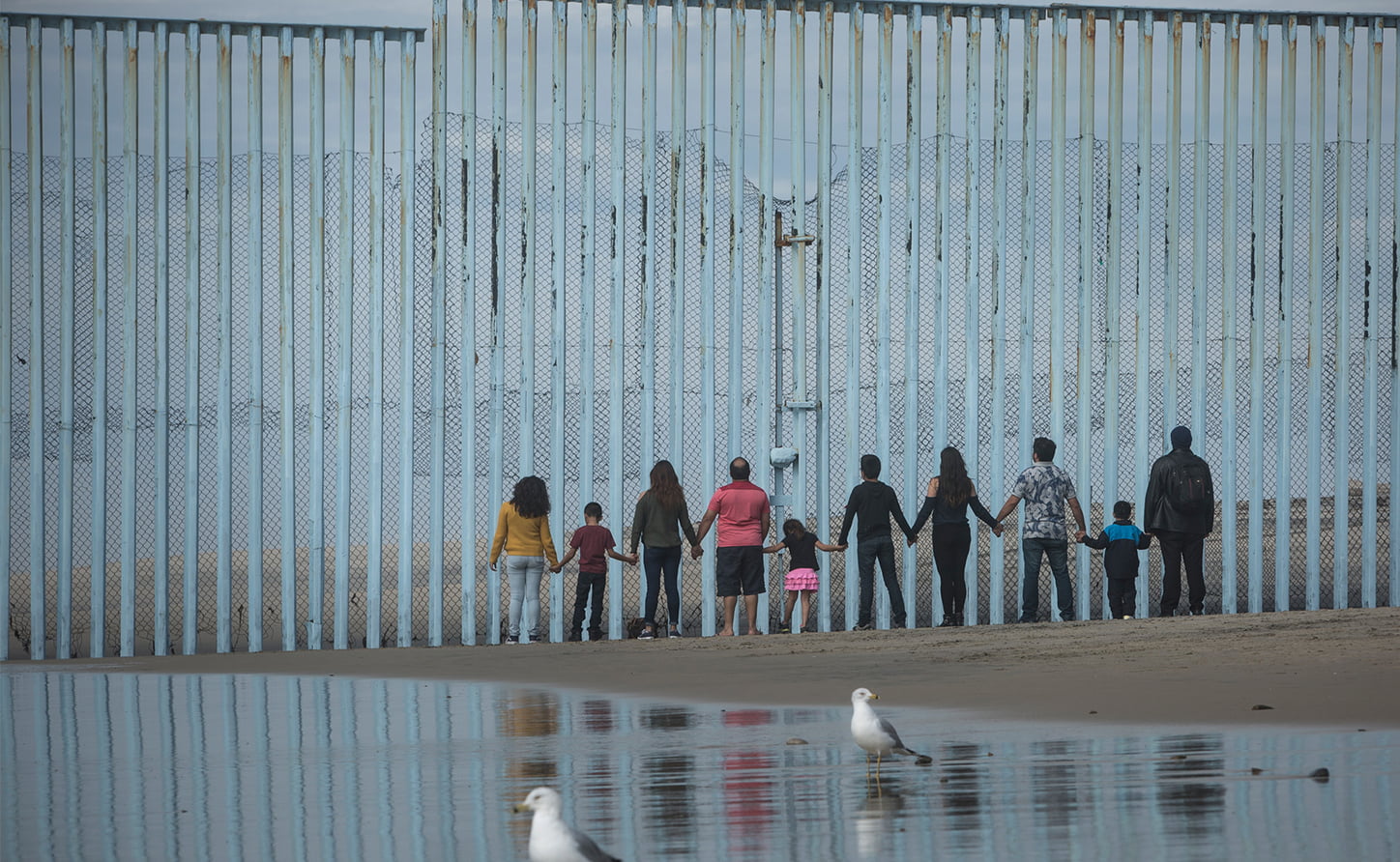
Unlawful US border policies are leaving thousands of asylum seekers stranded in Mexico, where they are facing threats of deportation to their countries of origin, where they potentially face serious harm, Amnesty International said today following a research mission last week. Conditions could only worsen under a reported deal between both countries that, if agreed, would force asylum-seekers to remain in Mexico while their claims are processed, rather than allow them to enter the United States.

As a result of Amnesty International’s research focusing on the treatment of refugees and migrants in the caravans in Guatemala, the southern Mexican state of Chiapas, Mexico City and Tijuana throughout October and November, the organisation has today issued 26 recommendations to the US and Mexican governments, as well as to the authorities in Central American countries of origin and transit, to ensure human rights protections and humanitarian support for all those seeking asylum and en route, including calling on authorities to respect international standards on the use of force.

“Instead of militarising the border and peddling fear and discrimination, President Trump’s administration should show compassion for those forced to flee their homes and must receive their requests for asylum without delay, as required by US and international law,” said Erika Guevara-Rosas, Americas director at Amnesty International.

“For their part, the governments of Mexico and Central America must take urgent action to guarantee the safety and wellbeing of all these people on the move and ensure they do not suffer further human rights violations. If Mexico agrees to do the US government’s dirty work at the expense of the caravan members’ dignity and human rights, it is effectively paying for Trump’s shameful border wall.”

“The danger posed to desperate families patiently waiting their turn for asylum at the border is an emergency of the US government’s own making,” said Margaret Huang, executive director of Amnesty International USA. “Using teargas in a situation where families, children and their parents were present was not only horrific, it was also a new low for this administration in its contempt for our shared human dignity and human rights.”

On 18 November, Amnesty International visited Tijuana’s Benito Juarez sports complex, a temporary shelter where the municipal government had accommodated approximately 3,000 migrants and asylum seekers who had arrived in the first of several caravans totalling 8,000 to 10,000 people across Mexico. They joined thousands of other people that US authorities have forced to wait in Tijuana for weeks or months before allowing them to request asylum at the border. On 22 November, US Secretary of State Pompeo declared that the US government plans to unlawfully deny people that right by refusing entry of the caravans into the United States.

Mexican federal, state and municipal officials separately confirmed to Amnesty International that the temporary shelter did not have sufficient food, water and health services, and that respiratory illnesses were spreading among those staying there.

Since at least April 2018, US and Mexican authorities have unlawfully required asylum seekers to put their names on a quasi-official asylum waitlist on the Tijuana side of the San Ysidro Port of Entry, instead of allowing people to request asylum directly at the border. The list is jointly coordinated by the asylum seekers themselves and Mexican authorities, in response to US limits on the number of asylum seekers they will receive each day. People seeking asylum without identity documents are prohibited from joining the list of those waiting to request asylum, and if they miss the day their number is called, they risk losing their places entirely.

By turning away asylum-seekers at ports of entry, US authorities are violating their right to seek asylum from persecution and manufacturing an emergency along the border. This queue along the border exposes people who seek asylum to risks of detention and deportation by Mexican immigration officials, and exploitation by criminal gangs.

On 21 November, Amnesty International reviewed the list, which contained the names of around 4,320 people, including about 2,000 caravan members, mostly from Honduras, who had arrived since 15 November. Those already on the list prior to the caravan’s arrival had been waiting, on average, about five weeks in Tijuana before US authorities started processing their asylum claims. Officials from Mexico’s National Institute of Migration (INM) and a Tijuana municipal official told Amnesty International that Mexican nationals comprised approximately 80 percent of those seeking asylum before the caravan arrived.

Mexican authorities cannot lawfully prevent people from exiting the country and seeking asylum at the US border. Yet Amnesty International confirmed with multiple sources in the Mexican government that Mexican immigration officials routinely take possession of the waitlist each night, and coordinate with US border authorities on how many asylum seekers from the list will be received each day. Amnesty International has received reports from Mexican officials speaking anonymously that raise doubts as to the supposed lack of capacity by US authorities to receive more people and indicate the pressure that the US government exercises on Mexican authorities to restrict entry of asylum seekers.

Mexican officials and asylum seekers at the San Ysidro Port of Entry told Amnesty International that US Customs and Border Protection (CBP) officials there were recently accepting 30 to 70 asylum applications per day. On 16 November, CBP’s San Ysidro Port Director told the Washington Post his staff could process 90 to 100 asylum seekers per day, provided that US Immigration and Customs Enforcement (ICE) took custody within 72 hours of those asylum seekers whom they processed.

In a meeting with Amnesty International on 20 November, ICE officials declined to answer whether they were taking custody of asylum seekers in a timely fashion or faced any capacity constraints due to the recent arrival of the caravans, before abruptly ending the meeting.

Amnesty International calls on the US authorities to immediately respect people’s right to claim asylum both at and between official ports of entry. Following the US government’s declarations that they plan to unlawfully deny people in the caravans that right, Congress should decline to fund CBP operations absent rigorous congressional oversight of those operations and a written commitment from CBP to halt the illegal pushbacks of asylum-seekers both at and between US ports of entry. Amnesty International documented these pushbacks in a recent report.

People seeking asylum face risk of deportation by Mexican authorities

On 19 November, Tijuana’s municipal police force announced that it had detained 34 caravan members for “public disorder” (including drinking beer on the street) and transferred them to INM for potential deportation. Amnesty International immediately asked INM to facilitate its access to interview the detainees, after receiving unverified reports that Tijuana’s municipal police may have racially profiled, entrapped and/or extorted some of them, and that their detentions may have resulted in their separation from family members staying at the Benito Juarez sports facility. INM did not allow the organisation to visit them.

On 20 November, a migrant rights expert with Mexico’s National Human Rights Commission (CNDH) confirmed to Amnesty International that one or more families had been separated by the detentions, but said CNDH had not yet interviewed any of the detainees to assess the validity of the charges against them. He noted that people who were part of the caravans were at high risk of deportation if detained by municipal police, since most either lack legal status in Mexico or their legal stay is due to expire soon, including those planning to seek asylum at the US border. Under Mexican migration law, municipal police are not allowed to carry out migratory revisions of people’s documents – a task reserved for the INM.

Local media in Tijuana reported  on 20 November that 40 caravan members had been detained by municipal police and then deported by INM. This detention is part of a wider trend in recent days, with the INM carrying out several mass detentions across Mexico in response to the caravan, including of families and children. In some cases, the number of people detained has reached the hundreds. On 25 November, Mexican authorities said that some of those who tried to cross into the United States and were met with teargas would be deported. Deporting people to countries were their lives are at risk, without giving them the chance to seek asylum, would violate Mexican and international law.

“Mexican municipal, state and federal authorities have struggled to accommodate and provide adequate humanitarian assistance for those stuck in Tijuana, and in some cases sought for Mexican immigration officials to deport people who are part of the caravans, potentially contrary to international law,” said Erika Guevara-Rosas”.

“Mexico’s National Migration Institute should urgently clarify whether all of those caravan members detained in recent days have been provided with opportunities to request asylum in Mexico or regularise their status and reunify with their children or other family members.”

Amnesty International calls on the Mexican government to ensure and expedite proper screening of migrants and asylum seekers who may qualify for international protection; and provide provisional documentation to those awaiting reception at US ports of entry, to prevent them from being deported to their countries of origin while their cases are processed.
The organisation also recommends authorities in countries of origin to address the factors that drive people to leave, while transit and receiving countries must ensure their health and safety, provide them with humanitarian assistance, respect their right to claim asylum, and prevent and investigate any abuses and human rights violations against them.

These recommendations are based on interviews that Amnesty International conducted with approximately 200 people travelling in the caravans – either individually or in groups, including several families, women travelling with children, and members of the LGTBI community – as well as information obtained from governments across the region, international organisations and civil society organisations present in the field.

AUSTRALIA MUST FOLLOW DENMARK AND END ARMS SALES TO SAUDI ARABIA

Amnesty International has again called on the Australian Government to cease the transfer of all military exports to Saudi Arabia, as yet another country announces they will stop arms trade with the Kingdom.

The announcement by the Danish government to suspend all exports of weapons and military equipment — including surveillance equipment — to Saudi Arabia follows decisions by Germany to also cease transfers and the recent announcement that the US military will cease refuelling Saudi/UAE-led coalition warplanes involved in the conflict. Despite mounting international pressure and repeated calls from Amnesty International to stop, Australia has continued to transfer military equipment to the Kingdom.

Responding to the announcement by the Danish government, Trine Christensen, Amnesty International Denmark’s Director, said:

“We welcome this decision. The human rights situation in Saudi Arabia has deteriorated rapidly over the past years, with a concerted effort to crush dissent and curb freedom of expression.

“Despite the humanitarian crisis in Yemen, the world has continued to sell weapons fuelling the conflict, and — as documented by Amnesty and others — enabled the Saudi Arabian-led coalition to target civilians, schools and hospitals.”

“It is high time that countries all over the world send a clear message that such human rights violations and such suffering will not be met by silence and inaction, but instead by strong criticism and clear consequences.

“A small country like Denmark can make a difference and play a role in persuading other countries to take a firm stand against Saudi Arabia’s massive human rights abuses at home and abroad.”

Amnesty has repeatedly called on the Australian Government to also suspend all arms sales to Saudi Arabia because of the clear risk that they will be used to carry out violations of international humanitarian law in Yemen. Australia has approved 14 military exports to the Kingdom of Saudi Arabia in the last 2 years alone.

Amnesty International has gathered more than 16,000 signatures from Australians calling on the Government to stop military exports to Saudi Arabia.

First time all States, Territories to discuss raising age Australia locks up kids

Tomorrow may be the first time Australians see action towards raising the age Australia locks up children, with the issue on the State and Territory Attorneys-General meeting agenda for the first time.

WA Attorney General John Quigley will be moving a motion regarding a national approach to raise the age of criminal responsibility.

In response, Amnesty International Campaigner Belinda Lowe said:

“Politicians are finally responding to the growing movement of Australians who want their governments to stop locking up 10 year olds.”

“Tomorrow marks the first time all States and Territories will meet to discuss raising the minimum age that Australia puts children behind bars, away from their families.

“The Northern Territory was the first to commit to raising this age, and Queensland and ACT are also looking at the issue.

“Other countries have a median minimum age of 14, which is the age recommended in the latest medical research and by the UN Committee on the Rights of the Child.

“Australia is lagging far behind the rest of the world by locking up such very young children, so we welcome all Governments recognising that through their discussion tomorrow.

“The evidence is in: human rights, legal and health experts are advocating for this change. I hope Australian Attorneys-General are listening to them.

“The next step for State and Territory Attorneys-General is to continue to work together to raise the age to 14 by June”.