Central Coast Schools Competition

Amnesty International Central Coast Group has just wrapped up their second annual Open Writing Competition. This year’s theme is Human Rights in an Age of Climate Change.

Students were encouraged to explore the significance of this relationship through Open Writing, which can be in the form of a song, poem, essay, short story, play, reflective diary, report or article with a limit of 500 words.

Wyong High Students with Hale Adasal, Cenral Coast Amnesty Group

Project Coordinator, Central Coast Amnesty Group member Hale Adasal explains why the group wanted to develop this project.

“This competition was created by our local group to inspire and engage our young people on the Central Coast through an inclusive open medium  of writing to the concept of ‘Human Rights in an age of Climate Change’.
“This competition allows our students on the Central Coast to respond to this important topic of our times, by giving them a voice to express their thoughts, whether it is in the form of  a poem, a short story, an essay or report. But, more then that it engages our teachers, school students parents and schools to develop a greater understanding of climate change and its impacts on a human rights, linking social and environmental justice for the first time for many people.
2018 Central Coast School Competition winners.
The competition has developed a sense of community, a connection and point of support and understanding for our high school students  by providing pathways to become engaged in both social and environmental justice. Our Central Coast Amnesty local group are proud to host the annual competition for 2 years now as a pathway for our students to engage in this important  topic that will directly impact their generation more then any other.”

To keep up to date with the crew from the Central Coast Amnesty International Group, check them out here.

Global Youth Summit

Julia Hansen Holme is part of the Victorian University Network, and in May she represented Australia at Amnesty’s first Global Youth Summit in Kenya. 

Youth, Power, Action!

Organised by Amnesty International Kenya, the East Africa Regional Office, and the Global Youth Team at the International Secretariat, the Youth, Power, Action! Summit took place over four days in Nairobi. There were 100 representatives from 25 different national Amnesty sections, the International Secretariat, and 15 external organisations, including Asylum Access, March for Our Lives, and Youth Policy Labs. Featuring speakers, panels, workshops and discussions, the purpose of the summit was to create a space for dialogue to explore,inspire and strengthen youth inclusion within the human rights movement. At the end of each day, we would all gather to develop recommendations related to the theme of the day. At the end of the conference, 10 of these recommendations formed a Call to Action with recommendations on how Amnesty International should advance its work with, for and by young people in the protection of human rights. The Call to Action was presented at Amnesty International’s Global Assembly July 2018.


Learning 1: Nothing about us, without us!

Participants at Youth Power Action Summit

A major focus of the summit was how to engage and empower youth in human rights activism, emphasising key issues and barriers preventing their participation. Young people around the world are vulnerable to human rights abuses. As everyone else, young people are rights holders and we need to be included in conversations about our rights (and general society). This requires us to acknowledge the importance of youth inclusion and to redistribute power to allow for people (young and old) to work collaboratively across generations to drive and create change. In Amnesty, this includes allowing young to develop as leaders and take on roles and responsibilities within our governance structure. It also includes conducting research with (not only on) young people on the human rights issues that affect youth and allow this to enable and encourage change. I am glad to see that Amnesty has set some important goals for youth inclusion, such as having 1/3 of all our supporters to be under the age of 25 by 2020. However, many Amnesty sections are yet to develop a national youth strategy, indicating that we still have a way go.


Key Learning 2: Be creative and diversify!

To achieve our goals of youth inclusion, we need to acknowledge that young people are not a homogenous group, hence have different interests, skills, and passions. It is important that we try to diversify the activities and opportunities available for young people (and everyone else). This includes having specialised networks and action groups, such as the Victorian Pop-Culture Network, the online magazine Am-Unity, or the arts-based groups such as ART-illry, allowing people to combine areas of interest with human rights. However, diverse activities and creative activism is not limited to these unique groups but can be taken up by everyone. It is a great way to create awareness on issues and attract and engage more people!


Key learning 3: Young & Brave

100 delegates at the 2018 Global Youth Summit in Kenya

My experiences in Nairobi made it painfully clear how lucky I am to have the freedom to stand up for human rights and feeling safe while doing so. Hearing the stories of young people who are being demonised or who face retaliation for their activism was difficult and almost surreal. In the
summit’s most heartbreaking session, a young woman named Monica told us the story of her brother, Evan. Evan was only 21 when he was killed by the police in Kenya for protesting increased school fees and unhygienic campus facilities. Unfortunately, this story is just one in many. Human rights abuses happen every day, all over the world. It is hard to not feel pessimistic. Yet, this also showcases exactly why we need to stand up for human rights. It is simply too important! And the good thing is, I am not alone in the battle. At the summit, I meet tons of all wonderful, brave and inspiring people who gave me hope and motivates me to continue advocating for human rights.


Overall, the Youth, Power, Action! Summit was an incredible experience, and it has helped change (and hopefully improved) the way I engage with and conduct my activism.


3 Activist Tips from Youth.Power Action!

Julia (centre) at a Workshop in Kenya

1. Regardless of your age, try to work with another age demographic on an issue. This is a great opportunity to learn from other generations and identify how you can be each other’s allies and supporters.

2. Find new ways for new ideas. Encourage untraditional, big and outrageous ideas. Sometimes the best ideas can come from unexpected places! This is especially beneficial to do if you are trying to engage a new group of people or starting to work on a new campaign/case.

3. Take a minute to reflect upon your own activist journey. Think about what you are grateful for, what inspires you to take action, and who is there to support you. Importantly, remember that the work you do matters!

(Bonus tip: People might say that you are the leaders of the future. Forget that. Your voice matters today!)


NT must lead the way in ending criminalisation of 10 year old kids

The Gunner Government must be the first in Australia to end the injustice of children as young as 10 being held back in life by a criminal record, said Amnesty International in Darwin today.

The Northern Territory Government, like all in Australia, is harming children at a crucial time in their development, by criminalising them at the young ages of 10 to 13. This is far younger than the rest of the world, where the median minimum age children are locked up is 14.

Every single child in detention in the Northern Territory is Aboriginal and Torres Strait Islander.

Amnesty today stood alongside Territory health and legal experts Olga Havnen, representative of Aboriginal Peak Organisations NT, and Matthew Littlejohn, barrister from William Forster Chambers, outside Don Dale Youth Detention Centre, to release a summary paper on the issue.

The experts called on Attorney-General Natasha Fyles and Minister for Territory Families Dale Wakefield to urgently address the ongoing crisis in the NT youth justice system by raising the minimum age the NT can give a child a criminal record to 14. This would be in line with the latest medical research and as recommended by the UN Committee on the Rights of the Child.

Too young for Facebook is too young for prison

“If a 12 year old child isn’t old enough to have a Facebook account, they aren’t old enough to be shackled with a criminal record,” said Rodney Dillon, Indigenous Rights Adviser at Amnesty International Australia.

Olga Havnen said, “Criminalising 10-13 year old children flies in the face of the latest brain science on when the brain matures. It also ignores the role of trauma in regulating emotion, behaviour and impulsivity. A high proportion of children who come into contact with justice system have experienced trauma, which is often an underlying cause of offending behaviour.”

Matthew Littlejohn said, “Young people are particularly vulnerable when exposed to the criminal justice system. They require support, education, and diversion, not incarceration. It has been clear for a long time that locking up young kids does enormous damage, to the children, their families, and their communities. Just because they may have broken the law does not mean they deserve to be broken by the system. Raising the age of criminal responsibility to 14 not only brings us into line with international standards, it reinforces our obligation to protect and rehabilitate young people at their most vulnerable.”

Children will be damaged until the age is raised

The Northern Territory has committed to raising the minimum criminal age, but, despite new evidence from human rights, health, legal and community experts, has only committed to raising it to 12.

The Territory Government’s expected deadline to raise the age – sometime after 2021 – is also so far in the future that hundreds of Territory children will be damaged before that time.

The children locked up in that time are more likely to become adult offenders, with children locked up before age 14 three times as likely to become chronic adult offenders than children locked up after 14. Imprisoning 10-14 year old children also makes them less likely to complete high school, complete further education and training, and gain employment.

Indigenous-led programs

Today’s summary paper echoes the findings of the Royal Commission into the Protection and Detention of Children in the Northern Territory that the Government would better prevent offending by keeping children away from the justice system, and by expanding ‘place-based’ programs that support children and families to overcome problems in their young lives.

One of the local programs offering such an approach in Darwin is Balunu, which takes young people on intensive cultural camps with Elders and Aboriginal social workers, and provides support to the kids and families to help with any issues they’re facing.

Rodney Dillon said, “We welcomed Friday’s refreshed strategic plan from Territory Families, particularly its commitment to a youth diversion framework that includes wilderness camps. It must now put words into action by funding Indigenous-led programs and raising the age of criminality to 14 before the year’s end.”

COMMUNITIES GETTING INVOLVED: MT LAWLEY QUIZ NIGHT

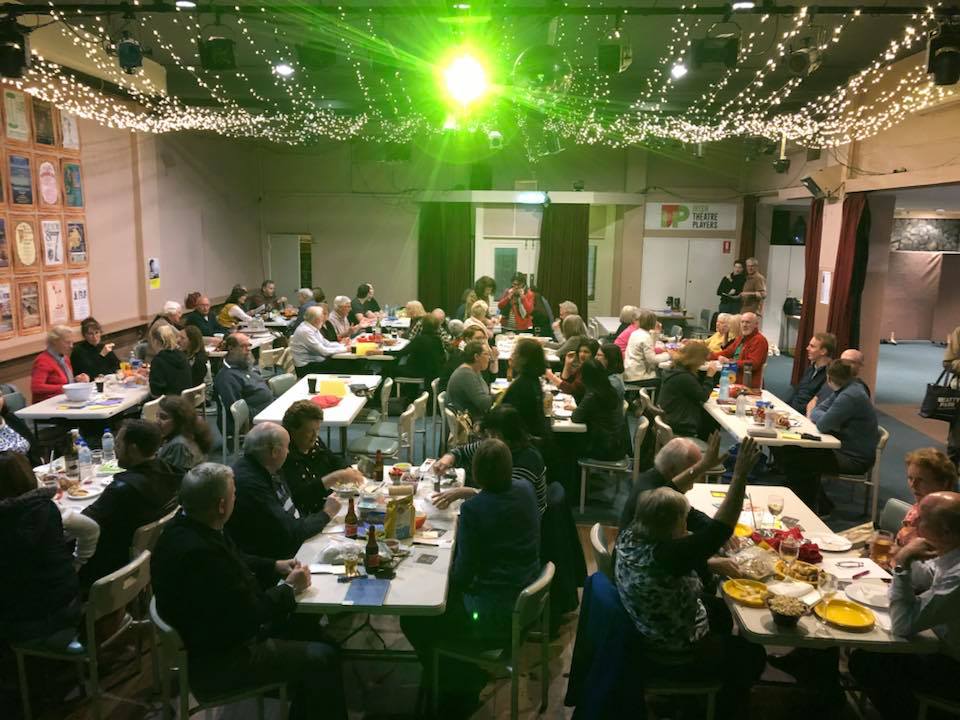
On Friday the 24th of August The Mt Lawley Group hosted a highly successful fundraising Quiz Night at the Irish Club in Subiaco.

90 guests attended the quiz and participated in games, a raffle and an auction raising over $2500.
The community support for the event was amazing with diverse donors including the Freo Dockers, Rottnest Express and many local businesses providing prizes.
The Mt Lawley group are committed to taking action and standing up for BRAVE human rights defenders.
Group co convener Leonie Alexander said that “raising money to protect and defend individuals at risk was something we are all committed to”
Group co convener and event organiser Amber Blake said “The funds raised from an event like this helps us free more women like Teodora,  lobby for more  change in legislation like the recent Irish referendum on abortion and protect more refugees like Sadat”

Myanmar: United Nations’ report adds to mountain of evidence of atrocities against Rohingya, other ethnic minorities

A blistering report released by the United Nations Fact-Finding Mission on Myanmar (FFM) today brought yet more damning evidence of the Myanmar security forces’ atrocity crimes against the Rohingya and other ethnic minorities in northern Myanmar, Amnesty International said.

The FFM – a body of independent experts appointed by the UN Human Rights Council – released its key findings and recommendations today in Geneva, with a more detailed report to follow in the coming weeks.

“This report, which adds to a mountain of evidence of crimes under international law committed by the military, shows the urgent need for independent criminal investigation and is clear that the Myanmar authorities are incapable of bringing to justice those responsible,” said Tirana Hassan, Director of Crisis Response at Amnesty International.

“The international community, including Australia, has the responsibility to act to ensure justice and accountability. Failing to do so sends a dangerous message that Myanmar’s military will not only enjoy impunity but is free to commit such atrocities again.

“The UN Security Council must refer the situation in Myanmar to the International Criminal Court as a matter of urgency. Until it does, it’s vital that countries establish a mechanism through the UN to collect and preserve evidence for use in future criminal proceedings.”

Diana Sayed, Crisis Campaigner at Amnesty International Australia said: “Australia’s new Foreign Affairs Minister Marise Payne now has an opportunity to step up and show leadership in her new role at next month’s UN Human Rights Council session by supporting the FFM’s recommendations. Australia must ensure those responsible for atrocities against Rohingya women, children and men are investigated for genocide, crimes against humanity and war crimes.”  

Background

Ahead of the shameful one-year anniversary of the Myanmar military’s ethnic cleansing campaign against Rohingya in northern Rakhine State, Amnesty International slammed the international community’s failure to hold those responsible to account.

More than 700,000 Rohingya women, men, and children were forced to flee from northern Rakhine State to neighbouring Bangladesh after 25 August 2017, when the Myanmar security forces launched a widespread and systematic assault on hundreds of Rohingya villages. The onslaught came in the wake of a series of attacks on security posts by a Rohingya armed group, the Arakan Rohingya Salvation Army (ARSA).

Amnesty International has documented extensively the military’s ethnic cleansing campaign, which included targeted burning of Rohingya villages, the use of landmines and the commission of crimes against humanity including murder, rape, torture, forced starvation and forced deportation as well as other serious human rights violations against the Rohingya.

Amnesty International has also documented war crimes and other human rights violations by the Myanmar Army against ethnic minorities in Kachin and northern Shan States, including extrajudicial executions, torture, forced labour, the use of landmines, and indiscriminate shelling. Serious violations against civilians remain ongoing in northern Myanmar, amidst the armed conflicts that continue to rage.

Australia: New Prime Minister Scott Morrison must uphold human rights in Australia and overseas

In response to the news that Australia has new a Prime Minister, with Scott Morrison this afternoon taking over the leadership role from Malcolm Turnbull, Claire Mallinson, National Director of Amnesty International Australia said:

“Australians expect to see our government deliver equality and justice for all. The revolving door of leadership has once again seen the rights of everyday people pushed aside for political gain but our new Prime Minister must now commit to upholding the human rights of everyone, without discrimination.”

“Politicians are busy holding leadership ballots while at the same time their policies have seen a 12-year-old girl, warehoused in Nauru, attempting to set herself on fire and Australian military exports continue to be transferred to the Saudi Arabia-led coalition committing war crimes in Yemen.

“In his newly elevated position as Prime Minister, Morrison has new responsibilities and he must now ensure that he, and those in his Ministry, put human rights first, both in their words and in their actions. Only then can the Morrison Government have a chance at being successful here at home and abroad.”

In particular Amnesty International is calling on the new Prime Minister and Cabinet to:

  • Respect the human rights of all Australians, ensuring everyone is treated with respect and enjoys equality and justice
  • End the overrepresentation of Indigenous kids in detention and raise the age at which we lock up children from 10 years to 14 years
  • Bring an end to the cruel and inhumane policy of offshore detention and immediately bring those warehoused in offshore detention to safety in Australia
  • Expand and improve the refugee Community Sponsorship Program so that more families have the opportunity to resettle and rebuild their lives in safety in Australia
  • Cut Australia’s defence training support to the Myanmar military, and pursue accountability for crimes against humanity in the International Criminal Court
  • Ensure Australia continues our leadership role on the Human Rights Council, especially on human rights abuses in our region and a global moratorium on the death penalty

My refugee heritage: Tammy Solonec

I grew up with two stories of displacement and resilience running through my blood. One as the granddaughter of a mission born and raised Nigena woman and the other as the grandchild of post WWII European refugees.

My life as an Aboriginal woman is deeply intertwined with my refugee ancestry. Both my families faced discrimination and both were expected to assimilate. Today, I am sharing my family’s refugee story.

My refugee grandparents

Growing up, my Ukrainian paternal grandfather Akim Solonec always reminded us, ‘We are lucky. We are so lucky we came to Australia.’

As Europe descended into WWII, grandad had been forced to join Russia’s Red Army. He escaped into Poland and then into Germany, where he worked for the British Army and eventually met my German grandmother, Gertrud Hagemann.

But in Germany, grandad lived in fear of being captured and sent to Siberia. So nanna and grandad with their baby son prepared to leave for Australia as refugees. They sailed into Fremantle on board the General Hersey in December 1950.

Today their names are embossed in the Welcome Walls at Fremantle. Walls have been good and bad omens in my family’s history because, nine years after they arrived in Australia, the Berlin wall was erected. It kept grandad separated from his family until he felt it safe to return after the felling of the Berlin Wall in 1989.

“Today their names are embossed in the Welcome Walls at Fremantle.”

Dieter (left) with family dog on his lap, sitting next to Tammy (right).
Tammy Solonec with her father, Dieter. © Kylie Gibson

Living with scarcity

As refugees the family was sent to a military camp near Northam, 100 km east of Perth. It was designed to provide refuge for displaced peoples after WWII and to support them to create a new life. Today, the camp is a prison. Known as the Yongah Hill Immigration Centre, it’s where foreign nationals who are set for deportation are detained.

In April 1952 my father Dieter and his twin were born in the Northam hospital, and 16 months later the family welcomed a fourth son. Out of necessity nanna was left to raise the boys, while grandad worked away laying the pipeline to Kalgoorlie and working on the railway line.

He didn’t like those times because his managers were uncivil to non-English speaking peoples so he found work at the Kwinana oil refinery.

In time he bought a block of land in Balcatta where he built their family home. Money was scarce and my grandparents were extremely frugal—dad and his brothers walked to school barefoot, even in winter.

To survive, my grandparents became self-sustaining. I have lovely memories of playing in their backyard. It was like a market garden with vegetables, fruit trees, a fowl yard and a big shed filled with fascinating material goods that grandad had scrounged.

Such was the poverty they lived in. But the more extreme poverty was that dad and his brothers never learned their languages. They were told to be as Australian as they could be. They were told not to be different, and to be like everyone else.

“Today dad is an adept technician and he has his own small computer business, where many of his customers are refugees.”

Building Western Australia

My refugee grandparents and their descendants have played major roles in developing Western Australia. Dad was 15 when he began training as a communications’ technician. He worked around the state in trying climatic conditions and it was in the Kimberley where he met my mother Cindy, a Nigena woman.

Today dad is an adept technician and he has his own small computer business, where many of his customers are refugees.

Tammy Solonec, Indigenous Rights Campaign Manager

I see in my dad intergenerational trauma from the loss of his culture and family—a legacy of the brutal world his parents escaped from. He doesn’t speak German nor Ukrainian, yet he was determined to find his families. In retirement he and mum have been to Ukraine twice, searching for them.

Yet according to grandad, ‘we are the lucky ones’, and I agree.

Tammy Solonec is a Nigena woman from the Kimberley of Western Australia and the Indigenous Rights Manager at Amnesty International Australia. Tammy thanks and acknowledges her parents for their contributions to this story.

Rohingya: Australia must act: shameful anniversary highlights lack of accountability for Myanmar’s atrocities

World leaders’ failure to act has allowed the Myanmar security forces’ perpetrators of crimes against humanity to remain at large for a year after their murderous campaign against the Rohingya prompted an exodus of epic proportions, Amnesty International said today.

More than 700,000 Rohingya women, men, and children fled from northern Rakhine State to neighbouring Bangladesh after 25 August 2017, when the Myanmar security forces launched a widespread as well as systematic assault on hundreds of Rohingya villages.

Amnesty International is calling on the Australian Government to cease its support and assistance to the Myanmar military, impose targeted sanctions on 13 military personnel implicated in the atrocities, and push for accountability and justice for their crimes against humanity committed to date.

This anniversary marks a shameful milestone. The explosion of violence over the past year perpetrated by Myanmar’s military in villages across northern Rakhine State was not the action of rogue soldiers or units. There is a mountain of evidence that the murder, rape, torture, burning and forced starvation was part of a highly orchestrated, systematic attack on the Rohingya population. That Australian taxpayers’ money is going to support the perpetrators is unthinkable,” said Diana Sayed, Amnesty International Australia’s Crisis Campaigner.

“Cutting Australia’s training support to the Myanmar military is the least the Australian government can do to stand up for the Rohingya people’s rights.

“Next, the Australian government must impose sanctions on Myanmar’s Commander-in-Chief, Senior General Min Aung Hlaing, and 12 other individuals implicated and named in Amnesty International’s 27 June report We Will Destroy Everything’: Military Responsibility for Crimes against Humanity in Rakhine State, Myanmar.

“There is a mountain of evidence that the murder, rape, torture, burning and forced starvation was part of a highly orchestrated, systematic attack on the Rohingya population. That Australian taxpayers’ money is going to support the perpetrators is unthinkable” – Diana Sayed, Amnesty International Australia’s Crisis Campaigner

“The Australian government must also explore all avenues for accountability and justice for the crimes committed in Myanmar, in particular an immediate mechanism for evidence collection and preservation for future criminal prosecutions at the International Criminal Court.”

Amnesty International has documented extensively how the military offensive amounted to ethnic cleansing. It included targeted burning of Rohingya villages, the use of landmines and the commission of crimes against humanity including murder, rape, torture, forced starvation and forced deportation as well as other serious human rights violations against the Rohingya. The onslaught came in the wake of a series of attacks on security posts by a Rohingya armed group, the Arakan Rohingya Salvation Army (ARSA).

“By its continued failure to hold to account those responsible for crimes against humanity, the international community risks sending the message that Myanmar’s military will not only enjoy impunity but will be allowed to commit such atrocities again. We must not let this happen,” said Tirana Hassan, Crisis Response Director at Amnesty International.

“A year on, hundreds of thousands of Rohingya women, men, and children who fled this highly orchestrated attack are still in limbo in refugee camps in Bangladesh. As long as their tormentors in Myanmar’s security forces remain at large, any notion that Rohingya refugees can have a safe, dignified and voluntary return home is farcical.”

Long-standing apartheid conditions

In June 2018, UN agencies and the government of Myanmar signed a Memorandum of Understanding, described as a ‘first step’ towards the repatriation of Rohingya refugees from Bangladesh. Although a near-final draft has been leaked, the final agreement has never been made public.

But serious reforms are needed in northern Rakhine State for any future repatriations to be viable. Amnesty International and others have documented how the Myanmar military’s vicious response to the August 2017 ARSA attacks came in the context of years of institutionalised discrimination and segregation amounting to apartheid – a crime against humanity.

“Having Rohingya refugees return from overcrowded camps in Bangladesh to what has been essentially an open-air prison in Rakhine State is not a viable option. States around the world must push for Myanmar to dismantle its system of apartheid and allow Rohingya and all other ethnic minorities to enjoy their rights to nationality and freedom of movement,” said Tirana Hassan.

UN Fact-Finding Mission’s report

The upcoming report of the UN Fact-Finding Mission on Myanmar will be an important addition to the existing mountain of evidence that crimes under international law were committed against the Rohingya  as well as against ethnic minorities in Kachin and northern Shan States – where Amnesty International has documented war crimes and where serious violations against civilians are ongoing.

In both these regions, the Myanmar authorities continue to impose severe restrictions on humanitarian access, with devastating consequences for civilians.

“Lack of political will, not a lack of evidence, is at the root of the international community’s inaction. It is undeniable that Myanmar’s security forces committed crimes against humanity against the Rohingya. But while the international community drags its feet deciding what to do about it, vital evidence risks disappearing or being destroyed,” said Tirana Hassan.

No brushing atrocities under the carpet

At the end of May 2018, in response to mounting international pressure, the Myanmar authorities announced an Independent Commission of Inquiry to investigate human rights violations in Rakhine State. Previous commissions have been little more than sham investigations to whitewash military atrocities. At a press conference earlier this month, the Commission’s Chairperson stated that there would be no “finger-pointing”, “blaming” or “saying ‘you are accountable’” – a clear indication that this latest body will be no different.

“Myanmar’s authorities must not be allowed to use a national commission of enquiry to brush atrocities against the Rohingya under the carpet. We’ve been down that road before and it’s clear that they are trying to buy time until the world moves on,” said Tirana Hassan.

Critical moment for accountability

In its June 2018 report, ‘We Will Destroy Everything’, Amnesty International named 13 individuals – including Myanmar’s Commander-in-Chief, Senior General Min Aung Hlaing – who played key roles in the atrocities against the Rohingya.

The organisation recommended concrete steps to hold them and others accountable – including a UN Security Council referral of the situation to the International Criminal Court and the establishment of an international mechanism to collect and preserve evidence for use in future criminal proceedings.

“When the UN Human Rights Council and General Assembly meet next month, strong, decisive action is needed to pave the way for justice” – Tirana Hassan,Crisis Response Director at Amnesty International

While the European Union, Canada and the United States have announced targeted sanctions against some of the alleged perpetrators in recent months, much more needs to be done urgently at the UN to ensure accountability.

“When the UN Human Rights Council and General Assembly meet next month, strong, decisive action is needed to pave the way for justice for the Rohingya and for ethnic minorities in northern Myanmar. The UN Security Council must urgently refer the situation to the International Criminal Court – the threat of veto power is no excuse for inaction. This critical opportunity cannot be missed,” said Tirana Hassan.

Cambodia: Land rights activist Tep Vanny released from prison following royal pardon

Responding to the news that human rights defender Tep Vanny has been released from prison following a royal pardon after more than 700 days in detention, Minar Pimple, Amnesty International’s Senior Director of Global Operations, said:

“After more than two years of being unjustly detained for her peaceful activism, the news that Tep Vanny is once again reunited with her family is a cause for great celebration.

“However, her release is long overdue. Tep Vanny has endured a catalogue of injustice –  from baseless, politically-motivated charges to unfair trials – and should never have been imprisoned in the first place.

“As well as allowing Tep Vanny to resume her activism without fear of further reprisals, Cambodia’s authorities must quash all convictions against her and halt any investigations into any other pending charges. Additionally, the many other human rights defenders and prisoners of conscience still languishing behind bars in the country must also be immediately and unconditionally released.”

“Her release is long overdue. Tep Vanny has endured a catalogue of injustice –  from baseless, politically-motivated charges to unfair trials – and should never have been imprisoned in the first place” – Minar Pimple, Amnesty International’s Senior Director of Global Operations

Background

On 23 February 2017, Phnom Penh’s First Instance Court convicted Tep Vanny of “intentional violence with aggravating circumstances“, and sentenced her to two years and six months’ imprisonment.

The conviction was based on her peaceful participation in a March 2013 protest in front of Prime Minister Hun Sen’s house, calling for the release of one of the arbitrarily detained Boeung Kak Lake Community members.

Tep Vanny was also ordered to pay a fine of five million Cambodian Riel (around AUD $1700), as well as a combined nine million riel in compensation payments to the two plaintiffs, both of whom are members of Phnom Penh’s Daun Penh district para-police.

On 27 July 2017 and again on 7 February 2018, Phnom Penh’s Appeal court upheld both her conviction and prison sentence.

Amnesty International considered Tep Vanny a prisoner of conscience held solely for her peaceful human rights work. She was also part of the human rights organisation’s global BRAVE campaign, with more than 200,000 people around the world joining a call for her release.

Following WA Corrections Minister’s comments, Government must commit to ending solitary confinement of children

The Western Australian government must stop breaching international laws and standards by locking children in solitary confinement, to ensure children are protected, said Amnesty International today.

The organisation called on WA’s government to place a moratorium on holding children in solitary confinement until the state’s laws are amended to prevent children being held in these conditions, in line with international law and standards.

The call comes following WA Corrections Minister Fran Logan’s denial that children were held in solitary confinement, despite the contrary being outlined in the recent Office of the Inspector of Custodial Services’ report.

Minister Logan also appeared to indicate the government intends to continue holding children in such conditions – a continued breach of international laws and standards.

Rights of children must be protected

Amnesty International Australia National Director Claire Mallinson said the state’s government must act urgently to amend laws, as recommended by the Office of the Inspector of Custodial Services’ report last week.

“The report found the evidence is that the children did not even get one hour out of their cells every 24 hours,” Ms Mallinson said.

“The UN Convention On The Rights of The Child, the Convention Against Torture, the Mandela and Havana Rules are clear that this is in breach of international law and standards.

“The report found that Banksia Hill did this to the children in its care for 10 days.

“It is critical that the Minister commits to complying with international standards and urgently amends WA laws so that the rights of children in custody will be protected.

Young Offenders Act

The report recommended the Young Offenders Act and regulations be reviewed to bring the State into line with international standards, which include the UN Convention Against Torture, the UN Convention on the Rights of Child, the United Nations Standard Minimum Rules for the Treatment of Prisoners (the Mandela Rules) and the UN Rules for the Protection of Juveniles Deprived of their Liberty (the Havana Rules).

The department agreed to this recommendation only ‘in principle’ by the end of 2019, leaving open the possibility of children being held in solitary confinement until the state’s laws are amended. The Minister appeared to confirm this on ABC radio on Tuesday, replying to questions on continuing to hold children in isolation for 10-day periods with, “It will occur. It will occur. And the Act allows us to do that.”

Bravery of young people

Claire Mallinson paid tribute to the bravery of the young people who spoke out by writing letters from detention outlining their fears and concerns about their treatment, and by giving verbal testimony to the Office of the Inspector of Custodial Services.

“Children in prisons in the Northern Territory and Queensland raised concerns for years about abuses, and were ignored by authorities. Only when CCTV footage was released of abuses in those States and Territories were they finally believed,” said Claire Mallinson.

“WA, after hearing concerns from children in prison, instead has ensured CCTV footage can never be made public, by routinely wiping CCTV footage after 28 days. In addition, written records of the children’s treatment are, as the report repeatedly says, incomplete and inadequate.”

Amnesty International’s Freedom of Information request on 14 December last year for CCTV and records kept at Banksia Hill was rejected on 2 August. The rejection is now being investigated by the WA Information Commissioner.

“The most important thing now is that the Department acts on the report’s recommendations around solitary confinement; the use of restraints; the right to bedding; notifying carers of self-harm incidents, attempts and threats; and around improving internal complaint processes. These changes will bring WA up to the standard of international law, and will result in better outcomes for young people in Western Australia.”