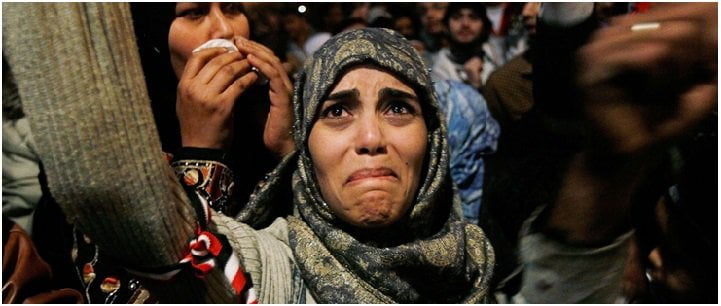
Israeli forces attacked peaceful crowds of Palestinians as they gathered at al-Aqsa mosque in Jerusalem for the first time since Israel lifted recent security measures imposed at the site, according to Amnesty International staff at the scene.
“Israeli forces started firing stun grenades, tear gas and sponge-tipped bullets into a peaceful crowd as they stood at the entrance of the al-Aqsa mosque compound and inside. It appeared to be an entirely unprovoked attack. Some Palestinians threw empty water bottles in return. Others, began to throw stones as well,” said Magdalena Mughrabi, Deputy Middle East and North Africa Director at Amnesty International.
“Using unnecessary and excessive force to disperse a peaceful gathering is a flagrant violation of Israel’s obligation to uphold the rights of Palestinians to peaceful assembly. The Israeli authorities must urgently rein in their security forces to prevent the situation from spiralling out of control and to avoid further bloodshed.”
The Palestinian Red Crescent Society said at least 96 Palestinians were injured in and around al-Aqsa mosque on 27 July. Since the beginning of the incidents four Palestinian civilians have been killed and more than 1090 injured by Israeli forces during protests and clashes in the West Bank including Jerusalem.
In Turkey, truth and justice have become strangers. Six human rights defenders were imprisoned this week on the absurd charge of supporting a terrorist organization. They await trial, which could prolong their incarceration for several months. Four others were released but remain under investigation. Their movements have been restricted and they have to report to the police three times a week.
Among those imprisoned is Idil Eser, Amnesty International’s director in Turkey. “I have committed no crime,” she wrote to me from detention last week. Nor have any of the others. Since the July coup in 2016, the Turkish government has seized on any whisper of dissent as an excuse to crackdown on political opponents. In this climate, even defending human rights is treated like a crime.
“This week, six human rights defenders were imprisoned this week on the absurd charge of supporting a terrorist organization.”
John dalhuisen, Amnesty international
Despite a foreign policy supposedly committed to supporting human rights defenders globally, the EU’s public response to Turkey’s horrific crackdown on human rights has been muted.
On July 25, at a meeting with Turkey’s Foreign Minister in Brussels, the EU’s foreign policy chief, Federica Mogherini, has an opportunity to make amends. Rather than hide behind honeyed words and soft diplomacy, she must make an explicit demand for the release of Eser and other human rights defenders unjustly detained.
Just last year, people in Turkey looked on in horror as journalists were dragged away during live broadcasts. Children were roused from their sleep as jets thundered overhead and gunshots echoed across the city. During 12 hours of bloodshed, 250 people were killed and thousands injured. Many people felt a sense of relief the next day when news spread that the attempted coup had failed.
“Rather than hide behind honeyed words and soft diplomacy, Federica Mogherini must demand the release of these human rights defenders.”
John dalhuisen, Amnesty international
But that feeling was short-lived. Five days later, the government imposed a state of emergency. Since then, it has been extended every three months. And its effects become progressively worse each time. Criminal investigations have been opened against 150,000 people accused being part of the “Fethullah Terrorist Organization,” which the government claims masterminded the July coup. Every day, the number of people under investigation grows.
As a result of the crackdown, some 50,000 people languish in jail. Among them are at least 130 journalists, the highest number of any country in the world. More than 100,000 public sector workers, including a quarter of the judiciary, have been arbitrarily dismissed. Last week alone, more than 140 arrest warrants were issued for IT workers, and hundreds of academics were cast out of their jobs.
“In Turkey, truth and justice have become strangers.”
John Dalhuisen, amnesty international
Last month, the purge arrived at Amnesty International’s door. Taner Kilic, Amnesty Turkey’s chair, was remanded in pretrial detention on the fictive claim that he is a member of the Fethullah Terrorist Organization. Authorities accuse him of being in possession of an encrypted messaging app favored by the Gülen movement. Taner, who is a human rights professional but a technology novice, had never heard of the app, let alone used it.
This week, President Recep Tayyep Erdoğan warned that the state of emergency could last “several years.” “First, we will chop off the heads of those traitors,” he said, in a menacing tirade. “When they appear in court, let’s make them appear in orange suits like in Guantanamo Bay.”
Ruling by executive decree, eluding the scrutiny of parliament and even the increasingly cowed courts, the government has crippled state institutions and civil society with a ferocity that rivals that of the 1980s military junta.
“People fighting for basic human rights in Turkey are being imprisoned one by one. Soon, there will be no one left.”
John Dalhuisen, amnesty international
Those responsible for the violence that killed and injured people in in last year’s attempted coup surely must be brought to justice. But those crimes cannot serve as a justification for a wave of repression that shows no signs of relenting. Erdoğan came to power on a promise to break with Turkey’s ugly past. But the more powerful he has become, the more closely he has come to emulate the repressive practices of those who came before him.
With some exceptions, the international community has studiously maintained a silence on what is happening in Turkey.
For many countries, Ankara is too important a political ally for human rights to matter. They need the country to stave off waves of migrants and refugees, to be an ally in Syria, and to halt the spread of the Islamic State. Erdoğan knows this — and he uses it to his advantage. He knows it blinds foreign leaders to the human rights violations taking place in plain sight.
Members of my staff are on the ground in Turkey. Some had waited outside the courthouse until the early hours when the sentences were delivered and, when I spoke to them, their voices were thick with emotion. They are sad not just for their friends, but for their country. What will it take for the world to break its silence? As foreign leaders wordlessly look on, people fighting for basic human rights in Turkey are being imprisoned one by one. Soon, there will be no one left.
Following tweets from President Donald Trump announcing he would no longer allow transgender individuals to serve in the U.S. military, Tarah Demant, Amnesty International USA’s director of Gender, Sexuality, and Identity program issued the following statement:
“This announcement violates the human rights of all transgender Americans. It lays bare the president’s prejudice and underlines the fact that creating policy based on bigotry is becoming a dangerous and cruel pattern for President Trump. The administration continues to target minority communities without pause and without facts. From stripping protections from transgender students to today’s announcement, the Trump administration has made clear it has an agenda of discrimination.”
While we hoped that 2017 wouldn’t deal us the same cruel blows as its predecessor, it seems we’re yet to see the light at the end of the tunnel. Whether it’s fretting over President Trump’s intent to reinstate a ban on transgender individuals from serving in the US armed forces, or agonising over the ongoing atrocities of the Syrian civil war and refugee crisis, it’s easy to feel completely overwhelmed by the state of the world.
But burying our misery in a tub of ice cream and a box of tissues isn’t going to make change – in fact, Amnesty’s Director of Communications, Osama Saeed Bhutta says events like Trump’s presidency can actually “renew the global human rights project”.
So how can we keep our spirits up as we seek to improve human rights? We asked the experts.
Establish boundaries
There’s no denying the crucial importance of activism, but if you’re not looking after yourself then you can’t do a very good job of helping others. Activists who are exposed to distressing events or imagery are at risk of vicarious trauma, which can lead to burnout, compassion fatigue or secondary traumatic stress.
“Part of the reason we see so much burnout is the guilt of ‘I have to be involved all the time’,” says Dr Peggy Kern, senior lecturer in the University of Melbourne’s Centre for Positive Psychology. “The best way you can help others is by taking time out for yourself – it might feel like you are being selfish but if you burn out, you won’t help anyone.”
“Part of the reason we see so much burnout is the guilt of ‘I have to be involved all the time'”
Dr Kern
Dr Kern suggests establishing clear boundaries of when you will focus on the issues that concern you and also allow time for lighter thoughts or activities. “You need to check in and check out,” she explains. “For a period of time you focus on [the cause] but then you have an outlet – something that’s healthy and recharges you at a core level.”
That’s something Belinda Lowe, Amnesty Activism Growth and Development coordinator, has learnt over 15 years of activism. “You have to make sure you have clear periods of time when you do your work and also when you have family or friend time,” she says. “I like to paint and exercise – you need to find activities that stimulate a different part of your brain and allow you to learn new skills.”
The former US First Lady Michelle Obama says she relies heavily on her network to keep her balanced – and we should all follow suit.
“When I’m unhappy with something, people know because I don’t want to hold onto it,” Mrs Obama told Prevention. “I’d rather deal immediately with the stuff that bothers me, so using my network – my girlfriends, my husband, my mum – I talk a lot, I vent. Even if there are no answers, sharing the emotions helps keep me stable.”
“The best way you can help others is by taking time out for yourself – it might feel like you are being selfish but if you burn out, you won’t help anyone”
Dr Peggy Kern
Sometimes banning certain conversation topics can be a good way of keeping a social catch-up light, and ensuring you don’t find yourself debating foreign policy or fretting over a particular person’s plight.
“I’m part of a book club with lots of activists and we have a law that we are not allowed to talk about human rights abuses,” Lowe says. “We call each other on it so we make sure we have time to nurture relationships.”
Celebrate the wins
It might feel like the problems of the world are insurmountable, but Lowe says it’s worth remembering how much has already been done and how people can come together when their rights are in jeopardy.
In the beginning of 2017, millions of people around the world took to the streets to voice their opposition to the hateful rhetoric of President Donald Trump and to stand up for gender equality. Look at how much we have already achieved for the rights of women, refugees and LGBTQI people,” Lowe says. A good way to keep positive is to keep tabs on Amnesty’s success page or create a portfolio or box of mementos that celebrate what you’ve achieved.
“It’s your collection of success stories or images or items that represent success,” Dr Kern says. “Go back to that every so often and when things get challenging go, ‘I remember this story when things worked’.”
Look for good news stories (and kittens)
As much as you might feel an urgent need to keep tabs on the latest happenings in Iraq or the Gaza Strip, note that research shows that people who are exposed to more than six hours of daily coverage of a disaster are more likely to feel despairing and irritable with a loss of identity and sense of failure.
“When we meet real tragedy in life, we can react in two ways – either by losing hope and falling into self destructive habits, or by using the challenge to find our inner strength”
Dali Lama
Dr Kern suggests actively seeking out good news stories to temper the bad. “We have a bias where we immediately tune in on the negative stuff,” she explains. “We stress each other out passing on bad news but passing on uplifting hero stories can shift our conversations.”
For Lowe, funny cat videos can lighten the load. “I used to think cat videos were really stupid but the longer I have been an activist the more valuable I think they are,” she says. “Cute animal videos and looking for stories of people being kind or caring are really important.”
Reconnect with your values
As the Dalai Lama says, “When we meet real tragedy in life, we can react in two ways – either by losing hope and falling into self destructive habits, or by using the challenge to find our inner strength”.
So if you’re feeling overwhelmed by the atrocities of the world, then try to remember why you began the fight in the first place. “Come back to why you are doing what you are doing,” Dr Kern says. “Remind yourself, ‘This is what got me here and this is the reason for it and this is what I care about’.”
The Lebanese authorities must disclose the full findings of their investigation into the deaths of four Syrian refugees, said Amnesty International, after the country’s military prosecutor yesterday revealed that a forensic report concluded that they had died of “natural causes”.
The men died after they were arrested in a military raid on the town of Arsal on 30 June 2017.
Forensic analysis of photographs showing the bodies of three of the four deceased men, commissioned by Amnesty International, reveals signs of recent beatings and trauma to the head, legs and arms suggesting they may have been tortured.
“It is extremely important for the full findings of the forensic report commissioned by the military prosecutor to be made public and accessible to the lawyers and families of the victims.”
Lynn Maalouf, Middle East Research Director at Amnesty International.
“It is extremely important for the full findings of the forensic report commissioned by the military prosecutor to be made public and accessible to the lawyers and families of the victims,” said Lynn Maalouf, Middle East Research Director at Amnesty International.
“Independent forensic analysis of photographs of the bodies obtained by Amnesty International raise serious questions about whether these men faced torture or other ill-treatment while in custody. International standards require that the full details of the official forensic report be disclosed. If torture is deemed the cause of death, the Lebanese Armed Forces (LAF) must take the necessary steps to bring those responsible to justice, in a fair trial.”
Prior to yesterday’s announcement, a statement issued by the LAF on 4 July claimed the four men, Anas Hussein al-Hasiki, Mustafa Abdulkarim Abse, Khaled Hussein el-Mleis and Othman Merhi el-Mleis had died of “chronic diseases” and “climate conditions”. Amnesty International saw reports by a forensic doctor at Riyak Hospital dated 1 and 2 July 2017 saying that the two men died of heart attacks and one of a stroke and that their bodies showed no signs of physical violence.
Both these reports and the statement made by the military prosecutor that the men died of “natural causes” are inconsistent with Amnesty International’s findings.
According to information gathered by Amnesty International one of the deceased Syrian men, Anas Hussein al-Hasiki, was arrested from his flat outside al-Qariya camp during the raids. He was taken to Riyak detention centre where he was repeatedly beaten by soldiers in front of other detainees. According to eye-witness accounts, he was severely beaten on three separate occasions, losing consciousness each time. The final time, the soldiers beating him tried to wake him up by forcing water down his mouth but were unable to revive him. He died a couple of hours later.
Efforts by lawyers representing the families of three of the deceased men to find out their causes of death were quashed by military officials. Despite the lawyers receiving a court order for another forensic doctor to examine the bodies and analyze medical samples, the samples were confiscated from the lawyer by Military Intelligence on 6 July. The military prosecution later announced that it had opened its own investigation and had assigned three forensic doctors to examine the bodies. However, the lawyers representing the families were never informed of the results of the examinations. Neither they nor the families have been given a copy of the forensic report completed by the three forensic doctors.
Amnesty International urges the Lebanese authorities to ensure an impartial investigation into the deaths of the four men in custody, in addition to other allegations of arbitrary arrest and detention and torture and other ill-treatment. Suspected perpetrators must be immediately suspended from carrying out military operations pending the conclusion of these investigations.
“While we understand the Lebanese authorities’ duty to counter security threats and to protect the population from deadly attacks, they must do so while respecting the human rights protections set out in international law, as well as ensuring accountability for any human rights violations committed by army or security officers.”
Background
According to information received by Amnesty International, officers from the LAF entered al-Nour and al-Qariya camps in Arsal at around 5am on 30 June 2017 in what they termed as ”pre-emptive” raids. Shortly afterwards, residents said that they had heard an explosion followed by gunshots. The army then sent in reinforcements including armoured cars that destroyed several tents as they entered al-Nour camp. According to eyewitnesses, soldiers rounded up all the men and boys in the tents, including children under the age of 18, and men over 60 years old. The men and boys were tied up and made to lie on the ground. Amnesty International has seen photos purportedly showing large numbers of men lying on the ground with their hands tied behind their backs during the raids.
During these raids on al-Nur and al-Qariya camps in Arsal, the LAF arrested and detained more than 350 males, including children and elderly men. Amnesty International spoke to several sources in the area who said that those detained were not told the reason for their arrest and were denied access to their families who were not informed of their location. They also said detainees were subjected to verbal insults, repeated beatings with various objects, as well as being deprived of water and sanitary facilities. Some of the detained men were beaten repeatedly with a rubber hose on their backs, heads, arms and legs and were kicked and stepped on with heavy boots on their ribs.
Eyewitnesses also said the soldiers made women hand over their mobile phones while verbally insulting them. They also reportedly destroyed some of the phones and tore the clothes off women who had refused to hand over or had tried to hide their phones. Amnesty International received information that a similar pattern of abuses took place in al-Qariya camp. Syrian refugees living in rented flats in a building close to the camp known as the Mujama’ were also arrested. The reason for these widespread arrests and roundups are unknown to Amnesty International but come amidst rising tensions and xenophobia against refugees from Syria and calls for them to return to Syria.
On 15 July, the LAF announced that it had arrested 356 men during the raids, out of which it had released 43 men and 257 were referred to the General Security Office for reasons linked to lack of legal status in Lebanon. The LAF also announced that 56 men were referred to military prosecution on charges of “committing different kinds of terrorist acts”, including involvement in the 2014 attack on military centres in Arsal and belonging or working with armed groups such as the group calling itself the Islamic State, Jabhat al-Nusra, and other “similar terrorist organizations”.
The raids came two weeks before a security operation in Arsal targeting armed groups on the Syrian border close to Arsal. Amnesty International has called on those involved in the fighting to prioritize the protection of Lebanese residents as well as Syrian refugees in the area.
Stunning coastlines, magnificent national parks, bustling cities… and human rights abuses. Here are some of the world’s most popular holiday destinations and the difficult truths that are being quietly ignored by tourism campaigns.
For most holidaymakers, politics isn’t the first thing that comes to mind when planning an overseas getaway, but what if the places that fit our ideal of tranquility are actually the opposite for those who live there?
As Ethical Traveler founder Even Greenwald said, “If travellers could learn how to use their influence — the places they go, the places they choose to spend money, the countries they support — that’s a political act.”
And whilst avoiding these destinations isn’t necessarily the answer, to be a socially-responsible traveller is to start engaging with the deeper sociopolitical issues of the places we visit and helping to shine an international spotlight on them.
Indonesia
Home to some of the most diverse flora and fauna and unspoiled beaches, it’s little surprise that Indonesia’s tourism industry has been thriving in recent years. In 2017,Bali was voted number one on Trip Advisor’s list of Top 25 destinations in the world; with travellers continuing to be drawn to the region for its outdoor adventures and luxury resorts. But across the country, the use of child labour is becoming a worsening problem on palm oil plantations.
Amnestyhas revealedthat children as young as eight are being forced into hard labour on these plantations, performing strenuous tasks that can cause lasting physical damage. The abuse extends to women who are being forced to work long hours for fear of pay cuts, with many already earning as little as US $2.50 a day. Despite this, household brands like Nestlé and Kellogg’s continue to source palm oil from Indonesian plantations owned by Wilmar International, where much of the exploitation takes place. Sign our petition to demand companies to help end child labour and worker abuse.
USA
In 2016,more than 1 million Australians travelled to the United States. From the bustle of New York City to the vast national parklands that stretch across the likes of the Grand Canyon and The Rockies, the US has a reputation for offering a travel experience that’s as varied as it is culturally rewarding. In recent years, however, the country’s treatment of marginal groups have come under intense scrutiny.
Under the Trump administration, thousands of asylum seekers arebeing unlawfully detained at the US-Mexico border, while others are being forcibly returned to life-threatening situations. This, coupled with the widely criticised travel ban, which bars the entry of people from seven Muslim-majority countries, are creating an unprecedentedly hostile environment for refugees and migrants. Domestically,police brutality continues to dominate headlines, while the inhumane use of the use of thedeath penaltyhas returned to public attention following the recent spate of prisoner executions in the state of Arkansas.
Myanmar
Ranked number nine onLonely Planet’s Best in Travellist, Myanmar is best known for its pristine outdoors and sacred Buddhist sites like the Golden Rock at Mt Kyaiktiyo. While the country is tipped for big changes after securing its first democratically-elected government in half a century, war crimes against ethnic groups remain an entrenched and complex problem.
Anew report by Amnesty found that Myanmar’s Armed Forces are still committing torture and extrajudicial executions against civilians in the country’s Kachin and northern Shan states. More than 100,000 people have been displaced in regions affected by armed conflict. Meanwhile, the Rohingya minority in Myanmar’s Rakhine state continue to suffer human rights abuses and extreme poverty, causing tens of thousands to flee to neighbouring countries.
Philippines
From unexplored nature treks to the stunning sandbar of Kalanggaman, Philippines has been an outdoor destination of choice for decades. With more than 7,000 tiny islands, this tropical destination attracts visitors the world over with its stunning coastline and sparkling beaches. In the city, however, it’s impossible to turn a blind eye to President Rodrigo Duterte’s so-called “war on drugs” — a government-backed scheme that sees large scale extrajudicial executions being committed each month.
The names of victims usually appear on unverified “drug watch lists”, and are targeted on suspicion of using or selling drugs. Duterte’s exceptionally harsh regime has attractedwidespread international outrage and criticism. To date, more than 7,000 people, most from impoverished families, have been killed.Join us in telling President Rodrigo Duterte to stop encouraging murder.
Fiji
Ask a traveller to describe the popular archipelago on the South Pacific and you’ll likely be told about its languorous, easy-going way of life. Each year, scores of nine-to-fivers escape to Fiji to unwind on its white sands and island resorts. But a darker reality dwells at the heart of the country, where a group of journalists are currently being charged with politically-motivated sedition by theFijian authorities.
Staff at The Fiji Times face up to seven years’ imprisonment for publishing a reader’s letter containing anti-Muslim sentiments in 2016. At the time of writing, ruling has been deferred until theend of July. The prosecution of journalists has sparked renewed concern for the government’s excessive restriction on the right to freedom of speech.
Lucy Le Masurier, journalist, artist and researcher, talks to the queer community about how the representation of LGBT+ people affects their personal identities.
I was too young and disinterested in science fiction to form a relationship with the franchise of Star Trek. Thankfully, the 1990s comedy series Will and Grace, a show much closer to my heart, dedicated an episode to the coming out of one of Star Trek’s leading actors, George Takei, in 2005.
Although diverse and progressive in many ways, the Star Trek franchise followed a fairly hetero-normative narrative, so the significance of having a gay man behind the iconic role of Hikaru Sulu had the LGBT+ community flying high. Takei’s move was momentous because queer representation, both on our screens and behind them, was something the mainstream was so desperately lacking. His coming out was definitely one more step in a good, gay direction.
“Show after show, film after film: you feel forgotten and invisible”
For non-LGBT+ readers, you may wonder why this representation needs to be emphasised. Why is it seemingly so important to us? Well, for one, I’ll say you’ve probably never been to a family Christmas with your same-sex partner and had the question ‘Sooo, when’s the wedding?’ thrown at you. Because that’s what it’s like watching the same casts of heterosexual and cis-gendered characters on your screens show after show, film after film: you feel forgotten and invisible. Seeing ourselves represented on-screen means so much more than mere entertainment value.
A brief, gay history
Since the 1990s, LGBT+ representation has been on the up, from my personal faves like the aforementioned Will and Grace, which featured an almost all-queer character list, to that kiss on Ally McBeal (1997-2002). In the next decade, The L Word (2004-09) and Queer as Folk (UK 1999-2000 & US 2000-05) showed the potential of an all-queer community, and The Ellen DeGeneres Show (2003-present) made way for someone to be more than a token gay sidekick.
Producers and writers had thankfully diversified in one aspect, but really failed in many others.The big problem with these casts of LGBT+ folk was typical to all mainstream media: it’s just so white. Current pop-culture vernacular is well-versed in the likes of ‘equality’, ‘diversity’, and ‘inclusion’, and there’s been a much-needed move in the past decade towards bringing more to our screens than rich, white, cisgender gay men and women.
The narratives have changed too, largely thanks to growing platforms such as Netflix, Stan and SBS on Demand, allowing for airtime outside the constraints of prime-time networking. We see the lived experiences of queer people of colour in the web-series Brown Girls (2017), transgender narratives that are played and written by transgender people in Transparent (2014) and the film Boy Meets Girl (2014); bisexuality as an actual sexuality, like Lexa’s character in The 100 (2014), and TV shows that don’t kill off their ‘token’ lesbian characters, such as in Master of None (2015).
“Moonlight, arguably the best film ever made, follows a storyline that makes your queer heart quiver”
This piece couldn’t be written without highlighting the importance of the Netflix production Orange Is The New Black (2013), showing a cast of women that have characters as intersectional as they are well-developed. Then there is 2016’s Moonlight, arguably the best film ever made (hello hyperbole!), following a storyline that makes your queer heart quiver. Seeing a film about a black and gay experience winning a Golden Globe and an Academy Award for Best Picture was, and is, huge in the fight for equality in our on-screen representation.
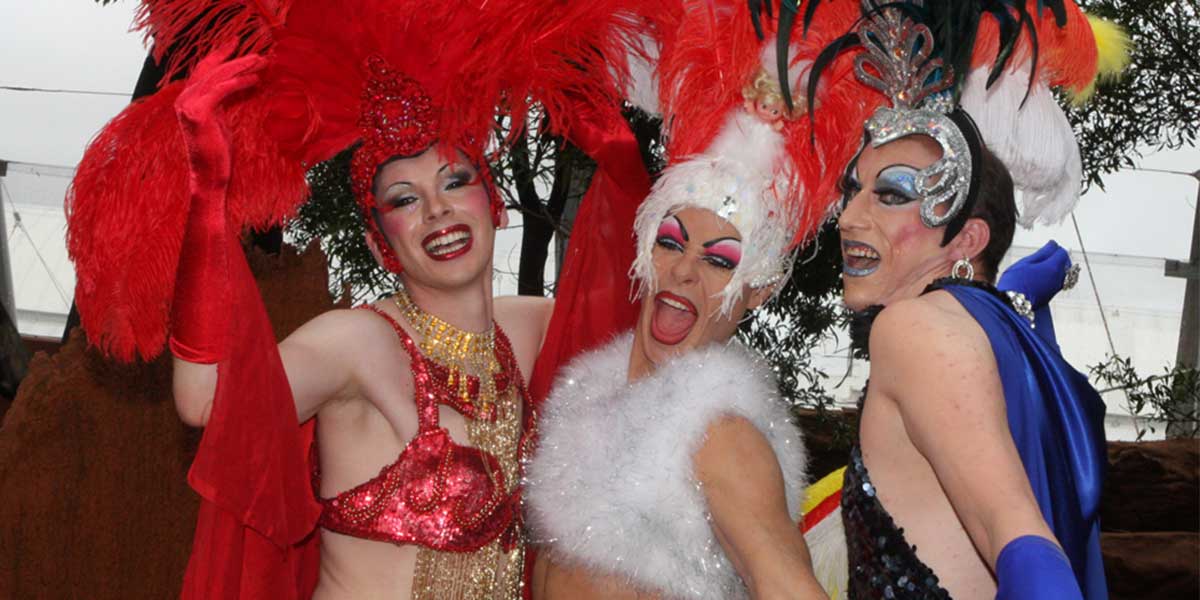
Many people I’ve interviewed in my research said watching queers on screen in film and TV, like Priscilla, Queen of the Desert (1994) and Ru Paul’s Drag Race (2009), made them feel like less of an outsider in a ‘real world’ community that didn’t make space for their gay identities.
So why is it so important to have adequate and true queer representation? Because we still live in a world where we have to fight to be seen and heard, not to mention given the same rights as our heterosexual counterparts. Stories, characters, narratives, and visual representations have the power to inform their straight and LGBT+ audiences alike, both with good and bad consequence.
Statistically, LGBT+ folk have poorer mental health, including self-harm and suicidal tendencies. These issues stem from many things, including ostracisation from family and community, social persecution, and legal and interpersonal discrimination.
I know myself that much of my anxiety came from a sense of isolation from the sexuality I said I was, and the one I actually was. As a child and teenager, I craved to see what I now know to be my own bisexuality in films, television, and stories. At the time, I didn’t know what this was or meant, because I had never seen what real bisexuality looked like in the flesh. I turned to TV and film to try and find it, but in the 90s and 2000s there were no good mainstream representations to guide my baby queer-self.
“As a child and teenager, I craved to see what I now know to be my own bisexuality in films, television, and stories”
I’m not here to say TV and film can change the statistical mental health disparity between straight and queer people, but I know I would have experienced my own sexuality in full much sooner if I’d learnt through watching. The relationship people have to stories is informative and persuasive, and the positive mainstream representation of LGBT+ folk means better education for straight and queer people alike. We learn from film and television, and with better representation comes less ignorance and discrimination.
Whether it’s seeing direct queer representation, or reading queerness onto certain characters (see Elsa in Frozen, or LeFou in Beauty and the Beast), the relationship we have with our onscreen selves has the potential to bring solace and acceptance to an audience, or to deeply isolate. On this path to equality, we need to be seeing change in all avenues. Our producers, writers, and image-makers make choices that have great consequence for the LGBT+ community. They just need to make the right choices.
Israeli soldiers and police stormed a Palestinian hospital twice over the past week terrifying staff and patients and in some cases preventing doctors from providing emergency medical care to critically injured patients, said Amnesty International.
The raids on al-Makassed hospital in East Jerusalem took place as tensions escalated in Jerusalem and across the West Bank in recent days following an Israeli government decision to place metal detectors and search worshippers at the entrance of Al-Aqsa mosque after two Israeli policemen were killed at the site on 14 July. At least four Palestinian civilians have been killed and more than 1,090 injured by Israeli police and military forces over the past 10 days in the widespread Palestinian protests against the decision and ensuing clashes.
“The conduct of Israeli forces who carried out violent raids on al-Makassed hospital harassing and intimidating staff and patients is utterly deplorable. There can be no justification for preventing medical workers from caring for a critically wounded patient,” said Magdalena Mughrabi, Deputy Director for the Middle East and North Africa at Amnesty International.
Eyewitnesses at al-Makassed hospital described scenes of “absolute mayhem” as armed Israeli soldiers and police stormed the premises on 17 and 21 July apparently in pursuit of critically injured patients.
Dr Rafiq Husseini, head of al-Makassed Hospital, told Amnesty International that between 20 and 30 heavily armed border guard soldiers and police raided the hospital late in the evening of 17 July.
“They harassed my staff and other patients and were acting in an aggressive manner… They acted without any legal basis, entering the hospital with machine guns and stun grenades and terrorising the staff and other patients,” he said.
Dr Bassam Abu Libdeh, al-Makassed Medical Director, said that since the protests and subsequent clashes broke out, the hospital had received a stream of patients suffering from tear gas inhalation, beatings or who had been injured by rubber bullets. He described how on 17 July soldiers had chased a 19-year-old young man from Silwan, who had been shot in the thigh wounding an artery and was bleeding severely, through the hospital like “hungry dogs after their prey”.
“They had long weapons and stun grenades and aggressively pushed and shoved through. They chased the injured youth, who’d been brought into the operating room, when a few of us doctors intervened to stop them… Others then began to roam the hospital and to harass anyone they found, staff, nurses, doctors, patients. There are kids in the hospital, old people. This is not acceptable…Why did they want to arrest the kid?
He was bleeding to death and in critical shape, he wasn’t going anywhere,” he said.
Speaking about the second raid, the hospital’s head of reception, Talal al-Sayed, who has worked there for 10 years said the staff have become accustomed to raids by Israeli forces over the years but that the events of 21 July were “above and beyond what we’ve ever seen”. He described how, around 200 heavily armed soldiers surrounded the hospital and entered forcefully, arresting people in their path and using tear gas. They were pursuing a young man with a major chest wound in critical condition and followed him all the way to the operating theatre.
Around 200 heavily armed soldiers surrounded the hospital and entered forcefully, arresting people in their path and using tear gas. They were pursuing a young man with a major chest wound in critical condition and followed him all the way to the operating theatre.
“They invaded the entire hospital… They even entered the neonatal unit… What do they want in there? It was pure terrorisation of the patients,” he said, describing how soldiers shoved and hit a doctor who was trying to care for the injured young man in the operating room. The young man, Mohammad Abu Ghannam, died of his wounds during the scuffle.
One of the nurses on duty at the time said: “I have never been so scared in my life. All I remember were loud sounds and pushing and screaming. It was total chaos… There was blood all over the place on the floor, on the walls.”
The hospital raids took place against a backdrop of demonstrations and violence that has swept across the Occupied Palestinian territories after Israeli authorities imposed a series of restrictions on worshippers’ access to al-Aqsa mosque and blocked several main roads leading to Jerusalem’s Old City. There have been reports of excessive use of force by Israeli forces against Palestinian protesters. Of the more than 1000 Palestinians injured, 29 were wounded with live ammunition, 374 with rubber bullets, 471 sustained injuries as a result of tear gas and 216 people suffered bruises, burns or broken bones as a result of beatings, according to the Palestinian Red Crescent Society.
Many of the protests in Jerusalem’s Old City began peacefully, involving collective prayers in the streets outside the al-Aqsa compound, but descended into violence when Israeli forces attempted to disperse the protests using tear gas and rubber bullets. Protesters responded by throwing water bottles.
Sheikh Ekrima Said Sabri, the Imam of al-Aqsa mosque and the former Mufti of Jerusalem, described to Amnesty International how members of Israel’s border police started to attack a peaceful crowd on 18 July near Lion’s Gate in the Old City pushing, kicking and beating protesters with batons and stamping on him. He was helped by a group of young men who carried him to the ambulance to be taken to the hospital.
Reports of use of excessive force and tit for tat violence between Israelis and Palestinians raise concern of further escalation of unlawful killings. Three Israeli civilians were stabbed to death by a Palestinian attacker at an Israeli settlement in the occupied West Bank on 21 July. Israel has since announced that it plans to demolish the home of the Palestinian attacker.
“Attacks on civilians can never be justified. However, justice for such attacks cannot be achieved through collective punishment of the Palestinian civilian population,” said Magdalena Mughrabi.
“As the occupying power, Israel has a responsibility to protect Palestinian civilians and must respect their right to peacefully protest. They must ensure that their forces limit their use of force in accordance with international law.
Responding to the deaths of 24 people and the wounding of 42 when a car packed with explosives rammed into a bus in western Kabul this morning, in an attack claimed by the Taliban, Amnesty International’s Afghanistan Researcher, Horia Mosadiq, said:
“This horrific attack deliberately targeted civilians and constitutes a war crime under international law.”
“This horrific attack deliberately targeted civilians and constitutes a war crime under international law. It was just yesterday that the people of Kabul were marking the one year anniversary of one of the deadliest attacks in the city’s history. Today, they are forced to mourn further deaths.
“Nearly 16 years after the conflict in Afghanistan began, civilians are increasingly paying the greatest price. A record number of civilians have been killed in the first half of this year, with women and children being the worst affected. And neither the Afghan government nor the international community is paying enough attention to their plight.
“The Afghan government must put the protection of people’s lives at the heart of its policies. Meanwhile countries in the European Union must stop making the callous claim that Afghanistan is safe for refugees and asylum seekers to be returned to.”
Background
According to the United Nations Assistance Mission in Afghanistan (UNAMA), a total of 1,662 civilians were killed between January 1 and June 30 this year, marking the highest figure for civilian casualties recorded by the UN body.
“Amnesty International, along with others, has been asking what will happen to split families from the very moment the US resettlement deal was announced.”
“For eight months, families separated between Australia and Nauru and Manus Island have been in even more distress, due to uncertainty around what the deal will mean for their future. This has only added to the trauma they have already suffered.
“Now UNHCR has confirmed that the Australian Government is choosing to deliberately separate families, refusing to reunite them despite having the power to do so. This is clearly punitive – another measure designed to punish people, including parents separated from their children. Family unity is key to successful resettlement and some of these families have been separated due to Australia’s cruel policies for four long years.
“This latest decision by the Australian government speaks volumes on the extreme measures of cruelty it is willing to meter out on people who came here seeking protection and safety.”
“This latest decision by the Australian government speaks volumes on the extreme measures of cruelty it is willing to meter out on people who came here seeking protection and safety.
“The right thing to do, the humane thing to do, would be to immediately bring those trapped in Nauru and Manus Island to Australia to be reunited with their family members here.”
Amnesty International is calling on the Australian Government to act with common sense and compassion. The camps must be evacuated immediately, and all those warehoused on Nauru and Manus Island must be brought to Australia.