Russia: Police mistreat hundreds of detained peaceful protesters

Hundreds of peaceful anti-corruption protesters in Russia’s two largest cities have been subjected to cruel and degrading treatment in police detention over the past 48 hours as authorities continue their crackdown on participants of mass rallies that took place across the country on 12 June.

“The Russian authorities have used mass detentions as a tactic to crush peaceful protests. But the reprisals haven’t stopped there. Hundreds of peaceful protesters in Moscow and St Petersburg were locked up in police stations overnight, in plainly degrading conditions, crowded cells with little or no food, bedding or easy access to sanitation,” said Denis Krivosheev, Deputy Director for Europe and Central Asia at Amnesty International.

“We have received numerous reports of people piled on top of one another in police stations, where police dealing with extreme backlogs in processing cases forced them to stay overnight on the floor or even on the street while in police custody. It is an outrage for anybody to be detained and subjected to these inhumane conditions, let alone detained simply for peacefully expressing their views.”

Thousands of protesters locked up

According to OVD-Info monitoring group, Russia’s police forces detained at least 1,721 peaceful protesters on 12 June, smashing its already atrocious record when more than a thousand people were detained during a previous wave of peaceful demonstrations in March.

The latest wave of arrests saw around 800 peaceful demonstrators detained in Moscow alone, and a similar number in St Petersburg, with dozens more locked up in cities and towns across Russia. While most of them were released shortly after police processed their individual administrative detention reports, the backlog forced hundreds to wait overnight for their reports and, in many cases, their trials.

In one example, 10 peaceful protesters were huddled together in a cramped room with only three chairs and no beds in a police station in St Petersburg’s Kalininsky district. They spent two nights in these conditions as they awaited trials in courts overwhelmed by the caseload.

They could hardly breathe

Six detainees at another police station in the same district complained about appalling conditions of detention. Police transported them from the court packed together in a very tight car, where, in their words, they could hardly breathe. According to the detainees, they have not slept for the past two days and were forced to serve their “administrative arrest” for up to five days in a cell with no bedding as the remaining cells were overcrowded.

At least three people were forced to spend the night in the open air outside Moscow’s Alekseevsky police station due to the lack of free cells.

“It appears the authorities in Russia wanted to send a further message by making these detentions slow, humiliating and painful. The Russian authorities must stop detaining peaceful protesters, whose only ‘crime’ was to irk those in power. If there are any case where protesters are arrested for an internationally recognizable offence, they must be treated in a humane manner” said Denis Krivosheev.

Amnesty International reiterates its call on Russian authorities to immediately and unconditionally release all peaceful protesters detained solely for exercising their right to freedom of expression and peaceful assembly during anti-corruption rallies.

USA-Mexico: Trump’s border crackdown pushes refugees into dangerous limbo

An already dangerous journey for tens of thousands of refugees has become deadlier thanks to President Trump’s Executive Order on border control and immigration as well as entrenched reckless practices in Mexico, Amnesty International said in a new report based on intensive investigations on both sides of the border.

Read the report

Facing Walls: USA and Mexico’s violation of the rights of asylum seekers explores the catastrophic impact of a catalogue of new policies and ongoing practices that result in unlawful push-backs of asylum seekers at the USA-Mexico border, and threaten to unlawfully lock up thousands more families, including babies and children, in immigration detention centres in the USA.

“The USA and Mexico are partners in crime in brewing up a burgeoning human rights catastrophe.”

Erika Guevara-Rosas, Americas Director at Amnesty International.

“The USA and Mexico are partners in crime in brewing up a burgeoning human rights catastrophe. The USA is building a cruel water-tight system to prevent people in need from receiving international protection and Mexico is all too willing to play the role of the USA’s gatekeeper,” said Erika Guevara-Rosas, Americas Director at Amnesty International.

“President Trump’s border wall strategy fails to acknowledge that these are people with no other choice but to flee their homes if they want to live.”

Erika Guevara-Rosas

“President Trump’s border wall strategy fails to acknowledge that these are people with no other choice but to flee their homes if they want to live. His wall, questionable orders and ever-expanding immigration detention centres will not stop people from trying to enter the USA. Instead, they will only be forced to take deadly routes through the desert, river and sea.”

“In this sick cat-and-mouse game, the only losers are the hundreds of thousands desperately fleeing extreme and deadly violence in the Central American countries of El Salvador, Honduras and Guatemala. Instead of pushing people to their likely death, the USA must override its Border Security Executive Order and go back to the drawing board when it comes to immigration enforcement.”

“Instead of pushing people to their likely death, the USA must override its Border Security Executive Order and go back to the drawing board when it comes to immigration enforcement.”

Push-backs and unlawful detention

Following intensive field research on both sides of the US-Mexico border since February this year, Amnesty International found that President Trump’s catalogue of measures aimed at “tackling immigration” violate international law. These include the 25 January 2017 Executive Order on “Border Security and Immigration Enforcement Improvements,” and a series of other measures which allow for the forcible return of people to life-threatening situations, and increase the unlawful mandatory detention of asylum-seekers and families for months on end.

Asylum seekers at the USA-Mexico border told Amnesty International the new measures forced them to risk extortion or violence by paying smugglers to cross into the USA. Areas of the Arizona desert have registered a doubling in migrant deaths since Trump’s election.

According to numerous lawyers, non-governmental organizations, migrants and human rights defenders, US Customs and Border Protection (CBP) officials are illegally refusing entry to asylum-seekers at ports of entry along the border.

A husband and wife who fled Honduras with their daughter after the husband was assaulted, shot and persecuted by a powerful criminal gang (mara), told Amnesty International that they were turned away from the McAllen, Texas border crossing six times over a three-day period in January 2017, despite presenting themselves to CBP officers to ask for asylum.

Nicole Ramos, a US lawyer who accompanied 71 asylum seekers to the San Diego-Tijuana border crossing between December 2015 and April 2017 told Amnesty International that on nearly all occasions, CBP officers either attempted to deny asylum seekers entry, or gave incorrect instructions such as re-directing people to the US consulate in Mexico.

President Trump’s Border Security Executive Order also includes increasing the capacity of existing detention centres for migrants and asylum seekers.

According the Department of Homeland Security, there are plans to allocate up to 33,500 more spaces for beds in immigration detention centres, potentially almost doubling the country’s daily detention capacity. This goes far beyond a congressionally imposed bed quota of 34,000 per day – reinforcing the cruelty behind what is already the world’s largest immigration detention system.

Amnesty International has documented cases of families with babies and children who have been locked up for more than 600 days. In the coming months, the US Congress will debate whether to fund such cruelty in the 2018 budget. Keeping a person in a detention centre is estimated to cost the US government between USD 126 and USD 161 a day, whereas alternative measures to detention cost as little as USD 6 a day per person.

Mexico, the USA’s gatekeeper?

Amnesty International has also found that Mexico is failing in its responsibility to protect the increasing number of Central Americans seeking protection in the country.

According to official figures, in 2016 a record 8,788 asylum claims were lodged in Mexico in comparison to 1,296 in 2013. Thirty-five per cent of these were recognized as refugees.

Ninety-one per cent of these claims came from citizens of the violence-wracked “Northern Triangle” of Central America (Honduras, El Salvador and Guatemala), and the UN Refugee Agency forecasts a possible 20,000 claims in 2017.

Instead of providing protection, Mexico is pushing people back to extremely dangerous situations. In 2016, Mexico’s National Institute of Migration detained 188,595 irregular migrants, 81% of these from Central America, and returned 147,370 to their countries of origin. Ninety?-seven per cent of people deported were from El Salvador, Honduras and Guatemala.

Many were not informed of their rights to seek protection through an asylum claim.

One 23-year-old man left Honduras five years ago fearing for his life has been deported from Mexico more than two dozen times. After being forcibly recruited as an orphan age 13, a mara wants to kill him for fleeing its ranks.“I’ve been deported 27 times from Mexico. The Mexican migration agents don’t care why you’re leaving your country. They make fun of you.”

When Amnesty International raised the issue with the authorities, an official of Mexico’s National Institute of Migration in the southern border state of Chiapas said: “We try to make the return to their countries as quick as possible.”

‘Here lies a Revolutionary’: Lionel Fogarty

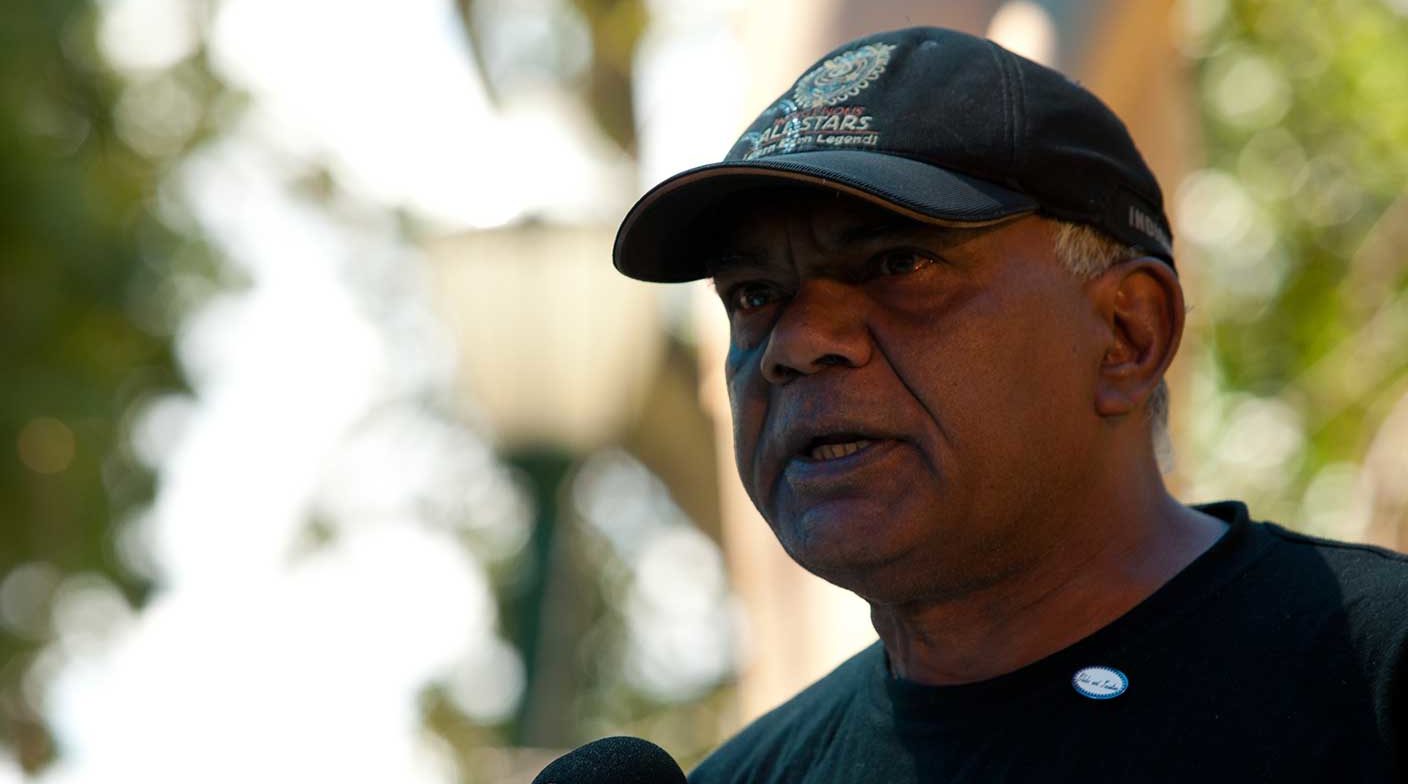
Lionel Fogarty, a Yugambeh man born on Wakka Wakka land, is an award-winning poet and longtime Aboriginal rights activist. He spoke with Amnesty International campaigner Roxanne Moore to reflect on 40 years of political poetry, justice, revolution, and the 1967 Referendum.

Q What inspired you to write poetry?

A I grew up in a mission, Cherbourg Aboriginal Reserve, and there was always a lot of teaching, writing and stories around the campfire.

When I was 15, I went to Brisbane. I used to do a lot of speaking, and started to do a lot of political writing. I was locked up with charges of conspiracy against the state. Getting locked up at 15 years old in a maximum security prison raised my consciousness about the system.

“Still received this sentence, for what? / Related to what? / I know this moment / People relate / Too late”

From ‘Related: Charged’, Kargun

I was learning to read and write, reading a lot by the great revolutionaries, like Malcolm X. The rallies and the protest speeches I was involved in inspired me. I started writing a community newspaper called Liberation. I was collecting poetry from other Aboriginal poets and activists for the magazine – Kath Walker, Jack Davis, Bobby McLeod. This influenced me to develop my own poetry. Telling stories is part of the way of my culture, it comes from a speaking tradition in my family.

Q Why do you use poetry to discuss injustices to Indigenous people?

A I always wanted to get to tell the truth in my poetry. When my brother Daniel was 18, he was murdered by the cops. For me, poetry was a way of channelling my anger and the injustice, a way to discipline it.

“Speak of death and you mourn / Aborigines ‘speak of death you didn’t care about’ / A music glittering in abundance with our hearts / Bravely finds my people contained in sheer horror”

‘Wild Falls Of A Dead Black JaileD’, Broken Mosaic

The prison is outside as well… the system knows that we are doomed. White people will usually not come across this experience in their life. I think about my brothers in jail writing poems, I think about those who have died in custody. It gets to me.

Prison did affect me. When you are in there, you want freedom, but when you get out there’s still no freedom. I’m still a bit damaged. I’m healing, getting there.

I wanted to use poetry to expose these injustices – from Aboriginal deaths in custody, to land rights, racism, domestic violence, recognition of our unknown warriors – it gives me an opportunity to speak.

“I was born into an unharvest world
that happiness is surrounded by death before life. Hard times before easy times.
Loneliness
Every one running and hiding from games
that these particular people gain and win
When it’s their game and rules”

‘Do Yourself A Favour, Educate Your Mind’

If I can get the truth out there about what’s happening in our national causes, I feel really justified.

Q What reflections do you have on the 1967 Referendum and reconciliation?

A At the time of the Referendum, I was 10. Everyone was singing and yarning about what was happening. The pride and dignity of our people had been recognised. There were lots of discussions of freedom.

People thought it would be easy now to get a good job. You used to have to apply for an exemption, like my grandfather. After the vote we weren’t meant to have to, but most of us still had to.

There was a little bit of change but no revolution at all. The Stolen Generation existed and still does.

“They disbanded us even on their Referendum 1967
Determining the old white man monitor
Directed at us natives to fail the Constitution”

‘Aphorism’

When I got to Brisbane, the revolution started happening  Vincent Lingiari and land rights. People started to take a stand. But there are barriers to our sovereignty, people need voting rights and power but on our own terms.

The people that walked across the bridge for reconciliation, now when we go out to rallies – where are they now? This struggle is one that needs people to come together.

Justice is achieved through reconciling people in their consciousness. We haven’t got there yet.

Q What are your hopes for the next generation?

A I want kids of the next generation to know their languages. I write my poetry in my language because it is important. I ran a black community school in 1976. I want learning language for kids to be mandatory. I want them to have higher education and an understanding of other people’s struggles.

“Do yourself a favour, Educate your mind” 

Kargun

Things are starting to change. I am involved in a men’s group with 20 young writers – young fellas in trouble with the law – and we presented their work to the magistrate and now they are back in the community. Things are moving forward in some ways.

Lionel Fogarty Selected Poems 1980-2017 will be launched on Friday 23 June, 6-8pm, Bella Union Trades Hall, Melbourne. See www.fogarty.works for more information.

‘All the Civilians Suffer’: Conflict, Displacement and Abuse in Northern Myanmar

Civilians from minority ethnic groups suffer appalling violations and abuses, including war crimes, at the hands of Myanmar’s military and ethnic armed groups in the country’s Kachin and northern Shan states, Amnesty International’s new report reveals.

‘All the Civilians Suffer’: Conflict, Displacement and Abuse in Northern Myanmar’ details how soldiers from the Tatmadaw, as Myanmar’s Armed Forces are known, commit torture and extrajudicial executions, shell civilian villages indiscriminately and place punitive restrictions on movement and humanitarian access.

Meanwhile, some ethnic armed groups at times abduct civilians perceived to support an opposing party, forcibly recruit men, women and children into their fighting forces and impose “taxes” on impoverished villagers trapped in the conflict.

Read the report

Myanmar: Ethnic minorities face war crimes in northern conflict

Civilians from minority ethnic groups suffer appalling violations and abuses, including war crimes, at the hands of Myanmar’s military and ethnic armed groups in the country’s Kachin and northern Shan states, Amnesty International said in a new report based on three recent visits to the conflict area.

‘All the Civilians Suffer’: Conflict, Displacement and Abuse in Northern Myanmar’ details how soldiers from the Tatmadaw, as Myanmar’s Armed Forces are known, commit torture and extrajudicial executions, shell civilian villages indiscriminately and place punitive restrictions on movement and humanitarian access.

Read the report

Meanwhile, some ethnic armed groups at times abduct civilians perceived to support an opposing party, forcibly recruit men, women and children into their fighting forces and impose “taxes” on impoverished villagers trapped in the conflict.

“Almost 100,000 people have been torn away from their homes and farms due to conflict and human rights violations in northern Myanmar. All sides must protect civilians amid the conflict and the Myanmar authorities need to immediately end the humanitarian access restrictions that have further harmed this already-vulnerable population,” said Matthew Wells, Senior Crisis Response Advisor at Amnesty International.

“The international community is familiar with the appalling abuses suffered by the Rohingya minority in Myanmar’s Rakhine state, but in Kachin and northern Shan states we found a similarly shocking pattern in the Army’s targeting of other ethnic minorities.”

“The international community is familiar with the appalling abuses suffered by the Rohingya minority in Myanmar’s Rakhine state, but in Kachin and northern Shan states we found a similarly shocking pattern in the Army’s targeting of other ethnic minorities.”

The United Nations Human Rights Council has established an international Fact Finding Mission to investigate abuses in Myanmar with a focus on Rakhine State.

“Australia, as one of the 11 donors of the Joint Peace Fund and one of the main donors to the Peace Support Fund, should call on the UN Fact Finding Mission to expand its investigation to human rights violations and abuses in Kachin and northern Shan State,” said Amnesty International Australia’s Crisis Campaigns Co-ordinator Diana Sayed.

Amnesty International conducted more than 140 interviews on the ground between March and May 2017, following renewed fighting since August 2016 in Kachin and northern Shan states, which border China. The organisation visited towns and villages in areas affected by fighting as well as 10 camps for internally displaced persons (IDPs), and spoke to civilian victims and eyewitnesses, community leaders and humanitarian officials.

Displacement crisis

More than 98,000 civilians are currently displaced in northern Myanmar amid fierce fighting between the Myanmar Armed Forces and various ethnic armed groups in the area, including the Kachin Independence Army (KIA), the Ta’ang National Liberation Army (TNLA), the Arakan Army (AA), and the Myanmar National Democratic Alliance Army (MNDAA).

Myanmar’s government has exacerbated the difficulties for many displaced persons by restricting humanitarian access to certain affected areas, particularly those controlled by armed groups. Humanitarian officials said this undermined their ability to respond quickly to emergency situations and to provide necessary humanitarian assistance like shelter, access to water, and sanitation.

Violations by the Myanmar Army

Since fighting escalated in November 2016, the Myanmar Army has committed egregious violations against civilians, sometimes amounting to war crimes, which continued through Amnesty International’s final research mission in May 2017.

The report documents nine incidents in northern Shan state where Myanmar Army troops arbitrarily detained and tortured civilians from ethnic minorities.

In the town of Monekoe in late November 2016, the Army arbitrarily detained 150 men, women and children who were preparing for a wedding. After releasing the women and children, as well as men from certain ethnic groups, the Army used the remaining men as human shields along the inner perimeter of a hilltop base; several were killed and others were seriously wounded by gun and grenade fire.

The report also documents two cases of enforced disappearance of ethnic minority civilians and four incidents of extrajudicial executions by the Myanmar Army since mid-2016, involving at least 25 victims.

Eighteen young men were killed in a single massacre at Nam Hkye Ho village in late November 2016. Amnesty International interviewed two eyewitnesses who said that around 100 Myanmar Army soldiers entered the village after fighting nearby with the MNDAA. Most of the village, including the women and children, had fled as fighting approached; after letting the remaining elderly men go, the soldiers marched the young men off at gunpoint. A short while later, fleeing villagers heard the sound of gunfire from the direction in which the soldiers had left.

The surviving villagers fled across the border to China, and when they returned several weeks later, found the remains of bodies dumped in two mass graves.

“We saw charred remains of what looked like a body. [There were] bones, but it was mostly ashes. We saw some of the [belongings]. … We already knew the 18 people were missing,” an elderly villager told Amnesty International.

The report documents how the Myanmar Army has repeatedly violated international humanitarian law by failing to distinguish between civilian and military targets when firing mortar shells.

In one instance on 12 January 2017, mortar shells were fired as dozens of villagers gathered for a festival in Hol Chaung village, northern Shan state, killing two civilians, including a young boy, and injuring at least eight more. Though the Myanmar Army denied responsibility for the shelling, it was almost certainly to blame, based on eyewitness accounts and fragments of the mortars observed by Amnesty International.

The Army also continues to forcibly conscript villagers as porters and guides, a practice often linked to other abuses, including torture. As four Kachin men forcibly guided Army soldiers in November 2016, the TNLA attacked the unit. The soldiers blamed the four men for signalling their position, beating them brutally and using a shaving blade to slice the faces of three of them.

Civilians repeatedly implicated the Army’s 33rd and 99th Light Infantry Divisions in many of the violations, but soldiers and commanders responsible almost never face investigation, much less prosecution, even for war crimes.

“For decades, the Myanmar Army has acted with near total impunity. This must change urgently, with those responsible for atrocities brought to book. The Myanmar government must also ensure unfettered access to the UN-established independent, international fact-finding mission,” said Matthew Wells.

“For decades, the Myanmar Army has acted with near total impunity. This must change urgently, with those responsible for atrocities brought to book. The Myanmar government must also ensure unfettered access to the UN-established independent, international fact-finding mission.”

Abuses by armed groups

While many ethnic minority civilians see armed groups as their protectors, they also suffer abuses from these groups.

Various armed groups use forced conscription, including of children, and impose “taxes” on villagers and market sellers, extorting cash and goods from communities that are already vulnerable due to the conflict.

Amnesty International documented a total of 45 abductions of civilians committed by two ethnic armed groups in the course of fighting in northern Shan state. People were typically taken in groups. Months later, their families still have no information about their whereabouts, raising fears about summary killings.

Landmines and IEDs

Both the Myanmar Army and ethnic armed groups use landmine-like weapons, planting antipersonnel landmines or improvised explosive devices (IEDs) that often harm civilians, including children, going to work on the family’s farm or returning home after being displaced. The Myanmar Army is one of only a handful of state forces worldwide, along with North Korea and Syria, to still use antipersonnel landmines. Amnesty International is calling on all sides to halt their use, facilitate clearance and for Myanmar to accede to the global Mine Ban Treaty.

All sides to the conflict must end the pattern of violations and abuses against civilians, and the Myanmar authorities must end the cycle of impunity by investigating and prosecuting violations by all sides to the conflicts.

The UN Human Rights Council must ensure that its recently announced independent, international fact-finding mission is fully resourced to investigate ongoing conflict abuses in Kachin and northern Shan states. UN agencies on the ground and international donor countries must call for an end to restrictions on humanitarian access and increase their assistance to those affected by the conflict.

“Aung San Suu Kyi has prioritised the ongoing national peace process – but for it to succeed, it will have to be rooted in accountability and respect for the rights of all civilians, including ethnic minorities,” said Matthew Wells.
Australia: Decryption and surveillance

Responding to the news that on the basis of counter-terrorism the Australian Government is seeking changes to the law to allow authorities to decrypt communications, Amnesty International Australia’s Campaigns Manager Michael Hayworth said,
“There are few more important rights to citizens than privacy and free speech. Any move by the Government to implement wide-net surveillance would erode our democracy and attack the rights of everyday Australians. Terrorism is fuelled by the politics of exclusion and Islamophobia. Both sides of politics must not fan the flames of terrorism by overreaching with wide-net surveillance on Australians.”

Compensation deal must be turning point for a better solution for refugees

In response to the news that the Australian government and companies have come to a settlement agreement with the refugees and people seeking asylum forcibly sent to and detained on Manus Island, Kate Schuetze, Pacific Researcher at Amnesty International said:

“The settlement marks a historic agreement by the Australian government and corporations to compensate refugees and people seeking asylum for the deliberate harm they have endured on Manus Island. However, financial compensation alone is not enough.”

“The reality is this deal does not change the immediate situation for the people trapped on Manus and Nauru. Now is the time to bring the 2,000 people still warehoused in offshore detention to safety in Australia.

“This historic settlement is a major crack in the Australian Government’s crumbling system of abuse and must be a turning point towards a better solution for refugees – one that is grounded in protection not abuse.

“This agreement must also serve as a warning to any company or organisation who is complicit in abuse through the Australian government’s offshore detention regime that they will be held liable.”

Amnesty International calls on the Australian Government to:

  • Bring all asylum seekers and refugees on Nauru and Manus Island to Australia immediately.
  • Close the Regional Processing Centres and other refugee facilities on Nauru and Papua New Guinea.
  • Assess, in a fair and timely manner, those whose international protection applications have not been finalised by the authorities in Nauru and Papua New Guinea.
  • Ensure that all those who were granted refugee status on Nauru and Manus have the right to settle in Australia.

Egypt: Dozens of news sites blocked as digital censorship ramped up

The Egyptian authorities have shifted their onslaught against media freedom to the digital sphere, blocking access to more than 40 news sites without justification in recent weeks, in an attempt to eliminate the country’s last remaining spaces for criticism and free expression, said Amnesty International.

At least 63 websites have been blocked in total since 24 May according to the Association for Freedom of Thought and Expression, including 48 news sites. Mada Masr, an independent news site which regularly published news and analysis deeply critical of the authorities was among the first to be blocked. Most recently on 11 June the Egyptian news sites Albedaiah, run by independent journalist Khaled al Balshy,Elbadil and Bawabit Yanair were blocked. Access to the global online publishing platform Medium was also cut off on 10 June.

“The latest clampdown on digital media is further evidence of Egypt’s age-old police state tactics in motion. Even in the darkest days of the repressive Mubarak era the authorities didn’t cut off access to all independent news sites,” said Najia Bounaim, Amnesty International’s North Africa Campaigns director.

“With this move the Egyptian authorities seem to be targeting the few remaining spaces for free expression in the country. It shows just how determined the authorities are to prevent Egyptians from accessing independent reporting,analysis and opinion about Egypt. The authorities must immediately stop arbitrarily blocking news websites.”

On 24 May, state media announced that Egyptian authorities had blocked a group of websites including the prominent independent news platforms Mada MasrDaily News Egypt, Elborsa and Masr Al Arabia.The authorities failed to provide any evidence of illegal activity or to clarify the legal basis for the decision. Instead officials made vague statements to the media saying this was in connection with “publishing false information” and “supporting terrorism”.

On 25 May, Egyptian newspapers published reports citing a “sovereign agency” (a term usually used to refer to Egyptian intelligence agencies) justifying the move on the grounds of “combating terrorism” and accusing Qatar of supporting some of the blocked websites, again without providing evidence.

Amnesty International has reviewed the list of blocked websites. The majority are news sites but the list also includes sites where VPN and TOR, which can be used to access blocked sites, can be downloaded. Amnesty International was able to identify only one website connected to groups that use or advocate violence.

Many of the sites that have been blocked had served as a refuge for Egypt’s remaining critical voices who no longer are allowed to appear on TV or in the print media, which have been firmly in the grip of the state since President Abdel Fattah al-Sisi came to power.

Many of the sites that have been blocked had served as a refuge for Egypt’s remaining critical voices who no longer are allowed to appear on TV or in the print media, which have been firmly in the grip of the state since President Abdel Fattah al-Sisi came to power.

The independent news and analysis website Mada Masr is known for unflinchingly exposing human rights violations committed by the Egyptian authorities in recent years, including arbitrary detention, unfair trials, the crackdown on human rights NGOs, extrajudicial executions and the use of the death penalty.

The site’s editor-in-chief, Lina Attallah, told Amnesty International that she believes the site was blocked because it publishes well-researched investigations based on verified information.  “We publish what authorities don’t want people to read,” she said.

“The Egyptian government appears to be exploiting recent violent attacks by armed groups in the country to crack down on the remaining free space and silence critical voices. Once again the authorities are using national security grounds to justify outright repression,” said Najia Bounaim.

“Instead of attacking critical and independent voices Egypt should respect the obligations enshrined in its own constitution and in international law not to impose arbitrary restrictions on freedom of expression and to protect the right of everyone to seek, receive and share information.”

The government’s decision to block these websites also flouts Egypt’s constitution, which prohibits censorship of the media, except at times of war and military mobilisation, and protects freedom of expression and press freedom both in print and digital formats. The constitution also upholds the right of all citizens to use telecommunication tools and methods.

The legal grounds and authority the government has used to block these sites is ambiguous and it remains unclear whether emergency law provisions were applied. There are, however, a number of Egyptian laws that can be used to censor the media and the internet, on the grounds of national security.

The legal grounds and authority the government has used to block these sites is ambiguous and it remains unclear whether emergency law provisions were applied. There are, however, a number of Egyptian laws that can be used to censor the media and the internet, on the grounds of national security.

After the bombing of two churches in Tanta and Alexandria in April 2017, President Abdel Fattah al-Sisi declared a three-month state of emergency. An hour later, the authorities confiscated that day’s edition of Albawaba newspaper, which demanded that the Minister of Interior be held accountable for failing to prevent the bombing.

Under emergency laws, the authorities have broad powers to impose surveillance and censorship on media. On 10 April, the head of the Egyptian parliament, Dr Ali Abdel’al announced that these laws will extend to social media platforms, such as Twitter, Facebook and YouTube. He added that these platforms were being used as means of communication between “terrorists” and warned that online offenders would face prosecution.

The vaguely worded articles of Egypt’s counterterrorism law also allow punishments of up to 15 years in prison for establishing a website for the purpose of promoting “terrorist ideas” and grant the authorities the power to block websites suspected of promoting “terrorism”.

Two of the blocked websites, Daily News Egypt and Elborsa, belong to the Business News Company, which is licensed by the government. In November 2016, the government froze the company’s assets under the pretext that it belonged to the Muslim Brotherhood, without providing evidence to support this claim. The paper’s 230 staff have not received their salaries since.

Representatives of many of the websites affected have filed complaints with the Press Syndicate, the National Council for Media, the Ministry Communications and the Public Prosecutor, but so far received no response. Mada Masr has filed an appeal against the decision to block its website before an administrative court, but it has not yet heard the appeal.

Submission on Constitutional Recognition of Aboriginal and Torres Strait Islander Peoples

In this submission Amnesty International raises concerns that the Referendum Council process on constitutional reform was not fully inclusive of all Aboriginal and Torres Strait Islander community views. Amnesty International urged that the remainder of the process be meaningfully consultative and inclusive, so that the right to participate is upheld.

Amnesty International recommends that any final outcome of this process has the free, prior and informed consent of Aboriginal and Torres Strait Islander people, including by meaningfully engaging with Aboriginal and Torres Strait Islander national peak bodies.

Regarding to the ‘key proposals for reform’, please refer our 2015 submission to the Joint Select Committee on Constitutional Recognition of Aboriginal and Torres Strait Islander Peoples). Amnesty International supports measures which reflect substantive constitutional change.

Finally, Amnesty International recommends that the Government follow the approach outlined in the Redfern Statement, by addressing and implementing the recommendations of the Council for Aboriginal Reconciliation.

Read the report

Turkey: Imprisonment of Amnesty Chair is a devastating injustice

The Turkish prosecution’s decision to charge Taner Kiliç, the Chair of Amnesty International Turkey, with “membership of a terrorist organisation” is a mockery of justice, and highlights the devastating impact of the Turkish authorities’ crackdown following the failed coup attempt in July last year.

Taner Kiliç became the latest victim of the government’s sweeping purge after he was detained in the early hours of Tuesday on suspicion of involvement with the Fethullah Gülen movement, together with 22 other lawyers based in Izmir. At his court hearing in the western Turkish city early this morning Australian time (Friday local time), he was charged with membership of the “Fethullah Gülen Terrorist Organisation” and remanded in pre-trial detention. Amnesty International is demanding his immediate and unconditional release.

“Taner Kiliç is a principled and passionate human rights defender. The charges brought against him today are completely without merit. They show just how arbitrary, just how sweeping, the Turkish government’s frenzied pursuit of its perceived enemies and critics has become. He must be released immediately and the charges against him dropped,” said Salil Shetty, Amnesty International’s Secretary General.

“Taner’s arrest highlights not just a disregard for human rights, but a desire to target those who defend them. We are calling on all those in Turkey and around the world who care about human rights to speak up for a courageous campaigner who has dedicated his life and now sacrificed his liberty in their cause.”

On Thursday, eight lawyers in the case were remanded in pre-trial detention. One was released on bail. Seven other lawyers were taken to the courthouse at the same time as Taner Kilic, but were still awaiting a decision on their cases.  A further six remain in police custody.

The only claim presented by the authorities purportedly linking Taner Kiliç to the Gülen movement is that Bylock, a secure mobile messaging application that the authorities say was used by members of the “Fethullahist Terrorist Organization” was discovered to have been on his phone in August 2014.

No evidence has been presented to substantiate this claim, and Taner Kiliç denies ever having downloaded or used Bylock, or even having heard of it, until its alleged use was widely publicized in connection with recent detentions and prosecutions.

“Taner Kiliç is neither a supporter nor a follower of the Fethullah Gülen movement and has in fact been critical of its role in Turkey. The only evidence brought against him is the alleged presence on his phone of a secure communications platform that would not, even it were true, be evidence of a criminal act. He must not face trial on the basis of such flimsy and inadequate accusations,” said Salil Shetty.

“Amnesty International will campaign tirelessly for Taner’s release, and continue its work in and on Turkey undeterred.”

Police arrived at the Izmir home of Taner Kiliç, who has served on the board of Amnesty International Turkey for various periods since 2002, on Tuesday morning, searching his home and later his office. A detention order was issued against him along with 22 other lawyers, referring to an investigation into suspected members of the “Fethullah Gülen Terrorist Organization”.

Taner Kiliç’s arrest has drawn widespread international condemnation, including from the US State Department, the EU, Germany’s Human Rights Commissioner and Denmark’s Minister of Foreign Affairs, and international and domestic human rights organisations.

Background

Taner Kiliç’s detention takes place in the context of an escalating crackdown on human rights by the Turkish authorities, following a failed coup attempt on 15 July 2016. Tens of thousands of public sector employees have been dismissed and hundreds of journalists and media workers detained. Hundreds of media outlets and NGOs have been shut down.

The Turkish government blames the coup attempt on Fethullah Gülen, a US-based cleric, and has since designated his movement a terrorist organisation. This has paved the way for thousands of people with no involvement in the coup attempt to be arbitrarily detained.