Offshore detention reaches critical point, further tragedy inevitable unless Australia acts responsibly

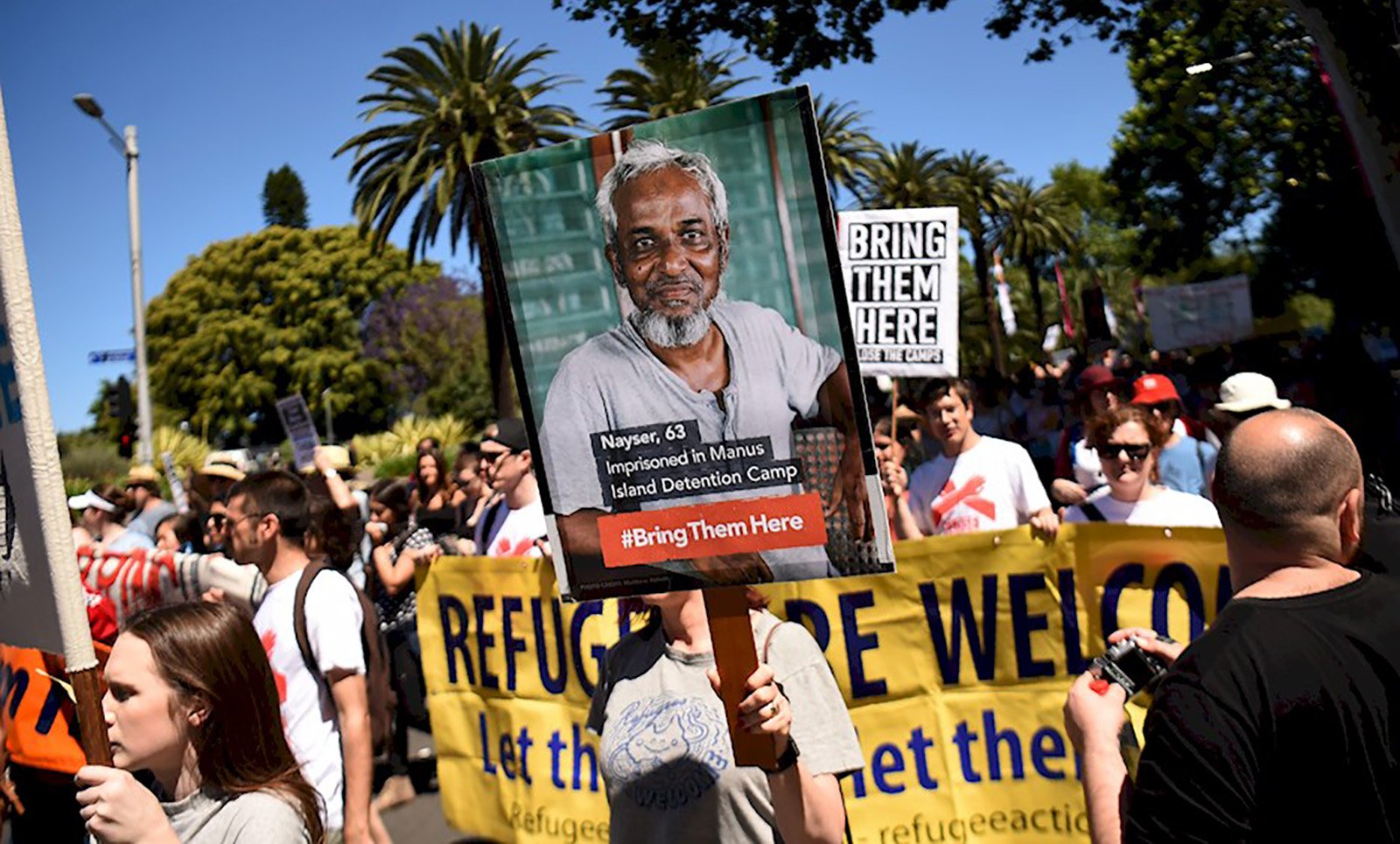
Accountability and an immediate plan to guarantee the safety of refugees trapped on Nauru and Manus Island are needed urgently as the evidence stacks up on the danger, deliberate abuse and suffering the Australian Government’s offshore detention regime is causing.

The clear message being delivered ahead of the Immigration Department’s appearance at Budget Estimates on Monday is, we will not stand by and allow our Government to sweep their responsibility under the carpet.

The organisations are warning that further tragedy is inevitable unless Australia acts responsibly by evacuating the camps and bringing all of those trapped in offshore detention  to safety immediately.

No-one left behind

They are also making it very clear that no refugee or person seeking asylum can be left behind in PNG or Nauru.

Graham Thom, Refugee Coordinator at Amnesty International said that there is ongoing risk to people’s lives on Manus Island following the Good Friday shooting.

“Enough is enough, the truth is out in plain sight and questions must be answered. The Australian Government has designed a deliberately abusive system, intended to harm people. Such a callous indifference to the safety and well-being of refugees puts them at great risk.”

The Human Rights Law Centre’s Director of Legal Advocacy, Daniel Webb, who has travelled to Manus three times to investigate conditions on the ground, said that while moves to close the Manus camp were clearly underway, the Government still had no viable plan to ensure the safety of the 850 men languishing inside.

“This isn’t about just tearing down the fences, it’s about finding a safe and viable way forward for the men trapped inside. Every single one of these men deserves the chance to finally start rebuilding their lives in safety. Hopefully the US deal will be a lifeline for some but it won’t be enough to ensure safety for all. It’s not good enough to just leave innocent people trapped in limbo in unsafe conditions forever.”

“Do not leave us here to die.”

1600 people from Nauru and Manus Island have registered their interest for resettlement in the US. So far 900 people have started the process. With over 2000 people trapped in offshore detention and without concrete details available on the US deal, currently several hundred and possibly up to 1000 people are left with no solution for safety.

Sr Jane Keogh, Brigidine Sister in Canberra, who has just returned from Manus Island said the refugees there are living in great fear right now.

“Every day I get several messages about this, desperate calls for help. “Do not leave us here to die” they say. Australia has the capacity, the ability, the history and the heart to do the right thing and to offer protection to people who are seeking safety.”

Trapped in a circle of hell

Imran Mohammad a 22-year-old Rohingya refugee held on Manus Island said: “We fear for those who will be left behind as there is no safety and structure for refugees to be resettled [in PNG].”

“All we want is a life that we can create in safety. I beg you today on behalf of all those refugees and asylum seekers, please open your hearts, show some kindness and compassion and humanity.”

Tim O’Connor, Director at the Refugee Council of Australia said that Australia is presiding over a humanitarian crisis of its own making.

“Innocent people who came to us seeking safety have been trapped in a circle of hell while our Governments have dithered and delayed. This is a time for common sense and compassion. The immediate solution is to bring all those we have sent to Nauru and Manus to Australia immediately, it’s the fairest and quickest way to prevent another tragedy.”

The day I realised I was contributing to child labour

By guest blogger Milly Stilinovic

Milly Stilinovic, like the rest of us, goes about her daily routine in ignorance of the human rights violations she is inadvertently contributing to across the span of an average day. Until the penny drops.

It’s 7:45 AM on a Monday. I have managed to oversleep my alarm and have only enough time to shower and dress before embarking on an endless day of engagements. I look at myself in the mirror before pumping a generous wad of Colgate toothpaste onto my toothbrush to begin the ritualistic routine of cleaning my teeth.

This picture taken on September 16, 2015 shows 13-year-old Indonesian girl Asnimawati working at a palm oil plantation area in Pelalawan, Riau province in Indonesia’s Sumatra island. © ADEK BERRY/AFP/Getty Images

As I’m doing so, a 10 year-old child, known as “C”, is spending the hours he should be in school helping his father carry sacks of loose palm fruit, and pushing wheelbarrows full of heavy bunches of fruit over uneven terrain and narrow bridges. He has to do so, for if his father doesn’t reach his daily target, his already low salary will be penalised , stripping away from their family’s livelihood.

“C” is, according to a recent Amnesty International Report, The Great Palm Oil Scandal, one of the many children subjected to harsh working conditions on Wilmar-owned or subsidised plantations in Indonesia. Wilmar controls over 43 percent of the global palm oil trade, making it the world’s largest processor and merchandiser of palm oil and its derivatives.

Today is going to be one of those days when I wish I hadn’t gotten out of bed at all, because today I will learn that I have inadvertently supported child labour, forced labour, work and human rights abuses.

The statistics

As it stands, the global production of palm oil has doubled over the last decade and, according to Amnesty International, is set to double again by 2020. This statistic is due to the sheer popularity of palm oil and its derivatives which can be found in roughly 50 percent of household products. The reason for this surge is the cheap price of palm oil which makes it one of the world’s most lucrative cash-crops.

This is why, according to Amnesty’s report, palm oil can be found in food products such as packaged bread, breakfast cereals, margarine, chocolate, ice cream, biscuits, and snack food. It is also used in household detergents, shampoos, creams, soap, lipsticks and in biofuels for cars and power plants.

What’s more, Wilmar-supplied palm oil can be found in products from some of Australia’s favourite brands  – including Colgate-Palmolive, Nestle and Kellogg’s.

Ignorance is bliss

© Amnesty International / WatchDoc

This means that just by waking up and leaving my apartment, several of my actions have contributed towards child and labour abuses  – applying a slick of Rexona deodorant, a touch of Vaseline on my lips, the two scoops of Cadbury cocoa I allow myself on the odd occasion.

However, like most, I associate the over-cultivation of palm oil with images of orang-utans wandering the scorched earth with their starving offspring in tow — a result of mass deforestation. It’s a horrific image, but one that doesn’t even scratch the sheer depth of abuse and devastation palm oil cultivation can be credited with.

As my mind is yet to boggle with this realisation, an alarming number of men, women and children throughout plantations in Indonesia and Malaysia are being subjected to back-breaking labour. They’re hidden from the watchful eyes of the Roundtable on Sustainable Palm Oil (RSPO), a non-for-profit who maintain the standard for sustainable palm oil.

“Once people came from the RSPO and they told us to wear our safety gear,” says “F”, who works as a sprayer on a Wilmar plantation.

“When they come, the medical is always kept ready and there is clean water for us to wash and the safety gear is in good condition. The FA [field assistant] told us … that the RSPO people are coming and told us not to tell them anything.”

What can be done?

As I finish my lunch, I’m reading through the Amnesty report on my iPhone. My footprint on child and labour exploitation is starting to set in. My pizza contains a crusty base, tomato paste, mushrooms and cheese — palm oil content unknown.

When I mention this to my lunch date, they reply with the standard response: “It’s in everything. What am I supposed to do!?”

This statement isn’t far from the truth. Food Standards Australia New Zealand (FSANZ), state that current regulations allow for palm oil to be labelled by the generic term ‘vegetable oil’ on ingredient lists. Furthermore, an attempt to correct labeling was rejected on the grounds that the FSANZ concern themselves with regional and domestic food standards, not with the reform of international standards.

However, where my lunch date is incorrect is that there is much that can be done.

Take action

A child transporting a wheelbarrow full of heavy palm fruit bunches over a narrow bridge on a plantation in North Sumatra. © Amnesty International / WatchDoc
© Amnesty International / WatchDoc

Next comes the realisation that knowledge is power.

“Making informed choices — selecting foods and products that don’t contain palm oil, or choosing to support companies who promise to ethically source sustainable palm oil — reduces the demand but also puts pressure on big brand companies and Wilmar that exploitation of workers’ rights has no place in shopping trolleys in 2017,” says Amnesty International Australia’s Crisis Response Campaign Coordinator, Diana Sayed.

Second, a firm application of pressure on those that knowingly, or unknowingly, engage in labour rights abuses and child labour can potentially secure results.

When the Amnesty International report was released, Nestlé (who were named in the report) issued a statement clarifying the source of the palm oil they use and reiterated their stance on sustainable palm oil.

Lastly, lend your voice to the voiceless. Actively support petitions aimed at reducing child labour and poor working conditions. Spread the word, via your social channels, to inform others of the current state of labour abuse in the palm oil industry.

A new palm-oil free day

That evening, armed with a new dose of knowledge, I set about removing products that I know contain palm oil that isn’t sustainably sourced. I counted 12 in my apartment in total.

Twelve counts of support for those that knowingly aid and abet children to give up any semblance of a childhood. Those that force adults, under grave conditions, to adhere to oppressive work quotas. Those that strip the earth and cause massive devastation to our fragile ecosystem.

The day I bailed up the Prime Minister on a train platform

What would you do if you were presented with the opportunity to tell the Prime Minister exactly what you thought of his government’s policy on offshore detention? Our intrepid activist Victoria had just that opportunity.

NSW Refugee activist Victoria. © Private

On my way to work last week, I was surprised to see the Prime Minister on the train platform, surrounded by staff and a ring of security people with matching suits and earpieces. Before I gave it too much thought, I had sidled past the guards and addressed the PM with a friendly and enthusiastic, ‘Oh wow, excuse me Mr Turnbull’. He asked for a moment to finish a text message, and I then started thinking about what I would do next.

The Prime Minister isn’t the first politician I have talked to at a train station. I’m part of Amnesty NSW’s Refugee Network, working mainly to engage members of parliament around the issue of refugee rights. Trying to secure meetings with politicians made me realise how rarely we get to speak directly to the people who represent us, so now I bail them up whenever I spot them. At the last election I spoke to several candidates outside my train station, or their campaign staff. Most simply gave me their party line on refugee and asylum seeker rights, but all were friendly and had time to chat about their policies.

The Prime Minister was different. We were surrounded by security staff and hurrying commuters, and I had just 4 minutes before his train arrived. As I tried to work out what to say, I got quite nervous. I could feel the blood rushing up to my face, and my hands were shaky. But when he turned to me and said hello I managed to politely ask, ‘When will you close the detention centres, Mr Turnbull?’.

As I tried to work out what to say, I got quite nervous. I could feel the blood rushing up to my face, and my hands were shaky. But when he turned to me and said hello I managed to politely ask, ‘When will you close the detention centres, Mr Turnbull?’.

He replied as you would expect, telling me it was a priority, and this annoyed me so much I was able to launch into more questions. What about the people the US won’t take? Have you seen the new research saying boat turnbacks just don’t work, here or in Europe? Why don’t you believe that research, which is from a New South Wales university?

I finally remembered an approach the NSW Refugee Network had taken in one of our MP engagement letters — offering to discuss a better plan. With this in mind, I reeled off one of the first items on the plan: increasing foreign aid to prevent people taking the risky journey to Australia. Mr Turnbull started explaining how much Australia invests in foreign aid per capita compared to other countries (a lot, apparently). I felt like I was getting somewhere. Then his train came, and with a quick ‘goodbye’ he left.

I stood on the platform for a moment, concerned I hadn’t said the right things or pushed him on a particular point. But I’m so glad I spoke to him. Just days before he met with President Trump, the Prime Minister heard from a random Australian how much I care about refugees and asylum seekers. I’m thrilled I had the chance to speak up for people who may never get that chance.

Children transferred out of adult maximum security prison

Following yet another court challenge by the Human Rights Law Centre (HRLC) and a third court decision that has declared it was unlawful, the Victorian Government has finally responded to public pressure and transferred all children who were being held in Barwon adult prison.

What happened?

Children as young as 15 had been held in Victoria’s maximum security adult prison, some since November last year.  This was a violation of children’s human rights. Not only are the facilities completely inappropriate for children, many were subjected to 23 hours a day of isolation in solitary confinement and all were denied adequate access to education and family visits.

Despite one settled court case and two further cases that found holding children at Barwon was unlawful, the Victorian government continued to keep children there. A fourth court case commenced on 3 April 2017 and the decision was handed down on Thursday 11 May 2017. The Supreme Court found that children’s human rights were being violated and that the children must be removed from Barwon prison. This time, the government finally acted on the court’s ruling and children were transferred out of Barwon on Friday 12 May 2017.

How did Amnesty respond?

Since early 2017, Amnesty supporters in Victoria have been emailing and calling members of parliament to demand that they get kids out of Barwon. We joined the Human Rights Law Centre at a press conference when the new court challenge was filed, and Amnesty activists held a rally outside the court as the case was heard. Around 15,000 supporters signed an online email action calling on Victorian Premier Daniel Andrews to get #KidsOutofBarwon. We partnered with a broad coalition of other organisations, including the Victorian Aboriginal Legal Service and Fitzroy Community Legal Centre, to make it clear to the Victorian government that an adult prison is no place for kids.

The issue in depth

The Victorian government had been holding children at Barwon, a maximum security adult prison, since November 2016 — some have been as young as 15 years old and there were at least 10 children there at the commencement of the court case.

The former Principal of Parkville College, a school within Victoria’s youth justice system, who resigned after speaking out, told ABC 7.30 that:

“What I saw was fifteen staff members really over the top, intimidating and threatening one child in really tight handcuffs…sort of reading the riot act from what I could tell.

They were frightened. They talked about being threatened…I went straight back to Parkville and went into the most senior offices and said, “They’re torturing children at Barwon.”

Many of the children were moved there from the Parkville Youth Detention Centre following disturbances there, even though not all of the children who were moved had participated in the disturbances.

They do not include any Indigenous children, as the Government agreed not to transfer these children as part of the settlement of a legal case brought by the Victorian Aboriginal Legal Service.

Prior to this court case, housing children in Barwon Prison had already been deemed unlawful by both the Victorian Supreme Court and Victorian Court of Appeal. It’s also a breach of international law – the Convention on the Rights of the Child says children must not be detained with adults.

What’s next?

From Barwon in Victoria to Cleveland in Queensland, from Don Dale in the Northern Territory to Cobham in New South Wales and Banksia Hill in Western Australia, over the past year we have heard story after horrifying story of children being mistreated in our youth justice system. Too often it is Indigenous children who are the victims of this mistreatment.

In 2017, we will fight to ensure that the Prime Minister finally shows national leadership and works with the states and territories to develop a long term plan to fix the broken youth justice system in Australia.

We will ensure that, as a country, we are doing what we can to ensure children aren’t being locked up in the first place. And when, as a last resort, a child spends some time in a place of detention, we will make sure they are nurtured and rehabilitated, not forced further into the labyrinth of the criminal justice system.

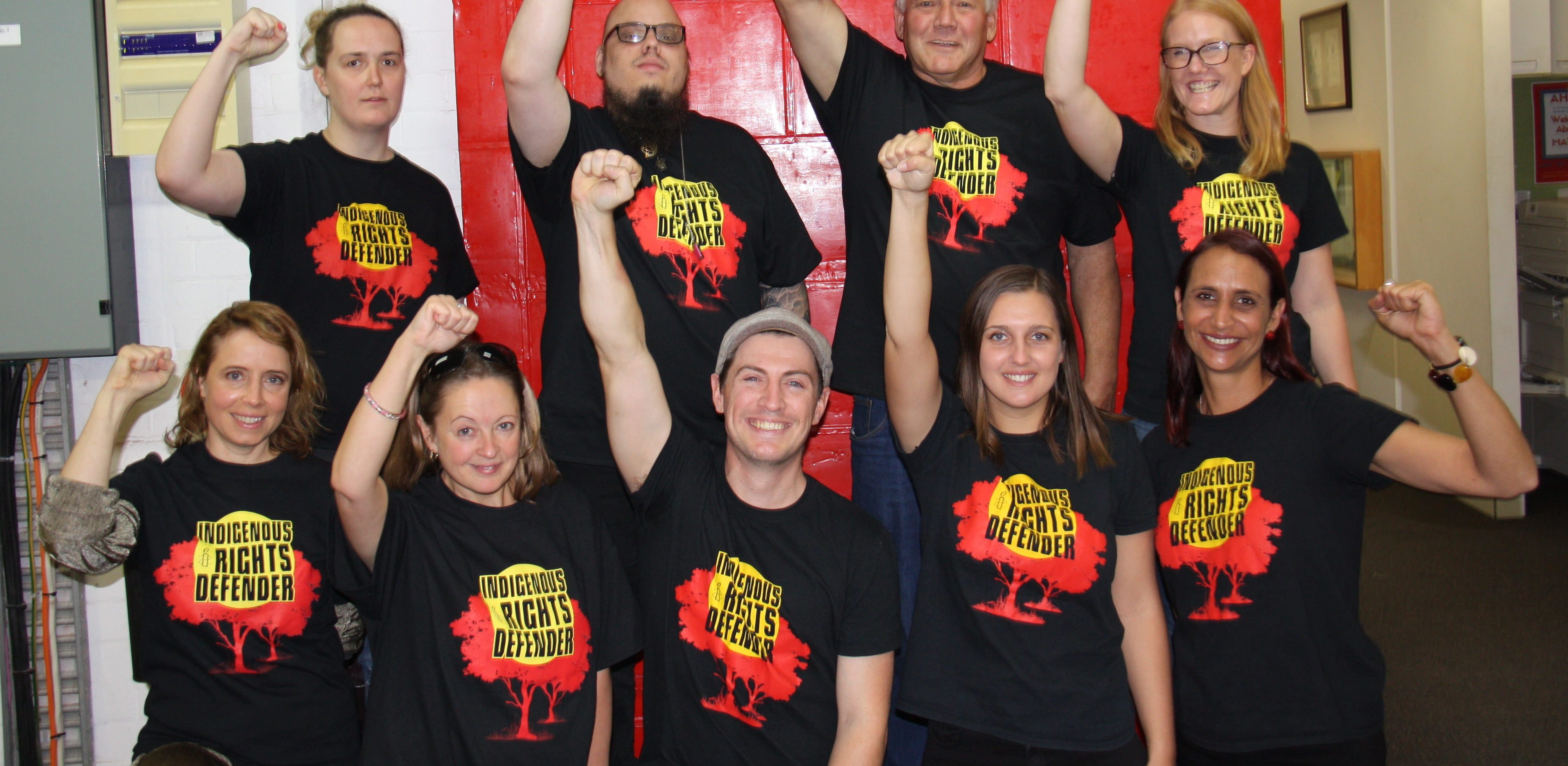
Together, we can secure a better future for Indigenous kids. Join our movement and together, we can make history.

Human Rights Council bid glosses over refugee, asylum seeker, Indigenous rights

Foreign Minister Julie Bishop has this week launched Australia’s bid for a Human Rights Council seat at the United Nations. But, back at home, the Government continues its inherently abusive offshore detention regime, and oversees astronomical rates of Indigenous incarceration.


“It’s not enough to talk the talk in New York – this government must must walk the walk at home,” said Claire Mallinson, National Director of Amnesty International Australia.


“Australia must demonstrate that it would be a principled, effective and accountable Human Rights Council member. It must protect the rights of Indigenous children, and refugees and asylum seekers living under Australia’s policies.”


“This week we released proof that the Australian-run Manus Island refugee centre was directly fired on, risking lives. Yesterday, more details emerged of deliberately cruel policies that place the safety of hundreds of people at great risk.”


“Meanwhile, Aboriginal and Torres Strait Islander children are 25 times more likely to be locked up than non-Indigenous children. We have seen abuses in youth detention in the Northern Territory, Queensland, Western Australia and Victoria – all around the country. The problem is nationwide and we need a national action plan on youth justice. This will support Indigenous children to stay with their families and thrive in their communities,” said Claire Mallinson.


“The UN Special Rapporteur on The Rights of Indigenous Peoples recently toured Australia. She was shocked at the rates Australia locks up Indigenous children, and at the conditions in youth detention. She said Australia needed to address Indigenous issues to be able to be a member of the Human Rights Council.”


In making its Human Rights Council bid, Amnesty International recommends Australia commits to:

  • Funding and implementing a measurable national plan to end the overrepresentation of Indigenous young people in the criminal justice system. This includes setting justice targets alongside the existing Closing the Gap targets and reporting on them annually.

  • Working constructively with the National Congress of Australia’s First Peoples, Aboriginal and Torres Strait Islander representatives and peak bodies. The Government must address the priorities set out in the Redfern Statement. This calls for a more just approach to Aboriginal and Torres Strait Islander Affairs.

  • Ending Australia’s cruel practice of mandatory offshore processing and detention.

  • Immediately bringing refugees and asylum seekers from Manus Island and Nauru to Australia for processing and protection.

  • Increase Australia’s annual refugee resettlement intake to at least 30,000 people, prioritising those selected by UNHCR.

  • Ensuring people who seek asylum in Australia are treated humanely. They must have their asylum claims assessed in a timely, fair and efficient manner, irrespective of their mode of arrival.

  • Ending Australia’s moratorium on resettling refugees that have arrived in Indonesia after 1 July 2014.

  • Working with other countries to adopt a responsibility-sharing approach to managing the flow of people seeking asylum and refugees.

  • Supporting and advocating for increased humanitarian assistance, assistance for hosting countries. Improving capability for search and rescue and safe disembarkation at sea. Providing more efficient and effective refugee status determination and resettlement processes. Expanding other safe pathways for refugees to access protection (eg. through skilled migration, family reunion, student visas etc).

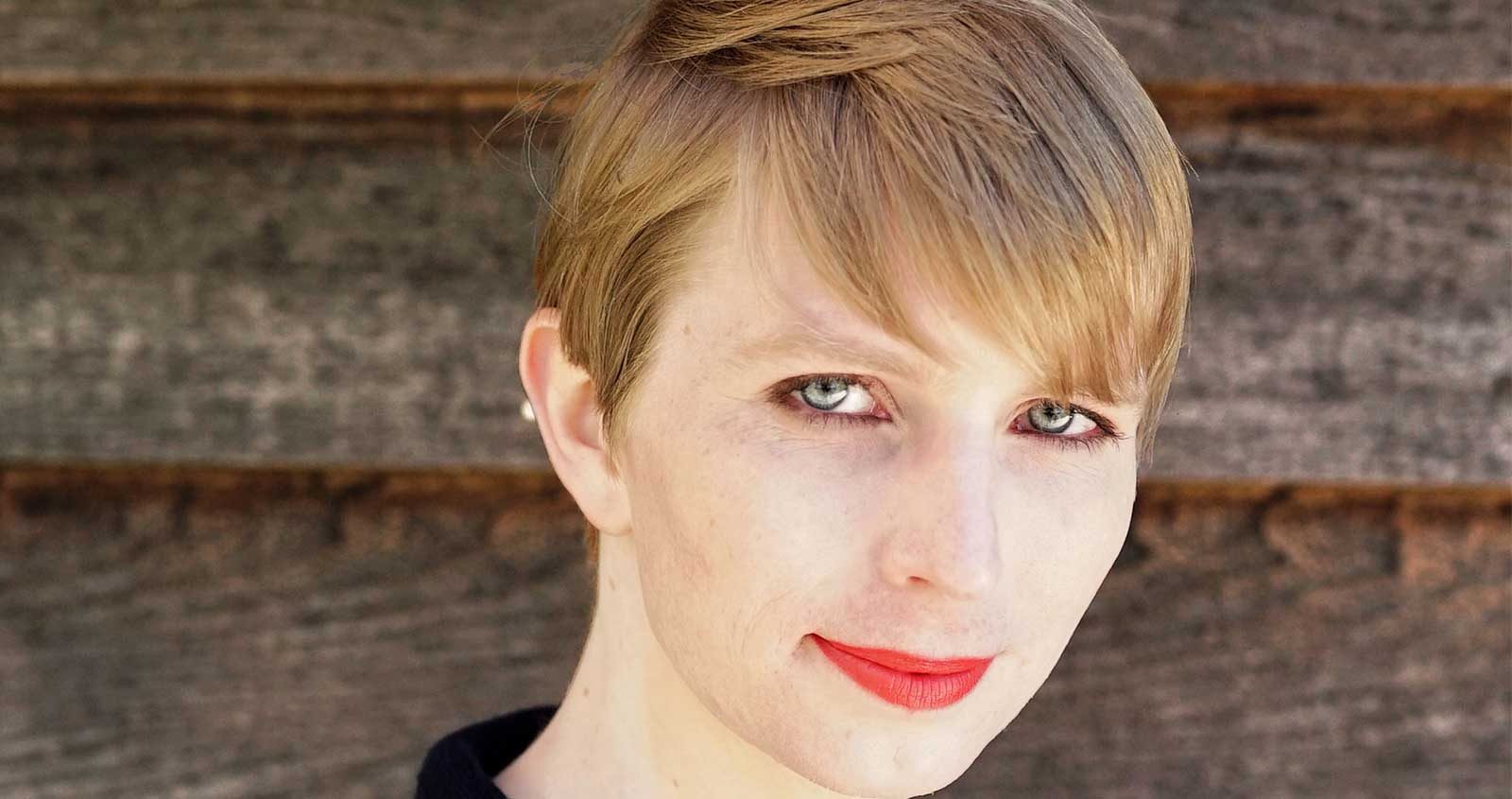
Good news: Chelsea Manning finally walks free!

Chelsea Manning, who was sentenced to 35 years in a US prison after disclosing classified information, walks free today instead of in 2045.

What happened?

© Chelsea Manning
© Chelsea Manning

Chelsea Manning was a military analyst with the U.S. Army in Iraq. Between 2009 and 2010 she publicly disclosed classified government materials, acting upon the belief that she could spark a meaningful debate on the costs of war.

In 2013 Chelsea Manning was sentenced to 35 years in prison after releasing information that pointed to potential human rights violations and crimes under international law by US forces.

Chelsea  was not able to present evidence that she had been acting in the public interest along with other due process issues at trial. She was held in pre-trial detention conditions for 11 months that the UN Special Rapporteur on Torture described as cruel and inhuman. Additionally, after beginning her gender transition following her sentencing, Chelsea was denied critical and appropriate treatment related to her gender identity at various points during her incarceration.

In January, former President Barack Obama commuted all but four months of Chelsea Manning’s remaining prison sentence during his last days in office.

How did Amnesty respond?

Amnesty International has campaigned for Chelsea Manning’s release since 2013.  As part of the annual letter writing event – Write for Rights 2014 – over 220,000 letters, emails and petitions were sent to the then President Obama, calling for Chelsea to be released from Amnesty supporters in over 36 countries. In addition, over 17,000 cards and messages were sent to Chelsea in prison. In response she said:

“Thank you so very much for your thoughtful cards and letters. I am so grateful for all the incredible and heartfelt support from the tens of thousands of people out there…who took the time to write to me and the President.”

In the final days in office for President Obama, Amnesty in Australia created an online petition, calling for the president to commute Chelsea’s sentence to time already served and release her. Over 10,000 people took action.

The issue in depth

Chelsea  was arrested in 2010 after a former computer hacker reported her to the FBI, accusing her of having admitted to leaking classified material. Chelsea  reportedly told the hacker that she had seen terrible things in these materials that she thought should be made public.

Some of the materials Chelsea leaked, published by Wikileaks, pointed to potential human rights violations and breaches of international humanitarian law by US troops abroad, by Iraqi and Afghan armed forces operating alongside US armed forces, by military contractors, and by the CIA within the context of counter-terror operations.

Information leaked by Chelsea included a video of a 2007 Apache helicopter attack in Baghdad in which US soldiers killed 12 people, including civilians, and which hadn’t been publicly accessible until then. Although a US military internal inquiry into the incident concluded that the soldiers acted appropriately, there has been no independent and impartial investigation into the attack.

In a letter to Amnesty International in 2014, Chelsea said:

“I support the work you do in protecting people wherever justice, freedom, truth and dignity are denied. It seems to me that transparency in government is a fundamental prerequisite to ensuring and protecting the freedom and dignity of all people.”

What’s next?

While this welcome move is long overdue, the US government must now investigate the potential human rights violations that she exposed and and strengthen protections for whistleblowers who reveal information that the public has the right to know.

Take action for someone who needs your help today

I’m a bisexual woman and your casual comments about my sexuality aren’t OK

By Amnesty International LGBTQI activist Hannah

On an ordinary day, a day like any other, a young woman came out to her mother as bisexual. Because of the courage that took, I can now comfortably say that young woman was me. It was a crucial step in becoming who I am, and propelled me to fight for my community. It was one of many times I would do so, and for the most part, my news was met with love, acceptance and support. I found most people did not judge and embraced who I was. However, when you are bisexual in the LGBTQI community, acceptance isn’t always going to occur, and biphobic behaviour and attitudes can be found.

LGBTQI activist Hannah. © Private

International Day Against Homophobia, Biphobia and Transphobia (IDAHOBIT) is a day that commemorates a win against bigotry, when the WHO (World Health Organisation) in 1990 stated that homosexuality was no longer considered a mental illness. While I, as an activist, am glad about this win, it took until 2015 before bisexuality was openly a part of the commemoration and ‘Biphobia’ was added to the name.

People have asked me, “Why do we need to add biphobia to the list – isn’t it basically the same thing as homophobia?”. And yes, while there is overlap between biphobia and homophobia, there are experiences that people within the bisexual community (myself included) experience that are different and make the distinction necessary.

Biphobia within the LGBTQI community

Being bisexual carries a social stigma of its own which shows not just outside our community, but within it as well. I have mostly been lucky with the people around me, however I have been snubbed by people simply for being bisexual. Initially they are happy to chat with me over a drink, however upon learning that I am bisexual, the chats come to a quick end. This has been a disheartening experience, especially for an introvert like me who finds interacting in social situations difficult already. Often this occurs because the person believes negative stereotypes about bisexuality.

A hurtful occurrence of biphobia that I experienced happened online. A lesbian woman had stated that through her own experience, she believed that all bisexuals were cheaters and she could never date one. I wrote that while I was sorry she’d had this experience, for me, it was the opposite. The comments that followed were so deeply hurtful that others came to my defense, and ultimately I had to remove myself from the conversation for my own mental health.

Other common forms of biphobia

It is not uncommon to hear casual comments such as that bisexuality doesn’t even exist, that we are either confused, greedy, or in the case for bisexual women, simply looking to get male attention.

Other biphobic occurrences are others expecting a bisexual to Identify as gay/lesbian if they are dating someone of the same gender, Exclusion from LGBTQI spaces when they have an opposite gender partner, pressuring bisexual activists to minimise bisexual issues, assuming bisexual means ‘available’ and fetishizing the orientation (thank you porn industry) The list goes on. With occurrences such as these, the prevalence of mental illness is unsurprising, in fact according to a recent study, our depression and anxiety rates are higher than those that identify as lesbian and gay. Those casual comments, the snubbing – they can have very real consequences, with bisexual men more likely to commit suicide than those that are gay.

These attitudes and behaviours are why we need days like IDAHOBIT on May 17th  to challenge stereotypes and keep the communication going and a reason why I am an activist because the battle against bigotry is far from over, and we as a whole community can do better.

This year on IDAHOBIT, I encourage you to sign a petition to support LGBTQI people, attend an event or get involved in a local group so that together we can fight against bigotry and leave this world better than how we found it.

Australia must step up for Indigenous kids as Julie Bishop talks up Human Rights Council bid.


Foreign Minister Julie Bishop has today begun her US visit to officially launch Australia’s Human Rights Council candidacy. In response, Julian Cleary, Indigenous Rights Campaigner at Amnesty International Australia, said:


“While Ms Bishop is overseas talking up Australia’s human rights record, back at home one of Australia’s most serious human rights abuses needs to be urgently addressed. That Aboriginal and Torres Strait Islander children are 25 times more likely to be locked up than non-Indigenous children is an international disgrace.”


“The UN Special Rapporteur on Indigenous Rights last month on her visit to Australia was shocked at the ‘simply astounding’ rate of incarceration of Indigenous children, and said Australia needed to substantially address Indigenous issues to be a member of the Human Rights Council.”


“Australia must demonstrate its commitment to the next generation of Indigenous kids, indeed to all Australian children, who all deserve the very best start in life. In 2017, the Federal Government must announce a national action plan to reform our youth justice system and support Indigenous children to stay with their families and flourish in their communities.”

‘My relatives walked over 5,000 kilometers to reach Saudi Arabia’

By Imran Mohammad, winner of the 2016 Amnesty Blogging Competition

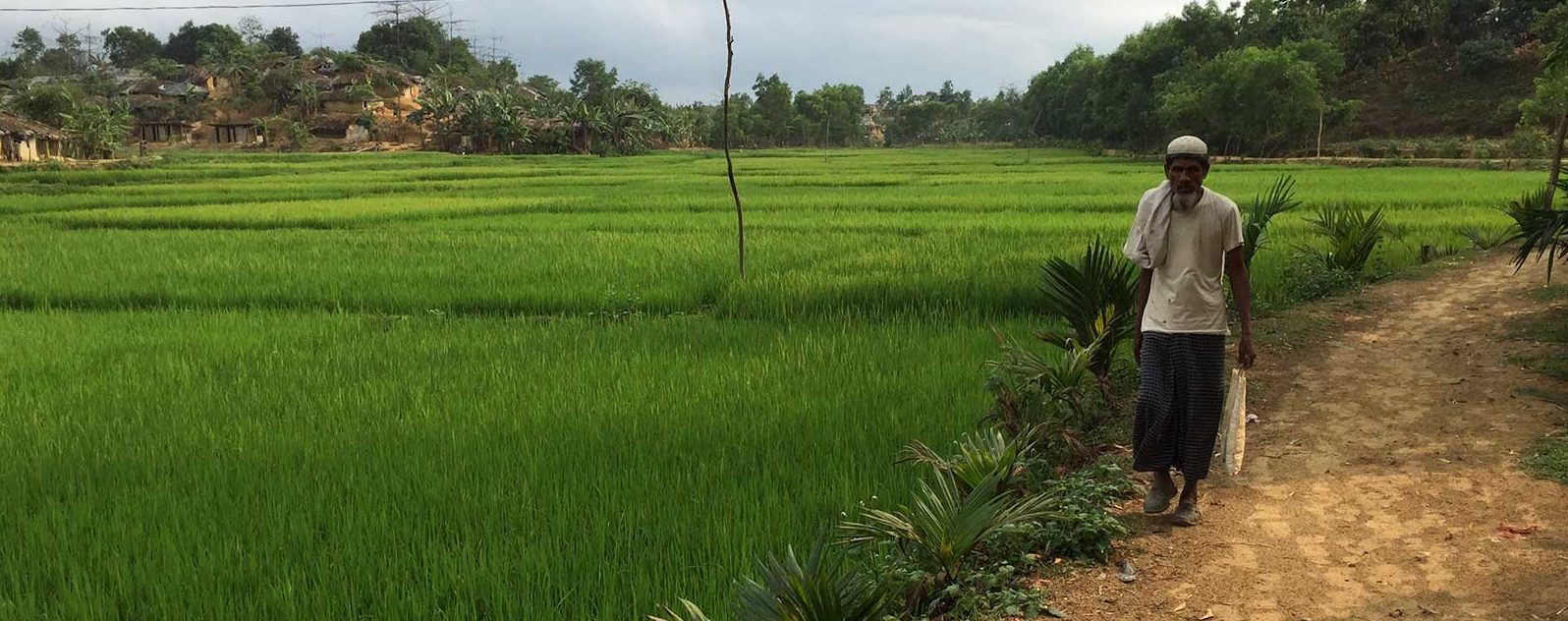
There is a very small area of land on the western coast of northern Myanmar called Rakhine State, where a group of people are not able to speak for themselves. This cultural group, the Rohingya, is losing its people, culture, traditions, language and land. These are my people. My father used to tell me how, as they couldn’t see a future for themselves or the next generation, many of his relatives fled their country in the ‘70s.

There were many families who embarked on the journey, most of them related to us, including my grandparents and my uncles and aunts. My father was the eldest son in his family, so at the age of 12, he stayed in Myanmar (then called Burma) to look after their land and some of his sisters.  

I was told they fled in a big group and their aim was to reach Saudi Arabia, a journey of over 5000 kilometres. It was a place of pilgrimage, where they could visit Mecca frequently. They believed that there, unlike their homeland, they would be treated as equals.   

My father and my uncles told me about the journey as a boy, but this is the first time their story, which has been hidden in my ancestors’ hearts, has been shared publicly.

The long journey

The journey from Myanmar to Saudi Arabia

For years they walked, boarding a boat from time to time to cross borders. They walked through many countries – Bangladesh, India, Pakistan, Afghanistan, Iran, Iraq, Oman and finally Saudi Arabia. They would walk all night and relied on roosters and the sun for the time. The moon and the stars were their guides. During the day they would hide the women, children and old people in the mountains to avoid being caught, while the young men assimilated themselves into the varied communities to work.

When they entered a country, they stayed long enough to earn enough money to enable them to move on. They made friends in those countries and received help from them. They also held fake documentation when it was required.

“They would walk all night and relied on roosters and the sun for the time. The moon and the stars were their guides”

Many families gave up along the way. Many lost their lives or their loved ones. Some gave up because of their health and had no choice except to stay in countries along the way. They were now stateless and could never return to their country. The others continued their journey until they arrived in Saudi Arabia.   

My father only heard this amazing story 12 years later. First, from a letter through a Bangladeshi man, and later via a cassette tape. We used to gather in the house to listen to their voices. It was a big event that took place in our house. We sent back tape cassettes back to them too.

My grandfather and grandmother have since died but my uncles are still alive and their children have grown up in Saudi Arabia. When they re-tell their story, even they find it hard to believe that they made this unbelievable journey.  

Life for the Rohingya in Saudi

in Saudi Arabia, none of my relatives have received any education. Although they have been living there for decades – they share the same religion, dress as Saudi Arabians and look exactly the same – they have never received any legal papers from the Saudi authorities.   

A great number of Rohingya, not just my family, fled in the ’70s and have been living in Saudi Arabia for decades. Similarly, none of them have gained legal migration documentation and have to be sponsored by a Saudi Arabian, called a ‘Kafeel’. It is almost impossible for them to own anything like houses or cars and if they get caught up in legal issues, they find they have no rights. Some of them have ‘Acama’, a type of documentation which enables them to stay in Saudi Arabia, but it is extremely difficult to renew, every one or two years.

“Although they have been living there for decades – they share the same religion, dress as Saudi Arabians and look exactly the same – they have never received any legal papers”

Rohingyans there are called ‘Bormaoi’ and many languish in prisons because they have no legal documentation. There are no humanitarian organisations who can provide help and those imprisoned only have two choices to facilitate their release — claim they are from Bangladesh and be deported there, or pay a lot of money to a prison guard who will help them to be released illegally.

The situation in Myanmar

The bleak situation in Saudi Arabia, however, is nothing compared to the conditions my people face in Myanmar. It is believed more than one thousand Rohingya were killed in recent military attacks by the Burmese military. A number of villages have been completely destroyed, houses were burnt down and everything was looted. Serious concerns are held for the young women and girls who face gang rape every day and it’s said many of them die during the rapes. There has not been any glimpse of support from the outside, as northern Rakhine has been locked down since October 2016.

In spite of having hundreds of deadly obstacles, a vast number of Rohingyans fled because of the prevailing troop attacks. Many are in Bangladesh now and desperately require attention from the world. There are a few government registered camps in Bangladesh where thousands of Rohingyan refugees are living in extremely poor conditions. Although generously funded by the UNHCR, the refugees only receive a meager amount of food.       

My people have been pushed to their limits and can no longer tolerate living in their own land, or as they are forced to do, in any other land. They have been subjected to mass killings, gang rapes, discrimination, oppression and displacement and there has not been any effective support from other countries to stop this barbaric treatment.   

When will the world listen?

Digital verification of Manus Island shooting released

  • Amnesty International experts have digitally verified images and footage from the shooting and found bullets were fired directly into the centre.
  • Calls for accountability renewed one month on from incident
  • Australian government deliberately fails to take responsibility for people’s lives

Digital verification of images and videos establishes that bullets were fired directly into the Manus Island refugee centre on 14 April 2017, putting the lives of refugees and asylum-seekers there in danger, a new Amnesty International briefing, released one month on from the incident.

The briefing, In the Firing Line directly contradicts initial claims made by the Australian Department of Immigration and Border Protection and the Papua New Guinea Police, suggesting that the soldiers only fired bullets into the air.

“Our investigation shows there is no doubt that on 14 April 2017 bullets were fired not only into the air but directly into the Manus Island refugee centre in a way that seriously endangered the lives of the people inside.”

Kate Schuetze, Amnesty International’s Pacific Researcher.

“Our investigation shows there is no doubt that on 14 April 2017 bullets were fired not only into the air but directly into the Manus Island refugee centre in a way that seriously endangered the lives of the people inside,” said Kate Schuetze, Amnesty International’s Pacific Researcher.

“This was not an isolated incident. Refugees trapped on Manus Island have faced several violent attacks in the past. They are the direct result of an inherently abusive system put in place by the Australian government.

“Until that system is dismantled and the refugees are brought to safety, the threat to their lives will remain.”

Despite the incident occurring more than one month ago, there has been absolutely no accountability. Amnesty International is calling for a prompt, independent, impartial and effective investigation into what exactly happened on 14 April, or ‘Good Friday’.

The Australian government has failed to conduct an investigation, issue a formal statement, or release the CCTV footage of the shooting for independent verification and analysis.

Blaming the victims

On the contrary Immigration Minister Peter Dutton sought to diminish the seriousness of the shooting, drawing a link, on the basis of no evidence, to an incident weeks before, when a young boy had entered the centre, implying that the child was at risk.

“Instead of waiting for the results of an investigation, Dutton has inflamed matters by making an irresponsible and unfounded claim about the shooting incident.”

Kate Schuetze.

“Instead of waiting for the results of an investigation, Dutton has inflamed matters by making an irresponsible and unfounded claim about the shooting incident,” said Kate Schuetze.

Refugees on Manus Island have expressed shock and dismay at Dutton’s resort to innuendo and allegations on the basis of no proof. They have said that guards at the centre and CCTV footage could verify their account.

“For Dutton to make such a claim is outrageous behaviour unworthy of a senior government official. For him then to try and connect it, weeks later, to drunken soldiers shooting at a refugee centre is reckless in the extreme and will put the lives of people there at even greater risk,” said Kate Schuetze.

The refugees have now lodged a formal complaint with the Australian authorities about Dutton’s comments and are pleading for the authorities to release the CCTV footage which they say will exonerate them.

Shut down Manus, bring the refugees to safety

A PNG Supreme Court ruling last year said that the Manus Island refugee centre is operating illegally, and the Australian government has said that it will be shut down later this year. However, Amnesty International calls on the Australian government to take action immediately.

“Unless the refugee centre on Manus Island is shut down and refugees and asylum seekers are brought to safety immediately, they will remain exposed to threats of violence.”

Kate Schuetze.

“Unless the refugee centre on Manus Island is shut down and refugees and asylum seekers are brought to safety immediately, they will remain exposed to threats of violence,” said Kate Schuetze.

Background: Refugees at risk on Manus Island

On 18 October 2013, a fight broke out between PNG police officers and soldiers just outside the Manus refugee centre, leaving refugees fearful of their safety. Witnesses claimed two shots were fired, but the Australian government denied this.

On 16 and 17 February 2014, Reza Baerati was murdered and more than 60 asylum seekers were injured in an attack on the Manus refugee centre by Papua New Guineans living near and working at the centre.

On New Year’s Eve 2016, media reports said two men seeking asylum on Manus Island were beaten severely by PNG police officers.