Think there are no better alternatives for kids than prison? Here are seven

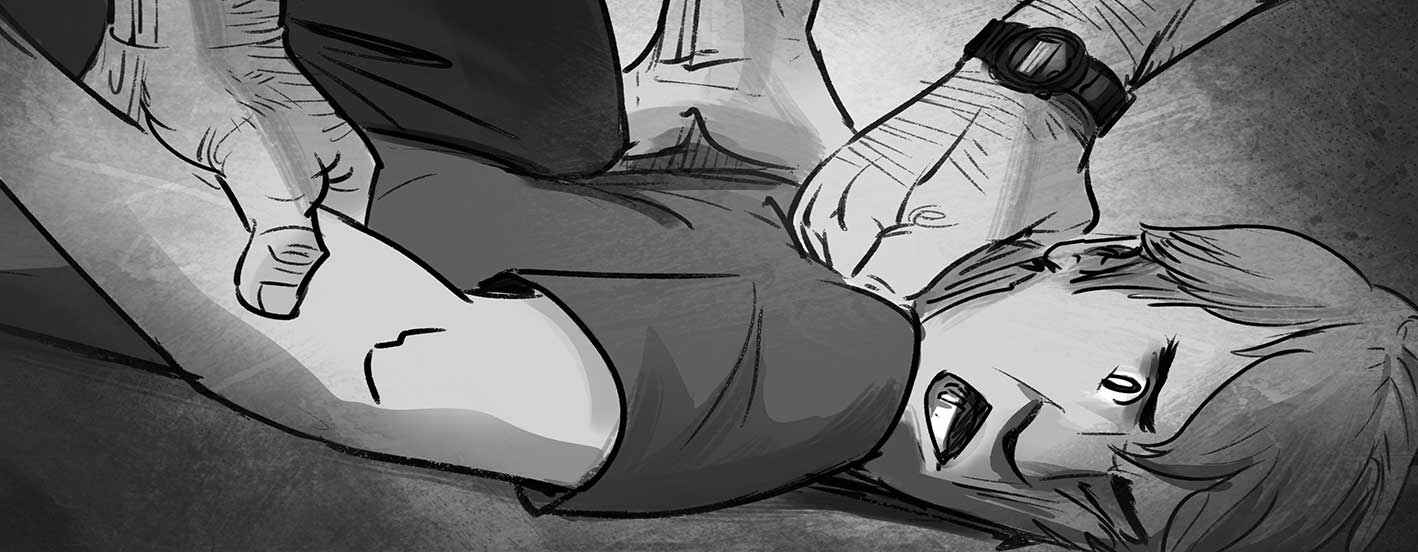
The Australian prison system is currently so broken that child abuse in detention centres is happening right under our government’s watch. There are children being tear gassed and locked in solitary confinement, and it’s not just at Don Dale.

When the entire prison system seems designed to punish children rather than help them, it’s little wonder that kids often end up there again.

Indigenous kids in Australia are some of the hardest hit. Centuries of intergenerational trauma and disadvantage weigh against Indigenous kids and if we don’t change how our justice system works now, it is the next generation who will pay the biggest price.

These kids need compassion and a helping hand, not an abusive prison system.

There are solutions

From boxing programs to cultural camps, brave Indigenous leaders are setting up new and innovative alternatives to prison. Evidence from experts and communities shows that culturally-appropriate prevention and rehabilitation programs work much better than detention. Most of these prison alternatives are set up with no government support and are achieving amazing things.

1 Yiriman Project, Kimberley WA

An Indigenous-led cultural program for kids at risk of being caught in the justice system, the Yiriman Project takes young people on trips back to country to connect them with the stories, songs and knowledge of their culture.

The Australian Productivity Commission Overcoming Indigenous Disadvantage Report 2014 noted that the program builds young people’s confidence and improves their self-worth, and has helped curb suicide, self-harm and substance abuse in the participating communities.

There are great stories of success through the Yiriman Project. In 2009 at Fitzroy Crossing, 15 boys attend a diversionary program run by Elders of the Yiriman Project.  One liaison officer said that many of the boys struggled at first with the routine and discipline; however all completed the camp. All 15 families reported positive changes in their child, and 12 months later none of the boys had re-offended.

2 Justice Reinvestment project, Bourke NSW

The country town of Bourke, New South Wales is the first place in Australia to trial community-led justice reinvestment to keep kids out of detention.

What is Justice Reinvestment? Once you hear it, the concept sounds obvious: shifting money from the criminal justice system and into those communities where it is most needed — so that people don’t commit offences in the first place. And, if they do, using programs to rehabilitate people without sending them to prison.

The community set about working with Just Reinvest to secure corporate and philanthropic funding, and to bring together government agencies, including police, health, statistics, treasury, Aboriginal Affairs, education and housing to tackle some issues that contribute to young people’s involvement with the justice system.

The benefits for young people is especially clear — with smarter investment in community programs, young people are much more likely to enjoy a brighter future.

3 Mona Horsemanship Program, Mt Isa Qld

Patrick Cooke, Angela and David Sammon, and Rex Ah-One began Mona Aboriginal Corporation’s cultural horsemanship program in response to a lack of culturally appropriate healing programs.

The Cultural Horsemanship Program runs for 15 weeks and teaches children and young people respect, mechanical training and skills, meal preparation, fencing and yard building, animal husbandry, cultural education and skills such as hunting and gathering.

After an initial trial in 2012, an independent program evaluation showed clear indicators of success, including cost-effectiveness and behavioural changes in the young people. 17-year-old Curtis* had a difficult time after leaving boarding school but found strength at Mona. “Every time I come out bush it’s just good – it gets me away from all the bad stuff,” he says.

4 Deadly Sista Girlz

Delivered by strong Aboriginal and Torres Strait Islander role models, the Deadly Sista Girlz program helps Aboriginal and Torres Strait Islander girls build their self-esteem and identity, and become leaders in their community. Josie Janz is a mentor at Deadly Sista Girlz. “A lot of our work is about enabling and empowering young Aboriginal girls,” she says, “and changing their attitudes and thinking.”

A lot of Aboriginal families have very sad histories. We have to face what our families and grandparents have gone through to understand the way we are today. The media’s always showing the negative stuff, and that’s what people link on to, you know. They think ‘All my family’s gone to prison, that’s the path I’m going to go down’”.

5 Red Dust Healing, Townsville Qld

Red Dust Healing in Townsville works in detention centres and schools to deliver cultural healing programs for children at risk of being sent to prison, with a focus on dealing with rejection and providing positive role models.

Randall Ross is the proud Juru/Erub and Kanaka man behind Red Dust Healing. “We had a huge success with our program in Cleveland Youth Detention Centre,” he says. “In 2006, we ran the program there with 40 boys. Their progress was monitored for two years: none of the children returned to detention in that time and only eight boys reoffended, on minor offences.”

6 Eugene Eades’ cultural camps, Nowanup WA

Over the past 10 years, Eugene Eades, a Noongar man from Western Australia has worked with Indigenous kids – especially those at risk of being trapped in the justice system. His solution is simple: use culture and connections to build them up strong instead of breaking them in prison cells.

In 2009 Eugene and other Noongar Elders ran a cultural knowledge camp for Indigenous young people. And it worked: kids came back from Eugene’s Nowanup camp happier, healthier, and with a sense of belonging.

“Those four young fellas that I had here… what they learnt about their culture and heritage and dreamtime, it changed their lives forever… they felt proud like a young Noongar man would after learning such things. These young fellows then go back to support their Elders in their own towns.”

7 Wayne Parker’s boxing program, Townsville Qld

Wayne Parker understands the battle that many young Indigenous people are going through today. “I was one of those street kids, born and bred in Mount Isa”, he says. “I had a violent relationship with my old man…I was stealing cars and getting into drugs… I’ve moved on from all of that. I’ve been sober for 25 years. It’s a long, hard, rocky road to recover from.”

Now Wayne runs a backyard boxing program for local kids. Through training and mentoring, Wayne helps kids learn about their identity, find discipline, and to gain confidence and respect for themselves. Wayne is now seeking funding to set up a cultural camp for kids.

“The key thing is for them to have respect for themselves. Once they have that, we can help them build a bigger and better future for themselves.”

Good News: Thailand drops case against human rights activists

Update 01/11/17: Even more good news! The Thai authorities have announced that all charges against the three activists will be dropped.

In early March 2017, the Thai military dropped the criminal case against an Amnesty International chairperson and two other human rights activists who were facing prosecution for reporting on torture.

Somchai Homla-or, Pornpen Khongkachonkiet and Anchana Heemmina are members of the Cross Cultural Foundation and Duay Jai (Hearty Support) group – non-governmental human rights organisations. The groups operate in Thailand’s southern provinces, where soldiers have systematically tortured individuals in connection to counter-insurgency operations. Pornpen is also Chair of Amnesty International Thailand, and Sonchai is the former Chair.

In January 2016, the three activists published a report describing 54 cases of alleged torture by the Royal Thai Police and Royal Thai Army, which they then presented to the the army unit responsible for national security operations in Thailand’s southern provinces. The report was published online in February 2016.

In May 2016, an officer from the army filed a complaint against them for criminal defamation and violating the Computer Crimes Act of 2007. The charges carry a maximum penalty of seven years’ imprisonment plus fines of up to 300,000 baht (US $8,330).

How did Amnesty respond?

The three activists were the subject of an Amnesty International Urgent Action, which was sent out globally in June 2016. In Australia, 11,800 people took online action by sending an email to the Thai Prime Minister, calling for the charges to be immediately be dropped against Somchai, Pornpen and Anchana and to stop all threats and harassment against them.

The issue in depth

In recent years, Thai authorities have targeted many activists, human rights defenders, journalists, and other members of Thailand’s civil society as part of a systematic crackdown on government critics.

Growing numbers of human rights defenders in Thailand are facing criminal defamation charges for their legitimate activities in defending rights and seeking redress for survivors.

Authorities have also been quick to dismiss allegations of torture, suggesting that they are being made solely to discredit authorities or for personal gain. In September 2016, Amnesty International cancelled a planned press conference to launch its report on torture after authorities threatened to arrest speakers if the event went ahead.

The use of criminal defamation charges violates Thailand’s obligation to uphold the right to freedom of expression under the International Covenant on Civil and Political Rights (ICCPR), to which it is party. The UN Human Rights Committee has encouraged governments to consider decriminalising defamation and that defamation laws must comply with international human rights obligations.

What’s next?

Amnesty commends the military authorities for their decision to drop the case against the activists, and hopes they will follow by immediately and unconditionally dropping complaints and charges against other peaceful human rights activists.

To prevent further injustices, the authorities should reform or repeal repressive laws and bring them into line with the country’s international obligations.

While Somchai, Pornpen and Anchana are now safe thanks to everyone who took action, there are other people who need your help. Please visit our action page for the latest cases.

Judith Neilson joins Amnesty International’s Global Council

The prominent philanthropist is the first Australian to join Amnesty’s council of leaders from the arts, business and philanthropic world.

Amnesty International is pleased to announce that philanthropist and arts patron Judith Neilson, AM will join the organisation’s prestigious Global Council.

Judith Neilson, founder of the White Rabbit Gallery in Sydney, Australia, will be the first Australian to join the Council and joins the likes of Sir Richard Branson, world renowned Brazilian author Paulo Coelho, pioneering Japanese artist Yoko Ono, financier and philanthropist Krishna Rao, Founder and CEO of AirAsia Tony Fernandes, social activist Hadeel Ibrahim and entrepreneur Bassim Haidar.

“As a visible driving force behind restoring the safety, dignity and hope of some of the world’s most vulnerable people, Judith Neilson’s voice will have tremendous strength as she brings it alongside Amnesty International.”

Salil Shetty, Secretary General of Amnesty International.

“As a visible driving force behind restoring the safety, dignity and hope of some of the world’s most vulnerable people, Judith Neilson’s voice will have tremendous strength as she brings it alongside Amnesty International,” said Salil Shetty, Secretary General of Amnesty International.

Growing up in Zimbabwe and South Africa left Judith Neilson with a deep awareness of poverty and the plight of refugees. Those concerns led to her work with Anti-Slavery Australia, of which she is Patron, and her endowment of a Chair in Architecture at the University of New South Wales to develop innovative housing for people displaced by war and natural disasters.

Neilson’s charitable work and her contributions to the arts were recognised in 2016 with her appointment as a Member of the Order of Australia.

Amnesty International’s Global Council was established in 2013 to support Amnesty’s work to advance justice and human rights globally.  Members serve as champions for Amnesty International within their own networks and help the organisation’s Secretary General to raise financial resources and identify and engage new human rights supporters. Council members do this in a variety of ways that are suited to their backgrounds, areas of expertise and interests.

Syria: UN Security Council must take decisive action after Idleb chemical attack

Evidence gathered is suggesting a nerve agent was used in an air-launched chemical attack which killed more than 70 and injured hundreds of civilians in Khan Sheikhoun in Syria’s northern province of Idleb, Amnesty International revealed as the UN Security Council met for an emergency meeting in New York.

We are urging the Security Council to immediately adopt a resolution that will enforce the prohibition of chemical weapons attacks and facilitate bringing the perpetrators of these crimes to justice.

“Security Council members, and in particular Russia and China, have displayed callous disregard for human life in Syria by repeatedly failing to pass resolutions that would allow for punitive measures to be taken against those committing war crimes and other serious violations in Syria,” said Anna Neistat, Senior Director of Research at Amnesty International.

“The Security Council must immediately vote to investigate this attack and help bring those responsible to justice. Failure to do so would be catastrophic, risking further emboldening governments and armed groups in Syria to target civilians in war crimes with banned and conventional weapons alike.”

Many of the victims of the attack, which occurred around 6:30a.m. local time on Tuesday 4 April, appear to have been poisoned as they slept in their beds. Chemical weapons experts working with Amnesty have confirmed that victims are very likely to have been exposed to a nerve agent, or an organophosphorus compound, such as sarin. Experts do not believe that chlorine gas was used, as in previous chemical attacks in the Syrian conflict.

Video evidence

Amnesty International was also able to authenticate more than 25 pieces of video footage shot in the aftermath of the chemical weapons attack. Some videos are of sufficient quality for experts to observe victims with pinpoint pupils, described as a classic symptom of nerve gas poisoning. There are reports of medical staff suffering from secondary exposure, which would also be consistent with the use of a nerve agent. In some videos, victims displayed no twitching or jerky movements which experts agree suggest cases of extreme poisoning. In others, including videos of children, the patients are trembling.

“This is the deadliest chemical attack in Syria since the United Nations Security Council passed resolution 2118 in September 2013 for the elimination of Syria’s chemical weapons”

Anna Neistat, Senior Director of Research at Amnesty International

One piece of footage, which Amnesty International has corroborated with other available content, shows nine children lying lifeless in the back of a pick-up truck. The children, little girls and boys, are naked or partially dressed; they appear to have died in their beds. No signs of trauma are visible on their corpses, which is consistent with chemical poisoning.

Other videos made in medical facilities in the aftermath of the attack show many people being treated for respiratory distress, as well as more images of dead children and adults. There are no obvious signs of bloody wounds or shrapnel injuries.

“This is the deadliest chemical attack in Syria since the United Nations Security Council passed resolution 2118 in September 2013 for the elimination of Syria’s chemical weapons,” said Anna Neistat.

“The Organisation for the Prohibition of Chemical Weapons and the UN have jointly confirmed several chemical weapon attacks since then, by government and non-government forces alike. It is appalling that nobody has been brought to justice.”

Interviews with medical workers in Idleb

Amnesty International interviewed a nurse, who was working at the Al Rahma hospital on the morning of the attack. He remembers checking his watch at around 6:20a.m. when he was having his morning coffee and all was quiet until then.

“The sound of the explosion was not what we are used to – my colleagues and I thought that this one hadn’t exploded, because of the thump sound it made, not an explosion sound. A few minutes later, around 6:35am, the first victims were brought in – and then the flow just kept going until around 9a.m. There was a huge number of people and aides being brought in, and there were only four of us medics at the hospital at the time, and one of us also got infected.”

The nurse also described unfamiliar symptoms:

“The smell reached us here in the centre; it smelled like rotten food. We’ve received victims of chlorine attacks before – this was completely different. Victims had vomit from the nose and mouth, a dark yellow colour, sometimes turning to brown. Paralysis in respiratory functions – children were dying faster than adults because of this. We tried injections … but it just didn’t work. Victims were unable to swallow, they were unconscious, completely unresponsive.”

“We tried injections … but it just didn’t work. Victims were unable to swallow, they were unconscious, completely unresponsive”

“The use of chemical weapons is strictly prohibited under international humanitarian law and constitutes a war crime. The international community must show outrage and take all possible measures to protect the Syrian people and the people of the world from such horrific acts,” said Anna Neistat.

A doctor working at the specialised surgery hospital, some 50 kilometres away from the site of the attack also gave his account of the incident.

“Victims were sent first to the closest hospitals, so by the time they reached us, it was around 8am. The attack happened at 6.42am exactly. Victims, including around 70 dead, have reached a total of around 400 people, who were spread out between the different medical centres, and those taken to Turkey. Most of the victims we received were still alive. Those who died didn’t make it to us. Two persons brought in here died in hospital.

“Victims reached us in different states – some had muscular and respiratory paralysis, which we tried treating with tranquilizers and Atropine.

They had secretions from the mouth and nose that were white. Some were completely unconscious. Some had severe muscular pain.

Children are the first ones to die, they cannot fight this back. We only had one child who, thank God, survived. “

Background

Khan Sheikhoun is a small town on the Damascus highway in rural Idleb, which is one of the few areas in northeastern Syria to remain under opposition control. In recent months Idleb has become collection point for those fleeing violence in Aleppo and elsewhere. It has suffered sporadic bombardment by Syrian artillery positions and aircraft since 2012. Recently the bombing intensified, in response to a surprise offensive by armed opposition groups in Hama. Aircraft of the US-led coalition have also been carrying out attacks in Idleb Governorate.

Amnesty has repeatedly called upon the UN Security Council to end the cycle of impunity and to refer the situation in Syria to the Prosecution of the International Criminal Court

In February 2017, Russia and China vetoed a draft Security Council resolution to impose Chapter VII measures for the “unauthorized transfer of chemical weapons, or any use of chemical weapons by anyone in the Syrian Arab Republic”.

This attack also serves as a bleak and unfortunate reminder to European countries meeting in Brussels to consider reconstruction in Syria that action towards justice and accountability must be central to any discussions about the country’s future.

Report: Treasure I$land: Corporate giant Ferrovial making millions from Australia’s torture of refugees on Nauru

A new briefing, Treasure I$land, exposes how Spanish multinational Ferrovial and its Australian subsidiary Broadspectrum are complicit in, enabling, and reaping vast profits from, Australia’s cruel, secretive and deliberately abusive refugee “processing” system on Nauru.

Read the report

“The Australian government has created an island of despair for refugees and people seeking asylum on Nauru, but an island of profit for companies making millions of dollars from a system so deliberately and inherently cruel and abusive it amounts to torture,” said Lucy Graham, Amnesty International’s Researcher on Business and Human Rights.

“By knowingly enabling the continuation of this system, which is specifically designed to cause suffering and deter people from travelling to Australia by boat to seek asylum, Broadspectrum and Ferrovial are unequivocally complicit in this abuse.”

With Broadspectrum’s AUD$2.5 billion contract with the Australian government ending in October, Amnesty International is warning other firms against seeking to profit from torture.

“Any company or organisation considering taking up this toxic baton will be complicit in an intentionally abusive system, in direct contravention of its human rights responsibilities, and will be exposing itself to potential criminal liability and damages claims,” said Lucy Graham.

“The regime of cruelty at the Refugee Processing Centre on Nauru leaves a stain that no responsible company would want on its conscience or reputation.”

Cruelty – a lucrative business

Since 2012, Australia has operated intentionally harsh “offshore processing” systems on Nauru and Manus Island, Papua New Guinea. Up to 2,000 men, women and children are warehoused in remote locations and subjected to cruel and degrading conditions, sometimes for years on end, simply because they have sought safety on Australian shores.

Amnesty International’s October 2016 report, Island of Despair: Australia’s ‘processing of refugees on Nauru’ found that the Australian government is intentionally and systematically violating the rights of refugees and people seeking asylum on Nauru. It concluded that the conditions on Nauru are so deliberately cruel and abusive that they amount to torture.

It has now transpired that cruelty and abuse make for a lucrative business.

The Refugee Processing Centres (RPCs) on Nauru and Manus Island are run by Broadspectrum, which was bought by Ferrovial in April 2016.

Amnesty International’s latest briefing details how the part of Broadspectrum’s business that runs its operations on Nauru and Manus Island contributed AUD$1.646 billion in the 2016 financial year– an astonishing 45% of the company’s total operating revenues.

Meanwhile, Ferrovial has raked in 1.4 billion euros in revenues from Broadspectrum since acquiring the company. A substantial portion of this comes from operations on Nauru and Manus Island.

“Not only are Ferrovial and Broadspectrum turning a blind eye to the human rights violations perpetrated by the Australian government; they are the very enablers of the abuse,” said Lucy Graham.

“It’s a clinical, cold-blooded set-up where the Australian authorities set the blueprint for cruelty, and the companies do the dirty work. Considering the extraordinary profits on offer, we believe it is clear that these companies are motivated by sheer greed.”

The total value of the Australian government’s contract with Broadspectrum is AUD$2.5 billion (US$1.9 billion) over three and a half years.

When put into the context of Broadspectrum’s other business sectors, it becomes clear just how profitable this contract is.

The profit margin in Broadspectrum’s Defence, Social and Property sector – which includes its Nauru and Manus Island operations – was 17.8% in its 2016 financial year, far higher than in its other business sectors such as Infrastructure (2.8%) and Resource and Industrial (1.6%).

Meanwhile, Ferrovial’s revenues in its Nauru and Manus Island-related Service sector increased by 24.1% in 2016 due to its acquisition of Broadspectrum.

No company should profit from abuse

Australia’s offshore processing system on Nauru could not function without Broadspectrum’s involvement. Ferrovial has stated it will not renew the contract when it expires in October 2017, so the Australian government is expected to issue a call for new service providers soon. Amnesty International is warning others not to take on this contract.

“No company should be operating on Nauru or Manus, where the current situation is so noxious that it would be impossible for any firm to do so without contributing to serious human rights violations and exposing itself to legal liability and reputational risk,” said Lucy Graham.

“It’s therefore our duty to the victims of human rights violations on the islands to name and shame any company that puts profit before decency by choosing to become involved in Australia’s abusive operations.”

Amnesty International is calling on the Australian government to shut down the offshore processing system; immediately bring all refugees and asylum seekers on Nauru and Manus Island to Australia; and ensure that all those who were granted refugee status have the right to settle in Australia.

It is also urging the Australian government to cooperate with all rights-respecting offers of international cooperation and assistance, including resettlement of refugees to third countries if the refugees wish to be resettled and are able to make a fully informed and free choice.

The organisation is calling on Ferrovial to end its operations on Nauru and Manus Island as soon as possible.

Spanish corporate giant Ferrovial makes millions from Australia’s torture of refugees on Nauru

A major corporation responsible for running the Australian government’s refugee “processing” centre on Nauru is making millions of dollars from a system that amounts to torture of refugees and people seeking asylum.

A new briefing, Treasure I$land, exposes how Spanish multinational Ferrovial and its Australian subsidiary Broadspectrum are complicit in, enabling, and reaping vast profits from, Australia’s cruel, secretive and deliberately abusive refugee “processing” system on Nauru.

“The Australian government has created an island of despair for refugees and people seeking asylum on Nauru, but an island of profit for companies making millions of dollars from a system so deliberately and inherently cruel and abusive it amounts to torture,” said Lucy Graham, Amnesty International’s Researcher on Business and Human Rights.

“By knowingly enabling the continuation of this system, which is specifically designed to cause suffering and deter people from travelling to Australia by boat to seek asylum, Broadspectrum and Ferrovial are unequivocally complicit in this abuse.”

“The Australian government has created an island of despair for refugees and people seeking asylum on Nauru, but an island of profit for companies making millions of dollars from a system so deliberately and inherently cruel and abusive it amounts to torture”

Lucy Graham, Amnesty International’s Researcher on Business and Human Rights.

With Broadspectrum’s AUD$2.5 billion contract with the Australian government ending in October, Amnesty International is warning other firms against seeking to profit from torture.

“Any company or organisation considering taking up this toxic baton will be complicit in an intentionally abusive system, in direct contravention of its human rights responsibilities, and will be exposing itself to potential criminal liability and damages claims,” said Lucy Graham.

“The regime of cruelty at the Refugee Processing Centre on Nauru leaves a stain that no responsible company would want on its conscience or reputation.”

Cruelty – a lucrative business

Since 2012, Australia has operated intentionally harsh “offshore processing” systems on Nauru and Manus Island, Papua New Guinea. Up to 2,000 men, women and children are warehoused in remote locations and subjected to cruel and degrading conditions, sometimes for years on end, simply because they have sought safety on Australian shores.

Amnesty International’s October 2016 report, Island of Despair: Australia’s ‘processing of refugees on Nauru’ found that the Australian government is intentionally and systematically violating the rights of refugees and people seeking asylum on Nauru. It concluded that the conditions on Nauru are so deliberately cruel and abusive that they amount to torture.

It has now transpired that cruelty and abuse make for a lucrative business.

The Refugee Processing Centres (RPCs) on Nauru and Manus Island are run by Broadspectrum, which was bought by Ferrovial in April 2016.

Amnesty International’s latest briefing details how the part of Broadspectrum’s business that runs its operations on Nauru and Manus Island contributed AUD$1.646 billion in the 2016 financial year– an astonishing 45% of the company’s total operating revenues.

Meanwhile, Ferrovial has raked in 1.4 billion euros in revenues from Broadspectrum since acquiring the company. A substantial portion of this comes from operations on Nauru and Manus Island.

“Not only are Ferrovial and Broadspectrum turning a blind eye to the human rights violations perpetrated by the Australian government; they are the very enablers of the abuse”

LUCY GRAHAM, AMNESTY INTERNATIONAL’S RESEARCHER ON BUSINESS AND HUMAN RIGHTS.

“Not only are Ferrovial and Broadspectrum turning a blind eye to the human rights violations perpetrated by the Australian government; they are the very enablers of the abuse,” said Lucy Graham.

“It’s a clinical, cold-blooded set-up where the Australian authorities set the blueprint for cruelty, and the companies do the dirty work. Considering the extraordinary profits on offer, we believe it is clear that these companies are motivated by sheer greed.”

The total value of the Australian government’s contract with Broadspectrum is AUD$2.5 billion (US$1.9 billion) over three and a half years.

When put into the context of Broadspectrum’s other business sectors, it becomes clear just how profitable this contract is.

The profit margin in Broadspectrum’s Defence, Social and Property sector – which includes its Nauru and Manus Island operations – was 17.8% in its 2016 financial year, far higher than in its other business sectors such as Infrastructure (2.8%) and Resource and Industrial (1.6%).

Meanwhile, Ferrovial’s revenues in its Nauru and Manus Island-related Service sector increased by 24.1% in 2016 due to its acquisition of Broadspectrum.

A bleak existence on Nauru

While Ferrovial and Broadspectrum turn in huge profits, those trapped on Nauru endure an unimaginably bleak existence with little hope of respite.

Not only have they been denied entrance to Australia, they also have no idea when or if Australia and Nauru will allow them to leave, despite a recently announced settlement deal with the USA. Even recognised refugees are not allowed to leave the island.

Refugees and asylum seekers at the RPC on Nauru have faced physical attacks and sexual assault by some members of staff, without anyone being held properly accountable.

The briefing highlights the devastating case of “Yasmin” from Iran. Her husband “Amir” told Amnesty International in July 2016 how Yasmin’s mental health started deteriorating during her time at the RPC on Nauru to the point that she tried to commit suicide on several occasions.

“Ferrovial acquired Broadspectrum in full knowledge of the extent of the human rights abuses on Nauru and the level of profit that Broadspectrum makes on the back of this immense suffering”

LUCY GRAHAM, AMNESTY INTERNATIONAL’S RESEARCHER ON BUSINESS AND HUMAN RIGHTS

Not only is Broadspectrum aware of the conditions faced on Nauru by refugees and people seeking asylum; in some cases, its employees and sub-contractors are directly responsible for neglect and abuse.

Allegations of abuses against Broadspectrum, its sub-contractor Wilson Security and other staff members at the RPC have included (as of 30 April 2015) 30 formal allegations of child abuse, 15 allegations of sexual assault or rape and four allegations relating to the exchange of sexual favours for contraband.

“This is business at its worst. Ferrovial acquired Broadspectrum in full knowledge of the extent of the human rights abuses on Nauru and the level of profit that Broadspectrum makes on the back of this immense suffering,” said Lucy Graham.

Oppressive culture of secrecy sustains abuse

The Australian authorities have stated with pride that they intend for the people detained on Nauru and Manus Island to suffer, in order to deter other would-be asylum-seekers from trying to enter the country irregularly.

Despite the apparent candour on the issue, no one is willing to take responsibility for operating the RPC on Nauru.

Broadspectrum told Amnesty International it “does not operate the Refugee Processing Centre”, a claim repeated by Ferrovial. Meanwhile, the Australian government claims the centre is run by the government of Nauru, which has in turn suggested that others are responsible.

In contrast, Amnesty International’s research shows that Broadspectrum runs the RPC on a daily basis and has effective control over the day-to-day lives of refugees and asylum-seekers at the RPC, on behalf of the Australian government and with the government’s ultimate oversight and control.

The Australian government has also gone to extraordinary lengths to hide the full magnitude of the abuses on Nauru and Manus Island, making it a criminal offence for welfare professionals to speak out and placing service providers under strict confidentiality clauses.

Meanwhile, Broadspectrum has warned its staff, in a leaked internal document, that they can be fired for communicating information about operations on Nauru.

“Strict confidentiality terms imposed by the Australian government allow it to hide the scale of these abuses”

LUCY GRAHAM, AMNESTY INTERNATIONAL’S RESEARCHER ON BUSINESS AND HUMAN RIGHTS.

This secrecy extends to the terms of the contracts under which Broadspectrum and Wilson Security provide services on Nauru and Manus Island, the full terms of which are not publicly known.

“The secrecy around the contracts allows Broadspectrum and Ferrovial to hide the exact profit they make from human rights abuses, while the strict confidentiality terms imposed by the Australian government allow it to hide the scale of these abuses,” said Lucy Graham

No company should profit from abuse

Australia’s offshore processing system on Nauru could not function without Broadspectrum’s involvement. Ferrovial has stated it will not renew the contract when it expires in October 2017, so the Australian government is expected to issue a call for new service providers soon. Amnesty International is warning others not to take on this contract.

“No company should be operating on Nauru or Manus, where the current situation is so noxious that it would be impossible for any firm to do so without contributing to serious human rights violations and exposing itself to legal liability and reputational risk,” said Lucy Graham.

“It’s therefore our duty to the victims of human rights violations on the islands to name and shame any company that puts profit before decency by choosing to become involved in Australia’s abusive operations.”

Amnesty International is calling on the Australian government to shut down the offshore processing system; immediately bring all refugees and asylum seekers on Nauru and Manus Island to Australia; and ensure that all those who were granted refugee status have the right to settle in Australia.

It is also urging the Australian government to cooperate with all rights-respecting offers of international cooperation and assistance, including resettlement of refugees to third countries if the refugees wish to be resettled and are able to make a fully informed and free choice.

The organisation is calling on Ferrovial to end its operations on Nauru and Manus Island as soon as possible.

How to stir up a refugee crisis in five steps, Trump style

The sight of one of the most infamous borders on earth – roughly 1,000 kilometers of porous metal fence dividing lives, hopes and dreams between the USA and Mexico, is undoubtedly overwhelming, but not in the way we expected it to be.

While it has been one of the most talked about issues since last year’s USA election campaign, the stretch of land that separates the USA and Mexico now lies eerily quiet.

The stream of men, women and children US President Trump predicted would be flooding the area are nowhere to be seen. There is no one working on the “big, powerful wall” Trump promised to build along the entire length of more than 3,000 kilometers of the border. The 5,000 additional border patrol agents that are meant to be “increasing security” in the area have yet to be deployed.

What we recently witnessed along the border, however, is increasing confusion and utter fear. As many advocates described it “the quiet before the storm”. This is not a new situation, things have been building up in the area but they are likely to get devastatingly worse.

Many of these people are seeking protection as they are fleeing extreme violence in their home countries.

Because although President Trump’s promises have not yet been fully acted upon, the machine has been set in motion, building up on years of bad policies and practices along the border. The potential impact the most recently enacted border control measures will have on the lives of thousands of people living in terror of being sent back to extreme violence is becoming notable.

This is how the Trump administration is stirring up what could dangerously become a full blown refugee crisis:

1. Sow a discourse of hate and fear

Since the start of his campaign for the Presidency, Donald Trump has repeatedly described migrants and asylum seekers, particularly people from Mexico and Central America, as “criminals and rapists”.

He has failed to acknowledge the plight of the thousands of women, children and men who live in “war-like” situations in some of the most dangerous countries on earth, particularly El Salvador and Honduras, and who are effectively forced to flee their homes if they want to live.

2. Pass confusing orders with no advice on how to implement them

In the initial raft of Executive Orders passed by President Trump during his first days in office, the administration effectively sought to close the borders to immigrants, including asylum seekers looking for a safe haven in the USA.

The Border Security and Immigration Enforcement Improvements Executive Order of 25 January aims at ensuring that the process of detaining and expelling migrants and asylum seekers is as swift as possible – fully ignoring the fact that some of these people face mortal danger if sent back to their countries.

Furthermore, since the order was issued, it appears border agencies have been left in the dark about how to implement it. We arrived in Arizona just two days after the Department of Homeland Security had released its 20 February Memo detailing how to roll out Trump’s border security executive order. We were told that at least one high-level member of border control had received the memo the same time as the press had, and was none the wiser as to how to implement it.

3. Turn people back, no questions asked

Each year, hundreds of thousands of people from Central America and other countries around the world cross Mexico’s land border with the USA to seek safety and a better life. As well as Mexicans, many of these people are seeking protection as they are fleeing extreme violence in their home countries (including El Salvador and Honduras).

The US/Mexico Border. © Hans Maximo Musielik/Amnesty International

But we received multiple reports and evidence that rather than allowing people to enter the USA and seek asylum in order to save their lives, US Customs and Border patrol are repeatedly refusing entry to asylum seekers all along the border.

From San Diego, California to McAllen, Texas, we were told that even before Trump arrived on the scene, from as early as 2015, border agents have been known to take the law into their own hands by turning back asylum seekers, telling them they cannot enter. This is not only immoral but also against international legal principles the USA has committed to uphold and USA law itself, which stipulates the right and process to ask for asylum.

One human rights worker on the Mexican side of the border with Arizona, told us how a border patrol agent scorned her for accompanying Central Americans to the border to ensure that their rights were not violated. “How do you feel, aren’t you ashamed to be helping ‘terrorists’?” she was asked.

4. Turn a blind eye to criminal groups terrorizing asylum seekers

Crossing into the USA without papers means risking your life, as it makes people more vulnerable to gangs and drug cartels who control the border area and are primed to profit from people in desperate situations.

We have received many reports that people smugglers have hiked their rates dramatically since Trump was elected. US Secretary of Homeland Security John Kelly recently announced that since November 2016 the rate charged by people smugglers in some areas along the US southwest border has risen from US$3,500 to US$8,000. Yet what Kelly fails to recognize is how this will put people’s lives at further risk. People will not stop fleeing their countries and moving north in search of safety, despite Trump’s border control measures. Criminal groups will only gain more power once the border wall is built, charging vulnerable people fortunes to leave their country and make their way to the USA.

5. Outsource the responsibility

Multiple questions remain regarding the USA’s plans to further militarize its southern border and deny entry to asylum seekers. One of the biggest questions involves Mexico’s role in this equation.

In recent weeks, Mexico’s Foreign Minister Luis Videgaray announced that Mexico would not receive foreigners turned back from the USA under Trump’s 25 January Border Control Executive Order. Yet no one we spoke to on the border understood what this would look like in practice. Would Mexico start raids along its border? Would it carry out more deportations? Or, would Mexico’s refusal to host migrants lead to even more people locked up in immigration detention centres on the US side? Or, would we see ad hoc refugee camps along the Mexican side of the border as asylum seekers wait for their claims to be heard in US immigration courts? Already acutely vulnerable people would be exposed to further harm and human rights abuses by both criminal groups.

In this climate of uncertainty and fear, migrants and asylum seekers are more vulnerable to coercion and violations of their rights to due process.

Amnesty International spoke to four Mexican government officials stationed at border cities, and it was evident that confusion reigns. “We are going along with our work in a normal way,” one official in Tamaulipas told us. “I don’t think we have any plans regarding how to receive those being turned back,” another official in Chihuahua said.

In this climate of uncertainty and fear, migrants and asylum seekers are more vulnerable to coercion and violations of their rights to due process. Fearful of a USA government that appears quick to detain and deport them, and uncertain of their situation while on Mexican soil, the desperation of migrants and asylum seekers and the abuses they are forced to endure, are bound to rise.

Madeleine Penman is a Mexico Researcher at Amnesty International.
This article first appeared on IPS news.

Victorian children report facing Don Dale-style abuse in adult prison

Warning: Strong content

Victoria is often referred to as one of Australia’s most progressive states. However, with children as young as 15 being sent to Barwon adult prison – a maximum-security prison for Victoria’s most notorious adult offenders – and allegedly facing abuse, Victoria is failing some of its most vulnerable children.

According to the Human Rights Law Centre, right now at least 10 children, aged 15 to 17 are being held in Barwon prison on the outskirts of Geelong, Victoria. If you think it’s strange for kids to be in an adult prison – it is – and also very much a human rights violation. Despite this, kids have been sent to Barwon since November last year.

Caleb [not his real name], a 17-year old who was sent to Barwon prison for two months, told The Herald Sun what life was like for a child inside an adult prison.

“For me, Barwon was the worst place I have ever been,” he wrote in a letter. “It is an adult prison. Some days I was locked up for more than 23 hours alone in a tiny concrete cell. Sometimes this happened for days.”

“I know people feel scared about kids committing crimes and I get that. But I think putting kids in an adult jail … is just going to make them come out worse.”

What are the allegations of abuse at Barwon?

The allegations of abuse at Barwon prison are reminiscent of those from the NT’s Don Dale youth detention centre we saw on Four Corners last year.

According to the children’s lawyers, some kids have been locked down in their cells for up to 23 hours a day. When some kids are let out of their cells, they are handcuffed. We heard that in the one short hour a child was released from his cell he was forced to butter his toast in handcuffs.

Some children reported that officers deliberately pepper sprayed boys who weren’t involved in any disturbance  – just eating dinner.

Others allege guards knelt on children’s backs while others held their face to the floor and incapacitated their arms and legs. The boys have reportedly been left with visible injuries, including bruising after this alleged use of excessive force.

In another alleged incident, guards brought German shepherd dogs into the unit and reportedly into a child’s cell as a form of intimidation.

Police are now investigating allegations that corrections staff assaulted nine children.  A human rights lawyer representing the boys said, “At Barwon, children have been isolated for days and even weeks at a time. They are going mad in their cells.”

What needs to happen?

A Victorian court confirmed three months ago that it was against the law for children to be sent to Barwon prison, because the Minister for Youth Affairs, Jenny Mikakos​ did not consider their developmental needs when she sent them there.

The Victorian Government tried to get around this by renaming the Grevillia Unit of the Barwon facility a youth detention centre. However, a name change doesn’t make this an appropriate  facility.

The Human Rights Law Centre have launched a fresh challenge against the legality of sending kids to Barwon.

This challenge starts Monday 3 April. But Victoria’s Premier Daniel Andrews doesn’t need to wait to do the right thing.  If Victoria wants to maintain its moniker of a ‘progressive state’, Premier Andrews needs to remove children from Barwon’s adult prison immediately.

Kids are some of our most vulnerable members of our society; there is simply no justification for a child’s mistreatment. We need humane, age-appropriate facilities that help these kids to rehabilitate and rejoin their families and communities. Barwon Prison does the opposite.

Sri Lanka: Victims of disappearance cannot wait any longer for justice

Sri Lanka will not break with its violent past until it reckons with the cruel history of enforced disappearance and delivers justice to as many as 100,000 families who have spent years waiting for it, Amnesty International said today in a new report, revealing the enduring scars of a conflict that has been forgotten by the world.

Amnesty International’s report, “Only Justice can heal our wounds”, will be launched by the organization’s Secretary General Salil Shetty at a meeting with families of the disappeared in the northern Sri Lankan town of Mannar.

The report tells the story of relatives, many of them women, who have spent years searching for truth and justice. Obstructed at every turn, they have been misled about the whereabouts or fate of their disappeared relatives, subjected to threats, smears and intimidation, and suffered the indignity of delayed trials and a stalled truth and justice processes.

“There is no community in Sri Lanka that remains untouched by the trauma of enforced disappearance. Most people in the country suffer the absence of a loved one or know someone who does. They have waited years, and in some cases, decades, to learn of the fate of their relatives. Until justice is delivered to these victims, the country cannot begin to heal, let alone move towards a more promising future,” said Salil Shetty, Amnesty International’s Secretary General.

Despite international commitments to end impunity for enforced disappearance, which may amount to crimes against humanity where they have been widespread and systematic, the authorities have failed to investigate these cases, identify the whereabouts or fate of the victim, or prosecute those suspected of the crimes.

A major driver of enforced disappearances has been like Sri Lanka’s notorious Prevention of Terrorism Act (PTA). Enabling incommunicado and secret detention, the PTA places people outside the law and leaves them vulnerable to human rights violations including torture and enforced disappearances.

“Sri Lanka needs to put the victims at the heart of any reconciliation process. The authorities must hear their demands and implement them. The current government has taken encouraging steps to acknowledge the need to end impunity, but it cannot leave the victims waiting any longer. They have waited too long already. If Sri Lanka wants to successfully pull away from its violent past, it must address victims’ demands for justice, truth, reparation and guarantees of non-recurrence,” said Salil Shetty.

A relentless search for justice

One of the cases detailed in the report is of Sandya Eknaligoda, whose husband, Prageeth, left his on 24 January 2010 and never returned. Prageeth Eknaligoda was a political cartoonist, known for his efforts to expose corruption and human rights abuses by the government then in power.

Sandya Eknaligoda’s perseverance has led to some evidence being uncovered which indicates that military intelligence personnel may have been involved in her husband’s disappearance. Since she filed a complaint, she has been to court at least 90 times. Each time she appears, she faces the prospect of harassment. She told Amnesty International that last year, a prominent member of the Buddhist national Bodhu Bala Sena and other monks stormed the court at Homagama and threatened her. The same group has smeared her as a supporter of the Liberation Tigers of Tamil Eelam (LTTE) in posters.

In 2011, the former attorney general told the UN Committee Against Torture that her husband had not been abducted but had fled the country. When confronted about the claim in court, the former attorney general said that his memory had failed him, forgetting where the claim came from.

Sandya has pressed on with her campaign, writing repeatedly to Sri Lankan leaders, handing out appeals in front of Parliament, organizing vigils, and emboldening other wives of the disappeared to raise their voices and join her demand for justice. Taking her case to the UN Human Rights Council, she has forced slow progress. In 2015, an investigation revealed that Prageeth had been held at army camps. But the process has stalled since then.

A cruel history

Since the 1980s, Amnesty International estimates there have been at least 60,000 and as many as 100,000 cases of enforced disappearance in Sri Lanka. The victims include Sinhalese young people who were killed or forcibly disappeared by government death squads on suspicion of leftists links in 1989 and 1990. They include Tamils suspected of links to the LTTE, disappeared by police, military and paramilitary operatives during the conflict from 1983 to 2009. And they include human rights defenders, aid workers, journalists, government critics, and prominent community leaders.

In June 2016, former President Chandrika Bandranaike Kumaratunga, who was in office from 1994 to 2005, acknowledged receiving at least 65,000 complaints of disappearance. The true figure could be as high as 100,000 people, Amnesty International estimates, as communities who have lived and continue to live under a pall of fear and without confidence in the authorities have not reported other cases.

Under international law, an enforced disappearance is where a person is arrested, detained, abducted or otherwise deprived of their liberty by agents of the state, or by persons or groups of persons acting with the authorization, support, or acquiescence of the state, followed by a refusal  to acknowledge the deprivation of liberty or by concealment of the fate or whereabouts of the disappeared person, which places them outside the protection of the law. In Sri Lanka, many “abductions” or “disappearances” have also been carried out by non-state actors, including armed groups.

In Sri Lanka, enforced disappearance have varied in time, scale and intensity at various points in the conflict.  Having ratified the Convention, Sri Lanka has an obligation to investigate all allegations of disappearance and, where sufficient evidence exists, to prosecute those suspected of the crimes at all levels in proceedings which should be fair and without recourse to the death penalty. The government must ensure that victims and their families are told the truth and that they are provided with full and effective reparation to address the harm they have suffered.

A way forward: truth, justice, reparation and non-recurrence

In October 2015, the Sri Lankan government committed to develop mechanisms and institute other reforms aimed at delivering truth, justice, reparation and ensuring non-recurrence for past human rights violations and abuses.  In public communications, the government of Sri Lanka refers to the overall process as “reconciliation.”

The determined activism of families of the disappeared and widespread public familiarity with the issue has pushed the government to address disappearances first, the process has been stalled. Last year, the Sri Lankan Parliament ratified the International Convention for the Protection of All Persons from Enforced Disappearance. But a bill to implement the Convention by criminalising enforced disappearance in the Sri Lankan Penal Code has yet to be debated.

Also in 2016, Parliament passed a bill to establish the “Office of Missing Persons”. While a laudable step, the government failed to consult with victims and civil society or address their concerns about the bill, including ambiguous provisions on whether evidence of responsibility for disappearance gathered by the Office would be submitted to prosecuting authorities, undermining public confidence in the initiative. The President has yet to sign the bill into law.

Where the government has reached out to victims, it has ignored what they have to say. Public consultations on the design of justice, truth and reparation mechanisms attracted more than 7,000 submissions, including many from families of the disappeared. But officials have shown little interest in the findings and even denigrated the Task Force that organized it.

To move forward, the Sri Lankan government should:

  • Enact legislation making disappearance a crime under national law in accordance with the Convention for the Protection of All Persons from Enforced Disappearance.
  • Amend and enact the Office on Missing Persons Act to ensure that the Office is established effectively without further delay to investigate all allegations of disappearance; ensuring its effectiveness by seeing that it is fairly, transparently and adequately staffed and resourced; ensure that it submits evidence of responsibility for  disappearances to prosecuting authorities;\
  • Where sufficient admissible evidence exists, prosecute those responsible for disappearances promptly before civilian courts in fair trials without recourse to the death penalty;
  • Preclude the application of amnesties, immunities and other measures of impunity to persons suspected of committing crimes under international law;
  • Formally acknowledge and prioritize the findings and recommendations of the Consultation Task Force;
  • Ensure that victims, including families of the disappeared, are provided with full and effective reparation to address the harm they have suffered, including restitution, compensation, rehabilitation and satisfaction;
  • Repeal the Prevention of Terrorism Act (PTA) and end its use immediately; abolish Sri Lanka’s system of administrative detention and ensure that any future legislation meant to replace the PTA meets international standards;
  • Release all individuals held under the PTA or other forms of arbitrary or secret detention unless they are charged with recognizable criminal offences and remanded in custody by an independent, regularly constituted court.

Not just the NT: PM Turnbull needs new vision for youth justice

Prime Minister Turnbull must learn from the systemic failings in children’s prisons, outlined in today’s Northern Territory Royal Commission interim report, and commit to reforming broken justice systems across Australia, said Amnesty International.

“The Commissioners found that children are being failed by a detention system that focuses on punishment rather than healing and rehabilitation, leaving many children more damaged than when they entered. This finding could be applied to just about every state and territory in Australia,” said Julian Cleary, Indigenous Rights Campaigner at Amnesty International Australia.

An example of testimony in this week’s hearings was about a girl in Don Dale Detention Centre who attempted suicide six times in five days. The girl was in an isolation cell at the time of each attempt, and returned there following three trips to emergency, despite isolation being a known contributing factor to suicide rates, because there was no other procedure for caring for at-risk children.

A national solution is needed

“This report paints a stark picture, but it is not unique to the NT; Victoria is currently going down this same dark path of punishment and demonisation, and we’ve recently heard of alleged abuse or self-harm in every state and territory in the country.

“This is a national problem, and it needs a national solution. PM Turnbull must learn from past mistakes, accept Federal responsibility and commit to a national action plan on youth justice,” said Julian Cleary.

“Today’s interim report makes for concerning reading – but it also offers some solutions. The answer is to support the health and development needs of children and their families from an early age. Governments must also invest in diversionary and non-custodial options that will help children to rehabilitate and thrive, not lock them up in archaic prisons once they reach crisis point.”

Respect and dignity

Amnesty International echoes the report’s conclusion that children ‘deserve to be treated with respect and dignity, with every child in out-of-home care or in detention given a real opportunity to reach their full potential.’

The report was tabled as new statistics from the Australian Institute of Health and Welfare show the overrepresentation of Indigenous children in detention nationally has gone up since last year. Indigenous children now are 25 times more likely to be in youth detention than non-Indigenous children.

The interim report stated: ‘Clearly any solutions and a way forward must be the result of genuine engagement with, and empowerment of, Aboriginal people.’

Ball is now in Turnbull’s court

Julian Cleary added, “Aboriginal and Torres Strait Islander leaders already have many of the answers to help their children and communities. The ball is in PM Turnbull’s court – he needs to throw support behind Indigenous-led solutions to keep children out of detention and in their communities”.

In a positive move, the Federal Government committed earlier this year to ratifying the UN Optional Protocol on the Convention Against Torture in December, which will allow for independent inspections of all places of detention once it is implemented.

But, while OPCAT ratification will help to ensure abuses in detention never happen again, Amnesty International maintains that most children in detention should not be entering the youth justice system in the first place.