‘I refuse to surrender my hope on Manus’

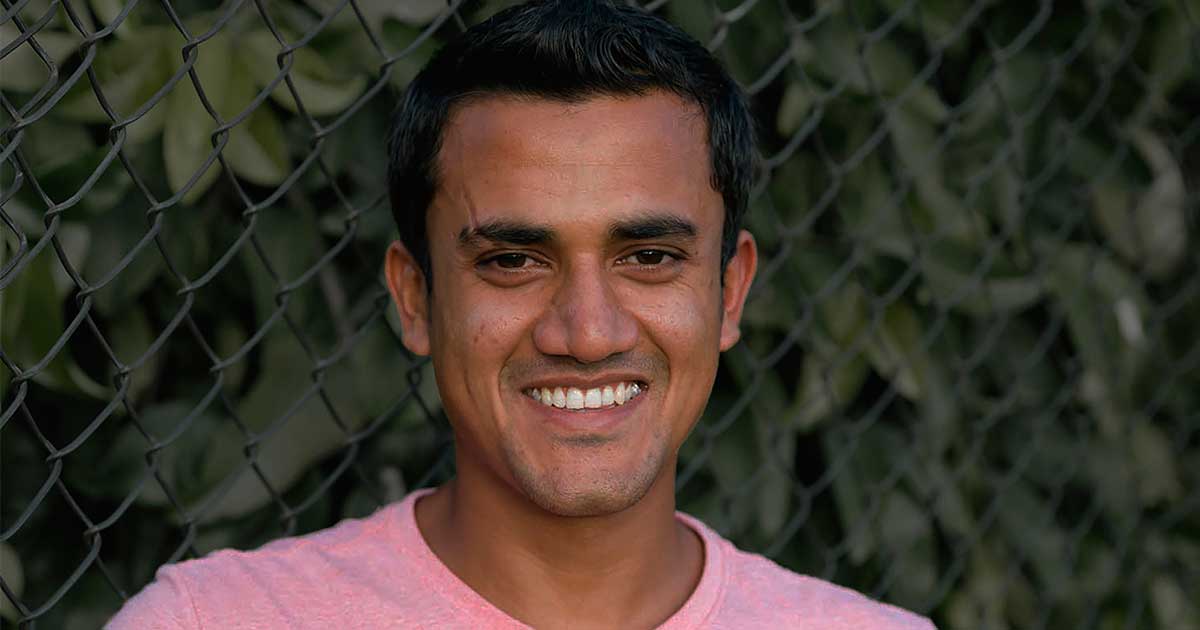
Imran Mohammad is Amnesty International Australia’s Blogging Competition 2016 winner. Imran, now 22, fled Myanmar at age 16 and taught himself to read and write English while being held on Manus Island. Here is his powerful winning entry.

I’m a passionate young writer incarcerated by the Australian Government for over three years on Manus Island, PNG. This indefinite offshore processing centre has ensured the loss of the rights of refugees in a world of power, greed and cruelty. Compassion, love and equality have died, along with human rights. I search my mind for the crimes that I committed; I come up with nothing.

I question what has happened to this world where refugees – among the most vulnerable people in the world – are treated like animals.

For the Rohingya ethnic group, creating a sense of identity is a difficult task. My ancestors have lived in Rakhine, Myanmar for generations. However, our country won’t acknowledge our existence. We’re known as illegal migrants in our own land, stateless people. Many people in this world take for granted that they can get a passport, but we are denied this right.

We are not even given a birth certificate or any other documentation to prove our citizenship. Rohingyan people are denied freedom of movement, access to social services and more importantly, education. Tragically we are victims of unprovoked violence, spread by fear, ignorance and hate. When a government doesn’t allow media or international visitors, the world should question this. They would be horrified; women and girls are raped, brothers buried alive and young boys killed.

Rohingya child on boat at sea
A Rohingya child on a boat at sea © Thapanee Ietsrichai

‘Everything was snatched from me’

Everything was snatched from me one dark night. I was threatened with death and fled my country. I lost everything precious to me; I couldn’t hug my mother for the last time.

I embarked on a journey in search of a place to rest my head in peace. There was no other way to leave Myanmar except by boat in the middle of the night. I crossed the ocean for 15 days from Bangladesh to Malaysia. I left Malaysia after experiencing so much cruelty in a few months. I arrived in Indonesia in 2012 and devastatingly, I was imprisoned for two years.

“There was no other way to leave Myanmar except by boat in the middle of the night”

I was recognised as a genuine refugee by UNHCR. I waited for so long but I was stuck in limbo with no hope of a visa, no way to support myself. I was sure I would die if I stayed. In October 2013, I boarded a boat to Australia. I was detained on Christmas Island until against my will, I was moved to Manus Island Detention Centre which was clearly built for intentional torture.

https://twitter.com/picexec/status/748392042271805440

‘I’ve lived in great fear’

The Australian government never had a plan to resettle refugees in PNG and the PNG Supreme Court found this camp illegal under its constitution. Again I was given refugee status by PNG, yet I am still imprisoned behind high fences. My friends who came with me on the same boat are free in Australia. We are not welcome in this country. I’ve lived in great fear since I arrived and as proof we are unsafe, I was beaten inside the detention centre during the 2014 riot.

Imran Mohammad
© Human Rights Law Centre/Get Up

There is no end date and my future remains unclear. All I receive from Australian Government is constant, endless torture.

I’m a refugee who refuses to surrender my hope. I hold on to my belief in humanity and freedom. I never got the chance to attend school or university; these words in English are my own – painstakingly studied with limited resources.

I have the power to give a voice for those who are voiceless. I survived the worst of life on the gift of love, the key to human survival. All I need is a chance to raise my voice on behalf of the millions of refugees to advocate for their right to live the life they deserve.

Egypt: Free journalist detained for over three years

Egyptian authorities must immediately and unconditionally release photojournalist Mohammed Abu Zeid, popularly known as Shawkan, who has spent more than three years in detention and whose court hearing takes place on Saturday 10 December. The authorities must also drop all charges against him.

“Mohammed Abu Zeid was simply doing his job when he was arrested, taking photographs of the violent dispersal by security forces of a sit-in at the Rabaa al-Adaweya Square in Cairo in 2013 that led to horrific mass killings. His detention by the Egyptian authorities is clearly politically motivated, and he should not be held for another day – taking pictures is not a crime,” said Najia Bounaim, Deputy Director for Campaigns at Amnesty International’s Tunis Regional office.

“His detention by the Egyptian authorities is clearly politically motivated, and he should not be held for another day – taking pictures is not a crime.”

Najia Bounaim, Deputy Director for Campaigns

“The list of injustices perpetrated against Mohammed Abu Zeid are numerous. He has suffered torture and beatings in police custody, he was questioned by a prosecutor without a lawyer, and his lawyers were denied access to key documents related to the case, undermining their ability to prepare his defence. During his time in prison, he has received only sporadic medication for the Hepatitis C from which he suffers.”

An Egyptian court referred Mohammed Abu Zeid to a criminal court in August 2015 and extended his pre-trial detention, a breach of both Egyptian and international law.

Mohammed Abu Zeid features in Amnesty International’s annual Write for Rights Campaign. The organization considers him a prisoner of conscience, detained solely for peacefully exercising his right to freedom of expression, and is calling on the Egyptian authorities to immediately and unconditionally release him and drop all charges against him.

Background

Under Egyptian law, if detainees have not been sentenced within two years of pre-trial detention they must be released. International law and standards stress that detention before trial must be exceptional and may only be applied when required in specific circumstances, such as when it is established that there is a substantial risk of flight, harm to others or interference with the evidence or investigation that cannot be mitigated by other means.

Sri Lanka: Much remains to be done on torture

The Sri Lankan authorities must take decisive action to stop torture and other ill-treatment, investigate complaints, and hold perpetrators accountable, Amnesty International said following the publication of the concluding observations by the UN Committee against Torture on Sri Lanka.

“If the Sri Lankan authorities are serious about breaking with the harrowing legacy of the country’s decades-long conflict, it must end impunity for torture and other acts of ill-treatment,” said Champa Patel, Amnesty International’s South Asia Director.

“If the Sri Lankan authorities are serious about breaking with the harrowing legacy of the country’s decades-long conflict, it must end impunity for torture and other acts of ill-treatment.”

Champa Patel, Amnesty International’s South Asia Director.

“Sri Lanka has taken important and positive steps. However, we also share the UN Committee against Torture’s alarm over Sri Lanka’s failure to prevent these crimes by the security forces and their concern that torture and other ill-treatment continue to take place. Impunity persists for perpetrators, as well as for those who have committed enforced disappearances, and deaths in custody and the use of coerced confessions continue to be reported.”

Lingering shadow of the conflict

In its assessment of Sri Lanka’s record on torture and other ill-treatment, the UN Committee against Torture said that the 26-year-long internal armed conflict continues to cast a long shadow over the country.

Despite promises, the authorities have failed to investigate serious human rights violations committed during the armed conflict.

Violations, however, were not limited to the legacy of the past. The Committee expressed concerns – shared by Amnesty International – that torture by police remains “a common practice,” with the absence of crucial safeguards in detention facilitating such abuse.

Amnesty International joins the UN Committee against Torture in calling on the Sri Lankan authorities to identify and prosecute perpetrators of unlawful killings, including of five Tamil students on Trincomalee beach and of 17 aid workers in the town of Muttur in 2006.  We support the call of the Committee for Sri Lankan authorities to protect the family of disappeared political cartoonist Prageeth Eknaligoda from harassment or reprisal as they seek truth and justice.

“The Sri Lankan government has previously made a commitment to address the widespread human rights violations that occurred during Sri Lanka’s armed conflict and in its immediate aftermath. But it has yet to lend those words substance by establishing the promised institutions, such as a judicial mechanism with a Special Counsel, a commission for truth, justice, reconciliation and non-Recurrence, and an office for reparations,” said Champa Patel.

Important but limited progress

Amnesty International is encouraged by some of the important steps Sri Lanka has taken, including the introduction of legislative and other measures designed to prevent torture and other ill-treatment.  However, these efforts have yet to be implemented effectively, leaving impunity for perpetrators in place.

The Sri Lankan authorities have also failed to act on previous observations made by the Committee against Torture. Safeguards are yet to be introduced to prevent torture and other ill-treatment by the security forces, and despite prohibitions in Sri Lanka’s Evidence Ordinance, courts continue to admit “confessions” obtained through torture and other ill-treatment into evidence.

The Committee expressed alarm that an official with previous command responsibility over a notorious site of torture and other ill-treatment was part of a delegation to meet with UN officials in Geneva.

“The Sri Lankan authorities need to match their words with actions.”

Champa Patel.

“The Sri Lankan authorities need to match their words with actions. The Committee against Torture has made a series of recommendations that should be acted on immediately. Safeguards should be put in place. Security forces have to know that torture and other ill-treatment will not be tolerated and that any survivors must obtain redress,” said Champa Patel.

Further recommendations

Amnesty International is also calling on the Sri Lankan authorities to take the following steps recommended by the Committee to prevent torture and other ill-treatment:

  • End reprisals against victims and witnesses of these crimes
  • Repeal the draconian Prevention of Terrorism Act and abolish the regime of administrative detention including in the form of “rehabilitation”
  • Ensure that all detainees are either promptly charged with recognizable offences and remanded by a court, , or else released
  • Ensure that the Protection Division provided for by the Assistance to and Protection of Victims of Crimes and Witnesses Act is an autonomous entity, independent of the police command structure
  • Ensure that the Office of Missing Persons is given enhanced capacity, including forensic expertise, to allow it to carry out effective investigations
  • Guarantee detainees prompt and unrestricted access to a lawyer from the time of arrest, including during interrogation
  • Ratify the Optional Protocol to the UN Convention against Torture (OPCAT), with a view to providing international oversight of places of detention as well as establishing an independent mechanism (National Preventive Mechanism) to monitor all places of detention
  • Guarantee victims of torture and other ill-treatment effective reparations, including restitution, compensation, satisfaction and guarantees of non-repetition.

Now recruiting: Grassroots Working Group

Are you interested in helping us develop our grassroots?

The Grassroots Working Group is seeking three new members:

  • A current or recent convenor from a capital city-based Group;
  • A current or recent convenor from a regional-based Group; and
  • An activist who has stepped down from an Amnesty International Australia (AIA) leadership role in the past five years but is not currently involved in another AIA position.

If you don’t fit the above criteria but are interested in joining the working group, please let us know you are interested and outline your current experience in AIA and we will also give your application consideration.

About the Grassroots Working Group

Since 2011, the Grassroots Working Group has been leading the discussion among members and activists on our vision for Amnesty International as a grassroots organisation and how our structures and policies can best support this vision. Last year the group contributed to clarifying the role of branches and increasing activist participation in campaign planning, and has provided activist input to staff projects such as the online activist portal and the training syllabus.

In 2016 the group will also be working on issues such as action group participation and the measuring of current activism by supporters of AIA.

What else is involved?

Members will need to actively participate at least three hours per month, including one meeting per month by teleconference, preparing for meetings by reading documents and undertaking tasks between meetings, and attending at least one weekend per year at a face-to-face or video conference meeting.

How to apply

A brief with further information is available from Paul Toner at qldbranchpresident@amnesty.org.au.

Please send expressions of interest by Monday 9 February.

What grassroots activism achieved for the movement in 2016

Amnesty International Australia’s Organising Team has been working with thousands of grassroots activists across the country in 2016 to build a stronger, more resourceful activist base. We’ve been developing the skills of our existing and future activist leaders in readiness for our 2020 vision work.

Here are some highlights of what we’ve achieved in 2016:

We engaged with the country’s leaders

Our activists are in regular contact with politicians by post, email and social media to discuss Amnesty’s human rights work. This year our activists have handed petitions and reports directly to ministers, including the Prime Minister Malcolm Turnbull this year.

Activists stepped up to influence QLD laws by writing submissions and helped bring about changes to the Youth Justice Act, getting 17 year olds out of adult prisons, and the announcement of a QLD Human Rights Act.

Our Tasmanian Refugee Group held a forum during Refugee Week in collaboration with RESULTS International in which three MP’s attended: Nick McKim (the Australian Greens) Andrew Wilkie (Independent) and Lisa Singh (ALP).

Amnesty's Eastern Suburbs local group in a meeting with Prime Minister Malcolm Turnbull. © Private
Malcolm in the middle: the Prime Minister says he is on board for creating a fairer Australia for Indigenous kids.

We set up a new Regional Peer Support Network

A network of regional and remote local groups from across Victoria was established this year. The activist-led Peer Support network, allows many of our remote groups to regularly share knowledge and support.

Chloe Clarke, the Convener of our Goulburn Valley Group, will be helping to coordinate the network and its looking to include other states in 2017. It’s been a great boost to our regional media and partnership opportunities and we’re looking forward to seeing what 2017 holds!

We held Social Change Labs and skill-share training

For the first time in Victoria, two Social Change Labs were held in 2016. Social Change Labs are Amnesty events with high-profile guest speakers on human rights topics and group discussions. More than 50 lead activists were in attendance at each Victoria event, with half from regional groups. At one event we wrote 19 letters to 8 different federal members. Three of them responded directly in support for our Community is Everything campaign work.

In NSW we held four Social Change Labs (there is another on the 10th Dec), where around 70 activists came together to share experiences, develop new skills and build relationships. In 2017, these events will be better than ever!

Amnesty Western Australia held their first activist skill-share training day in 2016, and it was a success with 30 people attending sessions run by activists, on topics like MP engagement, running successful events and creative activism. Keep an eye on the Events page for more events in your state.

We reached new audiences through the TAFE Project

This year the Activism Support Coordinator in Victoria worked with Holmesglen TAFE course coordinators to design an intensive human rights-based course. 40 students doing the Diploma of Community Services completed eight projects as part of this, including refugee workshops and speaker forums.

In the beginning of this pilot project, the majority of students felt that government’s refugee policies were right and necessary – by the end of the 15-week intensive course, 85 per cent of the students had changed their minds. The development of a TAFE Network and a TAFE Conference is planned for 2017.

Children and activists at an Amnesty NSW schools conference
© Amnesty International

We brought human rights issues to schools and universities

The Victorian Schools Conference 2016 was attended by 60 students from 12 schools across Victoria. There was a full day of speakers and workshops from Julian Burnside to AIME. Students did strategic planning of campaign activities they could do at school.

The WA Schools Conference on Refugee Rights was attended by over 50 students from 5 different schools. The kids all participated in debates about refugee rights and heard from guest speaker Ali-Raza Yusafzai from Pakistan, who arrived in Australia by boat as an asylum seeker in 2013.

This year, Amnesty’s NSW schools team went above and beyond. On top of an impressive year of school visits, they also organised three schools conferences to bring students together for workshops, skill development and brainstorming.

The Universities Conference in Victoria was well attended by over 100 university students. These uni groups held their own workshops and activities and heard from Asher Hirsch from the Refugee Council and Uncle Kelvin Onus-King from the Aboriginal Family Planning Network.

We trained leaders and  formed new partnerships

We’ve built stronger leadership teams within the Refugee, Womens’ Rights, University, AmUnity, Speakers and Schools Networks in Victoria.

The Conveners of these Networks have been trained as trainers and a number of our leaders have taken Amnesty training to partnership organisations like Rural Australians for Refugees, Yarra Ranges Council, and Probus Clubs.

Up in Queensland, the Lady Cilento vigil at the beginning of the year saw us partnering with other community leaders and organisations including Australians Against Capital Punishment, Indigenous leaders all over Queensland and various Brisbane refugee advocacy groups.

We increased visibility within our communities


WA honk-a-thon hits the press. © AI

Hundreds of events are run by our activists every year. Many vigils, marches and actions aimed at blocking the lifetime ban on refugees were held all across the country. The Fremantle Action group participated in the Fremantle parade to encourage the Labor party to block the lifetime ban on refugees. Many regional groups partnered with their local Rural Australian for Refugees colleagues to run similar actions across the country.

Honk-a-thons (asking cars to honk if they agree with an issue) are a thing! The Tasmanian Refugee group have held regular honk-a-thons throughout the year, raising awareness on key issues.

The Crisis Response Network WA in partnership with the Curtin Uni group and Indigenous rights group also orchestrated monthly honk-a-thon stunts. The event placed pressure on the WA Premier to keep youth justice particularly for Indigenous young people on his agenda.

Amnesty International WA’s first ever Human Rights Night Market was held in March and featured stalls and live entertainment and gave information to people attending on how they can get involved in Perth’s Human Rights Network.

The Long Walk 2016. © AI
The Long Walk 2016. © A

NSW groups were involved in Vivid Sydney this year, holding an art exhibition around the theme of childhood, and a panel with Aboriginal artists. They were both brilliant events which took a lot of hard work from activist Alicia Jooste and inspired new audiences to get involved and think critically about the art, expression, Indigenous talent, social change and activism.

And finally, we participated again this year for the second time in The Long Walk, an event which attracts hundreds of thousands of people to raise awareness of racial discrimination in AFL football.

2016 Milestones

Three groups celebrated significant milestones this year:

  •         The Warrnambool group’s 30th birthday
  •         The Manly group’s 30th birthday
  •         The Bendigo Group’s 40th

Congratulations!

Was there a milestone that your group achieved that we didn’t mention? Leave your comment below!


November update from our Board

The Board held its 4th quarter meeting over the weekend of 26 and 27 November, and we have some exciting updates to share.

As you know, in our 2020 Vision we have committed to protect and defend more lives. To meet this important goal, we approved key project plans for the upcoming year:

  • Continue our work on Community is Everything, our campaign to end the over-representation of Indigenous young people in detention within a generation.
  • Be part of a global campaign for refugee rights. In Australia we will focus on closing Manus and Nauru, and develop a coordinated, responsibility-sharing regional approach to strengthen refugee protections for asylum seekers and refugees.
  • Continue to take on cases defending individuals at risk all over the world, and push for a moratorium on the death penalty in Japan.
  • Stand up for the rights of civilians in conflict-ridden Syria.

To achieve our goals and be the unstoppable movement for human rights we want to be we have to make sure we have the support necessary to be a strong and effective campaigning organisation. To do this, we approved operational plans to:

  • Develop a high-quality database to support our work; and
  • Inspire outstanding and long-term passion and commitment in our members, activists and supporters.

This includes:

  • An exciting plan to grow our membership base and expand the base of members who are actively involved in our governance processes;
  • Continuing to raise funds to build a strong human rights movement across the world, particularly supporting human rights defenders in the global south and east; and
  • Strengthen the engagement of all our supporters including activists who are critical to our core human rights work.
Amnesty International Australia Board © Emma Davies Photography
The Amnesty International Australia Board © Emma Davies Photography

In addition to approving our important plans for 2017, the Board concluded a 360 degree review of our performance, individually and collectively. This was a great learning experience for us, and we will continue to work toward being a Board that demonstrates the values of Amnesty International Australia: that is, empowerment focused, persistent, acting with integrity, and courageous.

Work is also continuing on a review of our national governance structures to ensure we have fit for purpose decision making processes in place as we work towards our 2020 Vision. Given the significance and complexity of this task, the Board’s Governance Committee has engaged the services of the Australian Institute of Company Directors to provide advice on how best to structure our national governance. This advice will be based on research both within our movement and externally.

We can announce our 2017 National AGM will be held in the Sydney Action Centre in Chippendale over the weekend of 1 and 2 July. All members are warmly invited to attend, so put it in your diary! We will try our best to involve members who cannot attend in person where possible.

Finally, we note some significant departures from the organisation.

David Robertson, who has been a member of the Board for four and a half years, has recently resigned from his position. Dave’s contribution – particularly in relation to grassroots organising and his passion for the Community is Everything campaign – has been a great asset to our Board and we thank him for all of his work.

Two long-standing members of the Amnesty Australia staff team – Andrew Beswick, Director Community Engagement & Media Relations, and Desley Mather, Director Campaigns & Government Relations – left us in November. They have both made outstanding contributions to not only Amnesty Australia but also our entire international movement and will be greatly missed. In particular, over his 19 years with the organisation, Andrew has been at the heart of our strategy to deepen and grow our grassroots networks across Australia. Desley has been a passionate advocate for all our campaigns and has driven our work around refugee rights and Indigenous rights over the last 13 years. We look forward to seeing what wonderful work they achieve next.

I hope you all have an opportunity for some rest and relaxation over the holiday period, and I look forward to working with you in 2017 to protect human rights around the world.

Gabe Kavanagh

National President
Amnesty International Australia

Saudi Arabia: Death sentences a travesty of justice

The condemning of 15 people to death by the Specialized Criminal Court today after a grossly unfair trial is a travesty of justice and a serious violation of human rights.

The men were among 32 people arrested across Saudi Arabia in 2013 and 2014 who were accused of spying for Iran. Fifteen others were sentenced to prison terms ranging from six months to 25 years, and two were acquitted.

The men were charged with a series of offences including “high treason”, with some facing several other ludicrous charges which should not be considered criminal offences, such as “supporting protests”, “spreading the Shi’a faith” and “possessing banned books and videos”.

“Sentencing 15 people to death after a farcical trial which flouted basic fair trial standards is a slap in the face for justice. Time and again, Saudi Arabia’s justice system has been proven to be incapable of ensuring fairness and justice,” said Samah Hadid, Deputy Director for Campaigns at Amnesty International’s Beirut regional office.

“The death penalty is cruel, inhuman and degrading in any circumstances but it is even more shocking when people are sentenced to death after blatantly unfair trials. These death sentences must be immediately quashed and the accused must either be re-tried in line with international standards without resorting to the death penalty, or released.”

“Time and again, Saudi Arabia’s justice system has been proven to be incapable of ensuring fairness and justice.”

Samah Hadid, Deputy Director for Campaigns 

Those convicted were all Saudi Arabian nationals except for one Iranian national who was sentenced to four years in prison. An Afghan national was one of the two men acquitted.

According to Taha al-Hajji, one of the lawyers who represented most of the accused, all 32 men arrested were detained without an arrest warrant and held for almost three months in incommunicado detention where they were repeatedly interrogated without a lawyer, heightening the risk that they could face torture and other ill-treatment. In many cases they only discovered the reason for their arrest during their interrogations.

Some told the court that they were threatened with solitary confinement and that they would be banned from having any contact with their families if they did not sign “confession” documents. They said they were told that if they refused to sign these “confessions” that their families would be imprisoned and locked in cells next to them.

After almost three years in detention without charge or trial the defendants were suddenly brought before the Specialized Criminal Court in Riyadh – Saudi Arabia’s secretive security and counter-terrorism court – in February 2016. Most of them attended their first session without any lawyers and the rest met their lawyers briefly for the first time in court. Some of the defendants had to prepare their defence themselves.

“The entire legal proceedings in this case have made a mockery of justice. The fact that the men were held incommunicado for three months, denied access to a lawyer during the interrogations, and that the court failed to adequately investigate the men’s claims that they were coerced to ‘confess’ makes this little more than a sham trial,” said Samah Hadid.

While the General Prosecutor had almost three years to build the case against the 32 defendants, their lawyers were given less than a month to prepare their defence after the first hearing and were denied crucial information to enable them to prepare a proper case.

The lawyers complained saying they needed more time since it was a very complex case with 32 defendants involved, however, the request was ignored by the judge. They were initially denied access to court documents and key evidence relied upon for the convictions, including the forced “confessions” of the men.

During the first session in February 2016, the 32 defendants were handed a list of charges that was nearly 100 pages long. Most of the defendants were accused of offences such as “high treason” for either setting up or joining a spy cell or meeting with Iranian intelligence and sharing military and security information with them.

However, some of the other charges listed against the men are not recognizably criminal offences under international standards. These include “supporting protests”, “spreading the Shi’a faith” for example by setting up a Shi’a centre in Mecca, “possessing banned books and videos”, “inciting the public to break allegiance to the ruler and harm his reputation and the reputation of the royal family” among other charges.

One defendant, who is among those sentenced to death, even faced charges for possessing articles written by Mikhlif al-Shammari a prominent human rights defender and advocate for Saudi Arabia’s Shi’a Muslim community who was sentenced to prison and 200 lashes for his activism.

It is not the first time a Saudi Arabian court has issued death sentences after an unfair mass trial. On 1 June 2016, 14 Shi’a Muslim men were sentenced to death by the Specialized Criminal Court after a trial which relied on “confessions” extracted through torture for a series of offences including among other things, taking part in violent protests in the Eastern Provinces in 2012.

Trials before the Specialized Criminal Court are shrouded in secrecy. Given the opaque procedures at these courts, in some cases simply being brought to trial appears to be enough grounds for judges to find the accused guilty.

In a letter submitted to the Specialized Criminal Court at the second session several of the lawyers said they would boycott the trial in protest the manner in which the trial was being conducted including the fact that they were not allowed to visit their clients, view evidence and prepare their defence adequately. The lawyers also objected to the “media war” waged against the defendants. The Saudi Arabian authorities do not allow any critical or independent media to operate in the Kingdom.


Standing Rock: a major victory for Indigenous people

In a major victory for Indigenous people who fought to protect the water and their rights, the Army Corps of Engineers has decided not to allow an oil pipeline to cross under a reservoir on land it controls in North Dakota.

United States Assistant Secretary of the Army, Jo-Ellen Darcy, said they would “explore alternate routes” for the $3.7billion Dakota Access pipeline that runs through North and South Dakota, Iowa and Illinois.

Thousands of demonstrators at the Oceti Sakowin campsite erupted in cries of “Mni Wiconi” – Water is life – as the news of the victory spread.

“This is a great victory for Indigenous peoples all over the world,” says Rodney Dillon. Amnesty International Australia’s Indigenous Rights Advisor. “When traditional owner’s knowledge is supported by others it empowers them and their beliefs. I’m glad that the US authorities have listened to the concerns and it’s great that Amnesty USA has been monitoring this situation.”

What’s been happening at Standing Rock?

Members of the Standing Rock Sioux Tribe and other tribes have been protesting against a planned oil pipeline that would border the Standing Rock reservation.

Tribal members and those protesting the Dakota Access Pipeline, calling themselves ‘water protectors’, say it threatens to contaminate their main source of drinking water and destroy cultural and religious sites.

Water protectors set up camp at a planned construction site across the river from the Standing Rock reservation, supported by a growing number of Indigenous people and others from across the United States and Canada.

“Authorities have a duty to protect the rights of Indigenous peoples, including their right to peacefully protest. It is the responsibility of the police to ensure the right to peaceful protest and freedom of expression”

Tarah Demant, a senior director with Amnesty International USA

As tensions rose between law enforcement officers and protestors, the police employed an increasingly militarised response.

Freedom of expression is a human right. But at Standing Rock it’s been under threat and we called on police to respect, protect and fulfil Indigenous people’s right to peaceful protest. Over the last few months, Amnesty sent four delegations of observers to the area to ensure people’s human rights are protected.

Evidence from news reports and Amnesty’s own observers on the ground showed an increasing use of force. Police used pepper spray, tear gas and sprayed protesters with a fire hose in order to disperse crowds in freezing temperatures.

“People here just want to stand up for the rights of indigenous people and protect their natural resources. These people should not be treated like the enemy,” said Eric Ferrero, director of communications, Amnesty International USA.

We asked local law enforcement officials to follow these principles, based on UN guidance, in their response to protests in North Dakota.

Respect and protect the right to protest

Amnesty reminded the police of their responsibility to respect, protect and fulfil protesters’ rights to peaceful freedom of expression.

  1. Law enforcement officers should be instructed to facilitate a peaceful public assembly, not restrict it.
  2. Officers should not be dressed in riot gear unless strictly necessary.
  3. Any use of force by officers – such as pepper spray, tear gas and rubber bullets – must be necessary, legal and proportionate to the threat posed. They should not be used in a way that causes lasting harm.
  4. Arrest and detention should be carried out legally and not used to intimidate, to punish, or to prevent peaceful participation in a public assembly.
  5. If people are arrested, restraints should not be used excessively or for long periods of time. Anyone who is arrested should be given food, water, medical attention if needed, access to toilets and prompt access to legal advice.
  6. Intrusive searches, including strip and body cavity searches, should only be undertaken if absolutely necessary. They should be conducted in private by trained staff of the same sex as the prisoner, and should not be carried out in a way that is cruel or humiliating.

What’s next?

This is a major victory for Indigenous people and their rights. Amnesty International is calling on Congress to ensure that Indigenous communities are always consulted in decisions like this. It must only be the beginning of an improved process for projects that affect Indigenous populations. The world is now watching and so are we.

Fiji: A darker side of paradise

Famed for white-sand beaches and sweeping views of turquoise water, Fiji is known as an idyllic holiday destination. However, under its picture-perfect exterior, the Pacific island contains an ingrained culture of torture.

Read the report

It’s been over a decade since the 2006 coup that brought Prime Minister Voreqe “Frank” Bainimarama to power. The military remains in control of key institutions – including the police – allowing torture and other ill-treatment to go unpunished.

A new Amnesty International report, Beating Justice: How Fiji’s Security Forces Get Away with Torture details how uniformed officials on Fiji’s islands have inflicted severe beatings, rape and other sexual violence, attacks by police dogs, shootings and other forms of torture and ill-treatment or punishment, in violation of international law.


“If Fiji wants to preserve its reputation as a Pacific island nation renowned for its natural beauty, it must end the ugly practices of its security officials,” said Kate Schuetze, Amnesty International’s Pacific Researcher.

“Not only do the security forces know that torture is taking place, they have stood in the way of accountability. While the Fijian authorities have ratified the UN Convention Against Torture and pledged to end this cruel practice, this will remain an empty gesture until decisive action is taken.”

Beaten, raped and killed

In an October 2016 speech, Prime Minister Frank Bainimarama said that the culture of “what we call the buturaki – the beating – is deeply ingrained in parts of the Fijian psyche”.

Beatings are among the most common form of torture and other ill-treatment used by the Fijian security forces, especially against suspected criminals and prisoners who have escaped.

“Vilikesa Soko, a 30-year-old man and father of three was beaten, raped and killed in August 2014.  Vilikesa Soko was a suspect in a robbery”

Among the cases detailed in the report is that of Vilikesa Soko, a 30-year-old man and father of three, who was beaten, raped and killed in August 2014.  Vilikesa Soko was a suspect in a robbery. After his arrest, he was interrogated, tortured and hospitalized for serious injuries.

Four days into his ordeal, Vilikesa Soko died of a blood clot in his lung, caused by multiple traumatic injuries, including to his rectum and penis, according to an autopsy report that was leaked online.

In January 2007, two people died from injuries after they were beaten by military officers. In both cases, the perpetrators evaded justice, being released within a month of being sentenced – serving only a fraction of the four-year sentences imposed.

Sakiusa Rabaka, one of the victims mentioned in the report, was just 19-years-old when he was severely beaten, sexually assaulted, and forced to perform military exercises while in custody at the Black Rock military base in the town of Nadi.

Eight police officers and one military officer were charged with Sakiusa Rabaka’s manslaughter. The military, however, stepped in to thwart accountability, by trying to send the accused military officer overseas on a UN Peacekeeping mission.

In 2009, the officers were tried and convicted. But just a month into their four-year sentences, the Prisons Commissioner released them early.

Coerced confessions and threats

Threats and violence have also been used to intimidate people and coerce confessions. In a series of cases highlighted, the courts found the accused had been forced to sign confessions after being tortured by the police.

“Five men accused of robbing a shop in Nadi had crushed chilies rubbed on their bodies, water poured in their ears, large rocks dropped on their backs and were beaten until they confessed”

When called by prosecutors, police witnesses said the accused were lying. But upon further scrutiny, judges ruled the confessions inadmissible, finding evidence that they had been coerced. Nevertheless, there remains a risk that people who complain about being tortured are not believed and coerced confessions could be admitted into evidence.

In one case, five men accused of robbing a shop in Nadi had crushed chilies rubbed on their bodies, water poured in their ears, large rocks dropped on their backs and were beaten until they confessed.

Lawyers who represent torture survivors have also come under attack. Aman Singh, a lawyer for an internet café owner Rajneel Singh, has seen his client attacked in his home this year, by two unknown men who tried to strangle him and fired a gunshot at him.

“I will stick by my men”

Under Fiji’s current constitution, government actions between 2006 and 2014 are covered by immunity. This has led to a climate of near-impunity, where security officials can escape justice for serious human rights violations.

Details of torture have often been suppressed by the authorities, only to come to light after videos and autopsy reports have been leaked online. In the face of these reports, the government has not only refused to condemn the torture that took place, but in some cases have offered the security officials its unequivocal support.

“At the end of the day, I will stick by my men, by the police officers or anyone else that might be named in this investigation,” Prime Minister and former Commander of the Royal Fiji Military Voreque “Frank” Bainimarama said in 2013.

Bainimarama’s remarks came in reaction to the leak on YouTube of a video showing uniformed officials beating and sexually assaulting a half-naked man in the back of a truck.

In the video, the man, Iowane Benedito, and another person were beaten after they escaped prison in late 2012. Despite the wide attention that the video attracted, two years passed before an investigation was opened into the torture it revealed.

Towards a torture-free Fiji

Amnesty International’s report outlines a series of steps that Fiji’s authorities must take if they wish to fulfill their international obligations and rid the Pacific island nation of the scourge of torture and other ill-treatment.

The report calls on the Fijian authorities to ensure that there is independent oversight, the legal framework is reformed, and security officials responsible for torture are brought to justice.

“To rid Fiji of torture, the authorities should withdraw the armed forces from policing tasks and the military should not be above the law,” said Kate Schuetze.

Myanmar: Rakhine investigation must be credible

Responding to the news that the President of Myanmar has established a commission to investigate violence in Rakhine state since the 9 October attacks on three border police posts, Amnesty International said:

“An investigation into human rights violations in northern Rakhine state is long overdue. However, it will only be effective if it is independent, impartial and applies international human rights law and standards,” said Rafendi Djamin, Amnesty International’s Director for Southeast Asia and the Pacific.

A credible investigation cannot take place under the cover of darkness, where only parties with an interest in the outcome can visit the affected areas.”

Rafendi Djamin, Director for Southeast Asia and the Pacific

“Our findings point to serious human rights violations and a policy of collective punishment against the Rohingya Muslim population in northern Rakhine State. The authorities have gone beyond any reasonable response to the 9 October border police post attacks to target individuals, whole families and whole villages. It is difficult to imagine how a commission chaired by a former army general – and staffed with the Police Chief – can impartially investigate these allegations against the security forces.

“The Myanmar authorities should also grant independent observers, journalists and human rights monitors unfettered access northern Rakhine State. A credible investigation cannot take place under the cover of darkness, where only parties with an interest in the outcome can visit the affected areas.”

Background

On 1 December 2016, Htin Kyaw, the President of Myanmar, announced the establishment of an investigation commission to probe into the attacks on 9, 12 and 13 October 2016 as well as “Incidents of violent attacks in Maungtaw and their background situations and causes; Deaths, injuries, destruction and other damage; Measures taken for restoring stability and the rule of law; Verification of outside allegations during area clearance operations; Guarantee for security and human rights of the people ; Conflict prevention and humanitarian aids; Measures to avoid similar incidents in the future.”

The commission is supposed to report to the President by 31 January 2017.

Myint Swe has been appointed chair of the commission to investigate events in northern Rakhine State. Myint Swe is a former high-ranking general in the Myanmar army, and is one of Myanmar’s two Vice Presidents. He was nominated by the Commander in Chief of the Army for the Presidency, but was appointed Vice President after a Parliamentary vote.

Amnesty International has recorded the testimonies of Rohingya villagers who came under attack in recent weeks, both in Myanmar and across the border in Bangladesh, where thousands have fled to seek safety.

They told Amnesty International of a litany of human rights violations by Myanmar’s security forces, including indiscriminate firing on villagers from helicopter gunships, torching hundreds of homes, arbitrary arrests and the rape of women and girls.

Some of these testimonies can be read here.

Since 9 October, the authorities have restricted humanitarian access to the area, suspending regular humanitarian services and preventing an assessment of the needs of an estimated 30,000 newly displaced people.