Syria-Jordan border: 75,000 refugees trapped in desert no man’s land in dire conditions

Prime Minister Turnbull must step up and offer solutions as he heads to New York.

To download available video material and satellite imagery click here.

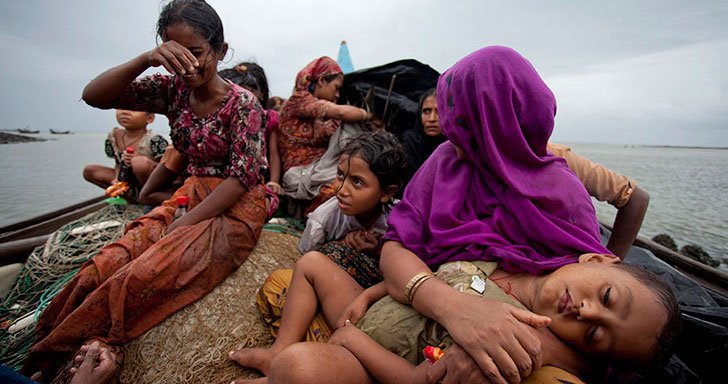
Video footage and satellite images showing makeshift grave sites and burial mounds offer a rare glimpse inside a desert no man’s land between Jordan and Syria where tens of thousands of refugees who have been virtually cut off from humanitarian aid for two months are stranded, said Amnesty International.

Fresh accounts gathered by the organisation from people in the area known as the berm, paint a desperate picture of human suffering and highlight the tragic consequences of the world’s failure to share responsibility for the global refugee crisis. Next week, world leaders will gather in New York for two high-level summits to discuss refugees.

“The situation at the berm offers a grim snapshot of the consequences of the world’s abject failure to share responsibility for the global refugee crisis.”

Tirana Hassan, Crisis Response Director at Amnesty International.

“The situation at the berm offers a grim snapshot of the consequences of the world’s abject failure to share responsibility for the global refugee crisis. The knock on effect of this failure has seen many of Syria’s neighbours close their borders to refugees,” said Tirana Hassan, Crisis Response Director at Amnesty International.

“It’s a desperate picture for people trapped at the berm, food is running out and disease is rife. In some cases people are suffering or even dying from preventable illnesses, simply because they are not allowed into Jordan and the authorities have blocked access for aid, medical treatment and a meaningful humanitarian response.”

Syria’s neighbours, including Jordan which is hosting 650,000 refugees, have taken in the vast majority of people fleeing the conflict, severely straining their resources.

Ahead of the two summits in New York Amnesty International called on world leaders to move beyond rhetoric and make concrete commitments to welcome their fair share of refugees, relieving the pressure on countries which are hosting large numbers of refugees. The organisation also called on Jordan to grant immediate entry to refugees at the berm.

Australia must step up

As Prime Minister Malcolm Turnbull stepped onto the world stage in New York Amnesty International called on him to make a commitment to help with this desperate situation.

“This is an urgent situation that requires a swift global response, and Australia simply must lend a helping hand,” said Emma Bull, Government Relations Adviser at Amnesty International Australia.

“This is an urgent situation that requires a swift global response, and Australia simply must lend a helping hand.”

Emma Bull, Government Relations Adviser at Amnesty International Australia.

Amnesty International is calling on the Prime Minister to assist Jordan, which has already taken in close to three quarters of a million refugees from Syria.

Australia must use the summit to apply diplomatic pressure on Jordan to grant immediate entry to refugees stranded at the berm, as well as work with other countries to do their fair share in offering resettlement places. As a show of good faith to the global community, Australia should make a new, additional pledge to take an emergency intake of refugees from Jordan.

“Australia can’t let this summit be a wasted opportunity. There is a global crisis, with more desperate women, children and men seeking our protection and Australia must respond to those in need,” said Emma Bull.

Starvation, sickness and death

Humanitarian assistance to the berm, which was already limited before, stopped completely when the Jordanian authorities sealed off the Rukban and Hadalat border crossings after a deadly attack killed seven border guards on 21 June. Since then, only one delivery of food aid was made in early August to more than 75,000 people stranded there. Aid agencies are barred by the Jordanian authorities from accessing the no man’s land area and were forced to drop supplies over the sandy ridge (berm) using cranes. Abu Mohamed, who has been living in the informal camp at Rukban for five months said the situation there has sharply deteriorated since the 21 June attack.

“The humanitarian situation is very bad, the situation of children in particular is very bad. We have drinking water but hardly any food or milk… [it] is awful,” he said.

“The humanitarian situation is very bad, the situation of children in particular is very bad. We have drinking water but hardly any food or milk… [it] is awful.”

Abu Mohamed, who has been living in the informal camp at Rukban for five months

“Many people have died… They distributed just rice and lentils and a kilo of dried dates, but that was all for a whole month, they gave us nothing but that. The mood among the people in Rukban is below zero.”

Video footage obtained by Amnesty International shows two makeshift grave sites in Rukban revealing dozens of burial mounds in close proximity to refugee tents.

The lack of access to proper medical care and the dire conditions is a deadly combination. Poor hygiene, sanitation conditions and limited access to clean water are reported to have led to an outbreak of hepatitis, which is believed to be the leading cause of child deaths in Rukban.

Humanitarian sources indicate that since June there have been at least 10 deaths from hepatitis. Sources in Rukban said many of those who have died are children who were suffering from jaundice which occurs as a result of hepatitis.

Aid workers have also reported that at least nine childbirth-related deaths took place since 21 June. A significant number of pregnant women are reportedly among the refugee population unable to access medical care.

The total number of deaths that have occurred is difficult to verify given the lack of access to the berm.

According to sources inside Rukban, in late August a 20-year-old man died from complications of jaundice most likely as a result of hepatitis. He is reported to have bled to death from gastrointestinal bleeding. The lack of medical treatment meant there was nothing that could be done to save his life.

Among the other most prevalent illnesses spreading in the camp are respiratory infections, dehydration, leishmaniasis and diarrhoea.

Satellite images obtained by Amnesty International show that since October 2015 the population density near the two informal border camps at Rukban and Hadalat has risen significantly.

Although the number of refugees at Hadalat decreased slightly following the halt to the humanitarian response in June and nearby Russian airstrikes in July, overall there has been steady rise in the number of refugees at the berm.

At Rukban the overall number of shelters rose from just 368 a year ago to 6,563 in late July 2016 and most recently increased to more 8,295 in September 2016. This dramatic influx highlights the fact that over the past few months thousands of people have continued to flee the conflict in Syria where war crimes and other grave violations are being committed on a daily basis.

Security concerns heighten restrictions

The Jordanian authorities have repeatedly cited security concerns as their reason for closing the border, halting humanitarian operations at the berm. Jordan’s Minister of State for Media Affairs Mohammed al-Momani told Amnesty International that the area around the berm is “becoming a Daesh enclave” (controlled by the armed group calling itself Islamic State). While he acknowledged that the humanitarian situation there is difficult and said that Jordan is ready to assume its share of responsibility he also called on the UN and international community to do their fair share for the refugees at the berm.

“There is no question that security is an important consideration, but protecting people in Jordan should not come at the expense of providing humanitarian assistance and protection to those desperately in need,” said Tirana Hassan.

“There is no question that security is an important consideration, but protecting people in Jordan should not come at the expense of providing humanitarian assistance and protection to those desperately in need.”

Tirana Hassan

Jordan has previously welcomed refugees from Syria through its borders and carried out rigorous screening and registration processes prior to allowing their entry into the country. The authorities can use these processes again to open their doors to refugees fleeing the conflict in Syria, while ensuring security at the same time.

The UN is negotiating plans with the Jordanian authorities to shift humanitarian aid distribution points some 2km into the no man’s land area, away from the Jordanian border creating a buffer zone, to allow humanitarian operations to resume.

“Whether aid is distributed at the berm’s edge or 2km away does not change the fact that there are tens of thousands of people seeking international protection on Jordan’s doorstep, nor does it absolve the authorities’ obligation to offer a safe haven to those fleeing conflict and persecution,” said Tirana Hassan.

“Directly or indirectly forcing refugees to return to Syria by refusing access and imposing intolerable living conditions on them is a flagrant violation of Jordan’s international obligations. The authorities must allow unfettered humanitarian access to refugees who are trapped. Any attempt to coerce or ask them to move should be rejected.”

“The authorities must allow unfettered humanitarian access to refugees who are trapped. Any attempt to coerce or ask them to move should be rejected.”

Tirana Hassan

Any longer term solution however, needs to be a global one. Internationally, resettlement places for refugees from Syria remain woefully insufficient. Countries in the region continue to bear the brunt of the refugee crisis, with more than four million refugees in just three countries.

“Without real commitments to boost resettlement followed by concrete action, next week’s refugee summits will serve as little more than a token gesture,” said Tirana Hassan.

“Failing to provide a long term solution for refugees stranded at the berm will point not just to the world’s failure there, but their failure of refugees worldwide.”
The coup may have failed but fear still rules Turkey

The government crackdown is intensifying one month after the attempted uprising.

Fear comes in many forms. A month ago, on the night of the bloody coup attempt here in Turkey, I together with millions in Istanbul and Ankara experienced gut-tightening fear as explosions shook our living rooms and gunfire crackled outside our windows. Downstairs my neighbours huddled in their bathroom, afraid for their safety and for the lives of loved ones. Outside, tanks rolled by whilst jets and helicopters filled the skies and civilians were gunned down by would-be putschists.

After it became clear that the bloody coup had failed there was huge relief, at least initially. But, like the acrid smell, fear still hung in the air. While large orchestrated rallies celebrating the defeat of the attempted coup brought an almost festive atmosphere at night, the mood on the streets during the day remained tense. Taut lips and furrowed brows had replaced the local shopkeepers’ usual smiles. Many others remained at home, watching and waiting nervously, unsure what would come next. Had the risk of a coup been averted? Could there be another violent attempt to seize power?

After it became clear that the bloody coup had failed there was huge relief, at least initially. But, like the acrid smell, fear still hung in the air.

Underpinning this fear was the memory of brutal coups in Turkey’s past: of the detentions, torture and executions that followed the 1980 coup. Those who lived through it know the horror, whilst those too young to remember have heard the stories from their parents.

State of emergency announced

In the days after the failed coup, as the government crackdown began and the state of emergency was announced, the gnawing fear did not subside – it merely transformed. Over the month since the attempted uprising, more than 23,000 people have been detained and nearly 82,000 have been suspended or removed from their jobs. Anyone with any perceived link to the movement of U.S.-based cleric, Fethullah Gülen, accused of orchestrating the coup, has been targeted. Soldiers, police, judges, lawyers, academics, journalists, teachers, doctors and even football referees. Seemingly no one is immune.

While the government has the duty to ensure security, protect citizens, and prosecute those responsible for violent attacks on ordinary people, individuals should only be investigated and brought to justice where there is sufficient evidence against them. People must not be arbitrarily arrested, detained or punished. And that is where the government of President Recep Tayyip Erdogan is failing.

People must not be arbitrarily arrested, detained or punished. And that is where the government of President Recep Tayyip Erdogan is failing.

The impact on individuals and their families has been huge. Those who have been suspended or fired will have difficulty finding other jobs. One new father I spoke to explained: “I think the reason for my suspension is because I am a member of a trade union,” he said. “I am back at work this week but proceedings are pending. I am very scared that if I lose my job I won’t get another and it won’t be possible to provide for my family.”

“I am very scared that if I lose my job I won’t get another and it won’t be possible to provide for my family.”

a new father in turkey

Having so many people suddenly dismissed has had significant consequence for the functioning of the state. One fifth of the judiciary has been suspended, fired, or detained. Other essential state functions, such as education, have been brought to their knees and cannot be rebuilt overnight. Members of the public are not the only ones afraid. Journalists, activists and lawyers are petrified of speaking out, lest they, too, become a target of suspicion.

Ironically, the mechanisms being used by the Erdogan government now are a legacy of Turkey’s past military rulers. The state of emergency law, passed in 1983, gives the government the power to impose curfews, ban demonstrations, and close businesses, foundations and associations. It gives police the power to stop and search people without judicial authorization. Several reports suggest that the police are using these powers to look at text and social media messages on people’s phones.

The law also gives the government power to rule by decree so they can pass laws unchallenged. So far two decrees have allowed habeas corpus to be suspended for up to 30 days, restricted the rights of detainees to consult with lawyers, and given state officials immunity from prosecution for carrying out duties under the decrees. Meanwhile, we have witnessed a crackdown on the media that is unprecedented in modern Turkish history. In the past month, 131 media outlets and publishing houses have been shut down and at least 89 arrest warrants have been issued for journalists.

In the past month, 131 media outlets and publishing houses have been shut down and at least 89 arrest warrants have been issued for journalists.

The post-coup purge comes at a time when Turkey’s attack on freedoms of expression, association and assembly was already gathering momentum. Government administrators had been appointed to run Gülen-linked opposition newspapers and 15 TV channels were shut down in the months before the coup. The right to freedom of peaceful assembly was already restricted and excessive force was regularly used by police to disperse protests.

In the south-east of the country, where there have been clashes between members of Kurdish separatist group the PKK and security forces, the government has overseen an onslaught on Kurdish towns and neighbourhoods, which includes round-the-clock curfews and cuts to services. The military have conducted operations in residential areas resulting in hundreds of thousands being displaced and unable to return.

The military have conducted operations in residential areas resulting in hundreds of thousands being displaced and unable to return.

In the febrile post-coup atmosphere, it is likely that the situation for dissenters will further deteriorate. A blurring of the distinction between culpability for the coup and being a Gülen sympathizer has already been visible. The authorities’ definition of “traitor” could be broadened further still to encompass secular, leftist or Kurdish critics.

The violent coup attempt, together with the government crackdown that has followed, will leave indelible scars on Turkey for years to come. The country is gradually returning to normal – but it is a new normal. A normal where there is less oxygen for civil society and where underlying fear is a constant.

By Andrew Gardner, Amnesty International’s Turkey researcher

This article first appeared in TIME

USA: Leaving Edward Snowden in limbo will be a stain on President Obama’s legacy

US President Barack Obama should place himself on the right side of history by pardoning whistleblower Edward Snowden, who faces the possibility of decades in prison for speaking out to defend human rights.

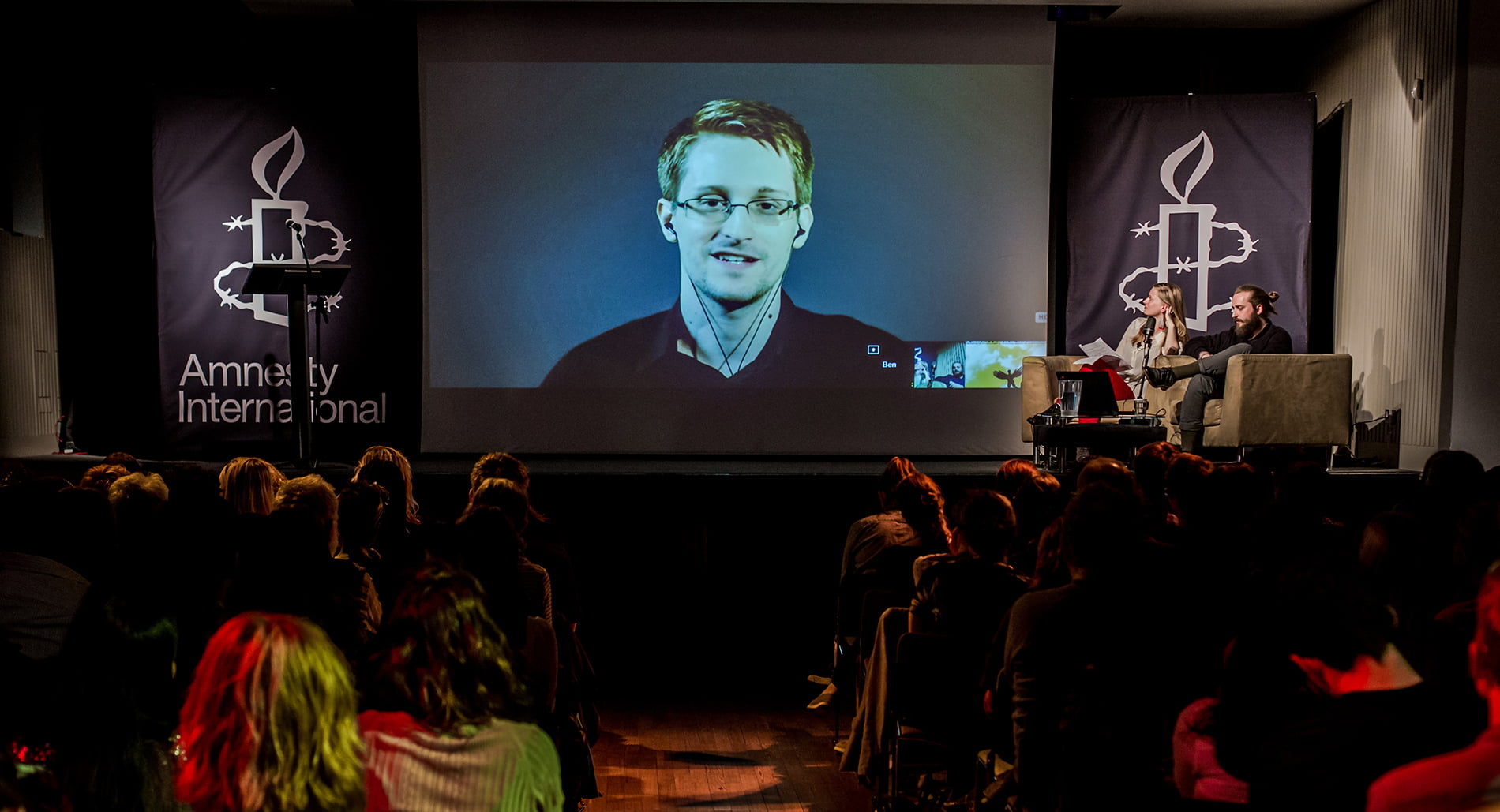
Ahead of an upcoming Oliver Stone film about Snowden’s whistleblowing and exile in Russia in 2013, the campaign is calling for a presidential pardon for the former National Security Agency (NSA) contractor before President Obama leaves office.

“Edward Snowden clearly acted in the public interest. He sparked one of the most important debates about government surveillance in decades, and brought about a global movement in defence of privacy in the digital age. Punishing him for this sends out the dangerous message that those who witness human rights violations behind closed doors should not speak out,” said Salil Shetty, Amnesty International’s Secretary General.

“Edward Snowden […] brought about a global movement in defence of privacy in the digital age.”

Salil Shetty, Amnesty International’s Secretary General.

“It is ironic that it is Snowden who is being treated like a spy when his act of courage drew attention to the fact that the US and UK governments were illegally spying on millions of people without their consent.

“The mass surveillance exposed by Snowden impacts the human rights of people around the world. Our new campaign gives the public a chance to call for his pardon and thank him for triggering action by concerned individuals around the world to take back their privacy.”

“It is ironic that it is Snowden who is being treated like a spy when his act of courage drew attention to the fact that the US and UK governments were illegally spying on millions of people without their consent.”

Salil Shetty

In June 2013, Edward Snowden shared with journalists a cache of US intelligence documents that he had gathered while working as an NSA security contractor. The documents revealed the extent of the US and UK governments’ electronic surveillance operations, which were monitoring the internet and phone activity of millions of people across the world.

In response to reporting of Snowden’s revelations, President Obama issued a directive requiring intelligence agencies to make significant changes to US surveillance practices. In 2015 Congress reined in the government’s surveillance authority for the first time in nearly four decades, after a federal appeals court found that the NSA’s collection of information about virtually every domestic phone call was illegal.

Amnesty International has repeatedly called on the US government to drop the charges against Edward Snowden, or to guarantee him a public interest defence in the event of his case going to trial.

But more than three years after his revelations Snowden remains in limbo in Russia, under the shadow of World War One-era espionage laws which could see him charged with serious felonies if he returns to the USA. A Presidential Pardon is Snowden’s best chance of freedom.

“Snowden should be remembered as a human rights champion for the public service he performed. It will be a deep stain on President Obama’s legacy if he leaves office with Snowden still in exile in Russia, separated from his family and treated like an enemy of the state,” said Salil Shetty.

“The charges against Edward Snowden come from hopelessly outdated laws and should never have been made in the first place. We are now calling on our supporters to join us in urging President Obama to address a gross injustice, and send the message that whistleblowers and others who act in the name of human rights will be protected.”

Ben Wizner, Edward Snowden’s attorney and director of the ACLU’s Speech, Privacy, and Technology Project, said:

“Cases like Edward Snowden’s are precisely the reason the pardon power exists. While some US Presidents have used that power to pardon people who committed reprehensible acts, President Obama has the opportunity to recognize one of the most significant acts of whistleblowing in modern history. In light of Snowden’s very concrete contributions to democratic debate worldwide, we should be talking about how to thank him, not how to punish him.”

“In light of Snowden’s very concrete contributions to democratic debate worldwide, we should be talking about how to thank him, not how to punish him.”

Ben Wizner, Edward Snowden’s attorney and director of the ACLU’s Speech, Privacy, and Technology Project

Background

The petition is available here.

Under Article II, Section 2 of the US Constitution, US Presidents have the power to grant pardons to individuals for federal offences.

Indonesia – An activist’s account of his dedication to peaceful protest

Amnesty supporters worldwide wrote thousands of letters on behalf of Filep Karma who was released from prison in November 2015. Today, he shares why he won’t stop fighting for freedom of expression in Indonesia.

I was born in Jayapura, Papua, the easternmost region of Indonesia. Since my childhood, I witnessed numerous human rights violations.

Under former President Suharto (1966-1998), people who spoke out for the rights of Papuans were immediately accused of separatism by the military government. Anyone who wanted to fight against this injustice had to go [into hiding].

When Papuans demand independence it’s because many of them know that the 1969 independence referendum was unfair. During that time Papuan people were intimidated and coerced by the Indonesian military forces. People were killed or they disappeared. Papuans lived in terror and didn’t have the courage to speak out. I could not accept this.

When I was a civil servant in the 1990s I was invited to study for a year in the Philippines. I learned about Mahatma Gandhi and Martin Luther King – how you could struggle against injustice using peaceful methods. I then decided that Papuans should do the same, and speak up for their rights peacefully.

“We have to free ourselves from fear before we can speak out for others.”

Filep Karma

Imprisoned for the first time

When Suharto resigned in May 1998, I thought this was the moment to initiate a peaceful Papuan independence campaign. I organized a gathering in Biak city and I led the raising of the Morning Star Flag [a symbol of Papuan independence which is banned in Indonesia]. For this, I was convicted of “treason” and sentenced to six and a half years in prison [the sentence was overturned on appeal after 10 months].

While in detention I received death threats. One day, I got a dog’s head. In the package there was also a letter saying: “I know your family, I know your activities; I know everything, so stay out of it!”

I was scared. But then I thought, if I want to speak out for other people’s rights I have to liberate myself first. We have to free ourselves from fear before we can speak out for others. So I was honest with my family and my kids. I just said, if anything happens to me, don’t be shocked, don’t give up hope and just live your life as normal.

Released from a second jail-term

In May 2015, the Indonesian government released five Papuan political prisoners after they were pardoned by the president. They also offered this to me, but I rejected it. I did not want to accept clemency. I could only accept “abolition” where they annulled my criminal conviction and rehabilitated my reputation.

On 18 November, a prison official informed me that I would be released in the next hour. I initially refused. I said: “Why do you want to kick me out today? At least I should be given a period of adaptation before being released”. The next day they released me. I was in shock.

“Amnesty’s letters gave me spirit, reassurance and hope.”

Filep Karma

The fight continues

I’m still going to fight for human rights in Papua, and against all the problems Papuans still face. Day by day, there are more Papuans who dare to speak out about their rights.

In January I visited political activists from Maluku imprisoned in Nusakambangan Island, Central Java. I met with [prisoner of conscience] Johan Teterissa for about an hour but unfortunately our conversation was monitored closely by several prison officials.

They were imprisoned only because they organized a peaceful protest by dancing and waving a flag in front of the President [on 29 June 2007]. They were sentenced to 18 years, 20 years and life imprisonment. For me, it’s very odd because they didn’t pose any threat to the president and it was part of their political expression.

They are being imprisoned in Java which is really far from Maluku. A prisoner should not be imprisoned far from his or her family. These things moved me and I can probably help campaign for them. A few months ago I met with the Minister of Law and Human Rights and he promised to move the Moloccan prisoners back to Ambon, the capital city. He did not say when he would; but he did say it would be “easy”.

The power of letter-writing

While I was in prison, I received lots of letters – from elementary, high school and university students, as well as university lecturers from many countries in the world. I give huge thanks to friends from Amnesty International from all around the world who campaigned for me.

I also ask Amnesty to continue to support my friends who are still in prison. Those letters had an enormous impact on me. I think the letters gave me spirit, reassurance and hope. They made me feel like I wasn’t alone.

My message to anyone reading this is: give whatever support and energy you can for friends who are being detained for peacefully expressing their aspirations wherever they are. Amnesty needs to tell the stories of these peaceful defenders of humanity, who are treated unjustly and inhumanly, so that people from all around the world know their story.

Indonesia: Allow stranded Sri Lankan Tamil asylum seekers to disembark

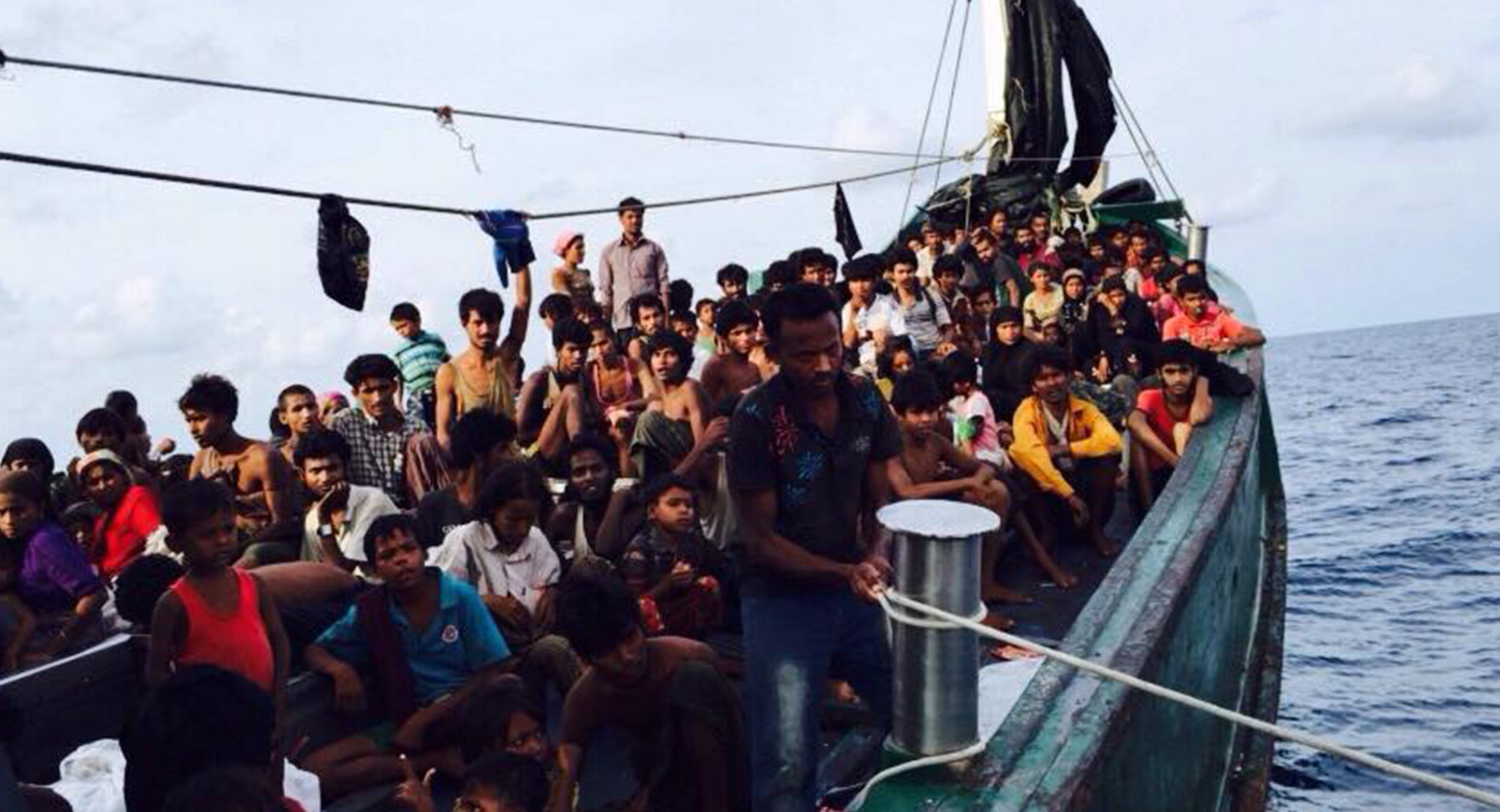
The Indonesian central government should allow dozens of Sri Lankan Tamil asylum seekers, including a pregnant woman and nine children, who have reached the coast of Lhoknga, Aceh, to disembark and meet UN Refugee Agency (UNHCR) officials.

Pushback fears

“These people have endured a long and difficult journey already. Now that they have reached land in Aceh, they should be allowed to disembark and meet UNHCR officials,” said Josef Benedict, Amnesty International’s Director of Campaigns for South East Asia and the Pacific.

The organization fears that the Indonesian authorities may push the boat – reportedly carrying 44 people – back into international waters.

“These people have endured a long and difficult journey already. Now that they have reached land in Aceh, they should be allowed to disembark and meet UNHCR officials.”

Josef Benedict, Amnesty International

The Aceh fishermen discovered the boat off the coast of Aceh province on 11 June. They subsequently reported the boat to the Indonesian navy who have not allowed the boat to disembark and the people on it to apply for asylum, arguing the asylum-seekers lack the proper documentation.

They remain on the boat along the Lhoknga coast, with the threat of being forced back into international waters lingering over them. Meanwhile, the authorities have not let UNHCR officials interview them and establish the veracity of their claims and identity.

“Refugees and asylum-seekers frequently travel without identity documents, as often these documents are either difficult to obtain or get lost during the journey. This has no consequence on these people’s right to seek asylum. UNHCR should be allowed to register them immediately,” said Josef Benedict.

Persecution against Tamils

The boat began a hazardous journey from India after those on board reportedly fled Sri Lanka, where the members of the Tamil minority have suffered past persecution. Despite many recent improvements, there are still concerns about discriminatory practices against Tamils by law enforcement officials.

The group had set out from India, more than 1,700 km away, on a boat bearing an Indian flag. They had been travelling for 20 days, headed for Australia. As they neared the coast of Aceh, bad weather struck, stranding their boat off Lhoknga.

The UN Human Rights Council noted in April that Sri Lanka saw a spate of arrests of Tamils under the Prevention of Terrorism Act (PTA). Arrests carried out under the PTA have, in a number of cases, failed to meet the minimum standards of due process laid out in directives by Sri Lanka’s National Human Rights Commission. Tamil Sri Lankans remain deeply concerned about what they say is a persistent culture of surveillance in the north and east of the country.

“We are calling on the Indonesian authorities to adopt a consistent approach in these cases. Last year Indonesia won much acclaim for providing refugees and migrants with much-needed assistance during the Andaman Sea boat crisis. It will be a grave injustice if people seeking international protection had their right to seek asylum ignored in Indonesia,” said Josef Benedict.

“It will be a grave injustice if people seeking international protection had their right to seek asylum ignored in Indonesia.”

Josef Benedict, Amnesty International

Indonesia’s constitution recognizes the right to claim asylum and since 2011 the Indonesian authorities have been developing a Presidential Regulation on asylum-seekers and refugees. According to Indonesian NGOs the proposed regulation contains many positive measures, but has not yet been passed.

Thailand: Withdraw charges against human rights defenders

The Thai authorities must reverse their decision to charge three prominent human rights defenders with criminal defamation and computer crimes for documenting and publishing details of human rights violations in the country.

“Instead of using broad and vague laws to target human rights defenders, the Thai authorities should be following up on the reports of alleged torture and other ill-treatment, with a view to holding those responsible accountable,” said Audrey Gaughran, Amnesty International’s Director of Global Issues.

The three well-known Thai activists, Somchai Homla-or, Pornpen Khongkhachonkiet, and Anchana Heemmima, have all been summoned to appear at Pattani Police station on 26 July 2016, to face charges of criminal defamation and violating the Computer Crimes Act.

“Instead of using broad and vague laws to target human rights defenders, the Thai authorities should be following up on the reports of alleged torture and other ill-treatment, with a view to holding those responsible accountable.”

Audrey Gaughran, Amnesty International

The move by the Thai authorities comes after the three activists’ organization, the Cross Cultural Foundation and Duay Jai, published a report that raises serious allegations of torture against the Internal Security Operations Command (ISOC) Region 4 – an army unit that operates in Thailand’s Southern Border Provinces.

Ever since the report was published, in February 2016, Somchai, Pornpen and Anchana have faced official harassment, including pressure to reveal the sources of their information and even the identity of the victims of alleged torture.

“The three accused are highly respected human rights defenders. The charges brought against them represent an escalation of the Thai authorities’ assault on the rights to freedom of expression and freedom of information. This shameful attempt to silence them, and others seeking redress, should amplify calls for the security forces to be held accountable,” said Audrey Gaughran.

EU’s reckless refugee returns to Turkey illegal

The European Union (EU) must immediately halt plans to return asylum-seekers to Turkey on the false pretence that it is a “safe country” for refugees.

No safe refuge

Amnesty International’s briefing on the issue, No safe refuge: Asylum-seekers and refugees denied effective protection in Turkey, details the short-comings in Turkey’s asylum system and the hardships refugees face there that would render their return under the EU-Turkey Agreement of 18 March illegal – and unconscionable.

The briefing shows that Turkey’s asylum system is struggling to cope with more than three million asylum-seekers and refugees. As a result, asylum-seekers face years waiting for their cases to be dealt with, during which time they receive little or no support to find shelter and sustenance for themselves and their families, with children as young as nine working to support families.

“The EU-Turkey deal is reckless and illegal. Amnesty International’s findings expose as a fiction the idea that Turkey is able to respect the rights and meet the needs of over three million asylum-seekers and refugees,” John Dalhuisen, Amnesty International

“In its relentless efforts to prevent irregular arrivals to Europe, the EU has wilfully misrepresented what is actually happening on the ground inTurkey. It is to be expected that a new asylum system, in a country hosting the largest number of refugees in the world, would struggle. While there is value in supporting and encouraging Turkey to develop a fully functioning asylum system, the EU cannot act as if it already exists.”

Turkey failing to protect refugees

Despite its broadly welcoming attitude towards refugees, the large numbers of people – about 2.75 million Syrian refugees and 400,000 asylum-seekers and refugees from other countries (primarily Afghanistan, Iraq and Iran) – have inevitably placed a considerable strain both on Turkey’s new asylum system and its capacity to meet people’s basic needs.

The report shows how the Turkish asylum system fails three crucial tests required under international law for the return of asylum seekers to Turkey to be lawful: status, durable solutions and subsistence.

1. Status: Turkey lacks the capacity to process asylum applications, meaning that hundreds of thousands of asylum-seekers and refugees languish in legal limbo for years at a time. The Turkish authorities have refused to provide Amnesty International with asylum statistics. In April, however, they reported having processed around 4,000 applications, or 4% of the 266,000 applications registered with the UN Refugee Agency, in 2015.

2. Durable Solutions: Refugees should either be integrated in the country, resettled to another country or, if safe, repatriated to their country of origin. However,Turkey denies full refugee status, and with it integration, to all non-European refugees, while the international community is failing to provide anywhere close to sufficient resettlement options/places. This leaves refugees in a double-bind, where they cannot build a new life in Turkey but they have little hope of being offered the option to resettle to another country in the coming years, if at all.

Faiza, (whose name has been changed) and her sister, both Afghans, fled forced marriages in Iran and were recognized as refugees in Turkey. For three years, they waited in vain for an interview at a resettlement country’s embassy. In the end they did not see any option but to risk their lives in a smuggler’s boat to Greece.

Faiza told Amnesty International that had there been any reasonable prospect of leaving Turkey safely and regularly, and some support while waiting for the process to conclude, she and her sister would have waited. She explained: “If there was any hope of resettlement, we would have waited. We were really scared of the journey to Europe because we knew it was dangerous. But…we were so desperate. We said to ourselves: ‘Maybe we will die, maybe we won’t arrive – but it doesn’t matter because we can’t stay in Turkey anymore.’”

3. Subsistence: The vast majority of Syrian and other refugees are forced to seek shelter without government support. Although the Turkish authorities are accommodating more than 264,000 Syrian refugees in camps in the southern border provinces, they cannot realistically provide shelter for the remaining 90% (2.48 million) from Syria. Meanwhile, it has only made social housing available for 100 of the 400,000 (0.0025%) asylum-seekers and refugees from other countries. This means that approximately three million asylum-seekers and refugees are being left to meet their own shelter needs as best they can.

Struggling to survive

Amnesty International researchers interviewed 57 refugees in Turkey between March and May 2016. All described the struggle to survive with almost no financial support from the authorities, with the vast majority relying on charity from family members, fellow asylum-seekers, or religious communities.

Refugees told Amnesty International how they live in shoddy or make-shift accommodation, sometimes sleeping in mosques, parks and metro stations because they cannot afford the rent. Two Afghan families were sleeping under a bridge in Istanbul after three of their children drowned in a failed sea-crossing.

“Turkey has been a generous host of refugees, but its promises to EU leaders are simply not reflected in the situation on the ground. Asylum seekers and refugees are stuck for years in Turkey and, while they’re waiting, are given neither support nor the right to support themselves,” JOHN DALHUISEN, AMNESTY INTERNATIONAL

“This is a reality check for Europe’s leaders. It may be politically expedient to outsource their legal duty to help people fleeing conflict, but if they think they can do this either lawfully or without inflicting additional misery on people already fleeing terrible suffering, they are tragically and quite obviously mistaken.”

Child refugees working to make ends meet

The briefing also warns that child labour is common among refugees in Turkey as families struggle to meet basic needs.

A Syrian mother of three boys told Amnesty International that her entire family of seven survives on the 5-10 Turkish Lira a day (about US$1.75 to $3.50) that her nine-year old son earns working at a grocery store. The shrapnel injuries her husband sustained in Syria prevent him from working.

EU must share, not outsource, responsibility

Rather than off-loading its responsibilities on Turkey, the EU should be looking to kick-start an ambitious resettlement programme for refugees currently in the country.

While Turkey hosts more than three million asylum-seekers and refugees, more than any other country in the world, EU member states collectively resettled only 8,155 refugees from around the world in 2015.

“The European Union has responded to one of the darkest humanitarian catastrophes of our time by putting up fences, deploying more border guards, and striking dodgy deals with neighbouring countries to keep people out. The result is misery and suffering, and more deaths at sea,” JOHN DALHUISEN, AMNESTY INTERNATIONAL

Background: EU-Turkey deal already undermined by forcible returns from Turkey to Afghanistan, Iraq and Syria

On 18 March 2016, the EU and Turkey agreed to a far-reaching migration control deal – formally a statement. In exchange for up to €6 billion as well as political concessions from the EU, Turkey agreed to take back all “irregular migrants” who cross into the Greek islands after 20 March.

The justification for the EU-Turkey deal is the assumption that Turkey is a safe place to which asylum-seekers and refugees can be returned. Beyond not respecting refugee rights within Turkey (the subject of this report), another way in which a country might not be “safe” is if it sends people to other countries where they face a risk of serious human rights violations. Previous Amnesty International research has already shown that in late 2015 and early 2016, asylum-seekers and refugees in Turkey were sent back to precisely such a risk in Afghanistan, Iraq and Syria.

World leaders have ‘shirked, not shared’ responsibility on refugee crisis

The abject failure of a United Nations summit to tackle the deepening global refugee crisis is a missed opportunity that will affect millions of the world’s most vulnerable people unless leaders find alternative solutions to help them reach safety.


UN member states are set to adopt an ineffective refugee deal on 19 September. On 20 September, US President Barack Obama will appeal to leaders to make specific commitments that will help end the suffering of refugees across the world – a call that has so far been wilfully ignored.

“Faced with the worst refugee crisis in 70 years, world leaders have shown a shocking disregard for the human rights of people who have been forced to leave their homes due to conflict or persecution,” said Salil Shetty, Secretary General of Amnesty International.

“We already know the UN summit is doomed to abject failure, while the Obama summit looks unlikely to pick up the pieces.”

“We already know the UN summit is doomed to abject failure, while the Obama summit looks unlikely to pick up the pieces.”

UN Secretary-General Ban Ki-moon had proposed a Global Compact on Refugees that would have asked governments to commit to welcoming 10% of the world’s refugees annually.

However, member states stripped the UN proposals of any substance, making sure there was nothing obligating them to take in specific numbers of people.

The Global Compact on Refugees will now not be agreed before 2018. Instead, states will issue the “New York Declaration” with token commitments but bereft of concrete responsibility-sharing measures.

“We have waited two years for this summit. World leaders should be announcing clear and concrete steps towards ending the refugee crisis. The UN had initially proposed an ambitious plan, but the European Union, Russia and China were among those who sacrificed refugees’ rights for national self-interest and missed a massive opportunity to back a global solution to the crisis,” said Salil Shetty.

“Instead of sharing responsibility, world leaders shirked it. The UN summit has been sabotaged by states acting in self-interest, leaving millions of refugees in dire situations around the world on the edge of a precipice.”

“The UN summit has been sabotaged by states acting in self-interest, leaving millions of refugees in dire situations around the world on the edge of a precipice.”

“But governments should not be under the illusion that this lets them off the hook. UN member states have both a moral and a legal duty to welcome the refugees who need help today.”

The day after the watered-down UN document is adopted, President Obama will host a Leaders’ Summit in New York on 20 September designed to secure specific commitments from member states to offer safe and legal routes to refugees – something most of them have so far failed to do. He will also call on leaders to donate money to assist refugees.

“UN member states have both a moral and a legal duty to welcome the refugees who need help today.”

Amnesty International is calling on governments, particularly from wealthier countries, to urgently make commitments to resettle significantly more refugees and provide them with legal ways to find safety, whether at the Obama Leaders’ Summit or in the weeks to come.

“The Obama summit needs to re-invigorate efforts to solve the refugee crisis by showing that at least some governments have a firm commitment to helping refugees,” said Salil Shetty.

“We desperately need a quick and decisive show of leadership from a core group of countries willing to take responsibility and immediately help by welcoming in some of the most vulnerable refugees and providing others with humanitarian, work and student visas. The more countries who step forward, the more workable a solution becomes.

“In the long-term, we need a more organized sharing of that responsibility, with states agreeing objective criteria to decide what proportion of the world’s refugees each needs to take, based on their capacity to host them.”

There are 21 million refugees in the world today, according to UNHCR, with only 14% of them in the richest parts of the world.

There are 21 million refugees in the world today, according to UNHCR, with only 14% of them in the richest parts of the world.

Together, Ethiopia, Kenya, Jordan, Lebanon, Pakistan and Turkey host a third of the world’s refugees, while accounting for 1.6% of the world’s economy. Right now, only about 100,000 refugees are actually resettled annually; 90% of them by just five countries (USA, Canada, Australia, Norway, and the UK).

Amnesty International has long lobbied governments around the world to do more to share responsibility to fulfil refugees’ rights, and this week began a global campaign called “I Welcome” calling on governments to welcome refugees.

“World leaders have completely failed to agree a plan to protect the world’s 21 million refugees – some of the most vulnerable people in the world. But where leaders fail, people of good conscience will act. Change starts with three short words: I welcome refugees,” said Salil Shetty.

Myanmar at the UN: Keep pressure on human rights

As Aung San Suu Kyi arrives in the United States to meet with President Barack Obama and attend the United Nations General Assembly, the international community must maintain pressure on Myanmar’s authorities to improve the country’s human rights record.

Aung San Suu Kyi’s trip to the US comes as the new civilian-led government enters its sixth month in office. In this time, it has taken some steps to address human rights but still faces challenges bequeathed by a half a century of military rule.

“We have seen encouraging changes as Myanmar eases out from under the shadow of military rule. But there is still a lot more to do to ensure a decisive break with the country’s ugly past of human rights violations,” said Rafendi Djamin, Amnesty International’s Director for South East Asia and the Pacific.

“For almost a quarter of a century, the United Nations General Assembly has adopted a resolution on human rights in Myanmar. It is important that the same happens this year. The gains made so far have to be consolidated and built upon, not left incomplete or eroded.”

A new quasi-civilian government, led by Aung San Suu Kyi, came to power in March 2016 after a resounding victory of her party, the National League for Democracy (NLD), in the 2015 elections. Upon taking office, it faced a daunting series of human rights challenges.

“For almost a quarter of a century, the United Nations General Assembly has adopted a resolution on human rights in Myanmar. It is important that the same happens this year.”

Rafendi Djamin, Amnesty International’s Director for South East Asia and the Pacific.

In addressing those challenges, the NLD’s power is severely constrained by the enduring influence of the Myanmar military, which continues to control key ministries and can block constitutional changes with a quarter of all seats in parliament.

The importance of a UNGA resolution on human rights in Myanmar is further underlined by the fact that none of the recommendations made in previous resolutions have been fully implemented.

“When it comes to ongoing conflict, the plight of the Rohingya, humanitarian assistance for displaced communities, holding human rights violators to account, curbing hate speech, and reforming repressive laws, little has improved.”

“When it comes to ongoing conflict, the plight of the Rohingya, humanitarian assistance for displaced communities, holding human rights violators to account, curbing hate speech, and reforming repressive laws, little has improved,” said Rafendi Djamin.

“Any decision to drop the UNGA resolution should be based on an objective assessment of the human rights situation in the country, not on political considerations. The reality on the ground makes clear that it is still too early to relax international pressure.”

Background

For the past 24 years, the European Union (EU) has introduced a resolution addressing the human rights situation in Myanmar at the United Nations General Assembly. The resolution brings much needed pressure to bear on Myanmar’s authorities.

Amid signs that the EU may prematurely break with that tradition, Amnesty International and other non-governmental organizations have called on the international community to back a resolution this year to help Myanmar press ahead with much-needed human rights reforms.

The key recommendations laid out in last year’s resolution (Resolution 70/233) have not been fully implemented.

Amnesty International, ALSEAN-Burma, Article 19, Civil Rights Defenders, the Asian Forum for Human Rights and Development (FORUM-ASIA), and the International Federation for Human Rights (FIDH) issued this statement.


New Darwin group hold vigil at Don Dale detention centre

The Darwin community has gathered at Don Dale to show their support for young people abused in detention.

(Re)building a network

SA/NT Community Organiser Nicole Donnelly has spent time recently in Darwin, working to re-build the Darwin Amnesty Action group.

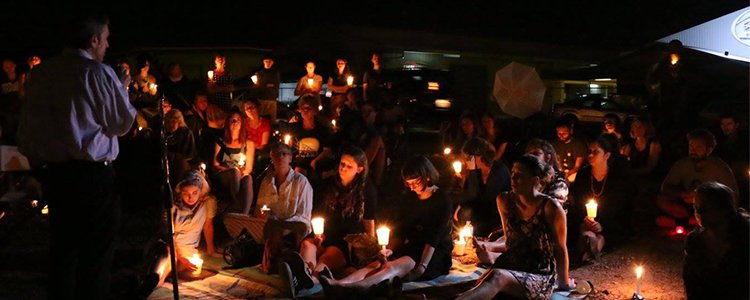
Once an enthusiastic group of new activists were recruited and trained up, the group hit the ground running by organising a vigil out the front of Don Dale detention centre in the wake of Four Corners’ investigation into the abuse of young people detained there.

The night of the vigil began with a smoking ceremony and Welcome to Country by a Larrakia Elder. Speakers included Jared Sharp, Manager of Law and Justice Projects at the North Australian Justice Agency, John Lawrence QC and Matthew Bonson, an independent lawyer – all of whom were involved in exposing the abuse at Don Dale through the Four Corners investigation. The event also featured local Aboriginal elders who are both musicians and activists, Ali and June Mills.

Jared Sharp speaking at the vigil for Don Dale kids in Darwin
Jared Sharp speaking at the vigil © Amnesty International

Reflections

Kate Rendell from the Darwin Amnesty group said of the vigil:

Given the haste at which we put this event together, it was an incredibly humbling and affecting event. That our little Amnesty International group could provide a platform for such impressive and passionate legal practitioners, community organisations and Aboriginal families and supporters was a rewarding and affirming thing – these are people who have been fighting this system, this injustice, for many many years in the Northern Territory and it felt like they were finally being heard. The vigil also provided a space for grief and shared sorrow – which I felt had not yet had an outlet.

It was both powerful and distressing to be gathered with such strong Aboriginal leaders, elders and community members celebrating the announcement of the Royal Commission and being hopeful for change – yet just metres from where 25 kids were still being incarcerated – the cry from June Mills that those kids need to be brought into this circle to be healed – was felt sharply by those gathered.

That night, the humble and yet immensely symbolic Amnesty candle felt like the most significant and powerful tool. I hope we can continue to gather in this fashion, if necessary, until those kids are released from detention.

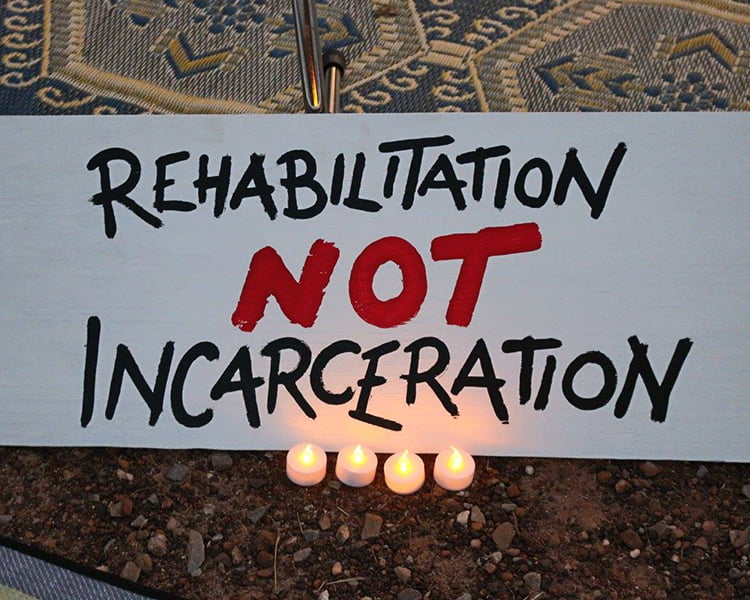
Sign calling for rehabilitation not incarceration at Don Dale vigil.
© Amnesty International
Stephanie O’Connell, Social Media Coordinator of the Darwin Amnesty Action Group:

At one point we could hear the kids yelling out from the detention center. They knew we were there to support them. The vigil helped with community awareness about the facts from different sides of the argument, and not just what the media had portrayed.

The event received a lot of media attention including live interviews from the vigil on ABC news outlets, quotes from vigil attendees in NITV news articles here and here, and SBS TV news coverage. There was also coverage in 9News online, 7 News Online, and The Guardian as well as interviews on various ABC and community radio stations.

The vigil helped to break down barriers of race and stereotypes so you can see on a personal level the effects that this kind of treatment has had on a whole community.

All in all, it was a great event and a promising start for the new Darwin local group – great work by everyone involved!

Check out the latest Community is Everything resources for action for your events.