Evidence of cash payments and abuse by Operation Sovereign Borders cannot be swept under the carpet

Amnesty International has appeared before a Senate Committee today to shed further light on Australia’s secretive Operation Sovereign Borders, following last year’s explosive reports Australian officials paid off a crew to smuggle a boat back to Indonesia in May 2015.

The Senate Inquiry, being undertaken by the Legal and Constitutional Affairs References Committee, will hear evidence and report on the alleged payment of cash by Australian officials in exchange for the return of asylum seeker boats, as documented in Amnesty International’s 2015 report “By hook or by crook: Australia’s abuse of asylum seekers at sea”.

Evidence of these payments from Australian officials to people smugglers in May 2015 has already been accepted by the Indonesian courts: the captain and crew of that boat were sentenced to jail time, with the judge taking as fact that the smugglers had “received money from Australian customs”.

Amnesty’s report also raises questions about whether the cash payments during the May pushback were an isolated incident, providing witness testimony that Australian officials may have paid money to the crew of another boat turned back in July 2015.

“The evidence Australian officials paid off the boat crew in May 2015 is very strong, and so far the Government has deliberately avoided refuting this evidence. Such payments from Australian officials would amount to a transnational crime. This is not a claim Amnesty International makes lightly”.

“We have also amassed a significant amount of witness testimony pointing to a systematic disregard for the well-being of people on board vessels pushed back by Australian officials: from allegations of physical violence to the denial of medicines and medical care, to endangering people’s lives by forcing them onto crowded vessels with inadequate fuel”.

“Amnesty International opposes the policy of pushing back boats because it is dangerous for the people on board, puts them at risk of being returned to a place where they may face abuse, and shirks Australia’s international commitments to protect the rights of asylum seekers.”Dr Graham Thom, AMNESTY INTERNATIONAL

“These are some of the world’s most vulnerable people and our government is sanctioning secret and potentially illegal activities which unnecessarily force people back to an uncertain future.

“This inquiry is one step towards improving accountability in Australia’s management of Operation Sovereign Borders but it is not enough.

“Amnesty International continues to call for a Royal Commission into Operation Sovereign Borders, to investigate and report on allegations of criminal and unlawful acts by Australian government officials, including allegations of payments made to crew and ill-treatment at sea.

“The humane and legal thing is to end the policy of turning back boats; however, if Australia is to continue with this dangerous pushback policy, Amnesty International strongly recommends a mechanism is put in place to ensure independent monitoring of all activities undertaken by Operation Sovereign Borders, including of any operations to intercept and push back boats.

“It is vital changes are made to ensure Australian government activities – particularly in matters concerning asylum-seekers – are in keeping with Australia’s international obligations and do not occur under a veil of secrecy, beyond public scrutiny.”

High Court decision prolongs agony faced by asylum seekers in offshore detention

Amnesty International is disappointed that the Australian High Court has ruled that offshore detention is lawful. This decision will result in around 260 vulnerable people, including over 80 children, being forcibly sent back to Nauru.

Amnesty International believes that these people seeking asylum would be at real risk of serious human rights violations if returned to Nauru. Despite the findings of the High Court, which only examined Australian law, it is clear that their return would violate Australia’s international obligations.

But the High Court decision, which does not outlaw the Australian policy of offshore detention in Nauru, has broader implications for the further 537 people already at the Nauru Regional Processing Centre, including 68 children, who now face an indefinite stay.

All asylum seekers on Nauru suffer the effects of harsh living conditions: their mental and physical wellbeing is being eroded each day, driving people to self-harm and attempted suicide.

Additionally, Amnesty International has continually received extremely concerning reports of sexual harassment and sexual abuse of women and children asylum-seekers in Nauru.

“Despite the High Court decision in this case, Amnesty International calls on Prime Minister Turnbull to do the right thing and permanently close the centre on Nauru and relocate the asylum seekers held there into our community.”

DR GRAHAM THOM, Amnesty International

“The Nauru processing centre puts vulnerable people at risk and operates with an unacceptable lack of transparency.

“Amnesty International, as well as numerous other organisations and individuals, has submitted several formal requests to visit Nauru with the intention of independently reviewing the conditions and assessing the overall human rights situation, but to no avail.

“This secrecy must be addressed, and the independent monitoring mechanism, which was agreed to under the Optional Protocol to the Convention Against Torture,  needs to be established.”

Nauru made a public commitment to allow greater access to media and international organisations at the UN Human Rights Council in November 2015, but these promises are yet to be fulfilled.

Amnesty International continues to call on Nauru to swiftly rectify this lack of transparency and to grant access to foreign journalists and international human rights organisations.

About our Community is Everything campaign

Rodney Dillon here. I’m an Aboriginal man from Tasmania and I work as an Indigenous Rights Advisor at Amnesty.

We launched our Community is Everything campaign in 2015 because we don’t want to see Indigenous kids locked up anymore. We want to see them living in happy, healthy communities, finishing school, getting good jobs and becoming community leaders.

What needs to happen?

The Australian Government must reduce the number of Aboriginal and Torres Strait Islander kids in detention around the country.

At the moment these kids are massively over-represented in the Australian justice system. This needs to change – if we’re about fairness and equality, then a fair go for all kids is a priority.

How will our Community is Everything campaign help?

With your support we can make a difference to the lives of Aboriginal and Torres Strait Islander kids across Australia. During the next five years, we’ll be working hard to make this a campaign that politicians at the state and federal levels can’t ignore.

What do we want?

1. More Indigenous-led solutions available for kids

We’ll work to ensure:

  • government support and funding for the courageous, hard-working Indigenous people already working to support families so that fewer kids get into trouble in the first place
  • judges have the option to work with and rehabilitate kids instead of locking them up.

2. A fairer youth justice system

We’ll work to make sure the government addresses the faulty parts of our justice system and creates practical circuit breakers that stop Indigenous kids ending up in detention, such as:

  • setting justice targets to close the gap in detention rates
  • better collection and use of data on how many Indigenous kids are being locked up
  • changing laws that have unintended and negative consequences for Indigenous kids and prevent judges from properly doing their job
  • ending inhumane treatment of kids in detention
  • making sure our laws comply with international legal obligations such as the Convention against Torture and the Convention on the rights of the Child

Have we had any success yet?

Yes!

At the end of 2015…

  • The Australian Senate passes a motion supporting our call for change in the justice space, developed in partnership with the Change the Record coalition.

We kicked goals in 2016…

…And it doesn’t end there. Our campaigners, activists and supporters are working hard to keep up the momentum in 2017. We’ll keep you updated!

Working with Indigenous people

Indigenous people in Australia have been fighting for their rights for over 200 years now. Thanks to their resilience and hard work, we’ve made progress, but we’re still not there.

Amnesty asked Indigenous people how we could support and build on the vital campaigning work that Indigenous people have already done. The answer? Help Indigenous young people. That is the foundation of our Community is Everything campaign – research and plans developed under the guidance of the Indigenous community.

Learn more about our campaign

Reports

Want to know more about our research into keeping kids in communities and out of detention? Our reports are a great way to get in depth knowledge of the conflict and its impact.

Take action today

Want to help keep kids out of detention and in their communities? Take that first step by signing our petition calling for national justice targets to close the gap in imprisonment rates.

Why don’t Syrian women feel safe in Lebanon?

Our new report ‘I want a safe place: Refugee women from Syria uprooted and unprotected in Lebanon’ reveals that Syrian refugee women don’t feel safe in Lebanon. Here are four reasons why, and four possible solutions.

1. Refugee women are often threatened and sexually harassed in public

Amnesty recently interviewed 65 Syrian refugee women in Lebanon. Some told us that men offer them money or help in exchange for sex, knowing that most refugees live in deep poverty. Others said they had been threatened, including with weapons.

Almost all the women we spoke to said they are constantly sexually harassed in public by neighbours, bus and taxi drivers, strangers in the street and sometimes even police officers and government employees.

“I feel threatened financially, psychologically and emotionally. My life pattern has changed. The way I do my hair has changed and I have to dress differently. Everyone approaches me to go with them in exchange for money. [Once] I was almost kidnapped. [Another time] someone said that they would give me money for rent in return for marriage. I say to them: ‘Who gives you the right to speak to me like this?” Reem, 28, Beirut

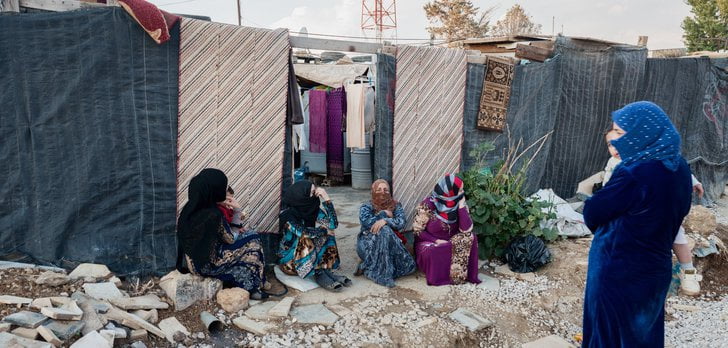
Four woman sitting in a refugee camp in Lebanon.
© Giles Clarke/Getty Images Reportage. Four woman sitting in a refugee camp in Lebanon.

2. Many refugee women are supporting their families alone

Lebanon now hosts more refugees per capita than any other country in the world. Most have fled the violent civil war in neighbouring Syria. They live in tents, abandoned buildings, or rented accommodation because no new refugee camps have been set up.

One in five Syrian refugee households has a woman in charge. Some are widows, others divorced, or have husbands who have chosen to stay in Syria. Many simply don’t know where their husbands are: disappearances remain a terrifying fact of life in Syria, with 58,148 people vanishing at the hands of the government between March 2011 and August 2015. Around 90% were men.

“I came to Lebanon in 2013 alone with my children. My husband disappeared in Syria. I live in a tent with 10 people – we are three widows with our children. Every month I have to pay rent for my tent. The landlord won’t wait [for payment] so sometimes I have to beg. I just want to go back to Syria.” Rajaa, 50, eastern Lebanon.

3. Without residence permits, refugee women are easy targets

Today, one in four people in Lebanon is a Syrian refugee. In January 2015, Lebanon’s government made it more complicated and expensive for refugees to renew their residence permits. Without these legal documents, refugees are considered to be breaking Lebanese law.

Many refugee women told us not having a valid residence permit was a key reason for not reporting harassment to the Lebanese authorities. Refugees who can’t afford the US$200 to renew their permits live in constant fear of being arrested and detained or deported back to Syria. This makes them easy to take advantage of.

“[Without a valid permit] I am afraid to go out, and I’m afraid to cross checkpoints. I have to go to Beirut for hospital appointments for my daughter every 15 days. She has a rare medical condition. A Lebanese man told me he would help me [get] official documents, but in exchange he wanted to spend the night with me. I felt really disturbed and upset because the general view of Syrians is that we are cheap.” Aisha, 33, eastern Lebanon.

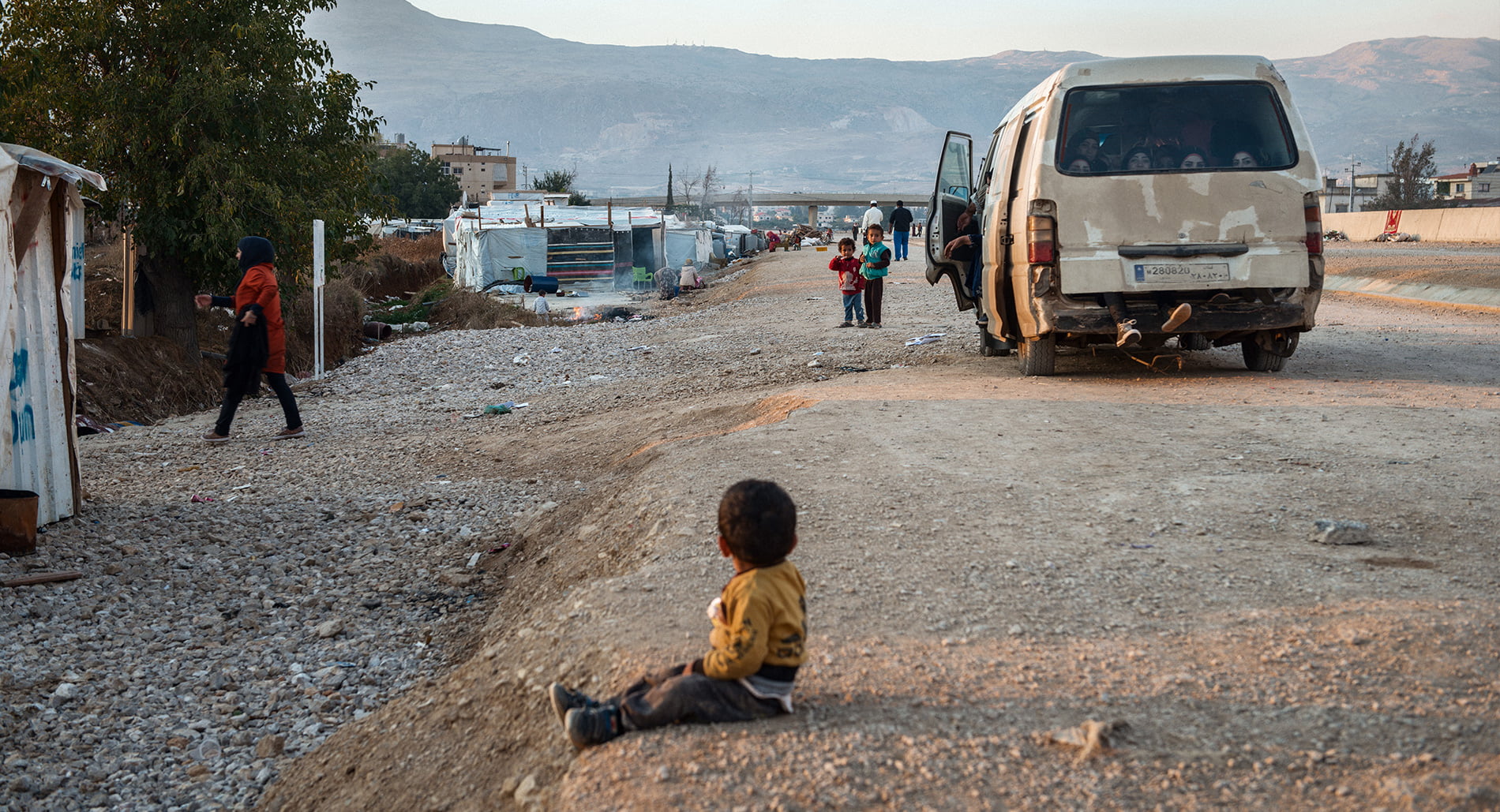
Syrian boy sits on a roadside in Lebanon.
© Giles Clarke/Getty Images Reportage. Syrian boy sits on a roadside in Lebanon.

4. Without humanitarian aid, poverty is getting worse

Governments around the world have promised financial support to overwhelmed host countries like Lebanon, but it’s not enough. In 2015, the UN received just 57 per cent of the funds needed to support refugees in Lebanon. Many of the women we met either had their monthly UN food support payment stopped, or substantially reduced to just US$21.60 per person. That works out as US$0.72 a day – well below the UN’s global poverty line of US$1.90. Women say that that employers, who know refugees without residence permits are unlikely to report them, deliberately pay very low wages – or not pay at all. They also live in fear of landlords suddenly increasing their rent or kicking entire families out with no notice.

“Landlords will kick you out of the house if you are one or two days late with the rent. I work and receive some aid, but it’s not enough. My 16-year-old daughter is very tall and looks older. Men come to me proposing to marry her, but I don’t want that. I want her to finish her education even though she hasn’t had the chance here.” Hanan, 38, Beirut.

Four solutions that would help refugee women right now

Refugee women and girls in Lebanon are staying strong in the face of intense pressure but they need protection and support right now.

To help improve the lives of refugee women and girls in Lebanon and Syria, the Australian Government must:

  • Increase assistance to countries hosting refugees and accelerate the resettlement of Syrians in Australia
  • Support humanitarian assistance and help human rights monitors reach vulnerable people on the ground
  • Make sure the Syrian Government and opposition groups stop all attacks on the Syrian people and act within international law
    Take all possible steps to avoid harming Syrian people during military operations.


10 ways we respond to a crisis

During war and conflict, crisis researcher Joanne Mariner is the first on the ground to gather evidence of serious human rights crimes. She tells us how your support makes her life-changing work possible.

1. Training

 “I’ve had training in first aid, facing hostile fire, and dealing with hostage situations. I’ve seen how high velocity bullets can penetrate steel. But being prepared is much more about experience than training.”

2. Preparation

“First of all, I buy a good, detailed map! Then I read everything that has been published about the country – from Amnesty, other human rights organisations, the UN, and the press.”

3. Essential kit

“I’ll bring a first aid kit, anti-malaria drugs, and satellite phone, local phone and UK phone, as communications are so important. I’ll also pack a still camera, video camera, and a GPS tracker so colleagues can track my location.”

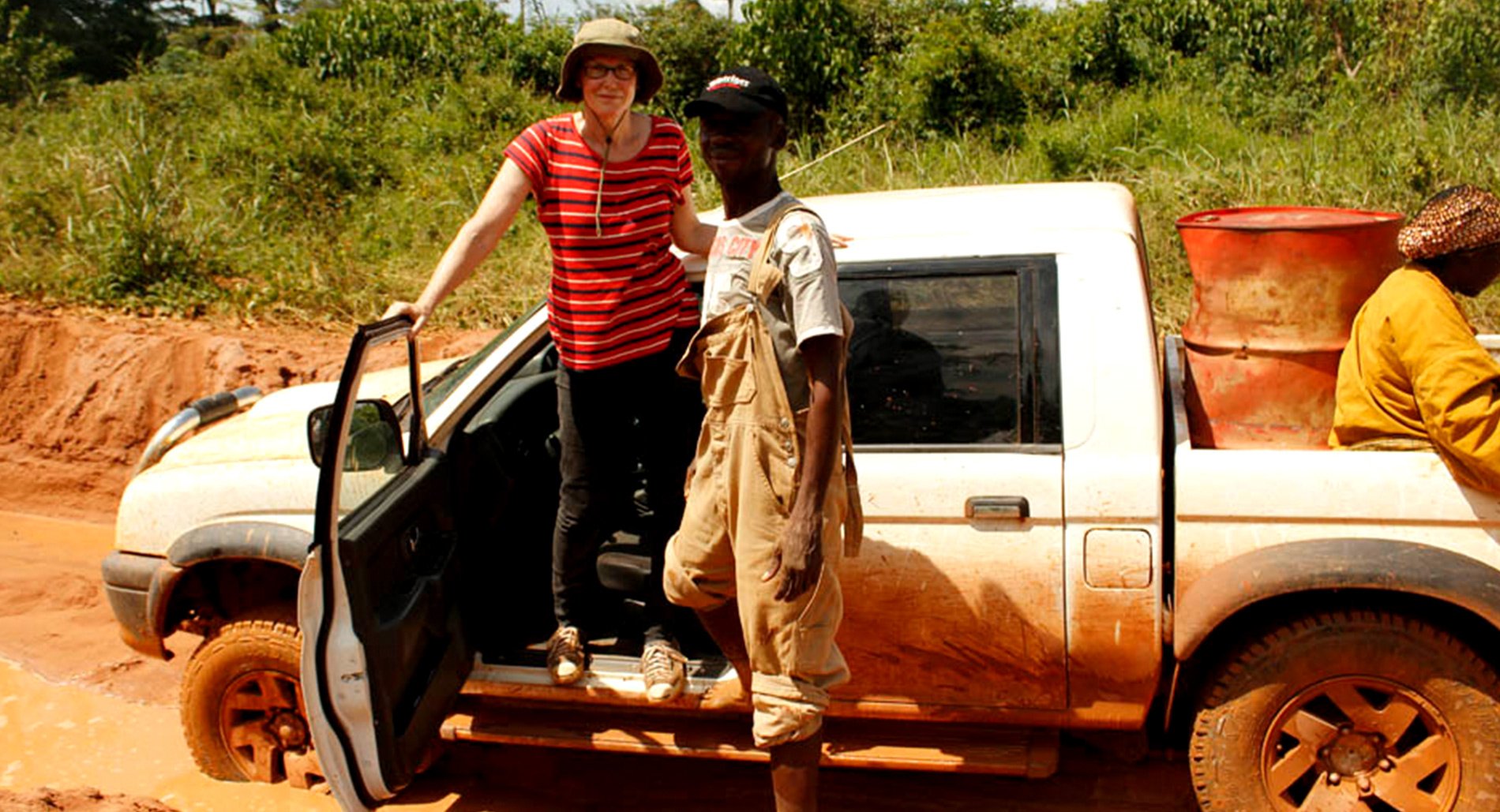
Senior Crisis Response Adviser Joanne Mariner and her car, stuck in the mud in the Central African Republic.
Crisis researcher Joanne Mariner stuck in the mud in Central African Republic, November 2014. © Amnesty International.

4. Security

“I talk with a lot of people on the ground to work out where not to go, what roads to avoid, when to travel. For example, they might tell us not to drive a particular type of car as it’s a favourite for car-jacking. In some situations, there are serious risks – of getting shot, hit by a mortar, kidnapped, killed…”

5. Transport

“In some countries, for example the Central African Republic, I usually just travel with a driver. Often the roads outside major towns can be terrible so we use a four-wheel drive. I’ve been in a few difficult situations because there can be robbers on the road, and it can be scary.”

6. Interviewing witnesses

“We always get first-hand testimony. After a massacre, you have an obligation to document exactly what happened. I ask people to detail the circumstances, the basic who, what, when and where. ‘What did you see?’ ‘What were they wearing?’ ‘Who was shooting?’”

7. Film and photography

“Our goal is to provide real-time documentation, to hold people to account and get justice for victims. We don’t repeat rumours, we get testimonial, written documentation and forensic evidence. We go to the place something happened and take photographs of bodies, bullets and shrapnel, and other physical evidence. Some of the photos you can’t even look at; we don’t publish those, but keep them as proof.”

“We don’t repeat rumours, we get testimonial, written documentation and forensic evidence.

Joanne Mariner

8. Reporting

“We describe exactly what happened, characterize and analyse the crimes that have been committed, and make recommendations for reform. We’re not criminal investigators, but we’re just as rigorous. Our goal is to provide real-time documentation, to hold people to account and get justice for the victims.”

9. Press and media

“In breaking news situations, we’ll tweet out news, speak with journalists, put out press releases, and write blogs, opinion pieces and briefing papers. It’s so important to show the world what’s going on and create pressure on governments to act.”

10. Advocacy and campaigning

“We put in a huge effort to ensure our recommendations for reform are enacted. We meet with UN and government officials across the world to explain the need for urgent action.”

Live updates

For the latest from the frontline of human rights, follow Joanne @jgmariner and her colleague Donatella Rovera @DRovera on Twitter. Follow Tirana from Amnesty’s crisis team at @TiranaHassan.

Amnesty International Annual Reports

Our latest Amnesty International Annual Report 2020/21: The State of The World’s Human Rights highlights how the global pandemic crisis impacted everyone, but also threw into stark relief, and sometimes aggravated, existing inequalities and patterns of abuse. 

The global system of governance strained at the seams, exacerbated by powerful governments’ attacks on multilateral institutions. However, by grounding measures aimed at recovery from the pandemic and other crises in human rights, leaders have an opportunity to resuscitate international cooperation and fashion a more just future.

This report presents Amnesty International’s concerns and calls for action to governments and others. It is essential reading for policy makers, advocates, activists, and anyone with an interest in human rights.

Past Reports

Stranded in Sweden aged 12: Why reuniting with relatives is crucial for refugees

Omar, a refugee from Syria, was just 12 years old when he accidentally arrived alone in Sweden. It took months of tears and worry, emails and phone calls before his parents and big brother could join him. As Denmark proposes delaying family reunification for up to five years, their story shows why the right to a family life is worth fighting for.

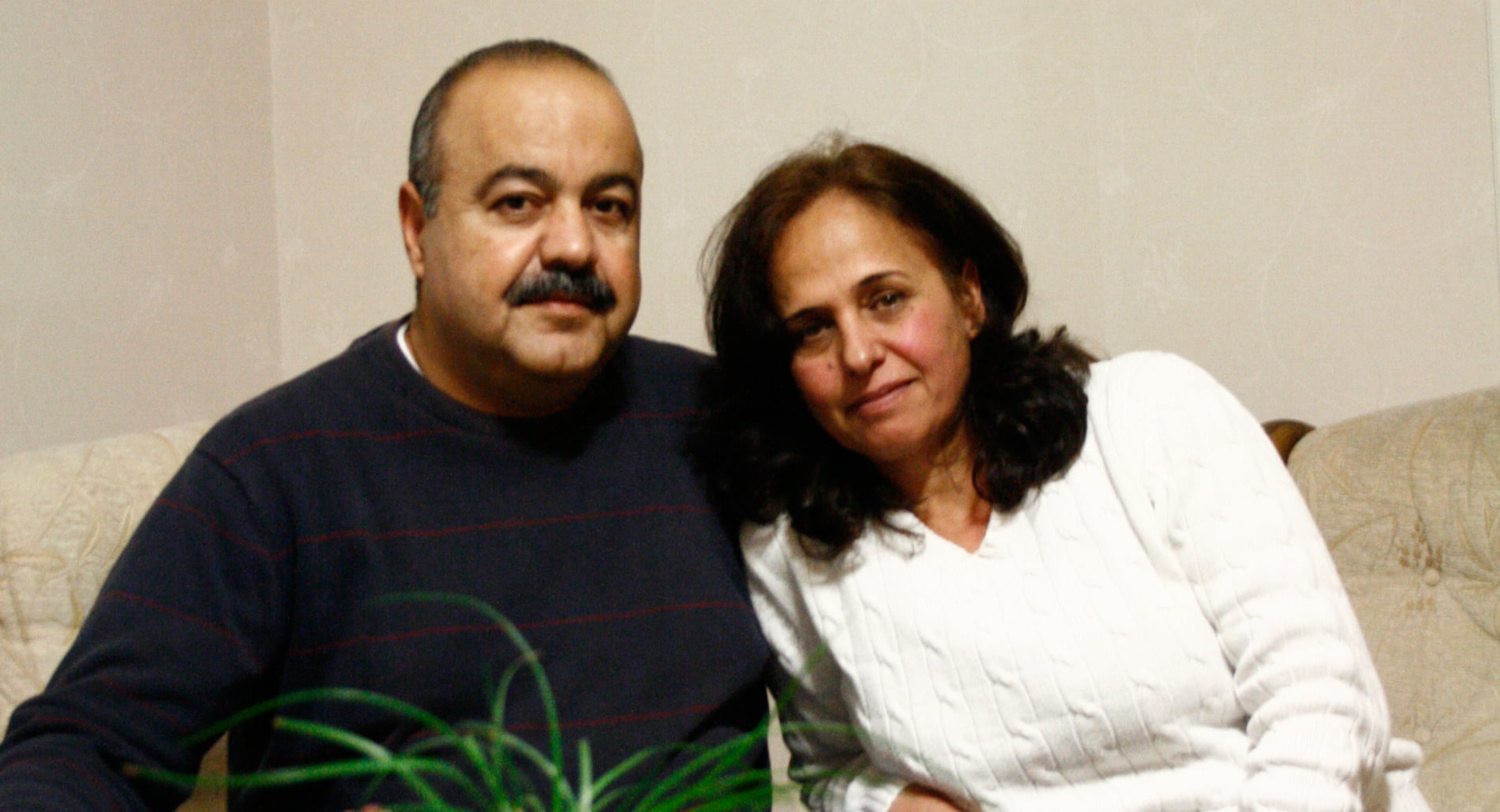
“I slept in jeans, not pyjamas,” says Maha Khadour, Omar’s mother (pictured above), recalling the summer of 2012 when bombs starting falling on their neighbourhood in Syria. “You just didn’t know when you’d have to flee.”

Despite being a veterinarian, not a doctor, her husband Mohannad gave medical help to injured neighbours who feared being arrested if they sought help at a public hospital. When rumours started circulating that the government was looking for Mohannad, he and Maha fled with their two sons, Ali, now aged 19, and Omar, now 14, to neighbouring Turkey.

Alone in Stockholm airport

Frustrated, the family tried twice to fly to Europe. But without an EU entry visa, they were stopped twice. Finally, Mohannad tried a third time with Omar and a woman smuggler who pretended to be his mother. Mohannad was stopped again by Turkish police, but Omar passed under the radar.

It wasn’t until hours later, when Omar found himself completely alone in Stockholm airport, that he realized his dad hadn’t made it.

“It was horrible,” his mum says. “I sent the Swedish embassy hundreds of emails saying: ‘Please, my son is there, I have to go to him.’ He was just 12 years old.”

“It wasn’t until hours later, when Omar found himself completely alone in Stockholm airport, that he realized his dad hadn’t made it.” Maha, Omar’s mum

Reunited

Four months later, Omar got his residence permit and the right to be reunited with his family – guaranteed by both international and European law. In August 2014, his parents and older brother finally joined him.

Arriving in Sweden, some things felt surprisingly familiar: “When we came to Uddevalla [a town in south-western Sweden], my husband and sons laughed at me,” says Maha, “because every now and then I’d say: ‘Look at this grass, look at that mountain – it’s the same as in my village [in Syria].”

“…every now and then I’d say: ‘Look at this grass, look at that mountain – it’s the same as in my village [in Syria].”

MAHA, OMAR’S MUM

“I started working as an English teacher and it was wonderful. I feel better when I can teach children. My husband is still studying Swedish. It’s harder for him – he worked as a veterinarian for 20 years and is an expert in his field. To work here he has to study the language for three years, then go to university for another two years.”

Walking from Greece to Germany

Maha and her family have recently made room for two more people in their small apartment. Their young niece, Rahaf, aged five, and her big brother Noor, 19, have arrived after a dangerous and lonely journey through Europe on foot.

“It took them 20 days,” says Maha. “Rahaf is five years old – she shouldn’t have to walk from Greece to Germany.”

“It was an awful experience for her – she’s always talking about the police,” she continues. “They were afraid of the police in all the countries they went through. I tell her that the police here helps you. But she’s still afraid.”

The gruelling journey Rahaf and Noor were forced to undertake is a symptom of a much bigger problem: For most refugees, despite their right to seek asylum and get protection abroad, getting to Europe safely and legally is now almost impossible.

The human right to a family life

In the chaos of the global refugee crisis, close relatives end up separated for many reasons. For them, family reunification is one of the few legal ways they can be together again. “I wouldn’t have been able to go to Sweden if my son wasn’t already there,” Maha says.

“I wouldn’t have been able to go to Sweden if my son wasn’t already there.”

Maha

But now, even the human right to a family life comes under attack, as Denmark proposes legal changes that could force close relatives to wait up to five years to see each other again. This is despite research showing that family support is crucial for refugees, helping people deal with trauma and integrate in new societies.

And the harder it gets for refugees to find protection abroad, the more people will be forced to go through hell – walking for weeks in the freezing cold and risking their lives in inflatable boats – to find safety.

Dreams for the future

Maha thinks the current situation is “insane”: “If these governments could do one thing, at least they could help people to come here normally.”

“If these governments could do one thing, at least they could help people to come here normally.”

Maha

“My dream for the future is to go back to my country,” she says. “At night I dream about going back to these villages I loved. And sometimes I think about how many relatives I have lost in this conflict. Almost all of them are dead.”

“And I think a lot about what you can do to make real change. Maybe that’s what makes me want to be a teacher so strongly. I know that what I teach a child today, she will make use of tomorrow. And that’s good. Maybe it’s one way to create change.”

Amnesty Annual Report 2015/16: Australia can do better

As Australia heads into an election year and steps up its bid for a UN Human Rights Council seat, now is the time to show human rights leadership. Yet, Australia is missing the chance to be a world leader on human rights due to its failures on Indigenous and refugee rights and new draconian laws. Read our Annual Report for 2015/16 and find out how our leaders can make the most of this opportunity for change.

Global human rights trends

Our new report analyses global human rights trends over the past year in 160 countries. It finds that international protections of human rights are unravelling, as families flee spiralling conflict and repression, only to find wealthy countries shutting their doors. Short-term national self-interest and draconian security crackdowns have led to a wholesale assault on basic freedoms and rights.

In 2015 Australia was one of many that used ‘national security’ to justify undermining human rights and turn its back on vulnerable people.

Australia is condemned in the report for its dangerous refugee policies of offshore processing, mandatory detention and boat pushbacks, and soaring Indigenous imprisonment rates.

The report criticises repressive laws, including those allowing for the silencing of staff and contractors who reveal human rights violations in immigration detention and the stripping of dual nationals of citizenship without any criminal conviction.

Amnesty International Australia National Director Claire Mallinson said it was time for Australia to show consistent leadership:

“Our leaders have been saying one thing and doing another, and we cannot be convincing on human rights on the world stage while we try to hide our own abuses under the carpet.”

“Australia showed glimpses of global human rights leadership in 2015 by announcing the resettlement of 12,000 Syrian refugees and pledging to campaign for a worldwide end to the death penalty – but glimpses are not enough.

“It’s time for our leaders to turn words into action. We need leadership underpinned by our shared values of fairness, openness, human dignity, justice, and freedom.”

Australia must lift its refugee quota to at least 30,000 people in 2016 and end the regime of offshore detention. To reduce Indigenous imprisonment rates, the Federal Government needs to follow in the footsteps of Victoria, the ACT and the Northern Territory and set justice targets .

Refugees

2015 was the year little Alan Kurdi drowned on a Turkish beach, because governments sat on their hands instead of protecting people in Syria and giving them safe routes to flee. We can be better than this. We can be a strong Australia, willing to help people in their darkest hour.

Amnesty International Australia National Director Claire Mallinson

Over 60 million people are currently displaced and seeking refuge worldwide, more than at any point since World War II.

The past year severely tested the international system’s willingness to respond to crises and mass forced displacements of people – and found it woefully inadequate.

“2015 was the year little Alan Kurdi drowned on a Turkish beach, because governments sat on their hands instead of protecting people in Syria and giving them safe routes to flee,” said Claire Mallinson.

In 2015, Australia was one of more than 30 countries that illegally forced refugees to to return to countries where they would be in danger.

Successive Australian governments have pursued increasingly hard-line deterrent policies to block out people seeking asylum. The current government is still choosing to send children to Nauru, despite clear evidence of harsh living conditions, independent reviews highlighting abuse, and uncertainty driving people to self harm and attempted suicide.

“We can be better than this. We can be a strong Australia, willing to help people in their darkest hour. An Australia that is diverse, open and free, where all people have a right to live in dignity and raise their families in safety,” said Claire Mallinson.

“Our leaders need to work with neighbouring countries to assist people seeking asylum to find safe places where they can rebuild their lives. We need creative solutions that help people on the move, not deterrence policies that cause harm and put people of sight and out of mind.”

Indigenous rights

Aboriginal and Torres Strait Islander people continued to be severely overrepresented in prison, making up over a quarter of all adults incarcerated. Indigenous children, less than 6 per cent of the population of 10-17 year-olds, are more than half of young Australians in detention.

In 2015, the NT Children’s Commissioner found that children in Don Dale Detention Centre had been placed in solitary confinement for between 6 and 17 days the year before. When a disturbance followed, they were hooded and tear gassed for up to eight minutes.

Australia continues to hold children as young as 10 and 11 in detention, even though the international standard is 12.

Tragically, at least five Indigenous people died in custody in 2015

“As a first step, Australia must set justice targets to end the over-representation of Indigenous people in prison. Australia can only hold its head high on the international stage when it listens to and works in partnership with its First Peoples to solve the crisis in Indigenous rights,” said Ms Mallinson.

Worldwide

Despite Australia’s efforts in 2014 to negotiate landmark UN Security Council resolutions aimed at protecting civilians in Syria, in 2015 the situation radically deteriorated. By the end of the year, 250,000 people had been killed; 7.6 million had become internally displaced and 4.6 million sought asylum abroad.

Governments from Saudi Arabia and Egypt to North Korea and China brutally silenced dissenting voices, and tortured and executed their citizens.

In China new laws were drafted or enacted that could be used to silence activists through expansive charges such as “inciting subversion”, “separatism” and “leaking state secrets” while in Malaysia tweeting and other forms of online expression led to arrests under the restrictive Sedition Act.

Australia pledged to campaign to end the death penalty, which was critically important, as the Asia Pacific carries out more executions than any other region. In Indonesia there were 14 executions in 2015, including those of Australians Andrew Chan and Myuran Sukumaran.

2015 did see many gains for human rights, such as the welcome release of Papuan prisoner of conscience Filep Karma, the Mongolian Parliament vote to end the death penalty, the people of Ireland voting for marriage equality and the UN General Assembly approving the Human Rights Defenders Resolution. These wins clearly show how people power combined with political will can and does create a force for change and protection of human rights.

Change is possible when governments put human rights first. Amnesty International is urging all UN member states to elect a strong, independent United Nations Secretary General, who will lead global action to protect and defend human rights.

The world today is facing many challenges, with refugees suffering in their millions. The world’s leaders have the power to prevent these crises spiraling further out of control, and decisive action is needed now to halt the assault on human rights.

Read the report
 

Malaysia using Sedition Act to crackdown on hundreds of critics

Malaysia is spiraling into a dark era of repression as the government has launched an unprecedented crackdown through the Sedition Act over the past two years to silence, harass and lock up hundreds of critics.

Sedition Act allows authorities to target opposition

An Amnesty briefing, Critical Repression: Freedom of expression under attack in Malaysia (PDF 3.8MB), shows how the use of the Sedition Act – which gives authorities sweeping powers to target those who oppose them – has skyrocketed since the Barisan Nasional coalition government narrowly won the 2013 general elections, with around 170 sedition cases in that period.

In 2015 alone, at least 91 individuals were arrested, charged or investigated for sedition – almost five times as many as during the law’s first 50 years of existence.

“Speaking out in Malaysia is becoming increasingly dangerous. The government has responded to challenges to its authority in the worst possible way, by tightening repression and targeting scores of perceived critics.” said Josef Benedict, Amnesty International

Staggering rise in sedition cases

“The Sedition Act has no place in a modern, rights-respecting society – it is a severely repressive law that has become the authorities’ weapon of choice when lashing out at any opposition.

“The numbers speak for themselves – the staggering rise in sedition cases over the past years highlight the rapidly shrinking space for freedom of expression.”

Malaysian authorities have cast a wide net of repression in their use of the Sedition Act, targeting a range of individuals including rights activists, journalists, lawyers and opposition politicians.

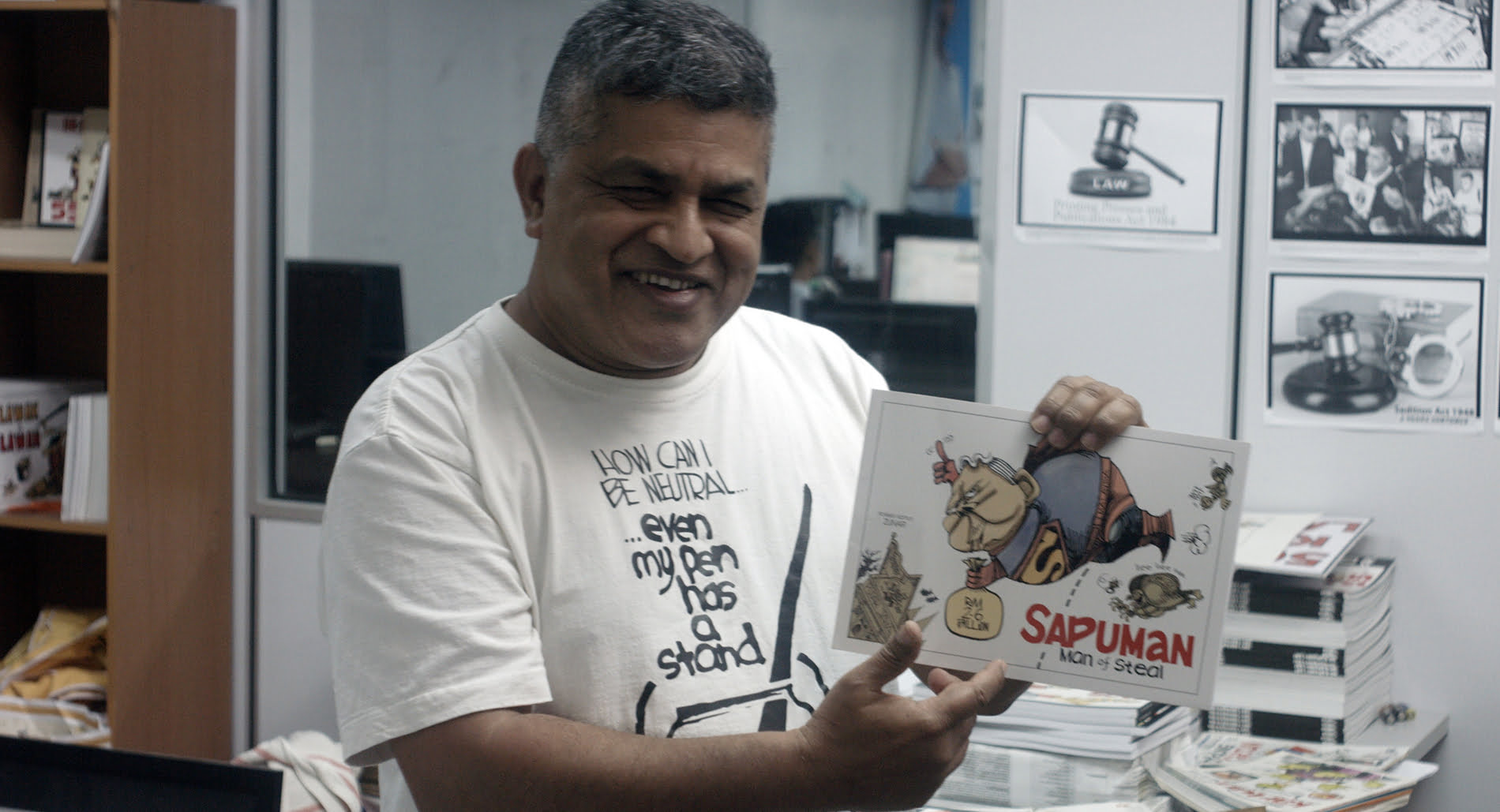
The briefing is released ahead of the trial hearing on 28 January of the cartoonist Zunar, who could face a long period in prison on sedition charges relating to a series of tweets he made which were critical of the government.

Another recent casualty of the Act, student activist Khalid Ismath, had three sedition charges levelled against him in October 2015 simply for a Facebook post denouncing the Malaysian police for abuse of power. Khalid Ismath is currently awaiting trial.

“If writing the truth, asking questions, taking a minister to task or making a powerful figure accountable are seditious, then let us all be seditious.” Susan Loone, Malaysian journalist

A silent media

The threat of arrest has had a chilling effect on public debate and freedom of expression in Malaysia, not least for independent media. Susan Loone, a journalist arrested on sedition charges in 2014 for an article criticising the police, told Amnesty International that her colleagues sometimes self-censor to avoid harassment by authorities.

But Susan Loone herself remains defiant: “If writing the truth, asking questions, taking a minister to task or making a powerful figure accountable are seditious, then let us all be seditious”.

The Sedition Act is a colonial-era relic, first introduced during British rule of Malaysia in 1948 to combat the independence movement. Those found guilty can face three years in prison, be fined up to 5,000 Malaysian Ringgit (USD1,300) – or both – for their first offence. Those convicted for a subsequent offence can face up to five years in jail.

In 2012, Prime Minister Najib Razak vowed to repeal the law, but the government has not only reneged on that promise but actually strengthened and widened the scope of the Sedition Act.

An amendment to the Act rushed through parliament in April 2015 after less than a day’s debate added criticism of religion to the list of sedition offences; reduced the discretion of judges in sentencing, requiring them to impose prison sentences of between three and seven years; and also brought electronic media and sharing on social media under the Act.

“It is deeply worrying that Malaysia’s authorities are moving to make the Sedition Act an even more potent tool for repression, rather than repealing it as they have promised.” Josef Benedict.

“The Internet and social media have become invaluable to many activists around Malaysia, something the authorities are moving swiftly to repress.”

Time for change

Amnesty International calls on the Malaysian authorities to urgently repeal the Sedition Act, and to quash the convictions against any individuals sentenced under the act simply for peacefully exercising their rights to freedom of expression and ensure that they are immediately and unconditionally released.

The organisation also urges Malaysia to review and amend all other laws which restrict the right to freedom of expression, and bring them into strict compliance with international human rights law and standards.


Iraq: Evidence of deliberate mass destruction in Peshmerga-controlled Arab villages

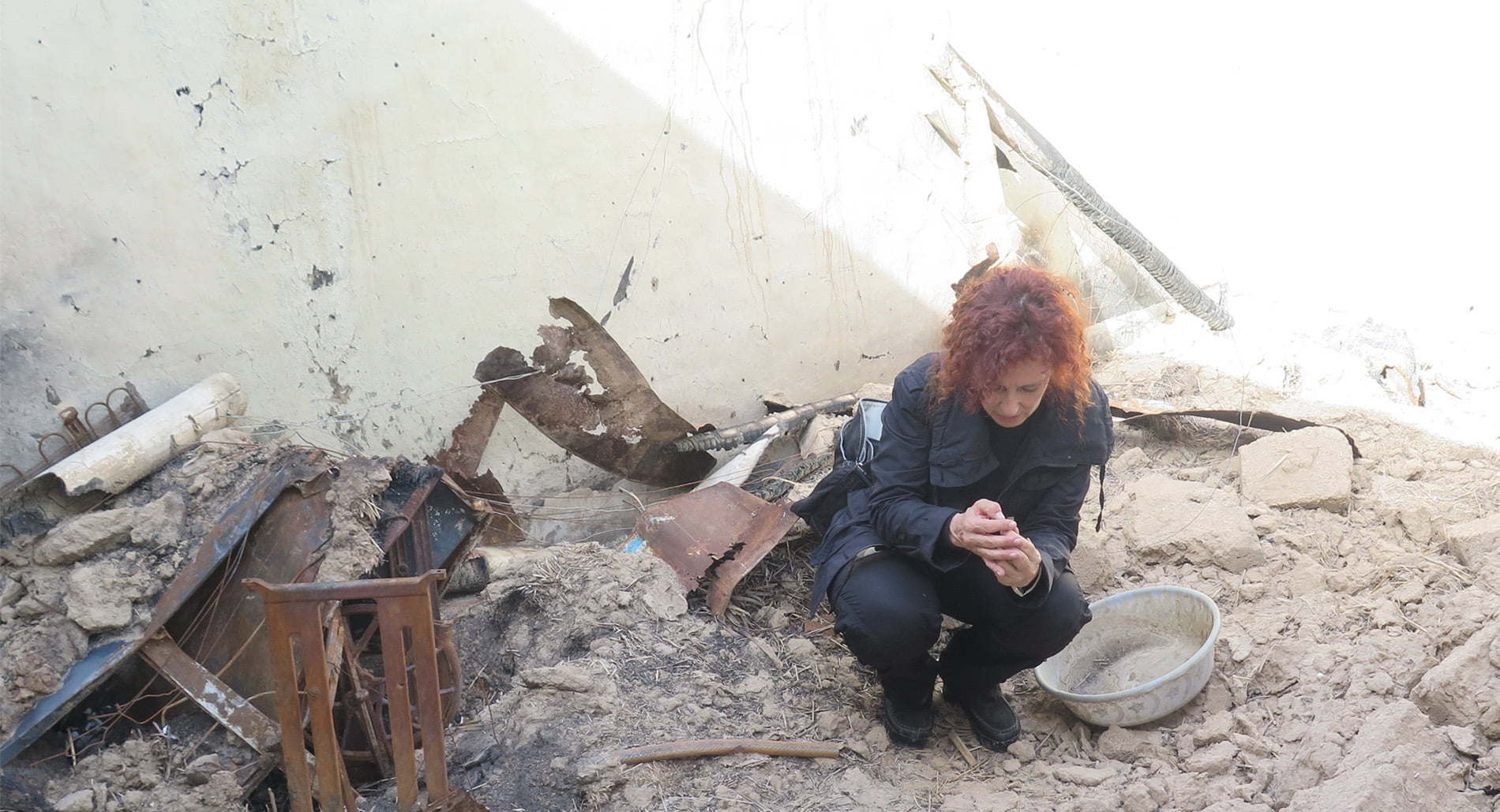
Peshmerga forces from the Kurdistan Regional Government (KRG) and Kurdish militias in northern Iraq have bulldozed, blown up and burned down thousands of homes in an apparent effort to uproot Arab communities in revenge for their perceived support for the so-called Islamic State (IS).

Displacement of civilians

Our new report, Banished and dispossessed: Forced displacement and deliberate destruction in northern Iraq, is based on field investigation in 13 villages and towns and testimony gathered from more than 100 eyewitnesses and victims of forced displacement. It is corroborated by satellite imagery revealing evidence of widespread destruction carried out by Peshmerga forces, or in some cases Yezidi militias and Kurdish armed groups from Syria and Turkey operating in coordination with the Peshmerga.

As part of the US-led coalition in Iraq, Australia has provided some military support to Peshmerga forces to assist them to recapture areas controlled by IS. Australia has delivered resupply of small arms, ammunition and mortar rounds to KRG forces, and provided them with military advisers and direct air support.

“KRG forces appear to be spearheading a concerted campaign to forcibly displace Arab communities by destroying entire villages in areas they have recaptured from IS in northern Iraq. The forced displacement of civilians and the deliberate destruction of homes and property without military justification, may amount to war crimes,” said Donatella Rovera, Amnesty International’s Senior Crisis Response Advisor, who carried out the field research in northern Iraq.

Barred from returning to homes and villages

Arab residents who fled their homes are also barred by KRG forces from returning to recaptured areas.

“Tens of thousands of Arab civilians who were forced to flee their homes because of fighting are now struggling to survive in makeshift camps in desperate conditions. Many have lost their livelihoods and all their possessions and with their homes destroyed, they have nothing to return to. By barring the displaced from returning to their villages and destroying their homes KRG forces are further exacerbating their suffering,” Donatella Rovera said.

The report reveals evidence of forced displacement and large-scale destruction of homes in villages and towns in Ninewa, Kirkuk and Diyala governorates – which Peshmerga forces recaptured from IS between September 2014 and March 2015.

Though KRG officials have justified the displacement of Arab communities on grounds of security, it appears to be used to punish them for their perceived sympathies with IS, and to consolidate territorial gains in “disputed areas” which the KRG authorities have long claimed as rightfully theirs. This is part of a drive to reverse past abuses by the Saddam Hussein regime, which forcibly displaced Kurds and settled Arabs in these regions.

“KRG forces have a duty to bring to justice in fair trials individuals who are suspected of having aided and abetted IS crimes. But they must not punish entire communities for crimes perpetrated by some of their members or based on vague, discriminatory and unsubstantiated suspicions that they support IS,” Donatella Rovera.

Satellite imagery corroborates evidence of mass destruction

Thousands of residents of Arab villages near Jalawla, in the east of Diyala governorate, fled after IS fighters attacked the area in June 2014. More than a year after the area was recaptured by Peshmerga forces, residents are unable to return and the villages have been largely destroyed.

Maher Nubul, a father of 11 who left his village, Tabaj Hamid, in August 2014 said the whole village was “flattened” after it was recaptured by the Peshmerga four months later.

“All I know is that when the Peshmerga retook the village the houses were standing. We could not go back but could see it clearly from the distance. And later they bulldozed the village, I don’t know why. There is nothing left. They destroyed everything for no reason,” he said.

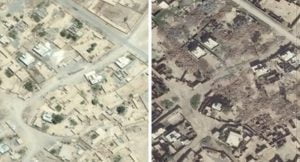
Amnesty International researchers who visited the area in November 2015 found that the village of Tabaj Hamid had been razed to the ground. Satellite images obtained by the organization also show that not a single structure is left standing.

In Jumeili, researchers found the main part of the village had been reduced to rubble. These findings are also supported by satellite imagery evidence showing 95% of all walls and low lying structures have been destroyed. Of the structures that remain the majority of rooftops and windows have been damaged or destroyed.

In both villages, satellite images also reveal possible bulldozer tracks near the piles of rubble and debris where buildings once stood.

Satellite images also provided evidence of large-scale destruction in two nearby villages, Bahiza and Tubaykh.

Two images: the left shows satellite of houses, the right shows the same streets with houses leveled.
© Amnesty International / DigitalGlobe Natural Color Imagery. Two images: the left shows satellite of houses, the right shows the same streets with houses leveled.

Repeated deliberate destruction of homes and property

Amnesty International also found evidence of repeated deliberate mass destruction of homes and property in Arab villages under Peshmerga control in Iraq’s north-western Ninewa governorate.

“After our homes were burned down we were ready to roll up our sleeves and repair them, but the Peshmerga did not allow us to go back and then the Yezidi militias came back and bulldozed and destroyed everything, including our orchards; they left nothing for us to salvage,” Ayub Salah, a resident of Sibaya, north-east of Mount Sinjar.

In Sibaya and four nearby Arab villages – Chiri, Sayir, Umm Khabari and Khazuqa – most of the houses were first burned down in January 2015 by members of Yezidi militias and fighters from Syrian and Turkish Kurdish armed groups operating in the Sinjar region. They were destroyed when the perpetrators returned with bulldozers five months later.

Amnesty International visited the area in November 2015 and found the villages largely destroyed. During a previous visit in April 2015, many houses had been ransacked and burned, but were still standing.

Satellite images obtained for four of the five villages also show them largely destroyed. In Sibaya, for example, more than 700 structures were damaged or destroyed out of an estimated total of 897 structures.

In a nearby Arab village, Barzanke, where virtually every single house had been destroyed, Peshmerga tried to blame the destruction on IS fighters, despite a lack of any evidence to support these claims and their own colleagues’ admission that they had destroyed the village to ensure that Arab residents would have nothing to return to.

On at least two occasions shortly after their arrival in destroyed villages, Amnesty International researchers were apprehended by Peshmerga, who escorted them out of the area and prevented them from taking photographs.

The KRG authorities have faced unprecedented humanitarian and security challenges, since hundreds of thousands of people sought refuge in areas under their control after IS captured large parts of northern Iraq in 2014. However, these difficult circumstances cannot excuse deliberate destruction and other serious abuses committed by KRG forces and other militias documented in this report.

“The KRG must immediately cease the unlawful destruction of civilian homes and property and provide full reparation to all civilians who have had their homes demolished or looted. Civilians who have been forcibly displaced must be allowed to return to their homes as soon as possible,” Donatella Rovera said.

“The Peshmerga must not allow armed groups and militias who are their allies in the fight against IS to commit such abuses. They have been in control of this area since they recaptured it from IS in December 2014 and have a responsibility to ensure the protection of all communities.”

“It is also critical that the international community – including members of the US-led coalition fighting IS such as the UK, Australia and Germany and others who are backing the Peshmerga forces – publicly condemn all such violations of international humanitarian law. They must also ensure that any assistance they are providing to the KRG is not fueling such abuses.”