The lethal injection generally consists of three chemicals: sodium pentotal (an anaesthetic), pancuronium bromide (used to paralyse the prisoner) and potassium chloride (used to stop the heart).
Sounds pretty scientific, doesn’t it? However, due to botched executions by inexperienced prison staff, the executions of some of the men and women sentenced to die by lethal injection haven’t run ‘smoothly’. In March 2014 Dennis McGuire, an Ohio death row inmate, took 26 minutes to die by lethal injection as he lay on a gurney with his mouth opening and closing.
2. Electrocution
Carried out in: USA
After the prisoner is shaved and strapped to a chair, a metal skullcap-shaped electrode is attached to their scalp and forehead over a sponge moistened with saline. The prisoner is then blindfolded. A jolt of between 500 and 2000 volts, which lasts for about 30 seconds, is repeatedly administered until the prisoner is declared dead.
Just like the lethal injection, the electric chair is far from foolproof. In 1990, Jesse Joseph Tafero suffered three jolts of electricity before he stop breathing, during which time six-inch flames erupted from his head. This botched execution was put down to “inadvertent human error” with the inappropriate substitution of a synthetic sponge for a natural one.
3. Hanging
Carried out in: Afghanistan, Bangladesh, Botswana, India, Iran, Iraq, Japan, Kuwait, Malaysia, Nigeria, Palestinian Authority (Hamas authorities, Gaza), South Sudan, Sudan
The ‘long drop’ is the most commonly used hanging method. In some countries prisoners are weighed the day before their execution to determine the length of ‘drop’ necessary to ensure a quick death. If the rope is too long, the inmate could be decapitated, and if it is too short, death by strangulation could take as long as 45 minutes. Some countries, such as Iran, use cranes to publicly hang the condemned.
4. Shooting
Carried out in: China, Indonesia, North Korea, Saudi Arabia, Somalia, Taiwan, Yemen
Execution by firing squad typically involves the prisoner being bound to a chair (sitting) or a pole (standing), with a black hood pulled over their head. Up to 20 feet away, the shooters, usually no less than five of them, aim for the prisoner’s heart.
If the shooters miss their target, by accident or intention, the prisoner can bleed to death slowly.
5. Beheading
Carried out in: Saudi Arabia
Beheading as a form of execution is routine in Saudi Arabia. An historic form of execution, beheadings in are carried out in public using a sword, usually in a town square or close to a prison. The condemned, who is blindfolded, handcuffed and often given a sedative, typically wears white – as does the executioner.
‘Crimes’ punishable by death in Saudi Arabia include: adultery, blasphemy, fornication, homosexuality and sorcery.
Racism is not only a violation of human rights, but it has serious health consequences. We have seen the very real impact of racism recently with the experience of Aboriginal footballer Adam Goodes.
In 2013, Goodes suffered backlash in media coverage and from the public for speaking out against being called “an ape” by a young spectator. More recently, Goodes was criticised after celebrating his culture by doing a war-cry after kicking a goal during the AFL Indigenous Round. After he spoke out about this event, and teammate Lewis Jetta also did the war-cry in support, football crowds steadily increased their booing of Goodes.
Goodes was shamed for exercising his rights to be free from racial hatredand to practice and promote understanding of his culture. These rights are protected under international law, and people are protected from racial hatred in Australian law under section 18C of the Racial Discrimination Act 1975. No one should be targeted, publicly shamed or intimidated for speaking out against racism or for expressing their cultural identity.
No one should be targeted, publicly shamed or intimidated for speaking out against racism or for expressing their cultural identity.
Goodes has been the target of continued public racial vilification. Any Indigenous person can tell you why the “ape” comment is offensive: our mob used to be officially classified as “flora and fauna”, considered “less evolved” and not counted in the census, a history reflected in continuing prejudice about Indigenous people being “primitive”. The outrage against the war-cry was clearly racially motivated; a reaction to Goodes’ public expression of cultural identity and pride.
Racism and health
The booing eventually reached a level where it had a humiliating and intimidating impact Goodes, leading to him taking time away from the game.
There are serious consequences for those experiencing racism, including poor physical and mental health. Indigenous people who experience discrimination are more likely to be in poor health, and engage in substance abuse, which is also a risk factor for Indigenous involvement in the justice system.
Indigenous people who experience discrimination are more likely to be in poor health, and engage in substance abuse, which is also a risk factor for Indigenous involvement in the justice system.
To tackle racism, Australia must fulfill its international obligations to protect against racial hatred, to promote understanding and harmony between cultures.
But we also need to have some honest and uncomfortable conversations with each other, as Australians, about what racism actually is. A beyondblue study found that almost half of those surveyed did not recognise moving away from an Indigenous person when they sit near them as an act of discrimination and 1 in 10 did not recognise direct examples like verbal abuse as an act of discrimination.
To tackle racism, Australia must fulfill its international obligations to protect against racial hatred, to promote understanding and harmony between cultures.
We must continue to condemn and eradicate racism for many reasons: for the protection of the continually violated rights of Indigenous people; for the health of so many Indigenous people who experience racism; for Indigenous children’s pride in identity and culture; and for the healing of our nation.
Amnesty International has signed a joint statement in support of Adam Goodes, along with 150 organisations, to call for renewed efforts to stamp out racism in sport and everyday life.
The first six months of 2015 have seen starkly contrasting developments on the death penalty. While the bad news has been very bad, the good news has been very good.
THE BAD
1. Indonesia resumed executions
The year began on a tragic note when Indonesia, ignoring pleas from around the world, put six people to death for drug trafficking. The executions were the first in Indonesia since 2013.
2. Pakistan may soon be counted among the world’s top executioners
Pakistan is edging closer to membership of the unenviable club of the world’s top executioners (China, Iran, Saudi Arabia, Iraq and USA).
At least 150 people have been put to death since a freeze on executions was lifted in December 2014, following a Taliban attack on a school in Peshawar.
3. Indonesia and Pakistan used crime and terrorism as an excuse to bring back executions
Both Indonesia and Pakistan justified bringing back the death penalty by claiming it is an effective response to crime and terrorism. But there is no evidence to show that the death penalty is more effective at addressing crime than a prison term, nor does abolition lead to a sharp increase in crime, as some fear.
4. Iran looks set to surpass its execution figures for 2014
Iran has so far this year executed nearly 700 people – many of these executions were not officially acknowledged. In 2014, Amnesty recorded at least 743 executions in Iran over 12 months. That the country put more than 600 people to death just six months into this year is deeply troubling.
5. Saudi Arabia has already executed more people than it did in 2014
Amnesty has recorded 102 executions in Saudi Arabia so far this year, exceeding the total number of executions (at least 90) for 2014. Almost half of these executions were for drug-related offences.
THE GOOD
1. Three countries abolished the death penalty in the first three months of 2015
In January Madagascar abolished the death penalty for all crimes. Fiji followed suit in February. And in March, the South American State of Suriname also removed the death penalty from its legal books. The abolition of the death penalty in three countries in the space of three months gives further momentum to a trend that has been evident for decades – the world is consigning capital punishment to history.
2. Another three countries are close to abolishing the death penalty
The Mongolian Parliament is considering a draft penal code abolishing the death penalty. Burkina Faso and South Korea are also considering similar draft laws.
3. The trend towards abolition in the USA is picking up steam
One more US state, Nebraska, has abolished the death penalty, becoming the 19th abolitionist state in the USA. And in February, Pennsylvania’s governor announced a suspension of all executions.
4. Those countries that execute are in the minority
Over the last five years, the average number of countries that have carried out executions each year stands at 22.
5. More than half the world’s countries have abolished the death penalty
In total, 101 countries have completely abolished the death penalty – that’s more than half the countries in the world. Another 33 countries are abolitionist in practice – meaning they have not executed anyone for at least 10 years and have a long-standing policy of not executing. Despite the sharp rise in executions in some countries, abolitionist countries still represent the clear global majority.
From the controversial to the downright terrifying, the dystopian futures described in these novels are starting to feel familiar.
By Katie Young
1984 by George Orwell
In an age where government agencies carry out surveillance on ordinary citizens and charities, George Orwell’s chilling novel, 1984, feels more relevant than ever.
First published in 1949 – 66 years ago – Orwell’s dystopian classic paints a haunting picture of the world in the year 1984. In Orwell’s frightening vision of the future, society is under the control of Big Brother. Every aspect of life is closely monitored through government surveillance, and any hint of unorthodoxy is ruthlessly suppressed by the terrifying Thought Police. The Ministry of Truth, where Winston Smith works, is the Party’s propaganda machine. Smith, a diligent and skillful worker, secretly hates the Party and dreams of rebellion against Big Brother. Winston finds new hope when he falls in love with the uncomplicated Julia, before discovering a nightmare world of terror where the price of freedom is betrayal.
Many of 1984’s terms and concepts, such as Big Brother, doublethink, thoughtcrime, Room 101, and 2 + 2 = 5 have entered into common use in the decades since its first publication.
If you liked 1984, you’ll love Animal Farm, also by George Orwell.
The Handmaid’s Tale, by Margaret Atwood
Margaret Atwood’s 1985 modern classic explores the repression and enslavement of women and their resistance to oppressive regimes. The novel is set in the Republic of Gilead, a totalitarian state which has overthrown the United States government. In an era of dangerously low birth rates, Handmaids are are forced to bear children for couples in the ruling class that have trouble conceiving.
The story is told through Offred (Handmaid names consist of the word ‘Of’ followed by the name of the their ‘Commander’), a woman whose only function is to breed. Offred’s freedom, like the freedom of all women, is completely restricted. She can leave the house only on shopping trips, the door to her room cannot be completely shut, and the Eyes, Gilead’s secret police force, watch her every public move. If she deviates, Offred will be hanged at the Wall as a ‘dissenter’.
Aldous Huxley’s fantasy of the future, published in 1932, depicts a world where freedom is dead and morality as we know it is taboo.
Far in the future the World State, a benevolent dictatorship headed by ten World Controllers, has established a stable global society where the population is permanently limited. The basis of that stability is the conditioning of citizens to accept their station in life. Through clever use of genetic engineering, brainwashing, restriction of social activity and relationships, and recreational sex and drugs, all its members are happy consumers. Bernard Marx, an Alpha-Plus sleep-learning specialist whose ‘conditioning’ is clearly incomplete, seems alone in his ill-defined, longing to break free.
Brave New World – which warns against the dangers of an all-powerful state that controls the behaviours and actions of its people in order to preserve its own stability and power – seems more relevant than ever, and sheds a critical light on a present and future that are frighteningly possible.
Published 62 years ago, in 1953, Ray Bradbury’s Fahrenheit 451 presents a future American society where books are outlawed and ‘firemen’ burn any that are found. Guy Montag is a fireman. His job is to destroy the most illegal of commodities, the printed book, along with the houses in which they are hidden.
Montag never questions the destruction his actions produce, returning each day to his bland life and wife, Mildred, who spends all day with her television ‘family’. But when he meets an eccentric young neighbour, Clarisse, who introduces him to a past where people didn’t live in fear and to a present where one sees the world through the ideas in books instead of the mindless chatter of television, Montag begins to question everything he has ever known.
Written during the McCarthy era, Farenheit 451 is often seen as a comment on state-based censorship and freedom of expression, making it highly relevant today.
In the ruins of a place once known as North America lies the nation of Panem, a wealthy Capitol surrounded by twelve outlying districts. Long ago the districts waged war on the Capitol and were defeated. As part of the surrender terms, each district agreed to send one boy and one girl to appear in an annual televised event called – you guessed it – ‘The Hunger Games’. Sixteen-year-old Katniss Everdeen regards it as death sentence when she is forced to represent her district. The object of the The Hunger Games is to be the last child alive.
As well as being an utterly absorbing and rip-roaring read, The Hunger Games looks at survival, humanity, inequality, and rebellion against oppression.
June Oscar AO is a Bunuba Leader from the Fitzroy Valley, Western Australia. Here she discusses Aboriginal youth justice in Western Australia and her vision of the solution — community programs that support young people and families.
What’s the problem?
There are many complex issues stemming from Western Australia’s colonial legacy. One issue is that of Aboriginal kids ending up in a cycle of detention. Western Australian Aboriginal young people are 53 times more likely than their non-Aboriginal peers to be in detention – it’s the highest rate of over-representation of Aboriginal young people in Australia.
Western Australian Aboriginal young people are 53 times more likely than their non-Aboriginal peers to be in detention – it’s the highest rate of over-representation of Aboriginal young people in Australia.
The state’s entrenched response to this is simply not working. We need new measures that conform with international standards and in doing so, improve Western Australia’s currents rates of Aboriginal youth detention.
A lot of people think kids need a ‘tough’ approach. Do you think this works?
Taking a tough approach to dealing with complex and generational issues is not a solution. The solutions that we’re looking for can be found in new ways of thinking and approaching issues that have been longstanding. The reason why some of these issues remain unresolved and continue to be issues that we’re grappling with, is because we haven’t taken the right approach to finding solutions.
I think it’s high time now that we look at a smarter way of responding to issues and we need to learn from what’s happening in other parts of the world … how they’ve rethought and re-approached these issues. Some of these issues are not too different from what we’re experiencing here in Australia. We can certainly learn from other places. So taking a more informed, innovative, smarter response to crime is the way to go.
How can we better support kids?
We need to recognise that these children belong to families, these families belong to communities of people; they belong to language groups right throughout the state and we need to engage with the families to support the children.
We need to recognise that these children belong to families, these families belong to communities of people; they belong to language groups right throughout the state and we need to engage with the families to support the children.
We need to look at: what are the strengths around children, what’s happening with families, how can families be better supported to become better at supporting their children?
Finding what works can only happen if we can engage with families and caregivers and the extended families that many Indigenous children are part of … if we’re not recognising the whole support networks then we’re really denying children their right to be seen and supported in the total context.
What role do Aboriginal organisations play in this?
We need to engage with the organisations, community-based organisations, that Aboriginal people see as there to support the aspirations and issues that challenge many of our communities here in Western Australia. Many of these organisations have been established by Aboriginal people to address particular issues concerning communities and families.
It’s about engaging in the right way those that are in positions of authority and influence within communities to help lead on some of these issues.I think we will continue to have problems if we continue to neglect the engagement and proper engagement of Aboriginal peoples in finding solutions.
Aboriginal organisations can be better supported through permanent and long term commitments to funding arrangements; we have the evidence in providing the results from some of these initiatives. We need to continue these positive programs that are helping people from getting into situations where they’re in contact with the police or the justice system.
What’s your message to the Western Australian Government?
My message to the West Australian government is that we need to take a few steps back and take stock of why it is we are now confronted with so many issues that challenge people’s right to a quality of life in WA. Why is it that our children are reaching the highest levels in Australia that are incarcerated in these detention centres?
Why is it that our children are reaching the highest levels in Australia that are incarcerated in these detention centres?
We cannot just see this as a responsibility that we as Aboriginal people have failed, we have been recipients of services and the end of policy decisions of governments in the history of Western Australia so clearly we need a different approach, a different way of engaging with Aboriginal people because we do hold the solutions to many of these issues. Politicians can no longer think that they hold the solutions for us.
What’s your message to Amnesty supporters?
We need people like you to support Aboriginal people in Australia in finding these solutions. How we can do that is through people like yourselves, supporters of Amnesty, listening and establishing relationships with Aboriginal communities and being informed so that solutions and support around advancing the profile of some of these terrible situations in communities can be raised right across Australia at the national and international levels.
It is the time that we can build relationships of trust and respect and it is only through those types of relationships that we can really truly know that we’re doing it right.
It is the time that we can build relationships of trust and respect and it is only through those types of relationships that we can really truly know that we’re doing it right.
Liked this interview? Watch more from June Oscar here:
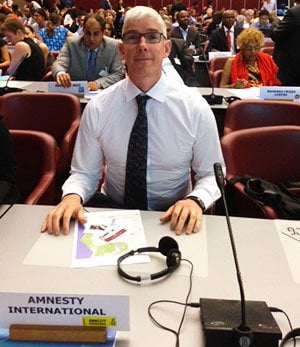
Graham Thom, Amnesty International Australia’s Refugee Coordinator, recently spent a week in Geneva for the two most important meetings on the refugee campaign calendar.
Here, Graham reveals five things that stood out to him during this trip.
1. Syrian refugees are most in need of resettlement while solutions for the Rohingya remain distant
Resettling Syrians remains a key priority and continues to be raised by Amnesty International in different forums around the world. While it was acknowledged more needs to be done in terms of increasing the number of resettlement places made available, the focus at the ATCR was on making sure places already pledged were matched with departures.
The situation facing the Rohingya remains dire, both in Myanmar and neighbouring countries.
UNHCR has still not been able to access the Rohingya that recently came ashore in Malaysia.
While Amnesty International’s #OpenToSyria campaign was not explicitly mentioned during the meeting, our ongoing campaigning on behalf of Syrians was mentioned in a number of sessions. The benefits of joint advocacy were also highlighted: a coalition of NGOs, including Amnesty International Norway, recently convinced the Norwegian government to take an additional 8,000 Syrians over the next three years.
“I highlighted the fact that the USA is effectively the only country resettling the Rohingya and that others also need to support this effort, especially for individuals at particular risk.” Graham Thom
2. Over the past year alone, we’ve seen that advocacy does have the ability to directly change government policy for the better
As well as Norway’s commitment to refugees, Belgium’s Government has also agreed to take an additional 300 Syrians.
One of the key issues discussed at the meeting was the lack of resettlement opportunities for separated and unaccompanied children. While the UNHCR has made improvements in child protection in recent years, more can still be done. We called on more countries to include specific quotas for vulnerable children in their programs.
3. The UN is taking concerns about Australia’s inhuman policies around asylum seekers seriously
Given the scale of the movement of people facing most regions – Greece has rescued over 62,000 people so far this year – most people I have spoken to simply cannot understand Australia’s approach to those coming by boat. The complete lack of humanity, the nature of the policies, and the complete contempt for international law is incomprehensible. The fact that despite numerous issues facing some other countries, many cannot imagine treating people in that way – I fact I find both heartening and depressing.
During a meeting with Volker Turk, the Assistant High Commissioner for Protection, I called on UNHCR to increase their visits to Nauru and Manus Island and report publicly on the conditions there – particularly given the recent reports of violence against children.
Other issues raised included a greater focus on Palestinians who have fled the violence in Syria and Iraq and the protection of children separated from their families.
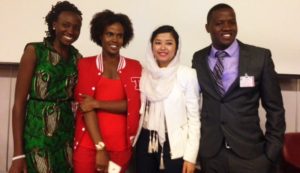
The most vibrant and inspirational session was the refugee youth panel, featuring Australian Najeeba Wazefadost, who fled Afghanistan as a child and now works closely with Amnesty International Australia.
Other speakers included young refugees who spoke about travelling as unaccompanied minors and the violence and exploitation they experienced. Despite the hardships they endured they are now leading successful and happy lives.
5. The resounding message to governments: the time to act on the refugee crisis is now
The sheer scale of the global refugee crisis, with record numbers of people on the move, ensured a very sobering mood at the Geneva meetings. The fact that, according to a UN report, over 42,000 people were forced to flee their homes every day in 2014 alone is very confronting.
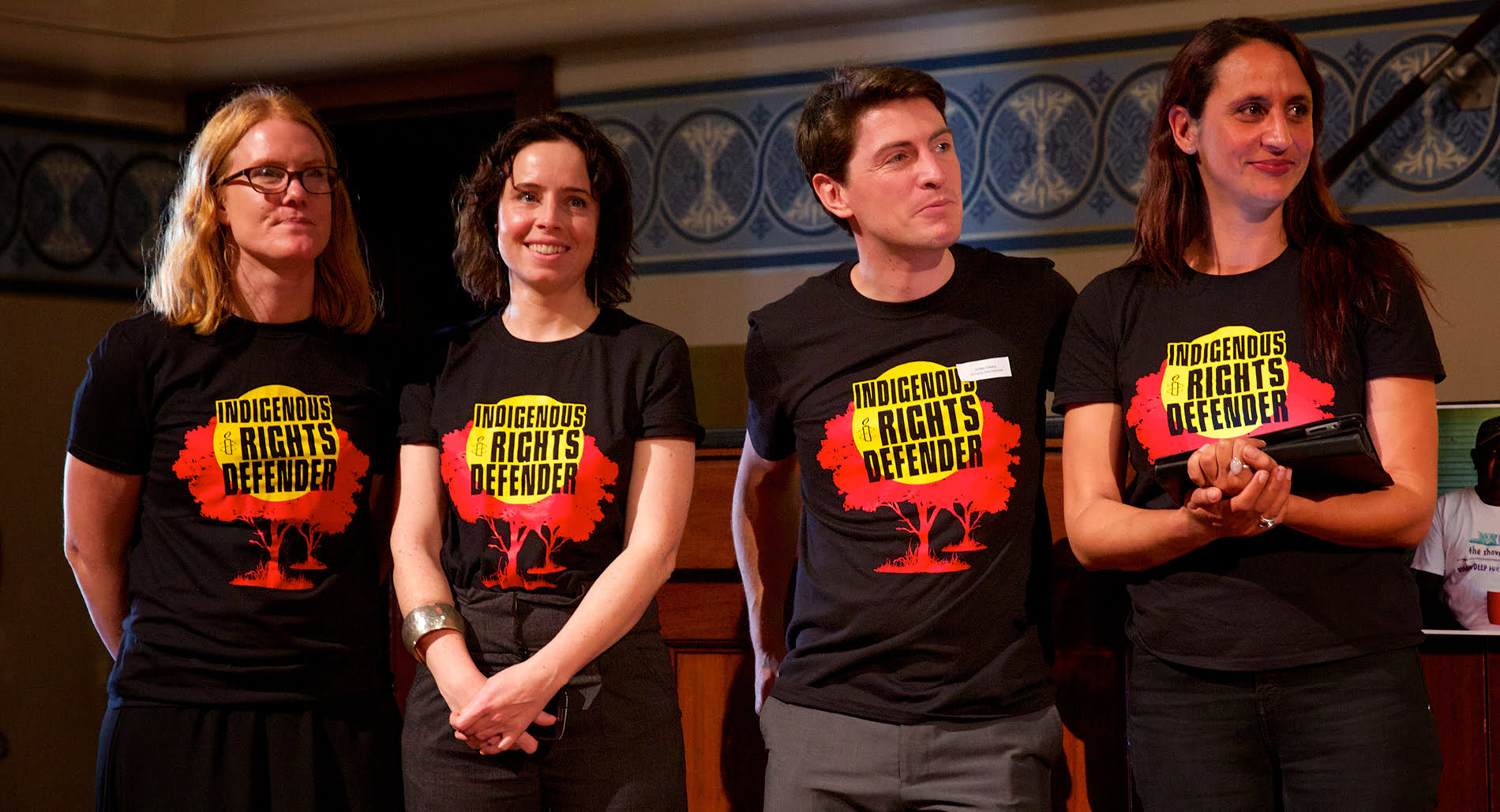
This NAIDOC Week, our Indigenous rights team tell us what motivated them to work for Indigenous rights.
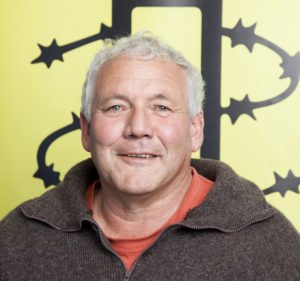
Rodney Dillon, Indigenous Rights Advisor
Rodney Dillon here. I’m an Aboriginal man from Tasmania. I have worked at Amnesty for the past eight years.
My great-great grandmother Fanny Cochrane Smith was the daughter of Tanganooturra, from Cape Portland in Tasmania. Tanganooturra was forcibly removed to Wybalenna on Flinders Island. She survived the invasion, but like the other Aboriginal children at Wybalenna, Fanny Cochrane Smith was taken from her mother to be trained in British ways.
Fanny was a very strong woman who has always inspired me. She eventually managed to move to the south-east of Tassie and get some land at a time when that was nearly impossible for Aboriginal people. My family has lived down this way now for five generations. This is where we belong now.
Fighting for justice for my people is something I just have to do until things change for the better. As long as our people are denied the right to practice culture, our cultural heritage is not properly protected and our ancestors’ stolen remains are held in overseas museums, I will keep fighting for our rights.
Fighting for justice for my people is something I just have to do until things change for the better.
Our forebears took care of each other and they cared for this country for 70,000 years. They lived here in harmony.
But the last 200 years have been very hard for Aboriginal people. Today a lot of our people don’t have harmony, many of us haven’t got the same standard of housing, health and education outcomes and more people are going to jail, even our kids.
In my lifetime I want to see our young ones living in happy, healthy communities, coming out of school educated and getting good jobs. I want to play a part in putting them on the road to become community leaders.
There’s great stories out there too, there’s people working tirelessly to make change. We’ve got Aboriginal judges, doctors and lawyers, but we still need to keep fighting for our people who are falling through the gaps.
Tammy Solonec, Indigenous Rights Manager
My name is Tammy Solonec. I am a Nigena woman from Derby in the Kimberley of Western Australia and I grew up in regional and remote WA before settling in Perth.
My passion and commitment to Aboriginal people stems from my ancestry and upbringing. When I was eight I lived in the town of Mullewa. I remember a racial riot after a Yamaji man was killed by a publican. This was a time when I asked a lot of questions. Mum worked in a segregated hotel at the time. The Aboriginal people used the ‘animal’ bar, the whites used the carpeted and clean part.
When I was a teenager in Marble Bar, mum started studying Aboriginal and Intercultural Studies and taught my sister and I about the atrocities committed against Aboriginal people — the stuff we weren’t taught in school.
I was always opinionated, like when I was living in the ‘closed’ mining town of Tom Price in the Pilbara of WA, where Aboriginal locals were not allowed to enter (it’s different now). So when I had the opportunity to study law, I jumped at it.
Ever since then I have worked for and with Aboriginal and Torres Strait Islander people, including as a community education officer at the Department of Commerce, a lawyer at the Aboriginal Legal Service of WA, a convenor of NAIDOC Perth and a Director of the National Congress of Australia’s First Peoples. I’ve even attended the United Nations a few times.
I feel very blessed and honoured to be doing this work. My time at Amnesty has been the first time I’ve worked for an organisation that is not dependent on government funding of some kind and this gives great freedom to do work that matters – like when we stood up for Oombulgurri – a community forcibly evicted. And this year, the work we are doing to reduce Indigenous children in the criminal justice system.
I’m Julian Cleary. I grew up in Melbourne and have lived in Alice Springs, Mexico and Germany.
On both sides of my family we are descendants of Irish potato famine migrants from Limerick and Tipperary. In my late teens, I began to reflect on my descent from poverty stricken people who came to this country seeking a better life, and the Aboriginal Peoples they dispossessed in the process.
As a university student I became interested in the similar struggles of Indigenous Peoples in the Americas, West Papua and East Timor. In 2003 I went to volunteer with the Mixtec and Zapotec Peoples in Mexico.
I saw first hand how dispossession from country directly led to poverty and marginalisation. But I also saw the resilience and vitality of culture in the face of this trauma. Every day as I went to work, I saw Mixteca and Zapoteca women chatting and singing in their own language, adorned in colourful traditional clothing, while they toiled away on street corners. They produced the most beautiful textiles, which sold for a pittance but kept their young ones clothed and fed. My experiences in Mexico got me thinking even more about our own backyard.
I also saw the resilience and vitality of culture in the face of this trauma.
Inequality and dispossession, but also a fierce determination to practice and revitalise culture, seem to me to be common to the struggles of Indigenous Peoples right around the world, despite their incredible diversity. This realisation strongly influenced my decision to return to University to study law with a focus on human rights.
Since then, I have been incredibly lucky to have worked with and for Indigenous people and organisations right across Australia. I am still on a very steep learning curve, but I am privileged to do the work I do, standing with Aboriginal and Torres Strait Islander people and communities to continue the long fight for rights, recognition and respect.
Roxanne Moore, Indigenous Rights Campaigner
I’m Roxanne Moore, a Noongar woman from the South West of Western Australia. I grew up in Margaret River, lived in Perth for many years, and am now based in Sydney.
Being part of the fight against the injustices facing Aboriginal and Torres Strait Islander Peoples in Australia is very close to my heart. My Noongar family originally lived near Bunbury but ended up at the mission at New Norcia. My great grandma was stolen from my family when she was about 13 years old. She was taken to Swan Native and Mogumber missions, where they tried to ‘civilise’ young ‘half-castes’ like her, before being contracted out for service to a farm up north near Carnarvon.
My great grandma’s wages were mostly held by the government, and she had to write to the Chief Protector asking for a few pounds when she needed clothing. Eventually, when she became pregnant, she wrote to the Chief Protector, begging to keep her baby. She ended up on the run from the authorities to protect my granddad, and he never went to school.
The government stole grandma, and in turn they stole from me my Noongar family and culture. I’m still trying to find them. There’s a lot of shame and trauma around the Stolen Generations, and it took a long time for my family to talk about it.
There’s a lot of shame and trauma around the Stolen Generations, and it took a long time for my family to talk about it.
My family’s history has instilled in me the need to fight for equality and respect for our people. The injustice and disadvantage today is clear across many areas that I’ve worked on in different jobs: Indigenous deaths in custody, racism and discrimination, violence against women, housing, land rights, criminal justice, to name a few.
There’s a lot of brave Indigenous communities and people doing this work, and I’m proud to be working with Amnesty International, as a leading independent human rights organisation, towards better protection and respect of the rights and culture of Indigenous peoples.
A Nigerian torture victim wrongfully sentenced to death for a crime committed when he was 16 years old has been pardoned following intensive campaigning from Amnesty International supporters across the world.
Moses Akatugba, who was on death row following his conviction for stealing three mobile phones 10 years ago and was repeatedly tortured into signing a confession, said he felt “overwhelmed” after the outgoing Governor of Nigeria’s Delta State announced last night he had granted him a full pardon.
A victory for people power
“The pardon of Moses Akatugba, who should not have been sentenced to death in the first place because he was a minor at the time of the offence, is a victory for justice and a reminder that people power and human rights campaigning really can make a difference,” said Netsanet Belay, Amnesty International’s Africa Director.
“Without the thousands of letters sent in support of Moses by his supporters across the globe, he may never have been granted his freedom.”
Moses is one of the core cases of Amnesty International Stop Torture Global Campaign and was highlighted in the 2014 Write for Rights campaign. In total, more than 800,000 actions were taken worldwide asking the Delta State Governor Emmanuel Uduaghan to commute the death sentence.
In a statement following Governor Uduaghan’s announcement, Moses said: “I am overwhelmed. I thank Amnesty International and their activists for the great support that made me a conqueror in this situation.
“Amnesty International members and activists are my heroes. I want to assure them that this great effort they have shown to me will not be in vain, by the special grace of God I will live up to their expectation. I promise to be a human rights activist – to fight for others.”
Moses also thanked the human rights defender Justine Ijeomah, who leads the Nigerian NGO Human Rights Social Development and Environmental Foundation (HURSDEF), and Governore Uduaghan for “keeping to his word”.
In October 2014, Governor Uduaghan responded to pressure from Amnesty International supporters and said that he was looking into the case. He granted a pardon to Moses yesterday on his penultimate day in office.
Arrested and tortured as a boy
Moses Akatugba was 16 years old when he was arrested in 2005 for armed robbery. He says police officers beat him repeatedly with machetes and batons.
He told Amnesty International that they tied him and hung him up for several hours, and then used pliers to pull out his toenails and fingernails. He was then forced to sign two pre-written “confessions”.
“Moses was just a boy when he was arrested and subjected to torture. And under international human rights law, he should not have been sentenced to death as he was a child at the time of the crime,” said Netsanet Belay.
I want to assure them that this great effort they have shown to me will not be in vain, by the special grace of God I will live up to their expectation. I promise to be a human rights activist – to fight for others.
“Nigerian Governors should commute the death sentences of all death row prisoners in their respective states, including many who are at imminent risk of execution after similarly flawed criminal investigations.”
Before leaving office today, Governor Uduaghan also commuted the death sentences of three other prisoners.
As Nigeria’s new president, Muhammadu Buhari, takes office, Amnesty International is calling on him to immediately establish an official moratorium on executions with a view to abolishing the death penalty.
More than 1,500 people are currently languishing on death row in Nigeria, including juvenile offenders. In 2013, Nigeria resumed executions when four people were hanged despite a “voluntary” moratorium.
A Nigerian torture victim wrongfully sentenced to death for a crime committed when he was 16 years old has been pardoned following intensive campaigning from Amnesty International supporters across the world.
Moses Akatugba, who was on death row following his conviction for stealing three mobile phones 10 years ago and was repeatedly tortured into signing a confession, said he felt “overwhelmed” after the outgoing Governor of Nigeria’s Delta State announced last night he had granted him a full pardon.
A victory for people power
“The pardon of Moses Akatugba, who should not have been sentenced to death in the first place because he was a minor at the time of the offence, is a victory for justice and a reminder that people power and human rights campaigning really can make a difference,” said Netsanet Belay, Amnesty International’s Africa Director.
“Without the thousands of letters sent in support of Moses by his supporters across the globe, he may never have been granted his freedom.”
“Without the thousands of letters sent in support of Moses by his supporters across the globe, he may never have been granted his freedom.”
Moses is one of the core cases of Amnesty International Stop Torture Global Campaign and was highlighted in the 2014 Write for Rights campaign. In total, more than 800,000 actions were taken worldwide asking the Delta State Governor Emmanuel Uduaghan to commute the death sentence.
Moses “a conqueror”
In a statement following Governor Uduaghan’s announcement, Moses said: “I am overwhelmed. I thank Amnesty International and their activists for the great support that made me a conqueror in this situation.
I want to assure them that this great effort they have shown to me will not be in vain, by the special grace of God I will live up to their expectation. I promise to be a human rights activist – to fight for others.
Moses Akatugba
“Amnesty International members and activists are my heroes. I want to assure them that this great effort they have shown to me will not be in vain, by the special grace of God I will live up to their expectation. I promise to be a human rights activist – to fight for others.”
Moses also thanked the human rights defender Justine Ijeomah, who leads the Nigerian NGO Human Rights Social Development and Environmental Foundation (HURSDEF), and Governore Uduaghan for “keeping to his word”.
In October 2014, Governor Uduaghan responded to pressure from Amnesty International supporters and said that he was looking into the case. He granted a pardon to Moses yesterday on his penultimate day in office.
Arrested and tortured as a boy
Moses Akatugba was 16 years old when he was arrested in 2005 for armed robbery. He says police officers beat him repeatedly with machetes and batons.
He told Amnesty International that they tied him and hung him up for several hours, and then used pliers to pull out his toenails and fingernails. He was then forced to sign two pre-written “confessions”.
“Moses was just a boy when he was arrested and subjected to torture. And under international human rights law, he should not have been sentenced to death as he was a child at the time of the crime,” said Netsanet Belay.
“Moses was just a boy when he was arrested and subjected to torture. And under international human rights law, he should not have been sentenced to death as he was a child at the time of the crime.”
Netsanet Belay, Amnesty International
“Nigerian Governors should commute the death sentences of all death row prisoners in their respective states, including many who are at imminent risk of execution after similarly flawed criminal investigations.”
Before leaving office today, Governor Uduaghan also commuted the death sentences of three other prisoners.
Call to abolish death penalty
As Nigeria’s new president, Muhammadu Buhari, takes office, Amnesty International is calling on him to immediately establish an official moratorium on executions with a view to abolishing the death penalty.
More than 1,500 people are currently languishing on death row in Nigeria, including juvenile offenders. In 2013, Nigeria resumed executions when four people were hanged despite a “voluntary” moratorium.
Why is community so important for Indigenous kids?
Meet Sarah*, from the Kimberley. She attributes her bright future to strong cultural and community connections while growing up.
Sarah’s story
Sarah is employed at a local Aboriginal organisation in the Kimberley and is planning to start her own business. She attributes her promising future to her involvement as a teenager with the Yiriman Project, a program that connects kids to their culture.
Sarah’s future wasn’t always so bright. Her parents split when she was 10 and she spent some of her teenage years moving between the homes of various family members.
Sarah began to smoke and drink.
But while her cousins were committing crimes and getting into trouble with the law, Sarah was steered away from trouble by the Yiriman Project.
“When I went out there I took a step back and said, this is me, this is where family come from, my ancestors walked this land, so I sort of found myself. I find that a sense of belonging gives you a sense of respect.”
The Yiriman Project takes young people, accompanied by elders, on trips back to country to immerse them in the stories, songs and knowledge of their heritage.
When Sarah was 15, she went out bush with women Elders of the Yiriman Project to connect with her grandmother’s country. For a week she learned songs, dances and stories, and visited sacred women’s sites.
“When I went out there I took a step back and said, this is me, this is where family come from, my ancestors walked this land, so I sort of found myself. I find that a sense of belonging gives you a sense of respect.”
What is the Yiriman Project?
The Yiriman Project in Western Australia is an Indigenous-led cultural program for kids at risk of being caught in the justice system.
The Yiriman Project contributes to the healing of young people, provides an opportunity to develop and assert culture, language and bush skills, and creates meaningful employment that values and maintains culture.
There are great stories of success through the Yiriman Project. In 2009 at Fitzroy Crossing, 15 boys attend a diversionary program run Elders of the Yiriman Project. The camp involved traditional knowledge transfer, work and counseling.
One liaison officer said that many of the boys struggled at first with the routine and discipline; however all the boys completed the camp. All 15 families reported positive changes in their child, and 12 months later none of the boys had re-offended.
All 15 families reported positive changes in their child, and 12 months later none of the boys had re-offended.
The Yiriman Project was featured in the recent Australian Productivity Commission Overcoming Indigenous Disadvantage Report 2014 under ‘Things that work’. The report stated that the program “builds young people’s confidence and improves their self-worth, and is considered to have helped curb suicide, self-harm and substance abuse in the participating communities.”
All too often, brilliant community-led programs like the Yiriman Project go unsupported. Instead we hear more and more stories of Indigenous kids in detention – some are as young as 10 years old. Indigenous kids in Australia are 24 times more likely to be locked up than their non-Indigenous classmates – often because there are no other options available.
All over Australia the communities are different – they are urban, they are regional, they are remote – but what they have in common is that Indigenous leaders and community members know the way forward for their children.
Now we need to push for a comprehensive and long-term solution, and more community-led programs, like Yiriman, for Indigenous kids all across Australia.



 Rodney Dillon here. I’m an Aboriginal man from Tasmania. I have worked at Amnesty for the past eight years.