Good news: Arms Trade Treaty to take effect in December 2014
Protection for the millions of people whose lives are devastated by the poorly regulated global arms trade just took a giant leap forward.
A total of 50 ratifications were needed for the Arms Trade Treaty (ATT) to come into force and as of now there have been 53, triggering a 90-day countdown to entry into force on 25 December 2014.
What’s happening
We are 90 days away from having the hard-won ATT becoming international law.
The ATT is an international treaty that sets out strong global rules to stop arms going to human rights abusers.
Over the past year, 121 states – including Australia – have signed the treaty. To become legally binding, the treaty had to be ratified by 50 states and this week we hit that magic number.
To become legally binding, the treaty had to be ratified by 50 states and this week we hit that magic number.
At a ceremony at the UN in New York this week, St Lucia, Argentina, Czech Republic, Senegal, Bahamas, Uruguay, Portugal and Bosnia Herzegovina ratified the ATT, bringing the total number of ratifications to 53.
When the ATT comes into force it becomes binding international law on all countries that have ratified it.
How did we get there?
Back in 1993, four non-governmental organisation representatives gathered in the Amnesty International offices in Central London and began working on ideas to legally end arms trading that contributes to human rights abuses.
After twenty years of tireless campaigning, millions of petition signatures and letters, thousands of public demonstrations, and countless hours speaking to politicians, we were finally able to announce that we had an international Arms Trade Treaty on 3 April 2013.
Your donation, letters, emails, and activism throughout our years of campaigning were invaluable.
Your donation, letters, emails, and activism throughout our years of campaigning were invaluable.
It was thanks too to our partners in the Control Arms coalition, and to the Australian Government and MPs who answered your call and fought for a treaty we can all be proud of.
What are the effects of the arms trade?
Arms trade details are often shrouded in secrecy, but the recorded value of the industry approaches USD$100 billion annually – in 2010 it was around $80 billion, so it’s growing fast.
Unsurprisingly, there are some shocking facts associated with the arms trade.
- 1,500 people are killed every day – 500,000 per year – by conflict and armed violence.
- There are more international laws regulating the trade of bananas than weapons.
- 12 billion bullets are produced every year.
- Over 26 million people have fled their homes in fear for their lives due to armed conflict.
- Tens of thousands of child soldiers are being used in armed conflict in 19 countries.
- Damage caused by weapons destroys infrastructure, limiting access to food, water and shelter, pushing survivors into poverty.
- A whopping 74 per cent of the world’s weapons are supplied by just six countries: USA (34.84%, Russia (14.86%), Germany (7.43%), UK (6.57%), China (6.29%) and France (4%).
- In conflict regions such as the Democratic Republic of Congo, Cote d’Ivore, and Sierra Leone, the scale of rape and sexual violence is
staggeringly high. Many women and girls have been forced into sexual
slavery by fighters, and many are raped at gunpoint.
A strong ATT could save hundreds of thousands of lives every year.
What needs to happen next?
While this is amazing news, our campaigning does not stop here – all states need to bite the bullet and commit to the ATT.
France, Germany, Italy, Spain and the UK have already ratified the ATT. While the USA has signed the treaty, it is yet to ratify. China, Canada, Israel, and Russia – all major arms producers – have also resisted ratification.
Amnesty International and its NGO partners will keep up the pressure on states by exposing cases of irresponsible arms transfers and pressing governments to bring the ATT rules into their own national laws by ratifying the treaty.
Amnesty International will also be ensuring that states implement the ATT.
WA Government must stop Oombulgurri demolitions
The WA Government must stop the demolition of an estimated $30 million worth of homes, public buildings and infrastructure in the Oombulgurri community in WA’s Kimberley region, said Amnesty International.
The organisation’s public action calling for a stop to the demolitions has attracted over 16,000 supporters since it was launched last Wednesday.
Forced eviction
Amnesty International sent a team to the East Kimberley earlier this month to gather evidence and residents’ testimonies. Based on these testimonies, there is evidence the residents were victims of forced eviction as defined by international law.
“Overwhelmingly, the consistent message from affected residents we met was that they did not give their free, prior and informed consent for the eviction from their homes and closure of their community, and that they wish to return to their homes on their traditional lands,”
Tammy Solonec, Indigenous Rights Manager
A 2008 Coronial Inquest highlighted a number of incidents in the town of domestic violence, suicide, child sexual abuse and alcoholism. This resulted in three convictions of individuals from the community.
In 2011 the WA Government closed the community and its essential services, including power and water, saying the small number of residents made the town unviable to run. Oombulgurri has sat empty since then.
The WA Government has since refused requests by the Balanggarra Aboriginal Corporation for around 150 residents to return to their homes.
Homelessness, overcrowding
After the eviction, many community members were left homeless and even now some do not have appropriate accommodation or are living in overcrowded housing in the neighbouring town of Wyndham. In addition, Amnesty International was told that many of the children from Oombulgurri are no longer attending school in Wyndham.
The Government plans within weeks to start demolishing the buildings and infrastructure, which would prevent the affected residents, including traditional owners, from being able to live on their Homelands.
Amnesty International has concerns that the areas slated for demolition include Aboriginal sacred sites and burial sites, and has sought confirmation from the WA Government that it has conducted the appropriate heritage surveys under the Aboriginal Heritage Act.
$30 million worth of assets
Amnesty International also has asked the WA Government to explain why it is carrying out these demolitions. The demolitions will cost $680,000 of public money, to demolish an estimated $30 million worth of buildings and infrastructure.
While the WA Government has not yet replied to these questions, in a statement to media Aboriginal Affairs Minister Peter Collier said that most residents had left the community voluntarily. He said demolition was necessary to reduce further vandalism and theft, and to leave the site in a safe condition for future non-residential use by the traditional owners.
“The Government’s statement sharply contradicts with the statements by the residents we met, and with the stated position of the Balanggarra Aboriginal Corporation, the Prescribed Body Corporate”
Tammy Solonec
“Residents have told us that many people left Oombulgurri because of the failure of the state to provide a safe community. Others left because of the closure of essential services including the school, clinic and office. And others left to follow family members, including children who had been removed.”
“I believe the threat of vandalism is limited because the community is so remote. Most of the houses we saw are still in good condition and many white goods and furniture remain, even though three years have passed.”
Consultation needed
“The WA Government must hold proper consultations with the community members and the Balanggarra Aboriginal Corporation before it takes any further action. Aboriginal and Torres Strait Islander peoples have the right to live on their homelands. If the residents wish to return to their homes, we call on the Government to support that by providing adequate housing, community safety, education, health and other essential infrastructure.”
“The problems in Oombulgurri, highlighted by the Coronial Inquest, showed a failure to protect women and children. The State has an important role in protecting people from violence, but forcing people from their Homelands is not the way to do this. Demolishing this community will only further traumatise those people the state should be protecting. ”
“There is no justification under international law for the eviction and demolition of an entire community because of the criminal acts of certain residents.”
The science of torture
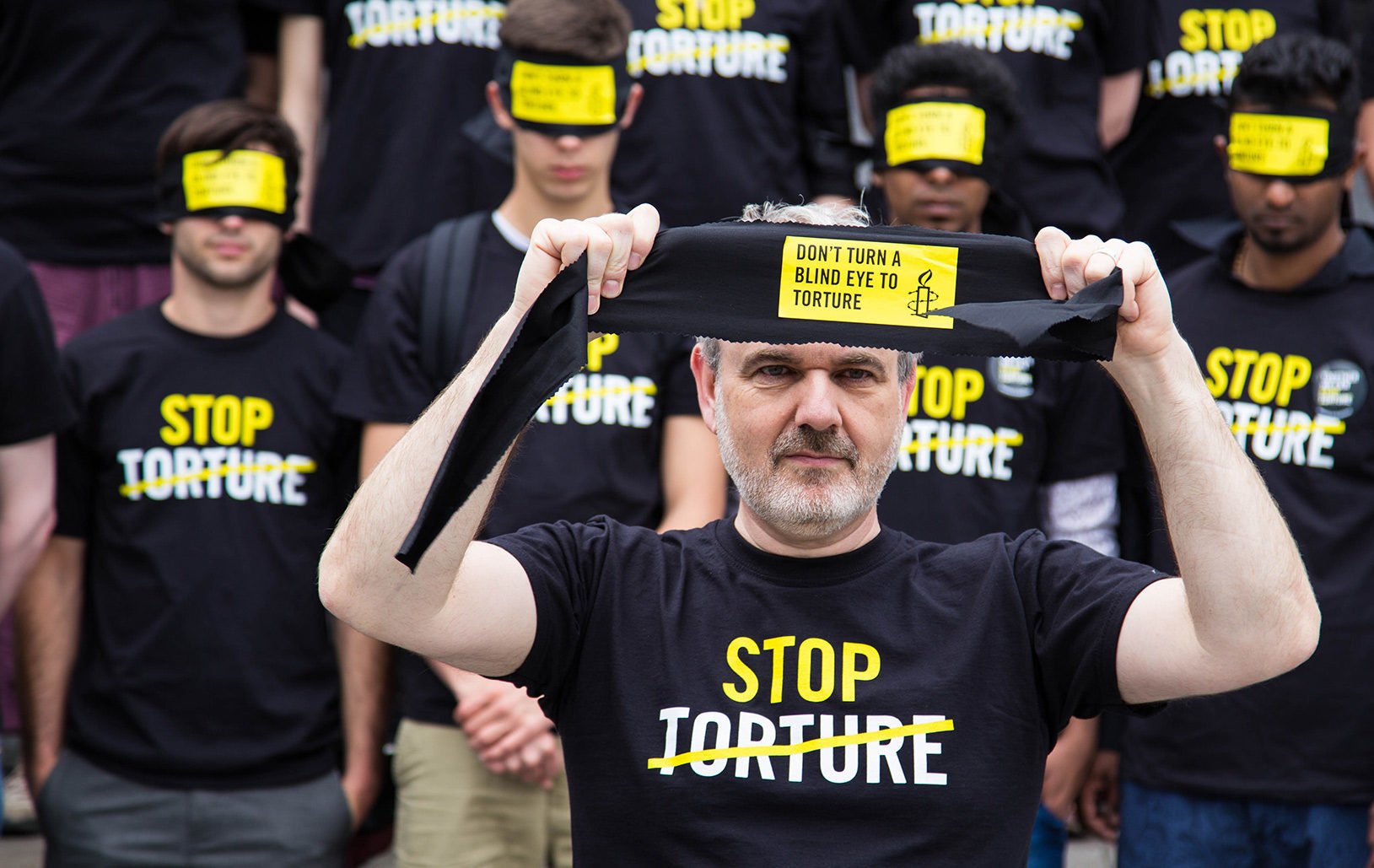
Governments use torture for all kinds of reasons, from obtaining information to silencing opposition or as a cruel punishment. Often it is simply the standard way to investigate crimes.
Torture is barbaric and inhumane, and can never, ever be justified. Here we take a look at the physical and emotional consequences of torture.
Punishment
The stench of rotting flesh coming from the tiny, cramped cell overpowered him. This was the smell of torture.
As soon he set one foot inside the small room at a police detention centre in Nigeria’s capital, Abuja, Forensic Doctor Duarte Vieira was shocked. He had never seen anything as bad – and he had seen plenty.
Among the 45 men, women and children held in a space originally built for six people, he saw a man with a rotting bullet wound on his foot. And then another. And a third one.
Among the 45 men, women and children held in a space originally built for six people, he saw a man with a rotting bullet wound on his foot. And then another. And a third one.
The wound on the ankle of a fourth man had gone untreated for so long that his foot was literally decomposing; attached to the leg by a thread of skin.
Dr Vieira immediately knew this was a form of torture used to punish prisoners.
“I never thought I was going to see anything like that in a living human being. People were shot on their feet before being interrogated as a way of showing them what to expect next,” he told Amnesty International.
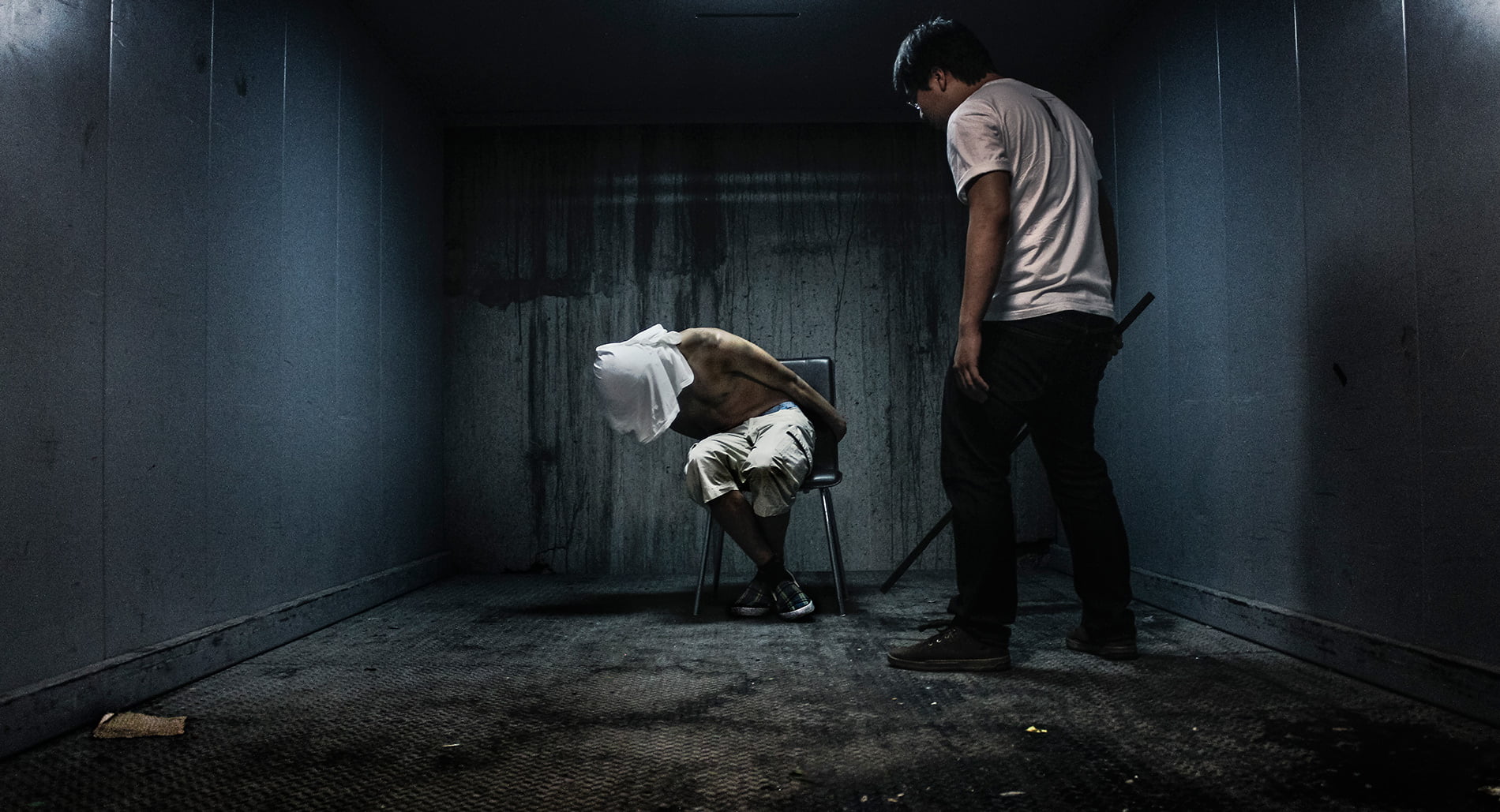
Torture
Portuguese born Dr Duarte Vieira, one of world’s leading medical forensic experts, was documenting reports of torture in detention centres in Nigeria as part of a 2007 mission by the then UN Special Rapporteur on Torture, Manfred Novak.
Since then, he has visited detention centres across the world, documenting the use of torture and other ill-treatment for a variety of reasons, including as a form of punishment or to extract “confessions”.
His conclusions are used as evidence in courts, asylum claims and official reports.
“We use medical techniques to advance justice. We interpret the evidence and try to establish all facts. The expert acts as the glasses of the judge and helps him make a decision based on the clearest possible version of reality,” Dr Vieira explained.
During the visits he examines and interviews detainees about their traumatic experiences.
“Sometimes the detainees don’t say anything because they are scared, but most of the time I only have to look at them to see something has happened because of the marks on their bodies, because of the way they act and even how they talk.”
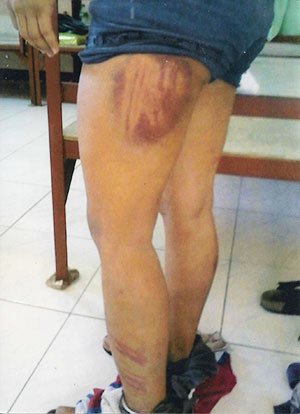
Dr Vieira documents the size, colour, depth and orientation of injuries in order to establish if they were caused by an accident, the result of a medical
treatment, the natural consequence of a disease or a wound inflicted by
another person. Everything is recorded in detail.
I never thought I was going to see anything like that in a living human being. People were shot on their feet before being interrogated as a way of showing them what to expect next.Duarte Vieira, a forensic doctor
A private interview with the detainee usually helps fill in any gaps.
“I have to interpret the evidence and evaluate all possible causes. When you see a burn or a scar, for example, it does not mean that the person was tortured. The mark could have been an accident, or an old injury or it could be self-inflicted so I have to evaluate if what the detainee says is consistent with what he is showing.
“If someone says, for example, that he was injured 15 days ago and I can see the scar is seven months old, then it doesn’t correspond. Or if a prison guard tells me that the prisoner fell down the stairs and I can see that the injuries are not typical of that.
“If I see a detainee with a burn mark and he tells me it was done with a hot iron to make him confess and I see only one detainee with that type of mark, I cannot say he was tortured. I can say it is a possibility but I cannot exclude that he was burned accidentally.
“However, if I see the same pattern of burns in several detainees then I can tell that it is unlikely all detainees would burn their backs accidentally so it is a pattern that shows me it is quite likely they were tortured.”
Science of justice
Just like Dr Vieira, medical experts across the world have the challenging job of establishing if an individual has been tortured, otherwise ill-treated, or not. When they exist, medical reports usually make an important part of a legal case against a particular government or are crucial factors when an individual applies for asylum in another country.
Experts are trained for years in forensic science – a branch of medicine that, among other thing, deals with identifying signs of abuse in individuals and in human remains.
However, physical injuries are only half of the story. With torture techniques becoming more sophisticated across the world, perpetrators aim to leave few, if any, physical marks on detainees and often rely on psychological torture instead.
With torture techniques becoming more sophisticated across the world, perpetrators aim to leave few, if any, physical marks on detainees and often rely on psychological torture instead.
Techniques used often include sleep deprivation, humiliation, mock executions, threats of abuse and sensory deprivation, among many others. Proving they were practised is difficult.
Dr Juliet Cohen is Head of Doctors at Freedom from Torture, a UK-based organisation that focuses on the treatment and rehabilitation of torture survivors.
She says evaluating whether someone has suffered psychological torture is usually extremely challenging.
“We evaluate how individuals conduct themselves, their behaviour, how they speak and how that changes during the course of the examination. The information that they give, the things they find very difficult to talk about, the impact that the torture has had on them. I ask a lot of questions about how
they get through the day and particularly revealing can be questions about
their sleep, what happens at night time.
“Torture might not leave any physical evidence and people might not fall into very neat categories for diagnosis so it is very important to get a very detailed picture of what happened and how it has affected them,” Dr Cohen explained.
The Istanbul Protocol
One of the tools used by forensic doctors is the Manual on the Effective Investigation and Documentation of Torture and Other Cruel, Inhuman or Degrading Treatment or Punishment, known as the Istanbul Protocol.
The Protocol, issued in 1999, contains detailed standards and procedures on how healthcare professionals can recognise and document symptoms of torture and other ill-treatment, so that their findings may then be used as evidence in court.
Dr Vieira agrees that torture techniques have evolved to become more sophisticated but experts have ways of determining if an individual has been tortured.
“Most forms of torture are designed not to leave any kind of marks in the body but there are ways to know if someone has been tortured. Torture survivors would usually describe particular experiences, the room they were tortured in, the colour of the walls, the light in the roof, the clothes of the torturer. Also when several people describe the same story that shows me a pattern that is repeated and that shows that the practice is happening.”
Dr Vieira is hopeful about the future. He thinks achievements in forensic medicine are key for the advancement of justice, which is what he works for every day.
Dr Vieira is hopeful about the future. He thinks achievements in forensic medicine are key for the advancement of justice, which is what he works for every day.
“We will never eradicate torture but at least I hope that those responsible will face justice. Today the situation is much better than it was 20 years ago and I hope that today it is much worse than it will be in 20 years.”
Oombulgurri demolitions: your questions answered
The Government of Western Australia plans to flatten the Aboriginal homelands community of Oombulgurri within days. Amnesty International is calling on the WA Government to stop the demolitions and the forced closure of Aboriginal communities. Here we explain why.
What are the Oombulgurri homelands?
Oombulgurri is an Aboriginal community in the eastern Kimberley, with a population of 107 at the time of the 2006 census.
In 2011, the men, women and children living at Oombulgurri were evicted from their homes after the government of Western Australia deemed the community “unviable”.
Although many refused to leave, WA Government closed the health clinic, school, police station, shop, and shut off the town’s power and water. The last residents from Oombulgurri were relocated to Wyndham, the northernmost town in the Kimberley region.
Oombulgurri’s residents and traditional owners have been fighting to return ever since.
Why didn’t Amnesty act at the time of the evictions?
The community didn’t seek our help at the time of their eviction. However, when we heard that the demolitions were imminent, we asked if we could visit the community and offer our assistance to protect their homes.
During our visit we heard evidence that a forced eviction may have occurred and that people had been denied their rights to free, prior and informed consent with regards to the closure of the community, the forced evictions and the demolition. We responded to the community’s request for our urgent support.
There was a spate of suicides, sexual assaults and other violence, and alcoholism in Oombulgurri. Isn’t it better that the WA Government did something to put an end to this toxic environment?
The safety of residents is of paramount importance, but the wholesale eviction of people from their homes is not the answer, and has only caused further trauma.
The problems in Oombulgurri sadly were not unique to that township and these problems are also widespread in non-Indigenous communities.
Action was certainly needed to address the serious social problems in the community, but this should take the form of better community safety, health, employment, and education programs — not the forced closure of Aboriginal communities.
The Government must determine better ways to manage community dysfunction, focusing on prevention rather than punishment, such as a Justice Reinvestment Framework.
Where has the WA Government has gone wrong in its plans for Oombulgurri?
Although action was needed to address the serious social problems in the community, it should have taken the form of better community safety, health, employment and education programs.
Instead, the WA Government evicted a whole community from their homes, further traumatising the people the State should be protecting.
Why is the WA Government carrying out these demolitions?
Good question.
We have asked the WA Government to give its reasons for carrying out the demolitions but they haven’t so far replied to these questions.
We do question why the Government is spending $680,000 to demolish $30 million worth of assets, and preventing our First Peoples from returning to their homes.
Would the demolitions breach international law?
In terms of international obligations, there is evidence of breaches of the International Covenant on Economic and Social Rights, which Australia ratified in 1975.
Also, there have been of breaches of the Declaration on the Rights of Indigenous Peoples, which Australia gave formal support to in 2009.
What needs to happen now?
The most urgent step is to stop the demolitions. The WA Government must then work with the affected residents to find a way forward.
The safety of members of the community, particularly women, children and the elderly, needs to be secured and all affected residents must be allowed to contribute to what comes next in a fair and safe way.
The WA Government must also provide appropriate housing, legal representation, compensation and access to counselling for residents.
Truth and justice needed for Miss Dhu, latest WA death in custody
Amnesty International today called for a full independent judicial inquiry into the tragic death last month of 22 year-old Aboriginal woman Miss Dhu while in West Australian police custody. This follows yesterday’s announcement of a WA coroner’s inquest and an internal police investigation.
The global human rights organisation mourns the passing of Miss Dhu, who died after three days of incarceration in South Hedland Police Station for unpaid fines. During that period she had twice been returned to the lock-up after being taken to hospital complaining of pain, vomiting, fever and paralysis.
“This is an absolute tragedy and our thoughts and support go out to Miss Dhu’s family and her community,” said Tammy Solonec, Amnesty International Australia’s Indigenous Peoples’ Rights Manager.
“The family want truth and justice for their daughter, sister and niece – Miss Dhu. They want an independent inquiry, and we agree that this very sad death deserves nothing short of a full judicial inquiry, without delay. Miss Dhu’s family can’t wait years for the truth to come out.”
Miss Dhu should never have been in that lock-up. The government has to stop locking up people for being unable to pay fines.
Incarceration rates high
Miss Dhu had been sentenced to incarceration in the lock-up for four days, in lieu of paying a fine of $1000.
“Miss Dhu should never have been in that lock-up. The government has to stop locking up people for being unable to pay fines.
“There should have been more culturally appropriate alternatives available than locking up people, and we need systems in place so that this will never happen again,” said Tammy Solonec.
“The over-representation of Aboriginal and Torres Strait Islander people in the justice system of WA is at an appallingly high rate. As of 26 June 2014, 43% of women incarcerated in WA prisons were Indigenous,” said Tammy Solonec.
We need an alternative system
Amnesty International urges the West Australian Government to reconsider its system of people paying off fines at the rate of $250 per day by doing time in police lock-ups, a system that disproportionately affects people on low incomes.
Police lock-ups should only be used where no other options are available to them due to these facilities being inappropriate for holding people for any length of time as they do not provide for immediate access to medical and other services.
In addition, the jurisdiction of the Office of the Inspector of Custodial Services does not extend to police lock ups. Longer term, Australia needs to ratify the Optional Protocol to the Convention Against Torture and set up a National Preventative Mechanism that will allow the United Nations to inspect all places of detention.
Teargassing of children in Darwin
The tear-gassing of children at a Darwin correctional facility last month is extremely alarming and must be urgently investigated.
Six boys aged between 14 and 17 were subdued with tear gas at Don Dale Detention Centre on 21 August 2014, after the teenagers reportedly escaped their cells, armed themselves with glass, injured a prison officer and smashed windows and light fittings. The dog squad also was brought in to respond to the disturbance.
Extreme response
“Using teargas and the dog squad is an extreme way to deal with kids, and it’s against international protocols. Don’t the authorities have better mechanisms for dealing with children?” said Rodney Dillon, Indigenous Rights Advisor at Amnesty International Australia.
“They’ve got this system of dealing with kids completely wrong. We should be helping to rehabilitate these young people and show them direction. Instead, they’re getting high penalties and being hit with tear gas. We’ve got to a very sad time if this is where we’re up to.“
Boys held in punishment unit
The boys had been held in the punishment unit prior to the disturbance, and Amnesty International is calling for an investigation into the circumstances leading up to the boys being transferred to this unit.
The NT Children’s Commissioner Howard Bath has said the Don Dale facility is inadequate, and the State Government had previously acknowledged the centre was at capacity.
Amnesty International echoes Mr Bath’s calls for a full investigation into the incident including an explanation for the use of tear gas.
Prison unsuitable for children
Amnesty International is also greatly concerned about the conditions in which the Northern Territory is detaining children. The Northern Territory Government announced that Berrimah Prison, an adult prison that was considered no longer appropriate to house adults, will be used for juvenile prisoners.
The North Australian Aboriginal Justice Agency has flagged that the Berrimah prison is unsuitable for juvenile offenders, even with the planned refurbishments. The previous Labor government promised to demolish the prison, and in 2011 the Corrections Commissioner said in a coronial inquiry that the Berrimah facility was so run down it should be bulldozed.
“Berrimah’s not child-appropriate. If we’re genuinely interested in helping kids with repeat offending, putting them in an old run down jail, no matter what the refurbishment, won’t solve any problems. Kids need special services including recreation and education and somewhere to meet with family. I’m not sure this old jail can ever meet those needs,” said Rodney Dillon.
Longer term, Australia needs to ratify the Optional Protocol to the Convention Against Torture and set up a National Preventative Mechanism that will allow the United Nations to inspect all places of detention, especially as the NT does not have an independent overseer like the Office of the Inspector of Custodial Services.
How do you cope when your brother is being tortured?
How do people cope when a family member is locked up and tortured?
“When your brother is detained and tortured you have two options: fight, or abandon him.” Farida Aarrass decided to fight.
Farida is an impressive woman: a mother of seven who works with a local organisation for homeless people in Brussels, Belgium. She has also spent the last five years campaigning for justice for her younger brother, Ali.
Ali is currently serving 12 years in a Moroccan prison for terrorism. He has always denied the charges and says he was tortured into confessing. Ali has created graphic drawings of being tortured.
Meanwhile, Farida reflects on what a difference international support makes to Ali and their family.
Giving Ali back his humanity
Ali and I have always been very close and I’m convinced of his innocence. Lots of people said “there’s no smoke without fire”, that he must have done something. The [Spanish, Moroccan and Belgian] governments presented my brother as a terrorist – a devil.
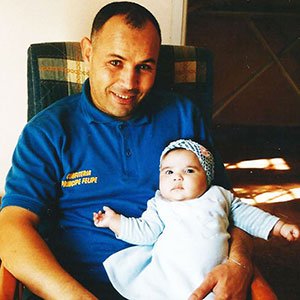
Little by little, I got to know people who supported me, and these people’s support has humanized him. That’s very important – giving my brother back
his humanity.
Ali has always been a very honourable man, known for not doing anything bad to anyone.
We gathered testimony from people who knew my brother, made a documentary, published a book, and his case has appeared on Belgian TV.
The more people knew about his case, the less fearful they were.
Many others – politicians, lawyers, activists – became interested in my brother’s story. They see that this is a very serious case of injustice.
Being forgotten is the worst thing for a prisoner
Ali runs the risk every day that he will be ill-treated again. He gains strength from people supporting him. Ali says that the worst that can happen to a prisoner is that people forget him.
There isn’t a day when I wake up and don’t think of Ali, or a night when I go to bed without remembering him. He is with us all the time and he knows that.
The people supporting us are the most wonderful part of this struggle. The spirit they give us – it’s like giving water to a thirsty person crossing the Sahara. They – you – are the water we need to live, the air we need to breathe.
Farida Aarrass
He calls me now and then if he hasn’t been having problems. When he doesn’t call, it’s torture for his relatives. He can receive letters but the ones he send don’t get out of the prison.
Knowing that the UN and Amnesty are working on his case gives him enormous satisfaction. He feels great knowing that the definition of him as a terrorist is fading.
Keep fighting
Ali says his case should be used to make sure that there are no more extraditions, no more torture. “I want mine to be the last of these injustices,” he tells me. What they do to the prisoners is barbaric. He doesn’t want his suffering to be in vain.
The people supporting us are the most wonderful part of this struggle. The spirit they give us – it’s like giving water to a thirsty person crossing the Sahara. They – you – are the water we need to live, the air we need to breathe. That’s where I get my strength.
We don’t feel alone. We are very thankful. Keep fighting, because the lives of many unjustly detained people depend on it.
Welcome back survey
Thank you for coming back on board as a human rights defender! Please take our short survey so we can make your supporter experience even better.
Welcome back survey
Thank you!
Did you know you can customise the emails we send you? Head to our preference centre – create an account – and customise to your liking.
Gaza: the four-minute version
Amnesty Australia takes a look at the origins of the Israel-Palestine conflict, the current violence in Gaza, and what needs to happen next.
First things first, where are Israel and Palestine?
Israel is a country in the Middle East and Palestine consists of two separate territories that run alongside Israel: Gaza and the West Bank. The borders between Israel and the Palestinian territories have long been in dispute.
The Palestinian territories are governed by the Palestinian Authority (PA), which was established in 1984 to provide self-government for Palestinians. However, due to political infighting between Hamas and Fatah – resulting in a division of control between Gaza and the West Bank – the AP is now only notionally in control.
Let’s talk about Gaza
Gaza is a narrow strip of land on the Mediterranean Sea, bordered by Israel and Egypt.
Despite being only 12 km wide and 50 km long, Gaza is home to 1.82 million people. The territory is approximately one third the size of Canberra but with five times the population, making it is one of the most densely populated places on earth.
Israel has full control of Gaza’s airspace and waterways and has stopped supplies and electricity moving across the border into the strip. Such tight control makes Israel the occupying power and the enforcement of a seven-year blockade has formed part of a rigid collective punishment on the people of Gaza by Israel.
Israel-Palestine – it’s complicated, right?
Like you wouldn’t believe. In fact, we can’t hope to cover every detail here so we’ll try to make it quick.
Although the conflict has origins going back to the early 1900s, when the region was part of the Ottoman Empire, we’re going to look at what happened during the mid-21st century.
In 1948, back when Palestine was a British territory, the United Nations (UN) declared it would be divided into two independent countries: Israel and Palestine.
To cut a very long and complicated story short, the Arab leaders of Palestine rejected the divide and attempted to maintain a unified, independent Palestine. This led to fighting, the upshot of which was that Palestine was defeated and Israel ended up controlling more land that the UN had originally granted to it.
Where do things stand now?
In 1967, during another war between Israel and the Palestinian territories, Israel began its military occupation of Gaza and the West Bank.
Although Israel withdrew its occupying troops from Gaza in 2005, it maintains a full blockade of the territory. The West Bank still remains under Israeli occupation.
In the years since occupation began, Israel and the Palestinian territories have been stuck in an unending cycle of violence and retribution. Whilst there are individuals and groups on both sides who are guilty of perpetuating the conflict, and Israeli citizens live under the threat of missiles and rockets from Hamas, Palestinian civilians still bear the brunt of the conflict.
So what’s happening right now?
On 10 June this year, three Israeli teenagers hitchhiking in the West Bank were murdered by Hamas. Israel responded by arresting Hamas operatives in the West Bank and with air strikes against the group in Gaza.
On 2 July Israeli extremists kidnapped and murdered a Palestinian teenager in Jerusalem, which was followed by protests across Palestinian neighbourhoods and cities. Israeli security forces cracked down on the protests and Hamas and other Gaza groups responded by launching dozens of rockets into Israel. And Israel hit back with more air strikes.
The violence in Gaza is devastating. Since Israel launched “Operation Protective Edge” on
Gaza on 8 July, over 640 Palestinians have been killed, including 147 children, and thousands of people injured. According to Gaza Ministry of Health figures, the majority of those killed have been civilians. Over 25 Israeli soldiers and two Israeli civilians have been killed and several Israeli civilians have been injured.
Israeli attacks against civilian homes in Gaza have left over 15,000 people homeless and, according to the United Nations, over a million of the population are without water or sewage services.
Potential war crimes are being committed on both sides.
Israel’s “knock on the roof” tactic – where a smaller bomb is dropped on a house as a warning to civilians inside before a larger bomb destroys the home – has the potential to be a war crime.
Hamas has fired hundreds of indiscriminate rockets into Israel in what is a clear violation of international law. It has also stored munitions in civilian buildings, disregarding international law and endangering the lives of civilians. International law is clear on this point – civilians must never be used as either shields or cover for military operations.
Despite the intent of warning civilians and claims that Hamas is using civilian homes for military purposes, both sides must show that they are targeting legitimate targets.
What will stop the violence?
The potential war crimes and human rights violations on both sides will continue to spiral out of control unless other countries fuelling the violence acknowledge their role and demand an end to the civilian deaths. One of the simplest ways to do that is to remove the weapons used to kill civilians.
We don’t have data on who supplies weapons to Palestinian armed groups but we do know the major suppliers of weapons to Israel: the US and UK.
The US is by far the largest exporter of military equipment to Israel, giving over $3 billion in annual “Foreign Military Financing”.
Last year the UK sold £6.3 million-worth of arms to Israel and arms sold by the UK government have been used to commit human rights violations in Gaza in the past.
In the short term, ceasefires must be allowed so emergency repairs can be made to water and sewage works in Gaza to avoid a public health catastrophe.
In the long-term, Israel must lift its crippling blockade of Gaza which violates international law and Israel’s obligations as the occupying power. It a key element of the context of the current hostilities.
Ultimately, both sides must respect the laws of war, protect civilians and hold those responsible for possible war crimes accountable.
Article written by Katie Young, Online Editor